The Menstrual Cycle
What is the menstrual cycle?
 The process in which females ripen or
release one mature egg.
 The average menstrual cycle will repeat
itself about every 28 days, but normal
menstrual cycles can range from 21 to
40 days.
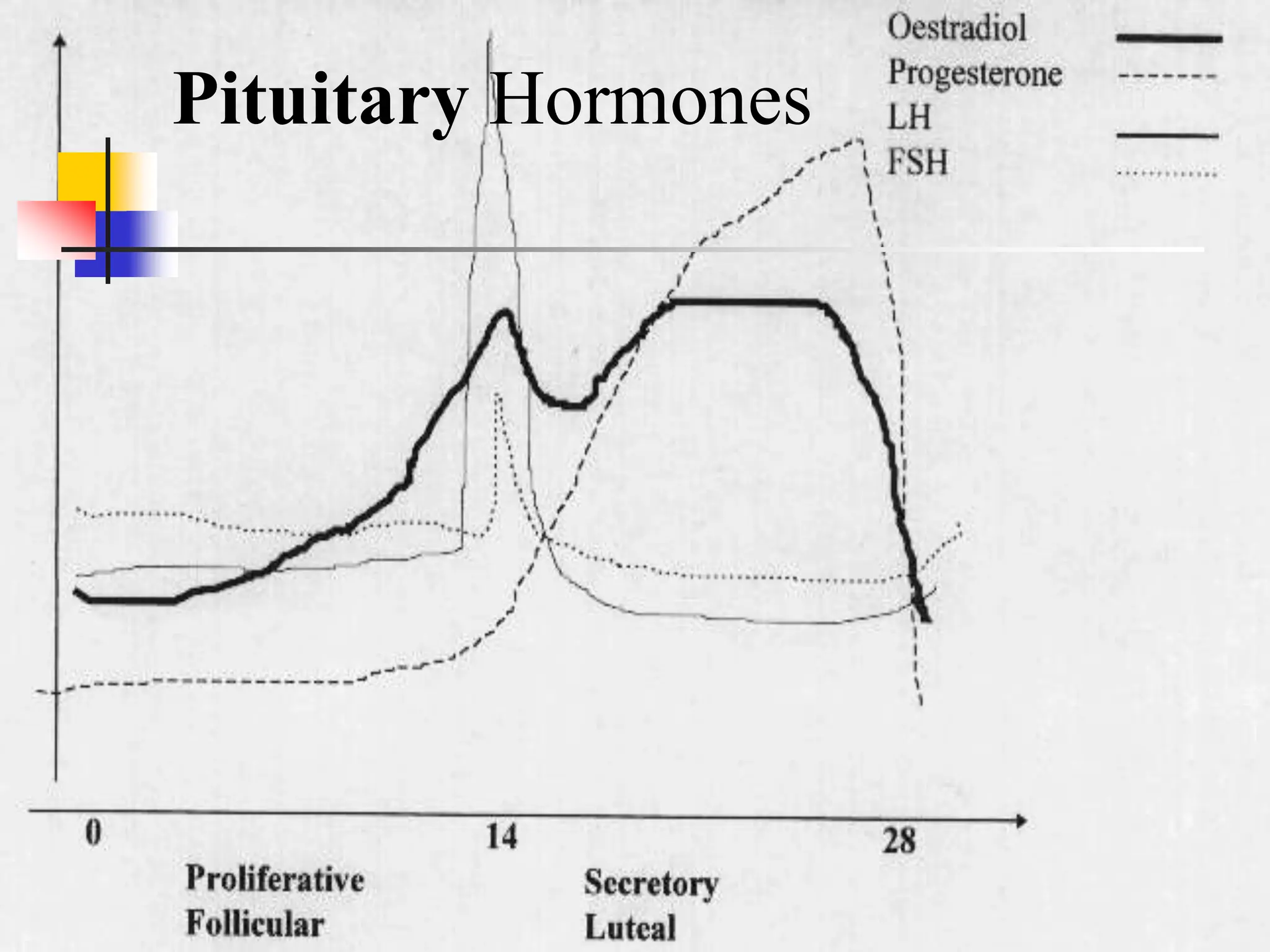
Changes in Pituitary
Hormones Days 1-14:
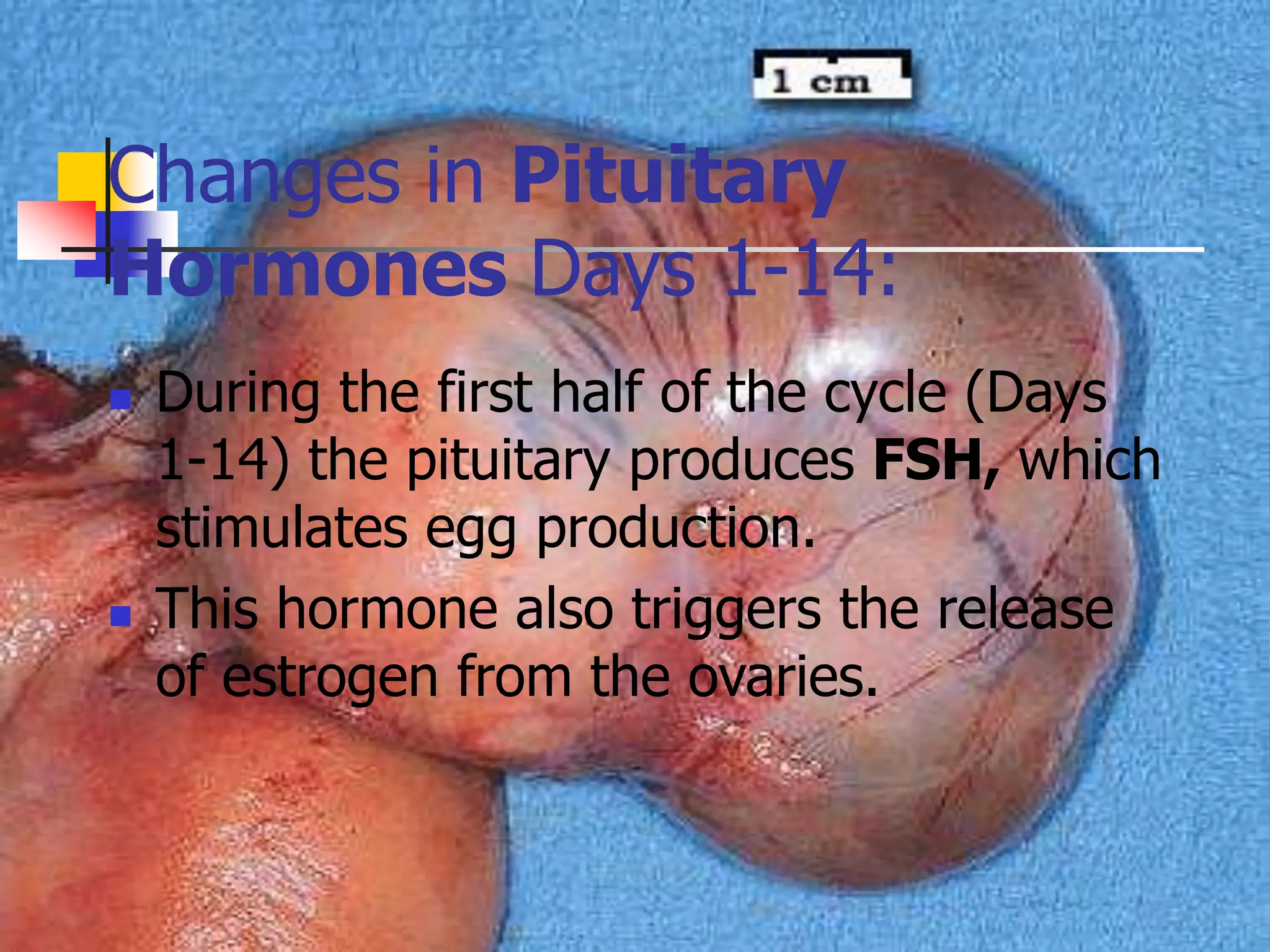
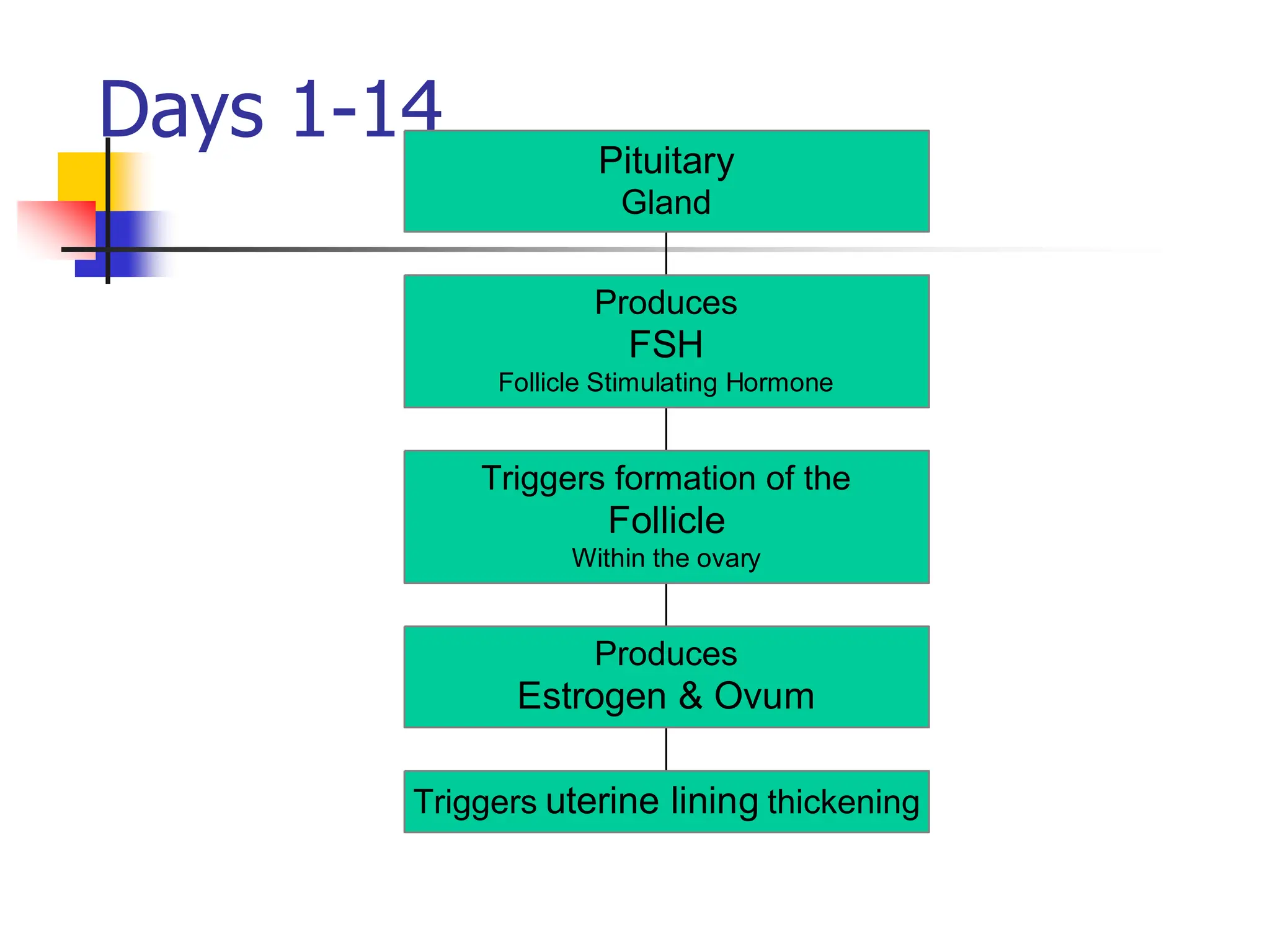
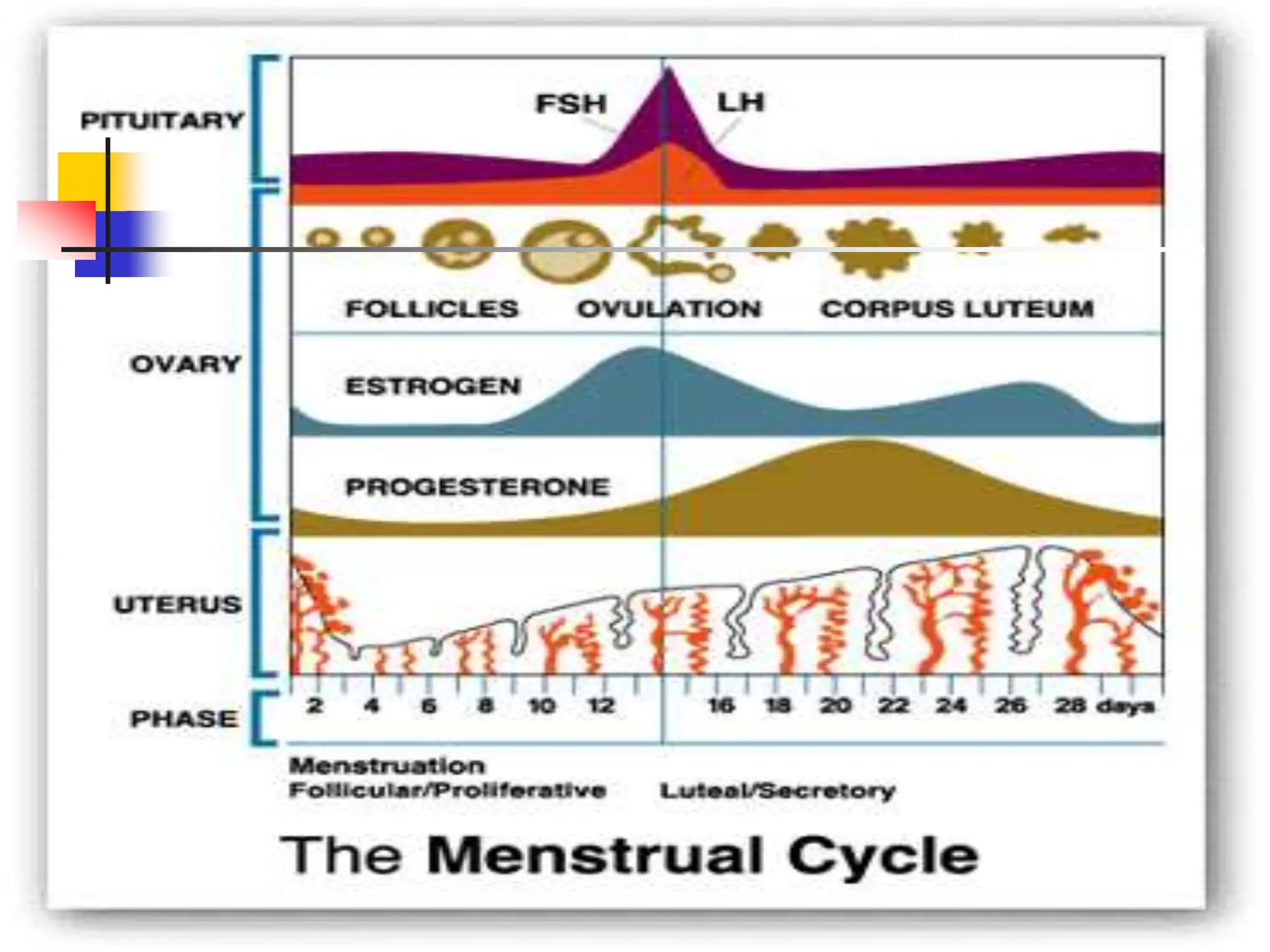
 During the first half of the cycle (Days
1-14) the pituitary produces FSH, which
stimulates egg production.
 This hormone also triggers the release
of estrogen from the ovaries.
Changes in Pituitary
Hormones Days 14-28:
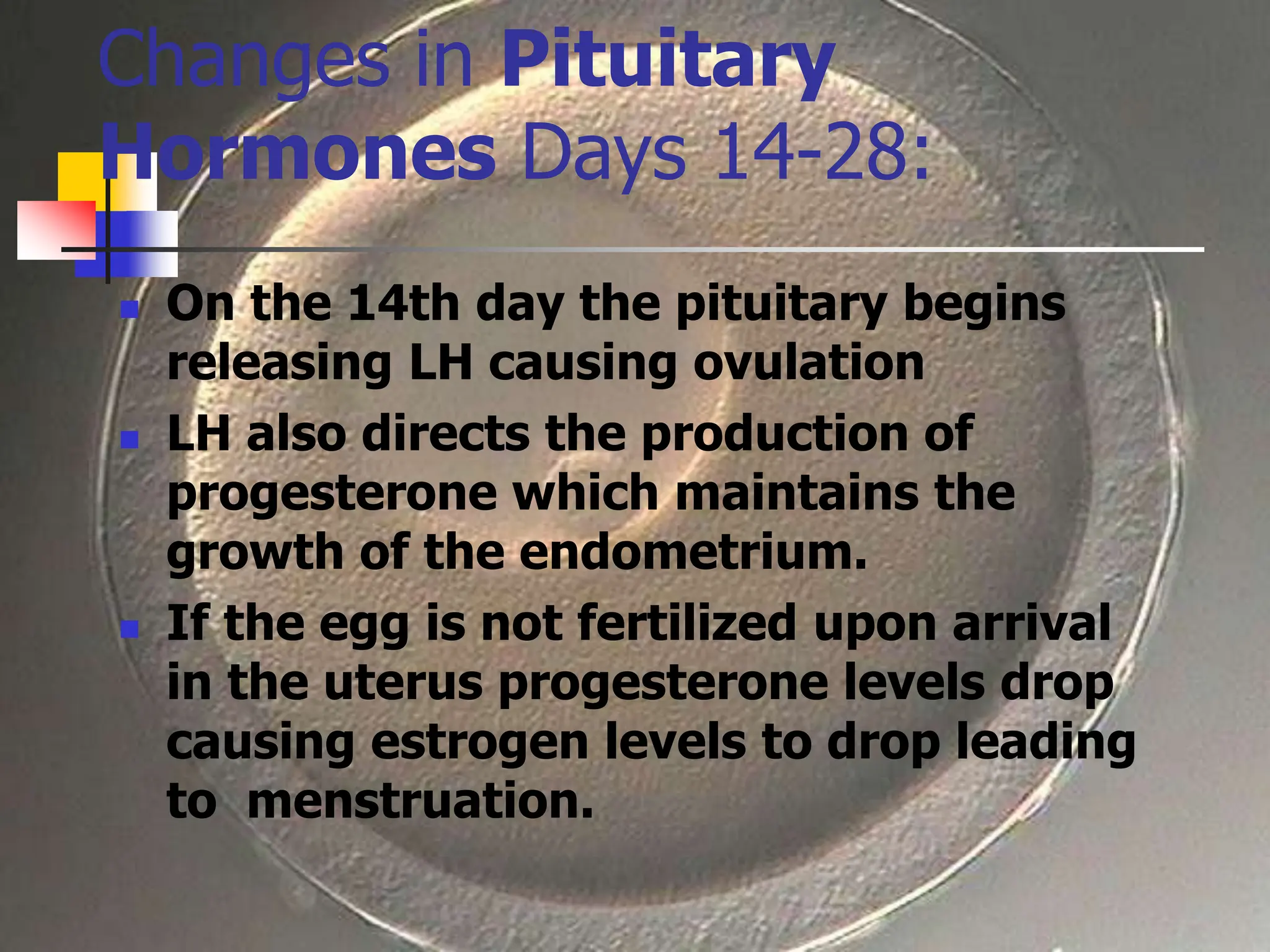
 On the 14th day the pituitary begins
releasing LH causing ovulation
 LH also directs the production of
progesterone which maintains the
growth of the endometrium.
 If the egg is not fertilized upon arrival
in the uterus progesterone levels drop
causing estrogen levels to drop leading
to menstruation.
Pituitary Hormones
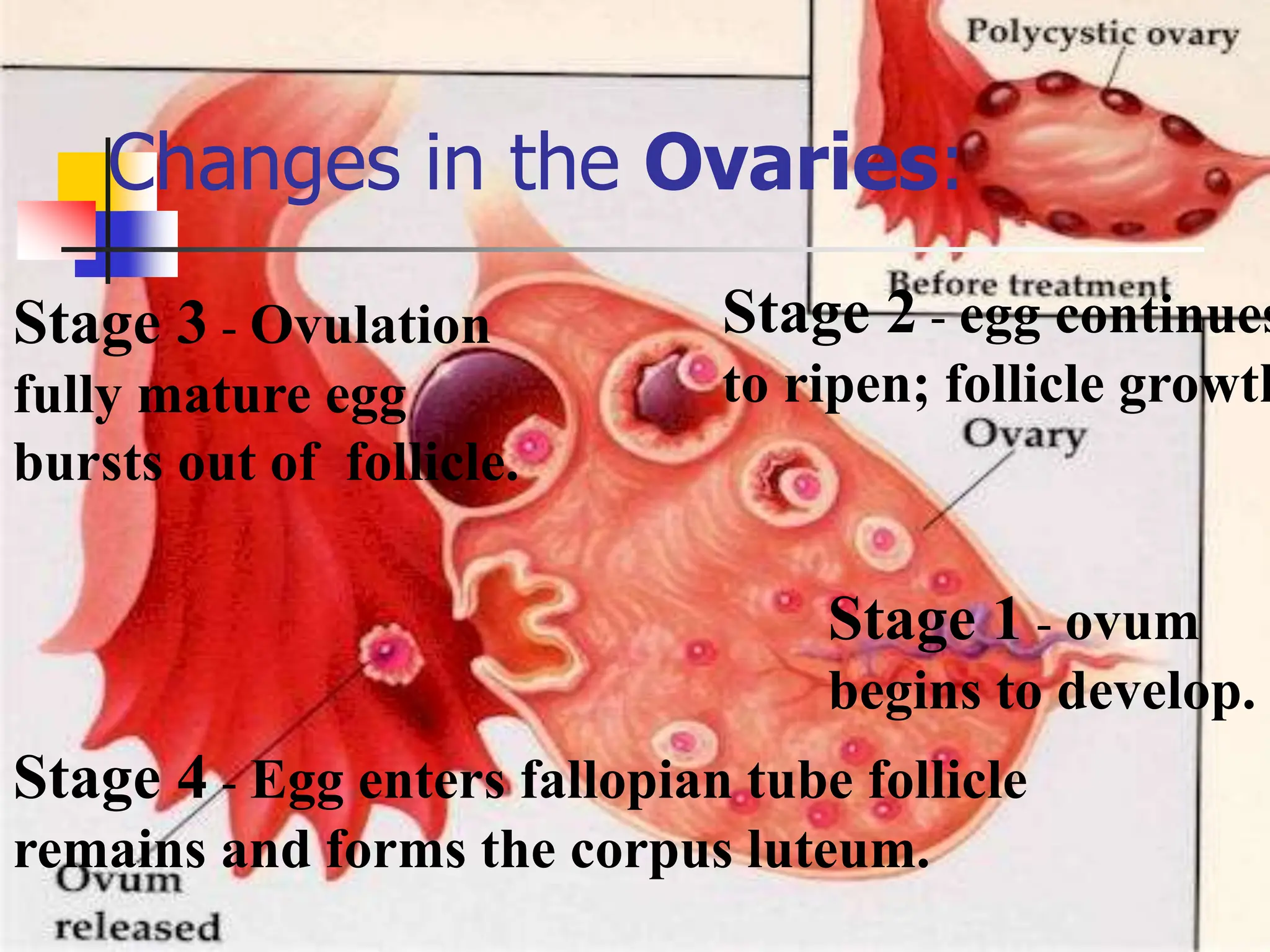
Changes in the Ovaries:
Stage 1 - ovum
begins to develop.
Stage 2 - egg continues
to ripen; follicle growth
Stage 3 - Ovulation
fully mature egg
bursts out of follicle.
Stage 4 - Egg enters fallopian tube follicle
remains and forms the corpus luteum.
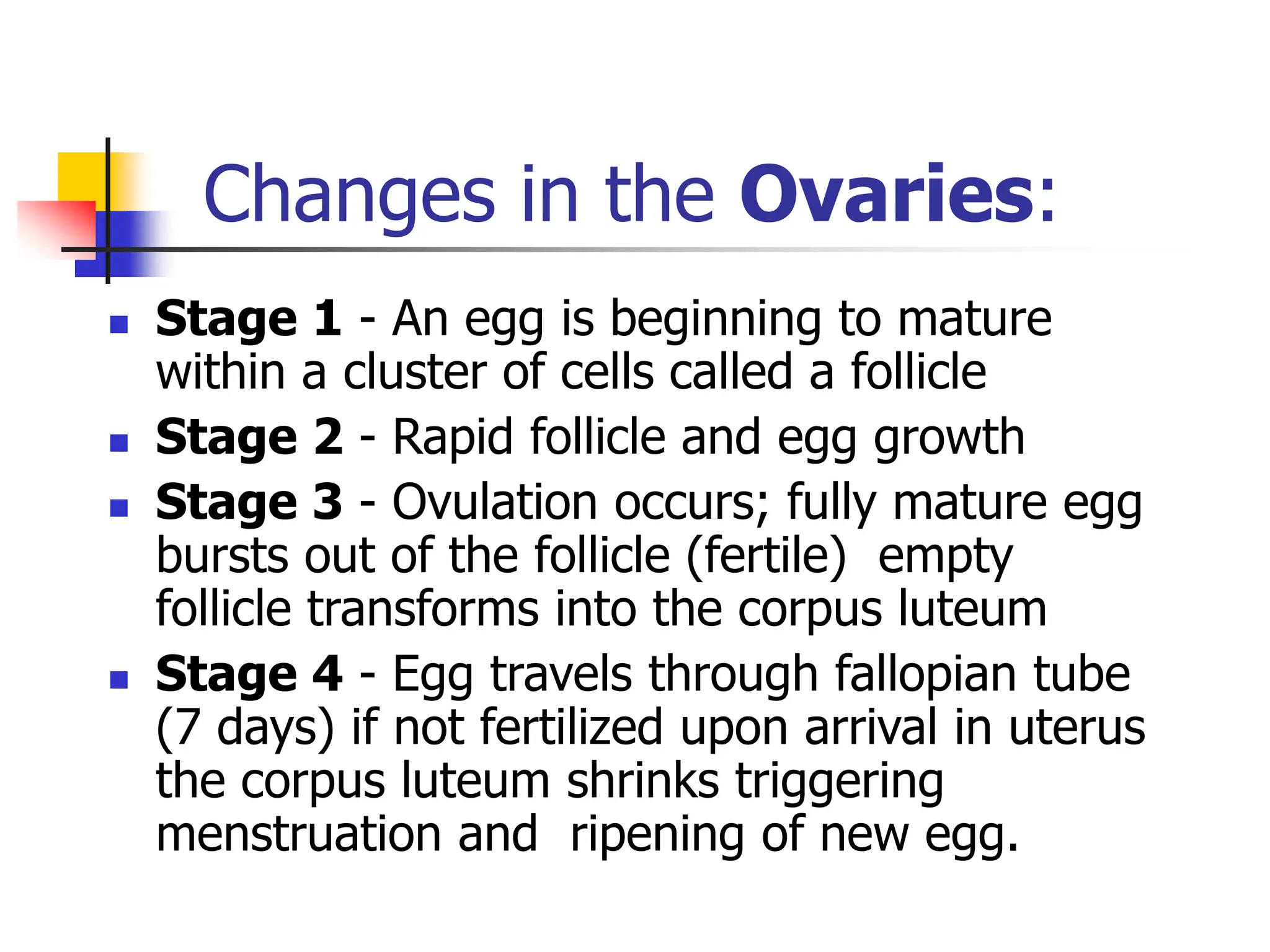
Changes in the Ovaries:
 Stage 1 - An egg is beginning to mature
within a cluster of cells called a follicle
 Stage 2 - Rapid follicle and egg growth
 Stage 3 - Ovulation occurs; fully mature egg
bursts out of the follicle (fertile) empty
follicle transforms into the corpus luteum
 Stage 4 - Egg travels through fallopian tube
(7 days) if not fertilized upon arrival in uterus
the corpus luteum shrinks triggering
menstruation and ripening of new egg.
Changes in Ovarian
Hormones:
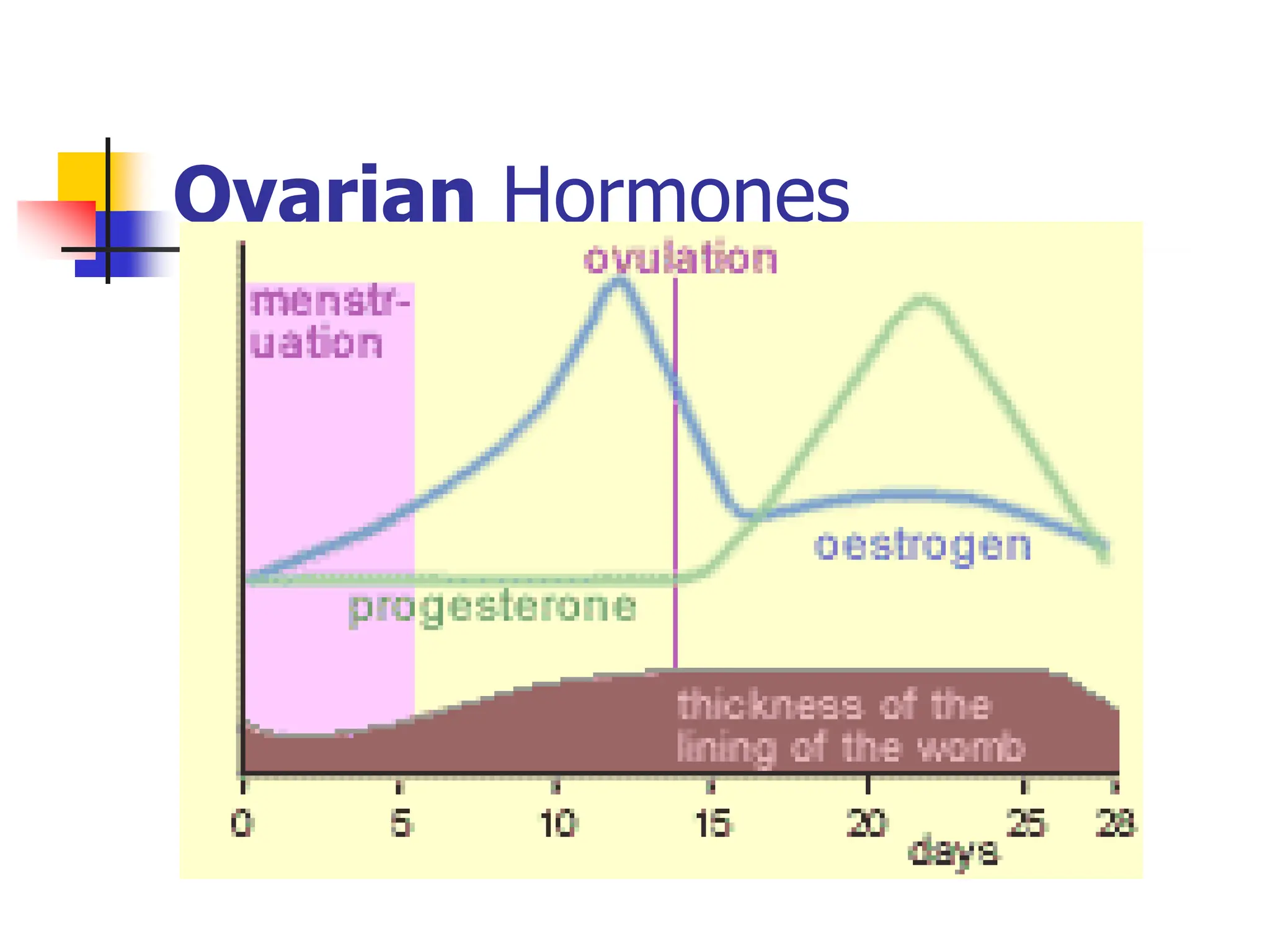
 Estrogen -gradually increases during days 1-
14; signals body to thicken the lining of the
uterus. Levels drop sharply after ovulation.
 Progesterone -Levels remain low during the
first half of the cycle and then increase
sharplyduring the second half of the cycle.
Maintaining the growth of the endometrium
lining.
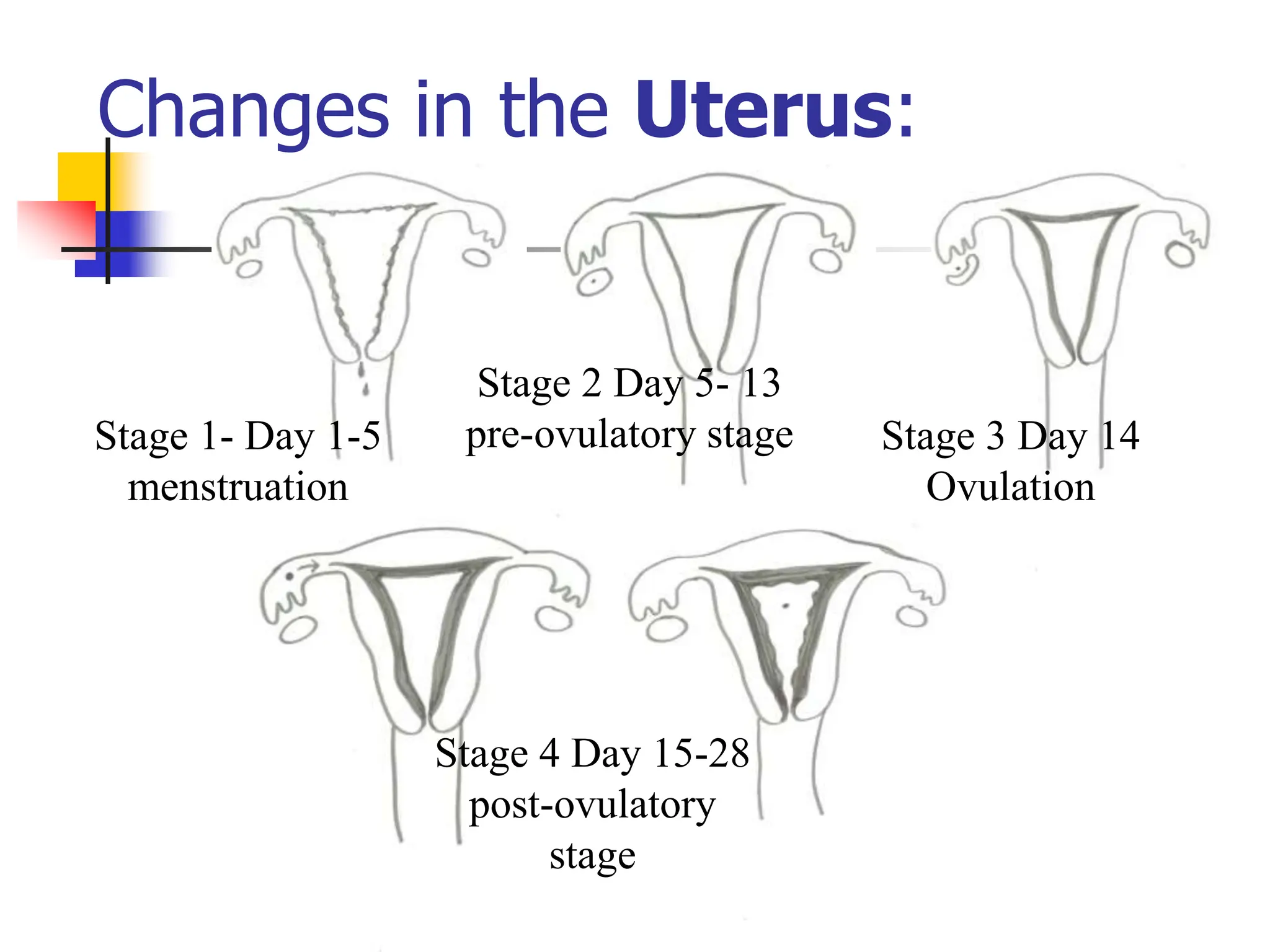
Changes in the Uterus:
Stage 1- Day 1-5
menstruation
Stage 2 Day 5- 13
pre-ovulatory stage Stage 3 Day 14
Ovulation
Stage 4 Day 15-28
post-ovulatory
stage
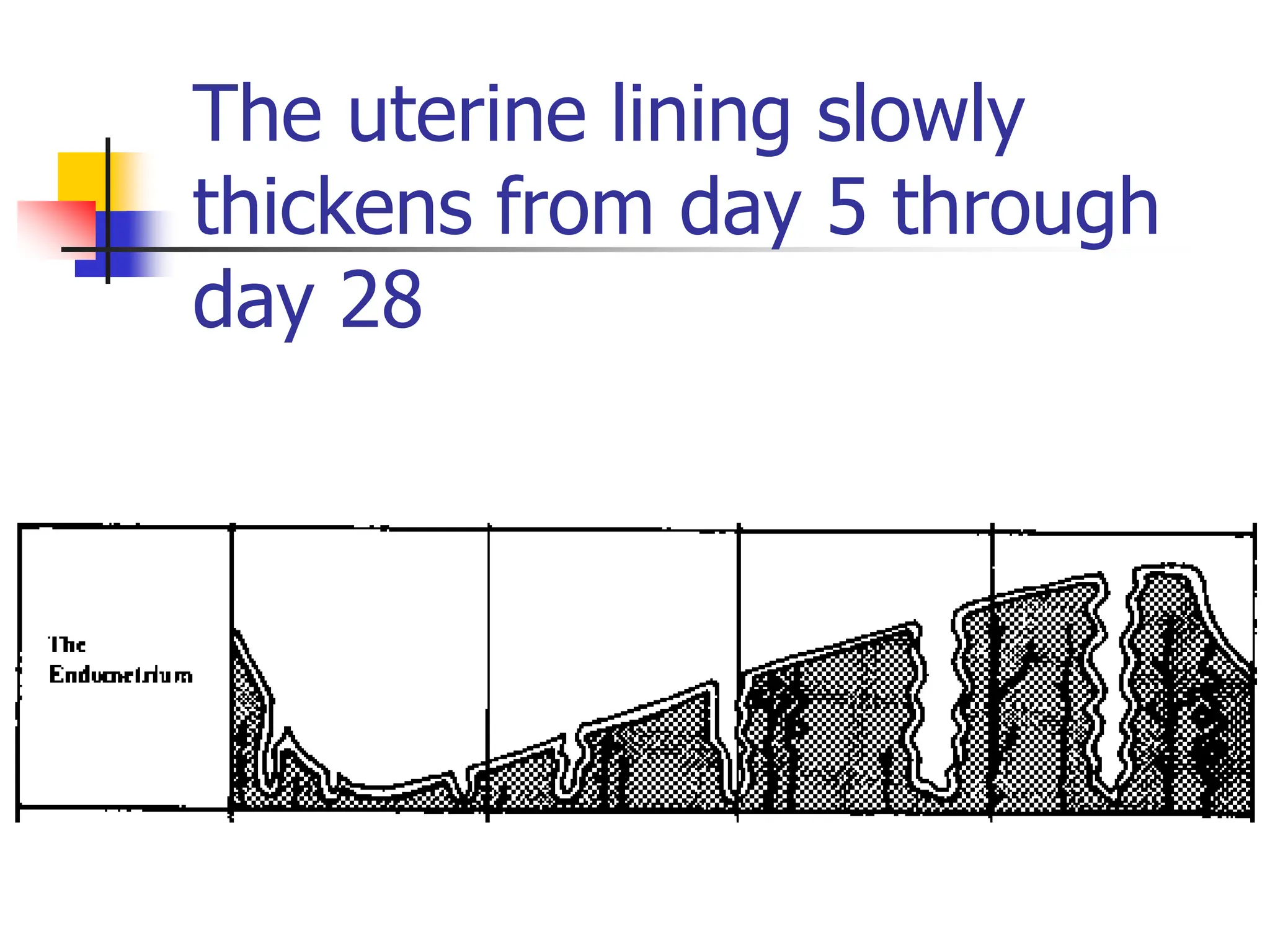
The uterine lining slowly
thickens from day 5 through
day 28
Changes in the Uterus:
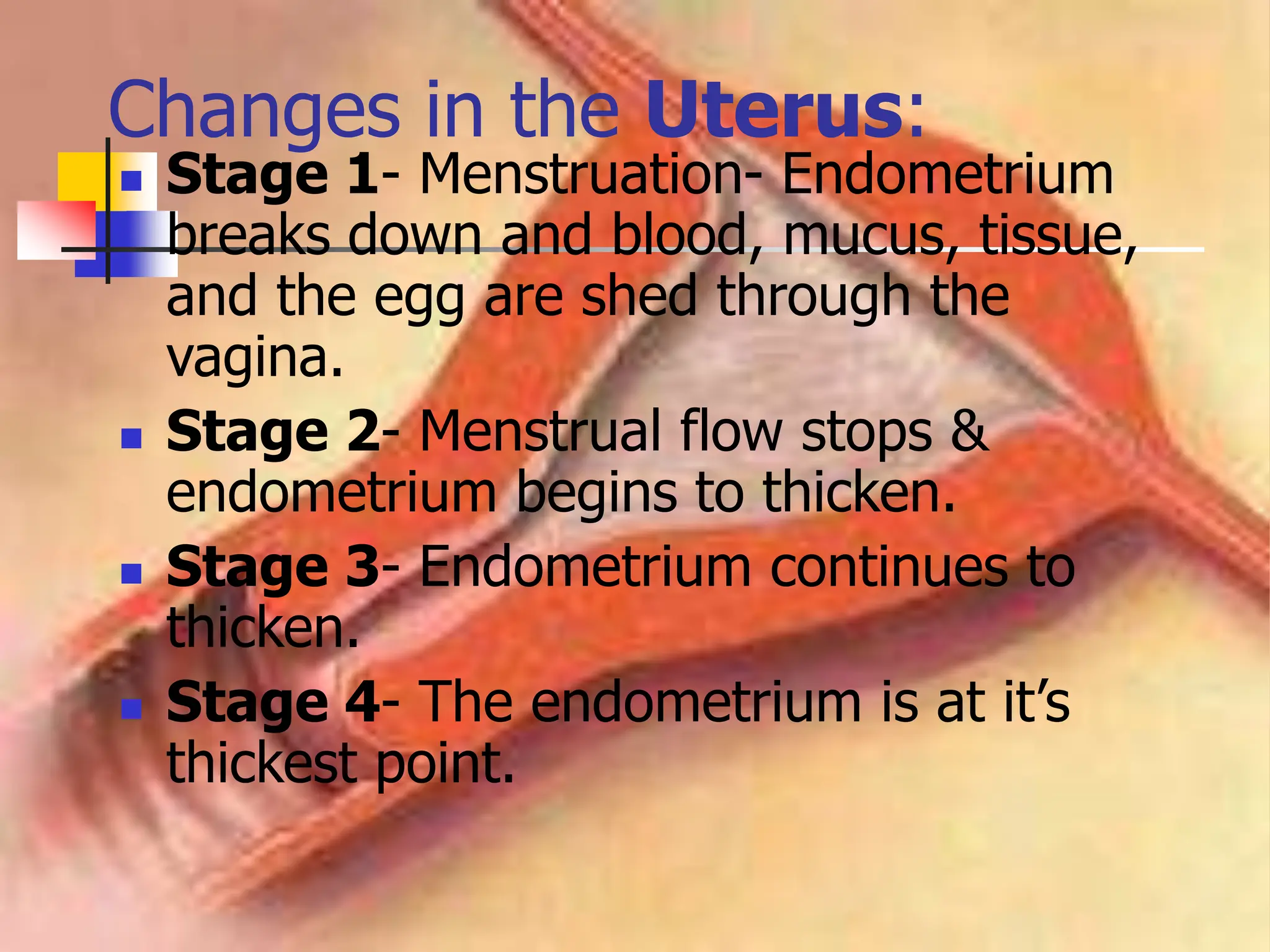
 Stage 1- Menstruation- Endometrium
breaks down and blood, mucus, tissue,
and the egg are shed through the
vagina.
 Stage 2- Menstrual flow stops &
endometrium begins to thicken.
 Stage 3- Endometrium continues to
thicken.
 Stage 4- The endometrium is at it’s
thickest point.
Ovarian Hormones
Days 1-14
Triggers uterine lining thickening
Produces
Estrogen & Ovum
Triggers formation of the
Follicle
Within the ovary
Produces
FSH
Follicle Stimulating Hormone
Pituitary
Gland
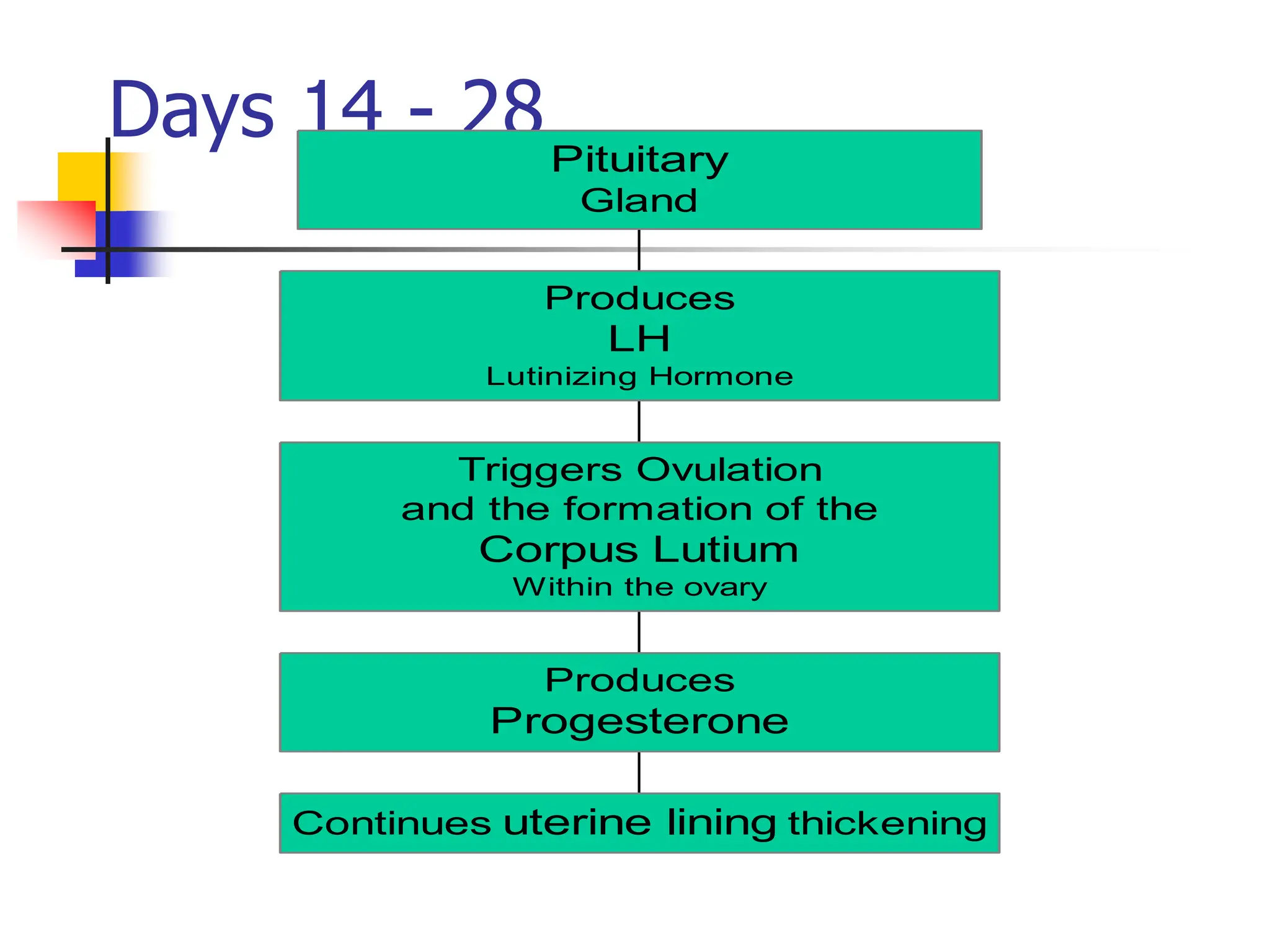
Days 14 - 28
Continues uterine lining thickening
Produces
Progesterone
Triggers Ovulation
and the formation of the
Corpus Lutium
Within the ovary
Produces
LH
Lutinizing Hormone
Pituitary
Gland
changes and phases of female reproductive cycle pptPPT.ppt

changes and phases of female reproductive cycle pptPPT.ppt

  • 1.
  • 2.
    What is themenstrual cycle?  The process in which females ripen or release one mature egg.  The average menstrual cycle will repeat itself about every 28 days, but normal menstrual cycles can range from 21 to 40 days.
  • 3.
    Changes in Pituitary HormonesDays 1-14:  During the first half of the cycle (Days 1-14) the pituitary produces FSH, which stimulates egg production.  This hormone also triggers the release of estrogen from the ovaries.
  • 4.
    Changes in Pituitary HormonesDays 14-28:  On the 14th day the pituitary begins releasing LH causing ovulation  LH also directs the production of progesterone which maintains the growth of the endometrium.  If the egg is not fertilized upon arrival in the uterus progesterone levels drop causing estrogen levels to drop leading to menstruation.
  • 5.
  • 6.
    Changes in theOvaries: Stage 1 - ovum begins to develop. Stage 2 - egg continues to ripen; follicle growth Stage 3 - Ovulation fully mature egg bursts out of follicle. Stage 4 - Egg enters fallopian tube follicle remains and forms the corpus luteum.
  • 7.
    Changes in theOvaries:  Stage 1 - An egg is beginning to mature within a cluster of cells called a follicle  Stage 2 - Rapid follicle and egg growth  Stage 3 - Ovulation occurs; fully mature egg bursts out of the follicle (fertile) empty follicle transforms into the corpus luteum  Stage 4 - Egg travels through fallopian tube (7 days) if not fertilized upon arrival in uterus the corpus luteum shrinks triggering menstruation and ripening of new egg.
  • 8.
    Changes in Ovarian Hormones: Estrogen -gradually increases during days 1- 14; signals body to thicken the lining of the uterus. Levels drop sharply after ovulation.  Progesterone -Levels remain low during the first half of the cycle and then increase sharplyduring the second half of the cycle. Maintaining the growth of the endometrium lining.
  • 9.
    Changes in theUterus: Stage 1- Day 1-5 menstruation Stage 2 Day 5- 13 pre-ovulatory stage Stage 3 Day 14 Ovulation Stage 4 Day 15-28 post-ovulatory stage
  • 10.
    The uterine liningslowly thickens from day 5 through day 28
  • 11.
    Changes in theUterus:  Stage 1- Menstruation- Endometrium breaks down and blood, mucus, tissue, and the egg are shed through the vagina.  Stage 2- Menstrual flow stops & endometrium begins to thicken.  Stage 3- Endometrium continues to thicken.  Stage 4- The endometrium is at it’s thickest point.
  • 12.
  • 13.
    Days 1-14 Triggers uterinelining thickening Produces Estrogen & Ovum Triggers formation of the Follicle Within the ovary Produces FSH Follicle Stimulating Hormone Pituitary Gland
  • 14.
    Days 14 -28 Continues uterine lining thickening Produces Progesterone Triggers Ovulation and the formation of the Corpus Lutium Within the ovary Produces LH Lutinizing Hormone Pituitary Gland