Mental Retardation
By
Mr. Ravi Rai Dangi
Assistant Professor
MSc. Child Health Nursing
Mentally challenged
 The term “mentally handicap” is now used for the
conduction “mental retardation”.
 At least 2 to 3 % of Indian population are mentally
handicapped in any form.
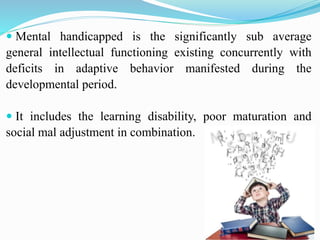
 Mental handicapped is the significantly sub average
general intellectual functioning existing concurrently with
deficits in adaptive behavior manifested during the
developmental period.
 It includes the learning disability, poor maturation and
social mal adjustment in combination.
Cause/Etiology of Handicap
Perinatal factors
 Birth asphyxia
 Prolonged and difficult birth
 Pre maturity
 Kernicterus
 Instrumental delivery resulting in head injury
Genetic factors
 Genetic mutation
 Genetic incompatibilities between parents
 Chromosomal disorders
Placental dysfunction
 Toxemia of pregnancy
 Placenta Previa
 Cord prolapse
 Nutritional growth retardation
Postnatal factors
 CNS Infections (encephalitis, meningitis,
septicemia, measles)
 Accidents
 Iodine deficiency
 Severe PEM
 Metabolic disorder
Environmental and social factors
 Poverty
 Broken family
 Faulty parenting
 Child abuse and neglecting
 Parental psychopathology
 Environmental deprivation
Classification
Mild mental retardation
Approximately 85% of the mentally retarded
population is in the mildly retarded category. Their IQ score
ranges from 51-70, and they can often acquire academic
skills up to about the sixth-grade level.
They can become fairly self-sufficient and in some
cases live independently, with community and social
support.
Moderate mental retardation
 About 10% of the mentally retarded population is
considered moderately retarded. Moderately retarded
persons have IQ scores ranging from 36-50. They can
carry out work and self-care tasks with moderate
supervision.
 They typically acquire communication skills in childhood
and are able to live and function successfully with in the
community in such supervised environments as group
homes
Severe mental retardation
 About 3-4% of the mentally retarded population is
severely retarded. Severely retarded persons have IQ
scores of 20-35.
 They may master very basic self-care skills and some
communication skills. Many severely retarded
individuals are able to live in a group home.
Profound mental retardation
 Only 1-2% of the mentally retarded population is
classified as profoundly retarded. Profoundly retarded
individuals have IQ score under 20.
 They may be able to develop basic self-care and
communication skills with appropriate support and
training.
 Their retardation is often caused by an accompanying
neurological disorder. Profoundly retarded people need a
high-level of structure and supervision.
CLINICAL SIGN AND SYMPTOMS
In infancy
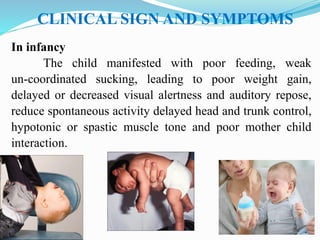
The child manifested with poor feeding, weak
un-coordinated sucking, leading to poor weight gain,
delayed or decreased visual alertness and auditory repose,
reduce spontaneous activity delayed head and trunk control,
hypotonic or spastic muscle tone and poor mother child
interaction.
In Toddler
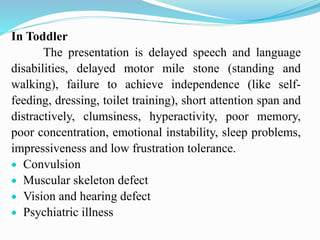
The presentation is delayed speech and language
disabilities, delayed motor mile stone (standing and
walking), failure to achieve independence (like self-
feeding, dressing, toilet training), short attention span and
distractively, clumsiness, hyperactivity, poor memory,
poor concentration, emotional instability, sleep problems,
impressiveness and low frustration tolerance.
 Convulsion
 Muscular skeleton defect
 Vision and hearing defect
 Psychiatric illness
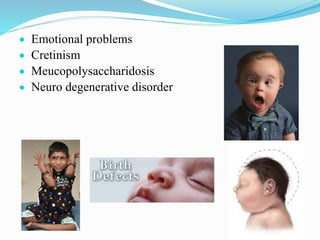
 Emotional problems
 Cretinism
 Meucopolysaccharidosis
 Neuro degenerative disorder
Diagnostic evaluation
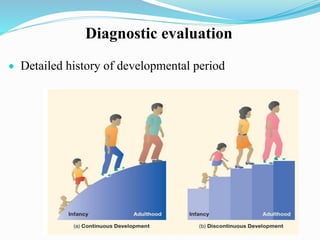
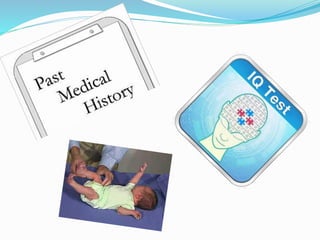
 Detailed history of developmental period
Family history
Any illness
history
Similar
history in
family
Consanguineous
marriage
Birth history
CIAB Type of
Delivery
Labour time
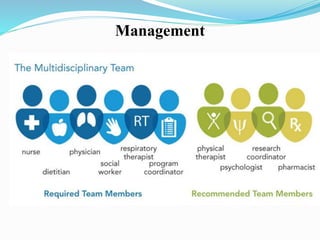
Management
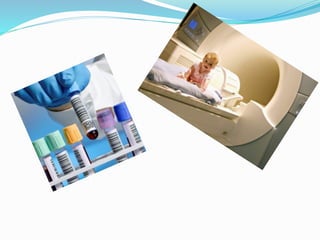
 Adequate diagnostic facilities to detect associated
problems and appropriate management of the specific
condition should be arranged.
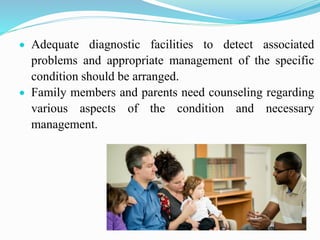
 Family members and parents need counseling regarding
various aspects of the condition and necessary
management.
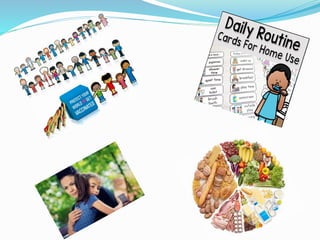
 Parents should be explained, informed and discussed
about the long term care at home situation according to
the child’s IQ level and associated problems
 Importance to be given on promotion of self-care ability
and independence of the child
 Necessary drug therapy should be discussed with
parents
 Psychological and emotional support needed for
parents and family members.
 The child needs love, affection, appreciation, discipline
and minimal criticism for tender loving care from
parents and family members.
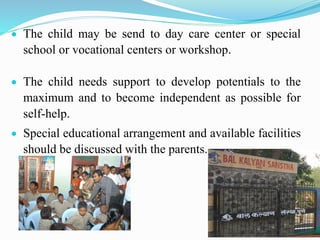
 The child may be send to day care center or special
school or vocational centers or workshop.
 The child needs support to develop potentials to the
maximum and to become independent as possible for
self-help.
 Special educational arrangement and available facilities
should be discussed with the parents.

Mental Retardation

  • 1.
    Mental Retardation By Mr. RaviRai Dangi Assistant Professor MSc. Child Health Nursing
  • 2.
    Mentally challenged  Theterm “mentally handicap” is now used for the conduction “mental retardation”.  At least 2 to 3 % of Indian population are mentally handicapped in any form.
  • 3.
     Mental handicappedis the significantly sub average general intellectual functioning existing concurrently with deficits in adaptive behavior manifested during the developmental period.  It includes the learning disability, poor maturation and social mal adjustment in combination.
  • 4.
    Cause/Etiology of Handicap Perinatalfactors  Birth asphyxia  Prolonged and difficult birth  Pre maturity  Kernicterus  Instrumental delivery resulting in head injury
  • 5.
    Genetic factors  Geneticmutation  Genetic incompatibilities between parents  Chromosomal disorders
  • 6.
    Placental dysfunction  Toxemiaof pregnancy  Placenta Previa  Cord prolapse  Nutritional growth retardation
  • 7.
    Postnatal factors  CNSInfections (encephalitis, meningitis, septicemia, measles)  Accidents  Iodine deficiency  Severe PEM  Metabolic disorder
  • 8.
    Environmental and socialfactors  Poverty  Broken family  Faulty parenting  Child abuse and neglecting  Parental psychopathology  Environmental deprivation
  • 9.
    Classification Mild mental retardation Approximately85% of the mentally retarded population is in the mildly retarded category. Their IQ score ranges from 51-70, and they can often acquire academic skills up to about the sixth-grade level. They can become fairly self-sufficient and in some cases live independently, with community and social support.
  • 10.
    Moderate mental retardation About 10% of the mentally retarded population is considered moderately retarded. Moderately retarded persons have IQ scores ranging from 36-50. They can carry out work and self-care tasks with moderate supervision.  They typically acquire communication skills in childhood and are able to live and function successfully with in the community in such supervised environments as group homes
  • 11.
    Severe mental retardation About 3-4% of the mentally retarded population is severely retarded. Severely retarded persons have IQ scores of 20-35.  They may master very basic self-care skills and some communication skills. Many severely retarded individuals are able to live in a group home.
  • 12.
    Profound mental retardation Only 1-2% of the mentally retarded population is classified as profoundly retarded. Profoundly retarded individuals have IQ score under 20.  They may be able to develop basic self-care and communication skills with appropriate support and training.  Their retardation is often caused by an accompanying neurological disorder. Profoundly retarded people need a high-level of structure and supervision.
  • 13.
    CLINICAL SIGN ANDSYMPTOMS In infancy The child manifested with poor feeding, weak un-coordinated sucking, leading to poor weight gain, delayed or decreased visual alertness and auditory repose, reduce spontaneous activity delayed head and trunk control, hypotonic or spastic muscle tone and poor mother child interaction.
  • 14.
    In Toddler The presentationis delayed speech and language disabilities, delayed motor mile stone (standing and walking), failure to achieve independence (like self- feeding, dressing, toilet training), short attention span and distractively, clumsiness, hyperactivity, poor memory, poor concentration, emotional instability, sleep problems, impressiveness and low frustration tolerance.  Convulsion  Muscular skeleton defect  Vision and hearing defect  Psychiatric illness
  • 15.
     Emotional problems Cretinism  Meucopolysaccharidosis  Neuro degenerative disorder
  • 16.
    Diagnostic evaluation  Detailedhistory of developmental period
  • 17.
    Family history Any illness history Similar historyin family Consanguineous marriage
  • 18.
    Birth history CIAB Typeof Delivery Labour time
  • 21.
  • 22.
     Adequate diagnosticfacilities to detect associated problems and appropriate management of the specific condition should be arranged.  Family members and parents need counseling regarding various aspects of the condition and necessary management.
  • 23.
     Parents shouldbe explained, informed and discussed about the long term care at home situation according to the child’s IQ level and associated problems  Importance to be given on promotion of self-care ability and independence of the child
  • 25.
     Necessary drugtherapy should be discussed with parents  Psychological and emotional support needed for parents and family members.  The child needs love, affection, appreciation, discipline and minimal criticism for tender loving care from parents and family members.
  • 26.
     The childmay be send to day care center or special school or vocational centers or workshop.  The child needs support to develop potentials to the maximum and to become independent as possible for self-help.  Special educational arrangement and available facilities should be discussed with the parents.