1. To introduce the topic
2. To define crisis
3. To describe the crisis proneness Characteristic
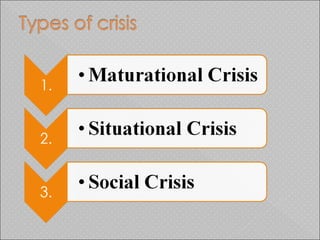
4. To enumerate about the types of crisis.
5. To explain the phases of crisis.
6. To enlist the sign and symptoms of crisis.
7. To discuss about the process of crisis intervention
8. To define the crisis intervention.
9. To elaborate about aims of crisis intervention
10. To enumerate the principle of crisis
intervention.
11. To enlist the technique of crisis intervention.
12. To describe the intervention of crisis
management.
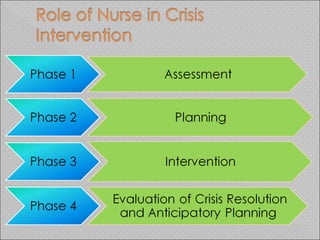
13. To explain about the role of nurses in crisis
intervention
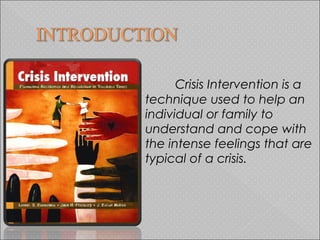
Crisis Intervention is a
technique used to help an
individual or family to
understand and cope with
the intense feelings that are
typical of a crisis.
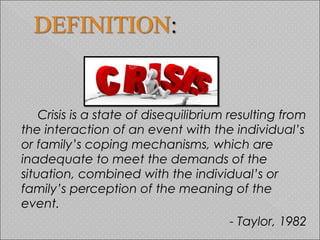
Crisis is a state of disequilibrium resulting from
the interaction of an event with the individual’s
or family’s coping mechanisms, which are
inadequate to meet the demands of the
situation, combined with the individual’s or
family’s perception of the meaning of the
event.
- Taylor, 1982
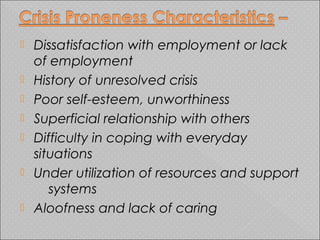
 Dissatisfaction with employment or lack
of employment
 History of unresolved crisis
 Poor self-esteem, unworthiness
 Superficial relationship with others
 Difficulty in coping with everyday
situations
 Under utilization of resources and support
systems
 Aloofness and lack of caring
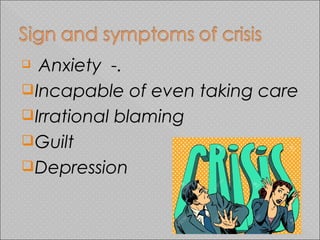
 Anxiety -.
Incapable of even taking care
Irrational blaming
Guilt
Depression
 Crisis Intervention is a technique
used to help an individual or family
to understand and cope with the
intense feelings that are typical of a
crisis.
 To provide a correct cognitive perception of the
situation.
 To assist the individual in managing the intense
and overwhelming feelings associated with the
crisis.
1. Be specific, use concise statements, and avoid
over whelming the patient with irrelevant
questions or excessive detail.
2. Encourage the expression of feelings.
3. A calm, controlled presence reassures the
person that the nurse can help.
4. Listen for facts and feelings: seeking clarification,
paraphrasing and reflection are effective strategies.
5. Allow sufficient time for the individuals involved to
process information and ask questions.
6. Help patients legitimize feelings by letting them know
that others in similar situations have experienced
comparable emotions.
7. Clarify distortions by getting persons to look at
the situation realistically.
8. Empower person by allowing them to make
informed choices.
9. Assist the person in confronting reality
7. Encourage the person to focus on one implication
at a time.
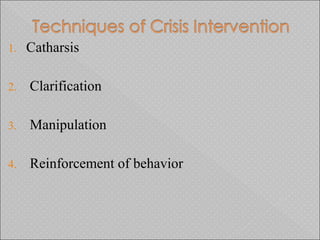
1. Catharsis
2. Clarification
3. Manipulation
4. Reinforcement of behavior
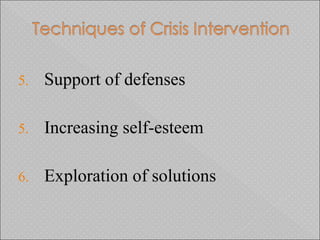
5. Support of defenses
5. Increasing self-esteem
6. Exploration of solutions
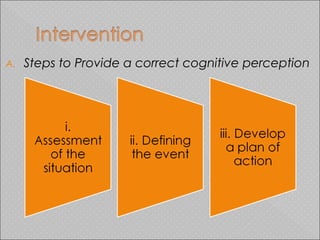
A. Steps to Provide a correct cognitive perception
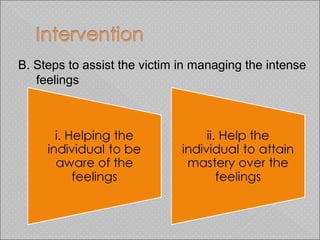
B. Steps to assist the victim in managing the intense
feelings
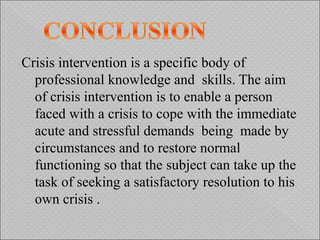
Crisis intervention is a specific body of
professional knowledge and skills. The aim
of crisis intervention is to enable a person
faced with a crisis to cope with the immediate
acute and stressful demands being made by
circumstances and to restore normal
functioning so that the subject can take up the
task of seeking a satisfactory resolution to his
own crisis .
 Read and write an assignment on
Techniques Of Crisis Intervention
in detailed and submit me sharp at
8 am on Monday .
 Mary C. Townsend,Psychiatric mental health nursing,
concepts of care in evidence based practise, 5th
edition, F.A.
Davis Company, pp. 237-251
 Gail W.Stuart,Michelle T.Lauria, Principles and practise of
psychiatric nursing,8th
edition,mosby publications,page
no.267-271
 Mohr.K.Wanda; Psychiatric Mental Health Nursing( Evidence
Based Concepts Skills And Practices), 7th
edition, Lippincott ,
Williams & Willies ,Wolters, Kulwer ;page no.752-758.
 R Sreevani, A Guide to Mental health and
psychiatric nursing, 3rd
edition,jaypee
publications, page no 267 - 270
 https://www.scribd.com/document/160498529/Cri
 https://www.scribd.com/document/65032498/
Crisis-Intervention
Crisis intervention

Crisis intervention

  • 4.
    1. To introducethe topic 2. To define crisis 3. To describe the crisis proneness Characteristic 4. To enumerate about the types of crisis. 5. To explain the phases of crisis. 6. To enlist the sign and symptoms of crisis. 7. To discuss about the process of crisis intervention 8. To define the crisis intervention. 9. To elaborate about aims of crisis intervention
  • 5.
    10. To enumeratethe principle of crisis intervention. 11. To enlist the technique of crisis intervention. 12. To describe the intervention of crisis management. 13. To explain about the role of nurses in crisis intervention
  • 6.
    Crisis Intervention isa technique used to help an individual or family to understand and cope with the intense feelings that are typical of a crisis.
  • 7.
    Crisis is astate of disequilibrium resulting from the interaction of an event with the individual’s or family’s coping mechanisms, which are inadequate to meet the demands of the situation, combined with the individual’s or family’s perception of the meaning of the event. - Taylor, 1982
  • 8.
     Dissatisfaction withemployment or lack of employment  History of unresolved crisis  Poor self-esteem, unworthiness  Superficial relationship with others  Difficulty in coping with everyday situations  Under utilization of resources and support systems  Aloofness and lack of caring
  • 11.
     Anxiety -. Incapableof even taking care Irrational blaming Guilt Depression
  • 14.
     Crisis Interventionis a technique used to help an individual or family to understand and cope with the intense feelings that are typical of a crisis.
  • 15.
     To providea correct cognitive perception of the situation.  To assist the individual in managing the intense and overwhelming feelings associated with the crisis.
  • 16.
    1. Be specific,use concise statements, and avoid over whelming the patient with irrelevant questions or excessive detail. 2. Encourage the expression of feelings. 3. A calm, controlled presence reassures the person that the nurse can help.
  • 17.
    4. Listen forfacts and feelings: seeking clarification, paraphrasing and reflection are effective strategies. 5. Allow sufficient time for the individuals involved to process information and ask questions. 6. Help patients legitimize feelings by letting them know that others in similar situations have experienced comparable emotions.
  • 18.
    7. Clarify distortionsby getting persons to look at the situation realistically. 8. Empower person by allowing them to make informed choices. 9. Assist the person in confronting reality 7. Encourage the person to focus on one implication at a time.
  • 19.
    1. Catharsis 2. Clarification 3.Manipulation 4. Reinforcement of behavior
  • 20.
    5. Support ofdefenses 5. Increasing self-esteem 6. Exploration of solutions
  • 22.
    A. Steps toProvide a correct cognitive perception
  • 23.
    B. Steps toassist the victim in managing the intense feelings
  • 26.
    Crisis intervention isa specific body of professional knowledge and skills. The aim of crisis intervention is to enable a person faced with a crisis to cope with the immediate acute and stressful demands being made by circumstances and to restore normal functioning so that the subject can take up the task of seeking a satisfactory resolution to his own crisis .
  • 28.
     Read andwrite an assignment on Techniques Of Crisis Intervention in detailed and submit me sharp at 8 am on Monday .
  • 29.
     Mary C.Townsend,Psychiatric mental health nursing, concepts of care in evidence based practise, 5th edition, F.A. Davis Company, pp. 237-251  Gail W.Stuart,Michelle T.Lauria, Principles and practise of psychiatric nursing,8th edition,mosby publications,page no.267-271  Mohr.K.Wanda; Psychiatric Mental Health Nursing( Evidence Based Concepts Skills And Practices), 7th edition, Lippincott , Williams & Willies ,Wolters, Kulwer ;page no.752-758.
  • 30.
     R Sreevani,A Guide to Mental health and psychiatric nursing, 3rd edition,jaypee publications, page no 267 - 270  https://www.scribd.com/document/160498529/Cri  https://www.scribd.com/document/65032498/ Crisis-Intervention