-MENTALLY-CHALLENGED-CHILD.power point presentations
1.
Content Outline:
Introductionof Challenges
Concept of Challenges
Definition of Mentally Challenged Child (MR)
Incidence
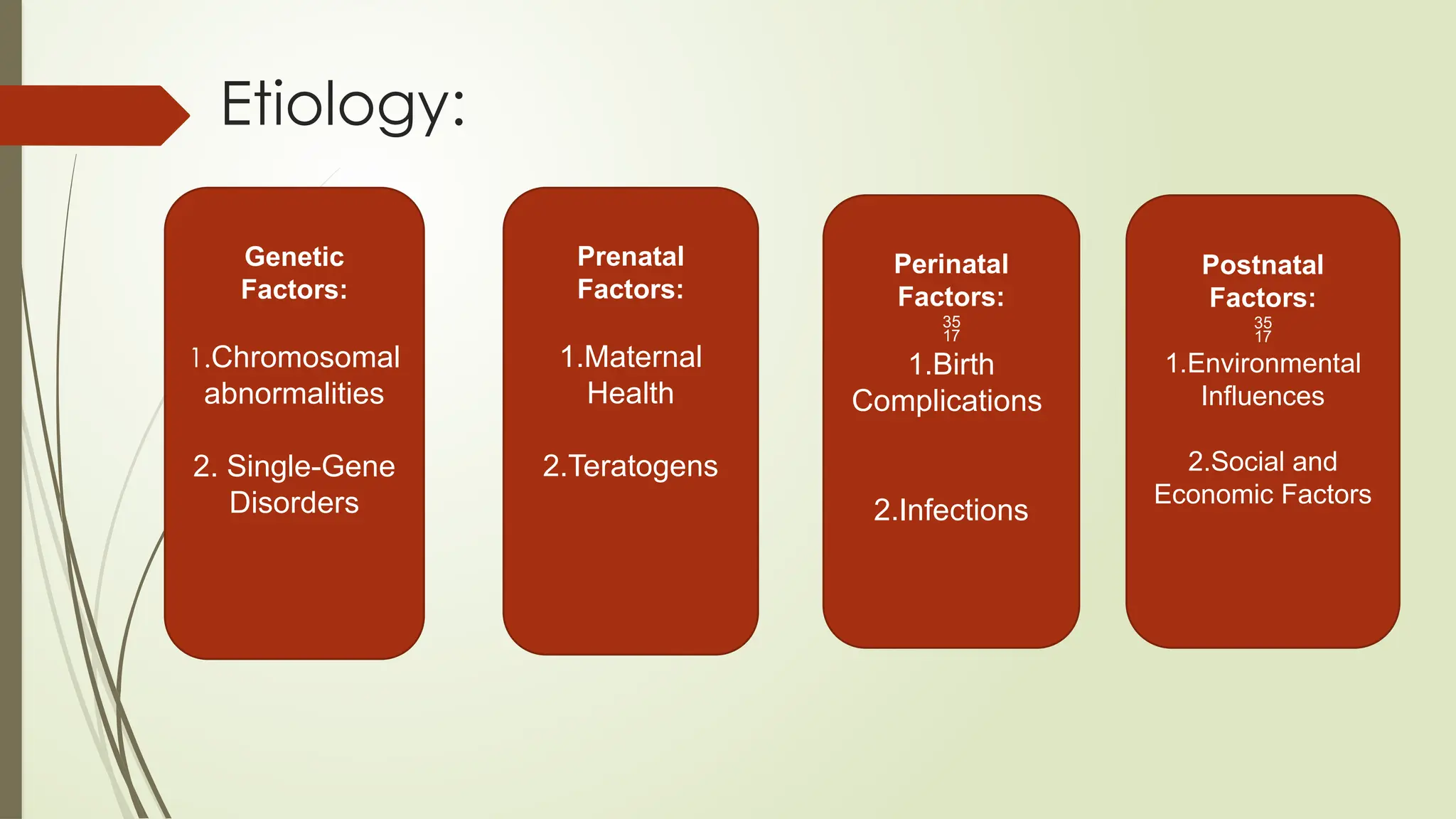
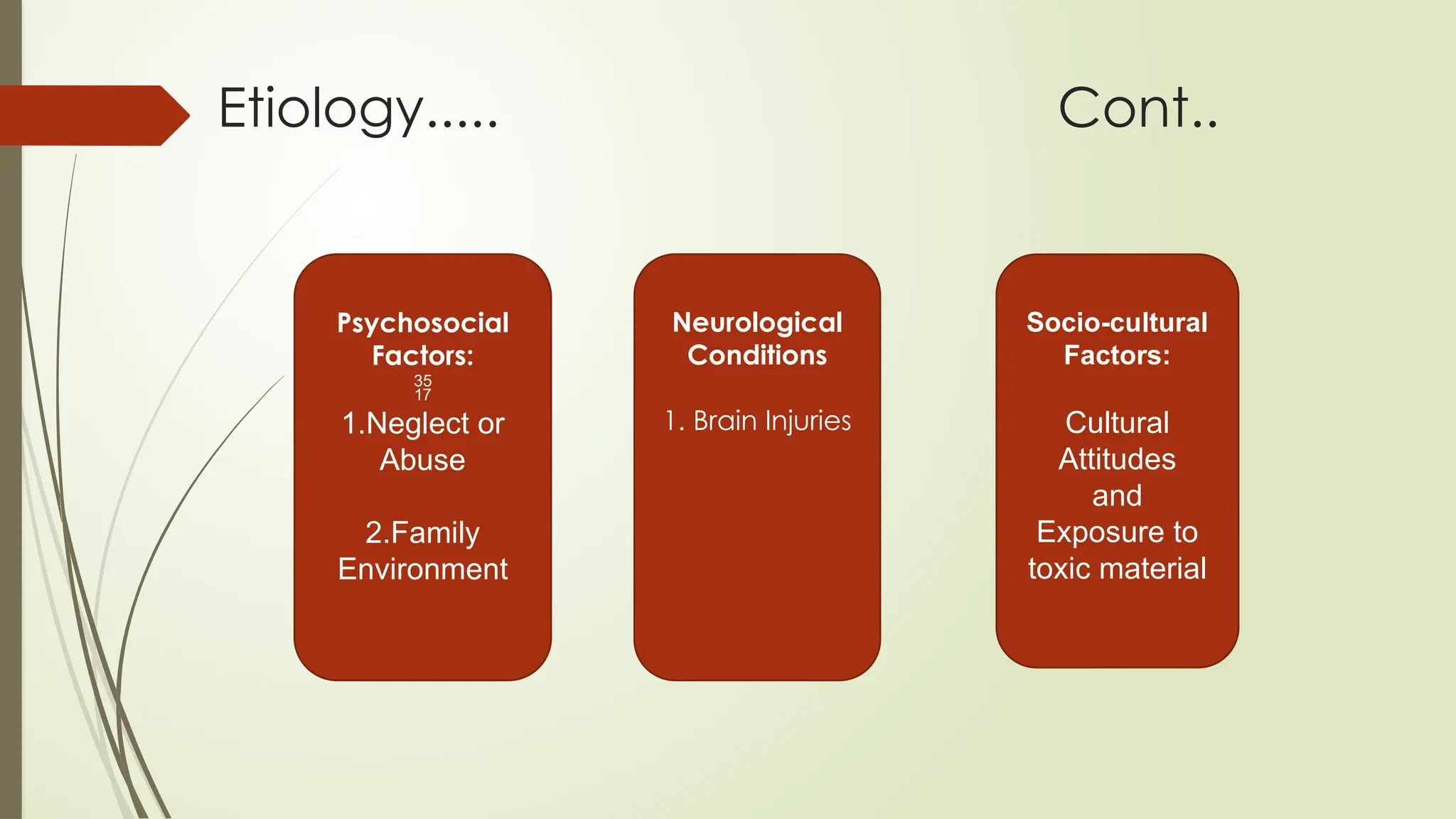
Etiology
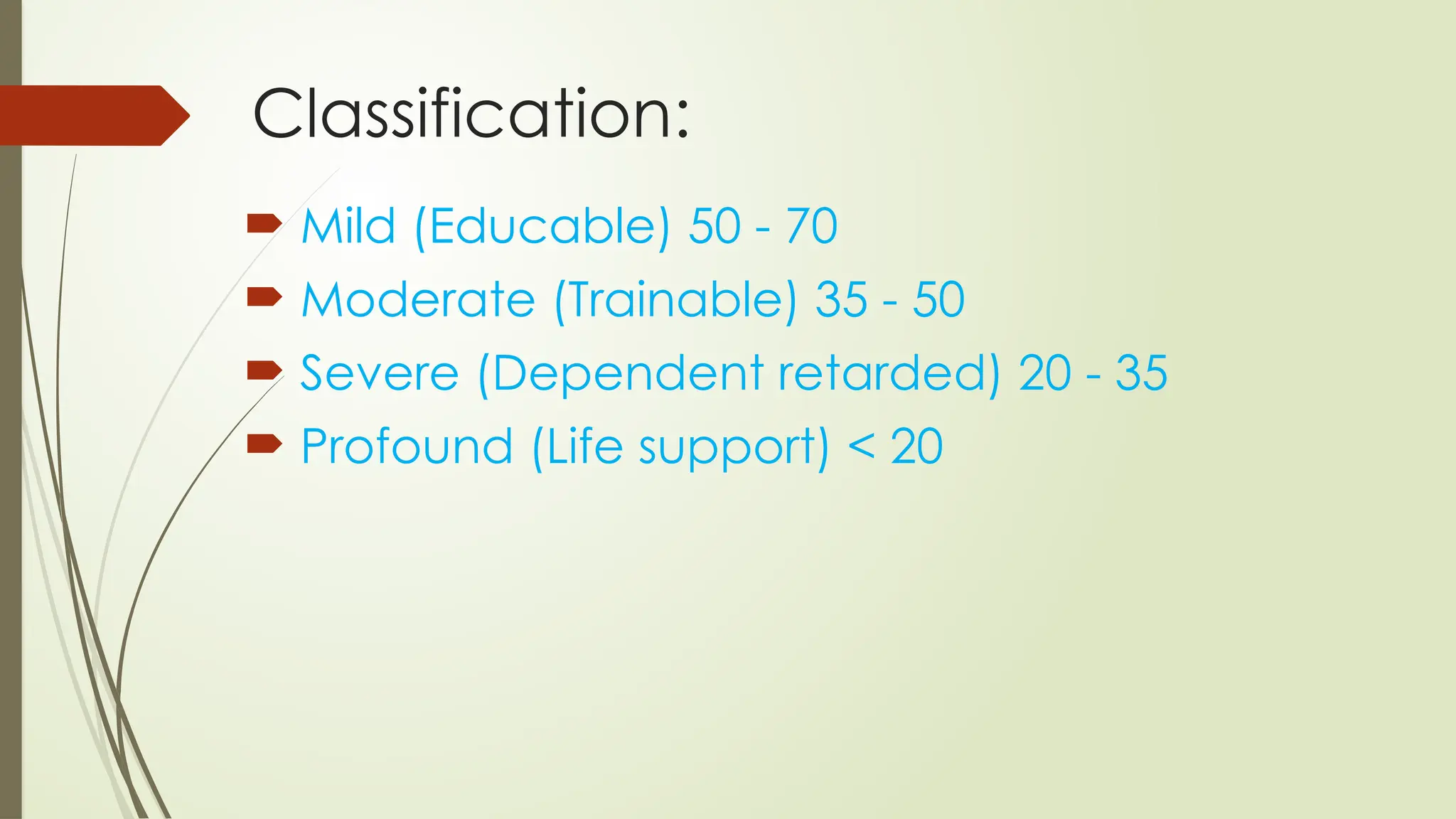
Classification
Early Behavioural Sign of MR
Diagnosis
Managment of MR
Prevention of MR
Parent Councelling
Care and Rehabilitation
Institue Working for Children in India
Prognosis
Conclusion
2.
Introduction....
Challenged children isone who deviated from
normal health status either physically, mentally
or socially and requires special care, treatment
and education.
3.
Concept of challenged:
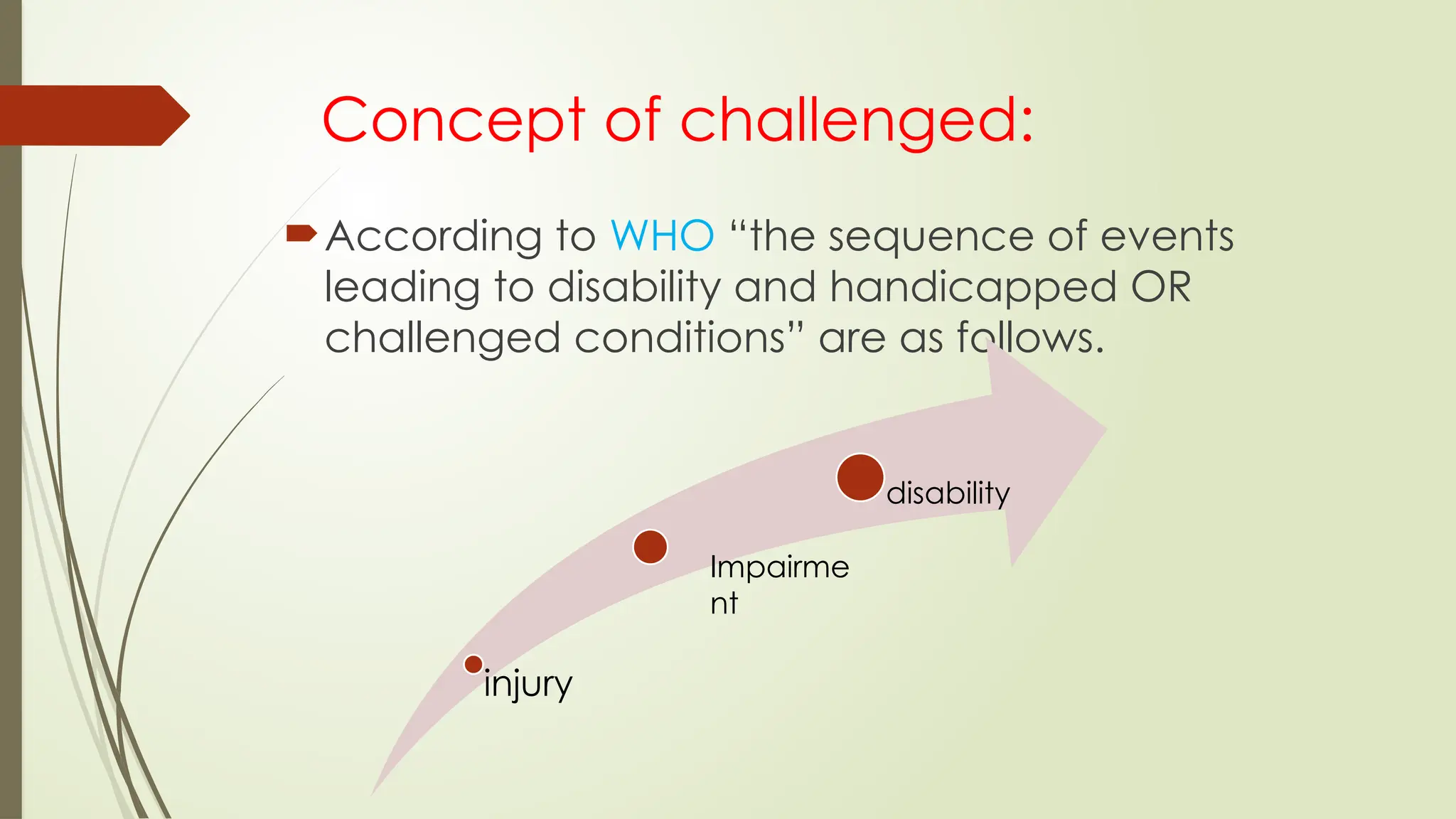
Accordingto WHO “the sequence of events
leading to disability and handicapped OR
challenged conditions” are as follows.
injury
Impairme
nt
disability
4.
Impairment:
It isdefines as any loss or abnormality of psychological, physiological
or anatomical structure or function, e.g. Loss of vision, loss of
hearing,etc
Disability:
It develops as the consequence of impairment. E.g. Loss of limbs
results in inability to walk. Disability is the inability to carry out certain
activities which are considered as normal for the age and sex.
5.
Handicaped OR Challenged:
Handicap is defined as a disadvantage for a given individual resulting
from an impairment or disability, that limits and prevents the fulfillment of
a role which is normal for that individual, depending, on age, sex, social
and cultural factors. primary handicap may lead to secondary handicap
condition e.g. Blindness leads to economical handicapped situation.
Mentally challenged is now used for the condition mental retardation.
Cognitive impairment is also used as synonym for mentally challenged or
mental retardation.
6.
Mentally Challenged:
Intellectualdisability (ID), also called intellectual development
disorder (IDD) and formerly known as mental retardation (MR)
Mental retardation (MR) is a developmental disability that first appears
in children under the age of 18.
It is characterized as a level of intellectual functioning (as measured by
standard intelligence tests ) that is well below average and results in
significant limitations in the person's daily living skills (adaptive
functioning).
7.
Mental Retardation:
Mentalretardation refers to significantly sub average general
intellectual functioning (BELOW 70) resulting in or associated
with concurrent impairments in adaptive behavior and
manifested during the developmental period.
- American association on mental deficiency,1983.
8.
Incidence:
3% ofthe world population is estimated to be mentally retarded.
In India 5 out of 1000 children are mentally retarded (Indian
express13th march 2011). More than 20 million children are
suffering with MR
Mental retardation is more common in boys than girls.
Mortality is high in severe or profound mental retardation due to
associated physical condition.
Common in the age group of 2-3 years.
Peak in 10–12 years of age.
At least 2 - 3 % of Indian population are mentally handicapped in
any one form.
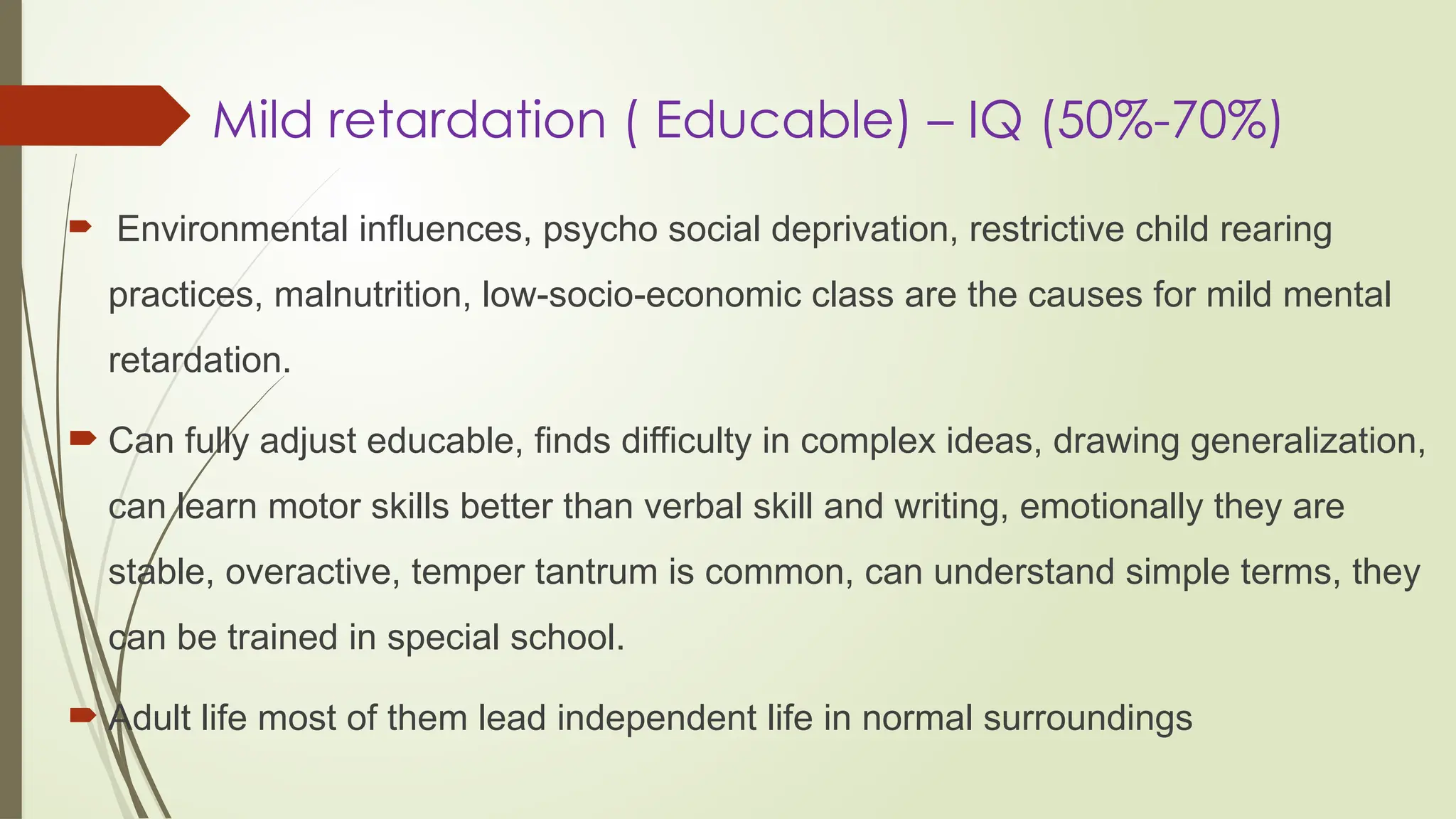
Mild retardation (Educable) – IQ (50%-70%)
Environmental influences, psycho social deprivation, restrictive child rearing
practices, malnutrition, low-socio-economic class are the causes for mild mental
retardation.
Can fully adjust educable, finds difficulty in complex ideas, drawing generalization,
can learn motor skills better than verbal skill and writing, emotionally they are
stable, overactive, temper tantrum is common, can understand simple terms, they
can be trained in special school.
Adult life most of them lead independent life in normal surroundings
13.
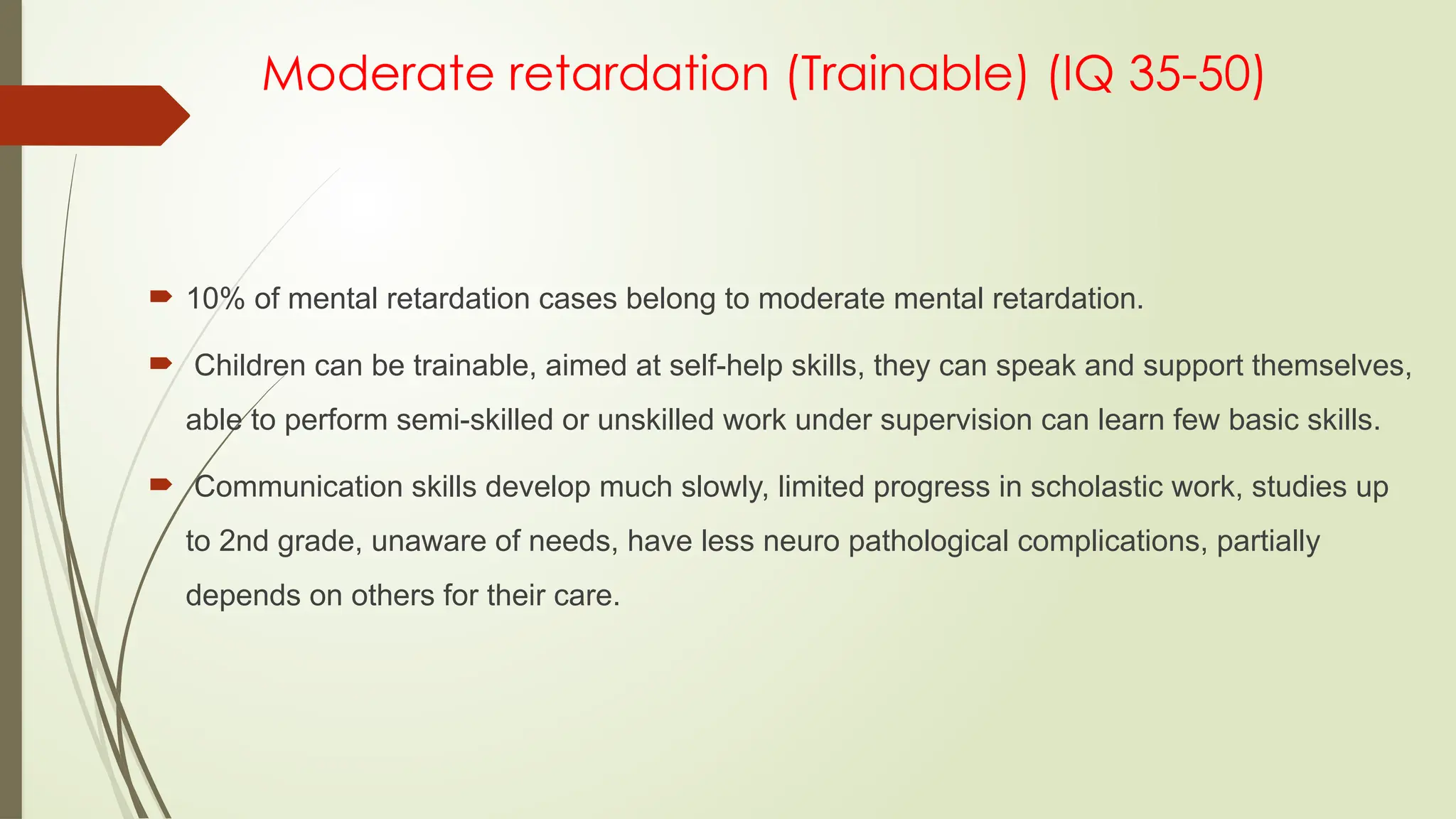
Moderate retardation (Trainable)(IQ 35-50)
10% of mental retardation cases belong to moderate mental retardation.
Children can be trainable, aimed at self-help skills, they can speak and support themselves,
able to perform semi-skilled or unskilled work under supervision can learn few basic skills.
Communication skills develop much slowly, limited progress in scholastic work, studies up
to 2nd grade, unaware of needs, have less neuro pathological complications, partially
depends on others for their care.
14.
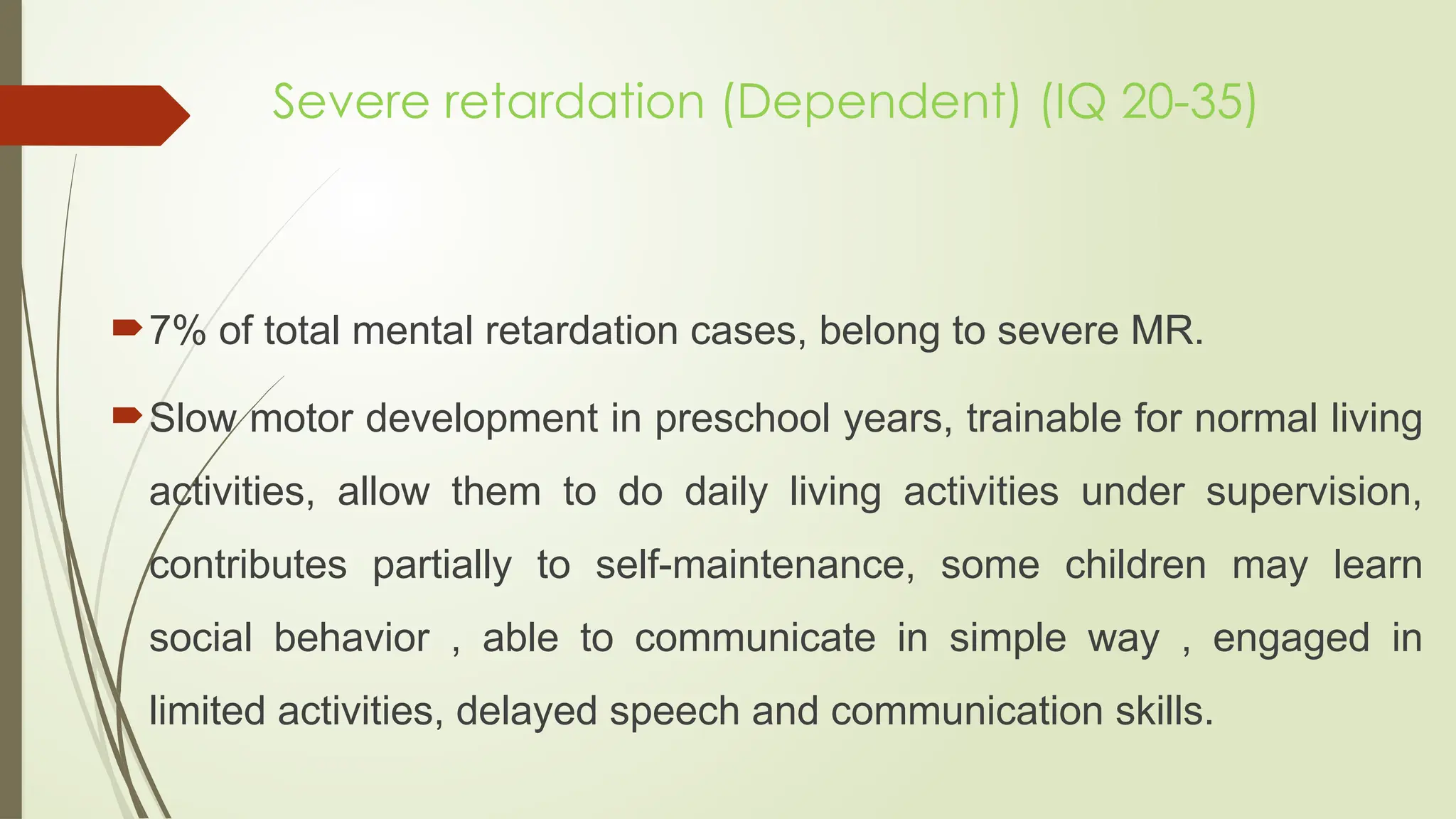
Severe retardation (Dependent)(IQ 20-35)
7% of total mental retardation cases, belong to severe MR.
Slow motor development in preschool years, trainable for normal living
activities, allow them to do daily living activities under supervision,
contributes partially to self-maintenance, some children may learn
social behavior , able to communicate in simple way , engaged in
limited activities, delayed speech and communication skills.
15.
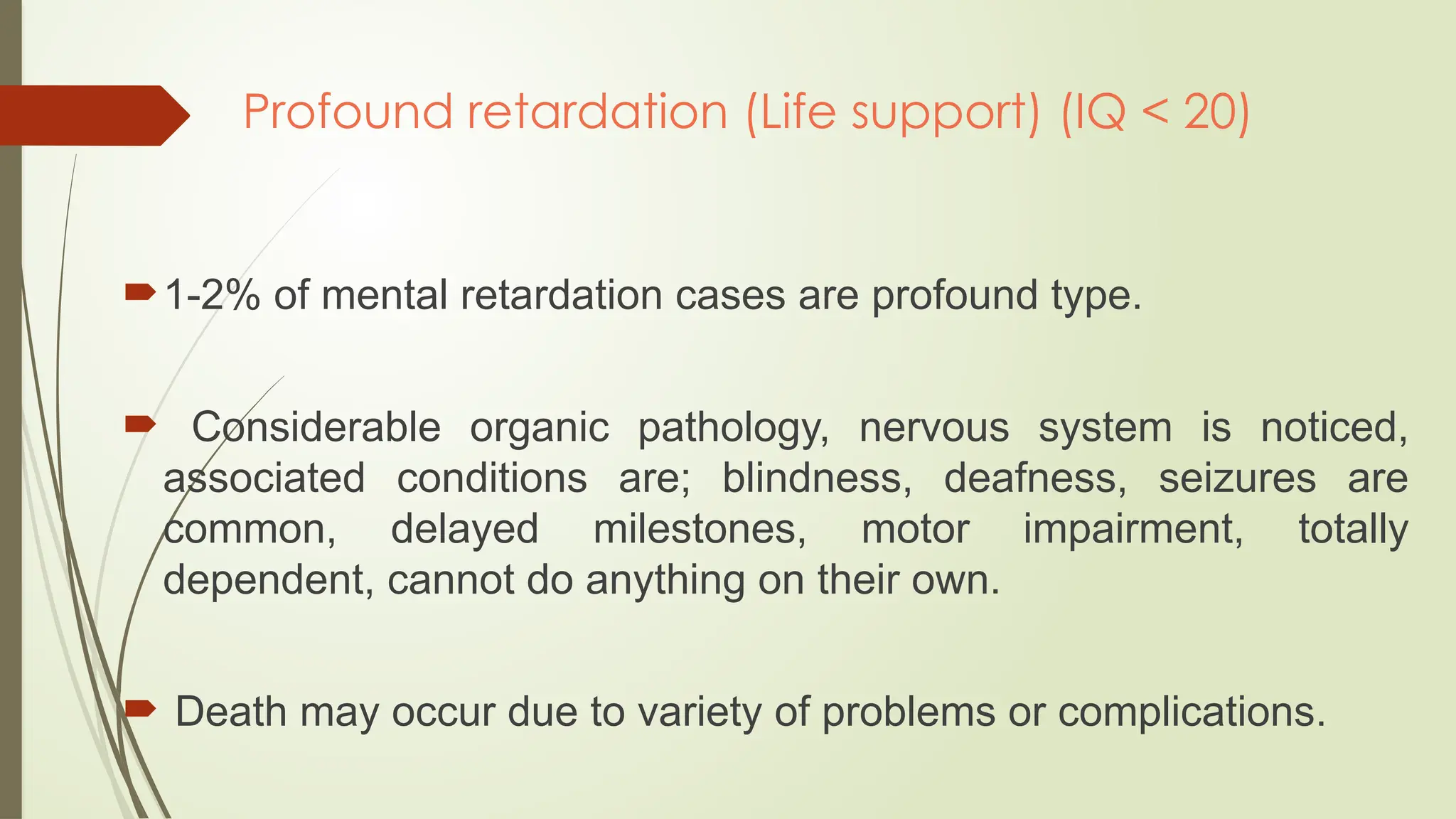
Profound retardation (Lifesupport) (IQ < 20)
1-2% of mental retardation cases are profound type.
Considerable organic pathology, nervous system is noticed,
associated conditions are; blindness, deafness, seizures are
common, delayed milestones, motor impairment, totally
dependent, cannot do anything on their own.
Death may occur due to variety of problems or complications.
16.
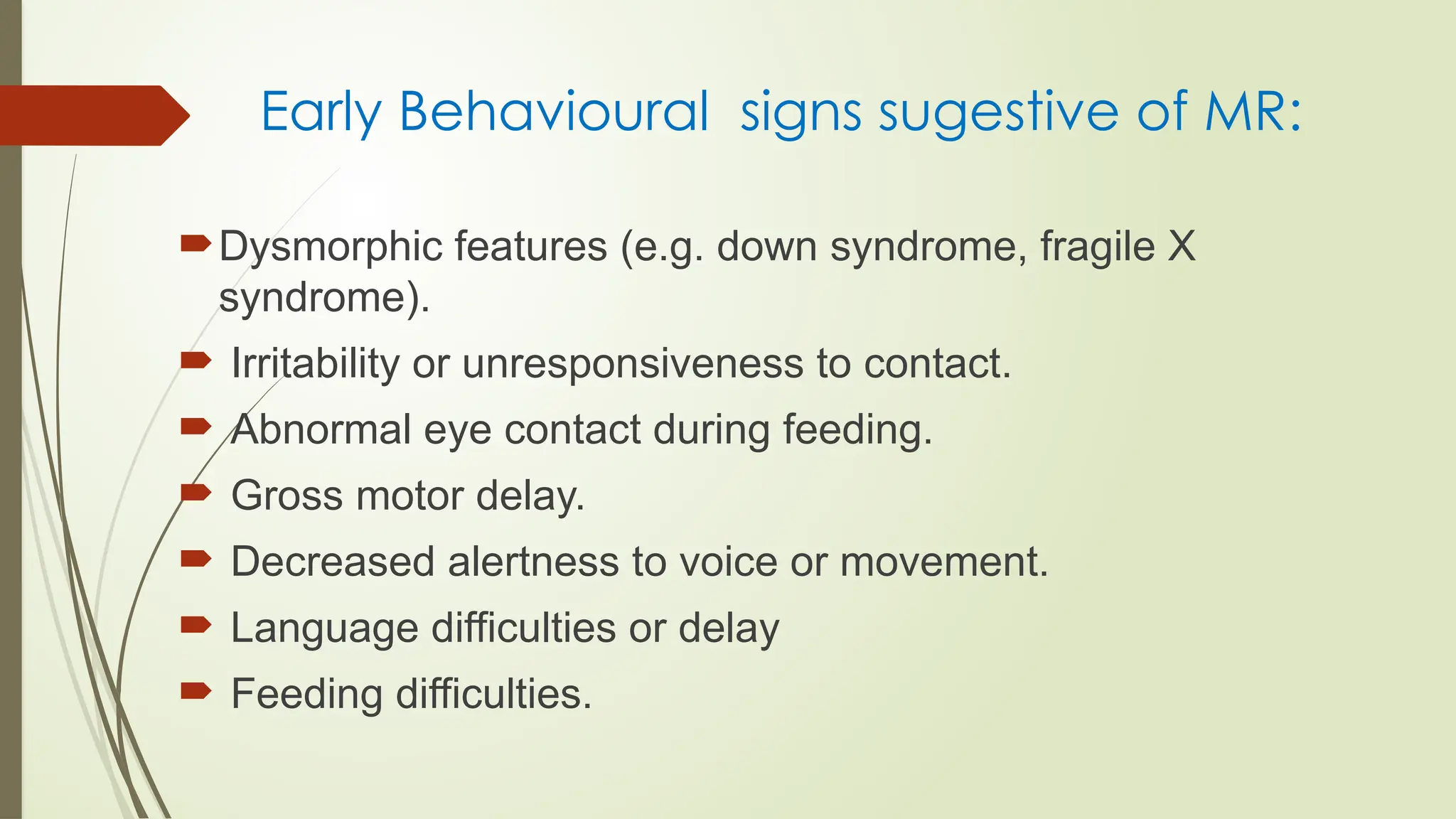
Early Behavioural signssugestive of MR:
Dysmorphic features (e.g. down syndrome, fragile X
syndrome).
Irritability or unresponsiveness to contact.
Abnormal eye contact during feeding.
Gross motor delay.
Decreased alertness to voice or movement.
Language difficulties or delay
Feeding difficulties.
17.
Diagnosis:
The diagnosisis usually made after a period of suspicion by family members that the
child’s developmental progress is delayed.
In some cases it is confirmed at birth because of recognition of syndrome.
Routine developmental screening can assist in early identification.
Multidisciplinary evaluation should be individually tailored to the child. A team of
professionals like pediatric neurologist, developmental pediatrician, psychologist, social
scientist, speech therapist, physical therapist, special educator, social worker and
nurse will evaluate the child.
Complete history is collected from family members and care takers.
18.
Cont...
Mental history
Physicalexamination to exclude physical illness.
Neurological assessment
Assessment of mile stones like intellectual levels, cognitive
ability, language pattern and communication skills, hearing,
cognitive behavior.
Urine and blood examination for metabolic disorders.
Hormonal studies- T3, T4, TSH when cretinism is suspected.
Culture for cytogenic and biochemical studies.
EEG to exclude seizures.
MRI, CT scan to study the structural abnormality of brain for
example tuberous sclerosis.
19.
Cont...
Antibodies for diagnosinginfections, LFT in Wilson’s
disease.
Sensory test – assessment for vision, hearing.
Amniocentesis for pregnant mothers to detect
chromosomal abnormalities, chorionic villi sampling,
chromosomal analysis.
Education evaluation- reading, writing, regularity in
schooling, living learning skills, daily living skills, social
abilities.
Significantly Subaverage Intellectual Functioning
Concurrent Deficits in Adaptive Functions.
20.
Diagnosis...
Cont..
Psychological investigation includesStanford Binet
intelligence tests (mental abilities) 2 years and more.
Wechler’s intelligence scale for children WISC (above 6
years)
Through the psychological testing the mental age of
the child estimated. The intelligence quotient is then
determined using the formula.
21.
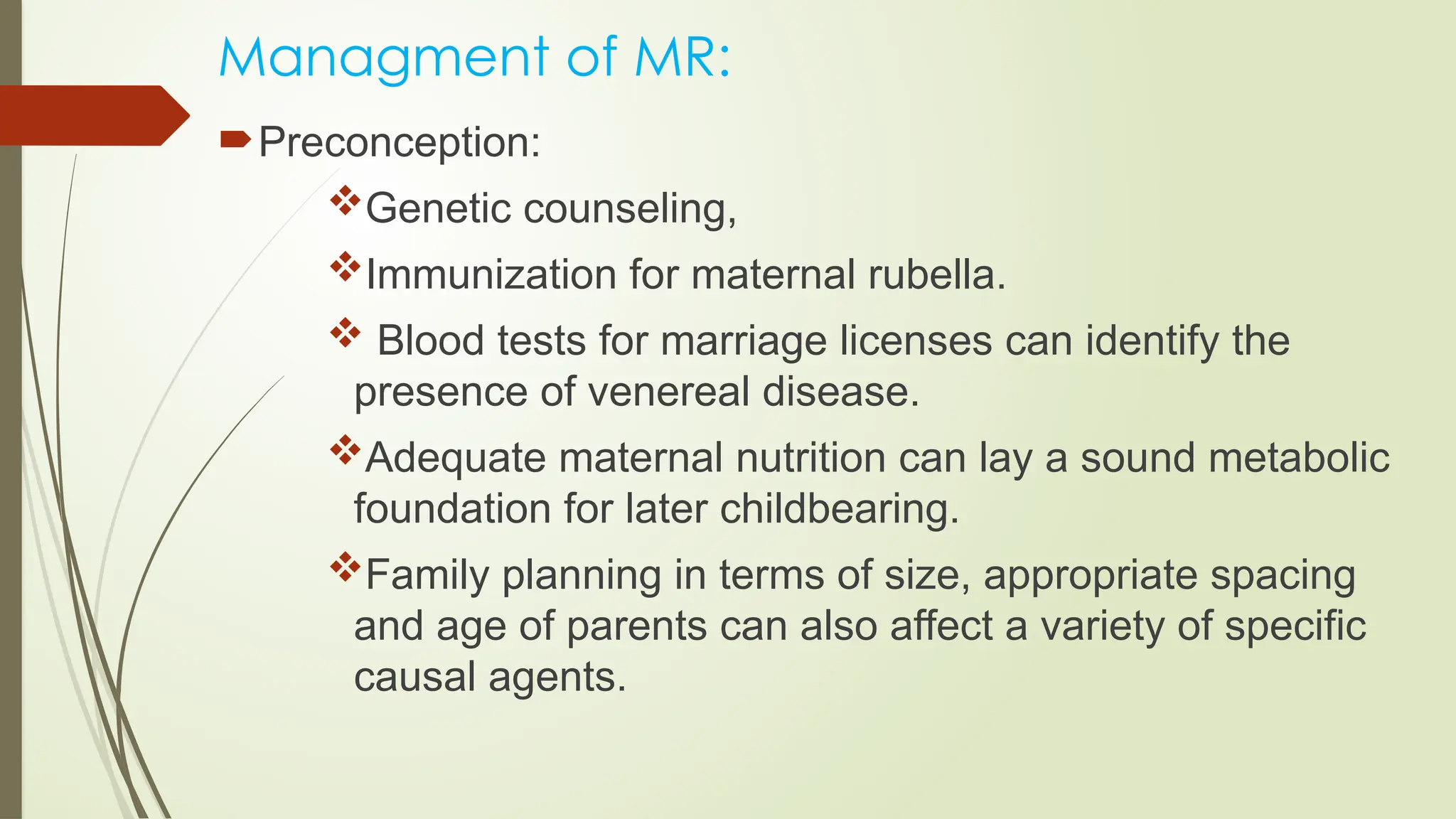
Managment of MR:
Preconception:
Geneticcounseling,
Immunization for maternal rubella.
Blood tests for marriage licenses can identify the
presence of venereal disease.
Adequate maternal nutrition can lay a sound metabolic
foundation for later childbearing.
Family planning in terms of size, appropriate spacing
and age of parents can also affect a variety of specific
causal agents.
22.
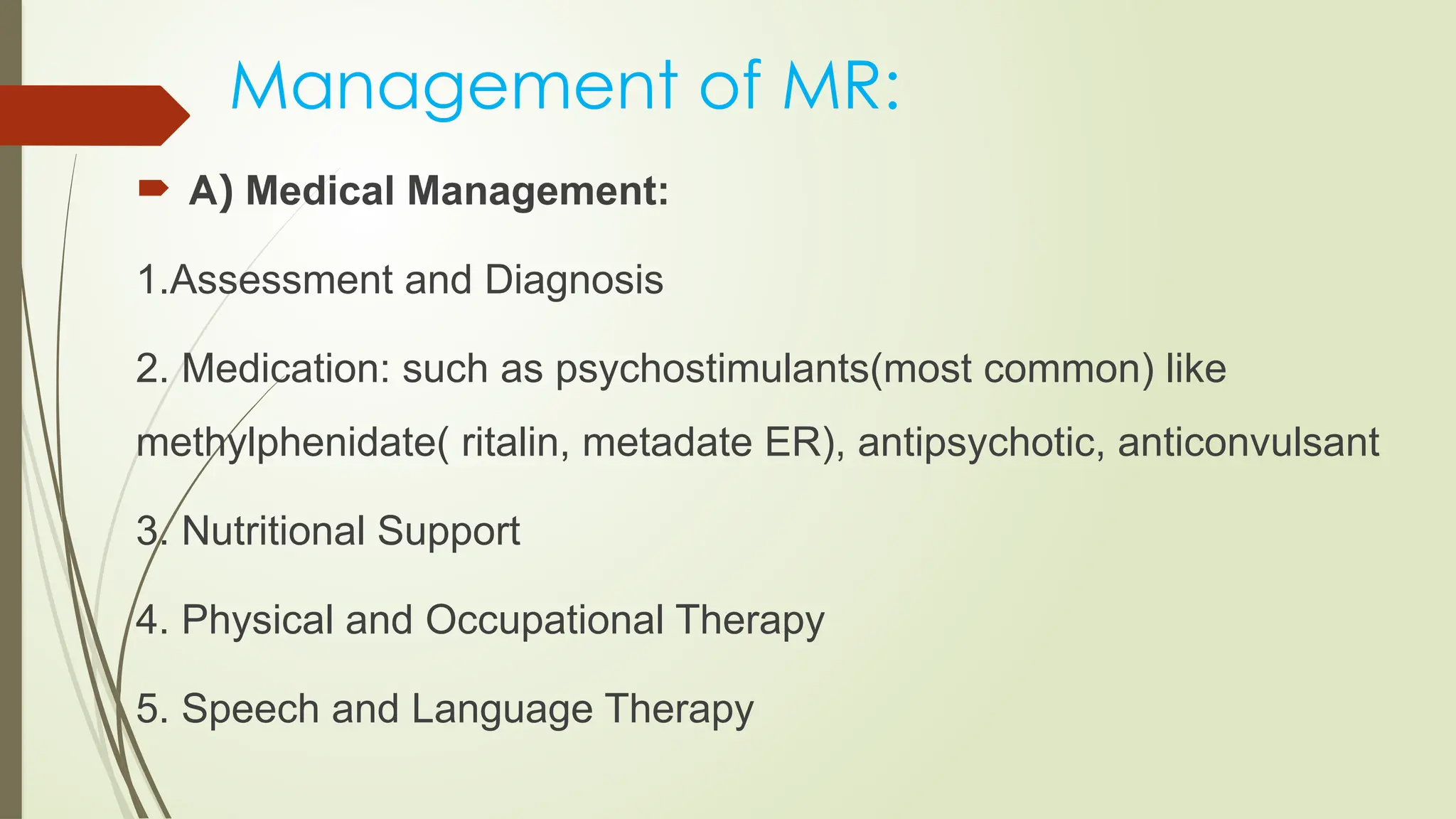
Management of MR:
A) Medical Management:
1.Assessment and Diagnosis
2. Medication: such as psychostimulants(most common) like
methylphenidate( ritalin, metadate ER), antipsychotic, anticonvulsant
3. Nutritional Support
4. Physical and Occupational Therapy
5. Speech and Language Therapy
23.
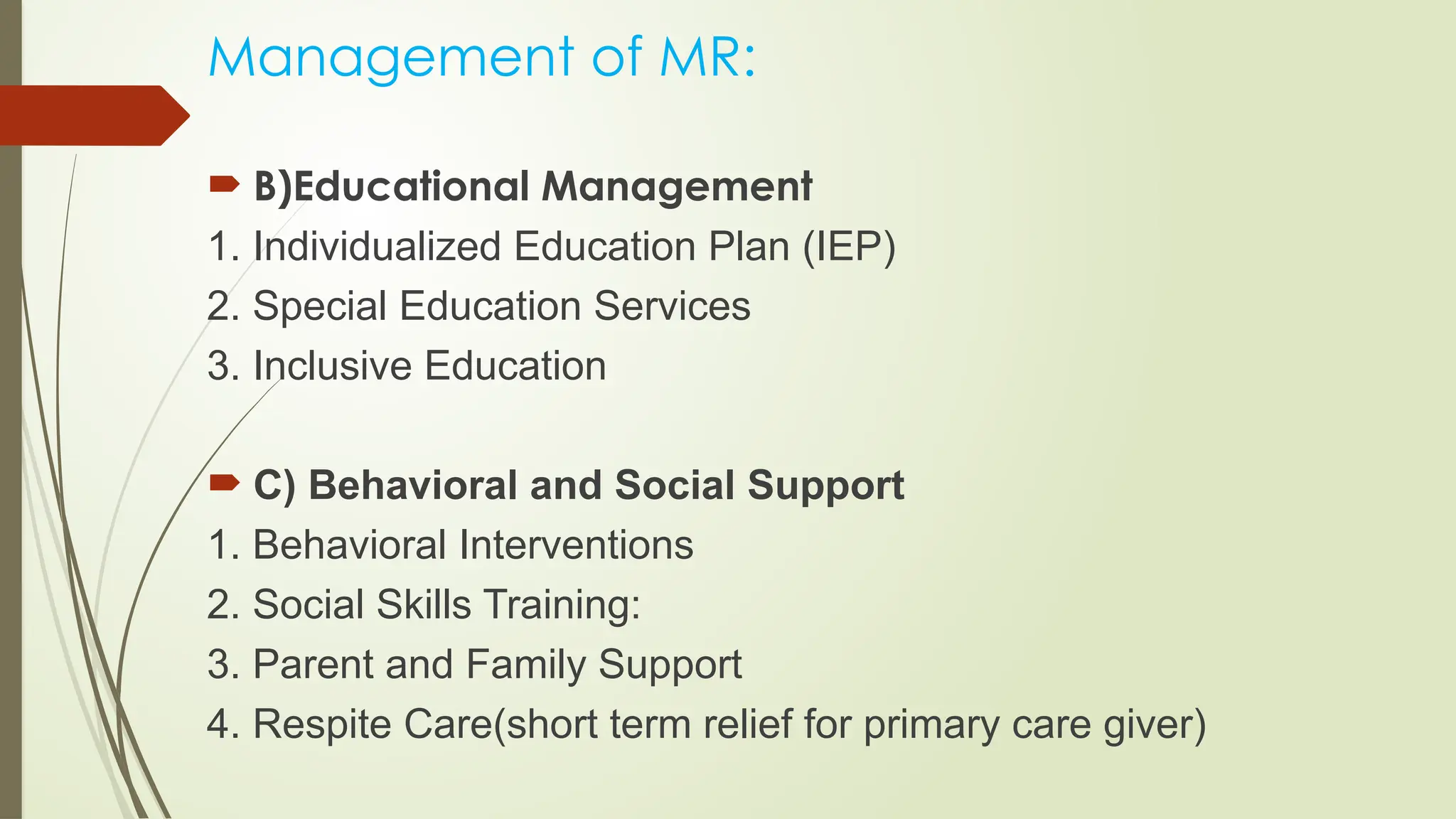
Management of MR:
B)Educational Management
1. Individualized Education Plan (IEP)
2. Special Education Services
3. Inclusive Education
C) Behavioral and Social Support
1. Behavioral Interventions
2. Social Skills Training:
3. Parent and Family Support
4. Respite Care(short term relief for primary care giver)
24.
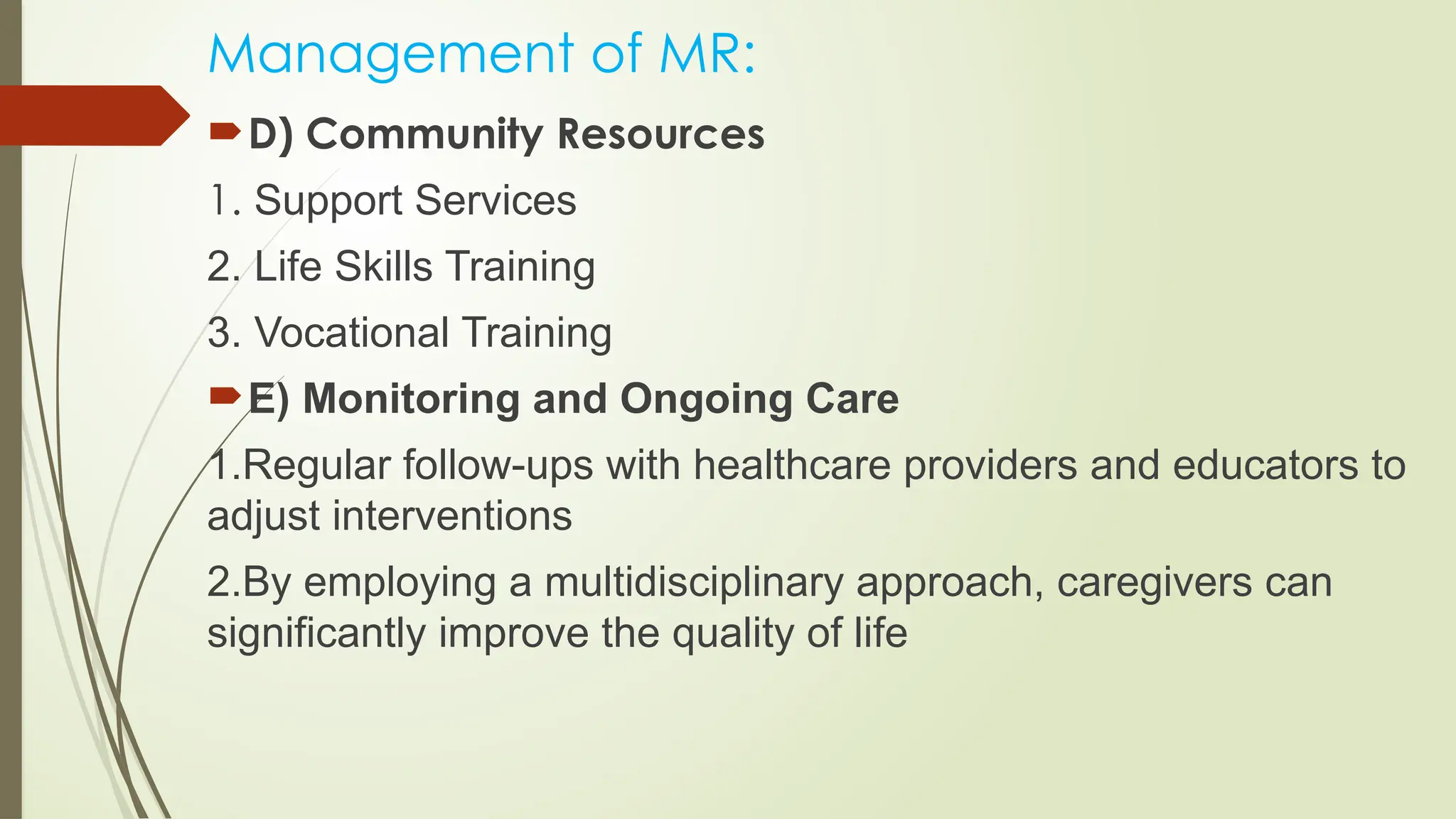
Management of MR:
D)Community Resources
1. Support Services
2. Life Skills Training
3. Vocational Training
E) Monitoring and Ongoing Care
1.Regular follow-ups with healthcare providers and educators to
adjust interventions
2.By employing a multidisciplinary approach, caregivers can
significantly improve the quality of life
25.
Nursing Management
Assessmentof early infant behavior and proper family
information for cognitive disability
Documentation of daily living skills.
Degree of independence encouraged at home.
Stability of the family unit
The nurse can participate in programs that teach infant
stimulation, ADL and independent self-care skills.
In addition learning social skills and adaptive behaviour
assists the child in building a positive self-image.
26.
Nursing Managment....
Teach thechild adaptive skills, such as eating, dressing,
grooming & toileting.
Work to increase his compliance with conventional social
norms & behaviors.
Maintain a consistent & supervised environment.
Maintain adequate environmental stimulation.
Set supportive limits on activities.
Work to enhance his positive feelings about self.
27.
Nursing Managment..
Develop aplan of care to maintain & enhance capabilities on
the basis of child’s abilities
Monitor the child’s developmental levels & initiate supportive
interventions
Teach him about natural & normal feelings & emotions.
Provide for his safety needs. Prevent self-injury. Be prepared
to intervene if self-injury occurs.
Modify his behavior by having him redirect his energy.
28.
Determine thechild’s strengths & abilities & develop a plan of care to maintain &
enhance capabilities.
Monitor the child’s developmental levels & initiate supportive interventions, such
as speech, language, or occupational skills as needed.
Teach him about natural & normal feelings & emotions.
Provide for his safety needs. Prevent self-injury. Be prepared to intervene if self-
injury occurs. Monitor the child for physical or emotional distress.
Modify his behavior by having him redirect his energy.
Teach the child adaptive skills, such as eating, dressing, grooming & toileting.
Demonstrate & help him practice self-care skills.
Work to increase his compliance with conventional social norms & behaviors.
Maintain a consistent & supervised environment.
Maintain adequate environmental stimulation.
Set supportive limits on activities.
Work to maintain & enhance his positive feelings about self & daily
accomplishments.
29.
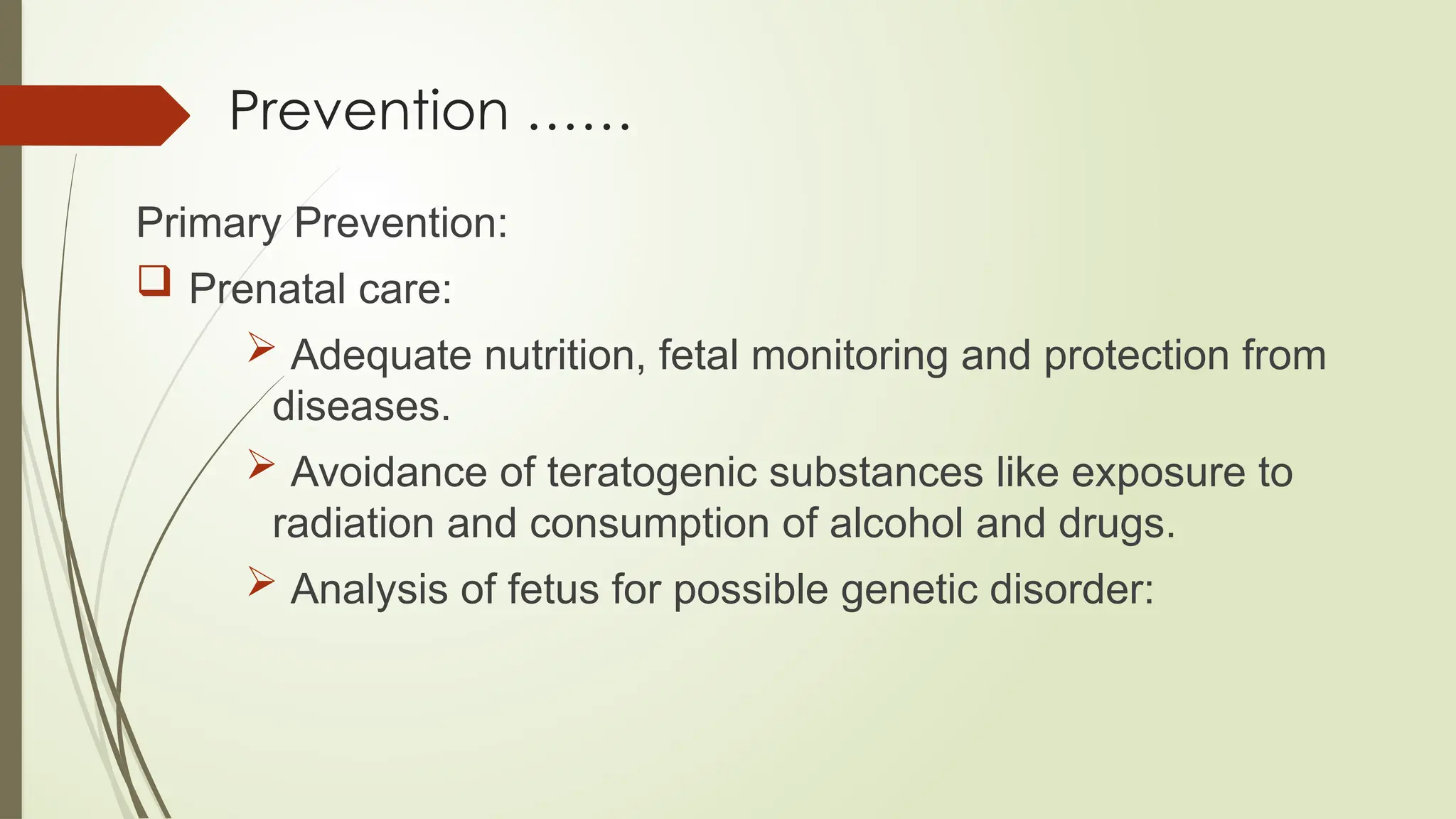
Prevention ……
Primary Prevention:
Prenatal care:
Adequate nutrition, fetal monitoring and protection from
diseases.
Avoidance of teratogenic substances like exposure to
radiation and consumption of alcohol and drugs.
Analysis of fetus for possible genetic disorder:
30.
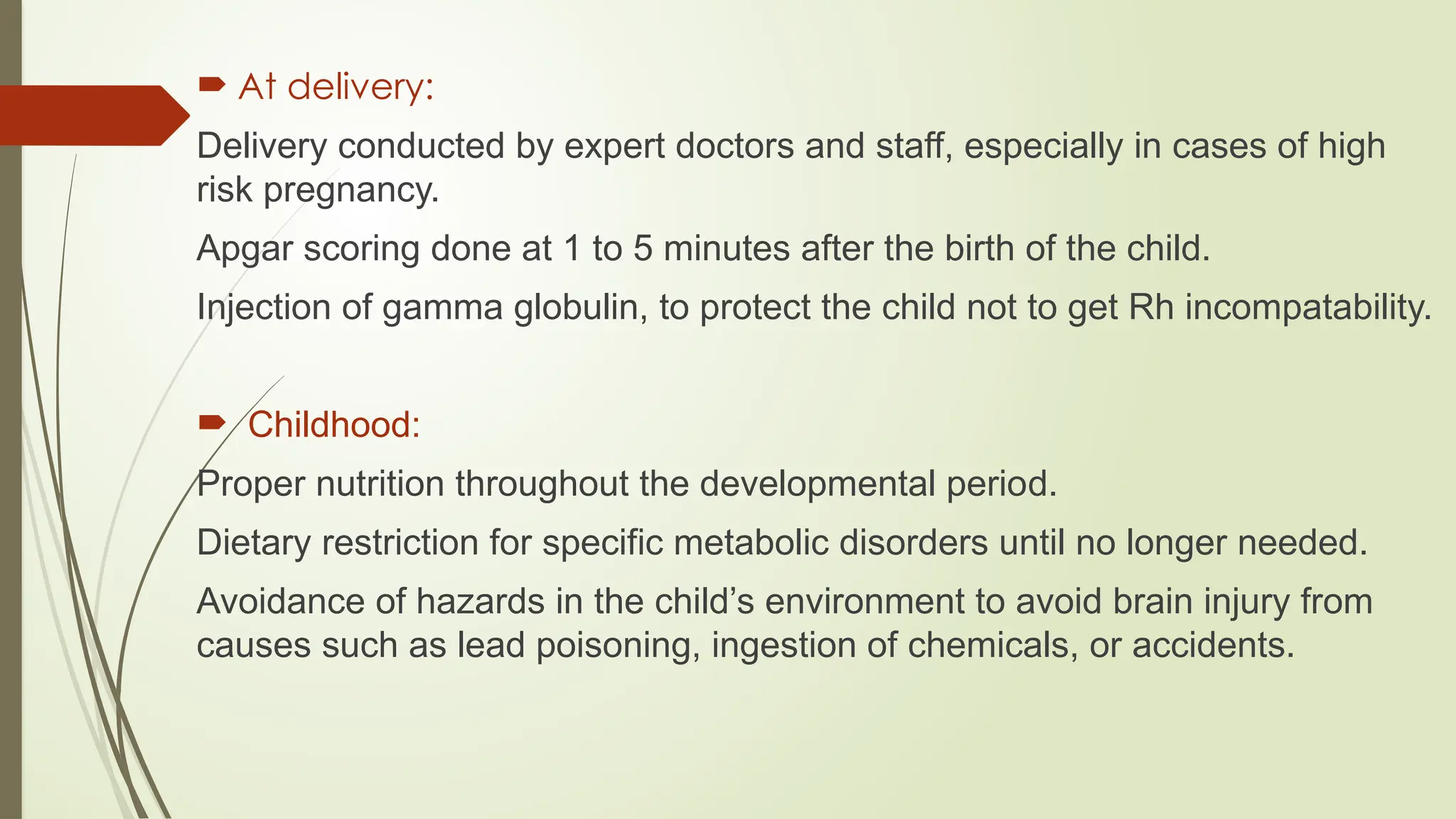
At delivery:
Deliveryconducted by expert doctors and staff, especially in cases of high
risk pregnancy.
Apgar scoring done at 1 to 5 minutes after the birth of the child.
Injection of gamma globulin, to protect the child not to get Rh incompatability.
Childhood:
Proper nutrition throughout the developmental period.
Dietary restriction for specific metabolic disorders until no longer needed.
Avoidance of hazards in the child’s environment to avoid brain injury from
causes such as lead poisoning, ingestion of chemicals, or accidents.
31.
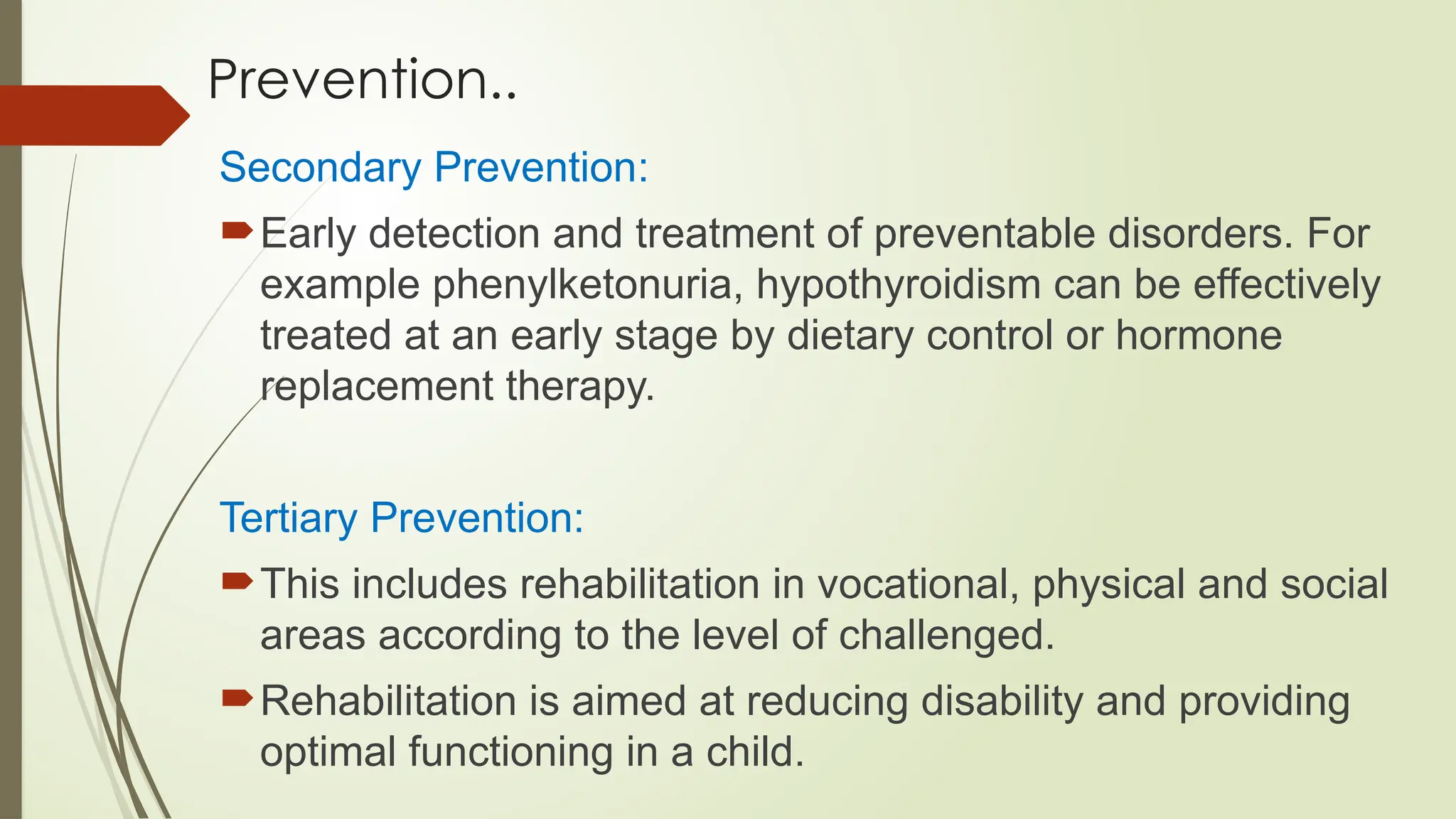
Prevention..
Secondary Prevention:
Early detectionand treatment of preventable disorders. For
example phenylketonuria, hypothyroidism can be effectively
treated at an early stage by dietary control or hormone
replacement therapy.
Tertiary Prevention:
This includes rehabilitation in vocational, physical and social
areas according to the level of challenged.
Rehabilitation is aimed at reducing disability and providing
optimal functioning in a child.
32.
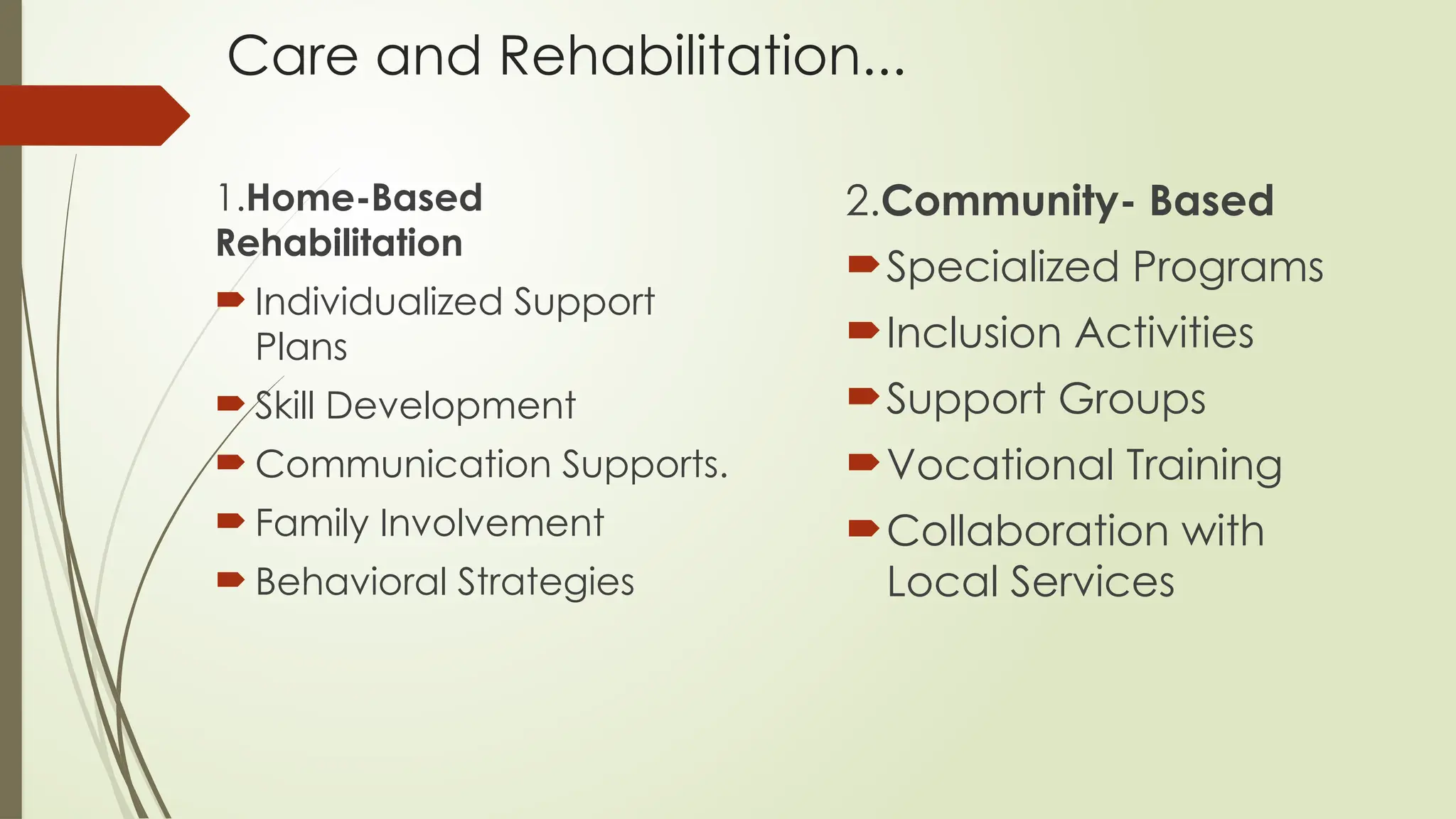
Care and Rehabilitation...
1.Home-Based
Rehabilitation
Individualized Support
Plans
Skill Development
Communication Supports.
Family Involvement
Behavioral Strategies
2.Community- Based
Specialized Programs
Inclusion Activities
Support Groups
Vocational Training
Collaboration with
Local Services
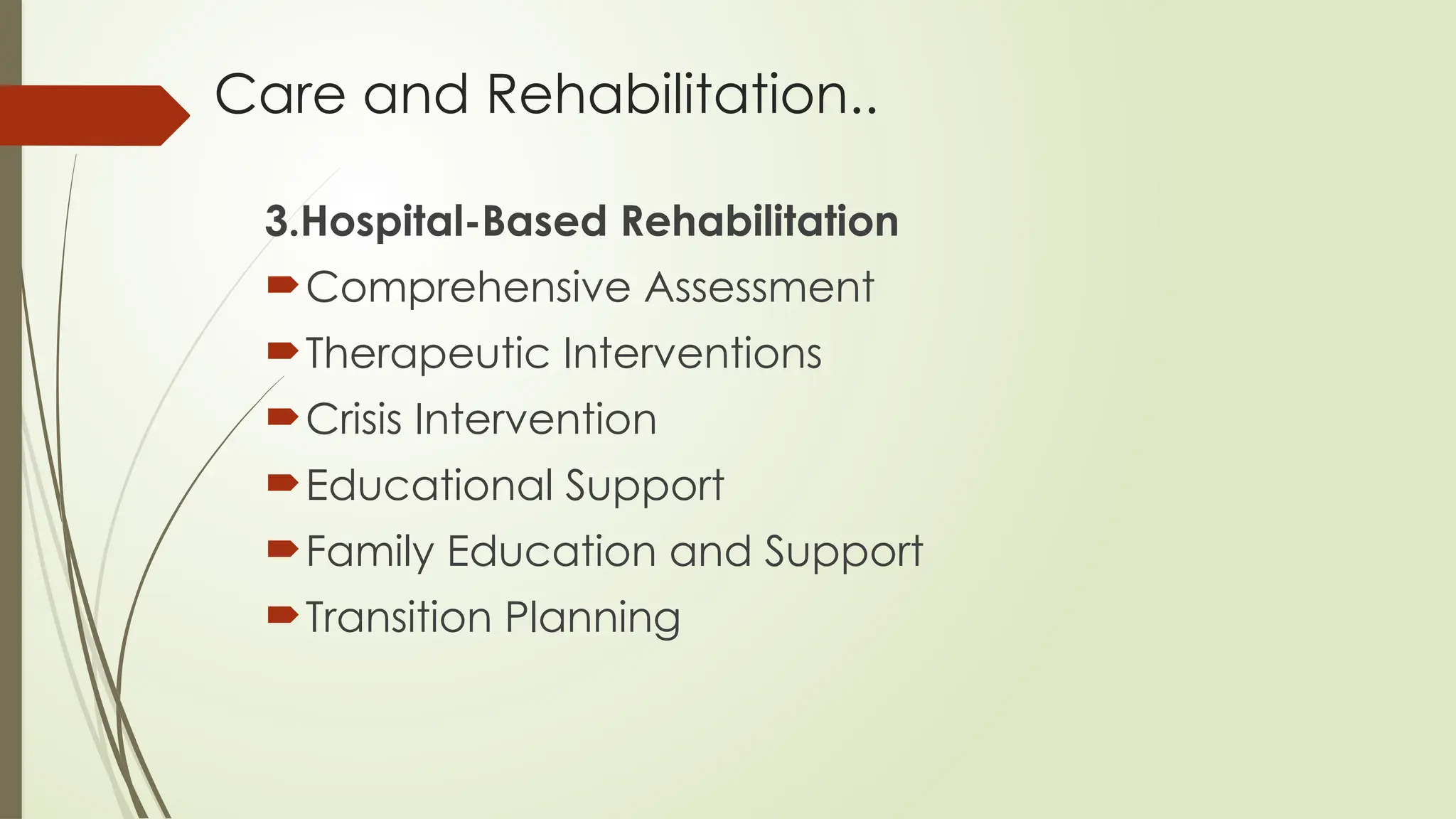
33.
Care and Rehabilitation..
3.Hospital-BasedRehabilitation
Comprehensive Assessment
Therapeutic Interventions
Crisis Intervention
Educational Support
Family Education and Support
Transition Planning
34.
Care and Rehabilitation...
Mildlyretarded….
A few mildly retarded children require fostering, boarding
schools placement or residential care, but usually specialist
services are not required.
Mildly retarded adults may need help with housing,
employment or with the special problems of old age.
35.
Care and Rehabilitation....
Severelyretarded…..
In case of severely retarded may require special services
throughout their lives, which may include a setting services,
day respite during school holidays, or overnight stays in a
foster family or residential care.
The main principle now guiding the provision of resources is
that the retarded person should be use the usual
community services rather than to provide specialist
segregate services.
36.
Care and Rehabilitation....
Educationand training…….
The aim is that as many mentally retarded children as
possible are educated in ordinary schools either in normal
classes or in special classes.
There is now an increasing use of more specialists teaching
and a variety of innovative procedures for teaching
language and other methods of communication.
Before leaving school, these children require reassessment
and vocational guidance.
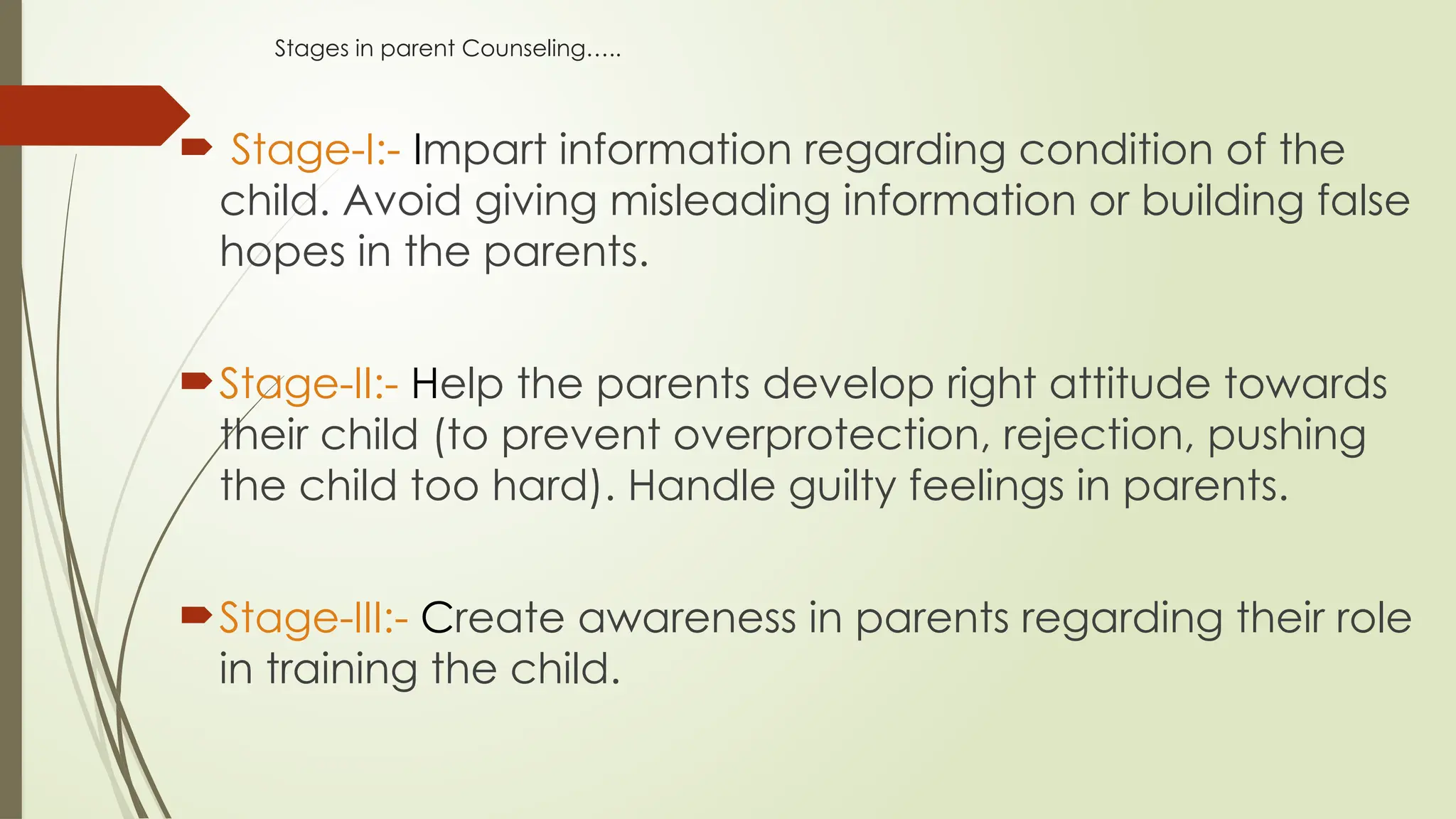
37.
Stages in parentCounseling…..
Stage-I:- Impart information regarding condition of the
child. Avoid giving misleading information or building false
hopes in the parents.
Stage-II:- Help the parents develop right attitude towards
their child (to prevent overprotection, rejection, pushing
the child too hard). Handle guilty feelings in parents.
Stage-III:- Create awareness in parents regarding their role
in training the child.
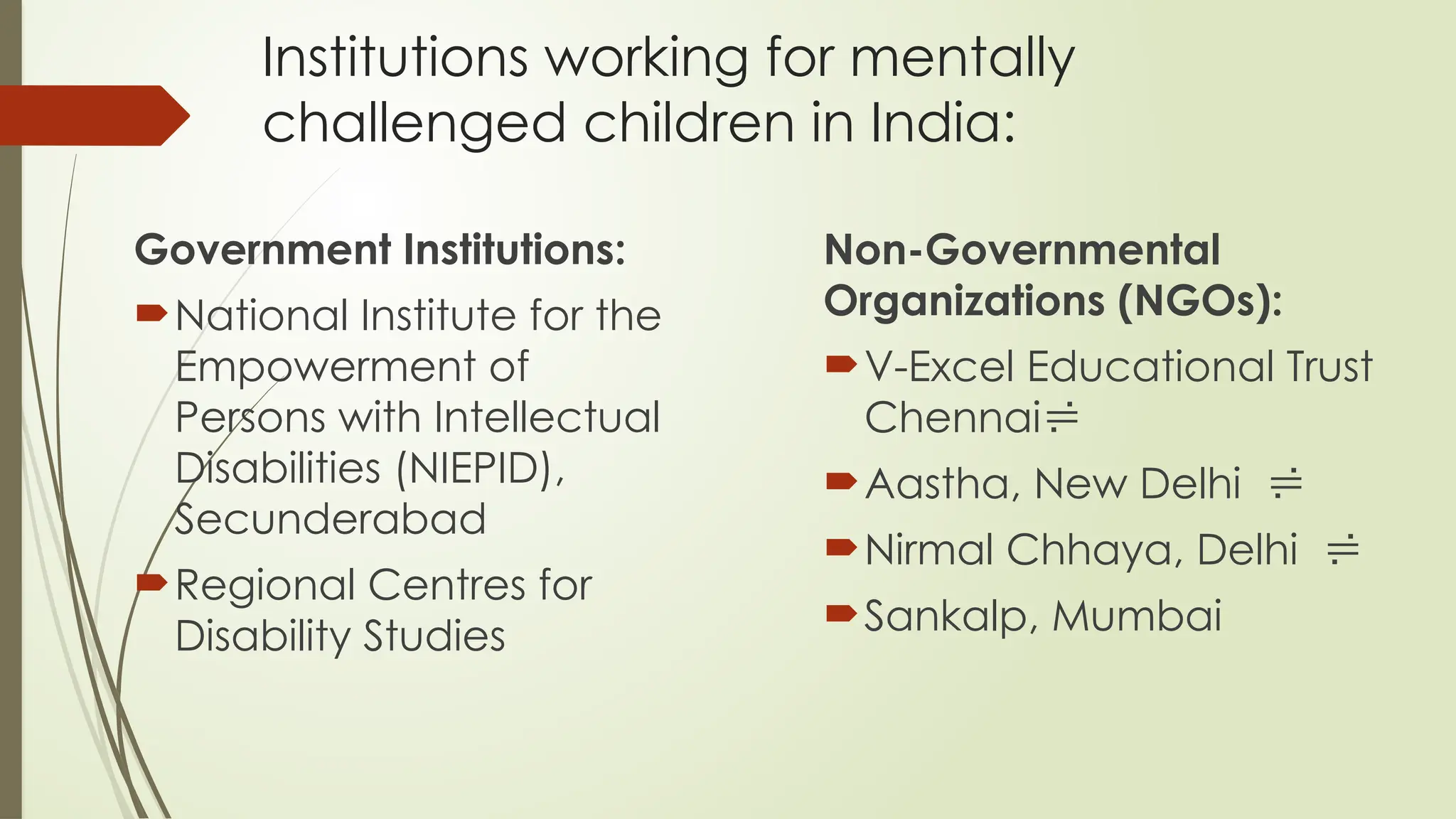
38.
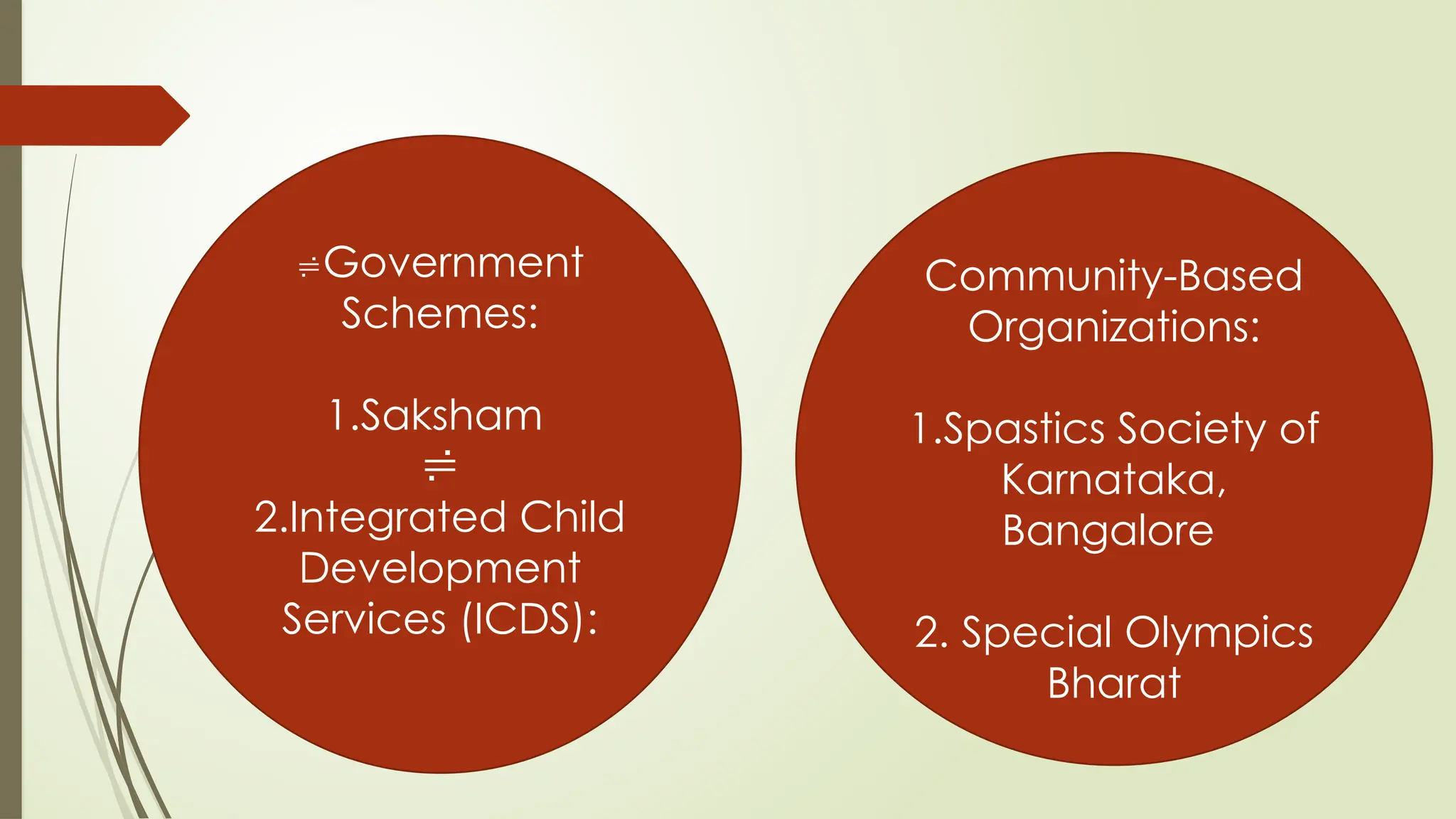
Institutions working formentally
challenged children in India:
Government Institutions:
National Institute for the
Empowerment of
Persons with Intellectual
Disabilities (NIEPID),
Secunderabad
Regional Centres for
Disability Studies
Non-Governmental
Organizations (NGOs):
V-Excel Educational Trust
Chennai
Aastha, New Delhi
Nirmal Chhaya, Delhi
Sankalp, Mumbai
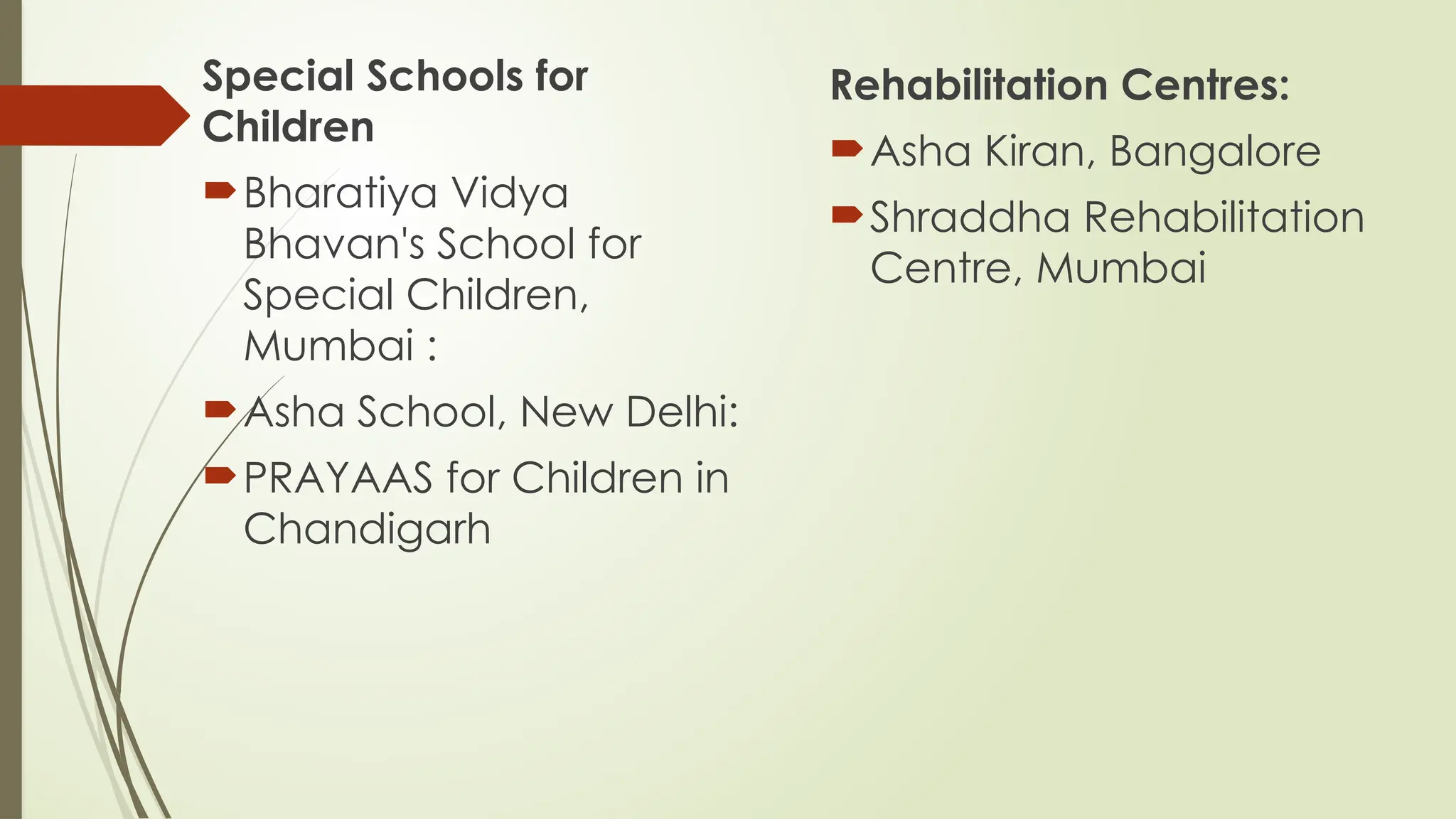
39.
Special Schools for
Children
BharatiyaVidya
Bhavan's School for
Special Children,
Mumbai :
Asha School, New Delhi:
PRAYAAS for Children in
Chandigarh
Rehabilitation Centres:
Asha Kiran, Bangalore
Shraddha Rehabilitation
Centre, Mumbai
Summary..
We have discussedabout:
Introduction of Challenges
Concept of Challenges
Definition of Mentally Challenged Child (MR)
Incidence
Etiology
Classification
Early Behavioural Sign of MR
Diagnosis
Managment of MR
Prevention of MR
Parent Councelling
Care and Rehabilitation
Institue Working for Children in India
Prognosis
43.
Conclusion...
Supporting mentally challengedchildren demands compassion
and collaboration.
By implementing tailored strategies and fostering inclusive
environments, we empower these children to thrive.
Our collective efforts not only enhance their quality of life but
also enrich our communities. Ultimately, every child deserves
the opportunity to reach their full potential, and together, we
can make that happen.
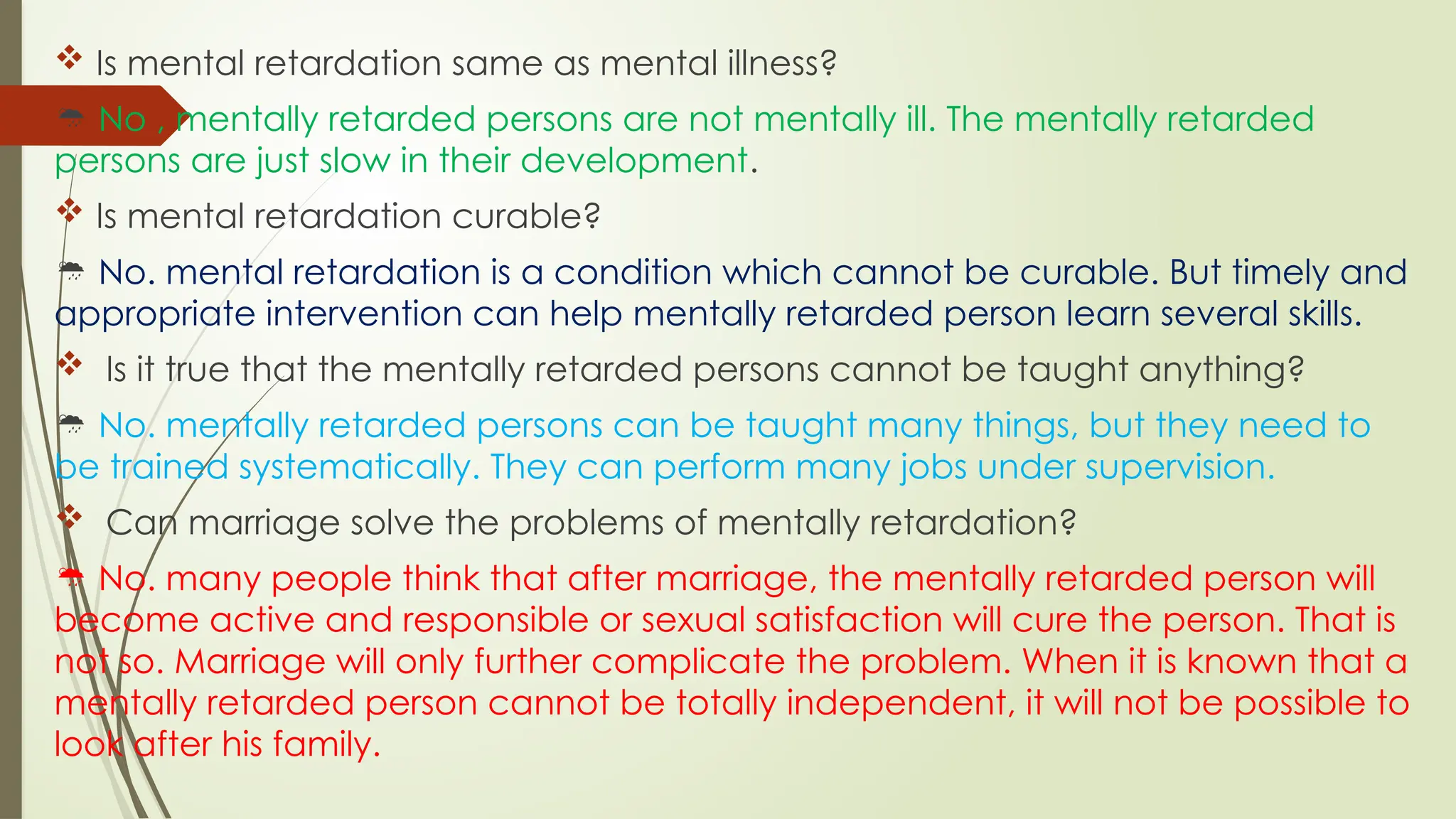
Is mentalretardation same as mental illness?
No , mentally retarded persons are not mentally ill. The mentally retarded
persons are just slow in their development.
Is mental retardation curable?
No. mental retardation is a condition which cannot be curable. But timely and
appropriate intervention can help mentally retarded person learn several skills.
Is it true that the mentally retarded persons cannot be taught anything?
No. mentally retarded persons can be taught many things, but they need to
be trained systematically. They can perform many jobs under supervision.
Can marriage solve the problems of mentally retardation?
No. many people think that after marriage, the mentally retarded person will
become active and responsible or sexual satisfaction will cure the person. That is
not so. Marriage will only further complicate the problem. When it is known that a
mentally retarded person cannot be totally independent, it will not be possible to
look after his family.
46.
Reference:
1. Marlow R,Redding A. Marlow’s textbook of pediatric nursing.
Elseiver south Asia edition. 6th
2013.
2. Datta p.A textbook of pediatric nursing, jaypee brothers medical
publishers ltd.2013.
3. Hockenberry J. Wilson P, Wong’s essential of pediatric nursing
elseiver south asia ed. 8th
.2012.
4. Gupta P. textbook of paediatrics. CSP publishers. New Delhi. 2013.
5. Pancahli P. textbook paediatric nursing. New delhi. Paras Medical
Publication. 2016.





![Revised -ppt of child psychiatric problems [Autosaved].pptx](https://cdn.slidesharecdn.com/ss_thumbnails/pptofchildpsychiatricproblemsautosaved-240926091227-d0592556-thumbnail.jpg?width=640&height=640&fit=bounds)


![Rights_of_women_and_children - new - Copy (2)[1].pptx](https://cdn.slidesharecdn.com/ss_thumbnails/rightsofwomenandchildren-new-copy21-250117115223-ac40d0df-thumbnail.jpg?width=640&height=640&fit=bounds)


