Congenital Glucoma
By
Mr. Ravi Rai Dangi
Assistant Professor
MSc. Child Health Nursing
Congenital Glaucoma
Glaucoma is a group of ocular conditions
characterized by optic nerve damage. The optic nerve
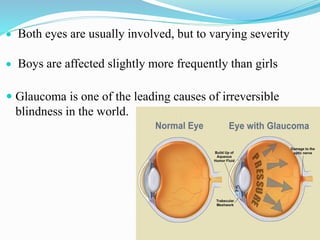
damage is related to the IOP caused by congestion of
aqueous humor in the eye.
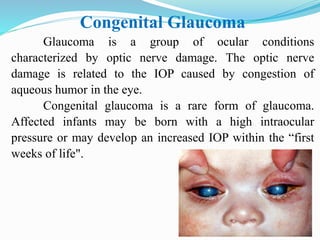
Congenital glaucoma is a rare form of glaucoma.
Affected infants may be born with a high intraocular
pressure or may develop an increased IOP within the “first
weeks of life".
 Both eyes are usually involved, but to varying severity
 Boys are affected slightly more frequently than girls
 Glaucoma is one of the leading causes of irreversible
blindness in the world.
Congenital glaucoma is a group of diseases with the
following classifications based on age:
 Congenital glaucoma (~40% of cases) is existent or
becomes evident at birth.
 Infantile glaucoma (~50% of cases) becomes evident
during early childhood (<3 years old).
 Juvenile glaucoma (~10% cases) becomes apparent in
later childhood (>3 years old).
Risk factor/etiological factor
 The exact cause is unknown.
 In some cases, child with a family history of glaucoma
are more likely to develop the disease.it is hereditary
 About 10% of primary congenital/infantile glaucoma
cases are inherited.
Signs/Symptoms
Signs
 Enlarged optic cupping (cup to disc ration >0.2) and/or
asymmetric cupping
 Newborn IOP >10–12 mmHg
 Anterior insertion of the iris and Barkan membrane
 Haab-striae
 Increased horizontal corneal diameter (above 11mm in first
year of life, above 13 mm thereafter)
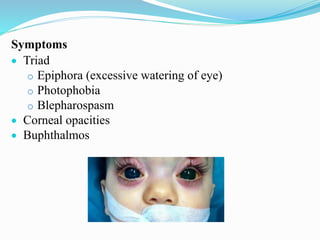
Symptoms
 Triad
o Epiphora (excessive watering of eye)
o Photophobia
o Blepharospasm
 Corneal opacities
 Buphthalmos
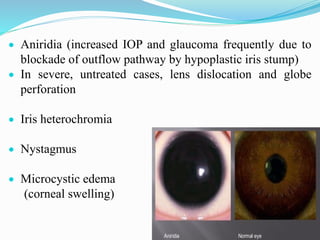
 Aniridia (increased IOP and glaucoma frequently due to
blockade of outflow pathway by hypoplastic iris stump)
 In severe, untreated cases, lens dislocation and globe
perforation
 Iris heterochromia
 Nystagmus
 Microcystic edema
(corneal swelling)
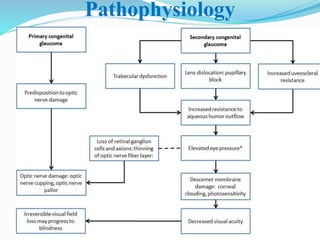
Pathophysiology
Diagnostic evaluation
Examination under General Anesthesia
 A thorough examination under general anesthesia is
necessary.
 To avoid blepharospasm (spasmodic closure of the eyes).
to prevent a transient rise in the IOP.
 Besides measuring the IOP, anesthesia allows a thorough
investigation of all segments of the eye and, in particular,
the optic disc.
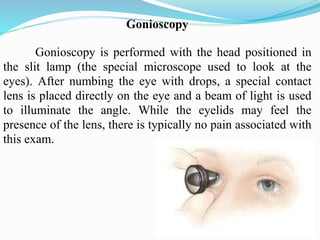
Gonioscopy
Gonioscopy is performed with the head positioned in
the slit lamp (the special microscope used to look at the
eyes). After numbing the eye with drops, a special contact
lens is placed directly on the eye and a beam of light is used
to illuminate the angle. While the eyelids may feel the
presence of the lens, there is typically no pain associated with
this exam.
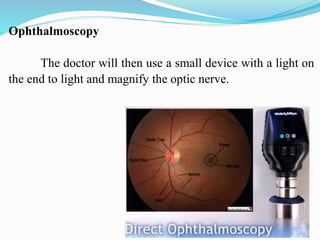
Ophthalmoscopy
The doctor will then use a small device with a light on
the end to light and magnify the optic nerve.
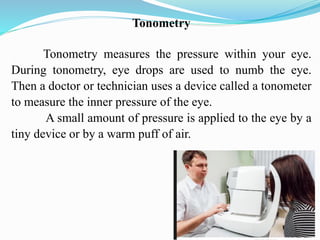
Tonometry
Tonometry measures the pressure within your eye.
During tonometry, eye drops are used to numb the eye.
Then a doctor or technician uses a device called a tonometer
to measure the inner pressure of the eye.
A small amount of pressure is applied to the eye by a
tiny device or by a warm puff of air.
Management
Medical Treatment
 Topical beta-blockers, carbonic anhydrase inhibitors
(CAI- dorzolamide or brinzolamide), and prostaglandin
analogs can be used. Timolol should be started low dose
as 0.25% initially
 Oral carbonic anhydrase inhibitors (eg, acetazolamide
and methazolamide) are most effective.
 The α2-adrenergic agonist apraclonidine should be used
only for the short term.
Surgical Treatment
Goniotomy
Goniotomy is a surgical procedure in which the doctor
uses a lens called a goniolens to see the structures of the
front part of the eye (anterior chamber). An opening is made
in the trabecular meshwork, the group of tiny canals located
in the drainage angle, where fluid leaves the eye.
Trabeculectomy
Trabeculectomy is a surgical procedure much like
trabeculectomy. A piece of tissue in the eye's drainage
angle is removed to create an opening. This new
opening allows fluid (aqueous humor) to drain out of
the eye. Trabeculectomy is a surgery for children
only.
Nursing Management
 A nurse will take your child’s weight, vital signs and
medical history. The nurse will ask you to name any
medications your child might be taking, as well as the
dosages and the time last taken.
 Administer prescribed pain medication
 Strict handwashing and aseptic technique will be used
while dealing with child
 After trabeculectomy give medications as ordered to dilate
the pupil
 After surgery protect the affected eye by applying an eye
patch and eye shield
 Monitor the client IOP regularly.
 Education the parents to use strict septic technique while
dealing with child.
 Instruct the client and parents to for do not rub the eyes.
 Explain all procedures and treatment, especially surgery,
to help reduce the parents anxiety.
 Observer the patient while topical beta-blocker is given. It
can cause respiratory distress, caused by apnea or
bronchospasm, and bradycardia.
 Beta-blockers should be used with extreme caution in
neonates due to the possibility of apnea and other systemic
side effects.
 Cardiac abnormalities and bronchial asthma should be
specifically excluded before using beta-blockers.
 Observe for alpha agonists because it can cross the blood
brain barrier easily & result in CNS depression &
respiratory depression.
 Educate about importance of follow-up care to parents.
 Educate the parents about the home care of the child and
medication.

Congenital Glucoma

  • 1.
    Congenital Glucoma By Mr. RaviRai Dangi Assistant Professor MSc. Child Health Nursing
  • 2.
    Congenital Glaucoma Glaucoma isa group of ocular conditions characterized by optic nerve damage. The optic nerve damage is related to the IOP caused by congestion of aqueous humor in the eye. Congenital glaucoma is a rare form of glaucoma. Affected infants may be born with a high intraocular pressure or may develop an increased IOP within the “first weeks of life".
  • 3.
     Both eyesare usually involved, but to varying severity  Boys are affected slightly more frequently than girls  Glaucoma is one of the leading causes of irreversible blindness in the world.
  • 4.
    Congenital glaucoma isa group of diseases with the following classifications based on age:  Congenital glaucoma (~40% of cases) is existent or becomes evident at birth.  Infantile glaucoma (~50% of cases) becomes evident during early childhood (<3 years old).  Juvenile glaucoma (~10% cases) becomes apparent in later childhood (>3 years old).
  • 5.
    Risk factor/etiological factor The exact cause is unknown.  In some cases, child with a family history of glaucoma are more likely to develop the disease.it is hereditary  About 10% of primary congenital/infantile glaucoma cases are inherited.
  • 6.
    Signs/Symptoms Signs  Enlarged opticcupping (cup to disc ration >0.2) and/or asymmetric cupping  Newborn IOP >10–12 mmHg  Anterior insertion of the iris and Barkan membrane  Haab-striae  Increased horizontal corneal diameter (above 11mm in first year of life, above 13 mm thereafter)
  • 7.
    Symptoms  Triad o Epiphora(excessive watering of eye) o Photophobia o Blepharospasm  Corneal opacities  Buphthalmos
  • 8.
     Aniridia (increasedIOP and glaucoma frequently due to blockade of outflow pathway by hypoplastic iris stump)  In severe, untreated cases, lens dislocation and globe perforation  Iris heterochromia  Nystagmus  Microcystic edema (corneal swelling)
  • 9.
  • 10.
    Diagnostic evaluation Examination underGeneral Anesthesia  A thorough examination under general anesthesia is necessary.  To avoid blepharospasm (spasmodic closure of the eyes). to prevent a transient rise in the IOP.  Besides measuring the IOP, anesthesia allows a thorough investigation of all segments of the eye and, in particular, the optic disc.
  • 11.
    Gonioscopy Gonioscopy is performedwith the head positioned in the slit lamp (the special microscope used to look at the eyes). After numbing the eye with drops, a special contact lens is placed directly on the eye and a beam of light is used to illuminate the angle. While the eyelids may feel the presence of the lens, there is typically no pain associated with this exam.
  • 12.
    Ophthalmoscopy The doctor willthen use a small device with a light on the end to light and magnify the optic nerve.
  • 13.
    Tonometry Tonometry measures thepressure within your eye. During tonometry, eye drops are used to numb the eye. Then a doctor or technician uses a device called a tonometer to measure the inner pressure of the eye. A small amount of pressure is applied to the eye by a tiny device or by a warm puff of air.
  • 14.
    Management Medical Treatment  Topicalbeta-blockers, carbonic anhydrase inhibitors (CAI- dorzolamide or brinzolamide), and prostaglandin analogs can be used. Timolol should be started low dose as 0.25% initially  Oral carbonic anhydrase inhibitors (eg, acetazolamide and methazolamide) are most effective.  The α2-adrenergic agonist apraclonidine should be used only for the short term.
  • 15.
    Surgical Treatment Goniotomy Goniotomy isa surgical procedure in which the doctor uses a lens called a goniolens to see the structures of the front part of the eye (anterior chamber). An opening is made in the trabecular meshwork, the group of tiny canals located in the drainage angle, where fluid leaves the eye.
  • 16.
    Trabeculectomy Trabeculectomy is asurgical procedure much like trabeculectomy. A piece of tissue in the eye's drainage angle is removed to create an opening. This new opening allows fluid (aqueous humor) to drain out of the eye. Trabeculectomy is a surgery for children only.
  • 17.
    Nursing Management  Anurse will take your child’s weight, vital signs and medical history. The nurse will ask you to name any medications your child might be taking, as well as the dosages and the time last taken.  Administer prescribed pain medication  Strict handwashing and aseptic technique will be used while dealing with child
  • 18.
     After trabeculectomygive medications as ordered to dilate the pupil  After surgery protect the affected eye by applying an eye patch and eye shield  Monitor the client IOP regularly.  Education the parents to use strict septic technique while dealing with child.  Instruct the client and parents to for do not rub the eyes.
  • 19.
     Explain allprocedures and treatment, especially surgery, to help reduce the parents anxiety.  Observer the patient while topical beta-blocker is given. It can cause respiratory distress, caused by apnea or bronchospasm, and bradycardia.  Beta-blockers should be used with extreme caution in neonates due to the possibility of apnea and other systemic side effects.
  • 20.
     Cardiac abnormalitiesand bronchial asthma should be specifically excluded before using beta-blockers.  Observe for alpha agonists because it can cross the blood brain barrier easily & result in CNS depression & respiratory depression.  Educate about importance of follow-up care to parents.  Educate the parents about the home care of the child and medication.