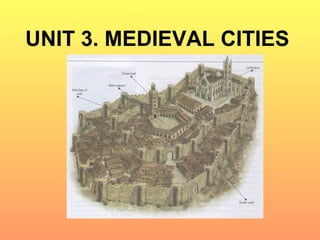
UNIT 3. MEDIEVAL CITIES
Why did Europe become more 
prosperous since the 12th 
century? 
THERE WERE FIVE IMPORTANT FACTORS 
AGRICULTURE: 
This production 
increased due to 
new techniques 
POPULATION: 
Population 
increased due to 
the improvement 
of the agriculture 
CITIES: 
There were more and 
bigger cities because 
many people moved from 
the countryside to the 
cities 
MONARCHIES 
They became 
stronger because 
cities supported 
kings with taxes 
and soldiers 
TRADE 
The trade increased due to the growth of the 
cities and the agriculture. 
Besides, routes were safer with stronger 
kingdoms
AGRICULTURE AND 
POPULATION 
Reasons of the agricultural growth: 
1. NEW LANDS  CUTTING DOWN FORESTS AND DRAINING MARSHES
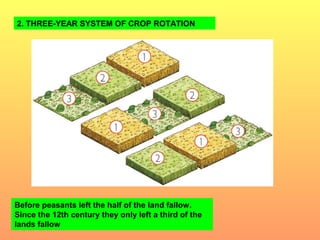
2. THREE-YEAR SYSTEM OF CROP ROTATION 
Before peasants left the half of the land fallow. 
Since the 12th century they only left a third of the 
lands fallow
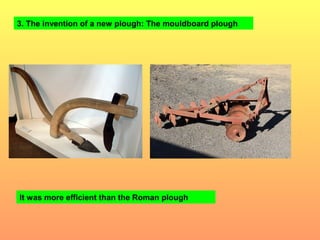
3. The invention of a new plough: The mouldboard plough 
It was more efficient than the Roman plough
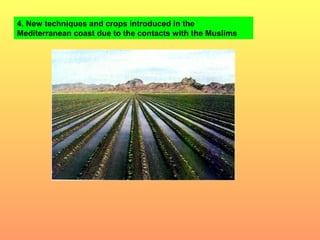
4. New techniques and crops introduced in the 
Mediterranean coast due to the contacts with the Muslims
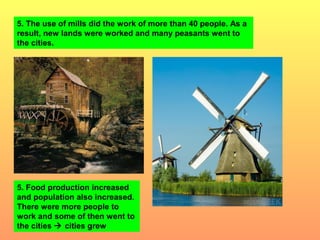
5. The use of mills did the work of more than 40 people. As a 
result, new lands were worked and many peasants went to 
the cities. 
5. Food production increased 
and population also increased. 
There were more people to 
work and some of then went to 
the cities  cities grew
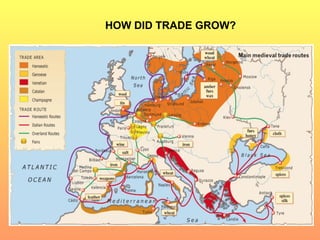
HOW DID TRADE GROW?
THE INCREASE OF THE FOOD PRODUCTION AND THE 
POPULATION MADE CITIES BIGGER. 
AS A RESULT, THE TRADE GREW FROM THE 12TH CENTURY 
THERE WERE THREE MAIN TRADE ROUTES: 
THE MEDITERRANEAN OR ITALIAN ROUTE 
THIS ROUTE LINKED SPANISH AND ITALIAN CITIES WITH MUSLIM 
AND BYZANTINE CITIES 
IT WAS BY SEA AND THE MAIN IMPORTANT SEAPORTS WERE: 
CADIZ, VALENCIA, BARCELONA, MARSEILLE, GEONOA, NAPLES, 
VENICE, CONSTANTINOPLE, ANTIOCH AND TREBIZOND 
THE WESTERN EUROPEAN MERCHANTS IMPORTED LUXURY 
ITEMS AND FURS AND THEY EXPORTED CLOTH (MAINLY 
LEATHER), WHEAT AND WEAPONS
THE ATLANTIC-BALTIC OR HANSEATIC ROUTE 
IT WAS CONTROLLED BY THE HANSEATIC LEAGUE. IT WAS AN 
ASSOCIATION OF MERCHANTS FROM RICH CITIES FROM THE 
NORTH OF EUROPE 
THE ROUTE LINKED IBERIAN AND FRENCH PORTS WITH 
FLEMISH, GERMAN, POLISH AND RUSSIAN CITIES 
THEY EXCHANGED: 
- WOOL FROM ENGLAND AND CASTILLE 
- SALT AND FRENCH WINES 
- ENGLISH TIN 
- PRODUCTS FROM THE NORTH OF EUROPE: AMBER, FURS, 
WOOD, WHEAT... 
THIS ROUTE WAS SO IMPORTANT THAT MADE VERY RICH THE 
CITIES LOCATED IN THE HANSEATIC AREA
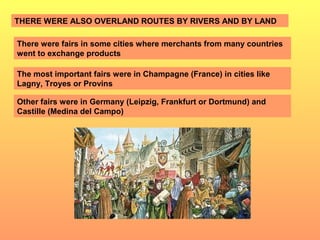
THERE WERE ALSO OVERLAND ROUTES BY RIVERS AND BY LAND 
There were fairs in some cities where merchants from many countries 
went to exchange products 
The most important fairs were in Champagne (France) in cities like 
Lagny, Troyes or Provins 
Other fairs were in Germany (Leipzig, Frankfurt or Dortmund) and 
Castille (Medina del Campo)
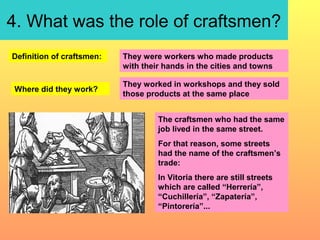
4. What was the role of craftsmen? 
Definition of craftsmen: They were workers who made products 
with their hands in the cities and towns 
Where did they work? They worked in workshops and they sold 
those products at the same place 
The craftsmen who had the same 
job lived in the same street. 
For that reason, some streets 
had the name of the craftsmen’s 
trade: 
In Vitoria there are still streets 
which are called “Herrería”, 
“Cuchillería”, “Zapatería”, 
“Pintorería”...
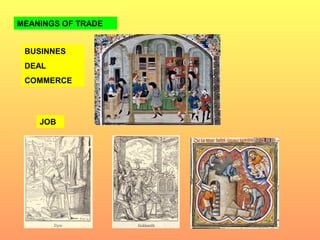
MEANINGS OF TRADE 
BUSINNES 
DEAL 
COMMERCE 
JOB
CRAFTSMEN IN THE 12th CENTURY 
Better agriculture  More production of food  Increase of the 
population  People moved to the cities  Great demand of products 
in the cities  Number of craftsmen increased  Trade is bigger  
Cities are wealthier 
WHAT WERE THE GUILDS? 
They were associations of craftmen who belonged to the same profession 
They started to work from the 12th century 
Guilds controlled many things: 
• Production 
• Distribution of raw materials 
• Number of workers 
• Prices of the products
Working in a trade out of a guild was forbidden 
Guilds also had social tasks: 
• To look after the workers and their families 
• To build hospitals and other important buildings for the cities 
As a result, guilds had a great power in the cities 
CATEGORIES OF CRAFTSMEN 
MASTER: 
• He was the owner of the workshop and he lived there with his family 
• Masters controlled the guilds 
JOURNEYMEN: 
• Skilled craftsmen with a salary 
APPRENTICES: 
• Young men who learnt a trade 
• They worked for the master but they did not have a salary 
• If they were good, they became journeymen
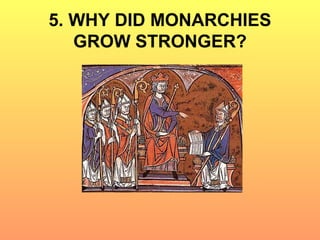
5. WHY DID MONARCHIES 
GROW STRONGER?
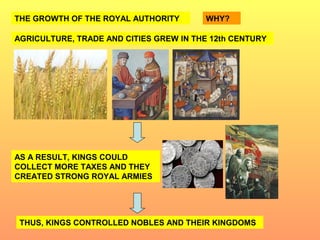
THE GROWTH OF THE ROYAL AUTHORITY WHY? 
AGRICULTURE, TRADE AND CITIES GREW IN THE 12th CENTURY 
AS A RESULT, KINGS COULD 
COLLECT MORE TAXES AND THEY 
CREATED STRONG ROYAL ARMIES 
THUS, KINGS CONTROLLED NOBLES AND THEIR KINGDOMS
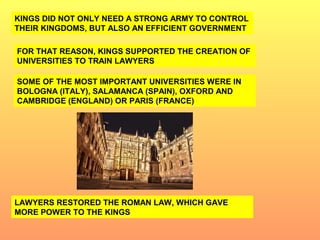
KINGS DID NOT ONLY NEED A STRONG ARMY TO CONTROL 
THEIR KINGDOMS, BUT ALSO AN EFFICIENT GOVERNMENT 
FOR THAT REASON, KINGS SUPPORTED THE CREATION OF 
UNIVERSITIES TO TRAIN LAWYERS 
SOME OF THE MOST IMPORTANT UNIVERSITIES WERE IN 
BOLOGNA (ITALY), SALAMANCA (SPAIN), OXFORD AND 
CAMBRIDGE (ENGLAND) OR PARIS (FRANCE) 
LAWYERS RESTORED THE ROMAN LAW, WHICH GAVE 
MORE POWER TO THE KINGS
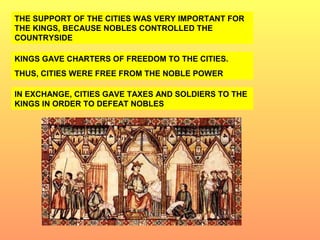
THE SUPPORT OF THE CITIES WAS VERY IMPORTANT FOR 
THE KINGS, BECAUSE NOBLES CONTROLLED THE 
COUNTRYSIDE 
KINGS GAVE CHARTERS OF FREEDOM TO THE CITIES. 
THUS, CITIES WERE FREE FROM THE NOBLE POWER 
IN EXCHANGE, CITIES GAVE TAXES AND SOLDIERS TO THE 
KINGS IN ORDER TO DEFEAT NOBLES
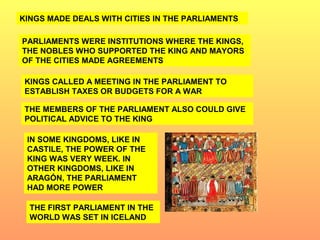
KINGS MADE DEALS WITH CITIES IN THE PARLIAMENTS 
PARLIAMENTS WERE INSTITUTIONS WHERE THE KINGS, 
THE NOBLES WHO SUPPORTED THE KING AND MAYORS 
OF THE CITIES MADE AGREEMENTS 
KINGS CALLED A MEETING IN THE PARLIAMENT TO 
ESTABLISH TAXES OR BUDGETS FOR A WAR 
THE MEMBERS OF THE PARLIAMENT ALSO COULD GIVE 
POLITICAL ADVICE TO THE KING 
IN SOME KINGDOMS, LIKE IN 
CASTILE, THE POWER OF THE 
KING WAS VERY WEEK. IN 
OTHER KINGDOMS, LIKE IN 
ARAGÓN, THE PARLIAMENT 
HAD MORE POWER 
THE FIRST PARLIAMENT IN THE 
WORLD WAS SET IN ICELAND
CONFLICTS IN EUROPE DURING 
THE MIDDLE AGES 
INTERNAL OR CIVIL WARS 
They were caused by fights related to succession 
When a king died 
without children 
When a king was 
considered to be 
unsuitable 
INTERNATIONAL WARS 
Different kingdoms fought to expand their boundaries

MEDIEVAL CITIES

  • 1.
  • 2.
    Why did Europebecome more prosperous since the 12th century? THERE WERE FIVE IMPORTANT FACTORS AGRICULTURE: This production increased due to new techniques POPULATION: Population increased due to the improvement of the agriculture CITIES: There were more and bigger cities because many people moved from the countryside to the cities MONARCHIES They became stronger because cities supported kings with taxes and soldiers TRADE The trade increased due to the growth of the cities and the agriculture. Besides, routes were safer with stronger kingdoms
  • 3.
    AGRICULTURE AND POPULATION Reasons of the agricultural growth: 1. NEW LANDS  CUTTING DOWN FORESTS AND DRAINING MARSHES
  • 4.
    2. THREE-YEAR SYSTEMOF CROP ROTATION Before peasants left the half of the land fallow. Since the 12th century they only left a third of the lands fallow
  • 5.
    3. The inventionof a new plough: The mouldboard plough It was more efficient than the Roman plough
  • 6.
    4. New techniquesand crops introduced in the Mediterranean coast due to the contacts with the Muslims
  • 7.
    5. The useof mills did the work of more than 40 people. As a result, new lands were worked and many peasants went to the cities. 5. Food production increased and population also increased. There were more people to work and some of then went to the cities  cities grew
  • 8.
  • 9.
    THE INCREASE OFTHE FOOD PRODUCTION AND THE POPULATION MADE CITIES BIGGER. AS A RESULT, THE TRADE GREW FROM THE 12TH CENTURY THERE WERE THREE MAIN TRADE ROUTES: THE MEDITERRANEAN OR ITALIAN ROUTE THIS ROUTE LINKED SPANISH AND ITALIAN CITIES WITH MUSLIM AND BYZANTINE CITIES IT WAS BY SEA AND THE MAIN IMPORTANT SEAPORTS WERE: CADIZ, VALENCIA, BARCELONA, MARSEILLE, GEONOA, NAPLES, VENICE, CONSTANTINOPLE, ANTIOCH AND TREBIZOND THE WESTERN EUROPEAN MERCHANTS IMPORTED LUXURY ITEMS AND FURS AND THEY EXPORTED CLOTH (MAINLY LEATHER), WHEAT AND WEAPONS
  • 10.
    THE ATLANTIC-BALTIC ORHANSEATIC ROUTE IT WAS CONTROLLED BY THE HANSEATIC LEAGUE. IT WAS AN ASSOCIATION OF MERCHANTS FROM RICH CITIES FROM THE NORTH OF EUROPE THE ROUTE LINKED IBERIAN AND FRENCH PORTS WITH FLEMISH, GERMAN, POLISH AND RUSSIAN CITIES THEY EXCHANGED: - WOOL FROM ENGLAND AND CASTILLE - SALT AND FRENCH WINES - ENGLISH TIN - PRODUCTS FROM THE NORTH OF EUROPE: AMBER, FURS, WOOD, WHEAT... THIS ROUTE WAS SO IMPORTANT THAT MADE VERY RICH THE CITIES LOCATED IN THE HANSEATIC AREA
  • 11.
    THERE WERE ALSOOVERLAND ROUTES BY RIVERS AND BY LAND There were fairs in some cities where merchants from many countries went to exchange products The most important fairs were in Champagne (France) in cities like Lagny, Troyes or Provins Other fairs were in Germany (Leipzig, Frankfurt or Dortmund) and Castille (Medina del Campo)
  • 12.
    4. What wasthe role of craftsmen? Definition of craftsmen: They were workers who made products with their hands in the cities and towns Where did they work? They worked in workshops and they sold those products at the same place The craftsmen who had the same job lived in the same street. For that reason, some streets had the name of the craftsmen’s trade: In Vitoria there are still streets which are called “Herrería”, “Cuchillería”, “Zapatería”, “Pintorería”...
  • 13.
    MEANINGS OF TRADE BUSINNES DEAL COMMERCE JOB
  • 14.
    CRAFTSMEN IN THE12th CENTURY Better agriculture  More production of food  Increase of the population  People moved to the cities  Great demand of products in the cities  Number of craftsmen increased  Trade is bigger  Cities are wealthier WHAT WERE THE GUILDS? They were associations of craftmen who belonged to the same profession They started to work from the 12th century Guilds controlled many things: • Production • Distribution of raw materials • Number of workers • Prices of the products
  • 15.
    Working in atrade out of a guild was forbidden Guilds also had social tasks: • To look after the workers and their families • To build hospitals and other important buildings for the cities As a result, guilds had a great power in the cities CATEGORIES OF CRAFTSMEN MASTER: • He was the owner of the workshop and he lived there with his family • Masters controlled the guilds JOURNEYMEN: • Skilled craftsmen with a salary APPRENTICES: • Young men who learnt a trade • They worked for the master but they did not have a salary • If they were good, they became journeymen
  • 16.
    5. WHY DIDMONARCHIES GROW STRONGER?
  • 17.
    THE GROWTH OFTHE ROYAL AUTHORITY WHY? AGRICULTURE, TRADE AND CITIES GREW IN THE 12th CENTURY AS A RESULT, KINGS COULD COLLECT MORE TAXES AND THEY CREATED STRONG ROYAL ARMIES THUS, KINGS CONTROLLED NOBLES AND THEIR KINGDOMS
  • 18.
    KINGS DID NOTONLY NEED A STRONG ARMY TO CONTROL THEIR KINGDOMS, BUT ALSO AN EFFICIENT GOVERNMENT FOR THAT REASON, KINGS SUPPORTED THE CREATION OF UNIVERSITIES TO TRAIN LAWYERS SOME OF THE MOST IMPORTANT UNIVERSITIES WERE IN BOLOGNA (ITALY), SALAMANCA (SPAIN), OXFORD AND CAMBRIDGE (ENGLAND) OR PARIS (FRANCE) LAWYERS RESTORED THE ROMAN LAW, WHICH GAVE MORE POWER TO THE KINGS
  • 19.
    THE SUPPORT OFTHE CITIES WAS VERY IMPORTANT FOR THE KINGS, BECAUSE NOBLES CONTROLLED THE COUNTRYSIDE KINGS GAVE CHARTERS OF FREEDOM TO THE CITIES. THUS, CITIES WERE FREE FROM THE NOBLE POWER IN EXCHANGE, CITIES GAVE TAXES AND SOLDIERS TO THE KINGS IN ORDER TO DEFEAT NOBLES
  • 20.
    KINGS MADE DEALSWITH CITIES IN THE PARLIAMENTS PARLIAMENTS WERE INSTITUTIONS WHERE THE KINGS, THE NOBLES WHO SUPPORTED THE KING AND MAYORS OF THE CITIES MADE AGREEMENTS KINGS CALLED A MEETING IN THE PARLIAMENT TO ESTABLISH TAXES OR BUDGETS FOR A WAR THE MEMBERS OF THE PARLIAMENT ALSO COULD GIVE POLITICAL ADVICE TO THE KING IN SOME KINGDOMS, LIKE IN CASTILE, THE POWER OF THE KING WAS VERY WEEK. IN OTHER KINGDOMS, LIKE IN ARAGÓN, THE PARLIAMENT HAD MORE POWER THE FIRST PARLIAMENT IN THE WORLD WAS SET IN ICELAND
  • 21.
    CONFLICTS IN EUROPEDURING THE MIDDLE AGES INTERNAL OR CIVIL WARS They were caused by fights related to succession When a king died without children When a king was considered to be unsuitable INTERNATIONAL WARS Different kingdoms fought to expand their boundaries