WHY ARE SOME PLACES OVERPOPULATED? 
Definition: 
They are the places where the number of people 
overweigh the availability of resources 
The are two reason to have an overpopulated place 
Increase in population 
Example: Bangladesh 
Low resources 
Example: Somalia
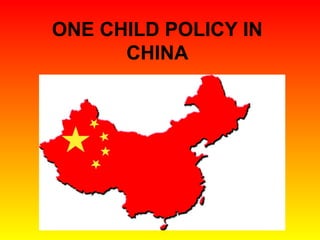
ONE CHILD POLICY IN 
CHINA
CHINESE DEMOGRAPHY 
CHINA IS THE MOST POPULATED COUNTRY IN THE WORLD 
IT HAS 1.3 BILLION OF PEOPLE, WHICH MEANS THAT THE 
20% OF THE WORLD’S POPULATION IS CHINESE 
ONE IN EVERY FIVE PEOPLE IN THE WORLD ARE CHINESE, 
BUT CHINA IS ONLY THE THIRD BIGGEST COUNTRY IN 
SURFACE 
OTHER IMPORTANT DEMOGRAPHIC INFORMATION: 
-Birth rate: 11.9 births per 1000 people (Spain: 9.1 per 1000) 
-Death rate: 7.14 deaths per 1000 people (Spain: 9 per 1000) 
-Life expectancy: 73 years old (Spain: 82 years old) 
-Fertility rate: 1.18 children per woman (Spain:1.26) 
-Infant mortality rate: 1.51 deaths per 100 live births (Spain 0,3 per 100)
WHY DOES CHINA HAVE THAT 
BIG POPULATION? 
THE PROBLEM 
1950’: For patriotic reasons the Chinese government encouraged 
people to have many children 
As a result, the population grew 55 million people every three years. 
1975: Population growth wasn’t as rapid as in the previous decades, 
but still the goverment had a problem due to the big population of 
the country and the lack of resources and services
SOLUTION 
1979: The Government decided to control the population growth. 
Thus, they introduced the “one child per family” policy. 
That policy included: 
-Couples had to be 22 (men) and 20 (woman) years old to get married 
-Couples only could have children if they were married 
-People who obeyed this policy had some benefits 
-People who didn’t obey this policy had to pay high fines. What’s 
more, woman who had a second child were forced to have an 
abortion 
However, there were some exceptions: 
1. If the first child had a handicap 
2. In the rural areas, if the first child was a girl, farmers could have a 
second child 
3. Having a second child was possible for the minorites (the non 
‘Han’ ethnics).
RESULTS 
1999: The one child policy was a success 
-The birth rate had fallen from 31 to 19 in 20 years 
- If they wouldn’t have taken that policy, the Chinese population 
would have had 230 million more people 
However, there was another problem by the end of the 20th century: 
the replacement of the population was in danger because there were 
few children to maintain the population in the future 
For that reason, Chinese authorities lifted some restriction in the 
policy. 
Nowadays, Chinese population is recovering enough young people 
to guarantee the population’s replacement in the future
RESULTS 
1999: The one child policy was a success 
-The birth rate had fallen from 31 to 19 in 20 years 
- If they wouldn’t have taken that policy, the Chinese population 
would have had 230 million more people 
However, there was another problem by the end of the 20th century: 
the replacement of the population was in danger because there were 
few children to maintain the population in the future 
For that reason, Chinese authorities lifted some restriction in the 
policy. 
Nowadays, Chinese population is recovering enough young people 
to guarantee the population’s replacement in the future

Chinese population

  • 1.
    WHY ARE SOMEPLACES OVERPOPULATED? Definition: They are the places where the number of people overweigh the availability of resources The are two reason to have an overpopulated place Increase in population Example: Bangladesh Low resources Example: Somalia
  • 2.
  • 3.
    CHINESE DEMOGRAPHY CHINAIS THE MOST POPULATED COUNTRY IN THE WORLD IT HAS 1.3 BILLION OF PEOPLE, WHICH MEANS THAT THE 20% OF THE WORLD’S POPULATION IS CHINESE ONE IN EVERY FIVE PEOPLE IN THE WORLD ARE CHINESE, BUT CHINA IS ONLY THE THIRD BIGGEST COUNTRY IN SURFACE OTHER IMPORTANT DEMOGRAPHIC INFORMATION: -Birth rate: 11.9 births per 1000 people (Spain: 9.1 per 1000) -Death rate: 7.14 deaths per 1000 people (Spain: 9 per 1000) -Life expectancy: 73 years old (Spain: 82 years old) -Fertility rate: 1.18 children per woman (Spain:1.26) -Infant mortality rate: 1.51 deaths per 100 live births (Spain 0,3 per 100)
  • 4.
    WHY DOES CHINAHAVE THAT BIG POPULATION? THE PROBLEM 1950’: For patriotic reasons the Chinese government encouraged people to have many children As a result, the population grew 55 million people every three years. 1975: Population growth wasn’t as rapid as in the previous decades, but still the goverment had a problem due to the big population of the country and the lack of resources and services
  • 5.
    SOLUTION 1979: TheGovernment decided to control the population growth. Thus, they introduced the “one child per family” policy. That policy included: -Couples had to be 22 (men) and 20 (woman) years old to get married -Couples only could have children if they were married -People who obeyed this policy had some benefits -People who didn’t obey this policy had to pay high fines. What’s more, woman who had a second child were forced to have an abortion However, there were some exceptions: 1. If the first child had a handicap 2. In the rural areas, if the first child was a girl, farmers could have a second child 3. Having a second child was possible for the minorites (the non ‘Han’ ethnics).
  • 6.
    RESULTS 1999: Theone child policy was a success -The birth rate had fallen from 31 to 19 in 20 years - If they wouldn’t have taken that policy, the Chinese population would have had 230 million more people However, there was another problem by the end of the 20th century: the replacement of the population was in danger because there were few children to maintain the population in the future For that reason, Chinese authorities lifted some restriction in the policy. Nowadays, Chinese population is recovering enough young people to guarantee the population’s replacement in the future
  • 7.
    RESULTS 1999: Theone child policy was a success -The birth rate had fallen from 31 to 19 in 20 years - If they wouldn’t have taken that policy, the Chinese population would have had 230 million more people However, there was another problem by the end of the 20th century: the replacement of the population was in danger because there were few children to maintain the population in the future For that reason, Chinese authorities lifted some restriction in the policy. Nowadays, Chinese population is recovering enough young people to guarantee the population’s replacement in the future