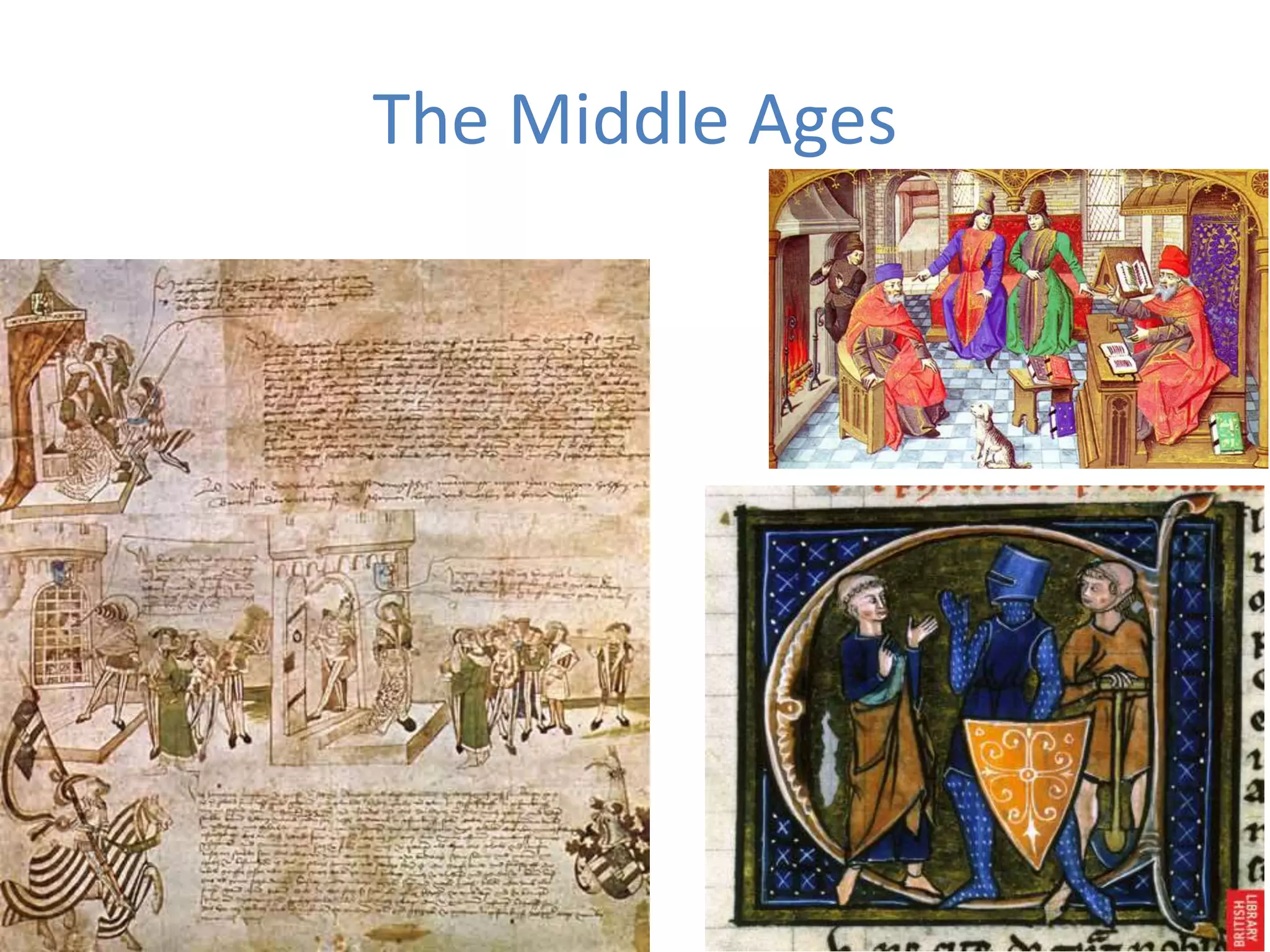
The Middle Ages
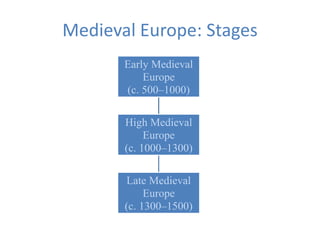
Medieval Europe: Stages
Early Medieval
Europe
(c. 500–1000)
High Medieval
Europe
(c. 1000–1300)
Late Medieval
Europe
(c. 1300–1500)
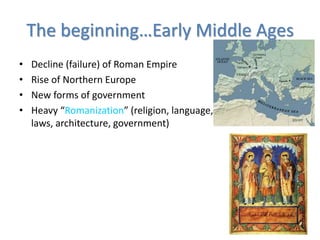
The beginning…Early Middle Ages
• Decline (failure) of Roman Empire
• Rise of Northern Europe
• New forms of government
• Heavy “Romanization” (religion, language,
laws, architecture, government)
High Middle Ages
• New royal dynasty(era) called Capetians in France
• System of primogeniture = system where eldest son inherited
everything (instead of dividing land / property / wealth)
• Lords and knights however had little loyalty and began
competing more fiercely(severely) for land, power, influence
and control
Late Middle Ages
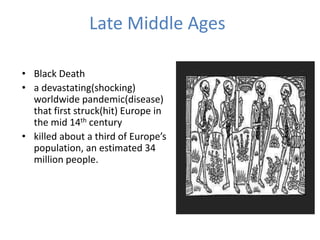
• Black Death
• a devastating(shocking)
worldwide pandemic(disease)
that first struck(hit) Europe in
the mid 14th century
• killed about a third of Europe’s
population, an estimated 34
million people.
Birth of Modern Languages
• Development of Middle Ages
• New languages born through migration, resettlement, conflict
(battle)and changes
• Old English (Anglo Saxon) began to join words taken from
Latin and Old French, Old German and Old Norse
• Roots of contemporary(modern) Spanish, Italian and other
French languages
The Feudal System
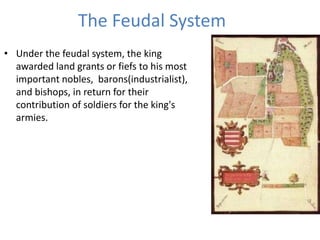
• Under the feudal system, the king
awarded land grants or fiefs to his most
important nobles, barons(industrialist),
and bishops, in return for their
contribution of soldiers for the king's
armies.
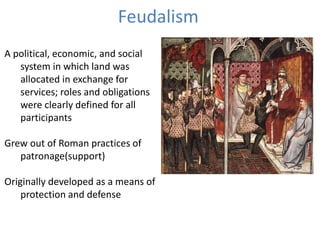
Feudalism
A political, economic, and social
system in which land was
allocated in exchange for
services; roles and obligations
were clearly defined for all
participants
Grew out of Roman practices of
patronage(support)
Originally developed as a means of
protection and defense
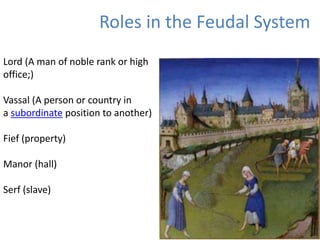
Roles in the Feudal System
Lord (A man of noble rank or high
office;)
Vassal (A person or country in
a subordinate position to another)
Fief (property)
Manor (hall)
Serf (slave)
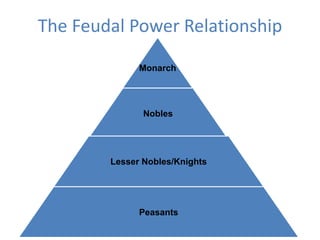
The Feudal Power Relationship
Monarch
Nobles
Lesser Nobles/Knights
Peasants
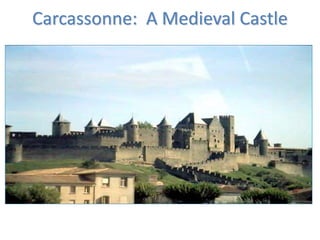
Carcassonne: A Medieval Castle
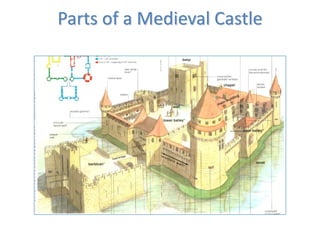
Parts of a Medieval Castle
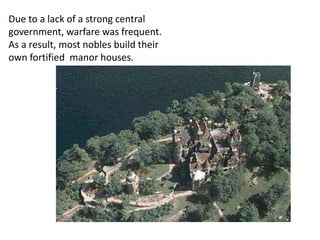
Due to a lack of a strong central
government, warfare was frequent.
As a result, most nobles build their
own fortified manor houses.
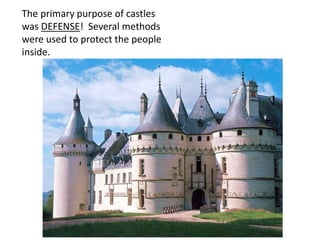
The primary purpose of castles
was DEFENSE! Several methods
were used to protect the people
inside.
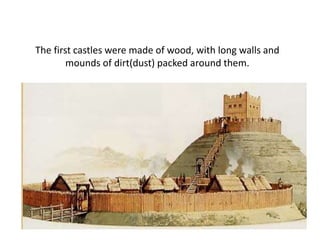
The first castles were made of wood, with long walls and
mounds of dirt(dust) packed around them.
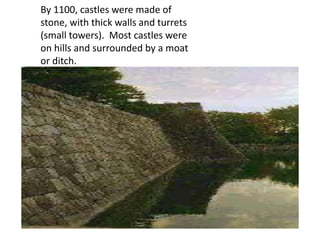
By 1100, castles were made of
stone, with thick walls and turrets
(small towers). Most castles were
on hills and surrounded by a moat
or ditch.
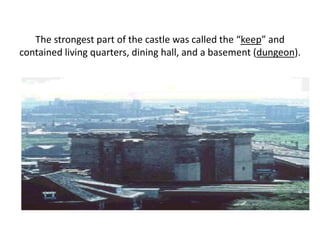
The strongest part of the castle was called the “keep” and
contained living quarters, dining hall, and a basement (dungeon).
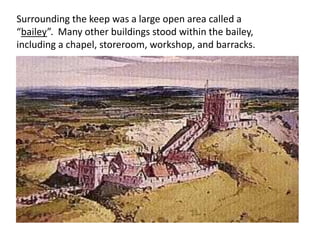
Surrounding the keep was a large open area called a
“bailey”. Many other buildings stood within the bailey,
including a chapel, storeroom, workshop, and barracks.
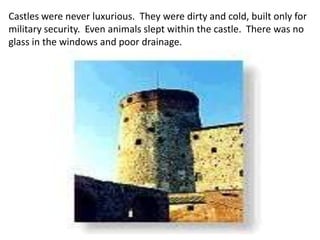
Castles were never luxurious. They were dirty and cold, built only for
military security. Even animals slept within the castle. There was no
glass in the windows and poor drainage.
The Catholic Church
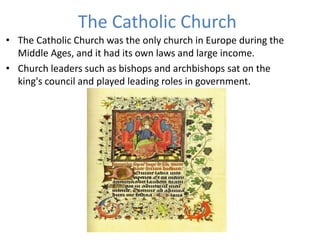
• The Catholic Church was the only church in Europe during the
Middle Ages, and it had its own laws and large income.
• Church leaders such as bishops and archbishops sat on the
king's council and played leading roles in government.
• The Church becomes more
of a political entity(body)
• Struggles with monarchs
• Expanded land ownership
The Catholic Church Expands Its
Power
Bishops
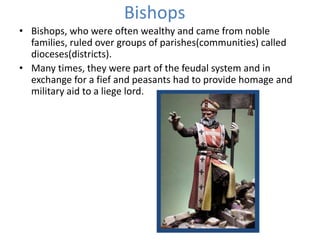
• Bishops, who were often wealthy and came from noble
families, ruled over groups of parishes(communities) called
dioceses(districts).
• Many times, they were part of the feudal system and in
exchange for a fief and peasants had to provide homage and
military aid to a liege lord.
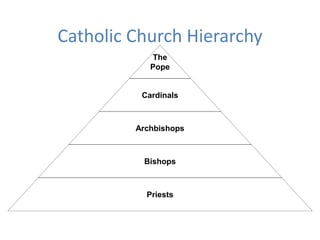
Catholic Church Hierarchy
The
Pope
Cardinals
Archbishops
Bishops
Priests
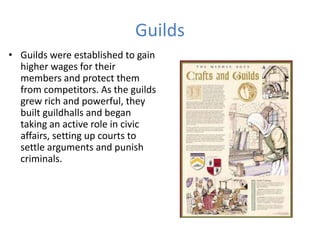
Guilds
• Guilds were established to gain
higher wages for their
members and protect them
from competitors. As the guilds
grew rich and powerful, they
built guildhalls and began
taking an active role in civic
affairs, setting up courts to
settle arguments and punish
criminals.
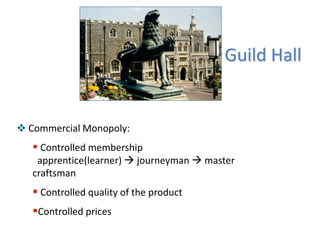
Guild Hall
 Commercial Monopoly:
 Controlled membership
apprentice(learner)  journeyman  master
craftsman
 Controlled quality of the product
Controlled prices
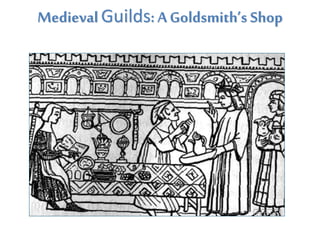
MedievalGuilds: AGoldsmith’s Shop
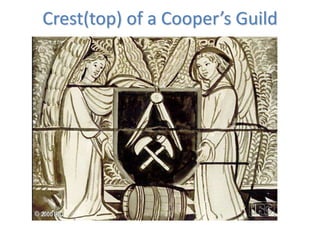
Crest(top) of a Cooper’s Guild
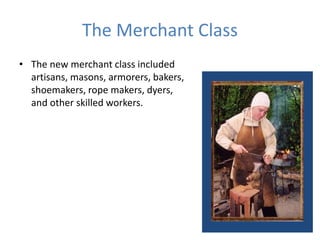
The Merchant Class
• The new merchant class included
artisans, masons, armorers, bakers,
shoemakers, rope makers, dyers,
and other skilled workers.
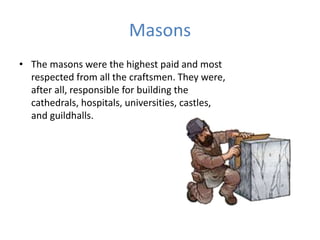
Masons
• The masons were the highest paid and most
respected from all the craftsmen. They were,
after all, responsible for building the
cathedrals, hospitals, universities, castles,
and guildhalls.

8. medival planning

  • 1.
  • 2.
    Medieval Europe: Stages EarlyMedieval Europe (c. 500–1000) High Medieval Europe (c. 1000–1300) Late Medieval Europe (c. 1300–1500)
  • 3.
    The beginning…Early MiddleAges • Decline (failure) of Roman Empire • Rise of Northern Europe • New forms of government • Heavy “Romanization” (religion, language, laws, architecture, government)
  • 4.
    High Middle Ages •New royal dynasty(era) called Capetians in France • System of primogeniture = system where eldest son inherited everything (instead of dividing land / property / wealth) • Lords and knights however had little loyalty and began competing more fiercely(severely) for land, power, influence and control
  • 5.
    Late Middle Ages •Black Death • a devastating(shocking) worldwide pandemic(disease) that first struck(hit) Europe in the mid 14th century • killed about a third of Europe’s population, an estimated 34 million people.
  • 6.
    Birth of ModernLanguages • Development of Middle Ages • New languages born through migration, resettlement, conflict (battle)and changes • Old English (Anglo Saxon) began to join words taken from Latin and Old French, Old German and Old Norse • Roots of contemporary(modern) Spanish, Italian and other French languages
  • 7.
    The Feudal System •Under the feudal system, the king awarded land grants or fiefs to his most important nobles, barons(industrialist), and bishops, in return for their contribution of soldiers for the king's armies.
  • 8.
    Feudalism A political, economic,and social system in which land was allocated in exchange for services; roles and obligations were clearly defined for all participants Grew out of Roman practices of patronage(support) Originally developed as a means of protection and defense
  • 9.
    Roles in theFeudal System Lord (A man of noble rank or high office;) Vassal (A person or country in a subordinate position to another) Fief (property) Manor (hall) Serf (slave)
  • 10.
    The Feudal PowerRelationship Monarch Nobles Lesser Nobles/Knights Peasants
  • 11.
  • 12.
    Parts of aMedieval Castle
  • 13.
    Due to alack of a strong central government, warfare was frequent. As a result, most nobles build their own fortified manor houses.
  • 14.
    The primary purposeof castles was DEFENSE! Several methods were used to protect the people inside.
  • 15.
    The first castleswere made of wood, with long walls and mounds of dirt(dust) packed around them.
  • 16.
    By 1100, castleswere made of stone, with thick walls and turrets (small towers). Most castles were on hills and surrounded by a moat or ditch.
  • 17.
    The strongest partof the castle was called the “keep” and contained living quarters, dining hall, and a basement (dungeon).
  • 18.
    Surrounding the keepwas a large open area called a “bailey”. Many other buildings stood within the bailey, including a chapel, storeroom, workshop, and barracks.
  • 19.
    Castles were neverluxurious. They were dirty and cold, built only for military security. Even animals slept within the castle. There was no glass in the windows and poor drainage.
  • 20.
    The Catholic Church •The Catholic Church was the only church in Europe during the Middle Ages, and it had its own laws and large income. • Church leaders such as bishops and archbishops sat on the king's council and played leading roles in government.
  • 21.
    • The Churchbecomes more of a political entity(body) • Struggles with monarchs • Expanded land ownership The Catholic Church Expands Its Power
  • 22.
    Bishops • Bishops, whowere often wealthy and came from noble families, ruled over groups of parishes(communities) called dioceses(districts). • Many times, they were part of the feudal system and in exchange for a fief and peasants had to provide homage and military aid to a liege lord.
  • 23.
  • 24.
    Guilds • Guilds wereestablished to gain higher wages for their members and protect them from competitors. As the guilds grew rich and powerful, they built guildhalls and began taking an active role in civic affairs, setting up courts to settle arguments and punish criminals.
  • 25.
    Guild Hall  CommercialMonopoly:  Controlled membership apprentice(learner)  journeyman  master craftsman  Controlled quality of the product Controlled prices
  • 26.
  • 27.
    Crest(top) of aCooper’s Guild
  • 28.
    The Merchant Class •The new merchant class included artisans, masons, armorers, bakers, shoemakers, rope makers, dyers, and other skilled workers.
  • 29.
    Masons • The masonswere the highest paid and most respected from all the craftsmen. They were, after all, responsible for building the cathedrals, hospitals, universities, castles, and guildhalls.