Medical Biotechnology
Chapter 11: Essence Perry
1. How can molecular biology techniques be used to
identify genetic disease?
Amniocentesis and chorionic
villus sampling are both
molecular biology techniques
that sample tissues in
embryos. Adult tissues can
be tested by karyotype
analysis, RFLP analysis,
ASO tests, and DNA
2. What is gene therapy?
The purpose of gene therapy is to
deliver therapeutic genes into humans
to treat diseases. Ex vivo gene therapy
involves removing cells, injecting the
genes into cells, and implanting them
into a patient. In vivo gene therapy
occurs within the body. Techniques to
deliver therapeutic genes include
viruses, naked DNA, targeting specific
cells/tissues.
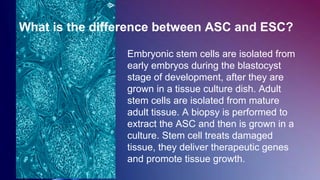
Embryonic stem cells are isolated from
early embryos during the blastocyst
stage of development, after they are
grown in a tissue culture dish. Adult
stem cells are isolated from mature
adult tissue. A biopsy is performed to
extract the ASC and then is grown in a
culture. Stem cell treats damaged
tissue, they deliver therapeutic genes
and promote tissue growth.
What is the difference between ASC and ESC?
4. Compare cloning techniques.
Reproductive Cloning
Pros:
● Child
● Cloned Human
Cons:
● Nine Months
● Identical human
Therapeutic Cloning
Pros:
● Undifferentiated
● Genetically matched
● Cure diseases
● No surrogate mother
Cons:
● Embryo needed
● Need genetic match
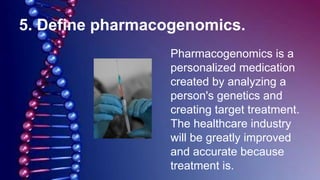
5. Define pharmacogenomics.
Pharmacogenomics is a
personalized medication
created by analyzing a
person's genetics and
creating target treatment.
The healthcare industry
will be greatly improved
and accurate because
treatment is.
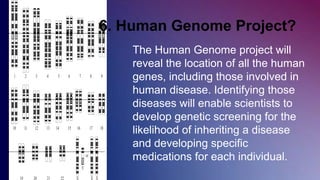
The Human Genome project will
reveal the location of all the human
genes, including those involved in
human disease. Identifying those
diseases will enable scientists to
develop genetic screening for the
likelihood of inheriting a disease
and developing specific
medications for each individual.
6. Human Genome Project?
7. Current gene therapy trials.
Currently clinical trials are
in progress at 187
countries, mostly about
neural activity, psychiatric
disorders and there are
many studies completed on
bones and arthritis.
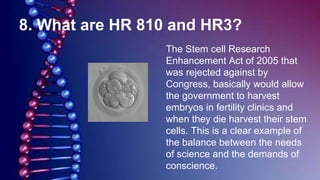
8. What are HR 810 and HR3?
The Stem cell Research
Enhancement Act of 2005 that
was rejected against by
Congress, basically would allow
the government to harvest
embryos in fertility clinics and
when they die harvest their stem
cells. This is a clear example of
the balance between the needs
of science and the demands of
conscience.
9. Gene silencing techniques.
Antisense RNA technologies
and RNAi are two common
gene silencing technologies
that can be used to inhibit a
gene involved in gene
process.
10. Regenerative medicine.
Regenerative medicine
involves creating cells,
tissues, or organs that can
repair/replace dead or
damaged tissue in a person.
11. What are SNP’s?
Single nucleotide polymorphisms
are single based changes in DNA
sequence that are responsible for
subtle genetic differences between
individual humans. SNP’s can be
detected as a way to identify
genetic changes involved in
disease.

Medical biotechnology ch.11

  • 1.
  • 2.
    1. How canmolecular biology techniques be used to identify genetic disease? Amniocentesis and chorionic villus sampling are both molecular biology techniques that sample tissues in embryos. Adult tissues can be tested by karyotype analysis, RFLP analysis, ASO tests, and DNA
  • 3.
    2. What isgene therapy? The purpose of gene therapy is to deliver therapeutic genes into humans to treat diseases. Ex vivo gene therapy involves removing cells, injecting the genes into cells, and implanting them into a patient. In vivo gene therapy occurs within the body. Techniques to deliver therapeutic genes include viruses, naked DNA, targeting specific cells/tissues.
  • 4.
    Embryonic stem cellsare isolated from early embryos during the blastocyst stage of development, after they are grown in a tissue culture dish. Adult stem cells are isolated from mature adult tissue. A biopsy is performed to extract the ASC and then is grown in a culture. Stem cell treats damaged tissue, they deliver therapeutic genes and promote tissue growth. What is the difference between ASC and ESC?
  • 5.
    4. Compare cloningtechniques. Reproductive Cloning Pros: ● Child ● Cloned Human Cons: ● Nine Months ● Identical human Therapeutic Cloning Pros: ● Undifferentiated ● Genetically matched ● Cure diseases ● No surrogate mother Cons: ● Embryo needed ● Need genetic match
  • 6.
    5. Define pharmacogenomics. Pharmacogenomicsis a personalized medication created by analyzing a person's genetics and creating target treatment. The healthcare industry will be greatly improved and accurate because treatment is.
  • 7.
    The Human Genomeproject will reveal the location of all the human genes, including those involved in human disease. Identifying those diseases will enable scientists to develop genetic screening for the likelihood of inheriting a disease and developing specific medications for each individual. 6. Human Genome Project?
  • 8.
    7. Current genetherapy trials. Currently clinical trials are in progress at 187 countries, mostly about neural activity, psychiatric disorders and there are many studies completed on bones and arthritis.
  • 9.
    8. What areHR 810 and HR3? The Stem cell Research Enhancement Act of 2005 that was rejected against by Congress, basically would allow the government to harvest embryos in fertility clinics and when they die harvest their stem cells. This is a clear example of the balance between the needs of science and the demands of conscience.
  • 10.
    9. Gene silencingtechniques. Antisense RNA technologies and RNAi are two common gene silencing technologies that can be used to inhibit a gene involved in gene process.
  • 11.
    10. Regenerative medicine. Regenerativemedicine involves creating cells, tissues, or organs that can repair/replace dead or damaged tissue in a person.
  • 12.
    11. What areSNP’s? Single nucleotide polymorphisms are single based changes in DNA sequence that are responsible for subtle genetic differences between individual humans. SNP’s can be detected as a way to identify genetic changes involved in disease.