Aquatic Biotechnology
Chapter 10: Essence Perry
1. What is the difference between transgenic fish
and triploids?
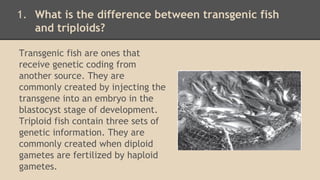
Transgenic fish are ones that
receive genetic coding from
another source. They are
commonly created by injecting the
transgene into an embryo in the
blastocyst stage of development.
Triploid fish contain three sets of
genetic information. They are
commonly created when diploid
gametes are fertilized by haploid
gametes.
2.Suggest ways to assess the risk of genetically
engineered marine species.
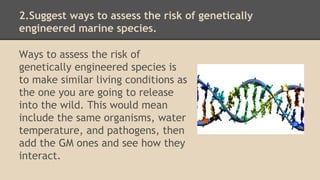
Ways to assess the risk of
genetically engineered species is
to make similar living conditions as
the one you are going to release
into the wild. This would mean
include the same organisms, water
temperature, and pathogens, then
add the GM ones and see how they
interact.
3. Create a list of benefits and problems
associated with aquaculture.
Benefits:
● Fish are pathogen free
● Provides more food
● More than enough to feed certain
population
● Fish are bigger, stronger, and
more appetizing
● Fish have better resistance to
bacterial diseases
● Fish are more tolerant to cold
temperatures
● Fish are used to study human
disease
● Fish use recycled material
Problems:
● Fisheries are under stress
● Possible environmental impact on
wild species
● Waste runoffs: hotbeds for viral
and bacterial diseases
● Overuse of antibiotics
● Escaped fish could cause
ecological disruption or species
extinction.
● Foreign fish could invade natural
species
● These fish can pollute the natural
gene pool
4. What is the most interesting aspect of
aquatic biotechnology? Why?
The genetic manipulation of fish is
my favorite aspect of aquatic
biotechnology because this allows
many different species of fish to
thrive in different environments
despite genetic limitations.
Scientists are able to manipulate
their genetic coding to change their
body temperature, muscle mass,
and more.
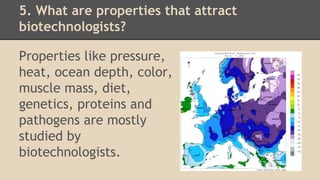
5. What are properties that attract
biotechnologists?
Properties like pressure,
heat, ocean depth, color,
muscle mass, diet,
genetics, proteins and
pathogens are mostly
studied by
biotechnologists.
6. Name examples of shellfish and finfish
species that are important for aquaculture.
● Catfish
● Crawfish
● Trout
● Salmon
● Baitfish
● Tilapia
● Bass
● Quahogs
● Sturgeon
● Carp
● Yellowtail
● Bream
● Goldfish
● Oysters
● Clams
● Mussels
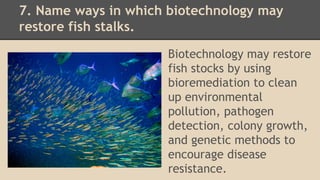
7. Name ways in which biotechnology may
restore fish stalks.
Biotechnology may restore
fish stocks by using
bioremediation to clean
up environmental
pollution, pathogen
detection, colony growth,
and genetic methods to
encourage disease
resistance.
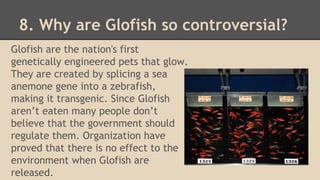
8. Why are Glofish so controversial?
Glofish are the nation's first
genetically engineered pets that glow.
They are created by splicing a sea
anemone gene into a zebrafish,
making it transgenic. Since Glofish
aren’t eaten many people don’t
believe that the government should
regulate them. Organization have
proved that there is no effect to the
environment when Glofish are
released.
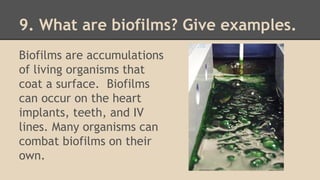
9. What are biofilms? Give examples.
Biofilms are accumulations
of living organisms that
coat a surface. Biofilms
can occur on the heart
implants, teeth, and IV
lines. Many organisms can
combat biofilms on their
own.
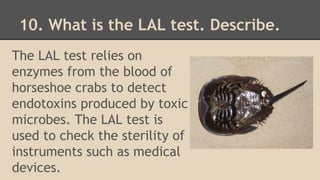
10. What is the LAL test. Describe.
The LAL test relies on
enzymes from the blood of
horseshoe crabs to detect
endotoxins produced by toxic
microbes. The LAL test is
used to check the sterility of
instruments such as medical
devices.

Aquatic biotechnology Chapter 10

  • 1.
  • 2.
    1. What isthe difference between transgenic fish and triploids? Transgenic fish are ones that receive genetic coding from another source. They are commonly created by injecting the transgene into an embryo in the blastocyst stage of development. Triploid fish contain three sets of genetic information. They are commonly created when diploid gametes are fertilized by haploid gametes.
  • 3.
    2.Suggest ways toassess the risk of genetically engineered marine species. Ways to assess the risk of genetically engineered species is to make similar living conditions as the one you are going to release into the wild. This would mean include the same organisms, water temperature, and pathogens, then add the GM ones and see how they interact.
  • 4.
    3. Create alist of benefits and problems associated with aquaculture. Benefits: ● Fish are pathogen free ● Provides more food ● More than enough to feed certain population ● Fish are bigger, stronger, and more appetizing ● Fish have better resistance to bacterial diseases ● Fish are more tolerant to cold temperatures ● Fish are used to study human disease ● Fish use recycled material Problems: ● Fisheries are under stress ● Possible environmental impact on wild species ● Waste runoffs: hotbeds for viral and bacterial diseases ● Overuse of antibiotics ● Escaped fish could cause ecological disruption or species extinction. ● Foreign fish could invade natural species ● These fish can pollute the natural gene pool
  • 5.
    4. What isthe most interesting aspect of aquatic biotechnology? Why? The genetic manipulation of fish is my favorite aspect of aquatic biotechnology because this allows many different species of fish to thrive in different environments despite genetic limitations. Scientists are able to manipulate their genetic coding to change their body temperature, muscle mass, and more.
  • 6.
    5. What areproperties that attract biotechnologists? Properties like pressure, heat, ocean depth, color, muscle mass, diet, genetics, proteins and pathogens are mostly studied by biotechnologists.
  • 7.
    6. Name examplesof shellfish and finfish species that are important for aquaculture. ● Catfish ● Crawfish ● Trout ● Salmon ● Baitfish ● Tilapia ● Bass ● Quahogs ● Sturgeon ● Carp ● Yellowtail ● Bream ● Goldfish ● Oysters ● Clams ● Mussels
  • 8.
    7. Name waysin which biotechnology may restore fish stalks. Biotechnology may restore fish stocks by using bioremediation to clean up environmental pollution, pathogen detection, colony growth, and genetic methods to encourage disease resistance.
  • 9.
    8. Why areGlofish so controversial? Glofish are the nation's first genetically engineered pets that glow. They are created by splicing a sea anemone gene into a zebrafish, making it transgenic. Since Glofish aren’t eaten many people don’t believe that the government should regulate them. Organization have proved that there is no effect to the environment when Glofish are released.
  • 10.
    9. What arebiofilms? Give examples. Biofilms are accumulations of living organisms that coat a surface. Biofilms can occur on the heart implants, teeth, and IV lines. Many organisms can combat biofilms on their own.
  • 11.
    10. What isthe LAL test. Describe. The LAL test relies on enzymes from the blood of horseshoe crabs to detect endotoxins produced by toxic microbes. The LAL test is used to check the sterility of instruments such as medical devices.