Genetic screening & 
Gene therapy 
Dr. Dinesh T 
Junior resident, 
Department of Physiology, 
JIPMER 
Dr sclero dinesh
Introduction
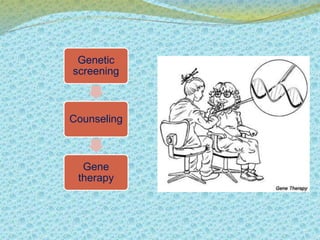
Genetic 
screening 
Counseling 
Gene 
therapy
History 
 Technology to detect and treat inborn diseases - 
1961. 
 1972 Friedmann and Roblin authored a paper in 
Science titled "Gene therapy for human genetic 
disease?“ 
 The late 1980's, an international team of 
scientists began the project to map the human 
genome. 
 September 14, 1990 - first approved gene 
therapy case in the United States took place.
 1992 - Doctor Claudio Bordignon, Milan, Italy 
performed the first procedure of gene therapy using 
hematopoietic stem cells. 
 1995 DNA testing in forensic cases gains fame in the 
O.J. Simpson trial. 
 2002 - first successful gene therapy treatment for 
adenosine deaminase-deficiency (SCID) 
 2003 – at University of California, Los Angeles 
research team inserted genes into the brain using 
liposome coated in a polymer called polyethylene 
glycol
 2006 - Preston Nix from the University of Pennsylvania 
School of Medicine reported on VRX496, a gene-based 
immunotherapy for the treatment of human 
immunodeficiency virus (HIV) that uses a lentiviral vector 
for delivery of an antisense gene against the HIV 
envelope 
 2007 – Moorfields Eye Hospital and University College 
London's Institute of Ophthalmology announced the 
world's first gene therapy trial for inherited retinal disease 
 2008 there were more than 1,200 clinically applicable 
genetic tests available.
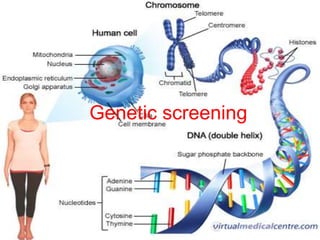
Genetic screening
What is genetic screening? 
 The newest and most sophisticated of the 
techniques used to test for genetic disorders. 
 One of the fastest moving fields in medical science. 
 A technique to determine the genotype or phenotype 
of an organism. 
 Determines risk of having or passing on a genetic 
disorder.
Genetic screening 
 Genetic screening is often used to detect faulty or 
abnormal genes in an organism 
 Can detect some genes related to an increased 
risk of cancer 
 Can detect some genes known to cause genetic 
disorders
Genetic tests 
The analysis of chromosomes (DNA), proteins, 
and certain metabolites in order to detect 
heritable disease-related genotypes, mutations, 
phenotypes, or karyotype for clinical purposes.
 Gene tests (also called DNA-based tests), in a 
broader sense 
 Direct examination of the DNA molecule 
 Biochemical tests for such gene products as 
enzymes and other proteins 
 Microscopic examination of stained or fluorescent 
chromosomes
Genetic tests 
 Who can order? 
 What are the samples needed? 
 How to interpret the tests? 
 What are all the risks? 
 Ethical considerations?
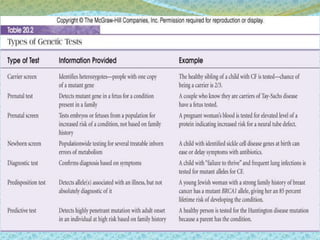
Types of screening tests 
• Carrier screening 
• Prenatal diagnostic testing 
• Newborn screening 
• Pre symptomatic testing for predicting adult-onset 
disorders such as Huntington's disease 
• Pre symptomatic testing for estimating the risk of 
developing Adult-onset cancers and Alzheimer's disease. 
• Conformational diagnosis of a symptomatic individual 
• Pre implantation genetic diagnosis 
• Forensic/ identity testing 
• Research 
• Pharmacogenomics
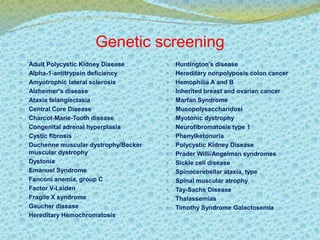
Genetic screening 
 Adult Polycystic Kidney Disease 
 Alpha-1-antitrypsin deficiency 
 Amyotrophic lateral sclerosis 
 Alzheimer's disease 
 Ataxia telangiectasia 
 Central Core Disease 
 Charcot-Marie-Tooth disease 
 Congenital adrenal hyperplasia 
 Cystic fibrosis 
 Duchenne muscular dystrophy/Becker 
muscular dystrophy 
 Dystonia 
 Emanuel Syndrome 
 Fanconi anemia, group C 
 Factor V-Leiden 
 Fragile X syndrome 
 Gaucher disease 
 Hereditary Hemochromatosis 
 Huntington's disease 
 Hereditary nonpolyposis colon cancer 
 Hemophilia A and B 
 Inherited breast and ovarian cancer 
 Marfan Syndrome 
 Mucopolysaccharidosi 
 Myotonic dystrophy 
 Neurofibromatosis type 1 
 Phenylketonuria 
 Polycystic Kidney Disease 
 Prader Willi/Angelman syndromes 
 Sickle cell disease 
 Spinocerebellar ataxia, type 
 Spinal muscular atrophy 
 Tay-Sachs Disease 
 Thalassemias 
 Timothy Syndrome Galactosemia
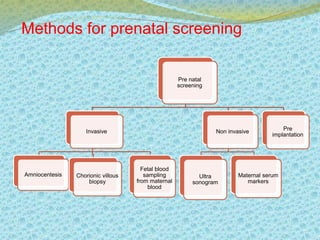
Methods for prenatal screening 
Pre natal 
screening 
Invasive 
Amniocentesis Chorionic villous 
biopsy 
Fetal blood 
sampling 
from maternal 
blood 
Non invasive 
Ultra 
sonogram 
Maternal serum 
markers 
Pre 
implantation
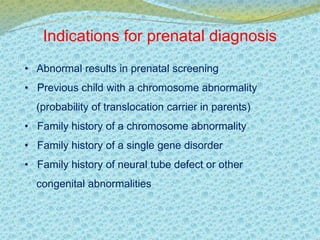
Indications for prenatal diagnosis 
• Abnormal results in prenatal screening 
• Previous child with a chromosome abnormality 
(probability of translocation carrier in parents) 
• Family history of a chromosome abnormality 
• Family history of a single gene disorder 
• Family history of neural tube defect or other 
congenital abnormalities
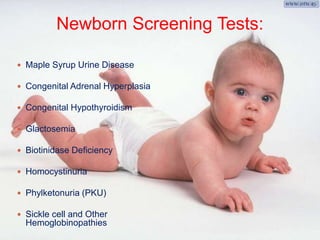
Newborn Screening Tests: 
 Maple Syrup Urine Disease 
 Congenital Adrenal Hyperplasia 
 Congenital Hypothyroidism 
 Glactosemia 
 Biotinidase Deficiency 
 Homocystinuria 
 Phylketonuria (PKU) 
 Sickle cell and Other 
Hemoglobinopathies
Pre implantation Genetic Diagnosis 
(PGD) 
 Pre implantation Genetic Diagnosis (PGD) uses in 
vitro fertilisation (IVF) to create embryos. 
 Tests one or two cells from each embryo for a 
specific genetic abnormality. 
 Identifies unaffected embryos for transfer to the 
uterus. 
 The approach through PGD assists couples at risk of 
an inherited disorder to avoid the birth of an affected 
child without going through selective pregnancy 
termination.
Pros and cones of gene testing 
• To clarify a diagnosis and direct a physician 
• To avoid having children with devastating diseases 
• Identify people at high risk 
• Provide doctors with a simple diagnostic test 
• Transforming it from a usually fatal condition to a treatable one 
• Possibility of laboratory errors 
• Potential for provoking anxiety, and risks for discrimination 
social stigmatization could outweigh the benefits of testing
Genetic counseling
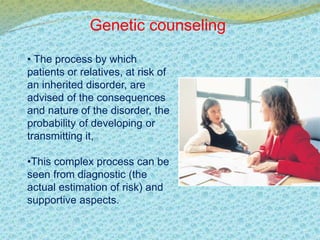
Genetic counseling 
• The process by which 
patients or relatives, at risk of 
an inherited disorder, are 
advised of the consequences 
and nature of the disorder, the 
probability of developing or 
transmitting it, 
•This complex process can be 
seen from diagnostic (the 
actual estimation of risk) and 
supportive aspects.
When can we do counseling? 
• Conception (i.e. when one or two of the parents are 
carriers of a certain trait) 
• During pregnancy (i.e. if an abnormality is noted on an 
ultrasound or if the woman will be over 35 at delivery) 
• After birth (if a birth defect is seen) 
• During childhood (i.e. if the child has developmental 
delay) 
• During adulthood (for adult onset genetic conditions 
such as Huntington’s disease or hereditary cancer 
syndromes).
•The couple should be counselled by a genetic 
counsellor to inform them of the test results and the 
risks to the foetus. 
•Providing the options open to them in 
management and family planning in order to 
prevent, avoid or ameliorate it. 
•Autonomy of decision is crucial. 
•The ethical, legal, and religious issues should be 
respected.
Direct-to-Consumer (DTC) genetic testing 
• A type of genetic test that is accessible directly to 
the consumer without having to go through a 
health care professional. 
• A variety of DTC tests, ranging from testing for 
breast cancer alleles to mutations linked to cystic 
fibrosis. 
• Benefits of DTC testing are the accessibility of 
tests to consumers, promotion of proactive 
healthcare and the privacy of genetic information. 
• Risks of DTC testing are the lack of governmental 
regulation and the potential misinterpretation of 
genetic information.
Gene therapy
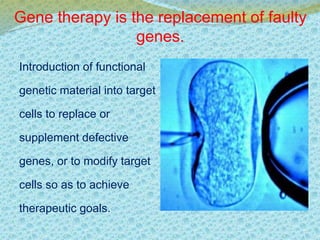
Gene therapy is the replacement of faulty 
genes. 
Introduction of functional 
genetic material into target 
cells to replace or 
supplement defective 
genes, or to modify target 
cells so as to achieve 
therapeutic goals.
In theory it is possible to transform either somatic 
cells (most cells of the body) or cells of the germ 
line (such as sperm cells, ova, and their stem cell 
precursors).
• All gene therapy so far in people has been 
directed at somatic cells. 
• Germ line engineering in humans remains only a 
highly controversial prospect.
For the introduced gene to be transmitted 
normally to offspring, it needs not only to be 
inserted into the cell, but also to be incorporated 
into the chromosomes by genetic recombination
Somatic Cell Therapy 
This is when a gene is introduced into a 
patient to help them recover from a 
disease.
Germ Line Therapy 
Changes are made to genes that will affect 
subsequent generations.
Applications of Gene Therapy 
 Radical cure of single gene diseases e.g. 
cystic fibrosis, haemoglobinopathies. 
 Amelioration of diseases with or without a genetic 
component e.g. malignancies, neurodegenerative 
diseases, infectious diseases.
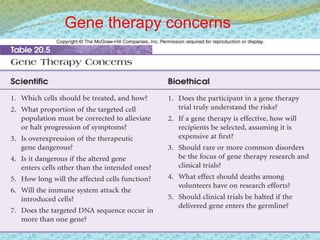
Gene therapy concerns
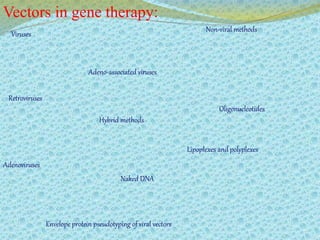
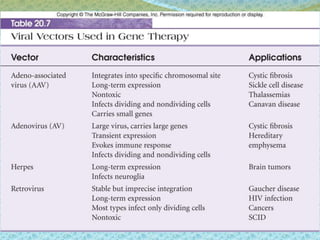
Vectors in gene therapy: 
Viruses 
Retroviruses 
Adenoviruses 
Adeno-associated viruses 
Envelope protein pseudotyping of viral vectors 
Non-viral methods 
Naked DNA 
Oligonucleotides 
Lipoplexes and polyplexes 
Hybrid methods
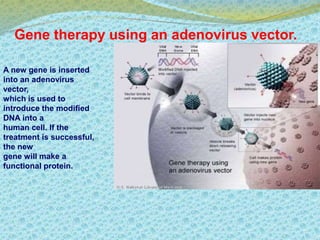
Gene therapy using an adenovirus vector. 
A new gene is inserted 
into an adenovirus 
vector, 
which is used to 
introduce the modified 
DNA into a 
human cell. If the 
treatment is successful, 
the new 
gene will make a 
functional protein.
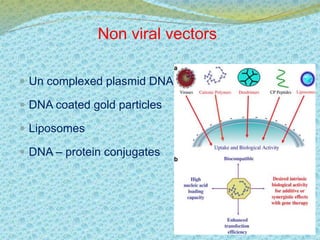
Non viral vectors 
 Un complexed plasmid DNA 
 DNA coated gold particles 
 Liposomes 
 DNA – protein conjugates
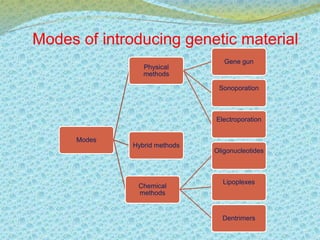
Modes of introducing genetic material 
Modes 
Physical 
methods 
Gene gun 
Sonoporation 
Electroporation 
Hybrid methods 
Chemical 
methods 
Oligonucleotides 
Lipoplexes 
Dentrimers
Un complexed Plasmid DNA 
 Purified DNA or mRNA injected directly 
into tissues 
 Injected into muscle and skin 
 • Utility in immunization/ vaccination against 
Infectious diseases 
• Ectopic synthesis of therapeutic proteins 
as erythropoietin.
DNA coated Gold particles 
• Plasmid DNA + Gold particles ( 1 micron india) 
• “shot” into cells using electric spark or 
pressurized gas – “gene gun” 
• Epidermis 
• Skin tumours (melanomas) 
• Gene mediated immunization
Liposomes 
 • DNA surrounded by hydrophobic molecules 
 • Anionic – given i.v. Targets reticuloendothelial cells of liver 
 • Cationic – transgene expression in most tissues if given 
in afferent blood supply 
 • Intra airway injection or aerosol to target -lung epithelium
DNA- Protein conjugates 
 • Cell- specific DNA delivery systems 
 • Utilize unique cell surface receptors on 
 target cells 
 • Chemical cross linking methods used
Methods 
• A normal gene may be inserted into a nonspecific location 
within the genome to replace a nonfunctional gene. 
• An abnormal gene could be swapped for a normal gene 
through homologous recombination. 
• The abnormal gene could be repaired through selective 
reverse mutation, which returns the gene to its normal 
function. 
•The regulation (the degree to which a gene is turned on or off) 
of a particular gene could be altered.
Gene Transfer techniques 
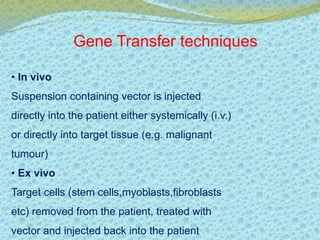
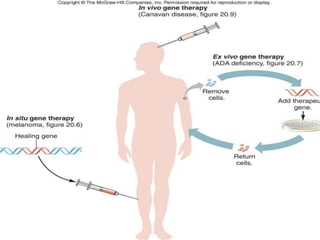
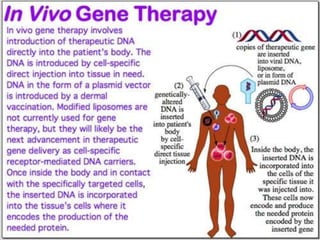
• In vivo 
Suspension containing vector is injected 
directly into the patient either systemically (i.v.) 
or directly into target tissue (e.g. malignant 
tumour) 
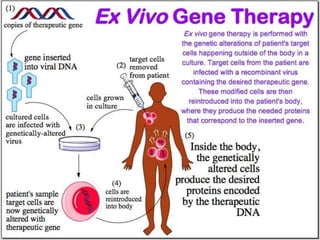
• Ex vivo 
Target cells (stem cells,myoblasts,fibroblasts 
etc) removed from the patient, treated with 
vector and injected back into the patient
Spectrum of gene expression 
 Gene replacement for single gene disorders 
 Gene repair 
 Gene inactivation 
 Ectopic synthesis of therapeutic proteins 
 Cancer gene therapy
A) Immunodeficiency Disorders 
 Adenosine Deaminase Deficiency 
 X- linked SCID 
 Chronic Granulomatous disease 
B) Liver Disease 
 Familial Hypercholesterolemia 
 Haemophilia A 
Target diseases
 Hemoglobinopathies 
 D) Lung Diseases 
• Cystic Fibrosis 
• α- 1 Antitrypsin Deficiency 
 E) Skeletal Muscle 
• Duchene Muscular Dystrophy 
• Limb Girdle Muscular Dystrophy
Challenges 
• Short-lived nature of gene therapy 
• Difficult to treat multi gene or multi factorial disease 
• Inserting gene into correct cells. 
• Controlling gene expression. Possibility of over expression 
• Damage to the host gene 
• Acquirement of virulence 
• Chance of inducing a tumour (insertional mutagenesis)
Conclusion
Thank u all….

Geneticscreeninggenetherapy 110917104755-phpapp01

  • 1.
    Genetic screening & Gene therapy Dr. Dinesh T Junior resident, Department of Physiology, JIPMER Dr sclero dinesh
  • 2.
  • 3.
  • 4.
    History  Technologyto detect and treat inborn diseases - 1961.  1972 Friedmann and Roblin authored a paper in Science titled "Gene therapy for human genetic disease?“  The late 1980's, an international team of scientists began the project to map the human genome.  September 14, 1990 - first approved gene therapy case in the United States took place.
  • 5.
     1992 -Doctor Claudio Bordignon, Milan, Italy performed the first procedure of gene therapy using hematopoietic stem cells.  1995 DNA testing in forensic cases gains fame in the O.J. Simpson trial.  2002 - first successful gene therapy treatment for adenosine deaminase-deficiency (SCID)  2003 – at University of California, Los Angeles research team inserted genes into the brain using liposome coated in a polymer called polyethylene glycol
  • 6.
     2006 -Preston Nix from the University of Pennsylvania School of Medicine reported on VRX496, a gene-based immunotherapy for the treatment of human immunodeficiency virus (HIV) that uses a lentiviral vector for delivery of an antisense gene against the HIV envelope  2007 – Moorfields Eye Hospital and University College London's Institute of Ophthalmology announced the world's first gene therapy trial for inherited retinal disease  2008 there were more than 1,200 clinically applicable genetic tests available.
  • 7.
  • 8.
    What is geneticscreening?  The newest and most sophisticated of the techniques used to test for genetic disorders.  One of the fastest moving fields in medical science.  A technique to determine the genotype or phenotype of an organism.  Determines risk of having or passing on a genetic disorder.
  • 9.
    Genetic screening Genetic screening is often used to detect faulty or abnormal genes in an organism  Can detect some genes related to an increased risk of cancer  Can detect some genes known to cause genetic disorders
  • 10.
    Genetic tests Theanalysis of chromosomes (DNA), proteins, and certain metabolites in order to detect heritable disease-related genotypes, mutations, phenotypes, or karyotype for clinical purposes.
  • 11.
     Gene tests(also called DNA-based tests), in a broader sense  Direct examination of the DNA molecule  Biochemical tests for such gene products as enzymes and other proteins  Microscopic examination of stained or fluorescent chromosomes
  • 12.
    Genetic tests Who can order?  What are the samples needed?  How to interpret the tests?  What are all the risks?  Ethical considerations?
  • 13.
    Types of screeningtests • Carrier screening • Prenatal diagnostic testing • Newborn screening • Pre symptomatic testing for predicting adult-onset disorders such as Huntington's disease • Pre symptomatic testing for estimating the risk of developing Adult-onset cancers and Alzheimer's disease. • Conformational diagnosis of a symptomatic individual • Pre implantation genetic diagnosis • Forensic/ identity testing • Research • Pharmacogenomics
  • 15.
    Genetic screening Adult Polycystic Kidney Disease  Alpha-1-antitrypsin deficiency  Amyotrophic lateral sclerosis  Alzheimer's disease  Ataxia telangiectasia  Central Core Disease  Charcot-Marie-Tooth disease  Congenital adrenal hyperplasia  Cystic fibrosis  Duchenne muscular dystrophy/Becker muscular dystrophy  Dystonia  Emanuel Syndrome  Fanconi anemia, group C  Factor V-Leiden  Fragile X syndrome  Gaucher disease  Hereditary Hemochromatosis  Huntington's disease  Hereditary nonpolyposis colon cancer  Hemophilia A and B  Inherited breast and ovarian cancer  Marfan Syndrome  Mucopolysaccharidosi  Myotonic dystrophy  Neurofibromatosis type 1  Phenylketonuria  Polycystic Kidney Disease  Prader Willi/Angelman syndromes  Sickle cell disease  Spinocerebellar ataxia, type  Spinal muscular atrophy  Tay-Sachs Disease  Thalassemias  Timothy Syndrome Galactosemia
  • 16.
    Methods for prenatalscreening Pre natal screening Invasive Amniocentesis Chorionic villous biopsy Fetal blood sampling from maternal blood Non invasive Ultra sonogram Maternal serum markers Pre implantation
  • 17.
    Indications for prenataldiagnosis • Abnormal results in prenatal screening • Previous child with a chromosome abnormality (probability of translocation carrier in parents) • Family history of a chromosome abnormality • Family history of a single gene disorder • Family history of neural tube defect or other congenital abnormalities
  • 18.
    Newborn Screening Tests:  Maple Syrup Urine Disease  Congenital Adrenal Hyperplasia  Congenital Hypothyroidism  Glactosemia  Biotinidase Deficiency  Homocystinuria  Phylketonuria (PKU)  Sickle cell and Other Hemoglobinopathies
  • 19.
    Pre implantation GeneticDiagnosis (PGD)  Pre implantation Genetic Diagnosis (PGD) uses in vitro fertilisation (IVF) to create embryos.  Tests one or two cells from each embryo for a specific genetic abnormality.  Identifies unaffected embryos for transfer to the uterus.  The approach through PGD assists couples at risk of an inherited disorder to avoid the birth of an affected child without going through selective pregnancy termination.
  • 20.
    Pros and conesof gene testing • To clarify a diagnosis and direct a physician • To avoid having children with devastating diseases • Identify people at high risk • Provide doctors with a simple diagnostic test • Transforming it from a usually fatal condition to a treatable one • Possibility of laboratory errors • Potential for provoking anxiety, and risks for discrimination social stigmatization could outweigh the benefits of testing
  • 21.
  • 22.
    Genetic counseling •The process by which patients or relatives, at risk of an inherited disorder, are advised of the consequences and nature of the disorder, the probability of developing or transmitting it, •This complex process can be seen from diagnostic (the actual estimation of risk) and supportive aspects.
  • 23.
    When can wedo counseling? • Conception (i.e. when one or two of the parents are carriers of a certain trait) • During pregnancy (i.e. if an abnormality is noted on an ultrasound or if the woman will be over 35 at delivery) • After birth (if a birth defect is seen) • During childhood (i.e. if the child has developmental delay) • During adulthood (for adult onset genetic conditions such as Huntington’s disease or hereditary cancer syndromes).
  • 24.
    •The couple shouldbe counselled by a genetic counsellor to inform them of the test results and the risks to the foetus. •Providing the options open to them in management and family planning in order to prevent, avoid or ameliorate it. •Autonomy of decision is crucial. •The ethical, legal, and religious issues should be respected.
  • 25.
    Direct-to-Consumer (DTC) genetictesting • A type of genetic test that is accessible directly to the consumer without having to go through a health care professional. • A variety of DTC tests, ranging from testing for breast cancer alleles to mutations linked to cystic fibrosis. • Benefits of DTC testing are the accessibility of tests to consumers, promotion of proactive healthcare and the privacy of genetic information. • Risks of DTC testing are the lack of governmental regulation and the potential misinterpretation of genetic information.
  • 26.
  • 27.
    Gene therapy isthe replacement of faulty genes. Introduction of functional genetic material into target cells to replace or supplement defective genes, or to modify target cells so as to achieve therapeutic goals.
  • 28.
    In theory itis possible to transform either somatic cells (most cells of the body) or cells of the germ line (such as sperm cells, ova, and their stem cell precursors).
  • 29.
    • All genetherapy so far in people has been directed at somatic cells. • Germ line engineering in humans remains only a highly controversial prospect.
  • 30.
    For the introducedgene to be transmitted normally to offspring, it needs not only to be inserted into the cell, but also to be incorporated into the chromosomes by genetic recombination
  • 31.
    Somatic Cell Therapy This is when a gene is introduced into a patient to help them recover from a disease.
  • 32.
    Germ Line Therapy Changes are made to genes that will affect subsequent generations.
  • 33.
    Applications of GeneTherapy  Radical cure of single gene diseases e.g. cystic fibrosis, haemoglobinopathies.  Amelioration of diseases with or without a genetic component e.g. malignancies, neurodegenerative diseases, infectious diseases.
  • 34.
  • 35.
    Vectors in genetherapy: Viruses Retroviruses Adenoviruses Adeno-associated viruses Envelope protein pseudotyping of viral vectors Non-viral methods Naked DNA Oligonucleotides Lipoplexes and polyplexes Hybrid methods
  • 37.
    Gene therapy usingan adenovirus vector. A new gene is inserted into an adenovirus vector, which is used to introduce the modified DNA into a human cell. If the treatment is successful, the new gene will make a functional protein.
  • 38.
    Non viral vectors  Un complexed plasmid DNA  DNA coated gold particles  Liposomes  DNA – protein conjugates
  • 39.
    Modes of introducinggenetic material Modes Physical methods Gene gun Sonoporation Electroporation Hybrid methods Chemical methods Oligonucleotides Lipoplexes Dentrimers
  • 40.
    Un complexed PlasmidDNA  Purified DNA or mRNA injected directly into tissues  Injected into muscle and skin  • Utility in immunization/ vaccination against Infectious diseases • Ectopic synthesis of therapeutic proteins as erythropoietin.
  • 41.
    DNA coated Goldparticles • Plasmid DNA + Gold particles ( 1 micron india) • “shot” into cells using electric spark or pressurized gas – “gene gun” • Epidermis • Skin tumours (melanomas) • Gene mediated immunization
  • 42.
    Liposomes  •DNA surrounded by hydrophobic molecules  • Anionic – given i.v. Targets reticuloendothelial cells of liver  • Cationic – transgene expression in most tissues if given in afferent blood supply  • Intra airway injection or aerosol to target -lung epithelium
  • 43.
    DNA- Protein conjugates  • Cell- specific DNA delivery systems  • Utilize unique cell surface receptors on  target cells  • Chemical cross linking methods used
  • 44.
    Methods • Anormal gene may be inserted into a nonspecific location within the genome to replace a nonfunctional gene. • An abnormal gene could be swapped for a normal gene through homologous recombination. • The abnormal gene could be repaired through selective reverse mutation, which returns the gene to its normal function. •The regulation (the degree to which a gene is turned on or off) of a particular gene could be altered.
  • 45.
    Gene Transfer techniques • In vivo Suspension containing vector is injected directly into the patient either systemically (i.v.) or directly into target tissue (e.g. malignant tumour) • Ex vivo Target cells (stem cells,myoblasts,fibroblasts etc) removed from the patient, treated with vector and injected back into the patient
  • 49.
    Spectrum of geneexpression  Gene replacement for single gene disorders  Gene repair  Gene inactivation  Ectopic synthesis of therapeutic proteins  Cancer gene therapy
  • 50.
    A) Immunodeficiency Disorders  Adenosine Deaminase Deficiency  X- linked SCID  Chronic Granulomatous disease B) Liver Disease  Familial Hypercholesterolemia  Haemophilia A Target diseases
  • 51.
     Hemoglobinopathies D) Lung Diseases • Cystic Fibrosis • α- 1 Antitrypsin Deficiency  E) Skeletal Muscle • Duchene Muscular Dystrophy • Limb Girdle Muscular Dystrophy
  • 52.
    Challenges • Short-livednature of gene therapy • Difficult to treat multi gene or multi factorial disease • Inserting gene into correct cells. • Controlling gene expression. Possibility of over expression • Damage to the host gene • Acquirement of virulence • Chance of inducing a tumour (insertional mutagenesis)
  • 53.
  • 54.