Molecular
Pharming

Presented by: C.G.O. Gaas
Introduction to Biotechnology
Chemical Engineering Department
CIT-University
Molecular Pharming
History and Definition
How is it done?
Advantages and Disadvantages
Examples and its Applications
Biosafety Issues of Molecular Faming
What is Molecular Pharming?
The use of whole organisms, organs, tissues or
cells, or cell cultures, as bio-reactors for the
production of commercially valuable products
via recombinant DNA techniques.
Difference between Molecular pharming and
Molecular farming
Molecular pharming
-It is defined as the production
of active pharmaceutical
substances in genetically
modified organisms
(GMOs).
-Plants are preferred as plants
do not carry pathogens. Still the
safety of GMO is a concern.
-First plant derived
pharmaceutical protein is serum
albumin.

Molecular farming
It is defined as the use of
genetically modified
organisms (GMOs) as a
production platform for
renewable raw materials,
fine chemicals and
dietary
supplements
History
•

1986

First plant -derived recombinant therapeutic proteinhuman GH in tobacco & sunflower. (A. Barta, D. Thompson et al.)

•

1989 First plant -derived recombinant antibody – full-sized IgG in
tobacco. (A. Hiatt, K. Bowdish)

•

1990 First native human protein produced in plants –
human serum albumin in tobacco & potato. (P. C. Sijmons et al.)

•

1992 First native human protein produced in plants –
human serum albumin in tobacco & potato. (P. C. Sijmons et al.)

•

1995

First plant derived industrial enzyme – α-amylase in tobacco.
(J.Pen, L. Molendijk et al.)
History
•

1996 First plant derivedprotein polymer
tobacco. (X. Zhang, D. W. Urry, H. Daniel)

–

artificial

elastin

•

1997

•

1997 Commercial production of avidin in maize.(E. E. Hood et al.)

•

2000

•

2003 Human GH produced in tobacco chloroplast.(J. M. Staub et al.)
Expression and assembly of a functional antibody in algae
Commercial production of bovine trypsin in maize.(S. L. Woodard )

First clinical trial using recombinant bacterial
delivered in a transgenic potato. (C. O. Tacket et al.)

in

antigen

Human GH produced in tobacco chloroplast.(J. M. Staub et al.)
How is it done?

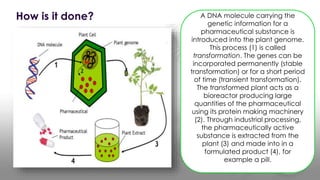
A DNA molecule carrying the
genetic information for a
pharmaceutical substance is
introduced into the plant genome.
This process (1) is called
transformation. The genes can be
incorporated permanently (stable
transformation) or for a short period
of time (transient transformation).
The transformed plant acts as a
bioreactor producing large
quantities of the pharmaceutical
using its protein making machinery
(2). Through industrial processing,
the pharmaceutically active
substance is extracted from the
plant (3) and made into in a
formulated product (4), for
example a pill.
How is it done?
Virus (left) with
genetic material
inside and surface
proteins (green
and orange) on
the outside. Viruslike particle (on
the right) without
genetic material
and some virus
surface proteins
(green)
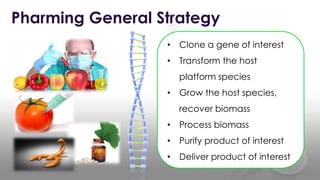
Pharming General Strategy
• Clone a gene of interest
• Transform the host

platform species
• Grow the host species,
recover biomass
• Process biomass
• Purify product of interest
• Deliver product of interest
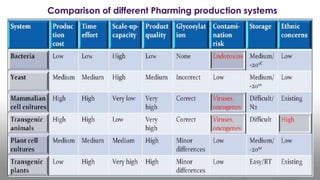
Comparison of different Pharming production systems
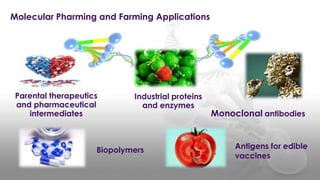
Molecular Pharming and Farming Applications

Parental therapeutics
and pharmaceutical
intermediates

Industrial proteins
and enzymes

Biopolymers

Monoclonal antibodies

Antigens for edible
vaccines
Biosafety Issues on Pharming
• Gene and
Protein
Pollution
• Product
Safety
Transgene Pollution
Transgene pollution is the spread of transgenes
beyond the intended genetically-modified species by
natural gene flow mechanisms.
Two classes of transgene pollution:
• The possible spread of primary transgenes.
• The possible spread of superfluous DNA
sequences.
Transgene Pollution Mechanism
Vertical gene transfer
• Vertical gene transfer is the movement of DNA between plants that are
at least partially sexually compatible.
• Most prevalent form of transgene pollution.
• Occurs predominantly via the dispersal of transgenic pollen/seed
dispersal.
Horizontal gene transfer
• Horizontal gene transfer is the movement of genes between species
that are not sexually compatible and may belong to very different
taxonomic groups.
• The process is common in bacteria (Agrobacterium tumefaciens and
related species), resulting in the transfer of plasmid-borne antibiotic
resistance traits.
• Antibiotic resistance markers and transgenes encoding pharmaceutical
proteins could be acquired by human pathogens.
Product safety
• The purified protein may be contaminated with
toxic substances from the plant or applied to the
plant, e.g. plant derived metabolites, allergens, field
chemicals (e.g. herbicides, pesticides, fungicides),
fertilizers, dung and manure.
• The product itself, due to intrinsic properties, may be
harmful.
Transgene pollution –possible solutions
• Minimum required genetic modification.
• Elimination of non-essential genetic information.
• Containment of essential transgenes. (Physical or artificial)
-Maintained in green house
-Concealing flowers/fruits in plastic bags in field
-Isolation
-Barrier crops
• Alternative production systems
-transient expression.
-Plant suspension cultures in sealed, sterile
reactor vessels. (Fischer et al., 1999a; Doran, 2000)
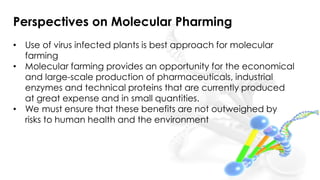
Perspectives on Molecular Pharming
• Use of virus infected plants is best approach for molecular
farming
• Molecular farming provides an opportunity for the economical
and large-scale production of pharmaceuticals, industrial
enzymes and technical proteins that are currently produced
at great expense and in small quantities.
• We must ensure that these benefits are not outweighed by
risks to human health and the environment
Thank you for listening. . . . 

Molecular pharming

  • 1.
    Molecular Pharming Presented by: C.G.O.Gaas Introduction to Biotechnology Chemical Engineering Department CIT-University
  • 2.
    Molecular Pharming History andDefinition How is it done? Advantages and Disadvantages Examples and its Applications Biosafety Issues of Molecular Faming
  • 3.
    What is MolecularPharming? The use of whole organisms, organs, tissues or cells, or cell cultures, as bio-reactors for the production of commercially valuable products via recombinant DNA techniques.
  • 4.
    Difference between Molecularpharming and Molecular farming Molecular pharming -It is defined as the production of active pharmaceutical substances in genetically modified organisms (GMOs). -Plants are preferred as plants do not carry pathogens. Still the safety of GMO is a concern. -First plant derived pharmaceutical protein is serum albumin. Molecular farming It is defined as the use of genetically modified organisms (GMOs) as a production platform for renewable raw materials, fine chemicals and dietary supplements
  • 5.
    History • 1986 First plant -derivedrecombinant therapeutic proteinhuman GH in tobacco & sunflower. (A. Barta, D. Thompson et al.) • 1989 First plant -derived recombinant antibody – full-sized IgG in tobacco. (A. Hiatt, K. Bowdish) • 1990 First native human protein produced in plants – human serum albumin in tobacco & potato. (P. C. Sijmons et al.) • 1992 First native human protein produced in plants – human serum albumin in tobacco & potato. (P. C. Sijmons et al.) • 1995 First plant derived industrial enzyme – α-amylase in tobacco. (J.Pen, L. Molendijk et al.)
  • 6.
    History • 1996 First plantderivedprotein polymer tobacco. (X. Zhang, D. W. Urry, H. Daniel) – artificial elastin • 1997 • 1997 Commercial production of avidin in maize.(E. E. Hood et al.) • 2000 • 2003 Human GH produced in tobacco chloroplast.(J. M. Staub et al.) Expression and assembly of a functional antibody in algae Commercial production of bovine trypsin in maize.(S. L. Woodard ) First clinical trial using recombinant bacterial delivered in a transgenic potato. (C. O. Tacket et al.) in antigen Human GH produced in tobacco chloroplast.(J. M. Staub et al.)
  • 7.
    How is itdone? A DNA molecule carrying the genetic information for a pharmaceutical substance is introduced into the plant genome. This process (1) is called transformation. The genes can be incorporated permanently (stable transformation) or for a short period of time (transient transformation). The transformed plant acts as a bioreactor producing large quantities of the pharmaceutical using its protein making machinery (2). Through industrial processing, the pharmaceutically active substance is extracted from the plant (3) and made into in a formulated product (4), for example a pill.
  • 9.
    How is itdone? Virus (left) with genetic material inside and surface proteins (green and orange) on the outside. Viruslike particle (on the right) without genetic material and some virus surface proteins (green)
  • 10.
    Pharming General Strategy •Clone a gene of interest • Transform the host platform species • Grow the host species, recover biomass • Process biomass • Purify product of interest • Deliver product of interest
  • 11.
    Comparison of differentPharming production systems
  • 12.
    Molecular Pharming andFarming Applications Parental therapeutics and pharmaceutical intermediates Industrial proteins and enzymes Biopolymers Monoclonal antibodies Antigens for edible vaccines
  • 17.
    Biosafety Issues onPharming • Gene and Protein Pollution • Product Safety
  • 18.
    Transgene Pollution Transgene pollutionis the spread of transgenes beyond the intended genetically-modified species by natural gene flow mechanisms. Two classes of transgene pollution: • The possible spread of primary transgenes. • The possible spread of superfluous DNA sequences.
  • 19.
    Transgene Pollution Mechanism Verticalgene transfer • Vertical gene transfer is the movement of DNA between plants that are at least partially sexually compatible. • Most prevalent form of transgene pollution. • Occurs predominantly via the dispersal of transgenic pollen/seed dispersal. Horizontal gene transfer • Horizontal gene transfer is the movement of genes between species that are not sexually compatible and may belong to very different taxonomic groups. • The process is common in bacteria (Agrobacterium tumefaciens and related species), resulting in the transfer of plasmid-borne antibiotic resistance traits. • Antibiotic resistance markers and transgenes encoding pharmaceutical proteins could be acquired by human pathogens.
  • 20.
    Product safety • Thepurified protein may be contaminated with toxic substances from the plant or applied to the plant, e.g. plant derived metabolites, allergens, field chemicals (e.g. herbicides, pesticides, fungicides), fertilizers, dung and manure. • The product itself, due to intrinsic properties, may be harmful.
  • 21.
    Transgene pollution –possiblesolutions • Minimum required genetic modification. • Elimination of non-essential genetic information. • Containment of essential transgenes. (Physical or artificial) -Maintained in green house -Concealing flowers/fruits in plastic bags in field -Isolation -Barrier crops • Alternative production systems -transient expression. -Plant suspension cultures in sealed, sterile reactor vessels. (Fischer et al., 1999a; Doran, 2000)
  • 22.
    Perspectives on MolecularPharming • Use of virus infected plants is best approach for molecular farming • Molecular farming provides an opportunity for the economical and large-scale production of pharmaceuticals, industrial enzymes and technical proteins that are currently produced at great expense and in small quantities. • We must ensure that these benefits are not outweighed by risks to human health and the environment
  • 23.
    Thank you forlistening. . . . 