INFORMATION
ACCESS
Marvin B. Broñoso
SHS MIL TEACHER
09565962116
MIL-L03
Media & Information Literacy
LEARNING COMPETENCIES
• defines information needs, locates, accesses, assesses, organizes, and
communicates information
• Identify the skills needed to be an information literate
• demonstrates ethical use of information
CONTENT
• What is Information Literacy?
• Skills Required
• 5 Components of Information Literacy
Photo credit: https://www.linkedin.com/pulse/marketing-evolution-from-traditional-digital-eric-ampah
INFORMATION LITERACY
Information literacy is knowing when
and why you need information
where to find it and how to evaluate,
use and communicate it in an ethical
manner.
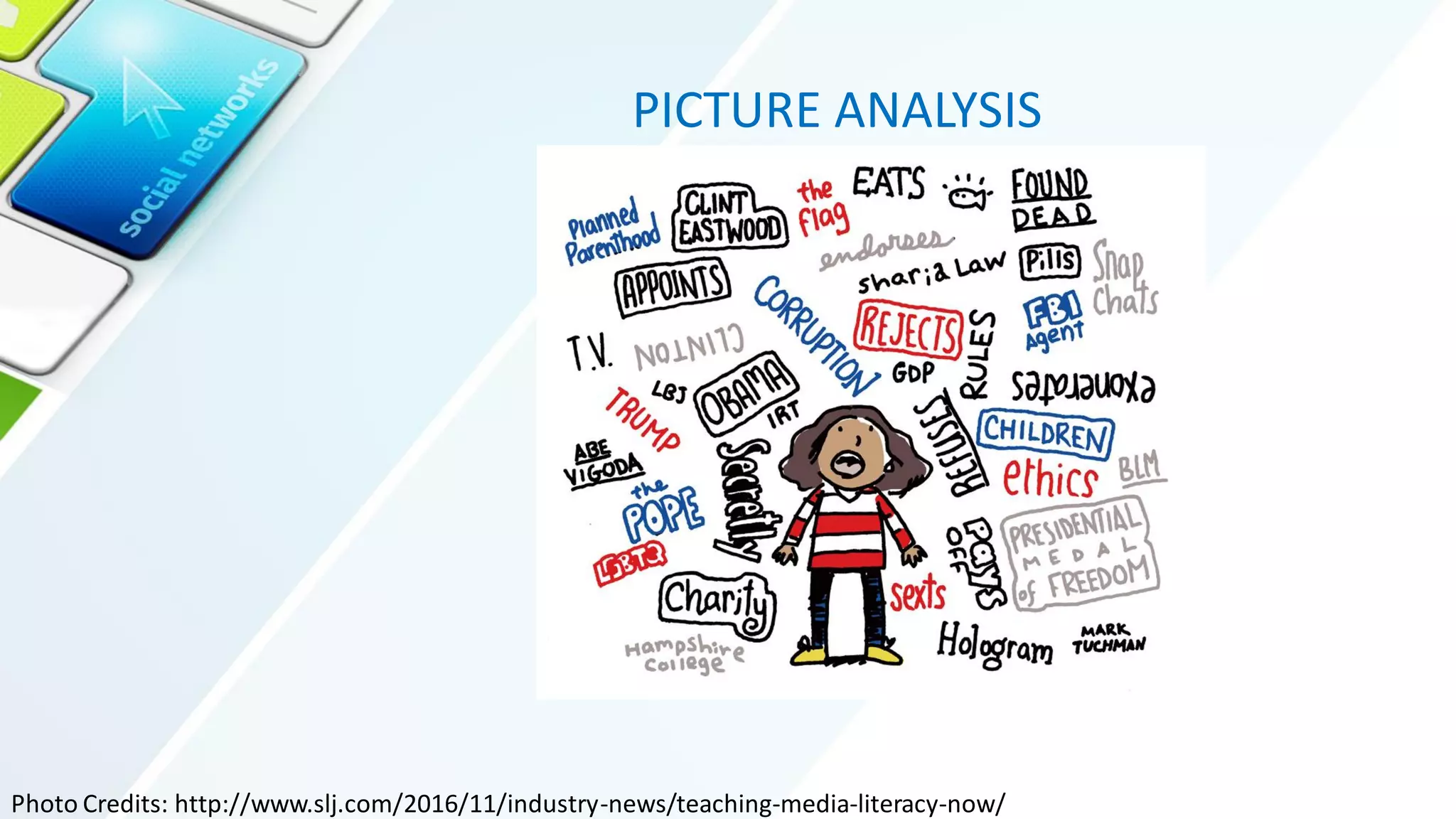
PICTURE ANALYSIS
Photo Credits: http://www.slj.com/2016/11/industry-news/teaching-media-literacy-now/
PICTURE ANALYSIS
Photo Credits: http://www.slj.com/2016/11/industry-news/teaching-media-literacy-now/
SKILLS REQUIRED
• A need of information
• The resources available
• How to find information
• The need to evaluate information
• How to work with or exploit results
• Ethics and responsibility of use
• How to communicateor share your findings
• How to manage your findings
ACCESS IN INFORMATION
• Recognizing that
information is needed;
understanding why
information is needed, what
(and how much; what kind
of ) information is required.
Photo credithttp://www.ufh.ac.za/library/InfoLit/need.html
• Examples Use prior knowledge of author, editor, series, publisher
• Examine the
• Relevance to problem question task in hand
• Appropriateness of style for users
• Availability of index, notes, bibliography, illustrations,
multimedia, etc
• Authenticity and origin Authority (ownership, reputation,
coverage, scope)
• Bias or point of view Error rate
• accuracy Purpose
5 Components of Information Literacy
IDENTIFY
• The information literate student can identify
the nature and extent of information needed.
Photo credit https://giphy.com/gifs/eye-education-jqXCdbzzxYBP2
FIND
• The information literate student can find
needed information effectively and efficiently.
Photo credit https://giphy.com/stickers/searching-APdM6q0D3DqTK
EVALUATE
• The information literate students can evaluate
information and its sources critically.
Photo credit http://www.technologystudent.com/despro_flsh/evalintegr1.html
APPLY
• The information literate student can apply
information effectively to accomplish a
specific purpose.
Photo credit http://improvinginformationliteracy.blogspot.com/
ACKNOWLEDGE
• The information literate student can
acknowledge sources of information and the
ethical, legal, and socio economic issues
surrounding information.
Photo CREDIT https://efacademyblog.ef.com/blog/2015/11/04/giving-credit-where-credit-is-due-why-you-need-to-cite-your-sources/
INFORMATION LITERATE
Photo Credit http://www.dw.com/en/media-and-information-literacy/a-18406566
ACTIVITY
• Make a video presentation to educate and inform our next
generation about Information Literacy.
• TIME: Max. 8 mins. / Min. 3 mins.
• Listen carefully to your assignment instructions.
RESOURCES
• https://libraries.wales/what-is-information-literacy/
• https://archive.cilip.org.uk/research/topics/information-literacy
• 5 Components of information literacy by Nichole Ackerman Martin
• http://www.ala.org/acrl/standards/

MEDIA AND INFORMATION LITERACY (MIL)

  • 1.
    INFORMATION ACCESS Marvin B. Broñoso SHSMIL TEACHER 09565962116 MIL-L03 Media & Information Literacy
  • 2.
    LEARNING COMPETENCIES • definesinformation needs, locates, accesses, assesses, organizes, and communicates information • Identify the skills needed to be an information literate • demonstrates ethical use of information
  • 3.
    CONTENT • What isInformation Literacy? • Skills Required • 5 Components of Information Literacy Photo credit: https://www.linkedin.com/pulse/marketing-evolution-from-traditional-digital-eric-ampah
  • 4.
    INFORMATION LITERACY Information literacyis knowing when and why you need information where to find it and how to evaluate, use and communicate it in an ethical manner.
  • 5.
    PICTURE ANALYSIS Photo Credits:http://www.slj.com/2016/11/industry-news/teaching-media-literacy-now/
  • 6.
    PICTURE ANALYSIS Photo Credits:http://www.slj.com/2016/11/industry-news/teaching-media-literacy-now/
  • 7.
    SKILLS REQUIRED • Aneed of information • The resources available • How to find information • The need to evaluate information • How to work with or exploit results • Ethics and responsibility of use • How to communicateor share your findings • How to manage your findings
  • 8.
    ACCESS IN INFORMATION •Recognizing that information is needed; understanding why information is needed, what (and how much; what kind of ) information is required. Photo credithttp://www.ufh.ac.za/library/InfoLit/need.html
  • 9.
    • Examples Useprior knowledge of author, editor, series, publisher • Examine the • Relevance to problem question task in hand • Appropriateness of style for users • Availability of index, notes, bibliography, illustrations, multimedia, etc • Authenticity and origin Authority (ownership, reputation, coverage, scope) • Bias or point of view Error rate • accuracy Purpose
  • 10.
    5 Components ofInformation Literacy
  • 11.
    IDENTIFY • The informationliterate student can identify the nature and extent of information needed. Photo credit https://giphy.com/gifs/eye-education-jqXCdbzzxYBP2
  • 14.
    FIND • The informationliterate student can find needed information effectively and efficiently. Photo credit https://giphy.com/stickers/searching-APdM6q0D3DqTK
  • 17.
    EVALUATE • The informationliterate students can evaluate information and its sources critically. Photo credit http://www.technologystudent.com/despro_flsh/evalintegr1.html
  • 20.
    APPLY • The informationliterate student can apply information effectively to accomplish a specific purpose. Photo credit http://improvinginformationliteracy.blogspot.com/
  • 23.
    ACKNOWLEDGE • The informationliterate student can acknowledge sources of information and the ethical, legal, and socio economic issues surrounding information. Photo CREDIT https://efacademyblog.ef.com/blog/2015/11/04/giving-credit-where-credit-is-due-why-you-need-to-cite-your-sources/
  • 27.
    INFORMATION LITERATE Photo Credithttp://www.dw.com/en/media-and-information-literacy/a-18406566
  • 28.
    ACTIVITY • Make avideo presentation to educate and inform our next generation about Information Literacy. • TIME: Max. 8 mins. / Min. 3 mins. • Listen carefully to your assignment instructions.
  • 30.
    RESOURCES • https://libraries.wales/what-is-information-literacy/ • https://archive.cilip.org.uk/research/topics/information-literacy •5 Components of information literacy by Nichole Ackerman Martin • http://www.ala.org/acrl/standards/