Information Literacy Session One We're adding information to our understanding of English and writing!  In this session of the class we will be learning and practicing information literacy and research skills that will aid you in your writing process and in building your writing skills.
Instructor Introduction Sarah Moore, LRC Assistant BA in Communication  with an emphasis in Print Media Feel free to contact me any time during the course!
Class Introduction We will meet eight times for 1 hour each The sessions build on each other Therefore, attendance is necessary You, as the student, are responsible for making up any missed lessons or assignments Utilize each other!
Homework Assignment Each homework assignment is part of, and works toward, the final project You can’t afford to miss a step Late work is docked points Grading scale is provided so YOU can keep track of what you earn
Information Literacy Why is this in  Introduction to Writing? What exactly is  Information literacy?
Information What is information? knowledge  gained  through study, communication, research, instruction, etc.; factual data  knowledge  communicated  or received concerning a particular fact or circumstance; news  What is knowledge? facts, truths, or principles, from study, observation or investigation that are stored in some external place (books, the internet, etc.)
Information Where do we get information? World Wide Web Radio Television Magazines Newspapers Books People
Literacy What is literacy? having knowledge or skill in a specified field  Reading / writing Technology Computers Media Library Information
Information Literacy What is information literacy? An information literate individual is “able to recognize when information is needed and has the ability to locate, evaluate, and use the information effectively.” The American Library Association
Information Literacy Problems of information illiteracy Asking wrong questions (and getting wrong answers) Using limited or inappropriate sources of information Using inaccurate or misleading information Accessing outdated information Finding incomplete information …  more
Information Literacy Problems of Information Illiteracy  Being inefficient on research and wasting time Being disorganized Ineffectively communicating the information Using biased resources Ineffectively understanding or evaluating the information
Lifelong Learning Skill Ultimately, information literate people are those who have  learned how to learn . They know how to learn because they know how knowledge is organized, how to find information, and how to use information in such a way that others can learn from them. They are  people prepared for lifelong learning , because  they can always find the information needed  for any task or decision at hand.
Information Literacy Did You Know? Workplace requirements of employees (SCANS report)
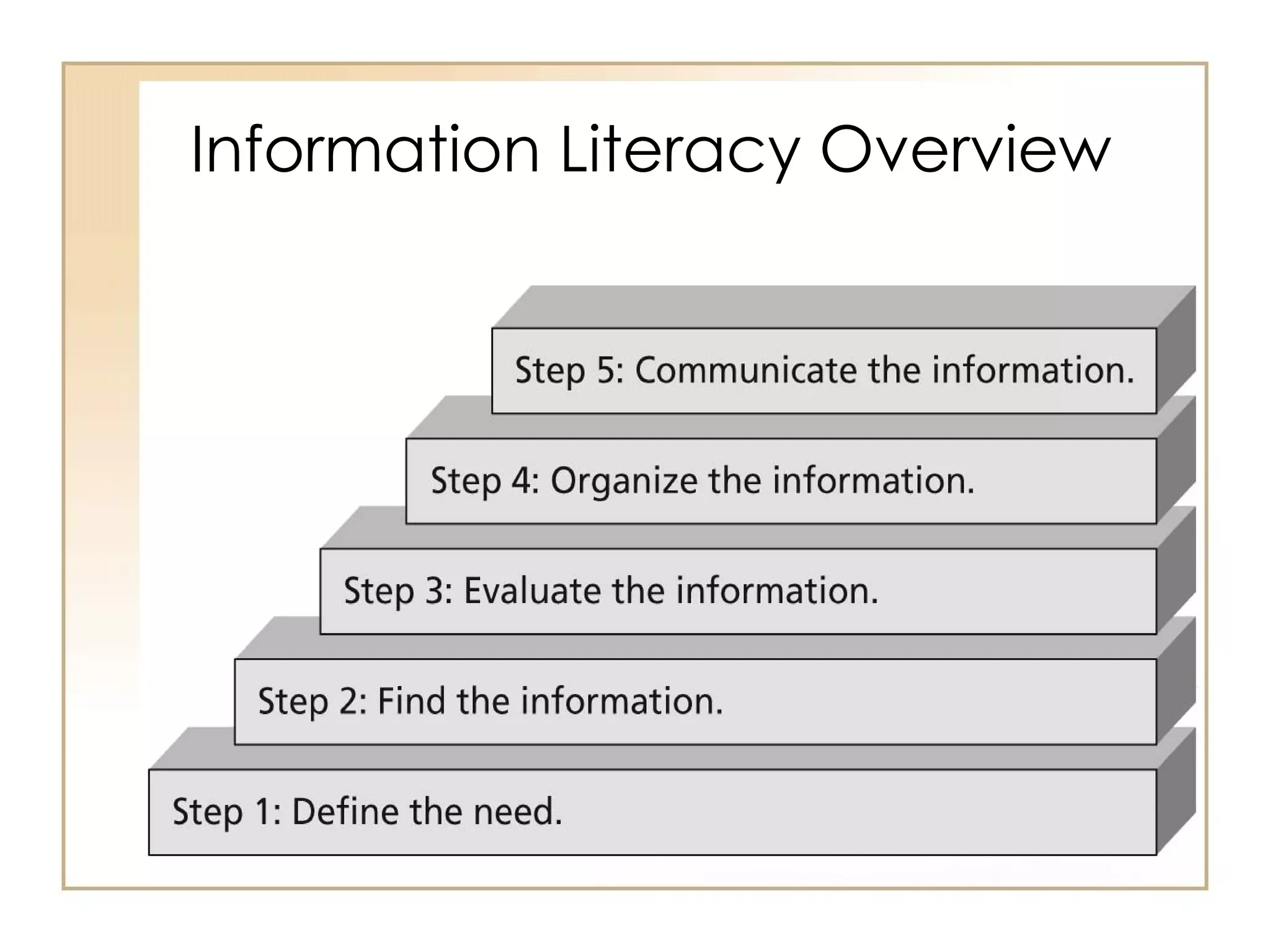
Information Literacy Overview
Information Literacy Overview Define:  Define the need, problem, or question. Find:  Locate, access, and retrieve the information from a variety of print, electronic, and human information sources. Evaluate:  Evaluate the  credibility ,  currency ,  reliability ,  validity , and  appropriateness  of the information retrieved.
Information Literacy Overview Organize:  Organize the information so that it can be used to meet the information need, solve the problem, or answer the question. Communicate:  Communicate the information legally and  ethically  using a variety of  channels  and to a range of audiences.
Homework for this Session Choose a Topic Related to your program of study or future career field. Something that interests you and that you will enjoy studying. Begin thinking of a question you can ask about it. Read first 9 pages of packet Due next Session!
Class Website http://sites.google.com/site/mooreinformationliteracy   See class information online, including calendar of due dates Get updates and announcements Make up work for missed classes Download class handouts and PowerPoints
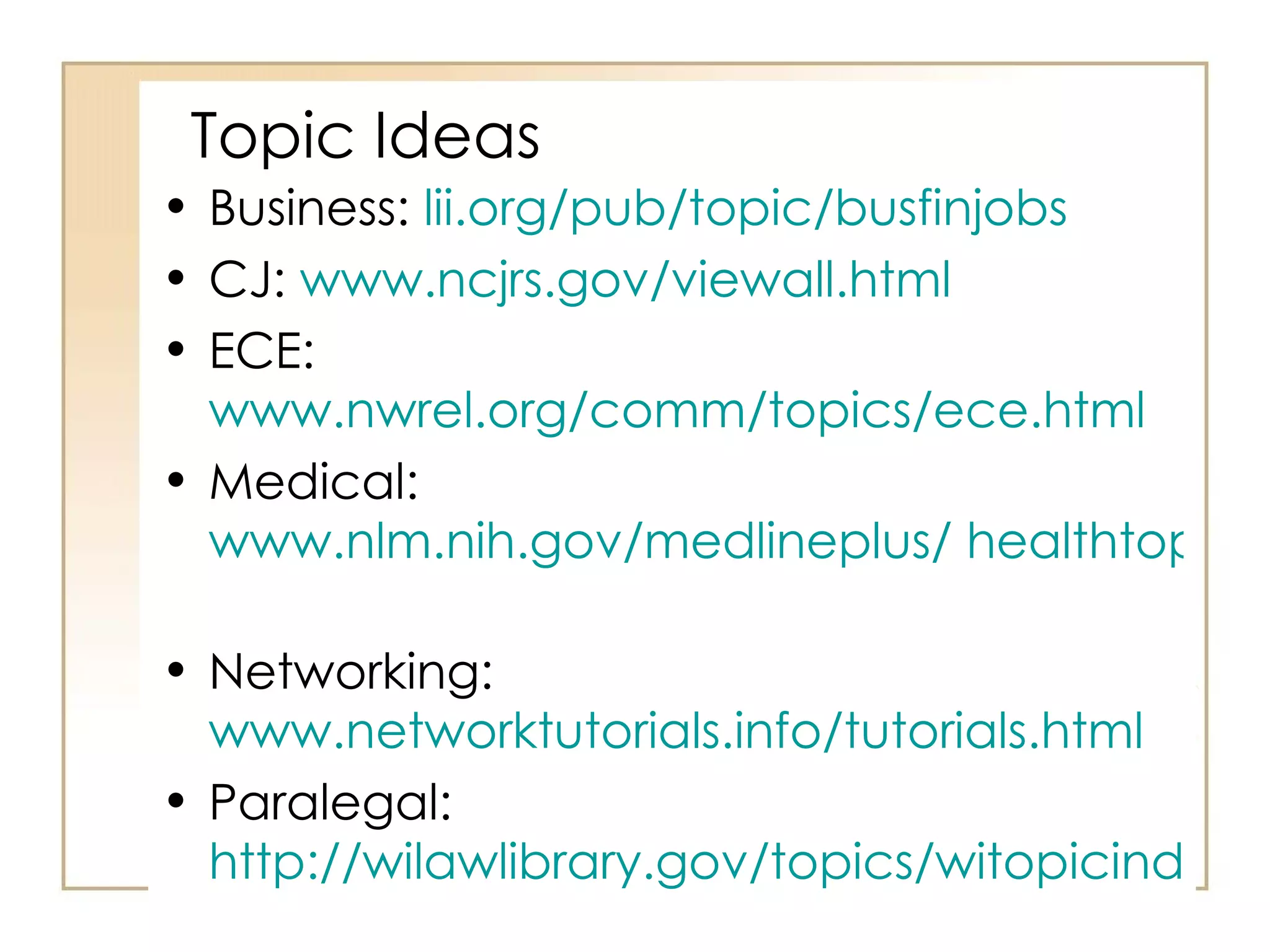
Topic Ideas Business:  lii.org/pub/topic/busfinjobs   CJ:  www.ncjrs.gov/viewall.html ECE:  www.nwrel.org/comm/topics/ece.html   Medical:  www.nlm.nih.gov/medlineplus/ healthtopics.html   Networking:  www.networktutorials.info/tutorials.html   Paralegal:  http://wilawlibrary.gov/topics/witopicindex.html
Information is knowledge that is:  Read in a written form Based on an opinion Gained and communicated Discovered and broadcast
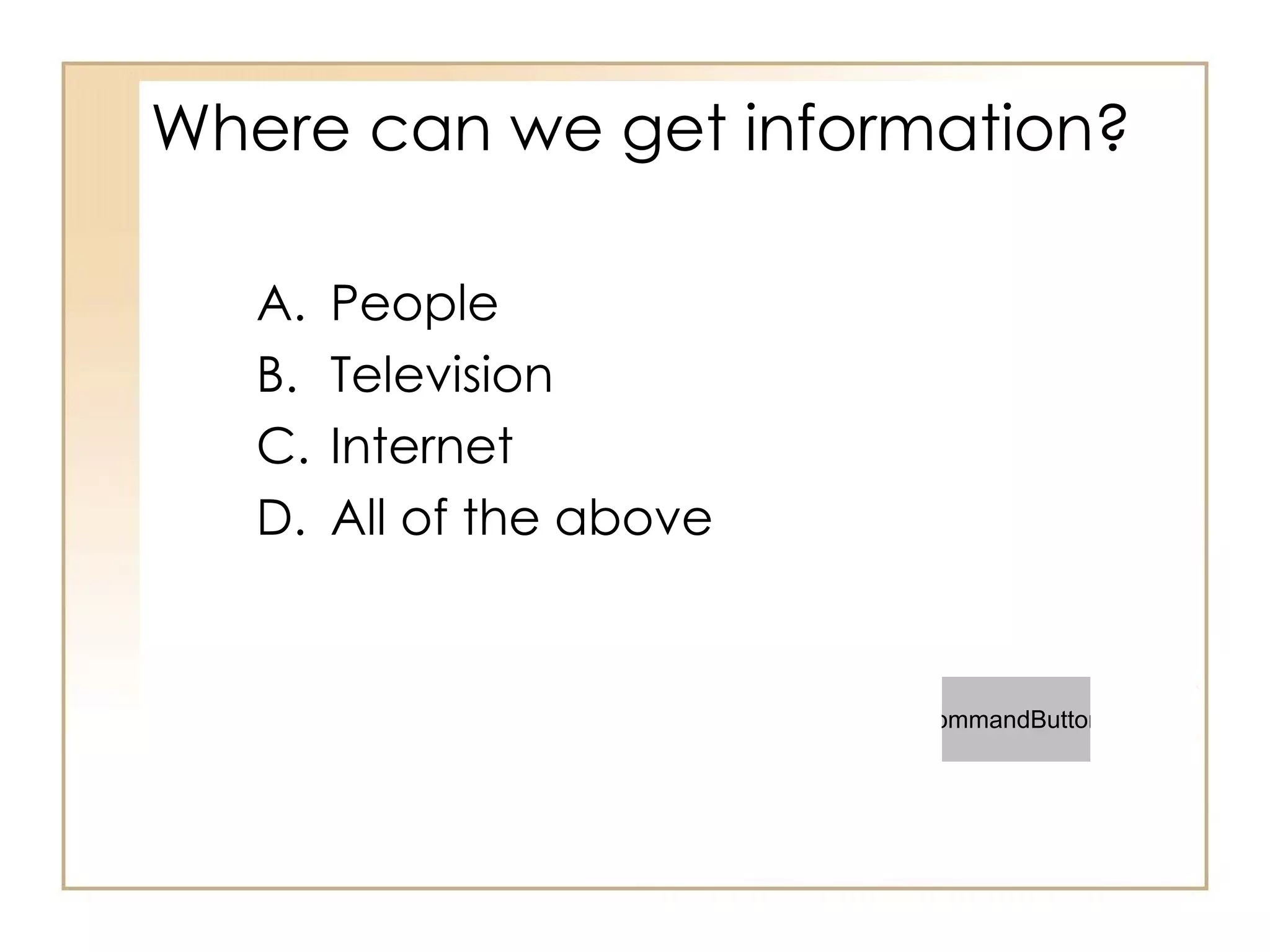
Where can we get information?  People Television Internet All of the above
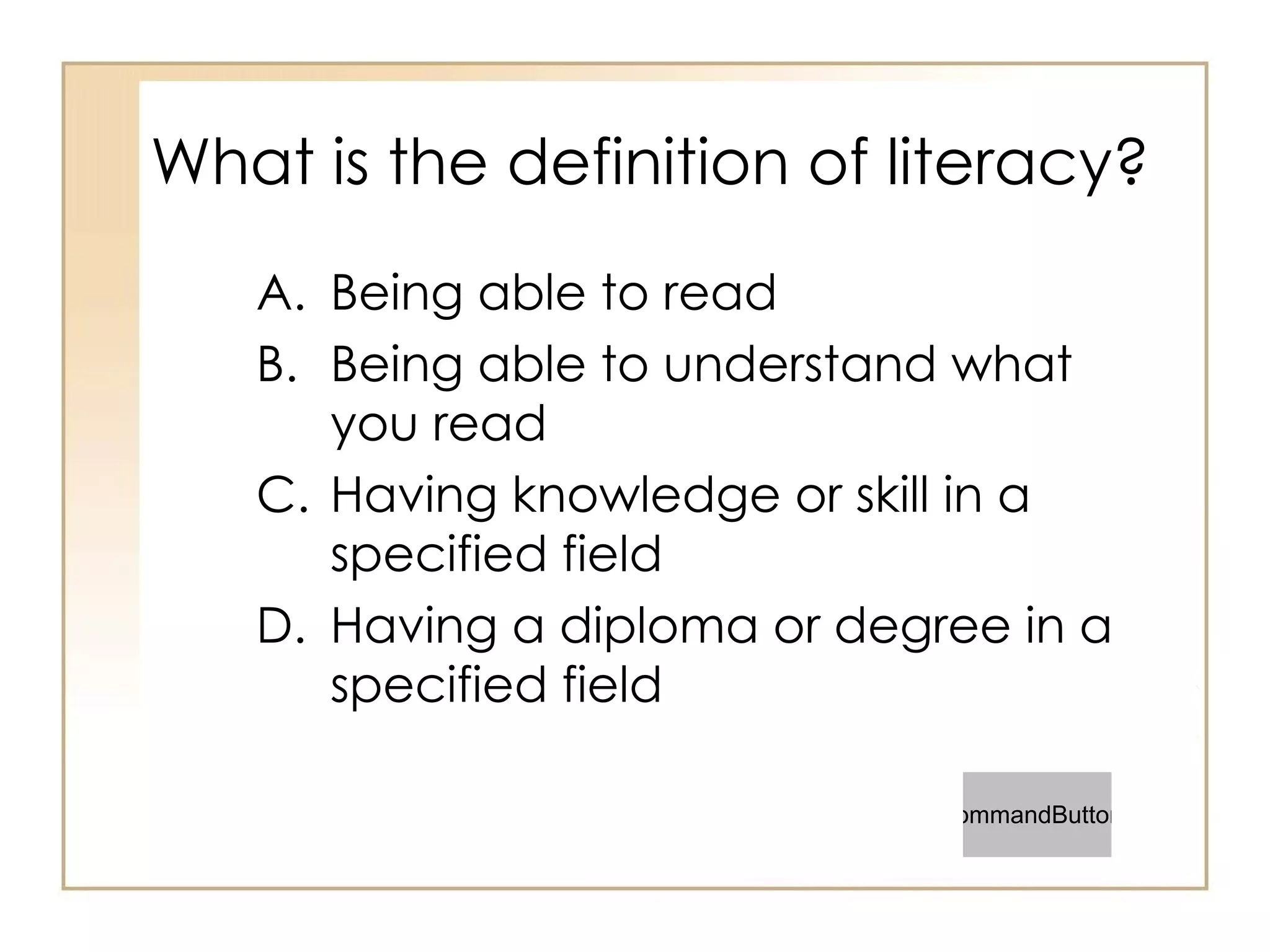
What is the definition of literacy? Being able to read Being able to understand what you read Having knowledge or skill in a specified field Having a diploma or degree in a specified field
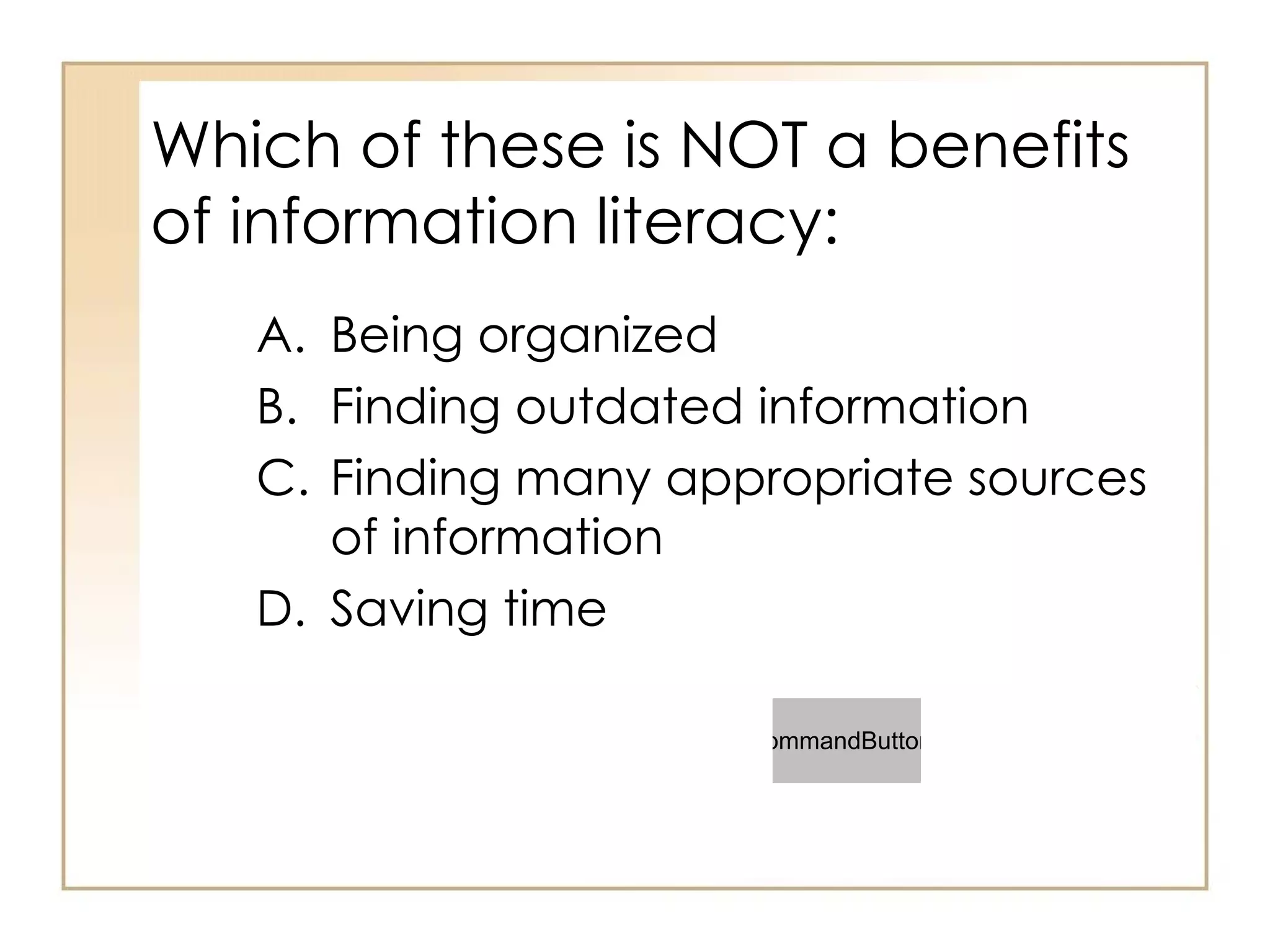
Which of these is NOT a benefits of information literacy: Being organized Finding outdated information Finding many appropriate sources of information Saving time
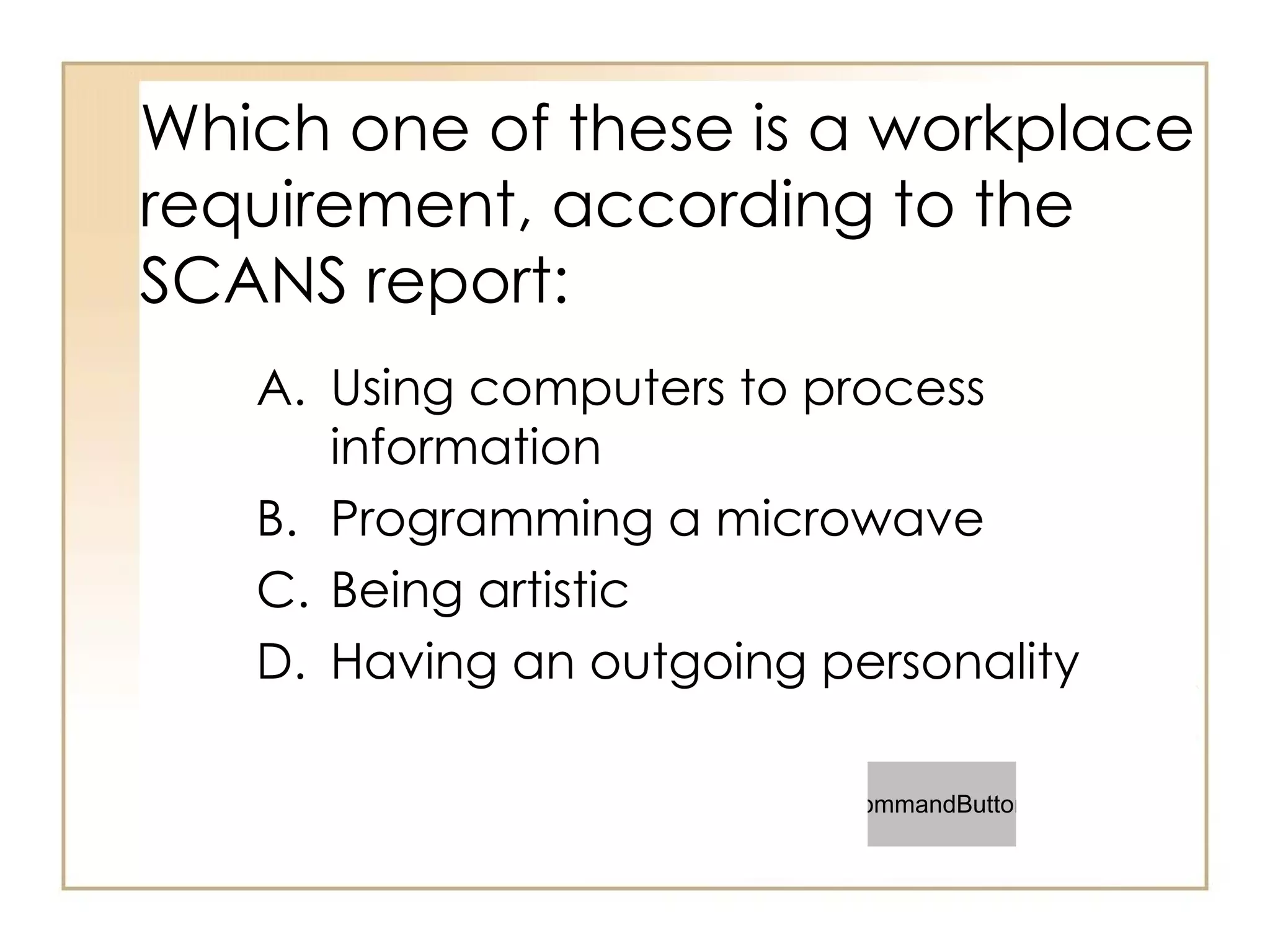
Which one of these is a workplace requirement, according to the SCANS report: Using computers to process information Programming a microwave Being artistic Having an outgoing personality

Information Literacy Session 1

  • 1.
    Information Literacy SessionOne We're adding information to our understanding of English and writing! In this session of the class we will be learning and practicing information literacy and research skills that will aid you in your writing process and in building your writing skills.
  • 2.
    Instructor Introduction SarahMoore, LRC Assistant BA in Communication with an emphasis in Print Media Feel free to contact me any time during the course!
  • 3.
    Class Introduction Wewill meet eight times for 1 hour each The sessions build on each other Therefore, attendance is necessary You, as the student, are responsible for making up any missed lessons or assignments Utilize each other!
  • 4.
    Homework Assignment Eachhomework assignment is part of, and works toward, the final project You can’t afford to miss a step Late work is docked points Grading scale is provided so YOU can keep track of what you earn
  • 5.
    Information Literacy Whyis this in Introduction to Writing? What exactly is Information literacy?
  • 6.
    Information What isinformation? knowledge gained through study, communication, research, instruction, etc.; factual data knowledge communicated or received concerning a particular fact or circumstance; news What is knowledge? facts, truths, or principles, from study, observation or investigation that are stored in some external place (books, the internet, etc.)
  • 7.
    Information Where dowe get information? World Wide Web Radio Television Magazines Newspapers Books People
  • 8.
    Literacy What isliteracy? having knowledge or skill in a specified field Reading / writing Technology Computers Media Library Information
  • 9.
    Information Literacy Whatis information literacy? An information literate individual is “able to recognize when information is needed and has the ability to locate, evaluate, and use the information effectively.” The American Library Association
  • 10.
    Information Literacy Problemsof information illiteracy Asking wrong questions (and getting wrong answers) Using limited or inappropriate sources of information Using inaccurate or misleading information Accessing outdated information Finding incomplete information … more
  • 11.
    Information Literacy Problemsof Information Illiteracy Being inefficient on research and wasting time Being disorganized Ineffectively communicating the information Using biased resources Ineffectively understanding or evaluating the information
  • 12.
    Lifelong Learning SkillUltimately, information literate people are those who have learned how to learn . They know how to learn because they know how knowledge is organized, how to find information, and how to use information in such a way that others can learn from them. They are people prepared for lifelong learning , because they can always find the information needed for any task or decision at hand.
  • 13.
    Information Literacy DidYou Know? Workplace requirements of employees (SCANS report)
  • 14.
  • 15.
    Information Literacy OverviewDefine: Define the need, problem, or question. Find: Locate, access, and retrieve the information from a variety of print, electronic, and human information sources. Evaluate: Evaluate the credibility , currency , reliability , validity , and appropriateness of the information retrieved.
  • 16.
    Information Literacy OverviewOrganize: Organize the information so that it can be used to meet the information need, solve the problem, or answer the question. Communicate: Communicate the information legally and ethically using a variety of channels and to a range of audiences.
  • 17.
    Homework for thisSession Choose a Topic Related to your program of study or future career field. Something that interests you and that you will enjoy studying. Begin thinking of a question you can ask about it. Read first 9 pages of packet Due next Session!
  • 18.
    Class Website http://sites.google.com/site/mooreinformationliteracy See class information online, including calendar of due dates Get updates and announcements Make up work for missed classes Download class handouts and PowerPoints
  • 19.
    Topic Ideas Business: lii.org/pub/topic/busfinjobs CJ: www.ncjrs.gov/viewall.html ECE: www.nwrel.org/comm/topics/ece.html Medical: www.nlm.nih.gov/medlineplus/ healthtopics.html Networking: www.networktutorials.info/tutorials.html Paralegal: http://wilawlibrary.gov/topics/witopicindex.html
  • 20.
    Information is knowledgethat is: Read in a written form Based on an opinion Gained and communicated Discovered and broadcast
  • 21.
    Where can weget information? People Television Internet All of the above
  • 22.
    What is thedefinition of literacy? Being able to read Being able to understand what you read Having knowledge or skill in a specified field Having a diploma or degree in a specified field
  • 23.
    Which of theseis NOT a benefits of information literacy: Being organized Finding outdated information Finding many appropriate sources of information Saving time
  • 24.
    Which one ofthese is a workplace requirement, according to the SCANS report: Using computers to process information Programming a microwave Being artistic Having an outgoing personality