Microbial Mechanisms of Pathogenesis
Pathogenesis The word comes from the  Greek   pathos , "disease", and  genesis , creation.  The term pathogenesis means step by step development of a disease. The chain of events leading to that disease due to a series of changes in the structure and /or function of a cell/tissue/organ. Caused by a microbial, chemical or physical agent.
Pathogenicity -  Ability to cause disease Virulence  -  Degree of  pathogenicity Many properties that determine a microbe’s pathogenicity or virulence are unclear or unknown But, when a microbe overpowers the hosts defenses, disease results!
Portals of Entry 1. Mucus Membranes 2. Skin 3. Parenteral
1. Mucus Membranes A. Respiratory Tract Sticky mucous secretion Muco polysachharides Cough reflex Phagocytic cells
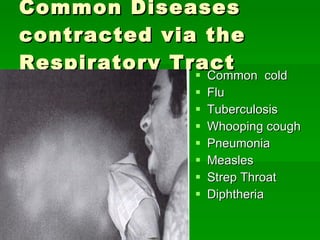
Common Diseases contracted via the Respiratory Tract Common  cold Flu Tuberculosis Whooping cough Pneumonia Measles Strep Throat Diphtheria
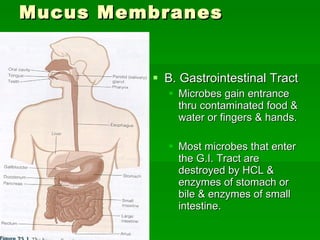
Mucus Membranes B. Gastrointestinal Tract Microbes gain entrance thru contaminated food & water or fingers & hands. Most microbes that enter the G.I. Tract are destroyed by HCL & enzymes of stomach or bile & enzymes of small intestine.
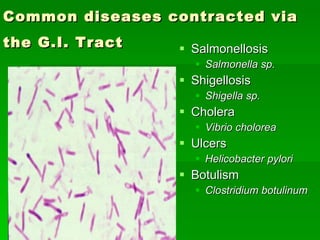
Common diseases contracted via the G.I. Tract   Salmonellosis Salmonella sp. Shigellosis Shigella sp. Cholera Vibrio cholorea Ulcers Helicobacter pylori Botulism Clostridium botulinum
Fecal - Oral Diseases These pathogens enter the G.I. Tract at one end and exit at the other end. Spread by contaminated hands & fingers or contaminated food & water Poor personal hygiene.
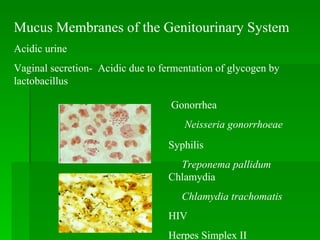
Mucus Membranes of the Genitourinary System  Acidic urine Vaginal secretion-  Acidic due to fermentation of glycogen by lactobacillus Gonorrhea Neisseria gonorrhoeae Syphilis Treponema pallidum Chlamydia Chlamydia trachomatis HIV Herpes Simplex II
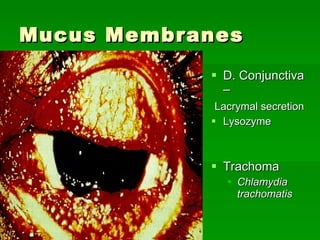
Mucus Membranes D. Conjunctiva – Lacrymal secretion Lysozyme Trachoma Chlamydia trachomatis
2.  Skin Skin - the largest organ of the body.  Sebaceous secretion-containing fatty acids Resident flora When unbroken is an effective barrier for most microorganisms. Some microbes can gain entrance thru openings in the skin: hair follicles and sweat glands
3. Parentarel Microorganisms are  deposited  into the tissues below the skin or mucus membranes Punctures injections bites scratches surgery splitting of skin due to swelling or dryness
Number of Invading Microbes LD 50  - Lethal Dose of a microbes toxin that will kill 50% of experimentally inoculated test animal ID 50  -  infectious dose required to cause disease in 50% of inoculated test animals Example:  ID 50  for  Vibrio cholerea  10 8  cells  (100,000,000 cells) ID 50  for  Inhalation Anthrax -  5,000 to 10,000 spores
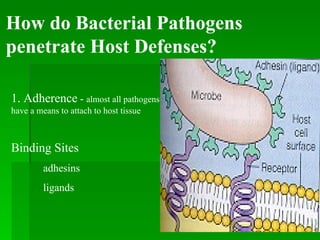
How do Bacterial Pathogens penetrate Host Defenses? 1. Adherence  -  almost all pathogens have a means to attach to host tissue Binding Sites adhesins ligands
How Bacterial Pathogens Penetrate Host Defenses 1. Adherence 2. Capsule 3. Enzymes A. leukocidins B. Hemolysins C. Coagulase D. Kinases E. Hyaluronidase F. Collagenase G. Necrotizing Factor
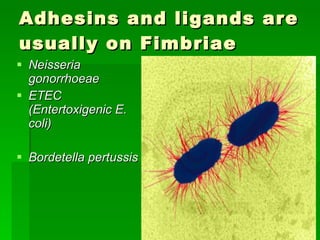
Adhesins and ligands are usually on Fimbriae Neisseria gonorrhoeae ETEC  (Entertoxigenic E. coli) Bordetella pertussis
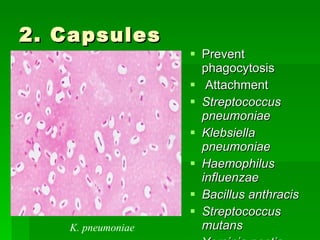
2. Capsules Prevent phagocytosis Attachment Streptococcus pneumoniae Klebsiella pneumoniae Haemophilus influenzae Bacillus anthracis Streptococcus mutans Yersinia pestis K. pneumoniae
3. Enzymes Many pathogens secrete enzymes that contribute to their pathogenicity
A. Leukocidins Attack certain types of WBC’s 1. Kills WBC’s which prevents phagocytosis 2. Releases & ruptures lysosomes lysosomes - contain powerful hydrolytic enzymes which then cause more tissue damage
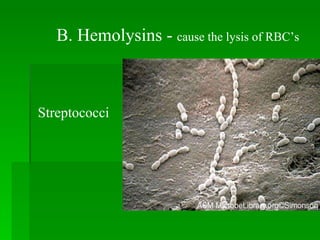
B. Hemolysins -  cause the lysis of RBC’s Streptococci
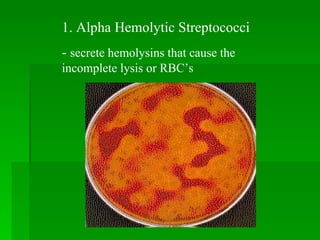
1. Alpha Hemolytic Streptococci  -  secrete hemolysins that cause the incomplete lysis or RBC’s
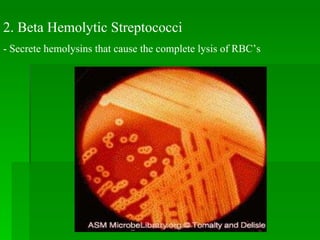
2. Beta Hemolytic Streptococci   - Secrete hemolysins that cause the complete lysis of RBC’s
C. Coagulase -  cause blood to coagulate Blood clots protect bacteria from phagocytosis from WBC’s and other host defenses Staphylococci - are often coagulase positive boils abscesses
D. Kinases -  enzymes that dissolve blood clots 1. Streptokinase -  Streptococci 2. Staphylokinase - Staphylococci Helps to spread bacteria  -  Bacteremia Streptokinase -  used to dissolve blood clots in the Heart (Heart Attacks due to obstructed coronary blood vessels)
E. Hyaluronidase Breaks down Hyaluronic acid  (found in connective tissues) “Spreading Factor” Mixed with a drug to help spread the drug through a body tissue
F. Collagenase Breaks down collagen  (found in many connective tissues) Clostridium perfringens  -  Gas Gangrene uses this to spread thru muscle tissue
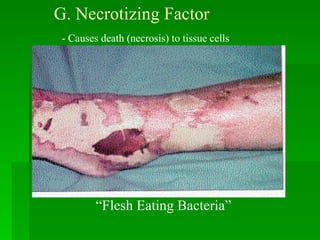
G. Necrotizing Factor - Causes death (necrosis) to tissue cells “ Flesh Eating Bacteria”
Bacterial Toxins Poisonous substances produced by microorganisms Toxins -  primary factor  - pathogenicity 220 known bacterial toxins  40% cause disease by damaging the Eukaryotic cell membrane Toxemia  Toxins in the bloodstream
Types of Toxins 1. Exotoxins Exotoxins are generated by the bacteria and actively secreted  Secreted outside the bacterial cell 2. Endotoxins Part of the outer cell wall of Gram (-) bacteria The body's response to endotoxin can involve severe inflammation.
Exotoxins Mostly seen in Gram (+) Bacteria Heat labile, can be inactivated by heating at 60-80  ۠   C. Excreted [ secreted] from the microbial cells into the surrounding ie culture media or circulatory system Don’t require bacterial death or cell lysis for their release.
Types of Exotoxins  1. Cytotoxins Kill cells-  shigella, vibrio 2. Neurotoxins Interfere with normal nerve impulses Clostridium botulinum Clostridium tetani 3. Enterotoxins Effect cells lining the G.I. Tract E. coli Salmonella
Response to Toxins If exposed to exotoxins:  antibodies against the toxin  ( antitoxins ) Exotoxins  inactivated ( heat, formalin or phenol) no longer cause disease, but stimulate the production of antitoxin altered exotoxins -  Toxoids Toxoids -  injected to stimulate the production of antitoxins and provide immunity
Endotoxins  Part of the Gram (-) Bacterial cell wall. Biological activity or toxicity of endotoxin is largely due to lipid A. Relatively heat stable can withstand heat over 60   ۠   C for many hours. Released upon cell lysis or death. Less potent than exotoxins, active in large doses only. Pyrogenic often produce fever in hosts. Salmonella, Shigella, Escherichia, Neisseria.
Bacteriocin Bacteriocins were first discovered by A. Gratia in 1925. He called his first discovery a  colicine  because it killed  E. coli. Bacteriocins  are proteinaceous toxins produced by bacteria to inhibit the growth of similar or closely related bacterial strain(s).  They are typically considered to be narrow spectrum antibiotics, though this has been debated.
Classification: Class I: Small peptide inhibitors . Class II: Small heat-stable proteins . Class III: Large, heat-labile protein bacteriocins
Medical significance  Bacteriocins are of interest in medicine because they are made by non-pathogenic bacteria that normally colonize the human body.  Loss of these harmless bacteria following antibiotic use may allow opportunistic pathogenic bacteria to invade the human body.

Mechanism Of Pathogenecity

  • 1.
  • 2.
    Pathogenesis The wordcomes from the Greek pathos , "disease", and genesis , creation. The term pathogenesis means step by step development of a disease. The chain of events leading to that disease due to a series of changes in the structure and /or function of a cell/tissue/organ. Caused by a microbial, chemical or physical agent.
  • 3.
    Pathogenicity - Ability to cause disease Virulence - Degree of pathogenicity Many properties that determine a microbe’s pathogenicity or virulence are unclear or unknown But, when a microbe overpowers the hosts defenses, disease results!
  • 4.
    Portals of Entry1. Mucus Membranes 2. Skin 3. Parenteral
  • 5.
    1. Mucus MembranesA. Respiratory Tract Sticky mucous secretion Muco polysachharides Cough reflex Phagocytic cells
  • 6.
    Common Diseases contractedvia the Respiratory Tract Common cold Flu Tuberculosis Whooping cough Pneumonia Measles Strep Throat Diphtheria
  • 7.
    Mucus Membranes B.Gastrointestinal Tract Microbes gain entrance thru contaminated food & water or fingers & hands. Most microbes that enter the G.I. Tract are destroyed by HCL & enzymes of stomach or bile & enzymes of small intestine.
  • 8.
    Common diseases contractedvia the G.I. Tract Salmonellosis Salmonella sp. Shigellosis Shigella sp. Cholera Vibrio cholorea Ulcers Helicobacter pylori Botulism Clostridium botulinum
  • 9.
    Fecal - OralDiseases These pathogens enter the G.I. Tract at one end and exit at the other end. Spread by contaminated hands & fingers or contaminated food & water Poor personal hygiene.
  • 10.
    Mucus Membranes ofthe Genitourinary System Acidic urine Vaginal secretion- Acidic due to fermentation of glycogen by lactobacillus Gonorrhea Neisseria gonorrhoeae Syphilis Treponema pallidum Chlamydia Chlamydia trachomatis HIV Herpes Simplex II
  • 11.
    Mucus Membranes D.Conjunctiva – Lacrymal secretion Lysozyme Trachoma Chlamydia trachomatis
  • 12.
    2. SkinSkin - the largest organ of the body. Sebaceous secretion-containing fatty acids Resident flora When unbroken is an effective barrier for most microorganisms. Some microbes can gain entrance thru openings in the skin: hair follicles and sweat glands
  • 13.
    3. Parentarel Microorganismsare deposited into the tissues below the skin or mucus membranes Punctures injections bites scratches surgery splitting of skin due to swelling or dryness
  • 14.
    Number of InvadingMicrobes LD 50 - Lethal Dose of a microbes toxin that will kill 50% of experimentally inoculated test animal ID 50 - infectious dose required to cause disease in 50% of inoculated test animals Example: ID 50 for Vibrio cholerea 10 8 cells (100,000,000 cells) ID 50 for Inhalation Anthrax - 5,000 to 10,000 spores
  • 15.
    How do BacterialPathogens penetrate Host Defenses? 1. Adherence - almost all pathogens have a means to attach to host tissue Binding Sites adhesins ligands
  • 16.
    How Bacterial PathogensPenetrate Host Defenses 1. Adherence 2. Capsule 3. Enzymes A. leukocidins B. Hemolysins C. Coagulase D. Kinases E. Hyaluronidase F. Collagenase G. Necrotizing Factor
  • 17.
    Adhesins and ligandsare usually on Fimbriae Neisseria gonorrhoeae ETEC (Entertoxigenic E. coli) Bordetella pertussis
  • 18.
    2. Capsules Preventphagocytosis Attachment Streptococcus pneumoniae Klebsiella pneumoniae Haemophilus influenzae Bacillus anthracis Streptococcus mutans Yersinia pestis K. pneumoniae
  • 19.
    3. Enzymes Manypathogens secrete enzymes that contribute to their pathogenicity
  • 20.
    A. Leukocidins Attackcertain types of WBC’s 1. Kills WBC’s which prevents phagocytosis 2. Releases & ruptures lysosomes lysosomes - contain powerful hydrolytic enzymes which then cause more tissue damage
  • 21.
    B. Hemolysins - cause the lysis of RBC’s Streptococci
  • 22.
    1. Alpha HemolyticStreptococci - secrete hemolysins that cause the incomplete lysis or RBC’s
  • 23.
    2. Beta HemolyticStreptococci - Secrete hemolysins that cause the complete lysis of RBC’s
  • 24.
    C. Coagulase - cause blood to coagulate Blood clots protect bacteria from phagocytosis from WBC’s and other host defenses Staphylococci - are often coagulase positive boils abscesses
  • 25.
    D. Kinases - enzymes that dissolve blood clots 1. Streptokinase - Streptococci 2. Staphylokinase - Staphylococci Helps to spread bacteria - Bacteremia Streptokinase - used to dissolve blood clots in the Heart (Heart Attacks due to obstructed coronary blood vessels)
  • 26.
    E. Hyaluronidase Breaksdown Hyaluronic acid (found in connective tissues) “Spreading Factor” Mixed with a drug to help spread the drug through a body tissue
  • 27.
    F. Collagenase Breaksdown collagen (found in many connective tissues) Clostridium perfringens - Gas Gangrene uses this to spread thru muscle tissue
  • 28.
    G. Necrotizing Factor- Causes death (necrosis) to tissue cells “ Flesh Eating Bacteria”
  • 29.
    Bacterial Toxins Poisonoussubstances produced by microorganisms Toxins - primary factor - pathogenicity 220 known bacterial toxins 40% cause disease by damaging the Eukaryotic cell membrane Toxemia Toxins in the bloodstream
  • 30.
    Types of Toxins1. Exotoxins Exotoxins are generated by the bacteria and actively secreted Secreted outside the bacterial cell 2. Endotoxins Part of the outer cell wall of Gram (-) bacteria The body's response to endotoxin can involve severe inflammation.
  • 31.
    Exotoxins Mostly seenin Gram (+) Bacteria Heat labile, can be inactivated by heating at 60-80 ۠ C. Excreted [ secreted] from the microbial cells into the surrounding ie culture media or circulatory system Don’t require bacterial death or cell lysis for their release.
  • 32.
    Types of Exotoxins 1. Cytotoxins Kill cells- shigella, vibrio 2. Neurotoxins Interfere with normal nerve impulses Clostridium botulinum Clostridium tetani 3. Enterotoxins Effect cells lining the G.I. Tract E. coli Salmonella
  • 33.
    Response to ToxinsIf exposed to exotoxins: antibodies against the toxin ( antitoxins ) Exotoxins inactivated ( heat, formalin or phenol) no longer cause disease, but stimulate the production of antitoxin altered exotoxins - Toxoids Toxoids - injected to stimulate the production of antitoxins and provide immunity
  • 34.
    Endotoxins Partof the Gram (-) Bacterial cell wall. Biological activity or toxicity of endotoxin is largely due to lipid A. Relatively heat stable can withstand heat over 60 ۠ C for many hours. Released upon cell lysis or death. Less potent than exotoxins, active in large doses only. Pyrogenic often produce fever in hosts. Salmonella, Shigella, Escherichia, Neisseria.
  • 35.
    Bacteriocin Bacteriocins werefirst discovered by A. Gratia in 1925. He called his first discovery a colicine because it killed E. coli. Bacteriocins are proteinaceous toxins produced by bacteria to inhibit the growth of similar or closely related bacterial strain(s). They are typically considered to be narrow spectrum antibiotics, though this has been debated.
  • 36.
    Classification: Class I:Small peptide inhibitors . Class II: Small heat-stable proteins . Class III: Large, heat-labile protein bacteriocins
  • 37.
    Medical significance Bacteriocins are of interest in medicine because they are made by non-pathogenic bacteria that normally colonize the human body. Loss of these harmless bacteria following antibiotic use may allow opportunistic pathogenic bacteria to invade the human body.