EDT 5303
    TECHNOLOGY AND
INNOVATION IN EDUCATION
       ( GROUP 12)

      TOPIC :
  MECHANISM OF
  ENZYME ACTION
  1 . N U R F AU ZAN A BT ZU LKIF LI (G 1 027668)
    2. N O R ‘AID AH BT LU K M AN           (G
  1 02731 2)
    3. WAN S U H AILA BT WAN IS M AIL (G 1 022282 )
C O N TE N T

        LEARNING
1       OUTCOME

2     INTRODUCTION

         PRIOR
3      KNOWLEDGE
      DEFINITION OF
4        ENZYME
      MECHANISM OF
5        ENZYME
         ACTION
6      ASSESSMENT
LE AR N IN G O U TC O M E


     4.10 :
  Explain the
 mechanism of
    enzyme
     action
IN TR O D U C TIO N


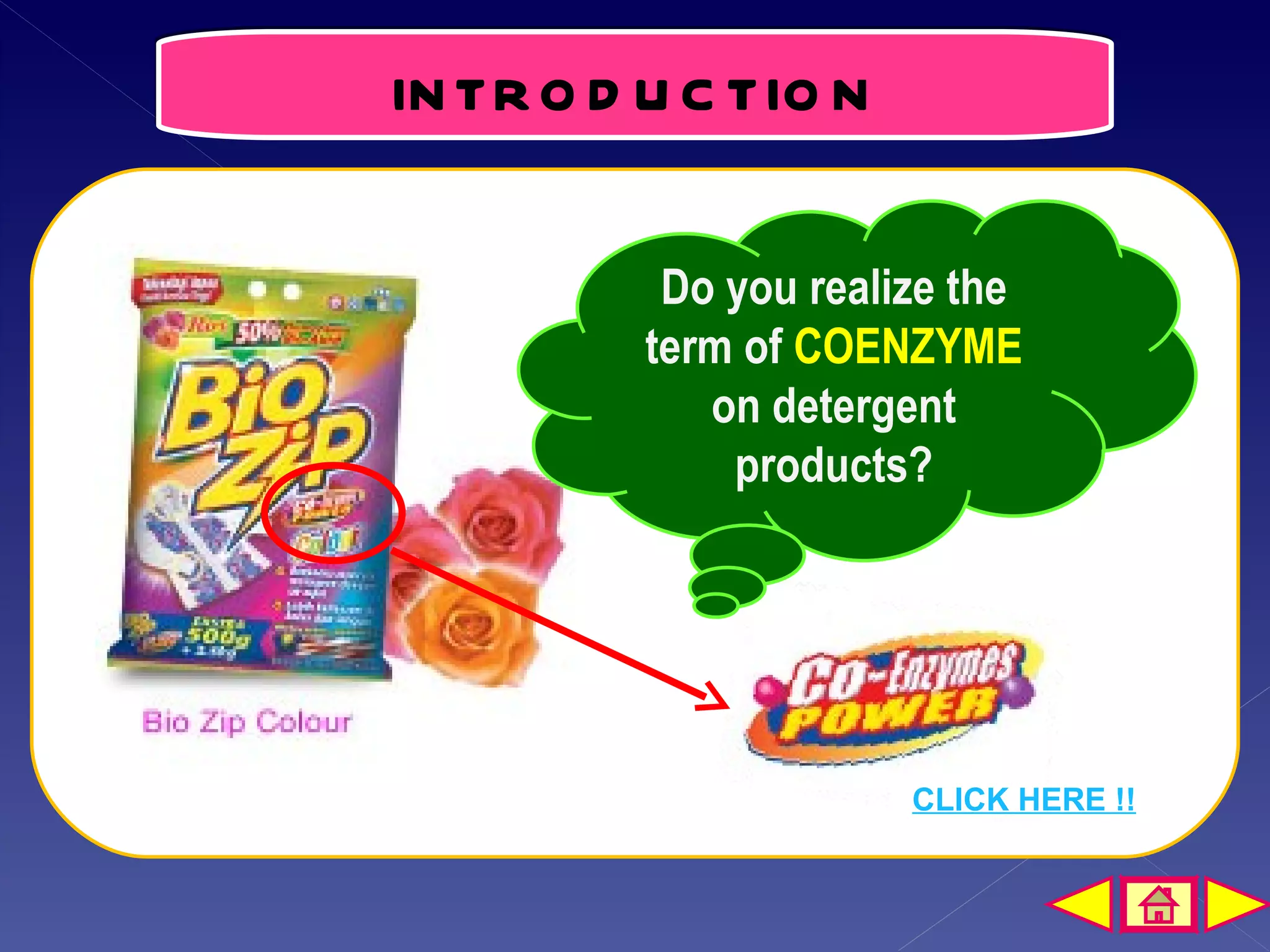
           Do you realize the
          term of COENZYME
             on detergent
              products?


                       CLICK HERE !!
P R IO R K N O WLE D G E

                  RECALL !!!


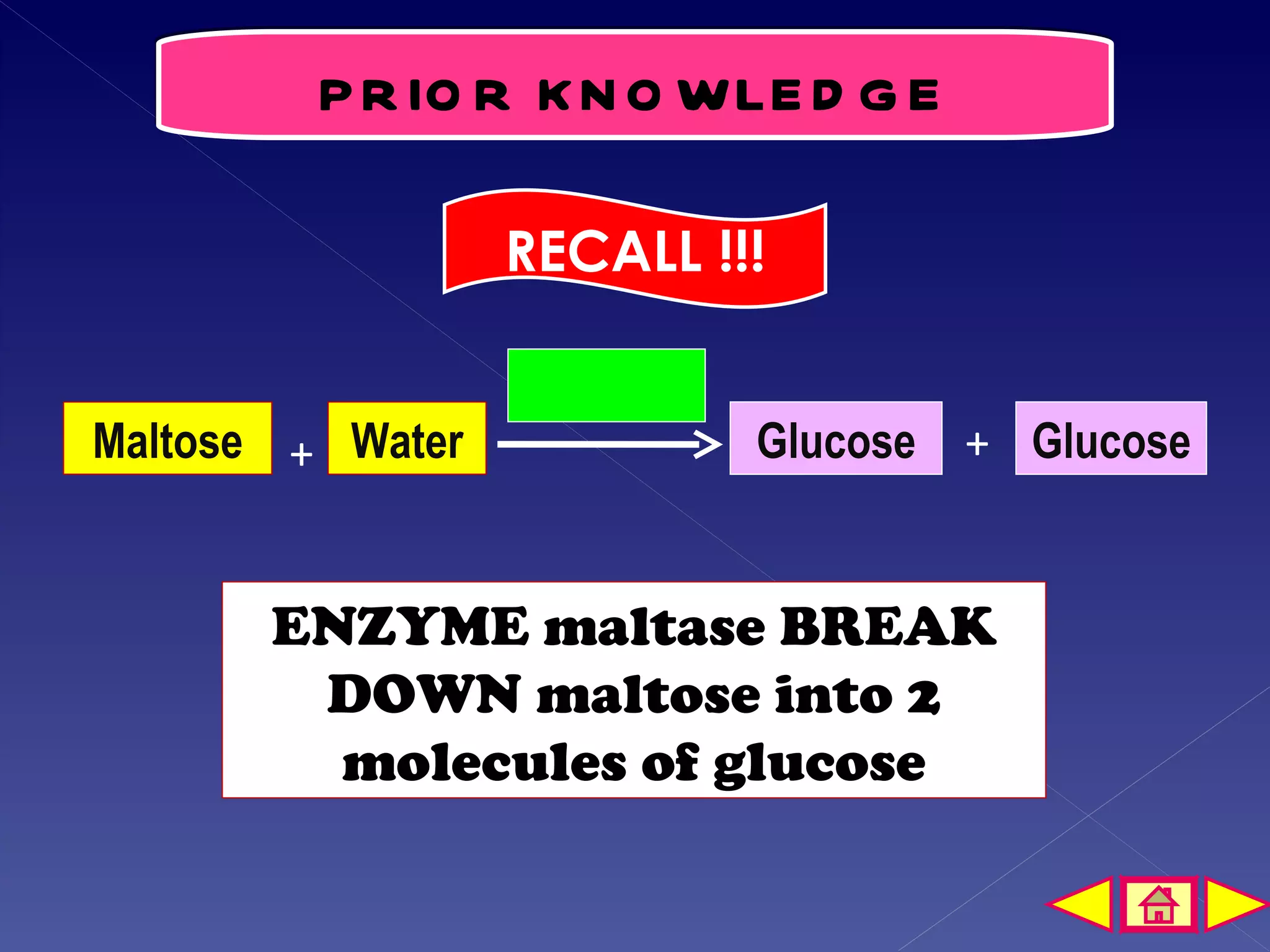
Maltose + Water            Glucose + Glucose


       ENZYME maltase BREAK
        DOWN maltose into 2
         molecules of glucose
P rior knowle d ge

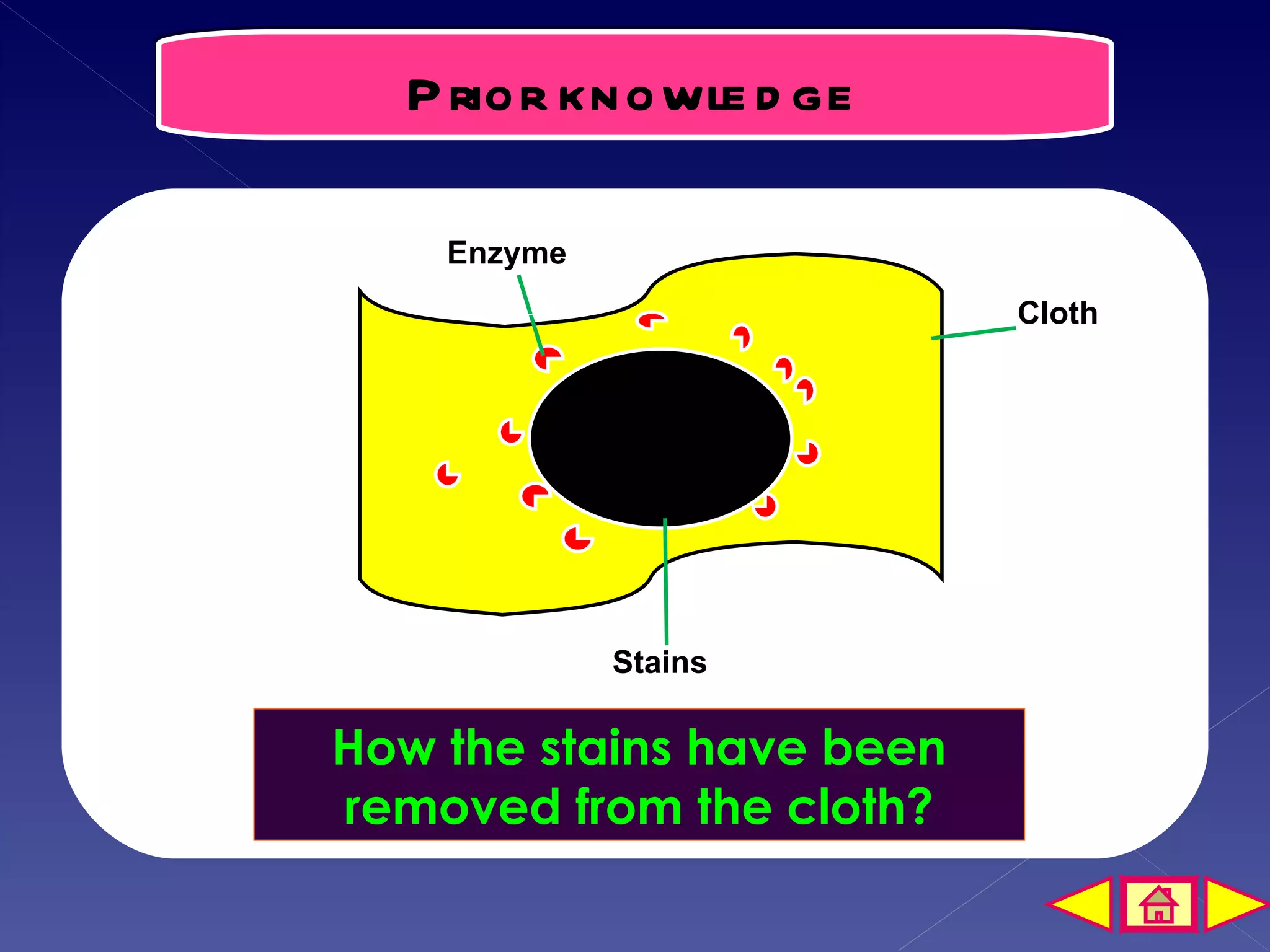
    Enzyme
    s
                           Cloth


             Stains

How the stains have been
removed from the cloth?
D E F IN ITIO N O F E N ZYM E


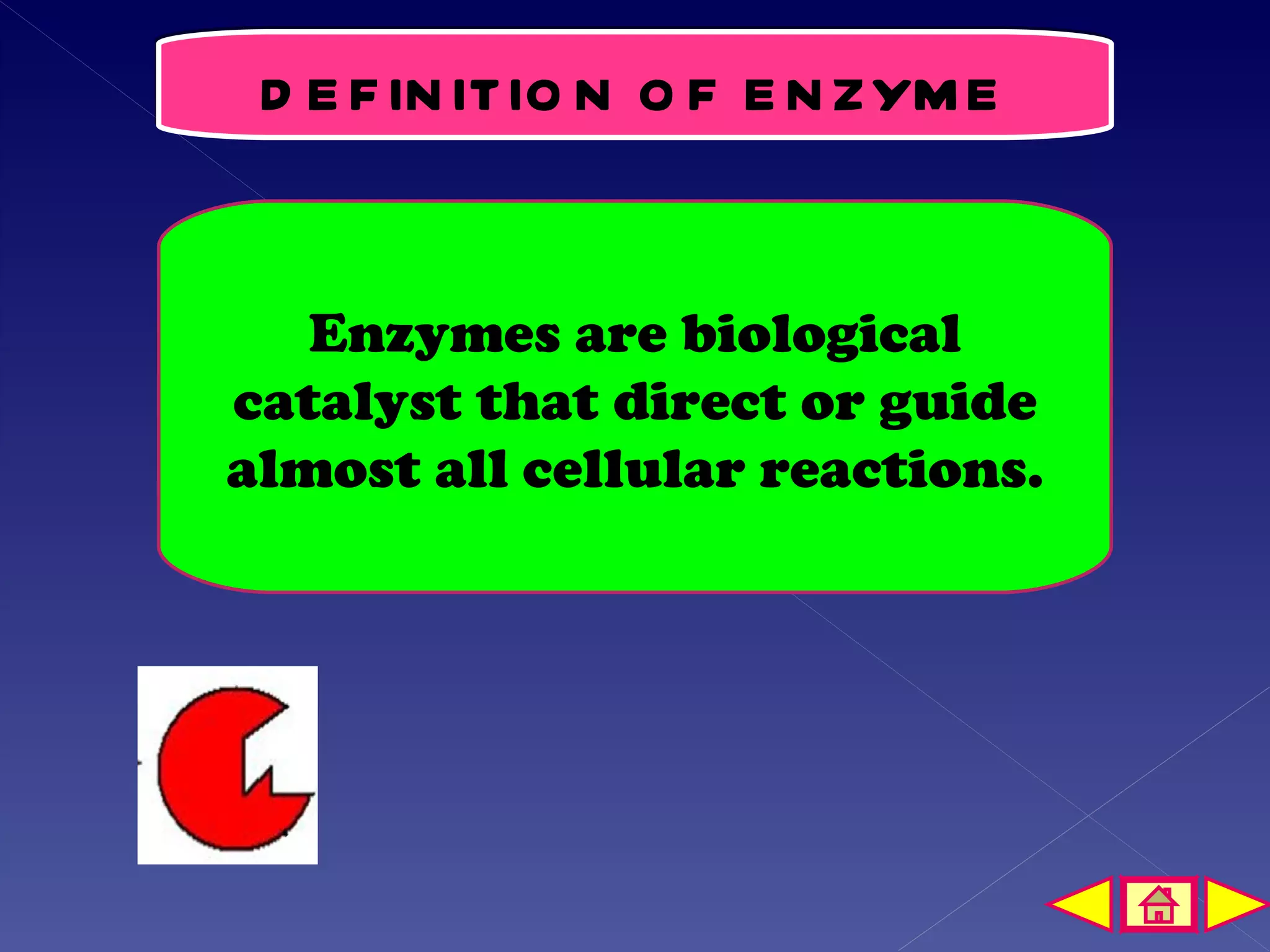
   Enzymes are biological
catalyst that direct or guide
almost all cellular reactions.
M E C H AN IS M O F E N ZM E
           AC TIO N

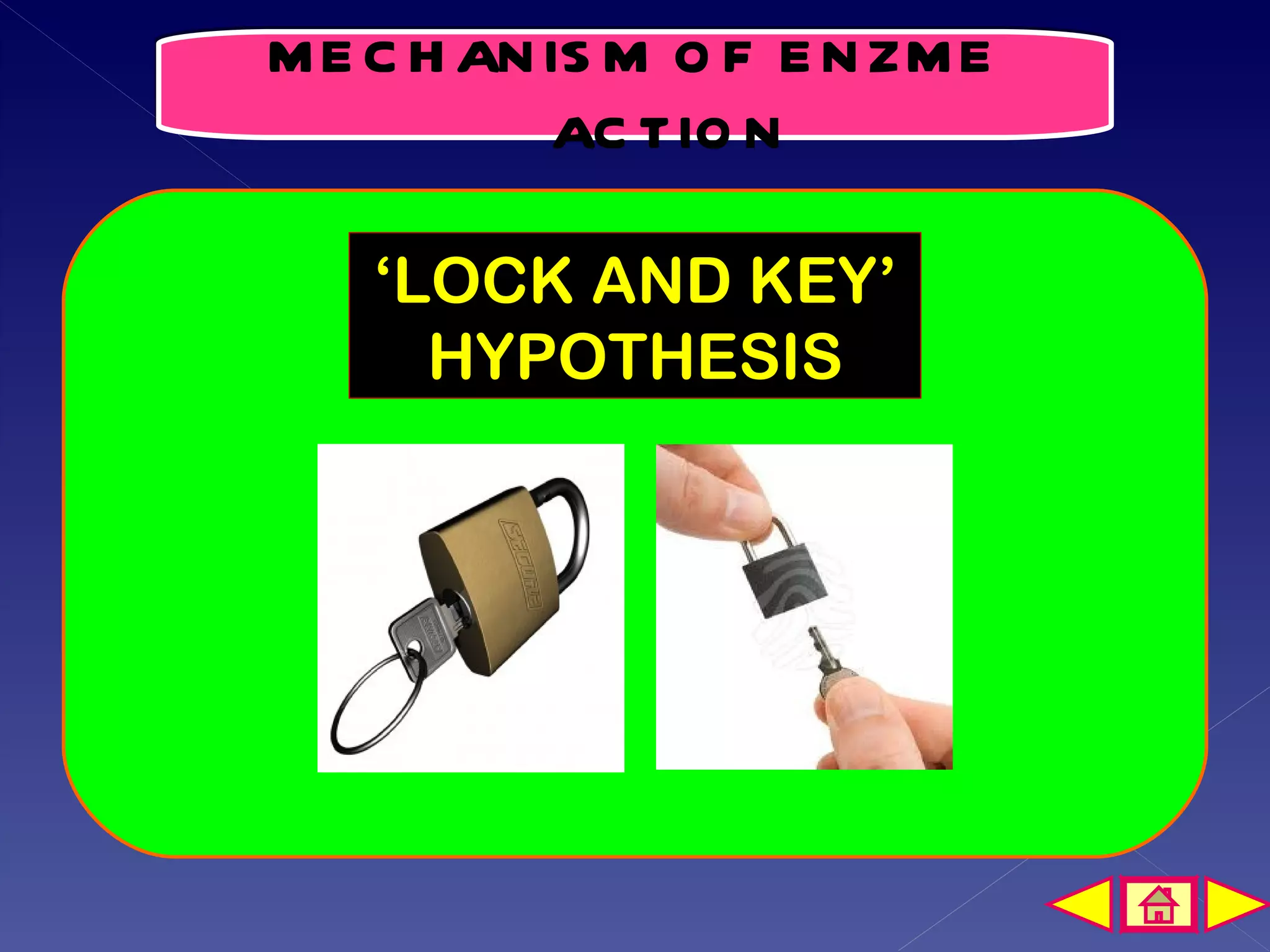
    ‘LOCK AND KEY’
      HYPOTHESIS
M E C H AN IS M O F E N ZM E
                     AC TIO N
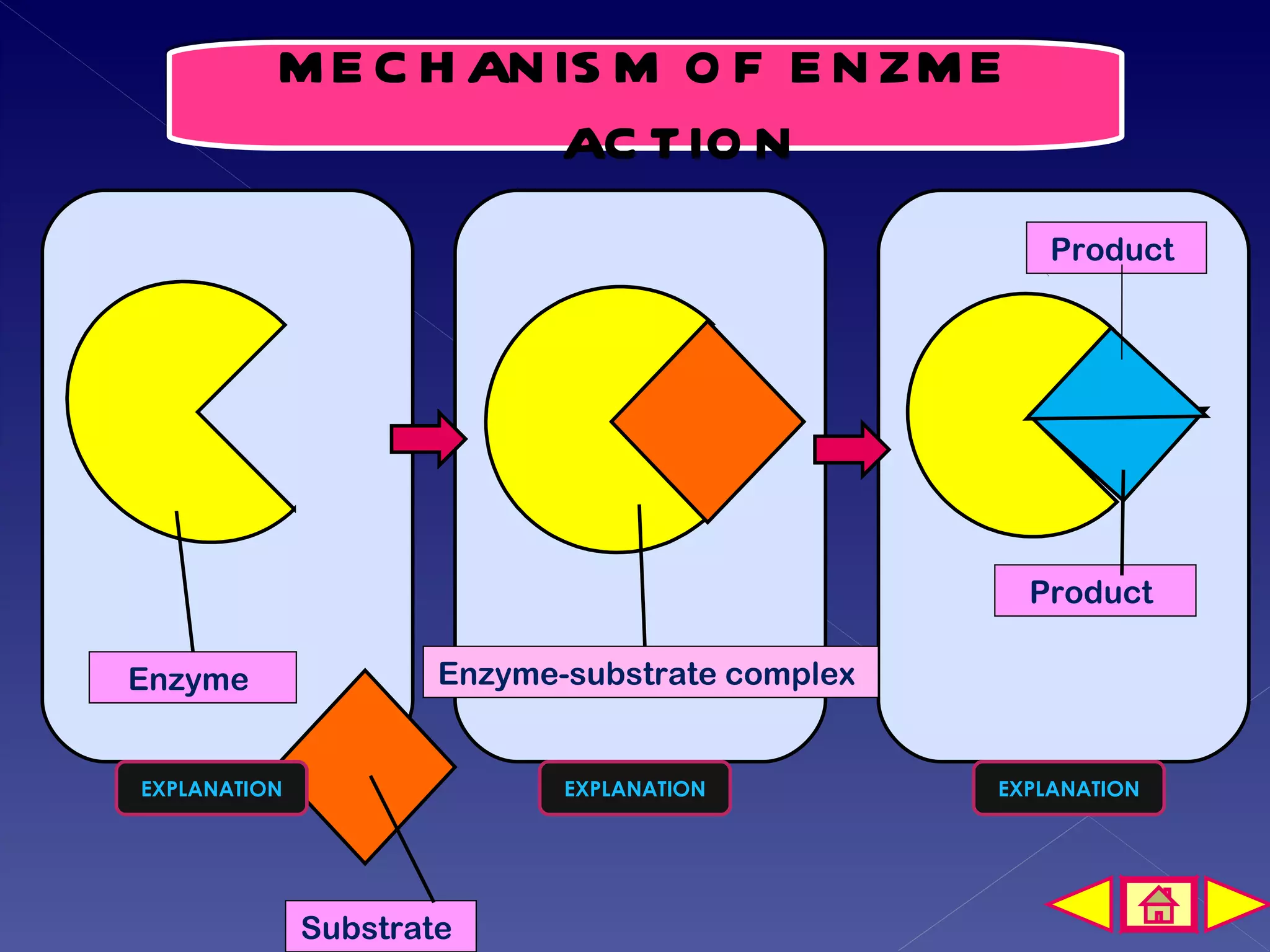
                                                     Product


                                                   Product

Enzyme                Enzyme-substrate complex


EXPLANATION                  EXPLANATION         EXPLANATION


              Substrate
M E C H AN IS M O F E N ZM E
              AC TIO N


A specific substrate molecule
arrives at the active site of the
       enzyme molecule.
M E C H AN IS M O F E N ZM E
               AC TIO N


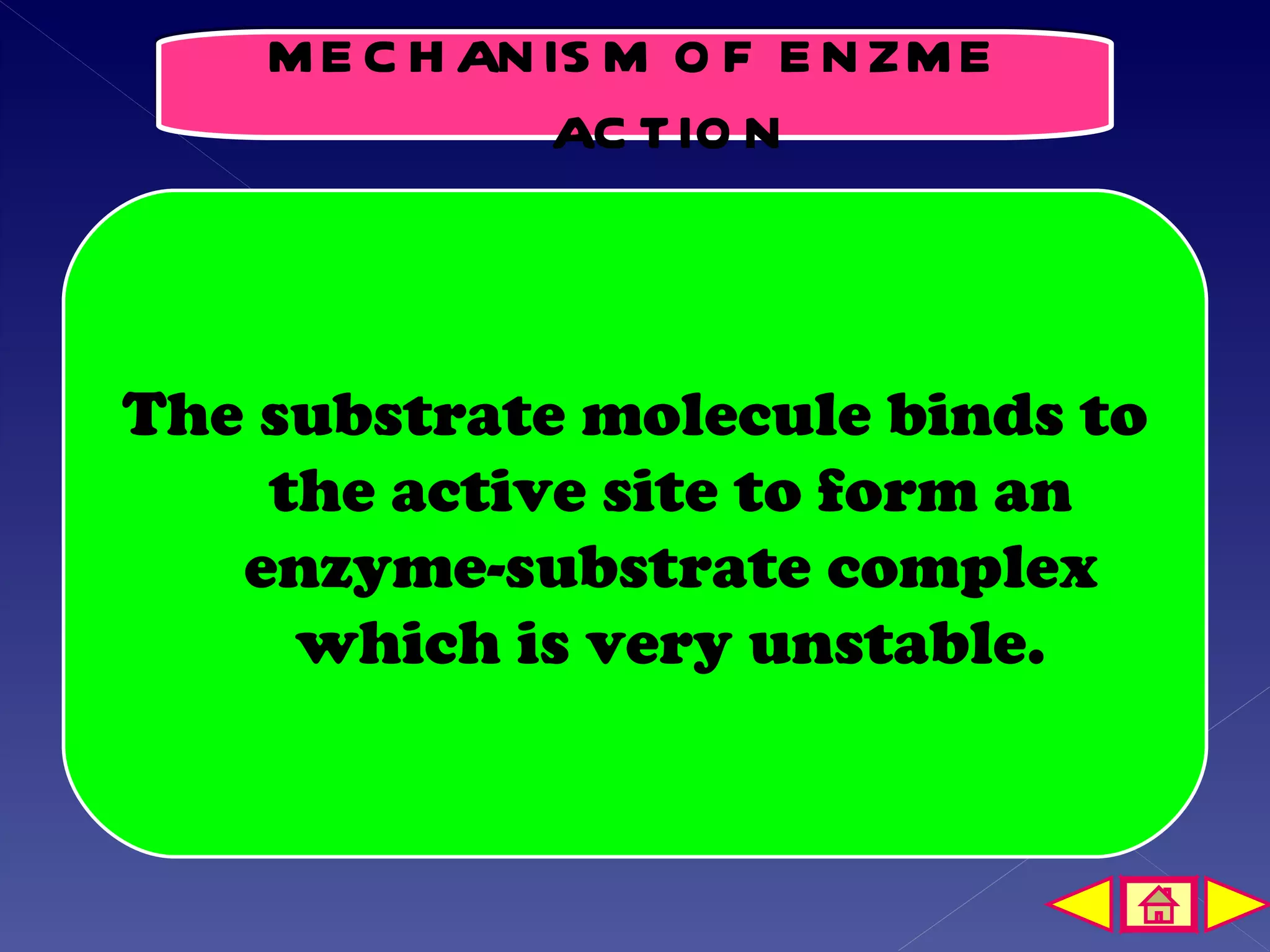
The substrate molecule binds to
    the active site to form an
   enzyme-substrate complex
     which is very unstable.
M E C H AN IS M O F E N ZM E
             AC TIO N

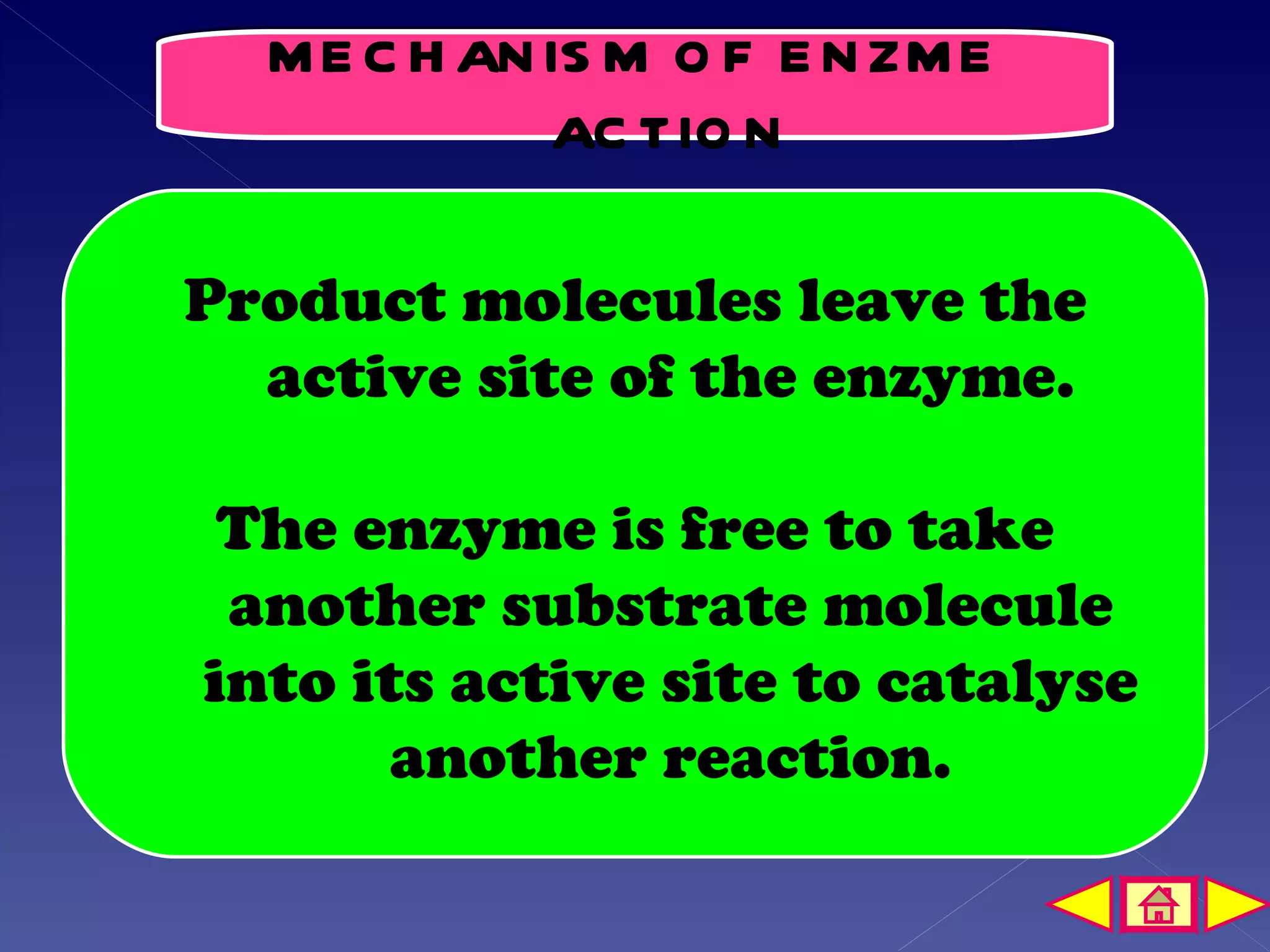
Product molecules leave the
  active site of the enzyme.

 The enzyme is free to take
 another substrate molecule
into its active site to catalyse
       another reaction.
M E C H AN IS M O F E N ZM E
                AC TIO N
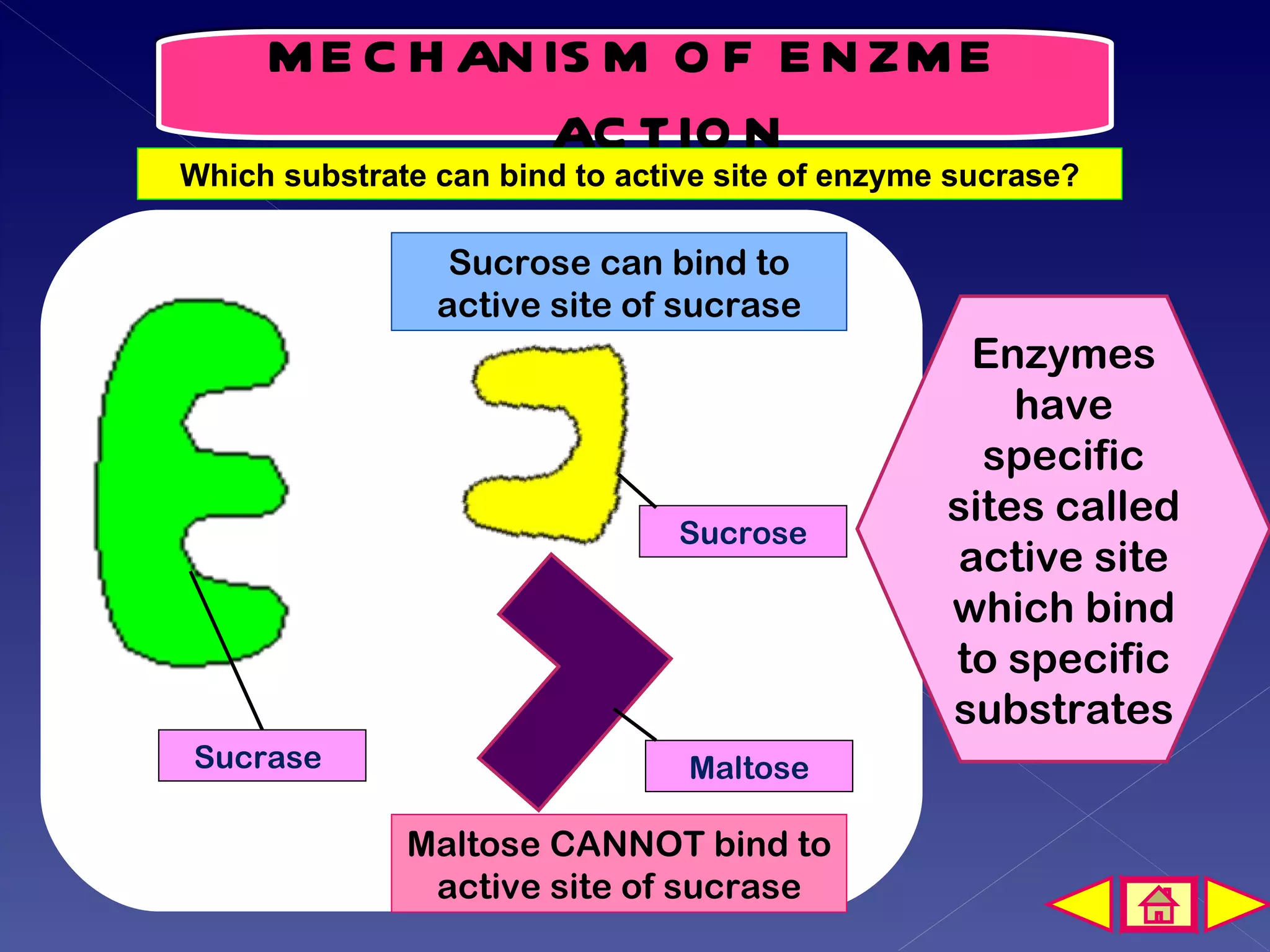
Which substrate can bind to active site of enzyme sucrase?

                 Sucrose can bind to
                active site of sucrase
                                                  Enzymes
                                                     have
                                                   specific
                                                 sites called
                                Sucrose
                                                 active site
                                                 which bind
                                                 to specific
                                                 substrates
Sucrase                         Maltose

              Maltose CANNOT bind to
               active site of sucrase
as s e s s m e nt


Question 1            Question 2


Question 3            Question 4
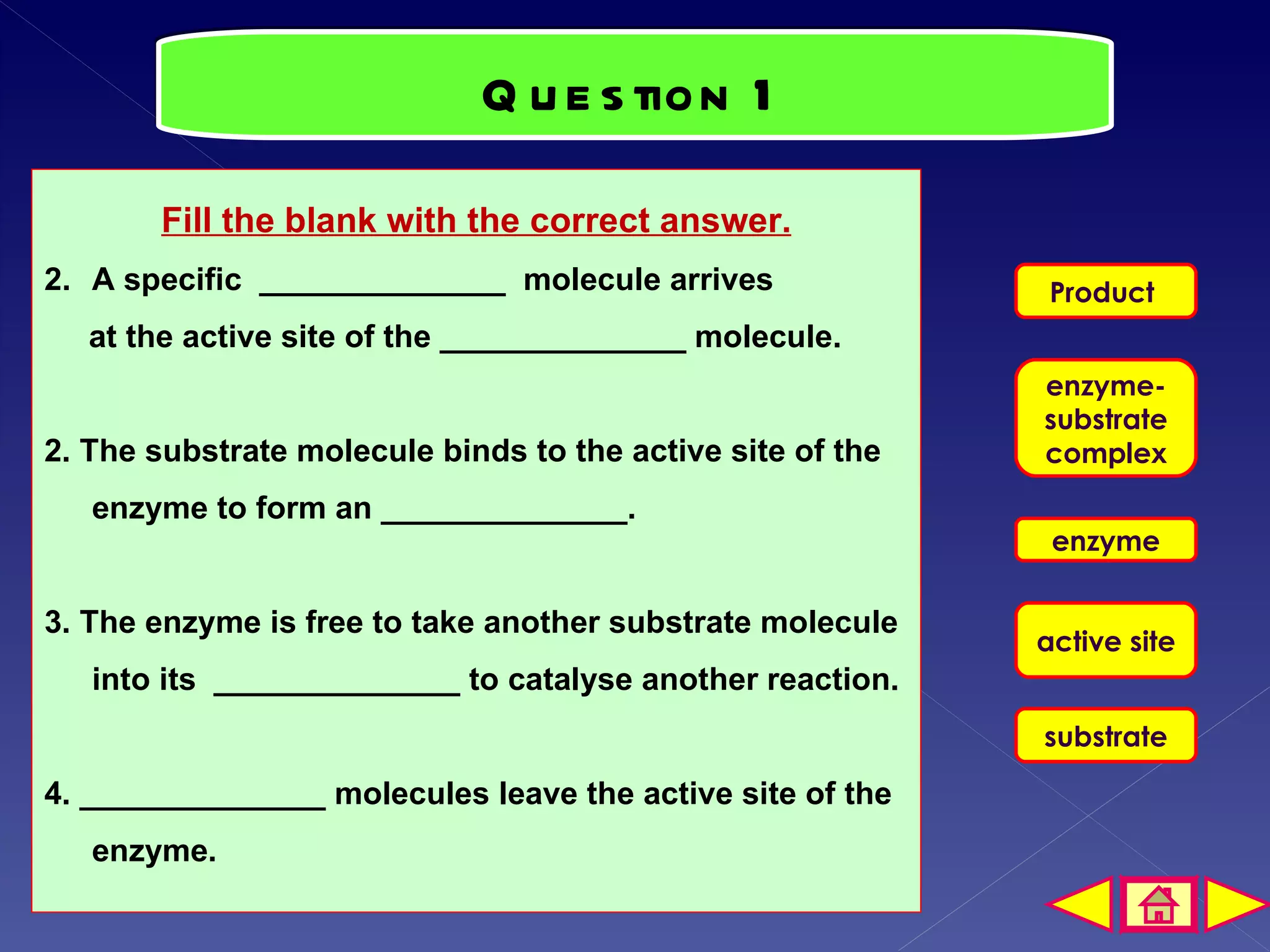
Q u e s tion 1
       Fill the blank with the correct answer.
2. A specific ______________ molecule arrives                Product
   at the active site of the ______________ molecule.
                                                            enzyme-
                                                            substrate
2. The substrate molecule binds to the active site of the   complex
   enzyme to form an ______________.
                                                             enzyme

3. The enzyme is free to take another substrate molecule
                                                            active site
   into its ______________ to catalyse another reaction.
                                                            substrate

4. ______________ molecules leave the active site of the
   enzyme.
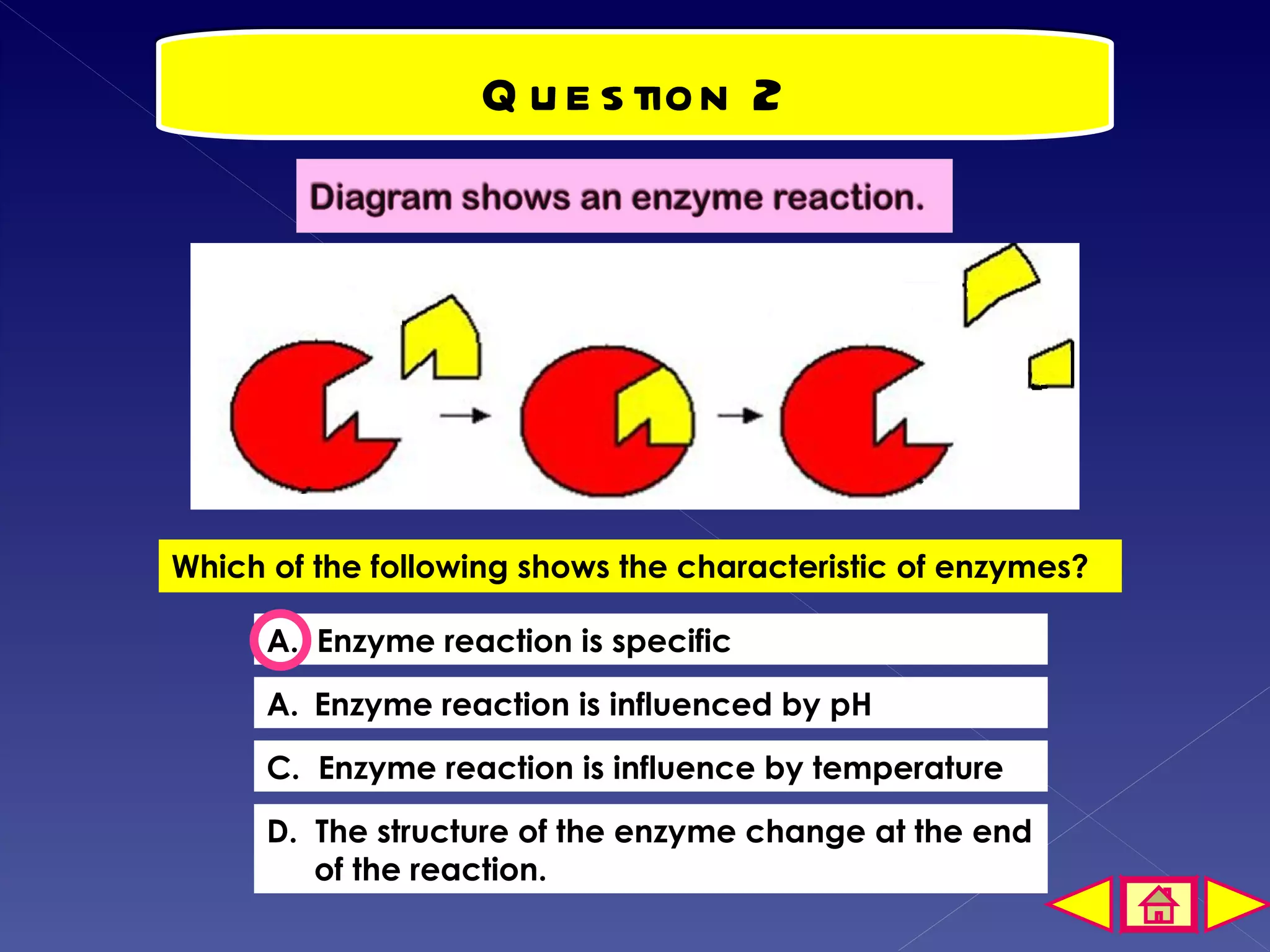
Q u e s tion 2


Which of the following shows the characteristic of enzymes?

      A. Enzyme reaction is specific

      A. Enzyme reaction is influenced by pH

      C. Enzyme reaction is influence by temperature

      D. The structure of the enzyme change at the end
         of the reaction.
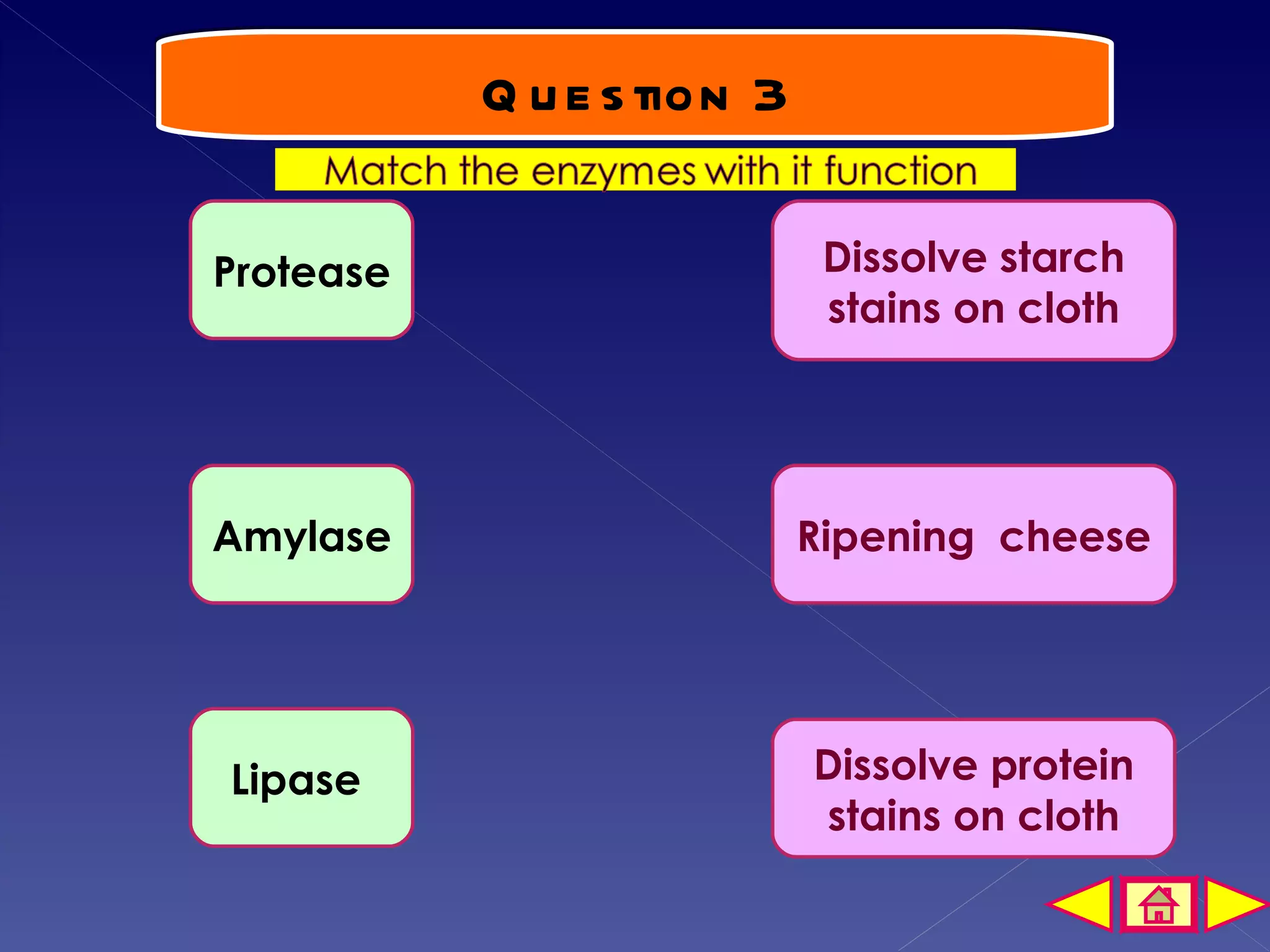
Q u e s tion 3

Protease                     Dissolve starch
                             stains on cloth


Amylase                     Ripening cheese


Lipase                      Dissolve protein
                            stains on cloth
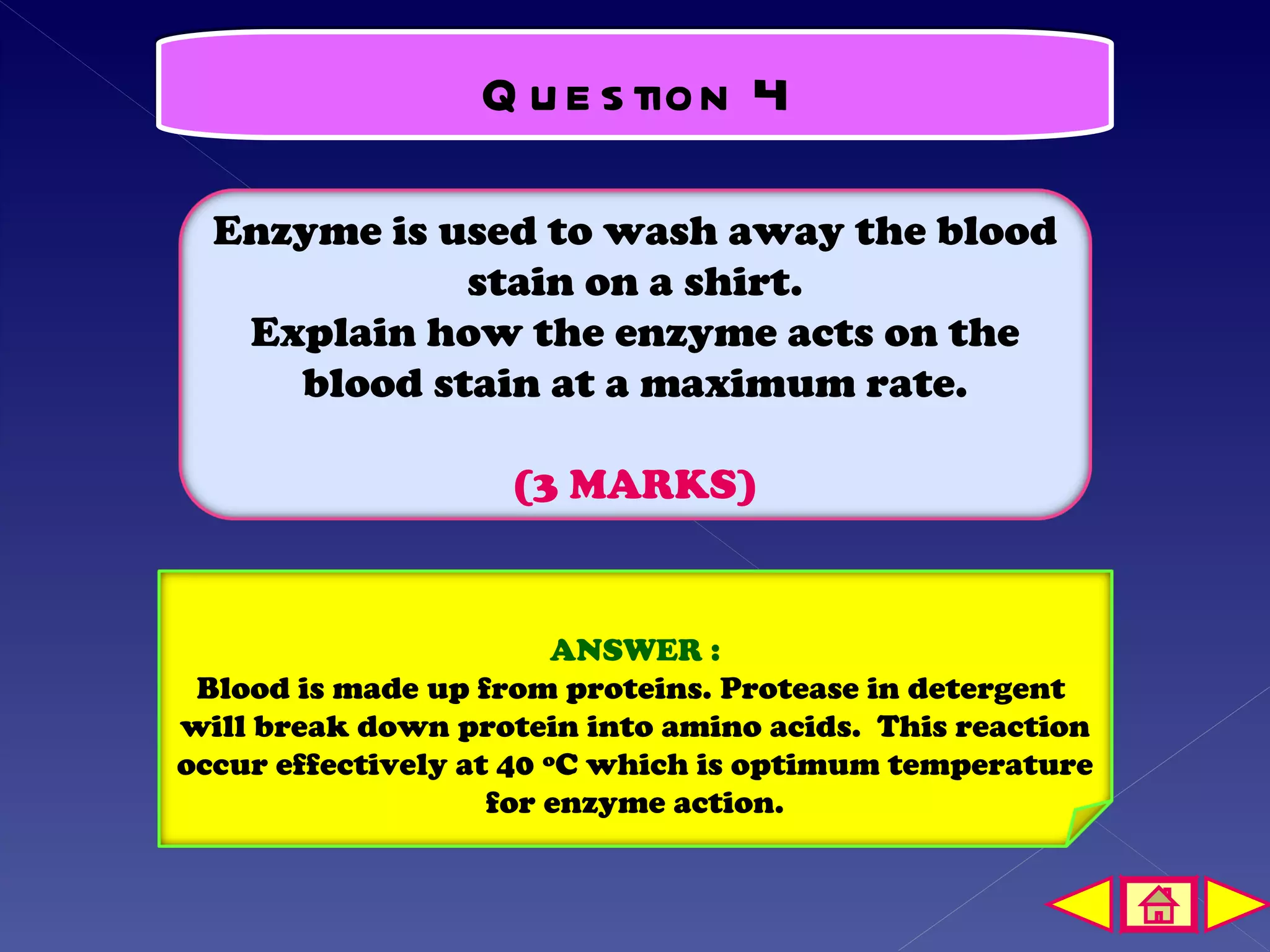
Q u e s tion 4

  Enzyme is used to wash away the blood
             stain on a shirt.
   Explain how the enzyme acts on the
     blood stain at a maximum rate.

                    (3 MARKS)


                         ANSWER :
 Blood is made up from proteins. Protease in detergent
will break down protein into amino acids. This reaction
occur effectively at 40 ºC which is optimum temperature
                    for enzyme action.
THANK YOU ….

Mechanism of Enzyme Action

  • 1.
    EDT 5303 TECHNOLOGY AND INNOVATION IN EDUCATION ( GROUP 12) TOPIC : MECHANISM OF ENZYME ACTION 1 . N U R F AU ZAN A BT ZU LKIF LI (G 1 027668) 2. N O R ‘AID AH BT LU K M AN (G 1 02731 2) 3. WAN S U H AILA BT WAN IS M AIL (G 1 022282 )
  • 2.
    C O NTE N T LEARNING 1 OUTCOME 2 INTRODUCTION PRIOR 3 KNOWLEDGE DEFINITION OF 4 ENZYME MECHANISM OF 5 ENZYME ACTION 6 ASSESSMENT
  • 3.
    LE AR NIN G O U TC O M E 4.10 : Explain the mechanism of enzyme action
  • 4.
    IN TR OD U C TIO N Do you realize the term of COENZYME on detergent products? CLICK HERE !!
  • 5.
    P R IOR K N O WLE D G E RECALL !!! Maltose + Water Glucose + Glucose ENZYME maltase BREAK DOWN maltose into 2 molecules of glucose
  • 6.
    P rior knowled ge Enzyme s Cloth Stains How the stains have been removed from the cloth?
  • 7.
    D E FIN ITIO N O F E N ZYM E Enzymes are biological catalyst that direct or guide almost all cellular reactions.
  • 8.
    M E CH AN IS M O F E N ZM E AC TIO N ‘LOCK AND KEY’ HYPOTHESIS
  • 9.
    M E CH AN IS M O F E N ZM E AC TIO N Product Product Enzyme Enzyme-substrate complex EXPLANATION EXPLANATION EXPLANATION Substrate
  • 10.
    M E CH AN IS M O F E N ZM E AC TIO N A specific substrate molecule arrives at the active site of the enzyme molecule.
  • 11.
    M E CH AN IS M O F E N ZM E AC TIO N The substrate molecule binds to the active site to form an enzyme-substrate complex which is very unstable.
  • 12.
    M E CH AN IS M O F E N ZM E AC TIO N Product molecules leave the active site of the enzyme. The enzyme is free to take another substrate molecule into its active site to catalyse another reaction.
  • 13.
    M E CH AN IS M O F E N ZM E AC TIO N Which substrate can bind to active site of enzyme sucrase? Sucrose can bind to active site of sucrase Enzymes have specific sites called Sucrose active site which bind to specific substrates Sucrase Maltose Maltose CANNOT bind to active site of sucrase
  • 14.
    as s es s m e nt Question 1 Question 2 Question 3 Question 4
  • 15.
    Q u es tion 1 Fill the blank with the correct answer. 2. A specific ______________ molecule arrives Product at the active site of the ______________ molecule. enzyme- substrate 2. The substrate molecule binds to the active site of the complex enzyme to form an ______________. enzyme 3. The enzyme is free to take another substrate molecule active site into its ______________ to catalyse another reaction. substrate 4. ______________ molecules leave the active site of the enzyme.
  • 16.
    Q u es tion 2 Which of the following shows the characteristic of enzymes? A. Enzyme reaction is specific A. Enzyme reaction is influenced by pH C. Enzyme reaction is influence by temperature D. The structure of the enzyme change at the end of the reaction.
  • 17.
    Q u es tion 3 Protease Dissolve starch stains on cloth Amylase Ripening cheese Lipase Dissolve protein stains on cloth
  • 18.
    Q u es tion 4 Enzyme is used to wash away the blood stain on a shirt. Explain how the enzyme acts on the blood stain at a maximum rate. (3 MARKS) ANSWER : Blood is made up from proteins. Protease in detergent will break down protein into amino acids. This reaction occur effectively at 40 ºC which is optimum temperature for enzyme action.
  • 19.