Chapter 1 The Nature and Scope of Managerial Economics www.slideshare.net/themhk
The application of economic theory and the tools of decision science to examine how an organization can achieve its aims or objectives most efficiently. www.slideshare.net/themhk
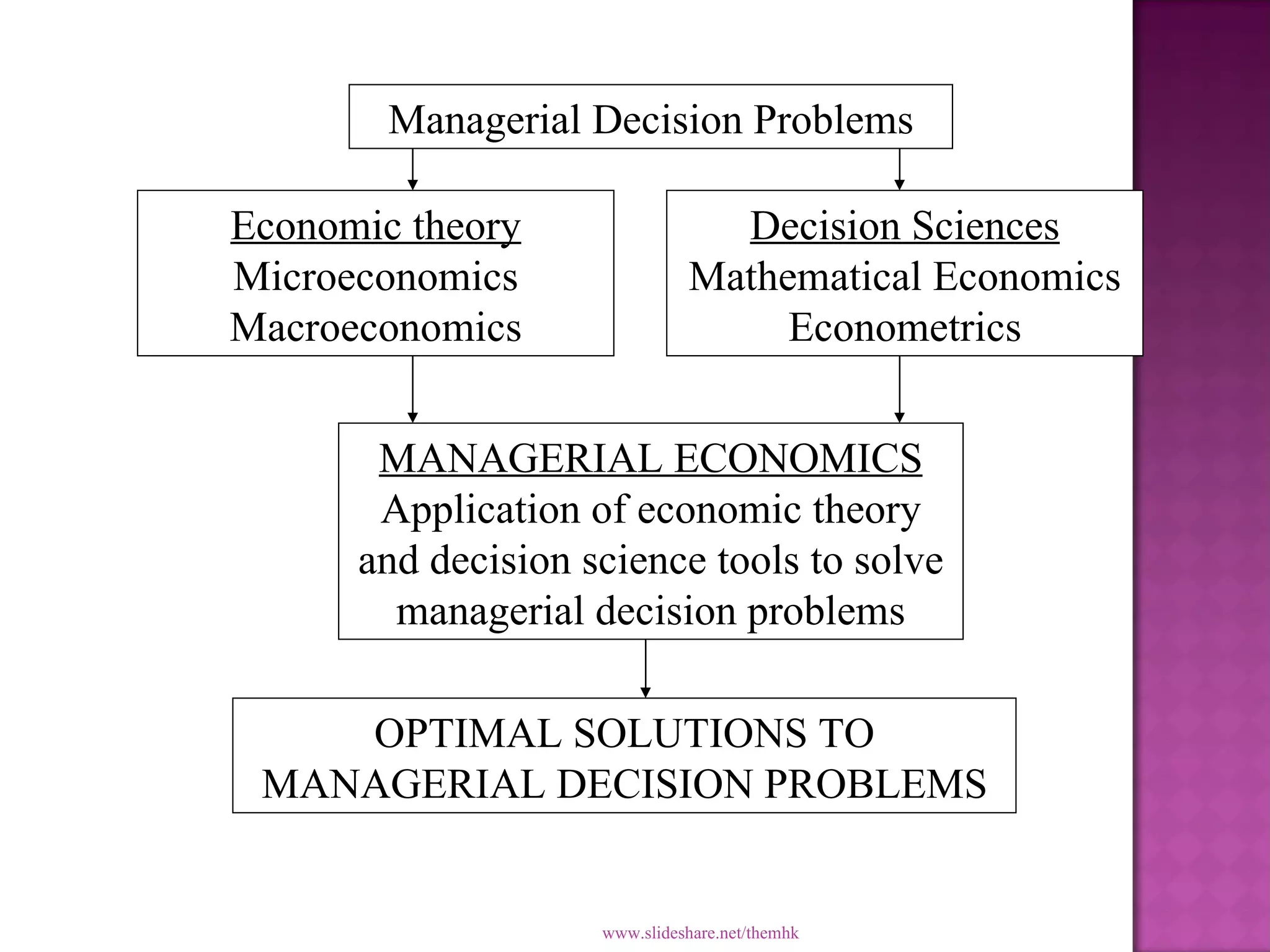
www.slideshare.net/themhk Managerial Decision Problems Economic theory Microeconomics Macroeconomics Decision Sciences Mathematical Economics Econometrics MANAGERIAL ECONOMICS Application of economic theory and decision science tools to solve managerial decision problems OPTIMAL SOLUTIONS TO MANAGERIAL DECISION PROBLEMS
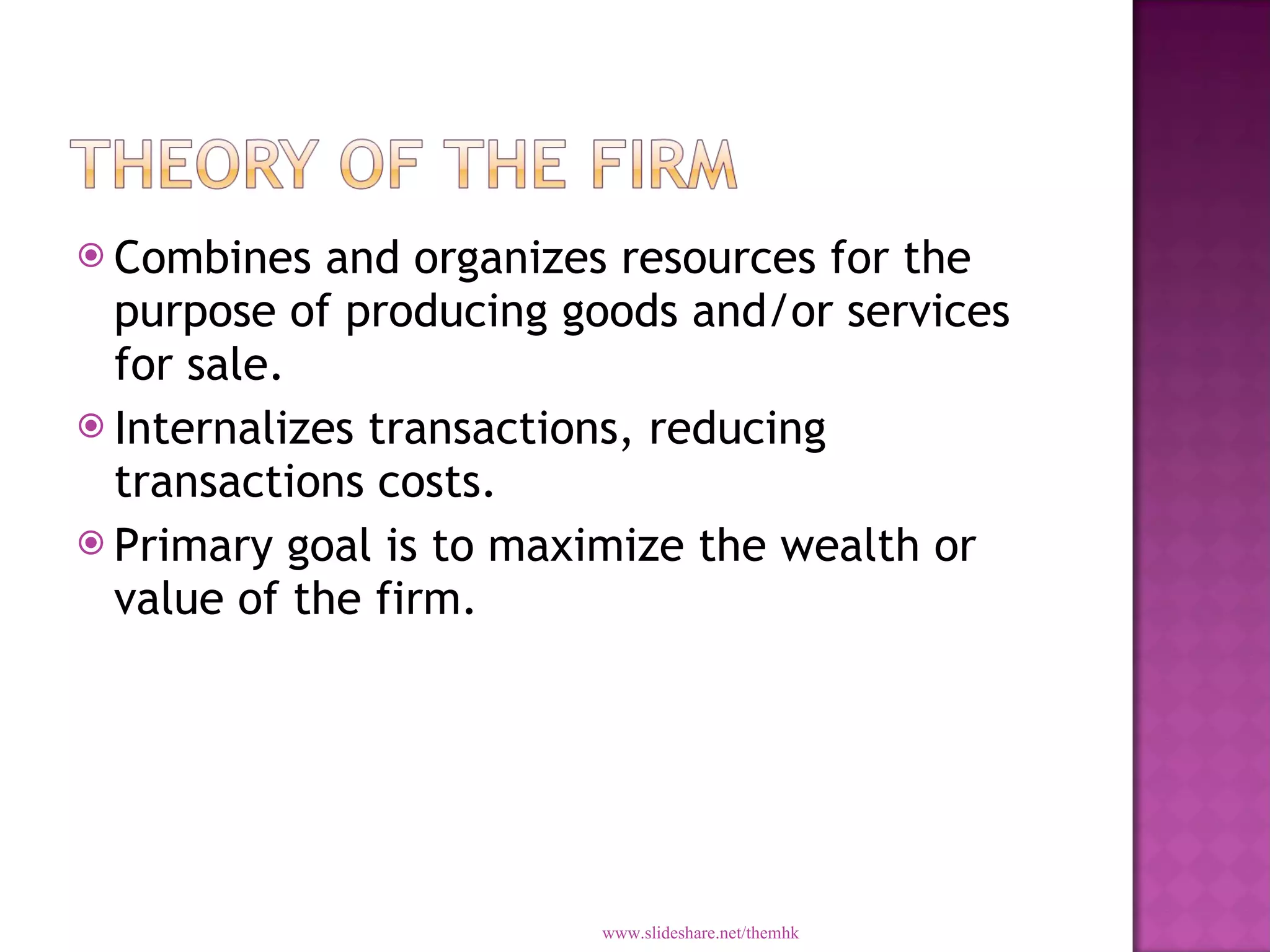
Combines and organizes resources for the purpose of producing goods and/or services for sale. Internalizes transactions, reducing transactions costs. Primary goal is to maximize the wealth or value of the firm. www.slideshare.net/themhk
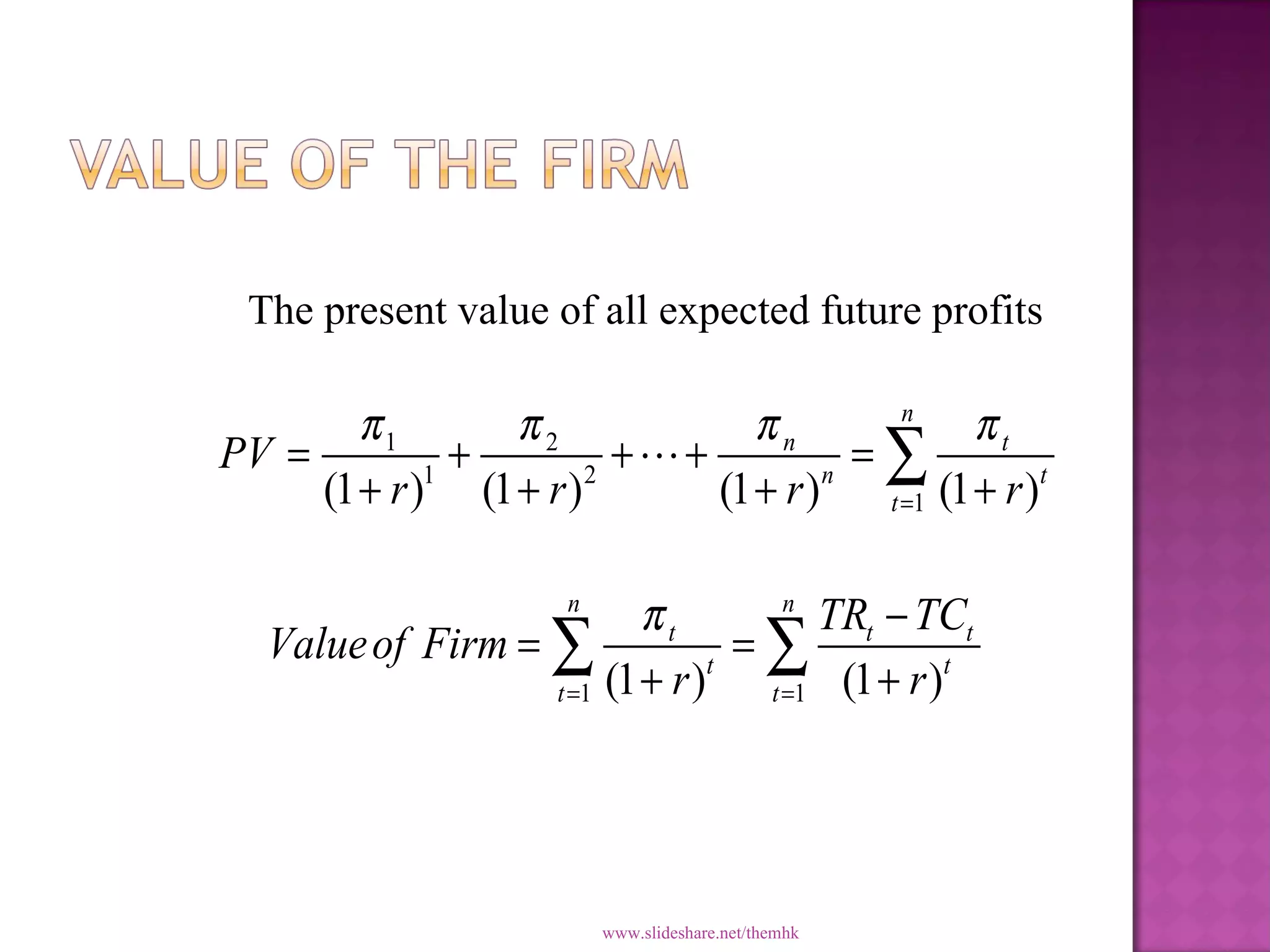
www.slideshare.net/themhk The present value of all expected future profits
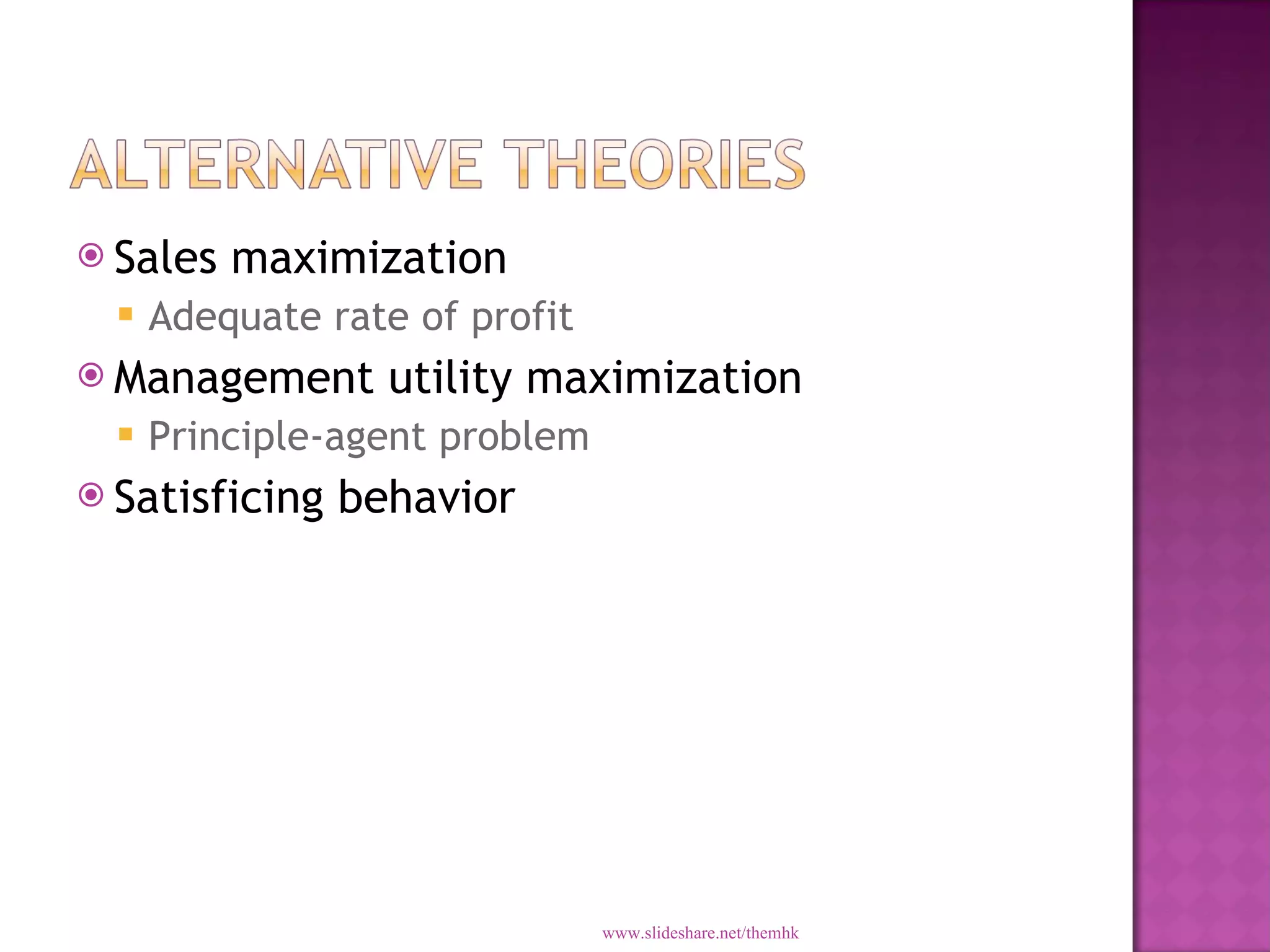
Sales maximization Adequate rate of profit Management utility maximization Principle-agent problem Satisficing behavior www.slideshare.net/themhk
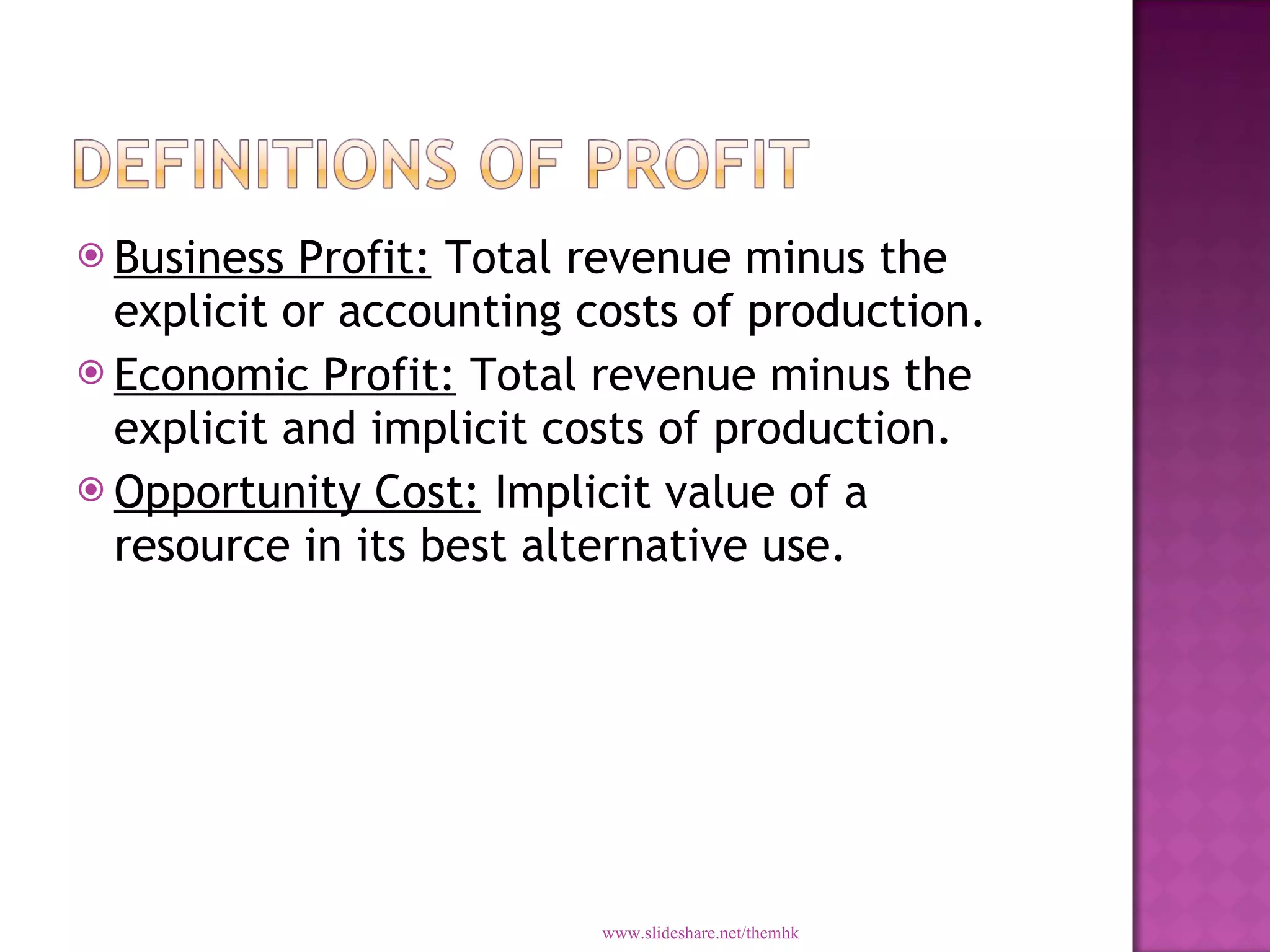
Business Profit:  Total revenue minus the explicit or accounting costs of production. Economic Profit:  Total revenue minus the explicit and implicit costs of production. Opportunity Cost:  Implicit value of a resource in its best alternative use. www.slideshare.net/themhk
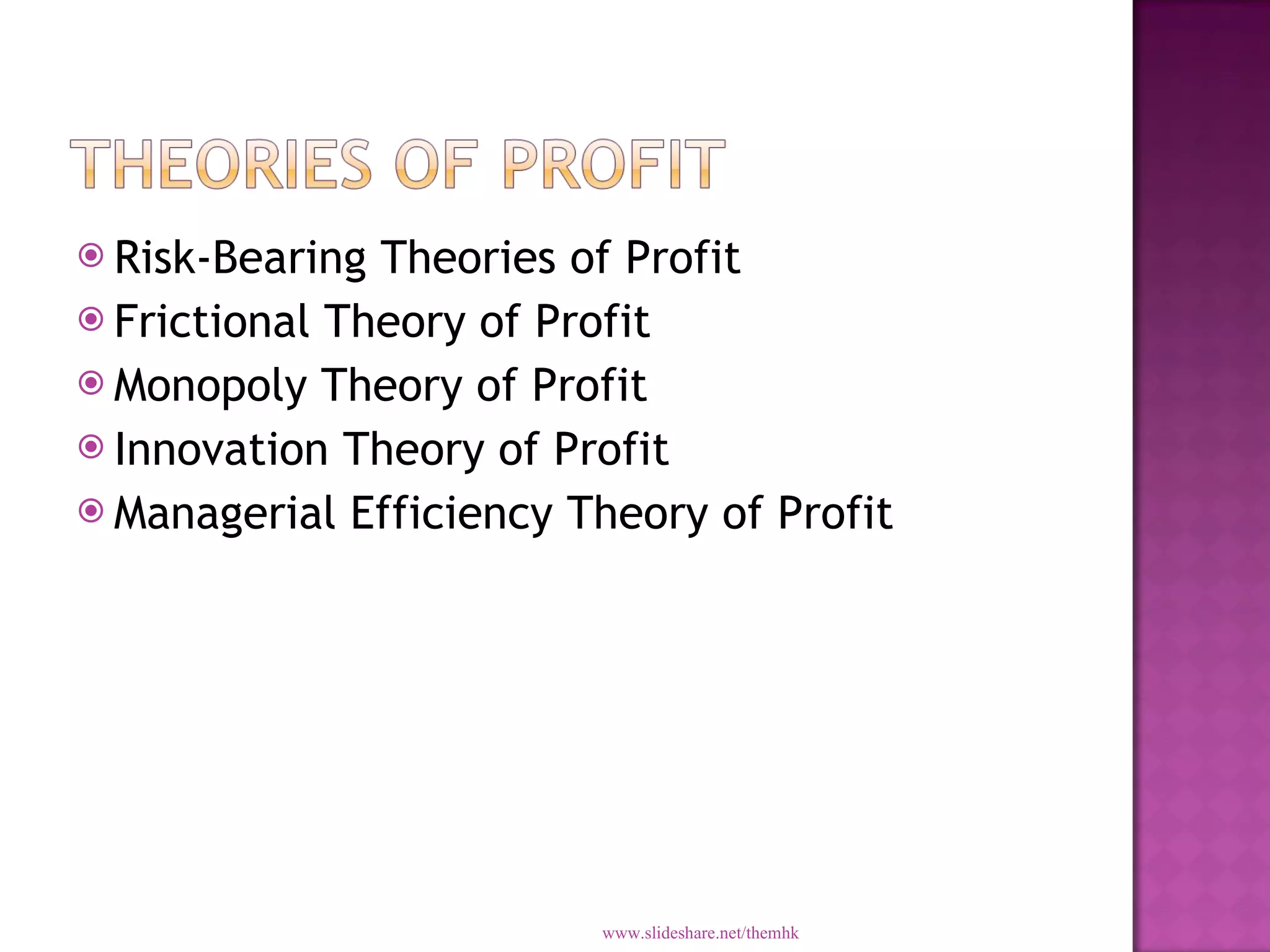
Risk-Bearing Theories of Profit Frictional Theory of Profit Monopoly Theory of Profit Innovation Theory of Profit Managerial Efficiency Theory of Profit www.slideshare.net/themhk
Profit is a signal that guides the allocation of society’s resources. High profits in an industry are a signal that buyers want more of what the industry produces. Low (or negative) profits in an industry are a signal that buyers want less of what the industry produces. www.slideshare.net/themhk
Identifies types of behavior that businesses and their employees should not engage in. Source of guidance that goes beyond enforceable laws. www.slideshare.net/themhk
Globalization of Economic Activity Goods and Services Capital Technology Skilled Labor Technological Change Telecommunications Advances The Internet and the World Wide Web www.slideshare.net/themhk

Managerial Economics Chap 1

  • 1.
    Chapter 1 TheNature and Scope of Managerial Economics www.slideshare.net/themhk
  • 2.
    The application ofeconomic theory and the tools of decision science to examine how an organization can achieve its aims or objectives most efficiently. www.slideshare.net/themhk
  • 3.
    www.slideshare.net/themhk Managerial DecisionProblems Economic theory Microeconomics Macroeconomics Decision Sciences Mathematical Economics Econometrics MANAGERIAL ECONOMICS Application of economic theory and decision science tools to solve managerial decision problems OPTIMAL SOLUTIONS TO MANAGERIAL DECISION PROBLEMS
  • 4.
    Combines and organizesresources for the purpose of producing goods and/or services for sale. Internalizes transactions, reducing transactions costs. Primary goal is to maximize the wealth or value of the firm. www.slideshare.net/themhk
  • 5.
    www.slideshare.net/themhk The presentvalue of all expected future profits
  • 6.
    Sales maximization Adequaterate of profit Management utility maximization Principle-agent problem Satisficing behavior www.slideshare.net/themhk
  • 7.
    Business Profit: Total revenue minus the explicit or accounting costs of production. Economic Profit: Total revenue minus the explicit and implicit costs of production. Opportunity Cost: Implicit value of a resource in its best alternative use. www.slideshare.net/themhk
  • 8.
    Risk-Bearing Theories ofProfit Frictional Theory of Profit Monopoly Theory of Profit Innovation Theory of Profit Managerial Efficiency Theory of Profit www.slideshare.net/themhk
  • 9.
    Profit is asignal that guides the allocation of society’s resources. High profits in an industry are a signal that buyers want more of what the industry produces. Low (or negative) profits in an industry are a signal that buyers want less of what the industry produces. www.slideshare.net/themhk
  • 10.
    Identifies types ofbehavior that businesses and their employees should not engage in. Source of guidance that goes beyond enforceable laws. www.slideshare.net/themhk
  • 11.
    Globalization of EconomicActivity Goods and Services Capital Technology Skilled Labor Technological Change Telecommunications Advances The Internet and the World Wide Web www.slideshare.net/themhk