Mckinsey’s 7 ‘s’ Technique
(Tool for Organizational Appraisal)
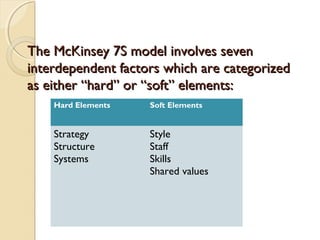
The McKinsey 7S model involves seven
interdependent factors which are categorized
as either “hard” or “soft” elements:


Hard Elements

Soft Elements

Strategy
Structure
Systems

Style
Staff
Skills
Shared values
“Hard” elements are easier to define or identify and
management can directly influence them:
These are strategy statements;
organization charts and reporting lines;
formal processes and IT systems.
“Soft” elements, on the other hand, can be more difficult
to describe, and are less tangible and more influenced by
culture. However, these soft elements are as important as
the hard elements if the organization is going to be
successful.
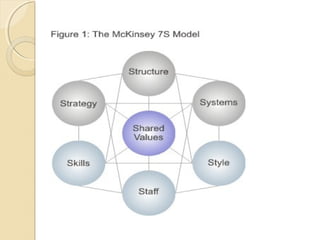
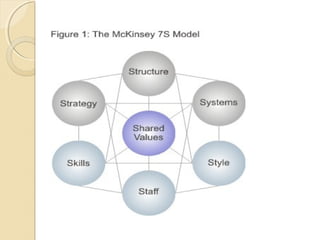
The way the model is presented in Figure 1 below depicts
the interdependency of the elements and indicates how a
change in one affects all the others.
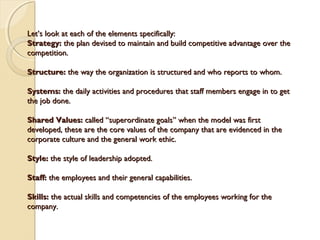
Let’s look at each of the elements specifically:
Strategy: the plan devised to maintain and build competitive advantage over the
competition.
Structure: the way the organization is structured and who reports to whom.
Systems: the daily activities and procedures that staff members engage in to get
the job done.
Shared Values: called “superordinate goals” when the model was first
developed, these are the core values of the company that are evidenced in the
corporate culture and the general work ethic.
Style: the style of leadership adopted.
Staff: the employees and their general capabilities.
Skills: the actual skills and competencies of the employees working for the
company.
Mckinsey  7 s
Mckinsey  7 s

Mckinsey 7 s

  • 1.
    Mckinsey’s 7 ‘s’Technique (Tool for Organizational Appraisal)
  • 2.
    The McKinsey 7Smodel involves seven interdependent factors which are categorized as either “hard” or “soft” elements:     Hard Elements Soft Elements Strategy Structure Systems Style Staff Skills Shared values
  • 3.
    “Hard” elements areeasier to define or identify and management can directly influence them: These are strategy statements; organization charts and reporting lines; formal processes and IT systems. “Soft” elements, on the other hand, can be more difficult to describe, and are less tangible and more influenced by culture. However, these soft elements are as important as the hard elements if the organization is going to be successful. The way the model is presented in Figure 1 below depicts the interdependency of the elements and indicates how a change in one affects all the others.
  • 4.
    Let’s look ateach of the elements specifically: Strategy: the plan devised to maintain and build competitive advantage over the competition. Structure: the way the organization is structured and who reports to whom. Systems: the daily activities and procedures that staff members engage in to get the job done. Shared Values: called “superordinate goals” when the model was first developed, these are the core values of the company that are evidenced in the corporate culture and the general work ethic. Style: the style of leadership adopted. Staff: the employees and their general capabilities. Skills: the actual skills and competencies of the employees working for the company.