ERP Systems: An Overview

Dr. Nityesh Bhatt
Institute of Management, Nirma University
nityesh@imnu.ac.in
Dynamic Business Environment &
Role of IS







Blurring Business Boundary
Cut-Throat Competition
Demanding Customers
Vigilant Government, Regulator and Judiciary
Changing Role of Trade Partners
Wider Choice with Employees
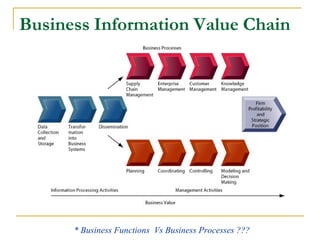
Business Information Value Chain

* Business Functions Vs Business Processes ???
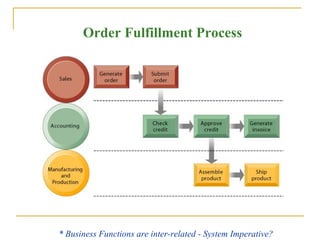
Order Fulfillment Process

* Business Functions are inter-related - System Imperative?
Enterprise Applications
• Designed to support organization-wide process coordination
and integration
• Consist of :
• Enterprise systems
•
•
•

Supply chain management systems
Customer relationship management systems
Knowledge management systems
Enterprise Application Architecture
Enterprise Resource Planning
• Provides a single information system for organizationwide coordination and integration of key business
processes.
• Interdependent software modules with a common central
database that enable seamless flow of information
throughout the firm

What was Pre-ERP Scenario ?
Traditional (“Silo”) View of Systems

What are TPS & MIS ??
Transaction Processing Systems (TPS)
• A computerized system that performs and records the daily
routine transactions
• Online (Real time) Vs. Offline (Batch Processing) System
• What are functional information system ?

* Need for Integration ???
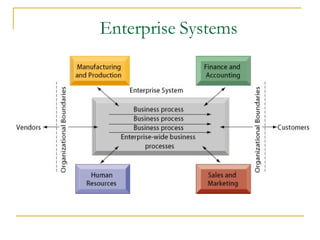
Enterprise Systems
Characteristics of an ERP System








Integrated
Sub-System concept
Management Oriented
Management Directed
Common Database
Common Dataflow
Heavy Planning element
Pre-requisites of Effective ERP










Top Management Support
Technology Oriented Staff
Qualified Systems
Control of System
Periodic Evaluation
Database
Networks
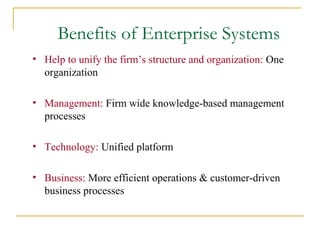
Benefits of Enterprise Systems
• Help to unify the firm’s structure and organization: One
organization
• Management: Firm wide knowledge-based management
processes
• Technology: Unified platform
• Business: More efficient operations & customer-driven
business processes
Constraints in Implementing ERP






Lack of skilled professionals
High turnover of experts
Lack of staff cooperation
Large investment & huge time requirement
Benefits not known to management
Challenges of Enterprise Systems
• Difficult to build: Require fundamental changes in the way
the business operates (Change Management)
• Technology: Require complex pieces of software and large
investments of time, money, and expertise
• On-time, on-budget implementation
• Centralized organizational coordination and decision
making: Not the best way for all kinds of firms

Erp overview

  • 1.
    ERP Systems: AnOverview Dr. Nityesh Bhatt Institute of Management, Nirma University nityesh@imnu.ac.in
  • 2.
    Dynamic Business Environment& Role of IS       Blurring Business Boundary Cut-Throat Competition Demanding Customers Vigilant Government, Regulator and Judiciary Changing Role of Trade Partners Wider Choice with Employees
  • 3.
    Business Information ValueChain * Business Functions Vs Business Processes ???
  • 4.
    Order Fulfillment Process *Business Functions are inter-related - System Imperative?
  • 5.
    Enterprise Applications • Designedto support organization-wide process coordination and integration • Consist of : • Enterprise systems • • • Supply chain management systems Customer relationship management systems Knowledge management systems
  • 6.
  • 7.
    Enterprise Resource Planning •Provides a single information system for organizationwide coordination and integration of key business processes. • Interdependent software modules with a common central database that enable seamless flow of information throughout the firm What was Pre-ERP Scenario ?
  • 8.
    Traditional (“Silo”) Viewof Systems What are TPS & MIS ??
  • 9.
    Transaction Processing Systems(TPS) • A computerized system that performs and records the daily routine transactions • Online (Real time) Vs. Offline (Batch Processing) System • What are functional information system ? * Need for Integration ???
  • 10.
  • 11.
    Characteristics of anERP System        Integrated Sub-System concept Management Oriented Management Directed Common Database Common Dataflow Heavy Planning element
  • 12.
    Pre-requisites of EffectiveERP        Top Management Support Technology Oriented Staff Qualified Systems Control of System Periodic Evaluation Database Networks
  • 13.
    Benefits of EnterpriseSystems • Help to unify the firm’s structure and organization: One organization • Management: Firm wide knowledge-based management processes • Technology: Unified platform • Business: More efficient operations & customer-driven business processes
  • 14.
    Constraints in ImplementingERP      Lack of skilled professionals High turnover of experts Lack of staff cooperation Large investment & huge time requirement Benefits not known to management
  • 15.
    Challenges of EnterpriseSystems • Difficult to build: Require fundamental changes in the way the business operates (Change Management) • Technology: Require complex pieces of software and large investments of time, money, and expertise • On-time, on-budget implementation • Centralized organizational coordination and decision making: Not the best way for all kinds of firms