MANAGEMENT BY OBJECTIVE
The McKinsey 7S Framework
How do you go about analyzing how well your organization is positioned
to achieve its intended objective?
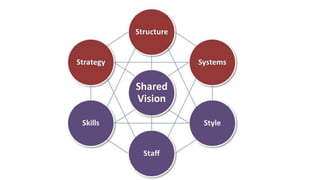
 Developed in the early 1980s by Tom Peters and Robert Waterman,
two consultants working at the McKinsey & Company consulting firm,
the basic premise of the model is that there are seven internal
aspects of an organization that need to be aligned if it is to be
successful.
The 7-S model can be used in a wide variety of ways:
To help spot what you need to do to improve the performance of
your company.
Very useful when planning for change in the organization
Identify what’s not working in your organization
You need to ask yourself where you are
now and where you want to be in the
future
The model will help you assess these
elements with searching questions
1.Structure
A successful organization may make
temporary structural changes to cope
with specific strategic tasks without
abandoning basic structural divisions
throughout the organization
What it really means:
Organizational structure is your
hierarchy or your organizational
chart
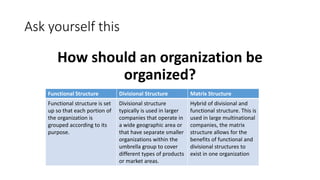
Ask yourself this
How should an organization be
organized?
Functional Structure Divisional Structure Matrix Structure
Functional structure is set
up so that each portion of
the organization is
grouped according to its
purpose.
Divisional structure
typically is used in larger
companies that operate in
a wide geographic area or
that have separate smaller
organizations within the
umbrella group to cover
different types of products
or market areas.
Hybrid of divisional and
functional structure. This is
used in large multinational
companies, the matrix
structure allows for the
benefits of functional and
divisional structures to
exist in one organization
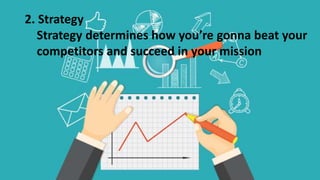
2. Strategy
Strategy determines how you’re gonna beat your
competitors and succeed in your mission
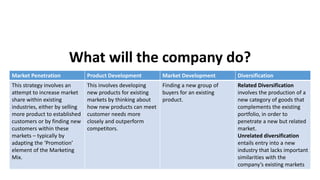
What will the company do?
Market Penetration Product Development Market Development Diversification
This strategy involves an
attempt to increase market
share within existing
industries, either by selling
more product to established
customers or by finding new
customers within these
markets – typically by
adapting the ‘Promotion’
element of the Marketing
Mix.
This involves developing
new products for existing
markets by thinking about
how new products can meet
customer needs more
closely and outperform
competitors.
Finding a new group of
buyers for an existing
product.
Related Diversification
involves the production of a
new category of goods that
complements the existing
portfolio, in order to
penetrate a new but related
market.
Unrelated diversification
entails entry into a new
industry that lacks important
similarities with the
company’s existing markets
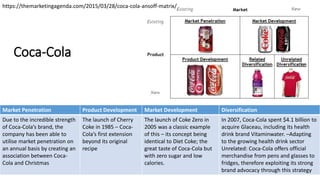
Coca-Cola
Market Penetration Product Development Market Development Diversification
Due to the incredible strength
of Coca-Cola’s brand, the
company has been able to
utilise market penetration on
an annual basis by creating an
association between Coca-
Cola and Christmas
The launch of Cherry
Coke in 1985 – Coca-
Cola’s first extension
beyond its original
recipe
The launch of Coke Zero in
2005 was a classic example
of this – its concept being
identical to Diet Coke; the
great taste of Coca-Cola but
with zero sugar and low
calories.
In 2007, Coca-Cola spent $4.1 billion to
acquire Glaceau, including its health
drink brand Vitaminwater. –Adapting
to the growing health drink sector
Unrelated: Coca-Cola offers official
merchandise from pens and glasses to
fridges, therefore exploiting its strong
brand advocacy through this strategy
https://themarketingagenda.com/2015/03/28/coca-cola-ansoff-matrix/
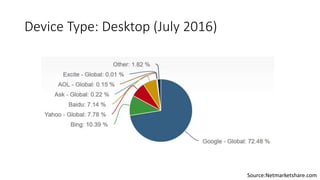
Device Type: Desktop (July 2016)
Source:Netmarketshare.com
3. Systems
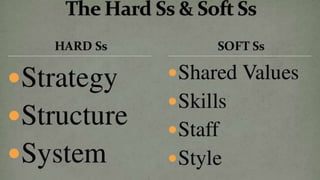
Systems are the resources and procedures that your
people use to do their work
Question
What procedures need to be in place
(few or many)?
4. Style
Represents the style of leadership adopted in the organization
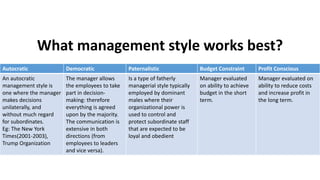
What management style works best?
Autocratic Democratic Paternalistic Budget Constraint Profit Conscious
An autocratic
management style is
one where the manager
makes decisions
unilaterally, and
without much regard
for subordinates.
Eg: The New York
Times(2001-2003),
Trump Organization
The manager allows
the employees to take
part in decision-
making: therefore
everything is agreed
upon by the majority.
The communication is
extensive in both
directions (from
employees to leaders
and vice versa).
Is a type of fatherly
managerial style typically
employed by dominant
males where their
organizational power is
used to control and
protect subordinate staff
that are expected to be
loyal and obedient
Manager evaluated
on ability to achieve
budget in the short
term.
Manager evaluated on
ability to reduce costs
and increase profit in
the long term.
5. Staff
Successful organizations view people as resources who should
be carefully nurtured, developed, guarded, and allocated
• In other words, represents your employees and their
capabilities
What staff are required?
6. Skills
Refer to those activities organizations do best and for which they are
known.
Eg. Du Pont is known for research. P&G for product management. ITT
for financial controls. HP for innovation and quality.
What skills will our staff and company
need?
•What skill does a company have?
•What skills is the company short of?
7. Superordinate Goals
Guiding concepts, values and aspirations that unite an
organization in some common purpose
• Your shared values determine the way that your work and the
way that you solve problems
What culture or attitudes will be most
suitable?
•The McKinsey 7S Model can be applied to
almost any issue at work. If there are
inconsistencies maybe the team or company
are not working effectively enough.
•The model can help reveal such
inconsistencies, and we can ensure that
they’re matched up to help you share values
and objectives with teams that are responsible
for making it happen

Management by Objective and McKinsey 7S Framework

  • 1.
  • 13.
    The McKinsey 7SFramework How do you go about analyzing how well your organization is positioned to achieve its intended objective?
  • 14.
     Developed inthe early 1980s by Tom Peters and Robert Waterman, two consultants working at the McKinsey & Company consulting firm, the basic premise of the model is that there are seven internal aspects of an organization that need to be aligned if it is to be successful. The 7-S model can be used in a wide variety of ways: To help spot what you need to do to improve the performance of your company. Very useful when planning for change in the organization Identify what’s not working in your organization
  • 17.
    You need toask yourself where you are now and where you want to be in the future
  • 18.
    The model willhelp you assess these elements with searching questions
  • 19.
    1.Structure A successful organizationmay make temporary structural changes to cope with specific strategic tasks without abandoning basic structural divisions throughout the organization
  • 20.
    What it reallymeans: Organizational structure is your hierarchy or your organizational chart
  • 21.
    Ask yourself this Howshould an organization be organized? Functional Structure Divisional Structure Matrix Structure Functional structure is set up so that each portion of the organization is grouped according to its purpose. Divisional structure typically is used in larger companies that operate in a wide geographic area or that have separate smaller organizations within the umbrella group to cover different types of products or market areas. Hybrid of divisional and functional structure. This is used in large multinational companies, the matrix structure allows for the benefits of functional and divisional structures to exist in one organization
  • 22.
    2. Strategy Strategy determineshow you’re gonna beat your competitors and succeed in your mission
  • 23.
    What will thecompany do? Market Penetration Product Development Market Development Diversification This strategy involves an attempt to increase market share within existing industries, either by selling more product to established customers or by finding new customers within these markets – typically by adapting the ‘Promotion’ element of the Marketing Mix. This involves developing new products for existing markets by thinking about how new products can meet customer needs more closely and outperform competitors. Finding a new group of buyers for an existing product. Related Diversification involves the production of a new category of goods that complements the existing portfolio, in order to penetrate a new but related market. Unrelated diversification entails entry into a new industry that lacks important similarities with the company’s existing markets
  • 24.
    Coca-Cola Market Penetration ProductDevelopment Market Development Diversification Due to the incredible strength of Coca-Cola’s brand, the company has been able to utilise market penetration on an annual basis by creating an association between Coca- Cola and Christmas The launch of Cherry Coke in 1985 – Coca- Cola’s first extension beyond its original recipe The launch of Coke Zero in 2005 was a classic example of this – its concept being identical to Diet Coke; the great taste of Coca-Cola but with zero sugar and low calories. In 2007, Coca-Cola spent $4.1 billion to acquire Glaceau, including its health drink brand Vitaminwater. –Adapting to the growing health drink sector Unrelated: Coca-Cola offers official merchandise from pens and glasses to fridges, therefore exploiting its strong brand advocacy through this strategy https://themarketingagenda.com/2015/03/28/coca-cola-ansoff-matrix/
  • 26.
    Device Type: Desktop(July 2016) Source:Netmarketshare.com
  • 27.
    3. Systems Systems arethe resources and procedures that your people use to do their work
  • 28.
    Question What procedures needto be in place (few or many)?
  • 29.
    4. Style Represents thestyle of leadership adopted in the organization
  • 30.
    What management styleworks best? Autocratic Democratic Paternalistic Budget Constraint Profit Conscious An autocratic management style is one where the manager makes decisions unilaterally, and without much regard for subordinates. Eg: The New York Times(2001-2003), Trump Organization The manager allows the employees to take part in decision- making: therefore everything is agreed upon by the majority. The communication is extensive in both directions (from employees to leaders and vice versa). Is a type of fatherly managerial style typically employed by dominant males where their organizational power is used to control and protect subordinate staff that are expected to be loyal and obedient Manager evaluated on ability to achieve budget in the short term. Manager evaluated on ability to reduce costs and increase profit in the long term.
  • 31.
    5. Staff Successful organizationsview people as resources who should be carefully nurtured, developed, guarded, and allocated • In other words, represents your employees and their capabilities
  • 32.
    What staff arerequired?
  • 33.
    6. Skills Refer tothose activities organizations do best and for which they are known. Eg. Du Pont is known for research. P&G for product management. ITT for financial controls. HP for innovation and quality.
  • 34.
    What skills willour staff and company need? •What skill does a company have? •What skills is the company short of?
  • 35.
    7. Superordinate Goals Guidingconcepts, values and aspirations that unite an organization in some common purpose • Your shared values determine the way that your work and the way that you solve problems
  • 36.
    What culture orattitudes will be most suitable?
  • 37.
    •The McKinsey 7SModel can be applied to almost any issue at work. If there are inconsistencies maybe the team or company are not working effectively enough. •The model can help reveal such inconsistencies, and we can ensure that they’re matched up to help you share values and objectives with teams that are responsible for making it happen