A Comparison of
five popular Organization
      Design Models

            April 2012
Organization Design Models- A comparison

Organization Design is not an exact science. The success of any
approach lies in making the design exercise logical and objective.


Over the years, many models have been developed for understanding
the various elements of Organization Design. The objective has been to
provide a framework to understand the intricacies of organization design.

We present here five most popular models for Organization Design with
their benefits and limitations


We hope that knowing the benefits and limitations of each model assists
you in making the right choice for designing your organization


   Source: Guide to Organisation Design: Creating High-Performing and Adaptable Enterprises
                         By Naomi Stanford, John Wiley& Sons, 2007
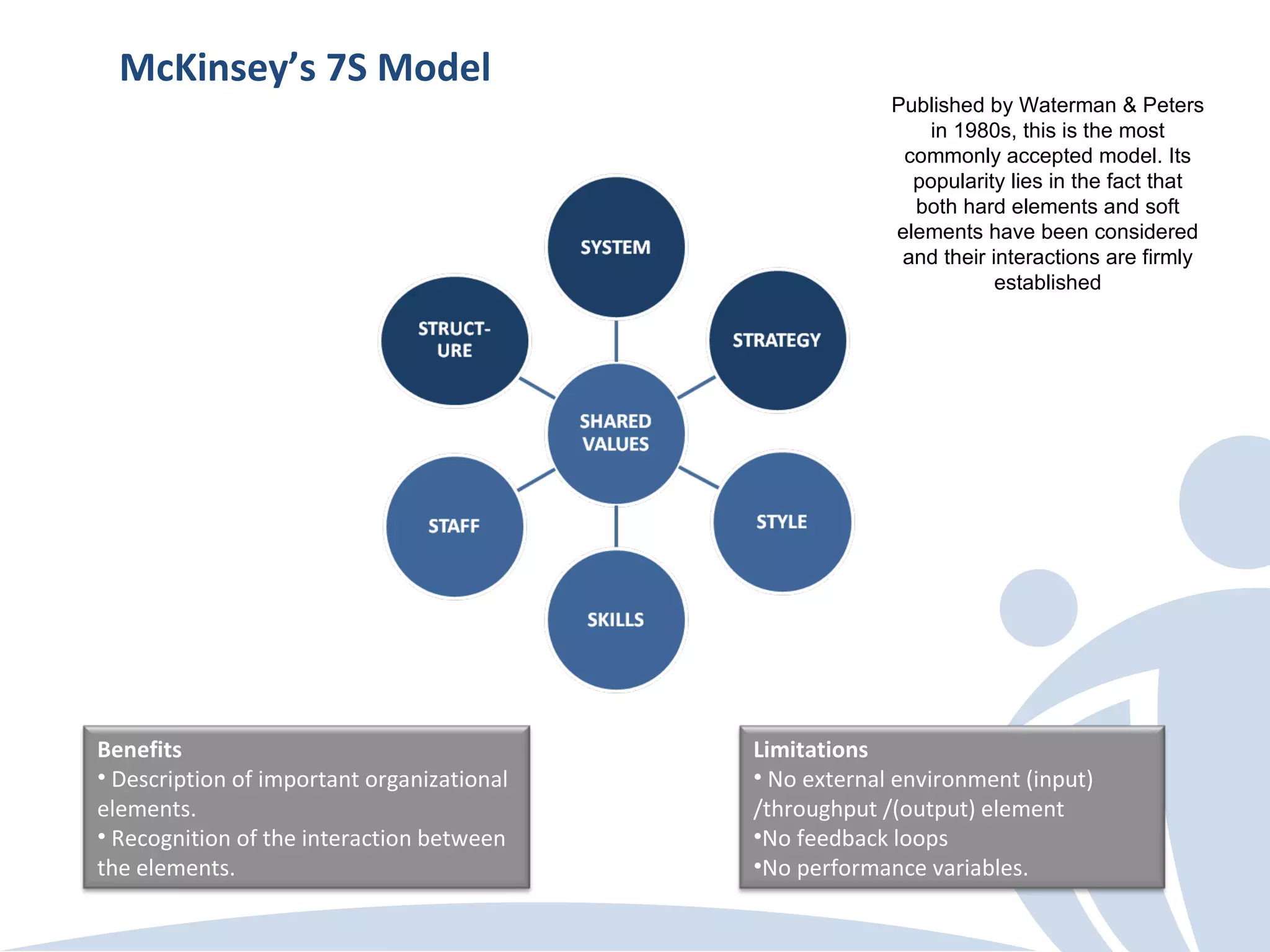
McKinsey’s 7S Model
                                                         Published by Waterman & Peters
                                                            in 1980s, this is the most
                                                          commonly accepted model. Its
                                                           popularity lies in the fact that
                                                           both hard elements and soft
                                                         elements have been considered
                                                          and their interactions are firmly
                                                                     established


Benefits                                    Limitations
• Description of important organizational   • No external environment (input)
elements.                                   /throughput /(output) element
• Recognition of the interaction between    •No feedback loops
the elements.                               •No performance variables.
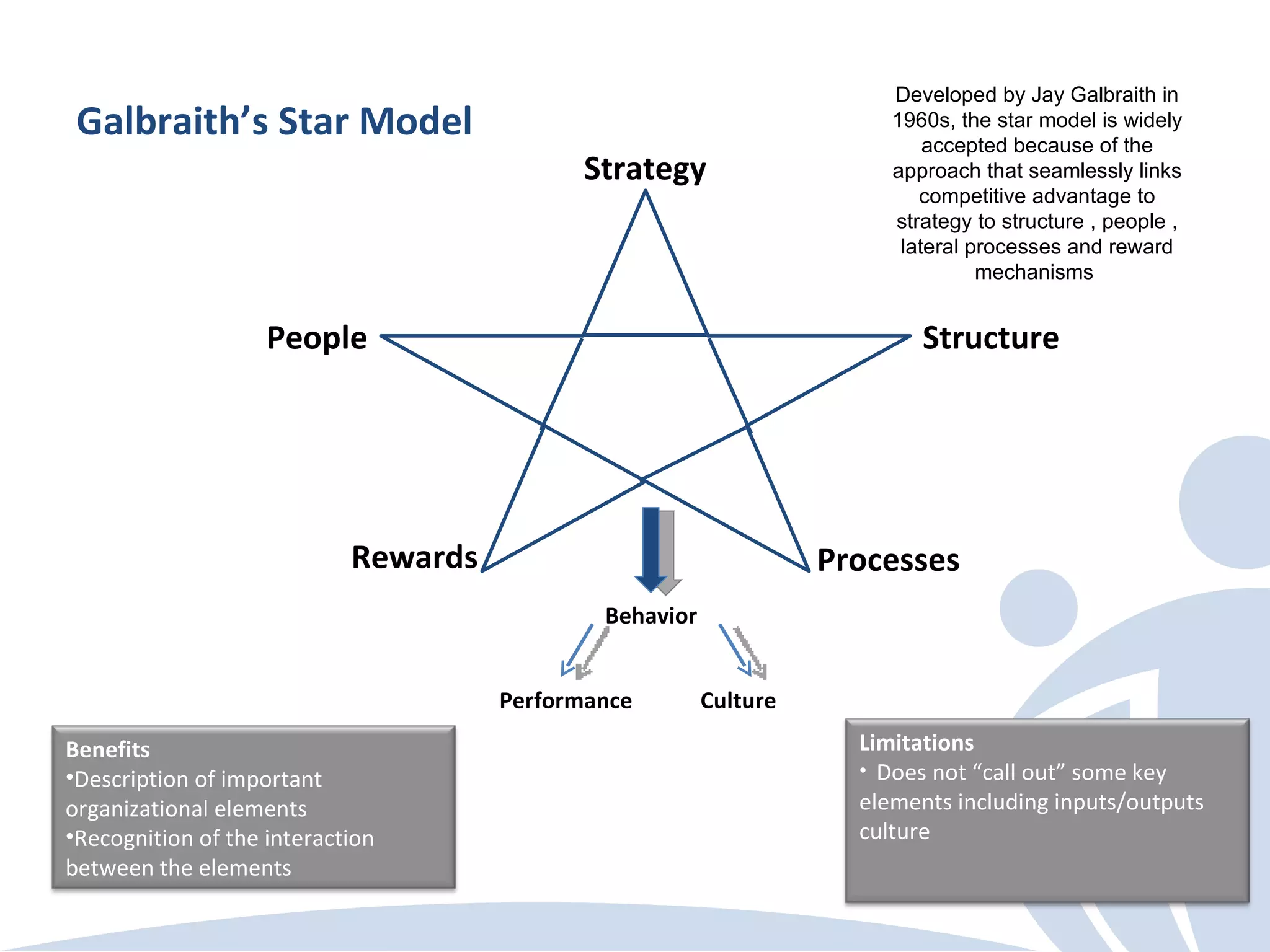
Developed by Jay Galbraith in
 Galbraith’s Star Model                                                 1960s, the star model is widely
                                                                            accepted because of the
                                            Strategy                    approach that seamlessly links
                                                                           competitive advantage to
                                                                        strategy to structure , people ,
                                                                         lateral processes and reward
                                                                                  mechanisms


                    People                                                 Structure


                            Rewards                                Processes
                                              Behavior


                                      Performance        Culture
Benefits                                                             Limitations
•Description of important                                            • Does not “call out” some key
organizational elements                                              elements including inputs/outputs
•Recognition of the interaction                                      culture
between the elements
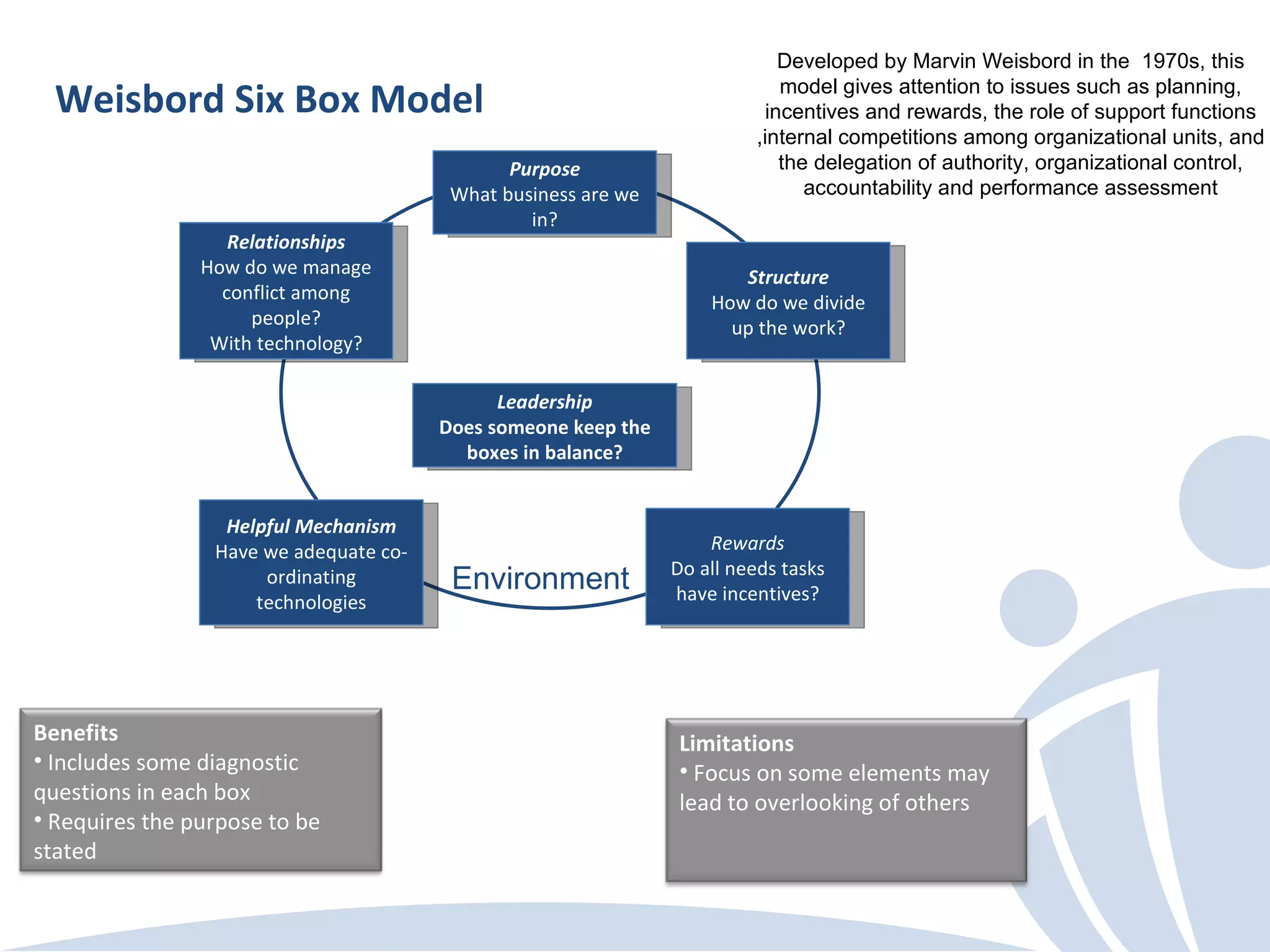
Developed by Marvin Weisbord in the 1970s, this

  Weisbord Six Box Model                                                      model gives attention to issues such as planning,
                                                                            incentives and rewards, the role of support functions
                                                                          ,internal competitions among organizational units, and
                                               Purpose                        the delegation of authority, organizational control,
                                         What business are we                    accountability and performance assessment
                                                 in?
                   Relationships
                How do we manage                                       Structure
                  conflict among                                    How do we divide
                     people?                                          up the work?
                 With technology?

                                              Leadership
                                        Does someone keep the
                                          boxes in balance?


                  Helpful Mechanism
                 Have we adequate co-                               Rewards
                                                                Do all needs tasks
                      ordinating         Environment            have incentives?
                     technologies


Benefits                                                         Limitations
• Includes some diagnostic                                       • Focus on some elements may
questions in each box                                            lead to overlooking of others
• Requires the purpose to be
stated
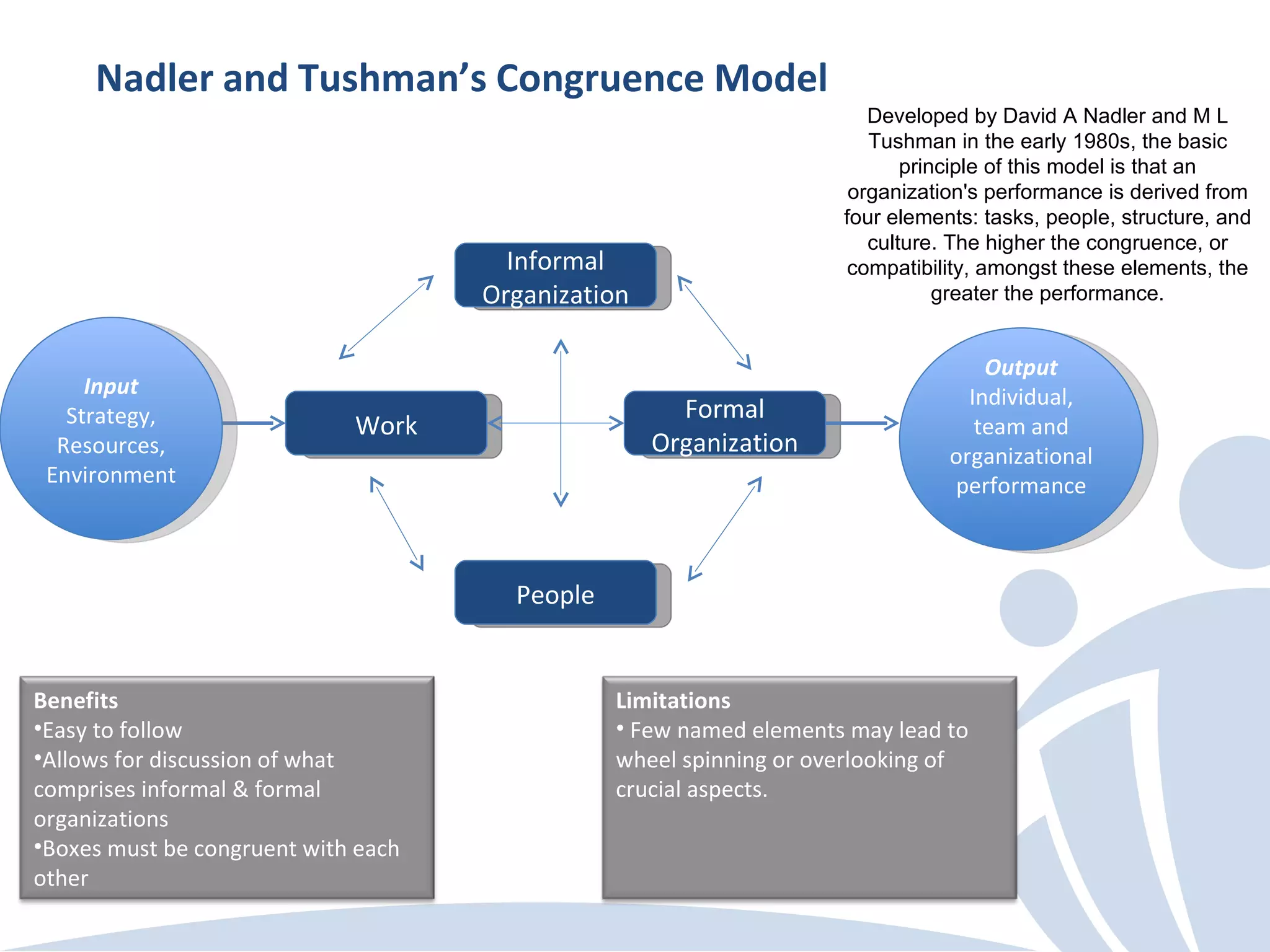
Nadler and Tushman’s Congruence Model
                                                                       Developed by David A Nadler and M L
                                                                       Tushman in the early 1980s, the basic
                                                                           principle of this model is that an
                                                                     organization's performance is derived from
                                                                    four elements: tasks, people, structure, and
                                                                       culture. The higher the congruence, or
                                       Informal                      compatibility, amongst these elements, the
                                     Organization                              greater the performance.


                                                                                   Output
     Input                                                                       Individual,
   Strategy,                                          Formal
                             Work                                                 team and
  Resources,                                        Organization               organizational
 Environment                                                                   performance


                                       People


Benefits                                        Limitations
•Easy to follow                                 • Few named elements may lead to
•Allows for discussion of what                  wheel spinning or overlooking of
comprises informal & formal                     crucial aspects.
organizations
•Boxes must be congruent with each
other
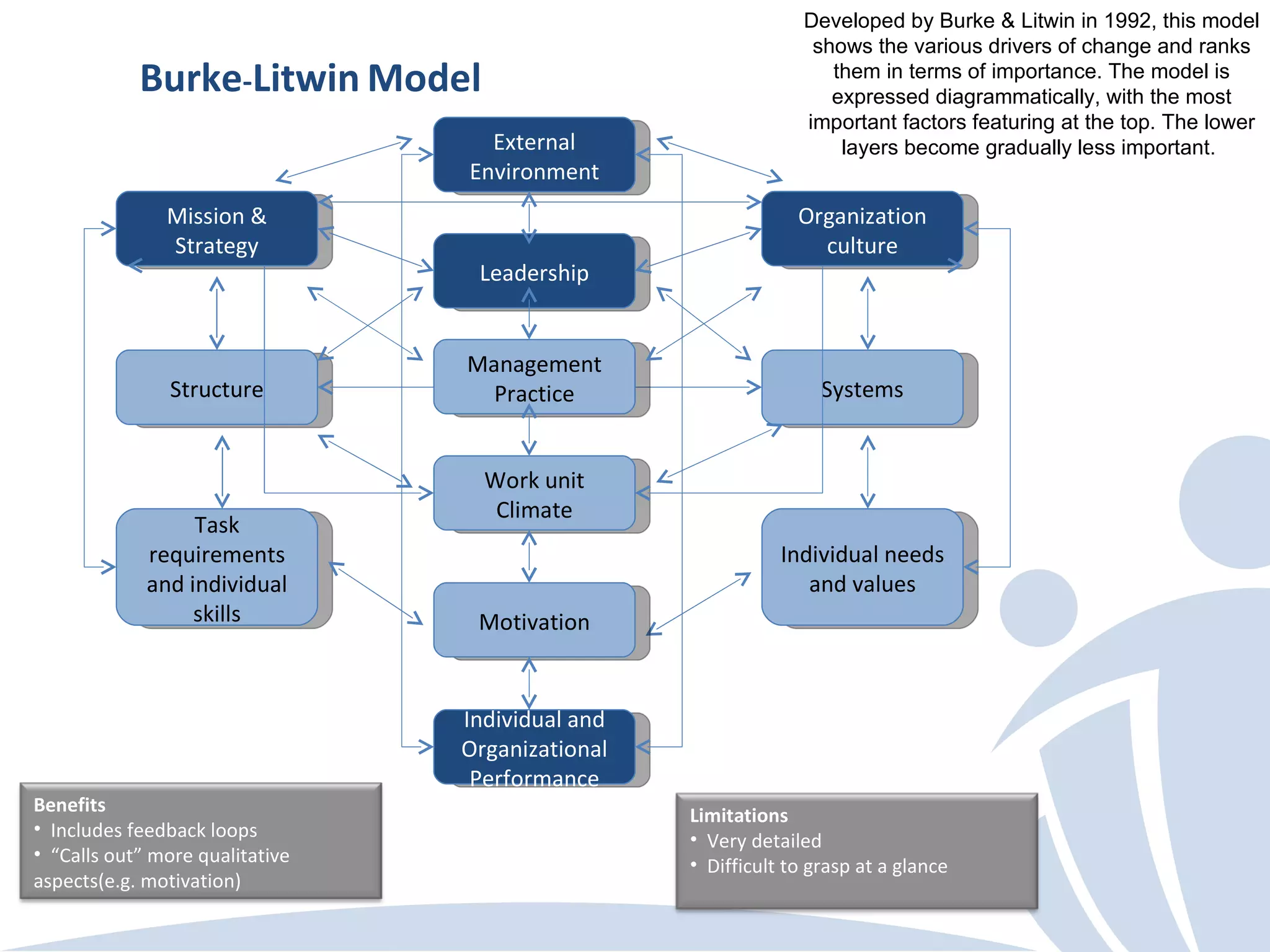
Developed by Burke & Litwin in 1992, this model
                                                                 shows the various drivers of change and ranks
            Burke-Litwin Model                                     them in terms of importance. The model is
                                                                   expressed diagrammatically, with the most
                                                                important factors featuring at the top. The lower
                                   External                         layers become gradually less important.
                                 Environment
               Mission &                                       Organization
               Strategy                                          culture
                                  Leadership


                                 Management
               Structure           Practice                       Systems


                                   Work unit
                                    Climate
                  Task
             requirements                                    Individual needs
             and individual                                     and values
                  skills          Motivation


                                 Individual and
                                 Organizational
                                  Performance
Benefits                                          Limitations
• Includes feedback loops                         • Very detailed
• “Calls out” more qualitative                    • Difficult to grasp at a glance
aspects(e.g. motivation)

A Comparison of five popular Organization Design Models

  • 1.
    A Comparison of fivepopular Organization Design Models April 2012
  • 2.
    Organization Design Models-A comparison Organization Design is not an exact science. The success of any approach lies in making the design exercise logical and objective. Over the years, many models have been developed for understanding the various elements of Organization Design. The objective has been to provide a framework to understand the intricacies of organization design. We present here five most popular models for Organization Design with their benefits and limitations We hope that knowing the benefits and limitations of each model assists you in making the right choice for designing your organization Source: Guide to Organisation Design: Creating High-Performing and Adaptable Enterprises By Naomi Stanford, John Wiley& Sons, 2007
  • 3.
    McKinsey’s 7S Model Published by Waterman & Peters in 1980s, this is the most commonly accepted model. Its popularity lies in the fact that both hard elements and soft elements have been considered and their interactions are firmly established Benefits Limitations • Description of important organizational • No external environment (input) elements. /throughput /(output) element • Recognition of the interaction between •No feedback loops the elements. •No performance variables.
  • 4.
    Developed by JayGalbraith in Galbraith’s Star Model 1960s, the star model is widely accepted because of the Strategy approach that seamlessly links competitive advantage to strategy to structure , people , lateral processes and reward mechanisms People Structure Rewards Processes Behavior Performance Culture Benefits Limitations •Description of important • Does not “call out” some key organizational elements elements including inputs/outputs •Recognition of the interaction culture between the elements
  • 5.
    Developed by MarvinWeisbord in the 1970s, this Weisbord Six Box Model model gives attention to issues such as planning, incentives and rewards, the role of support functions ,internal competitions among organizational units, and Purpose the delegation of authority, organizational control, What business are we accountability and performance assessment in? Relationships How do we manage Structure conflict among How do we divide people? up the work? With technology? Leadership Does someone keep the boxes in balance? Helpful Mechanism Have we adequate co- Rewards Do all needs tasks ordinating Environment have incentives? technologies Benefits Limitations • Includes some diagnostic • Focus on some elements may questions in each box lead to overlooking of others • Requires the purpose to be stated
  • 6.
    Nadler and Tushman’sCongruence Model Developed by David A Nadler and M L Tushman in the early 1980s, the basic principle of this model is that an organization's performance is derived from four elements: tasks, people, structure, and culture. The higher the congruence, or Informal compatibility, amongst these elements, the Organization greater the performance. Output Input Individual, Strategy, Formal Work team and Resources, Organization organizational Environment performance People Benefits Limitations •Easy to follow • Few named elements may lead to •Allows for discussion of what wheel spinning or overlooking of comprises informal & formal crucial aspects. organizations •Boxes must be congruent with each other
  • 7.
    Developed by Burke& Litwin in 1992, this model shows the various drivers of change and ranks Burke-Litwin Model them in terms of importance. The model is expressed diagrammatically, with the most important factors featuring at the top. The lower External layers become gradually less important. Environment Mission & Organization Strategy culture Leadership Management Structure Practice Systems Work unit Climate Task requirements Individual needs and individual and values skills Motivation Individual and Organizational Performance Benefits Limitations • Includes feedback loops • Very detailed • “Calls out” more qualitative • Difficult to grasp at a glance aspects(e.g. motivation)