THE MCKINSEY 7S
FRAMEWORK
Inese Pole
 Developed in the early 1980s by Tom Peters
and Robert Waterman
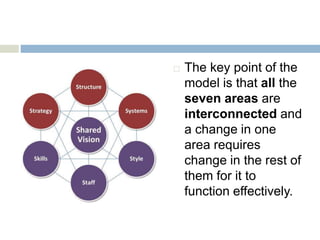
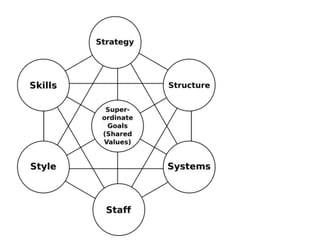
 The basic premise of the model is that there
are seven internal aspects of an organization
that need to be aligned if it wats to be
successful.
want
s
Where 7S model can be used?
 To improve the performance of a company,
 To examine the likely effects of future changes
within a company,
 To align departments and processes,
 To determine what is the best way to
implement a proposed strategy.
The Seven Elements
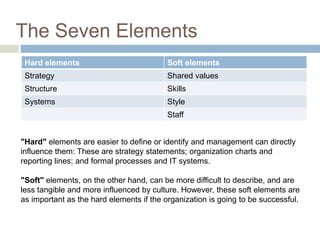
Hard elements Soft elements
Strategy Shared values
Structure Skills
Systems Style
Staff
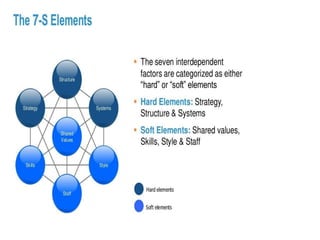
"Hard" elements are easier to define or identify and management can directly
influence them: These are strategy statements; organization charts and
reporting lines; and formal processes and IT systems.
"Soft" elements, on the other hand, can be more difficult to describe, and are
less tangible and more influenced by culture. However, these soft elements are
as important as the hard elements if the organization is going to be successful.
 The key point of the
model is that all the
seven areas are
interconnected and
a change in one
area requires
change in the rest of
them for it to
function effectively.
 Strategy: the plan devised to maintain and
build competitive advantage over the
competition.
 Structure: the way the organization is
structured and who reports to whom.
 Systems: the daily activities and procedures
that staff members engage in to get the job
done.
 Shared Values: these are the core values of
the company that are evidenced in the
corporate culture and the general work ethic.
 Style: the style of leadership adopted.
 Staff: the employees and their general
capabilities.
 Skills: the actual skills and competencies of
the employees working for the company
Apple Inc
 Shared Values - business is
aligned around the values of
design and user experience
 Strategy - focus on a small
number of products and to
make them innovative and
excellent – enabling the
business to capture a huge
market share relative to its
size, and build a loyal customer
following
 Staff - offers their employees huge benefits
 Skills - highly qualified and creative
employees
 Systems - supply chain with built capacity for
launching and supplying huge new market-
dominating products
 Style - people are free to innovate – as long
as they met Jobs’ high standards
How to use the tool?
 Step 1. Identify the areas that are not
effectively aligned
 Step 2. Determine the optimal organization
design
 Step 3. Decide where and what changes
should be made
 Step 4. Make the necessary changes
 Step 5. Continuously review the 7s
Thank You

38 The-McKinsey-7S-Framework.pptx

  • 1.
  • 3.
     Developed inthe early 1980s by Tom Peters and Robert Waterman  The basic premise of the model is that there are seven internal aspects of an organization that need to be aligned if it wats to be successful. want s
  • 5.
    Where 7S modelcan be used?  To improve the performance of a company,  To examine the likely effects of future changes within a company,  To align departments and processes,  To determine what is the best way to implement a proposed strategy.
  • 7.
    The Seven Elements Hardelements Soft elements Strategy Shared values Structure Skills Systems Style Staff "Hard" elements are easier to define or identify and management can directly influence them: These are strategy statements; organization charts and reporting lines; and formal processes and IT systems. "Soft" elements, on the other hand, can be more difficult to describe, and are less tangible and more influenced by culture. However, these soft elements are as important as the hard elements if the organization is going to be successful.
  • 8.
     The keypoint of the model is that all the seven areas are interconnected and a change in one area requires change in the rest of them for it to function effectively.
  • 10.
     Strategy: theplan devised to maintain and build competitive advantage over the competition.  Structure: the way the organization is structured and who reports to whom.  Systems: the daily activities and procedures that staff members engage in to get the job done.
  • 11.
     Shared Values:these are the core values of the company that are evidenced in the corporate culture and the general work ethic.  Style: the style of leadership adopted.  Staff: the employees and their general capabilities.  Skills: the actual skills and competencies of the employees working for the company
  • 15.
    Apple Inc  SharedValues - business is aligned around the values of design and user experience  Strategy - focus on a small number of products and to make them innovative and excellent – enabling the business to capture a huge market share relative to its size, and build a loyal customer following
  • 16.
     Staff -offers their employees huge benefits  Skills - highly qualified and creative employees  Systems - supply chain with built capacity for launching and supplying huge new market- dominating products  Style - people are free to innovate – as long as they met Jobs’ high standards
  • 17.
    How to usethe tool?  Step 1. Identify the areas that are not effectively aligned  Step 2. Determine the optimal organization design  Step 3. Decide where and what changes should be made  Step 4. Make the necessary changes  Step 5. Continuously review the 7s
  • 19.