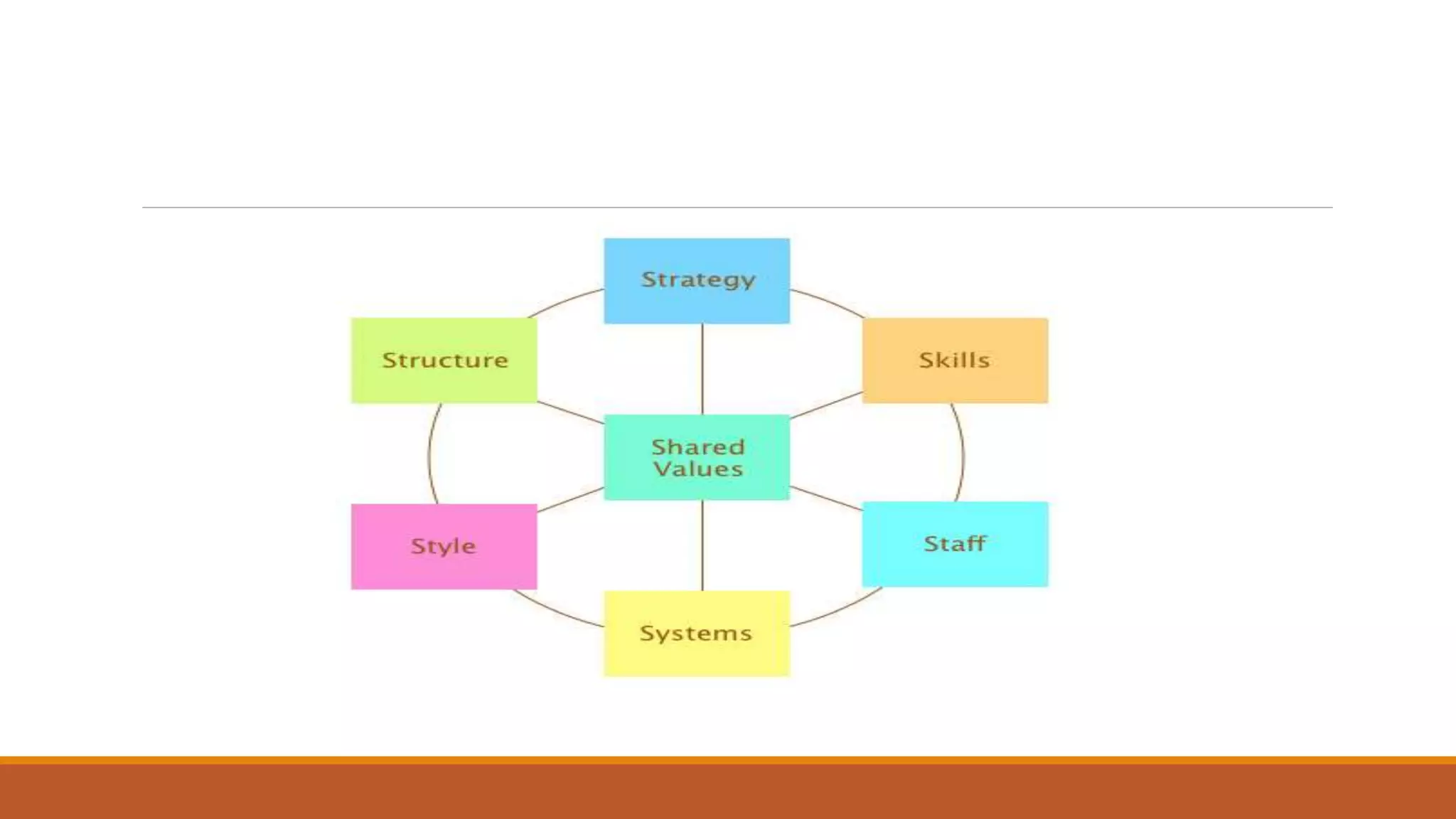
McKinsey 7-S 
framework model 
SUBMITTED BY: 
MUSTAFA.MULLA(131326) 
MD ASIF(131355)
Starbucks 7 s framework 
Shared values: The organization constantly refers to the “Starbucks experience”, and rallies 
employees behind delivering and satisfying this notion. Any retailer can sell coffee; Starbucks 
sells an experience. This experience includes coffee, friendly staff, interesting music, and a 
comfortable meeting place. 
Strategy: The company’s objective is to establish Starbucks at the most recognized and 
respected brand in the world. Further, Starbucks hopes to achieve this goal by “continuing to 
rapidly expand its retail operations, grow its specialty operations and selectively pursue other 
opportunities to leverage the Starbucks brand through the introduction of new products and the 
development of new distribution channels”. Starbucks has aggressively expanded throughout 
North American and to locations around the world. The number of retail locations increased by 
35% from 1998 to 2000. In bringing the Starbucks experience to consumers world wide, the 
company has decided that it must focus on its core competency; namely coffee.
Structure: Starbucks has a functional structure that can be defined as unstructured. This emphasizes the need for 
new ideas and employee input. Starbucks refers to its employees as partners, and extends to all of them (even part 
time help working at least twenty hours a week), benefits such as health coverage and stock options. 
Systems: The firm has several important systems in place within the organization. These deal primarily with product 
knowledge, and product development. 
•Training: Starbucks trains its staff extensively on the intricacies of coffee beans including where they are grown, how 
they are roasted, how they should be ground, and how they should be filtered to optimize taste. 
•Roasting coffee: Starbucks roasts all of its own coffee. This allows the company to deliver a product consistently 
matches customer expectations. 
•Purchasing coffee: As a large coffee retailer, Starbucks has the economies of scale needed to purchase coffee directly 
from growers and regional associations, rather than rely on import brokers. 
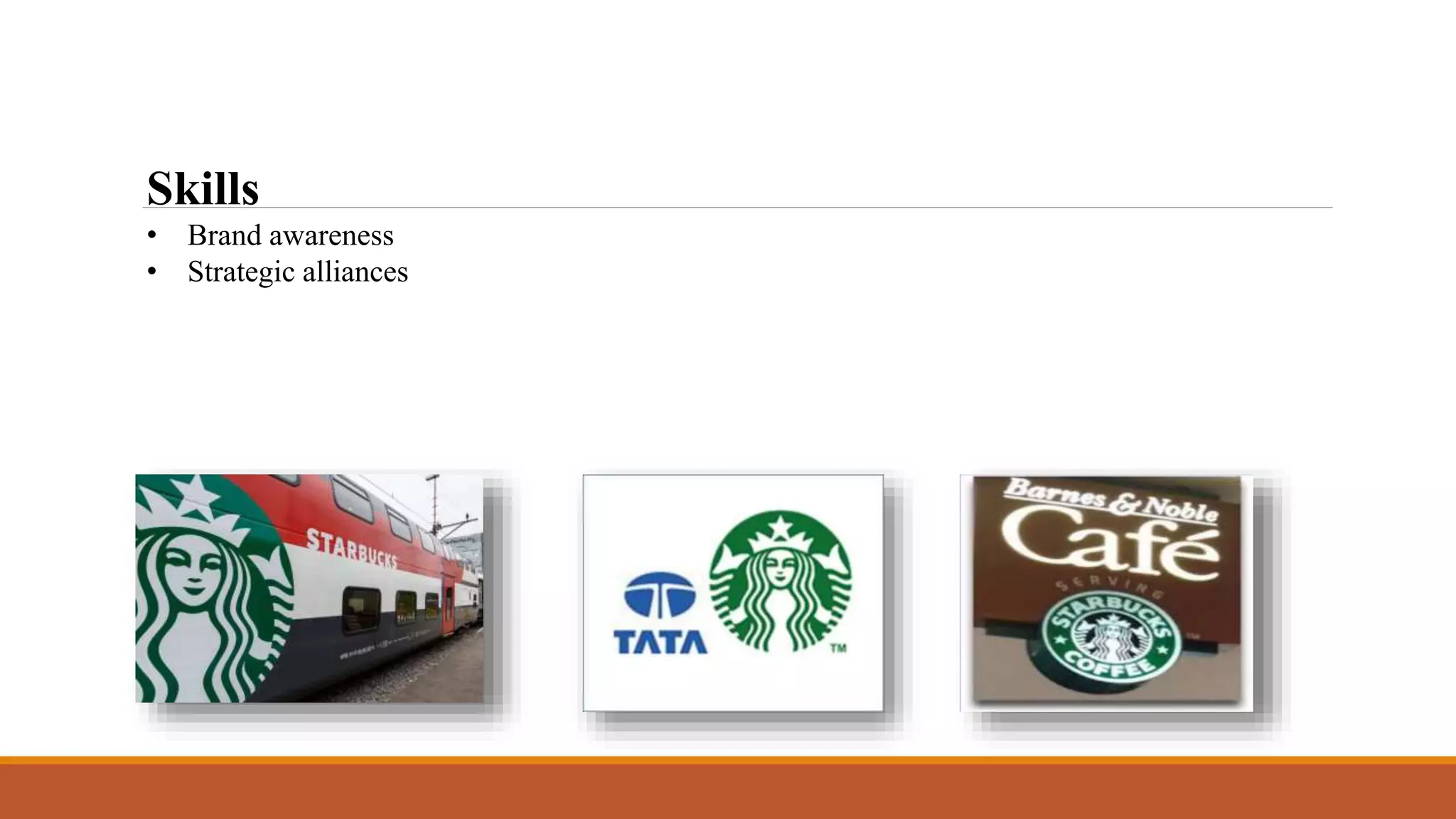
Skills: Starbucks has a distinct competitive advantage with its front line employees who are knowledgeable and 
friendly. Further, the Starbucks coffee experience is reinforced through strategic alliances with major grocery stores, 
hotels, and airlines. 
Staff: Through generous benefits packages, and comprehensive training, Starbucks is able to have high quality 
employees in a retail environment, while minimizing the challenges facing many other traditional retailers including 
employee turnover or employee motivation. 
Style: The style for the organization is defined as innovative, flexible and team orientated.
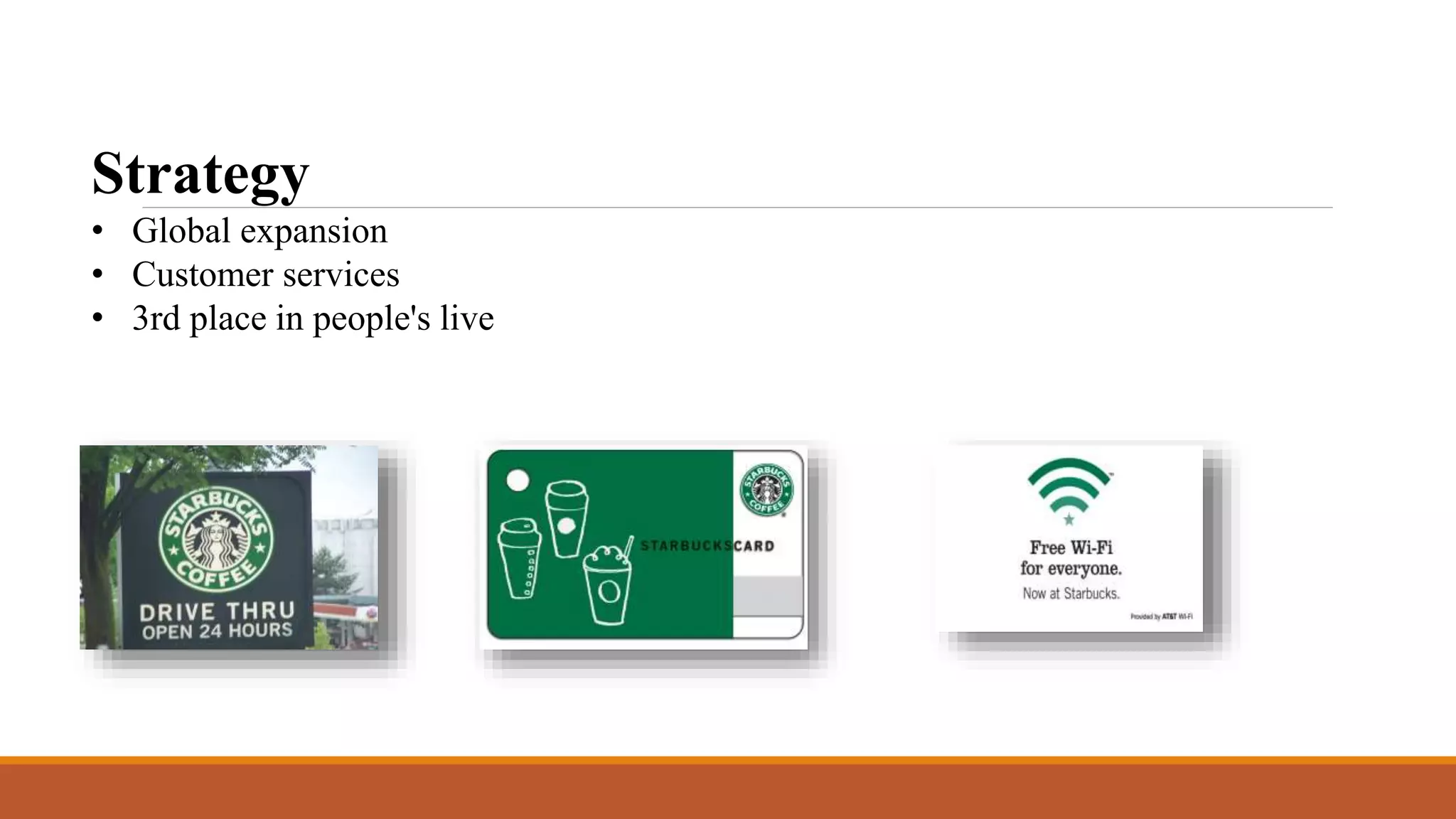
Strategy 
• Global expansion 
• Customer services 
• 3rd place in people's live
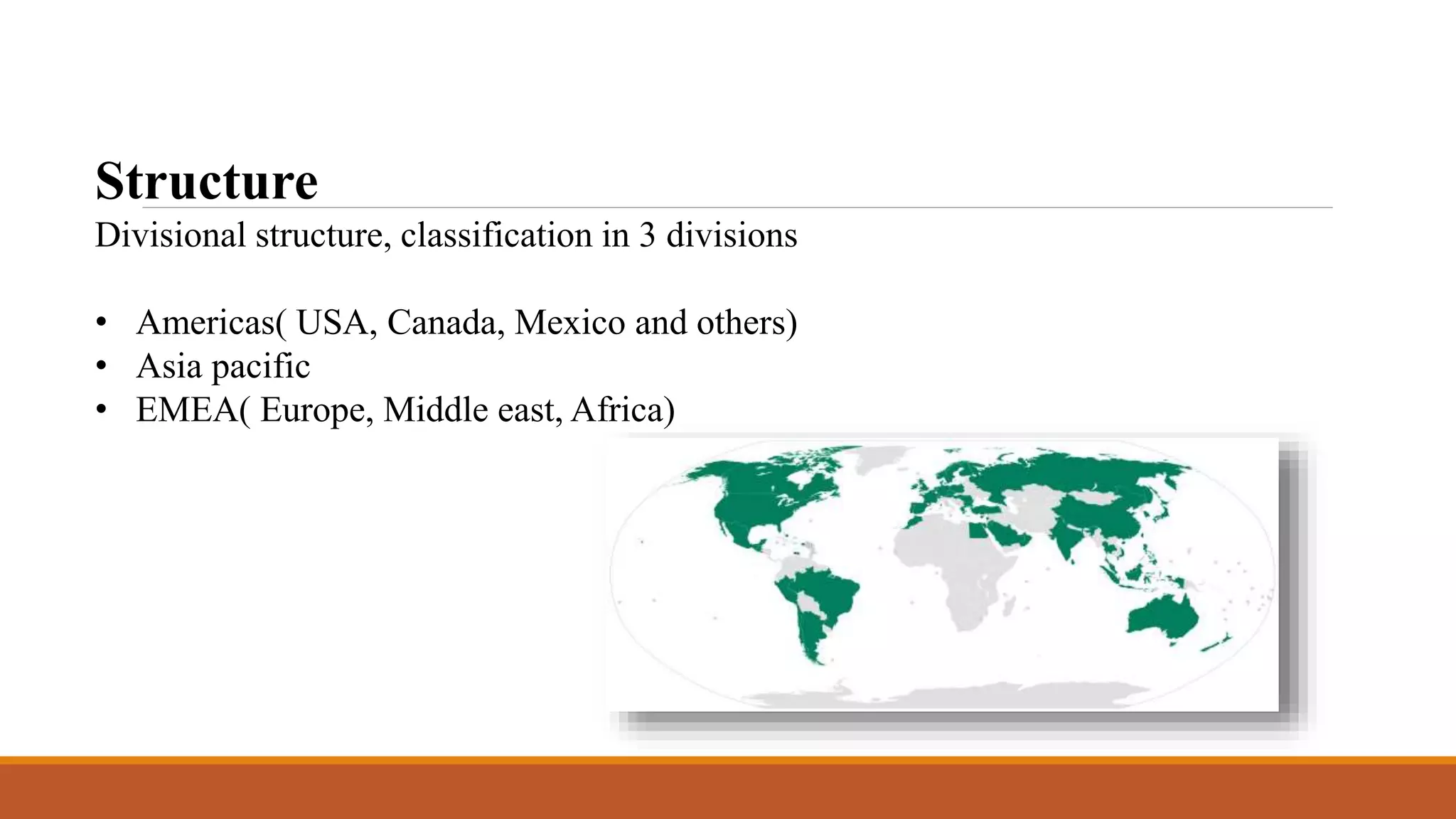
Structure 
Divisional structure, classification in 3 divisions 
• Americas( USA, Canada, Mexico and others) 
• Asia pacific 
• EMEA( Europe, Middle east, Africa)
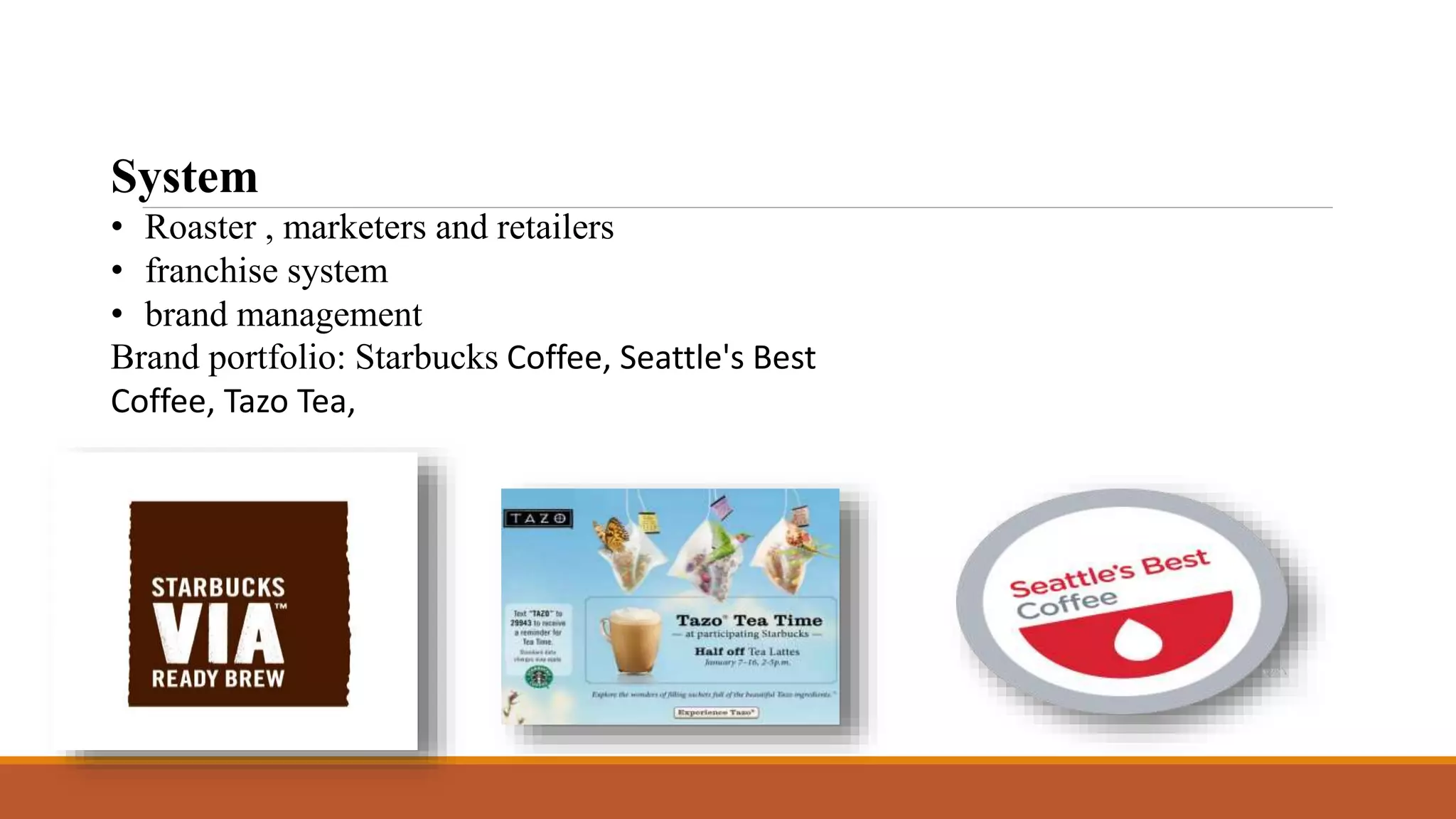
System 
• Roaster , marketers and retailers 
• franchise system 
• brand management 
Brand portfolio: Starbucks Coffee, Seattle's Best 
Coffee, Tazo Tea,
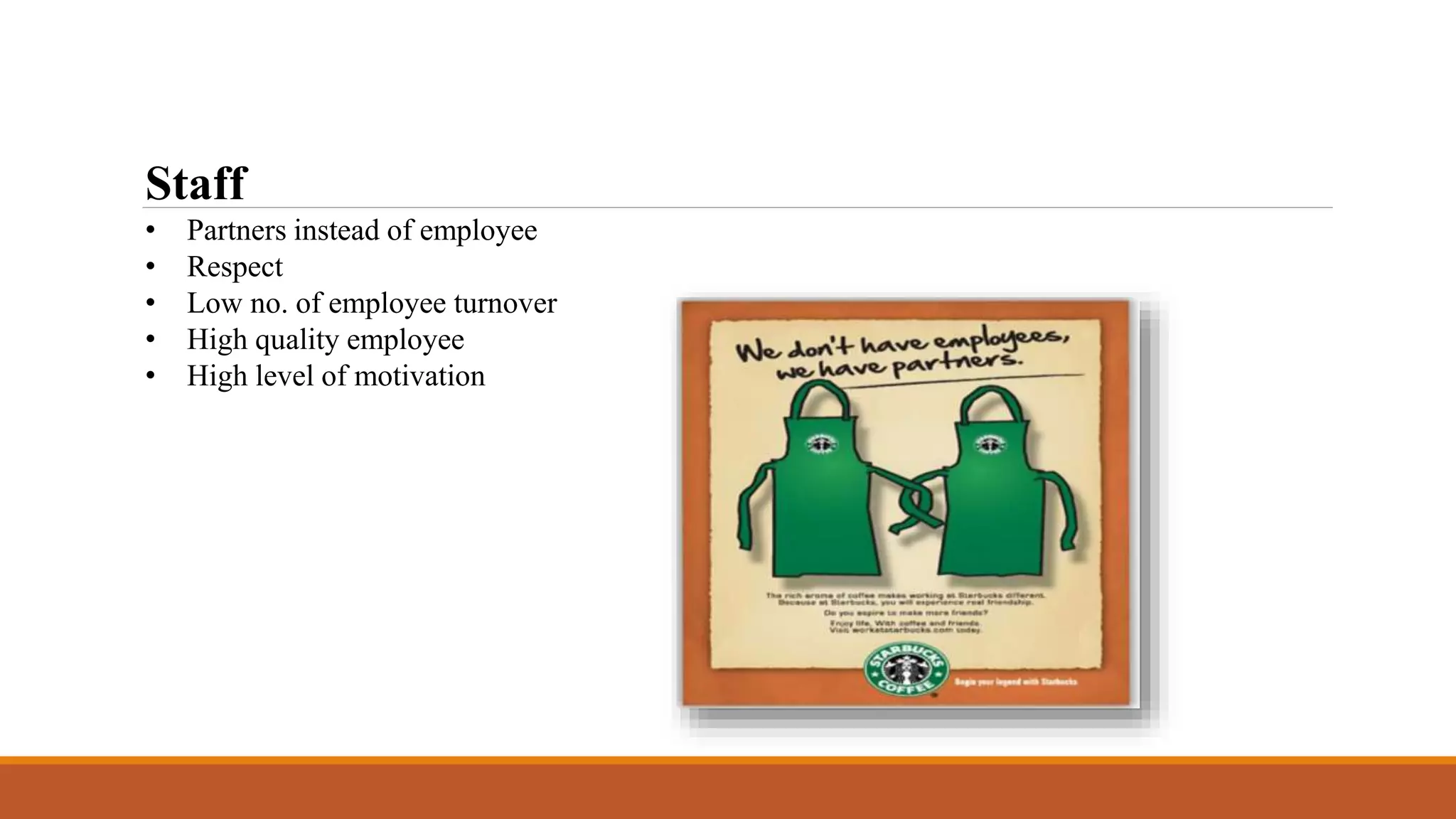
Staff 
• Partners instead of employee 
• Respect 
• Low no. of employee turnover 
• High quality employee 
• High level of motivation
Style 
Style of leadership 
• Flexible 
• Innovative 
• Collegial 
• Team-oriented
Skills 
• Brand awareness 
• Strategic alliances
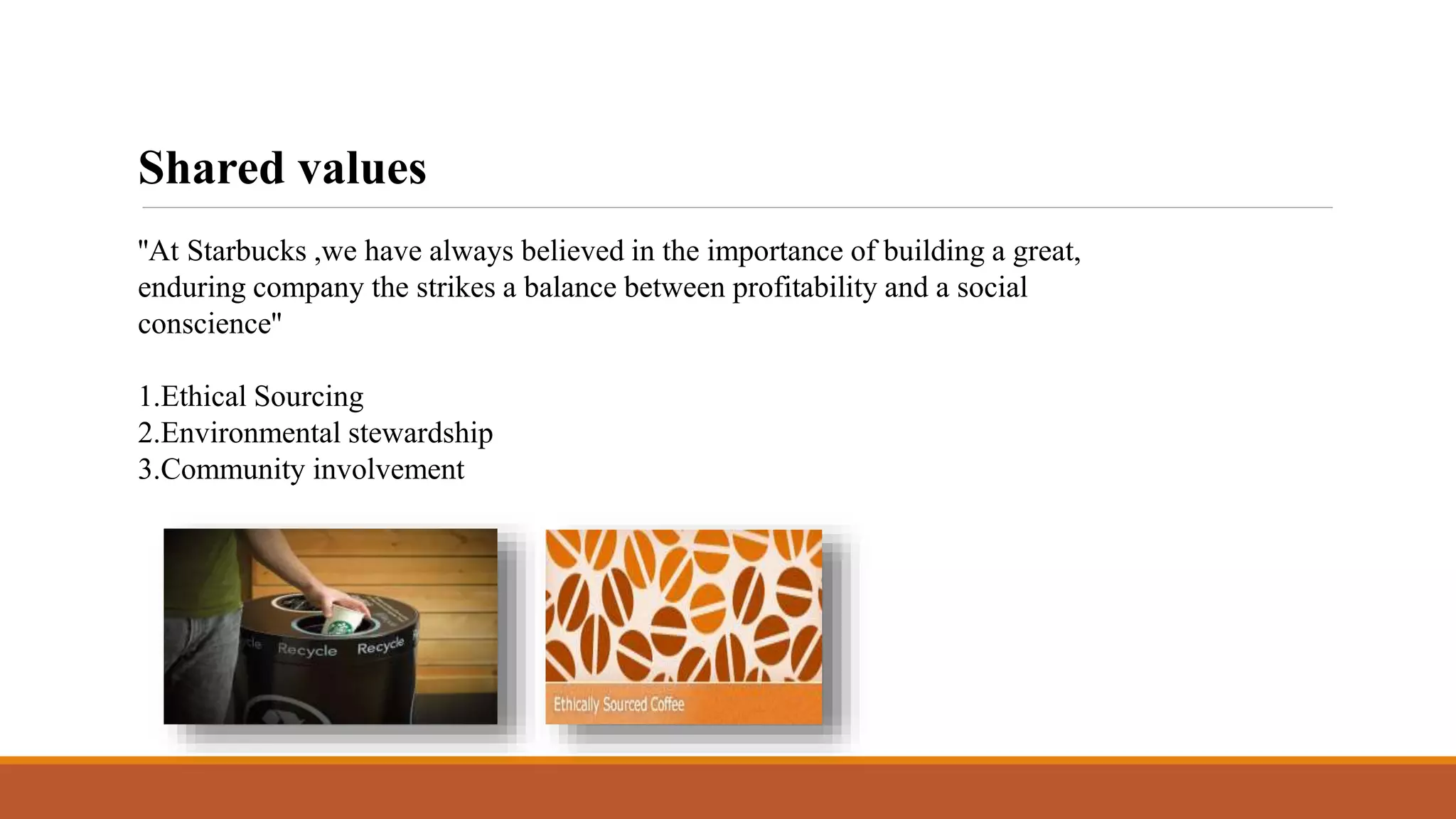
Shared values 
''At Starbucks ,we have always believed in the importance of building a great, 
enduring company the strikes a balance between profitability and a social 
conscience'' 
1.Ethical Sourcing 
2.Environmental stewardship 
3.Community involvement
Videos 
Strategy Shared values

Starbucks Mc kinsey 7 s framework model

  • 1.
    McKinsey 7-S frameworkmodel SUBMITTED BY: MUSTAFA.MULLA(131326) MD ASIF(131355)
  • 3.
    Starbucks 7 sframework Shared values: The organization constantly refers to the “Starbucks experience”, and rallies employees behind delivering and satisfying this notion. Any retailer can sell coffee; Starbucks sells an experience. This experience includes coffee, friendly staff, interesting music, and a comfortable meeting place. Strategy: The company’s objective is to establish Starbucks at the most recognized and respected brand in the world. Further, Starbucks hopes to achieve this goal by “continuing to rapidly expand its retail operations, grow its specialty operations and selectively pursue other opportunities to leverage the Starbucks brand through the introduction of new products and the development of new distribution channels”. Starbucks has aggressively expanded throughout North American and to locations around the world. The number of retail locations increased by 35% from 1998 to 2000. In bringing the Starbucks experience to consumers world wide, the company has decided that it must focus on its core competency; namely coffee.
  • 4.
    Structure: Starbucks hasa functional structure that can be defined as unstructured. This emphasizes the need for new ideas and employee input. Starbucks refers to its employees as partners, and extends to all of them (even part time help working at least twenty hours a week), benefits such as health coverage and stock options. Systems: The firm has several important systems in place within the organization. These deal primarily with product knowledge, and product development. •Training: Starbucks trains its staff extensively on the intricacies of coffee beans including where they are grown, how they are roasted, how they should be ground, and how they should be filtered to optimize taste. •Roasting coffee: Starbucks roasts all of its own coffee. This allows the company to deliver a product consistently matches customer expectations. •Purchasing coffee: As a large coffee retailer, Starbucks has the economies of scale needed to purchase coffee directly from growers and regional associations, rather than rely on import brokers. Skills: Starbucks has a distinct competitive advantage with its front line employees who are knowledgeable and friendly. Further, the Starbucks coffee experience is reinforced through strategic alliances with major grocery stores, hotels, and airlines. Staff: Through generous benefits packages, and comprehensive training, Starbucks is able to have high quality employees in a retail environment, while minimizing the challenges facing many other traditional retailers including employee turnover or employee motivation. Style: The style for the organization is defined as innovative, flexible and team orientated.
  • 5.
    Strategy • Globalexpansion • Customer services • 3rd place in people's live
  • 6.
    Structure Divisional structure,classification in 3 divisions • Americas( USA, Canada, Mexico and others) • Asia pacific • EMEA( Europe, Middle east, Africa)
  • 7.
    System • Roaster, marketers and retailers • franchise system • brand management Brand portfolio: Starbucks Coffee, Seattle's Best Coffee, Tazo Tea,
  • 8.
    Staff • Partnersinstead of employee • Respect • Low no. of employee turnover • High quality employee • High level of motivation
  • 9.
    Style Style ofleadership • Flexible • Innovative • Collegial • Team-oriented
  • 10.
    Skills • Brandawareness • Strategic alliances
  • 11.
    Shared values ''AtStarbucks ,we have always believed in the importance of building a great, enduring company the strikes a balance between profitability and a social conscience'' 1.Ethical Sourcing 2.Environmental stewardship 3.Community involvement
  • 12.