Bambi Rose M. Española
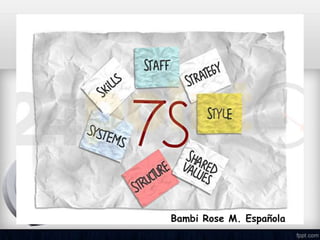
The 7-S Framework of McKinsey is a
 management model which includes
 7 factors to organize a company in
 an holistic and effective way.
History
The 7-S Framework was first mentioned in
 "The Art Of Japanese Management" by
 Richard Pascale and Anthony Athos in 1981.
It also appeared in "In Search of Excellence"
 by Peters and Waterman 1982.
The model was born at a meeting of these
 four authors in 1978.
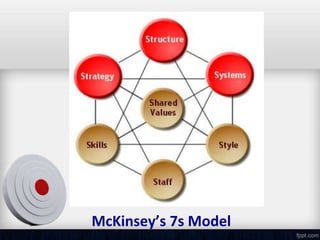
McKinsey’s 7s Model
Shared Values
         (Superordinate Goals)
the interconnecting center of McKinsey's
 model
set of traits, behaviors, and characteristics
 that the organization believes in
include the organization’s mission and vision
Strategy
plans for the allocation of a firms scarce
 resources over time to reach identified goals

plans of action an organization prepares in
 response to, or anticipation of, changes in its
 external environment
Structure
represents how the company is organized

refers to how organization's units relate to
 each other: centralized; decentralized; matrix,
 network
System
refers to the formal and informal procedures
 that govern everyday activity, covering
 everything from management information
 systems, through to the systems at the point
 of contact with the customer (retail systems,
 call center systems)
Staff
refers to the company's people resources and
 how they are developed, trained and
 motivated

selection, reward, recognition, retention,
 motivation and assignment to appropriate
 work are all key issues here
Style
refers to the employees shared and
 common way of thinking and behaving -
 unwritten norms of behaviour and
 thought
Skill
refers to the distinctive capabilities of
 personnel or of the organization as a
 whole which are needed to effectively
 execute the company’s vision, values,
 goals and strategies
Uses of the 7-S Model
helps identify the strengths and weaknesses
 of an organization and
understanding the core and most influential
 factors in an organization’s strategy
determining how best to realign an
 organization to a new strategy or other
 organization design

McKinsey's 7S

  • 1.
    Bambi Rose M.Española
  • 2.
    The 7-S Frameworkof McKinsey is a management model which includes 7 factors to organize a company in an holistic and effective way.
  • 3.
    History The 7-S Frameworkwas first mentioned in "The Art Of Japanese Management" by Richard Pascale and Anthony Athos in 1981. It also appeared in "In Search of Excellence" by Peters and Waterman 1982. The model was born at a meeting of these four authors in 1978.
  • 4.
  • 5.
    Shared Values (Superordinate Goals) the interconnecting center of McKinsey's model set of traits, behaviors, and characteristics that the organization believes in include the organization’s mission and vision
  • 6.
    Strategy plans for theallocation of a firms scarce resources over time to reach identified goals plans of action an organization prepares in response to, or anticipation of, changes in its external environment
  • 7.
    Structure represents how thecompany is organized refers to how organization's units relate to each other: centralized; decentralized; matrix, network
  • 8.
    System refers to theformal and informal procedures that govern everyday activity, covering everything from management information systems, through to the systems at the point of contact with the customer (retail systems, call center systems)
  • 9.
    Staff refers to thecompany's people resources and how they are developed, trained and motivated selection, reward, recognition, retention, motivation and assignment to appropriate work are all key issues here
  • 10.
    Style refers to theemployees shared and common way of thinking and behaving - unwritten norms of behaviour and thought
  • 11.
    Skill refers to thedistinctive capabilities of personnel or of the organization as a whole which are needed to effectively execute the company’s vision, values, goals and strategies
  • 12.
    Uses of the7-S Model helps identify the strengths and weaknesses of an organization and understanding the core and most influential factors in an organization’s strategy determining how best to realign an organization to a new strategy or other organization design

Editor's Notes

  • #4 at around the same time that Tom Peters and Robert Waterman were exploring what made a company It also appeared in "In Search of Excellence" by Peters and Waterman, and was taken up as a basic tool by the global management consultancy company McKinsey. excellent.