The McKinsey 7S Framework
Background 
Origin (early 1980s) 
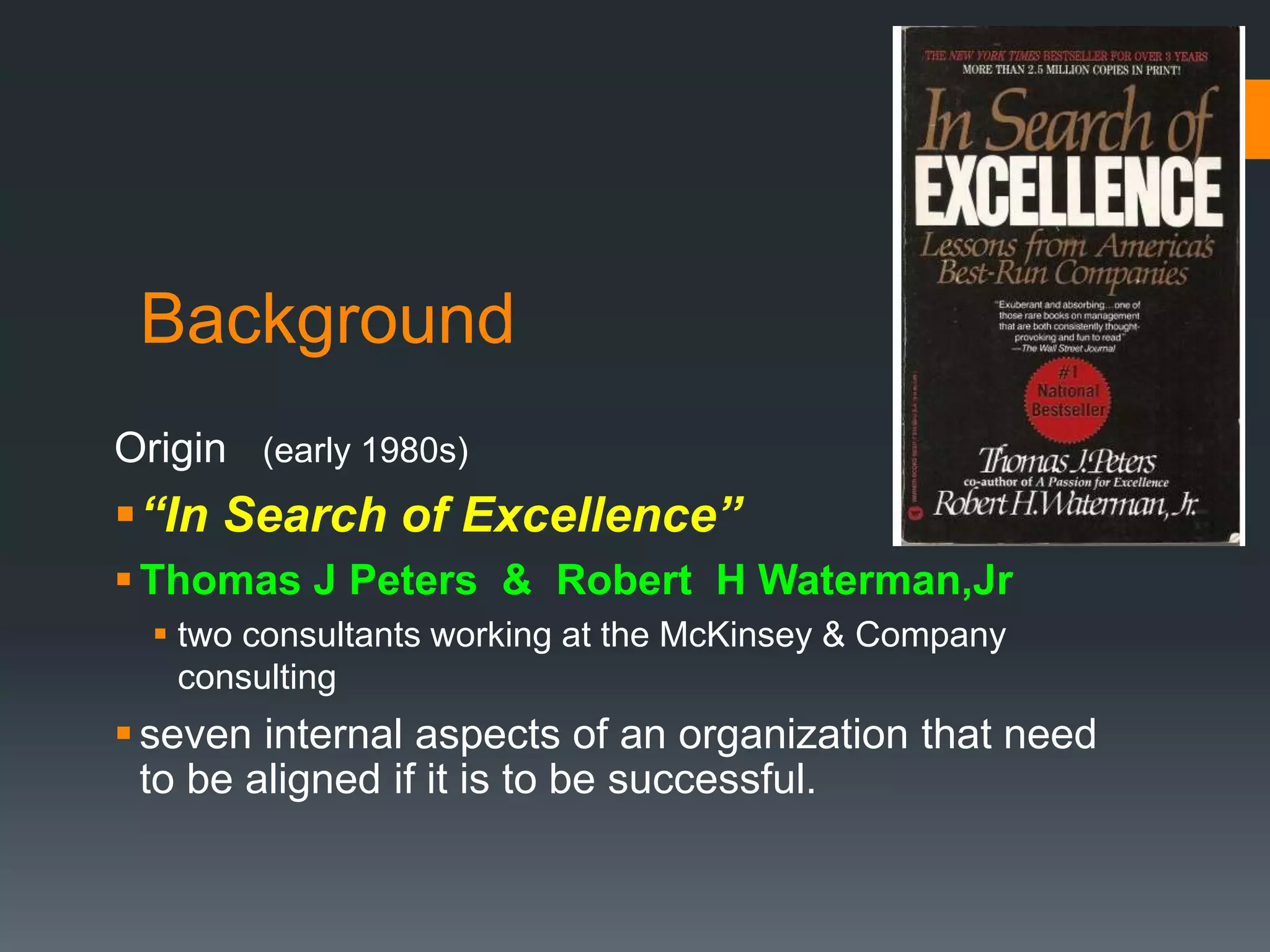
“In Search of Excellence” 
Thomas J Peters & Robert H Waterman,Jr 
 two consultants working at the McKinsey & Company 
consulting 
 seven internal aspects of an organization that need 
to be aligned if it is to be successful.
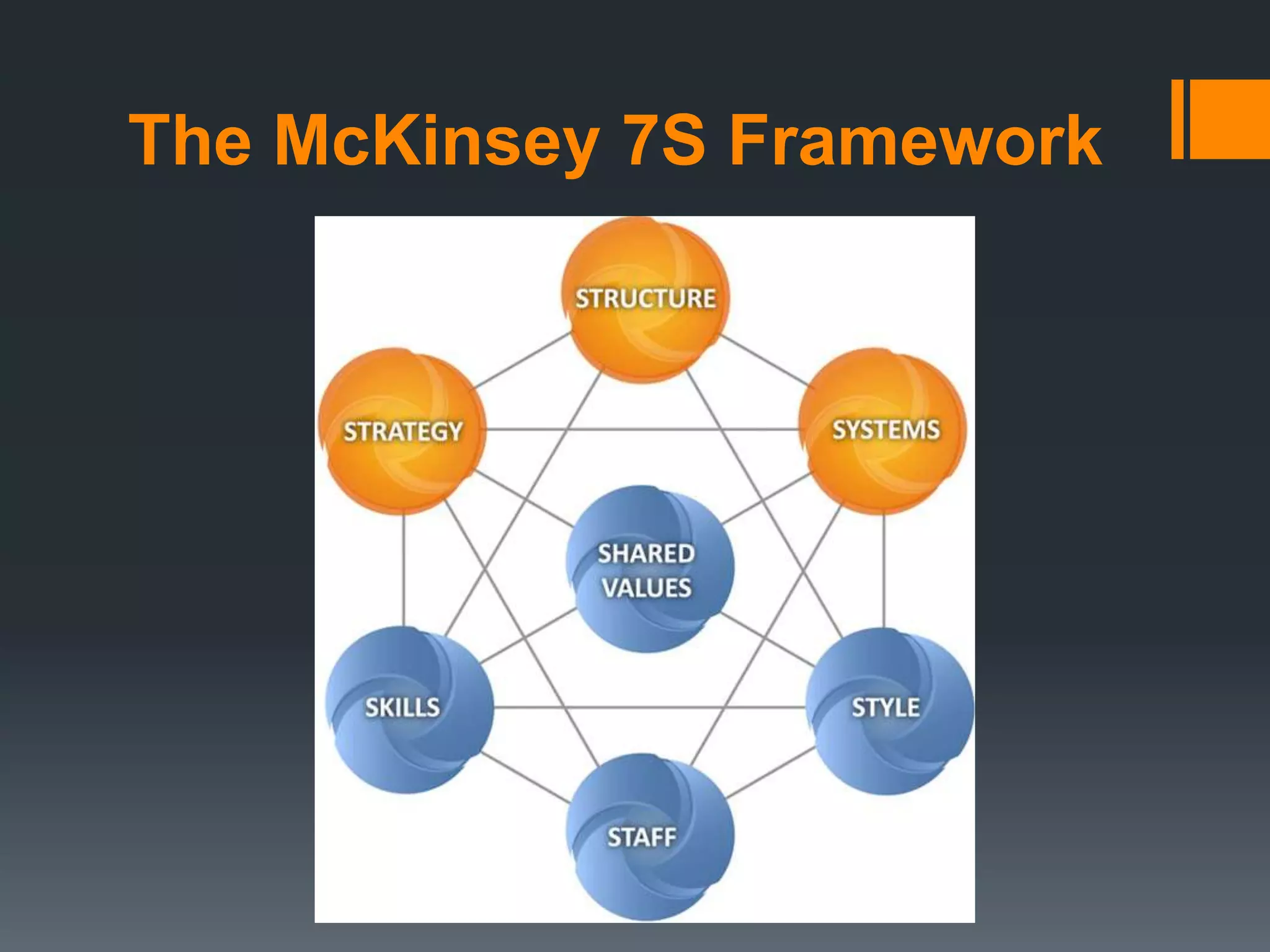
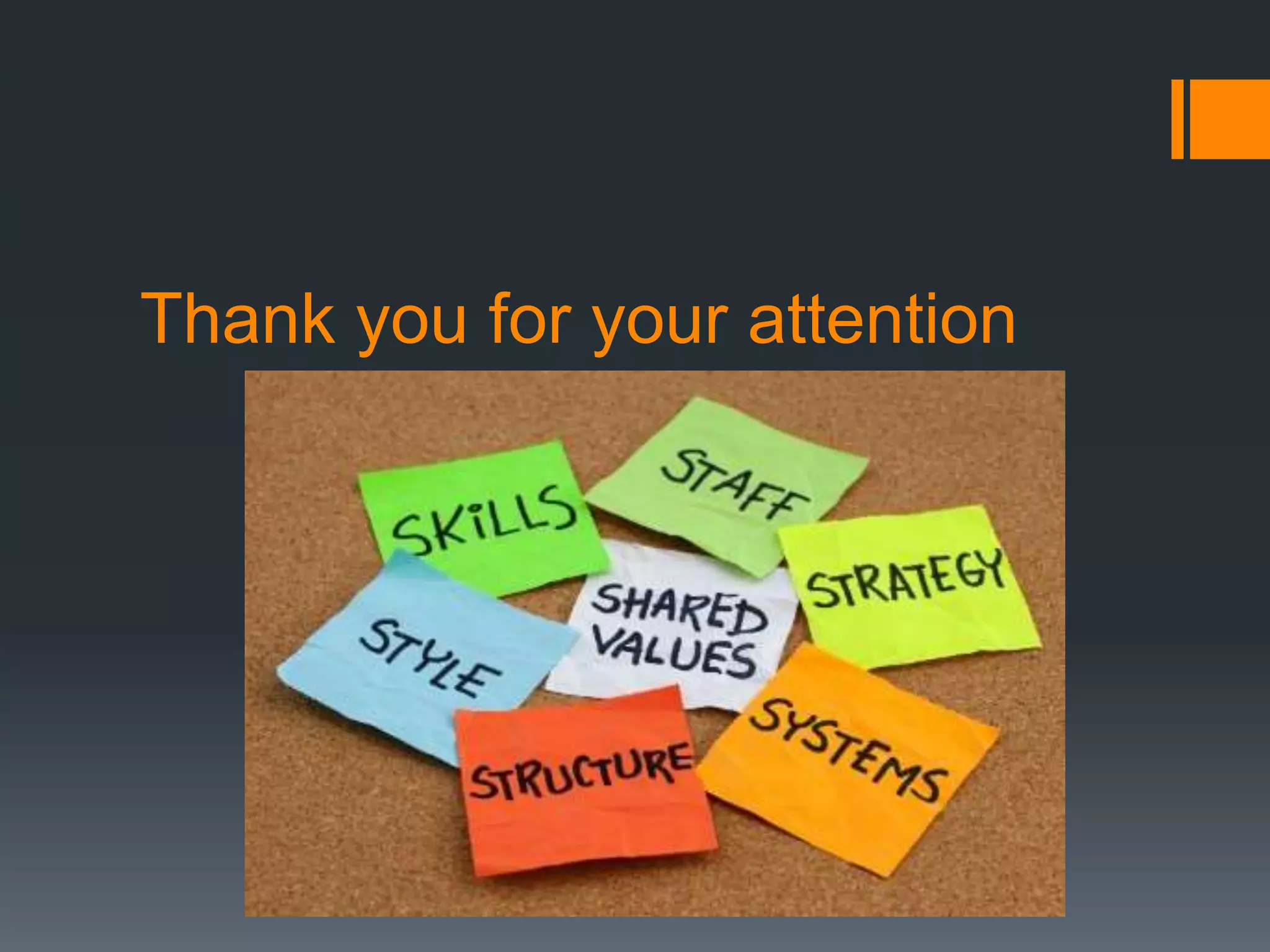
The McKinsey 7S Framework
The McKinsey 7S Framework 
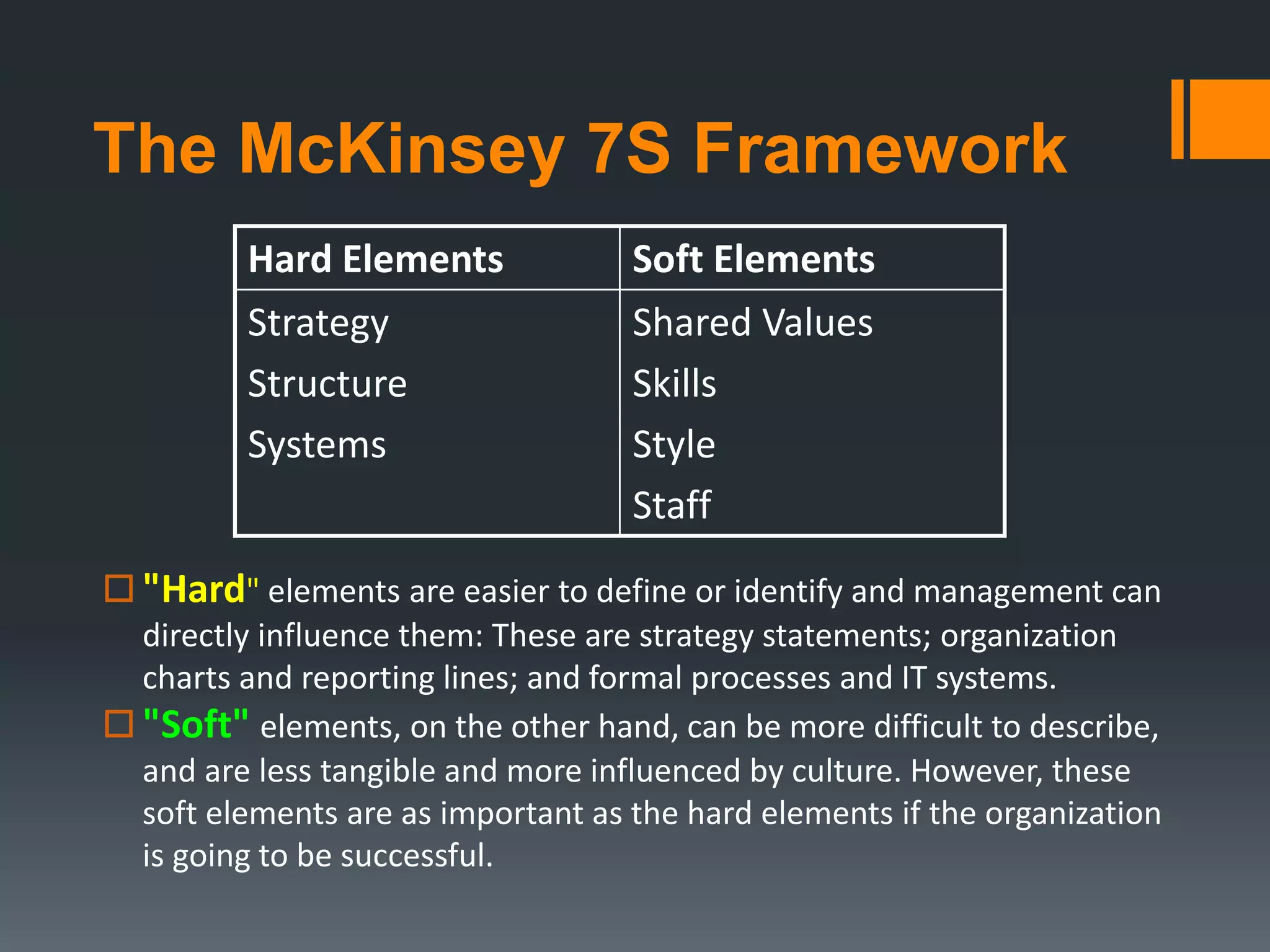
Hard Elements Soft Elements 
Strategy 
Structure 
Systems 
Shared Values 
Skills 
Style 
Staff 
 "Hard" elements are easier to define or identify and management can 
directly influence them: These are strategy statements; organization 
charts and reporting lines; and formal processes and IT systems. 
 "Soft" elements, on the other hand, can be more difficult to describe, 
and are less tangible and more influenced by culture. However, these 
soft elements are as important as the hard elements if the organization 
is going to be successful.
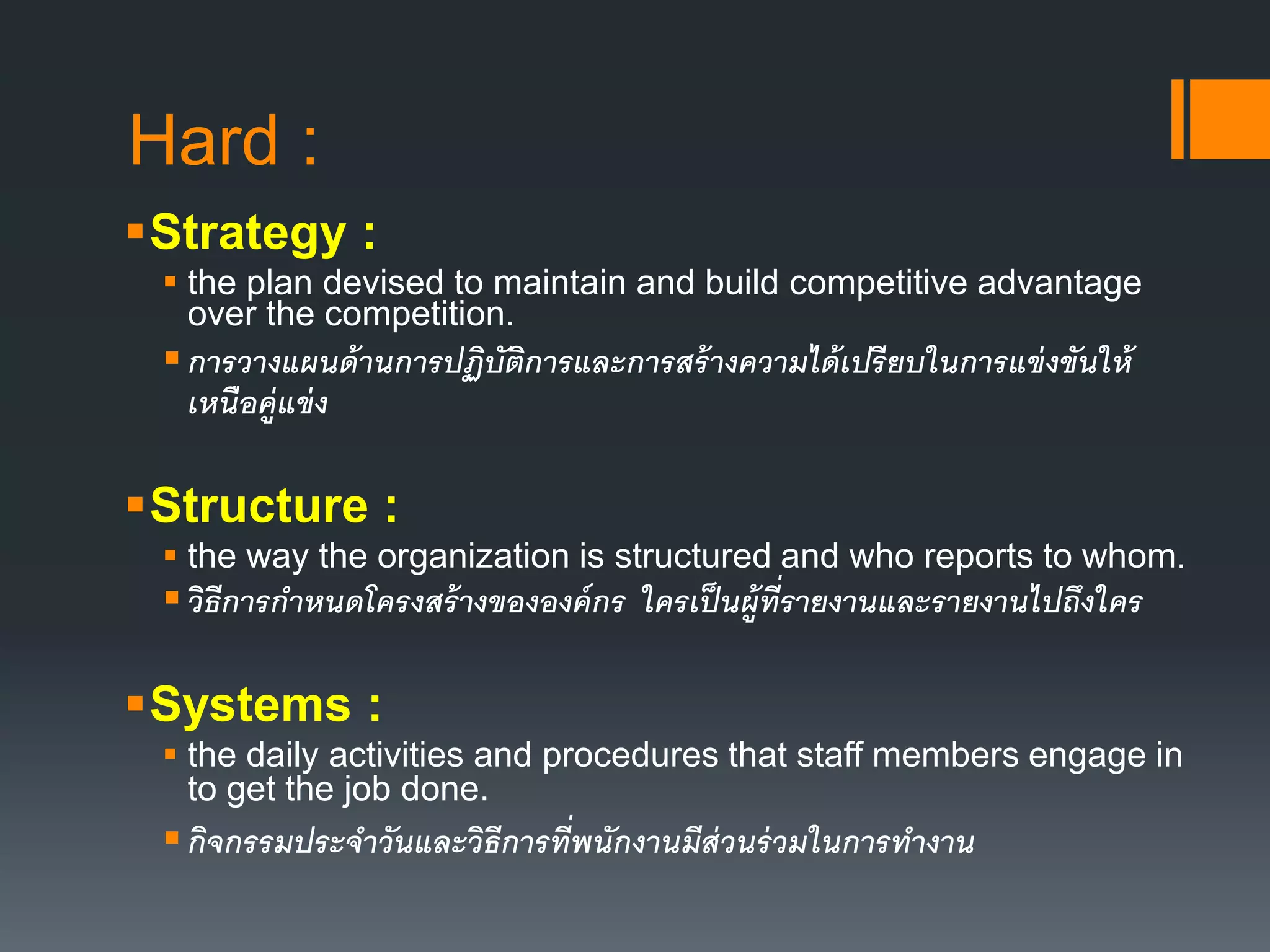
Hard : 
Strategy : 
 the plan devised to maintain and build competitive advantage 
over the competition. 
 การวางแผนด้านการปฏิบัติการและการสร้างความได้เปรียบในการแข่งขันให้ 
เหนือคู่แข่ง 
Structure : 
 the way the organization is structured and who reports to whom. 
 วิธีการกา หนดโครงสร้างขององค์กร ใครเป็นผู้ที่รายงานและรายงานไปถึงใคร 
Systems : 
 the daily activities and procedures that staff members engage in 
to get the job done. 
 กิจกรรมประจาวันและวิธีการที่พนักงานมีส่วนร่วมในการทางาน
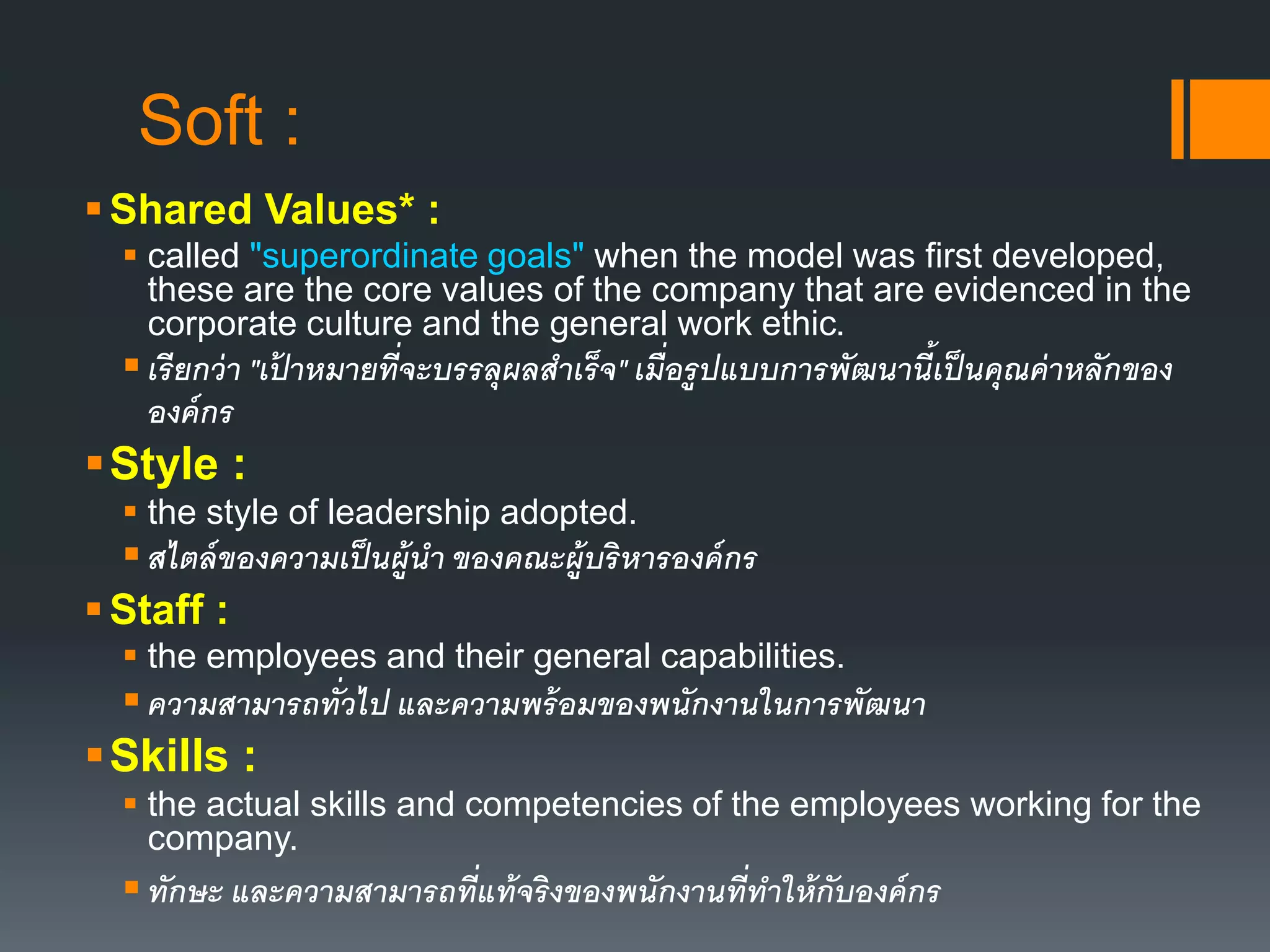
Soft : 
Shared Values* : 
 called "superordinate goals" when the model was first developed, 
these are the core values of the company that are evidenced in the 
corporate culture and the general work ethic. 
 เรียกว่า "เป้ าหมายที่จะบรรลุผลสาเร็จ" เมื่อรูปแบบการพัฒนานี้เป็นคุณค่าหลักของ 
องค์กร 
Style : 
 the style of leadership adopted. 
 สไตล์ของความเป็นผู้นา ของคณะผู้บริหารองค์กร 
 Staff : 
 the employees and their general capabilities. 
 ความสามารถทั่วไป และความพร้อมของพนักงานในการพัฒนา 
Skills : 
 the actual skills and competencies of the employees working for the 
company. 
 ทักษะ และความสามารถที่แท้จริงของพนักงานที่ทาให้กับองค์กร
How to Use the Model 
The model is based on the theory that, for an 
organization to perform well 
 can be used to help identify what needs to be realigned to 
improve performance, or to maintain alignment during other 
types of change. 
 Whatever the type of change - restructuring, new 
processes, organizational merger, new systems, 
change of leadership 
 can be used to understand how the organizational 
elements are interrelated, and so ensure that the wider 
impact of changes made in one area is taken into 
consideration.
The McKinsey 7S Framework 
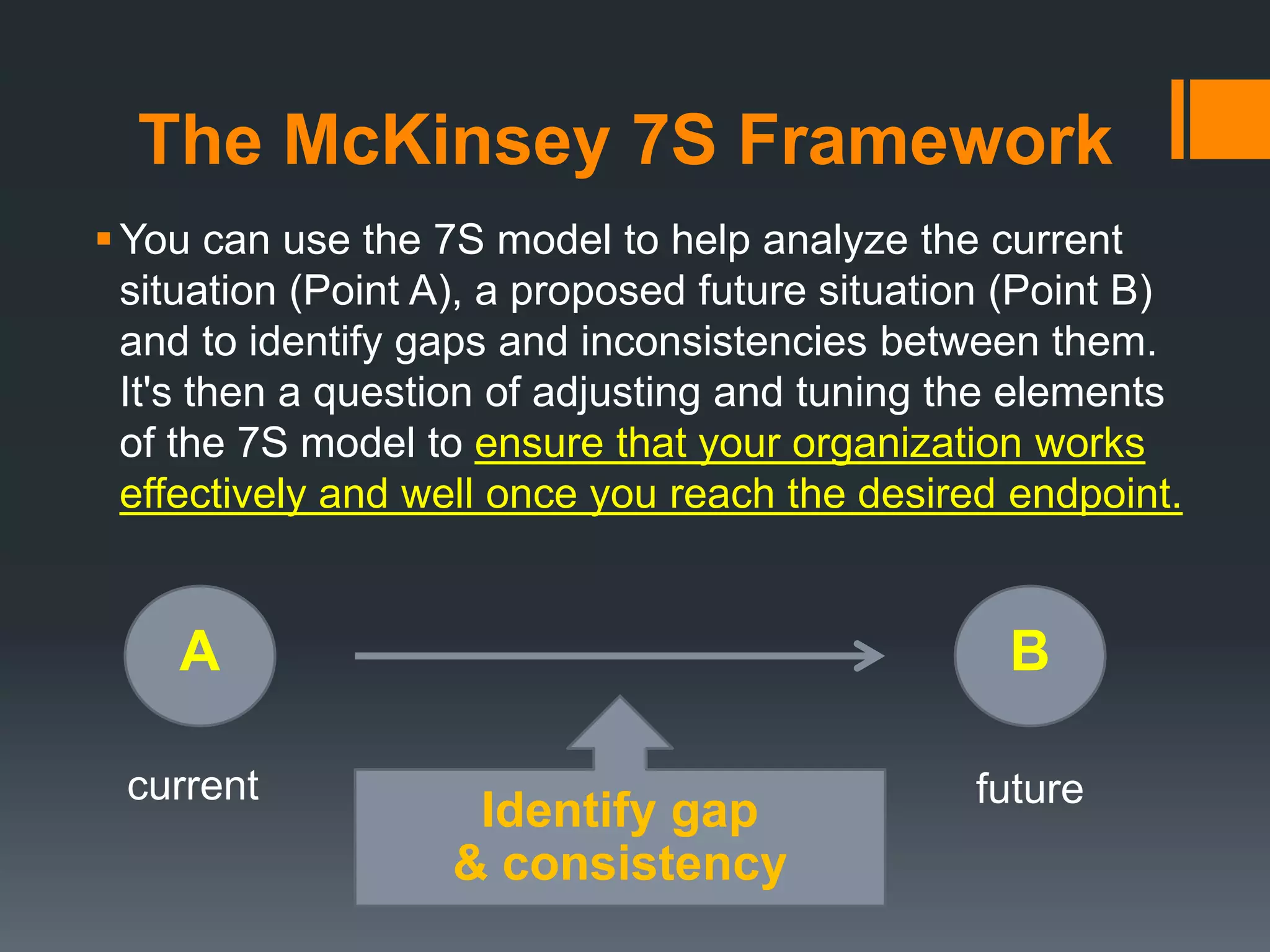
You can use the 7S model to help analyze the current 
situation (Point A), a proposed future situation (Point B) 
and to identify gaps and inconsistencies between them. 
It's then a question of adjusting and tuning the elements 
of the 7S model to ensure that your organization works 
effectively and well once you reach the desired endpoint. 
A B 
current future 
Identify gap 
& consistency
The McKinsey 7S Framework 
The 7S model is a good framework to help you 
ask the right questions - but it won't give you 
all the answers. 
For that you'll need to bring together the right 
knowledge, skills and experience. 
ต้องใช้ความรู้ที่ถูกต้อง ควบคู่ไปกับทักษะ และประสบการณ์
7S Checklist Questions 
Use them to analyze your current (Point A) 
situation first, and then repeat the exercise for 
your proposed situation (Point B). 
Strategy: 
 What is our strategy? 
 How do we intend to achieve our objectives? 
 How do we deal with competitive pressure? 
 How are changes in customer demands dealt with? 
 How is strategy adjusted for environmental issues?
7S Checklist Questions 
Structure: 
 How is the company/team divided? 
 What is the hierarchy? 
 How do the various departments coordinate 
activities? 
 How do the team members organize and align 
themselves? 
 Is decision making and controlling centralized or 
decentralized? Is this as it should be, given what 
we're doing? 
 Where are the lines of communication? Explicit and 
implicit?
7S Checklist Questions 
 Systems: 
 What are the main systems that run the organization? 
Consider financial and HR systems as well as 
communications and document storage 
 Where are the controls and how are they monitored and 
evaluated? 
 What internal rules and processes does the team use to 
keep on track? 
 Shared Values: 
 What are the core values? 
 What is the corporate/team culture? 
 How strong are the values? 
 What are the fundamental values that the company/team 
was built on?
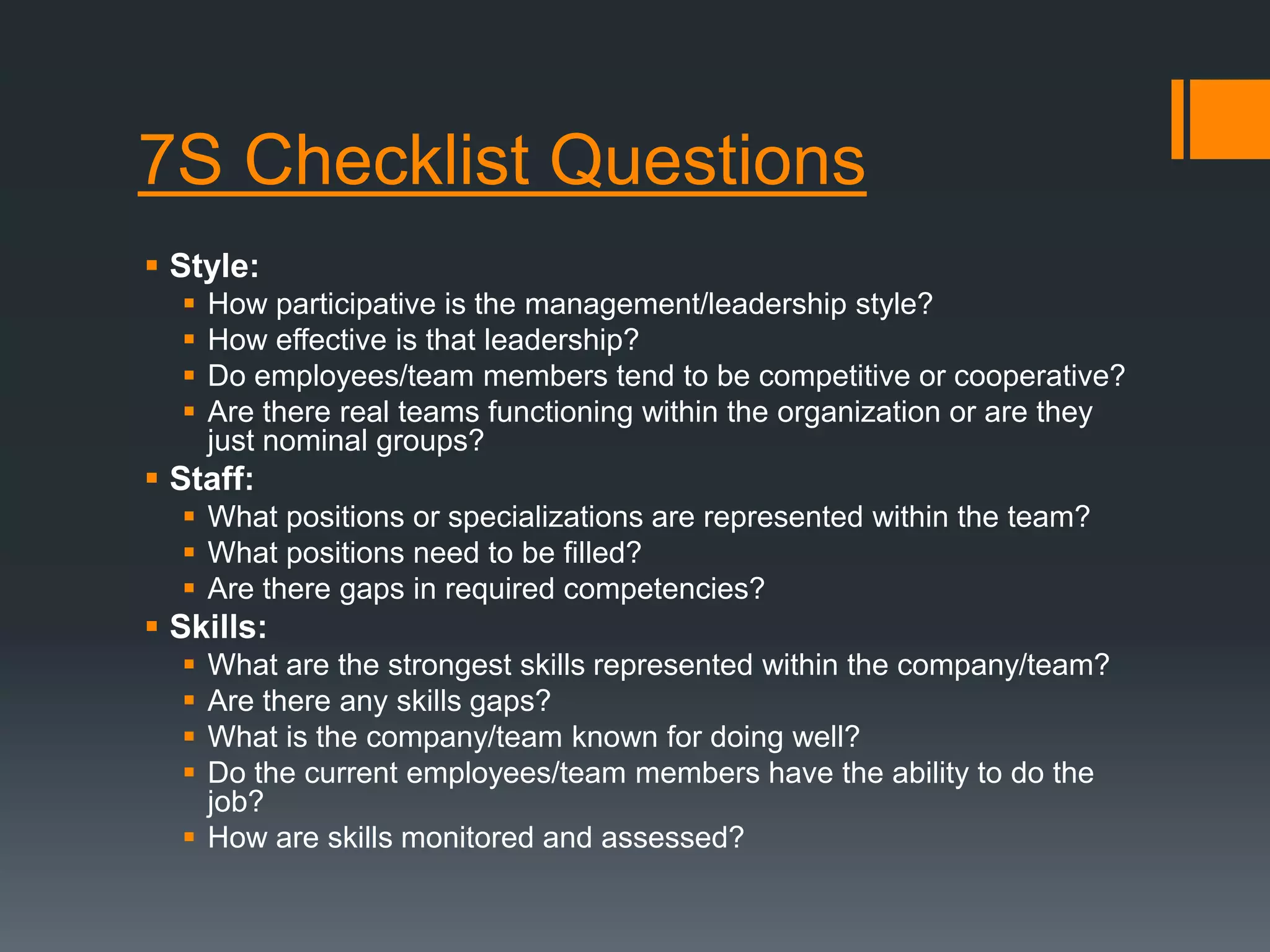
7S Checklist Questions 
 Style: 
 How participative is the management/leadership style? 
 How effective is that leadership? 
 Do employees/team members tend to be competitive or cooperative? 
 Are there real teams functioning within the organization or are they 
just nominal groups? 
 Staff: 
 What positions or specializations are represented within the team? 
 What positions need to be filled? 
 Are there gaps in required competencies? 
 Skills: 
 What are the strongest skills represented within the company/team? 
 Are there any skills gaps? 
 What is the company/team known for doing well? 
 Do the current employees/team members have the ability to do the 
job? 
 How are skills monitored and assessed?
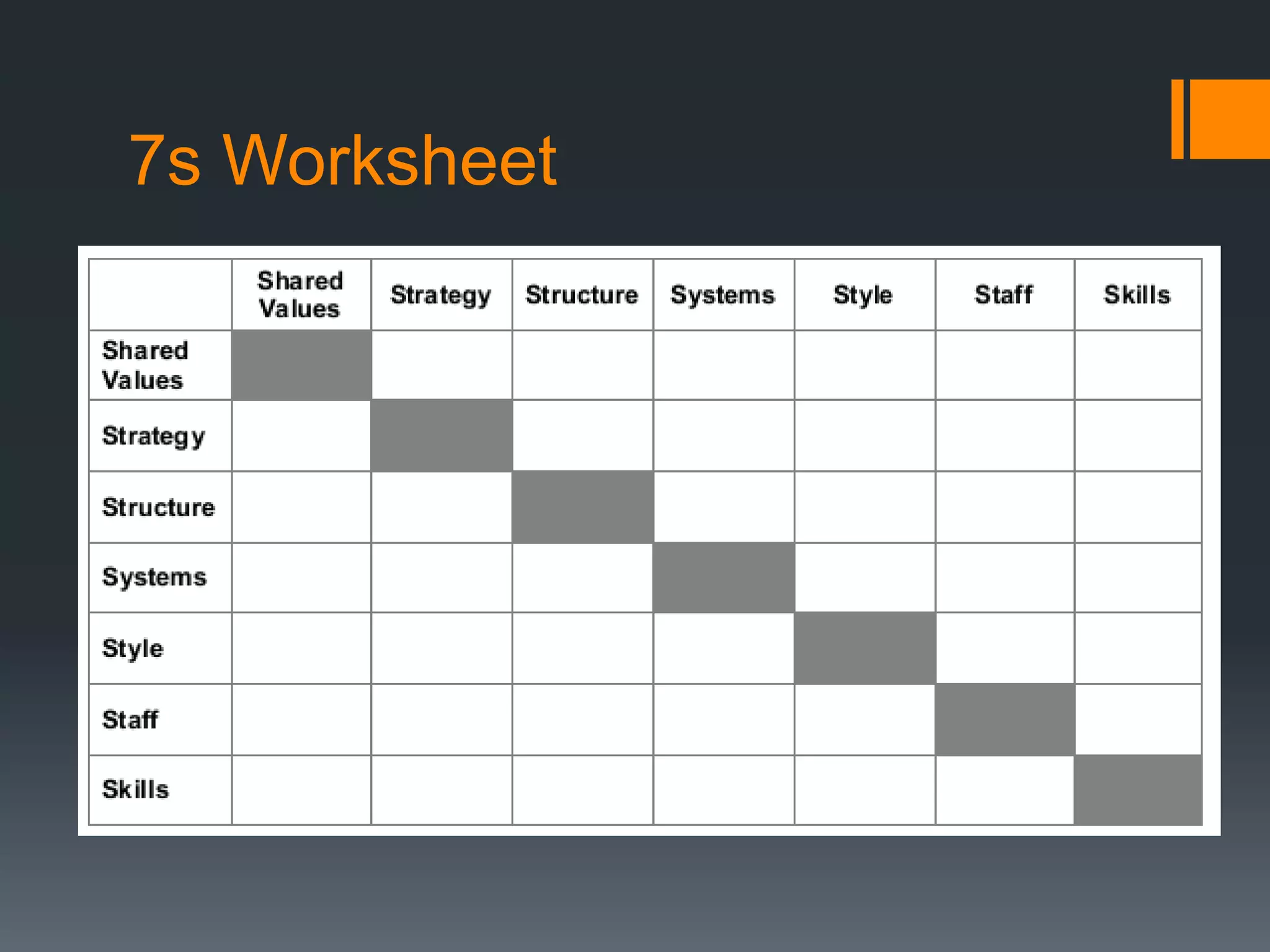
7s Worksheet
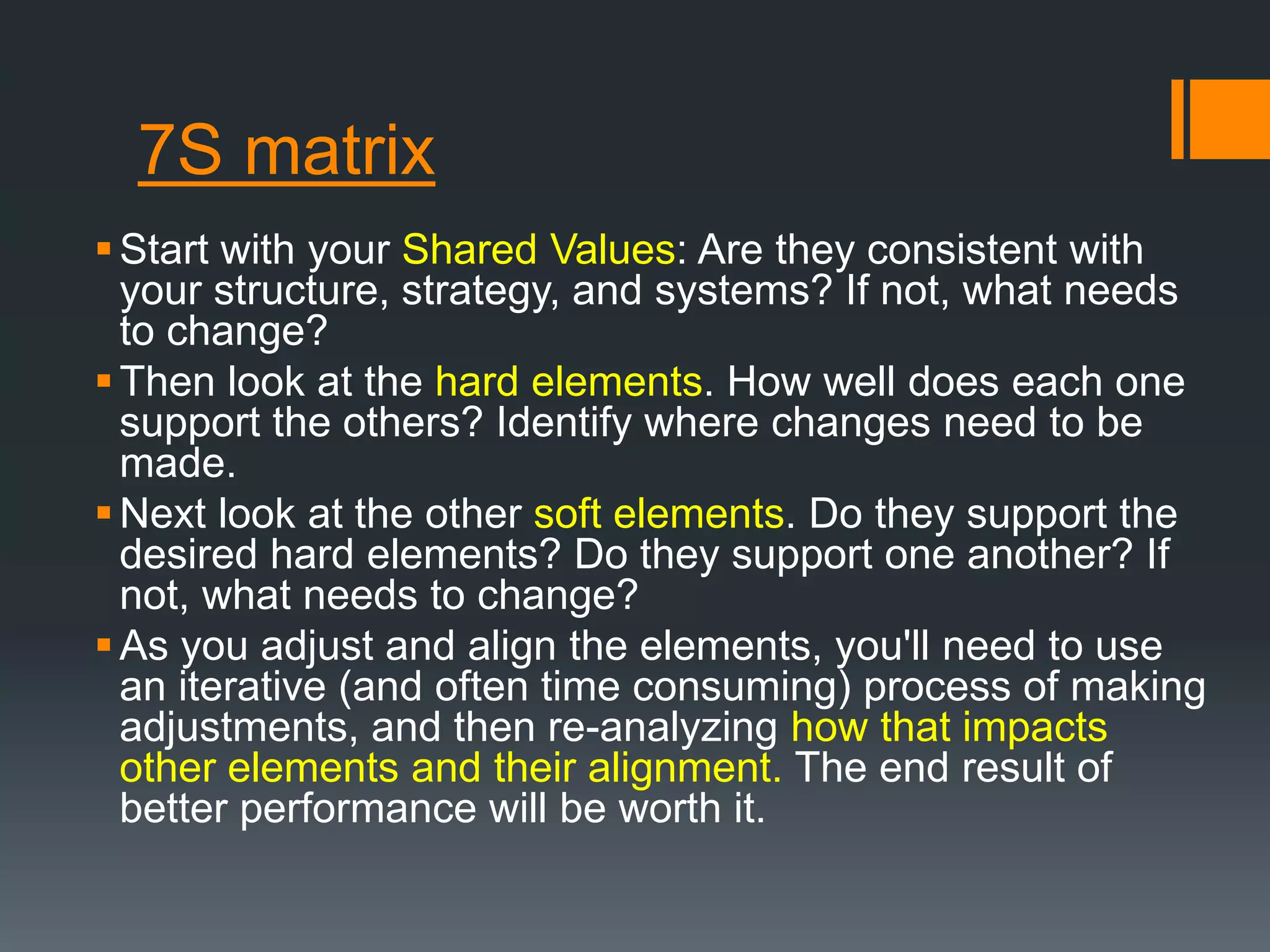
7S matrix 
 Start with your Shared Values: Are they consistent with 
your structure, strategy, and systems? If not, what needs 
to change? 
Then look at the hard elements. How well does each one 
support the others? Identify where changes need to be 
made. 
Next look at the other soft elements. Do they support the 
desired hard elements? Do they support one another? If 
not, what needs to change? 
 As you adjust and align the elements, you'll need to use 
an iterative (and often time consuming) process of making 
adjustments, and then re-analyzing how that impacts 
other elements and their alignment. The end result of 
better performance will be worth it.
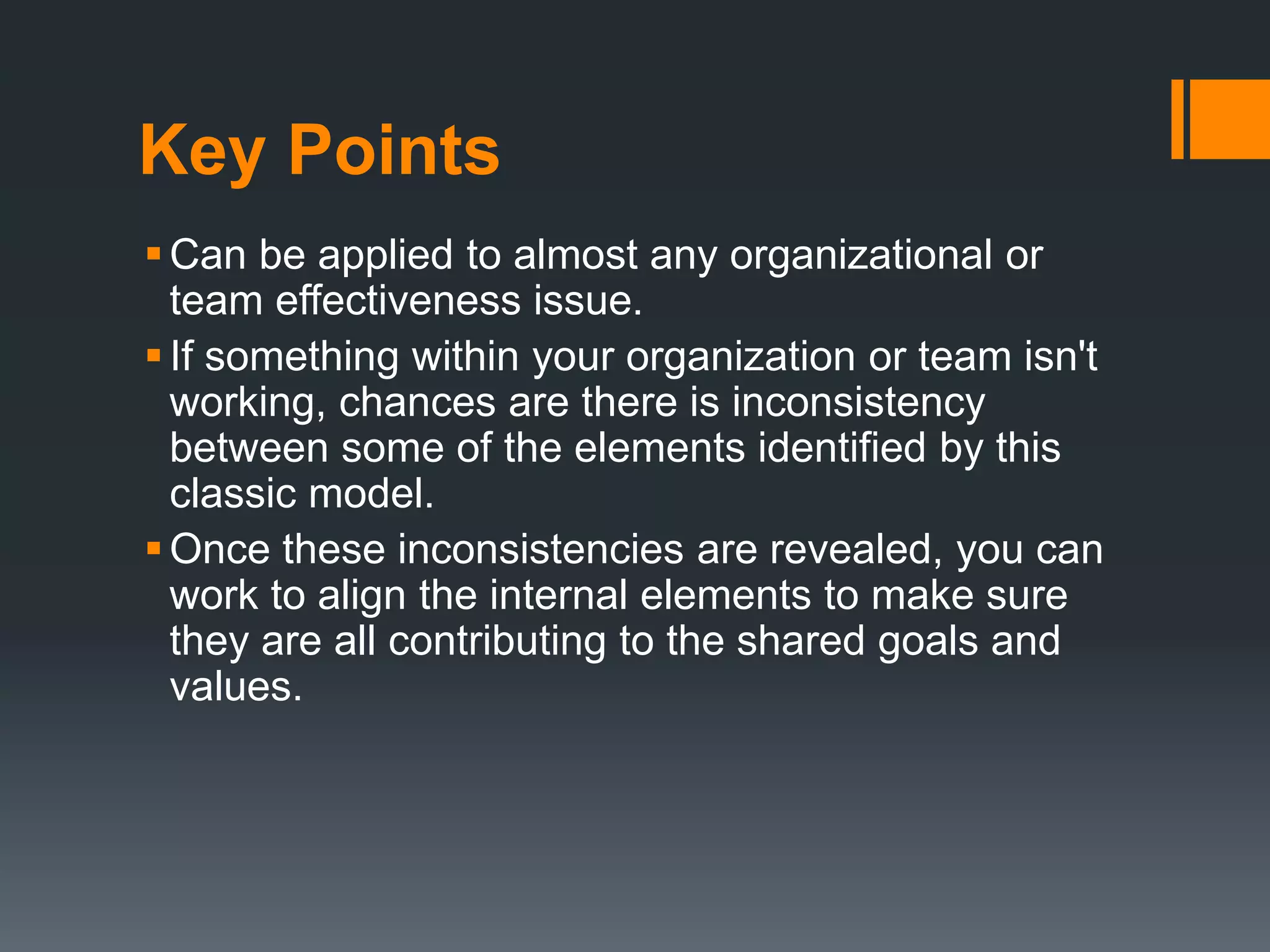
Key Points 
Can be applied to almost any organizational or 
team effectiveness issue. 
 If something within your organization or team isn't 
working, chances are there is inconsistency 
between some of the elements identified by this 
classic model. 
 Once these inconsistencies are revealed, you can 
work to align the internal elements to make sure 
they are all contributing to the shared goals and 
values.
Summary 
7 S ช่วยในการศึกษาจุดแข็ง จุดอ่อนขององค์กรได้ง่ายขึ้น 
ให้ข้อคิดที่เป็นประโยชน์กับผู้บริหาร 4 ข้อ 
 แนวทางและความสามารถขององค์กร จะเกิดการเปลี่ยนแปลงได้ มีหลาย 
ปัจจัยที่มีอิทธิพลเข้ามาเกี่ยวข้อง 
 ปัจจัยทัง้ 7 มีความสัมพันธ์ต่อเนื่องซึ่งกันและกัน ต้องให้ความสา คัญกับทุกๆ 
ปัจจัย 
 ถึงแม้แผนงานกลยุทธ์จะถูกออกแบบมาอย่างรอบคอบ แต่ถ้าขาดการใส่ใจ 
กับปัจจัยอื่นๆที่เข้ามามีอิทธิพล ก็อาจทา ให้แผนงานนั้นล้มเหลวได้ 
 ปัจจัยทัง้ 7 ตัว อาจไม่สามารถบอกได้ว่าปัจจัยใดสา คัญที่สุดในการ 
เปลี่ยนแปลงขององค์กรในช่วงเวลาใดเวลาหนึ่ง
Thank you for your attention

The Mc Kinsey 7s Framework

  • 1.
    The McKinsey 7SFramework
  • 2.
    Background Origin (early1980s) “In Search of Excellence” Thomas J Peters & Robert H Waterman,Jr  two consultants working at the McKinsey & Company consulting  seven internal aspects of an organization that need to be aligned if it is to be successful.
  • 3.
    The McKinsey 7SFramework
  • 4.
    The McKinsey 7SFramework Hard Elements Soft Elements Strategy Structure Systems Shared Values Skills Style Staff  "Hard" elements are easier to define or identify and management can directly influence them: These are strategy statements; organization charts and reporting lines; and formal processes and IT systems.  "Soft" elements, on the other hand, can be more difficult to describe, and are less tangible and more influenced by culture. However, these soft elements are as important as the hard elements if the organization is going to be successful.
  • 5.
    Hard : Strategy:  the plan devised to maintain and build competitive advantage over the competition.  การวางแผนด้านการปฏิบัติการและการสร้างความได้เปรียบในการแข่งขันให้ เหนือคู่แข่ง Structure :  the way the organization is structured and who reports to whom.  วิธีการกา หนดโครงสร้างขององค์กร ใครเป็นผู้ที่รายงานและรายงานไปถึงใคร Systems :  the daily activities and procedures that staff members engage in to get the job done.  กิจกรรมประจาวันและวิธีการที่พนักงานมีส่วนร่วมในการทางาน
  • 6.
    Soft : SharedValues* :  called "superordinate goals" when the model was first developed, these are the core values of the company that are evidenced in the corporate culture and the general work ethic.  เรียกว่า "เป้ าหมายที่จะบรรลุผลสาเร็จ" เมื่อรูปแบบการพัฒนานี้เป็นคุณค่าหลักของ องค์กร Style :  the style of leadership adopted.  สไตล์ของความเป็นผู้นา ของคณะผู้บริหารองค์กร  Staff :  the employees and their general capabilities.  ความสามารถทั่วไป และความพร้อมของพนักงานในการพัฒนา Skills :  the actual skills and competencies of the employees working for the company.  ทักษะ และความสามารถที่แท้จริงของพนักงานที่ทาให้กับองค์กร
  • 7.
    How to Usethe Model The model is based on the theory that, for an organization to perform well  can be used to help identify what needs to be realigned to improve performance, or to maintain alignment during other types of change.  Whatever the type of change - restructuring, new processes, organizational merger, new systems, change of leadership  can be used to understand how the organizational elements are interrelated, and so ensure that the wider impact of changes made in one area is taken into consideration.
  • 8.
    The McKinsey 7SFramework You can use the 7S model to help analyze the current situation (Point A), a proposed future situation (Point B) and to identify gaps and inconsistencies between them. It's then a question of adjusting and tuning the elements of the 7S model to ensure that your organization works effectively and well once you reach the desired endpoint. A B current future Identify gap & consistency
  • 9.
    The McKinsey 7SFramework The 7S model is a good framework to help you ask the right questions - but it won't give you all the answers. For that you'll need to bring together the right knowledge, skills and experience. ต้องใช้ความรู้ที่ถูกต้อง ควบคู่ไปกับทักษะ และประสบการณ์
  • 10.
    7S Checklist Questions Use them to analyze your current (Point A) situation first, and then repeat the exercise for your proposed situation (Point B). Strategy:  What is our strategy?  How do we intend to achieve our objectives?  How do we deal with competitive pressure?  How are changes in customer demands dealt with?  How is strategy adjusted for environmental issues?
  • 11.
    7S Checklist Questions Structure:  How is the company/team divided?  What is the hierarchy?  How do the various departments coordinate activities?  How do the team members organize and align themselves?  Is decision making and controlling centralized or decentralized? Is this as it should be, given what we're doing?  Where are the lines of communication? Explicit and implicit?
  • 12.
    7S Checklist Questions  Systems:  What are the main systems that run the organization? Consider financial and HR systems as well as communications and document storage  Where are the controls and how are they monitored and evaluated?  What internal rules and processes does the team use to keep on track?  Shared Values:  What are the core values?  What is the corporate/team culture?  How strong are the values?  What are the fundamental values that the company/team was built on?
  • 13.
    7S Checklist Questions  Style:  How participative is the management/leadership style?  How effective is that leadership?  Do employees/team members tend to be competitive or cooperative?  Are there real teams functioning within the organization or are they just nominal groups?  Staff:  What positions or specializations are represented within the team?  What positions need to be filled?  Are there gaps in required competencies?  Skills:  What are the strongest skills represented within the company/team?  Are there any skills gaps?  What is the company/team known for doing well?  Do the current employees/team members have the ability to do the job?  How are skills monitored and assessed?
  • 14.
  • 15.
    7S matrix Start with your Shared Values: Are they consistent with your structure, strategy, and systems? If not, what needs to change? Then look at the hard elements. How well does each one support the others? Identify where changes need to be made. Next look at the other soft elements. Do they support the desired hard elements? Do they support one another? If not, what needs to change?  As you adjust and align the elements, you'll need to use an iterative (and often time consuming) process of making adjustments, and then re-analyzing how that impacts other elements and their alignment. The end result of better performance will be worth it.
  • 16.
    Key Points Canbe applied to almost any organizational or team effectiveness issue.  If something within your organization or team isn't working, chances are there is inconsistency between some of the elements identified by this classic model.  Once these inconsistencies are revealed, you can work to align the internal elements to make sure they are all contributing to the shared goals and values.
  • 17.
    Summary 7 Sช่วยในการศึกษาจุดแข็ง จุดอ่อนขององค์กรได้ง่ายขึ้น ให้ข้อคิดที่เป็นประโยชน์กับผู้บริหาร 4 ข้อ  แนวทางและความสามารถขององค์กร จะเกิดการเปลี่ยนแปลงได้ มีหลาย ปัจจัยที่มีอิทธิพลเข้ามาเกี่ยวข้อง  ปัจจัยทัง้ 7 มีความสัมพันธ์ต่อเนื่องซึ่งกันและกัน ต้องให้ความสา คัญกับทุกๆ ปัจจัย  ถึงแม้แผนงานกลยุทธ์จะถูกออกแบบมาอย่างรอบคอบ แต่ถ้าขาดการใส่ใจ กับปัจจัยอื่นๆที่เข้ามามีอิทธิพล ก็อาจทา ให้แผนงานนั้นล้มเหลวได้  ปัจจัยทัง้ 7 ตัว อาจไม่สามารถบอกได้ว่าปัจจัยใดสา คัญที่สุดในการ เปลี่ยนแปลงขององค์กรในช่วงเวลาใดเวลาหนึ่ง
  • 18.
    Thank you foryour attention

Editor's Notes

  • #2 กรอบแนวคิด 7s McKinsey เป็นกระบวนการสร้างความมั่นใจว่าทุกส่วนขององค์กรของคุณทำงานอยู่ด้วยความสามัคคี
  • #3  7s McKinsey ได้มีการพัฒนาในต้นทศวรรษ 1980 โดย ดร.โธมัส เจ ปีเตอร์ส และโรเบิร์ต เอช วอเตอร์แมน เป็นสองที่ปรึกษาที่มีความเชี่ยวชาญด้านการทำงานเป็นที่ปรึกษาของ McKinsey & Company ได้นำเสนอแนวคิดการจัดแนวทางการศึกษาไว้ 7 ด้านสำหรับตรวจสอบภายในองค์กรและจำเป็นที่จะต้องมีความใกล้ชิดกัน (ห้ามมี Gap ระหว่างมุมของแผนก หรือกลุ่มที่ห่างกัน) ภายในองค์กรจึงจะประสบความสำเร็จ กล่าวถึงหนังสือขายดีที่สุดที่เผยแพร่ในปี ค.ศ. 1980 คือหนังสือ In search of Excellence ซึ่งเผยแพร่ผลการวิจัยการเทียบเคียงข้อมูลของบริษัทชั้นนำกว่า 60 บริษัทด้วยเกณฑ์การประเมินเดียวกัน ซึ่งปรากฏผลว่ามีบริษัทเพียงจำนวนหนึ่งที่ได้ชื่อว่าเป็นบริษัทชั้นเลิศ (Excellence companies) ซึ่งมีความโดดเด่นอย่างยิ่งโดยเฉพาะในด้านนวัตกรรม และการประดิษฐ์คิดค้นสิ่งใหม่ ๆ โดยกรอบแนวคิดพื้นฐานที่นำมาใช้ในการคัดสรรบริษัทต่าง ๆ นั้น เรียกว่า McKinney 7-S Framework ซึ่งกรอบแนวคิดประกอบด้วยปัจจัย 7 ประการในการประเมินองค์การ
  • #4 ความสำเร็จในการบริหารงานธุรกิจที่สัมฤทธิ์ผลนั้น ขึ้นกับปัจจัย 7 ตัว หรือ “Seven S’s” ซึ่งสัมพันธ์เกี่ยวเนื่องซึ่งกันและกัน ประกอบด้วย Structure โครงสร้าง Strategy กลยุทธ์ System ระบบต่างๆ Style รูปแบบการบริหาร Staff พนักงานทั้งหมด Skill ทักษะฝีมือ Shared value ค่านิยมร่วม
  • #5 7 องค์ประกอบที่สำคัญ แนวคิด 7s McKinsey เกี่ยวข้องกับ 7 ปัจจัยของการพึ่งพาซึ่งกันและกัน โดยแบ่งออกเป็นทั้ง "ยากและหนัก" กับ "อ่อนน้อม" ภายในองค์กร องค์ประกอบ "ยากและหนัก"                             องค์ประกอบ "อ่อนน้อม" กลยุทธ์                                                          ค่านิยมร่วมกัน โครงสร้าง                                                       ทักษะ/ประสบการณ์การทำงาน ระบบ                                                             สไตล์                                                                     พนักงาน องค์ประกอบ "ยากและหนัก" จะง่ายต่อการกำหนดหรือระบุวิธีการจัดการโดยตรงและมีอิทธิพลต่อพวกเขา  ซึ่งกลยุทธ์เหล่านี้ จะต้องใช้แผนภูมิองค์กรและสายการบังคับบัญชาและกระบวนการที่เป็นทางการและ ใช้ระบบสารสนเทศเข้ามาช่วยสนับสนุน องค์ประกอบ "อ่อนน้อม" เป็นสิ่งที่ยากที่จะอธิบายและมีความเป็นตัวตนน้อย มีอิทธิพลต่อวัฒนธรรมองค์กรโดยรวม  ซึ่งองค์ประกอบอ่อน มีความสำคัญมากต่อองค์กรที่ต้องการจะประสบความสำเร็จ
  • #6 เรามาพิจารณาแต่ละองค์ประกอบเฉพาะ : กลยุทธ์ : การวางแผนด้านการปฏิบัติการและการสร้างความได้เปรียบในการแข่งขันให้เหนือคู่แข่งแบบยั่งยืน โครงสร้าง : คือ แผนภูมิขององค์กรพร้อมข้อมูล วิธีการกำหนดโครงสร้างขององค์กร  ใครเป็นผู้ที่รายงานและรายงานไปถึงใคร ระบบ : กระบวนการและการ โฟลว์ของงาน ที่แสดงให้เห็นว่าการดำเนินกิจกรรมประจำวันขององค์กร เป็นไปอย่างไร
  • #7 ค่านิยมร่วมกัน :  ค่านิยมร่วมกันของคนส่วนมากในองค์กรยึดถือ ปฏิบัติ ปกติจะเขียนเป็นข้อความเป้าหมายหรือวัตถุประสงค์ที่ชัดเจน เข้าใจง่าย และครอบคลุม เป็นคุณค่าหลักขององค์กร  จำเป็นที่จะต้องมีสร้างให้เป็นวัฒนธรรมองค์กรและจริยธรรมในการทำงานทั่วไป สไตล์ หรือรูปแบบการบริหาร : พฤติกรรมการบริหารงานของผู้นำองค์กร พนักงาน : ความสามารถทั่วไปของพนักงานในองค์กร และความพร้อมของพนักงานในการพัฒนาเพื่อให้บรรลุวัตถุประสงค์ขององค์กร ทักษะ : ทักษะ และความสามารถที่แท้จริงของพนักงานที่ทำให้กับองค์กรที่จะช่วยให้การดำเนินกลยุทธ์ประสบความสำเร็จ การกำหนดค่านิยมร่วมกันในช่วงกลางของแนวคิด 7s McKinsey เป็นรูปแบบที่เน้นว่าค่านิยมที่กำหนดนี้เป็นศูนย์กลาง ในการพัฒนาทุกองค์ประกอบที่สำคัญอื่นๆ ของโครงสร้างองค์กร เช่น โครงสร้างองค์กร กลยุทธ์  ระบบ  สไตล์  พนักงาน และทักษะความสามารถ  ทั้งหมดนี้เป็นเหตุผลที่องค์กรถูกสร้างขึ้นทั้งหมดและเป็นสิ่งที่ยืนยันที่ดี เกี่ยวกับ วิสัยทัศน์เดิมขององค์กร  ที่ก่อตั้งขึ้นจากค่านิยมของผู้สร้าง
  • #8 จะสามารถนำแนวคิดไปใช้ได้หรือไม่ อย่างไร รูปแบบแนวคิดของ 7s McKinsey จะขึ้นอยู่กับทฤษฎีที่ว่า องค์กรสามารถจะดำเนินการกระบวนการทั้ง 7 อย่าง โดยที่องค์ประกอบทั้งหมดจะต้องสอดคล้องและส่งเสริมร่วมกัน ดังนั้นรูปแบบที่สามารถนำมาใช้เพื่อช่วยระบุสิ่งที่จะต้องทำได้จริง และสามารถปรับปรุงประสิทธิภาพหรือรักษาแนวปฎิบัติ (หรือประสิทธิภาพการทำงาน) ในระหว่างการเปลี่ยนแปลงกระบวนการทำงานในส่วนอื่นๆได้ด้วย ไม่ว่าการเปลี่ยนแปลงจะเกิดกับองค์ในรูปแบบใดก็ตาม อาทิเช่น การปรับโครงสร้างของขั้นตอนกระบวนการใหม่, การควบรวมกิจการของหน่วยงานต่างๆ ในองค์กร,  การออกแบบระบบใหม่,  การเปลี่ยนแปลงตัวผู้นำ หรือเปลี่ยนแปลงรูปแบบสไตล์การทำงานของผู้นำอื่นๆ   ถ้าจะนำ 7s มาใช้ ก็จำเป็นที่จะต้องเข้าใจองค์ประกอบขององค์กรที่มีความสัมพันธ์กัน  เพื่อให้แน่ใจว่าผลกระทบที่เกิดขึ้นเป็นวงกว้างนั้น เกิดการเปลี่ยนแปลงเฉพาะในหน่วยงานที่กำลังพิจารณา
  • #9 การใช้รูปแบบ 7S ------ เอาไปทำอะไร จากรูป จุด A คือ ตำแหน่ง ณ ปัจจุบัน ส่วน B คือ อนาคต 7S จะวิเคราะห์สถานการณ์ทั้งปัจจุบันและอนาคต เพื่อระบุช่องว่าง (Identify gap) รวมถึง consistency ของทั้งสองจุด เพื่อให้แน่ใจว่าองค์กรนั้น สามารถทำงานได้อย่างมีประสิทธิภาพ เมื่อเดินทางไปถึงจุดหมาย คือ จุด B นั่นเอง
  • #10 แบบ จำลอง 7s เป็นกรอบที่ดี ในการช่วยสร้างคำถาม แต่ก็ไม่ให้คำตอบในทุกเรื่อง ทั้งนี้ทั้งนั้นต้องใช้ความรู้ที่ถูกต้อง ควบคู่ไปกับทักษะ และประสบการณ์
  • #11 ตัวอย่างคำถาม Checklist 7s  ควรทำทั้งหมดสองครั้งคือ ครั้งแรก คือตำแหน่ง A ปัจจุบัน และตำแหน่ง B คืออนาคต กลยุทธ์ :  กลยุทธ์ของหน่วยงานเรา คืออะไร? เราจะบรรลุวัตถุประสงค์ของเราได้อย่างไร? เราจะมีวิธีรับมือกับแรงกดดันในการแข่งขันอย่างไร? เราจะจัดการกับความต้องการของลูกค้าที่เปลี่ยนแปลงไปได้อย่างไร? กลยุทธ์ของเราจะช่วยจัดการด้านสิ่งแวดล้อมอย่างไร?
  • #12 โครงสร้าง :  บริษัท/ทีมงาน แบ่งงาน/แผนกอย่างไร? ลำดับชั้นของโครงสร้างองค์กรเป็นอย่างไร? แต่ละหน่วยงานต่างๆมีการประสานงานกันอย่างไร? มีการจัดการสมาชิกในทีมและวางตำแหน่งภายในกลุ่มอย่างไร? การตัดสินใจเป็นแบบใด เป็นแบบกระจายอำนาจ หรือ รวมอำนาจที่ส่วนกลาง  แล้วควรจะทำวิธีใด? การติดต่อสื่อสารภายในองค์กรเป็นอย่างไร? มีระบบหรือวิธีการที่ชัดเจนหรือไม่?
  • #13 ระบบ :  อะไรคือระบบหลักที่ทำให้องค์กรดำเนินกิจการได้  เช่น ด้านการเงิน ด้านการบริหารทรัพยากรบุคคล ด้านการสื่อสาร หรือการจัดเก็บข้อมูล มีหน่วยงานใดที่คอยควบคุม และมีวิธีติดตามและประเมินผลอย่างไร กฎระเบียบที่ทำให้พนักงานปฎิบัติในแนวทางเดียวกันคืออะไร ค่านิยมร่วมกัน :  ค่านิยมหลักคืออะไร? วัฒนธรรมองค์กรคืออะไร? ค่านิยมจะแข็งแกร่งได้อย่างไร? อะไรคือค่านิยมพื้นฐานที่ องค์กร/ทีมงานใช้ร่วมกัน?
  • #14 สไตล์ :  รูปแบบการบริหาร รูปแบบการจัดการ/รูปแบบการเป็นผู้นำคืออะไร? ความเป็นผู้นำของผู้บริหารมีประสิทธิภาพหรือไม่? พนักงานภายในองค์กร มีแนวโน้มที่จะแข่งขัน หรือร่วมมือกันหรือไม่? มีทีมงานที่ทำงานจริงๆภายในองค์กร หรือเป็นแค่ในนาม? พนักงาน :  ตำแหน่งหรือความเชี่ยวชาญพิเศษอะไรที่จะเป็นตัวแทนของทีม? ตำแหน่งอะไรที่จำเป็นต้องมาชดเชย? มีช่องว่างในการพัฒนาจุดแข็งหรือไม่? ทักษะ :  ทักษะอะไรที่แข็งแกร่งที่สุดของบริษัทหรือทีมงาน? ขาดทักษะอะไรหรือไม่? อะไร หรือสิ่งใดที่องค์กร/ทีมงานปฏิบัติและยอมรับว่าดี? พนักงานหรือสมาชิกในทีมขณะนี้มีความสามารถในการทำงานหรือไม่? และ จะติดตามและประเมินทักษะดังกล่าวได้อย่างไร?
  • #15 อันนี้เป็นตาราง worksheet ของ 7S ให้เอาข้อมูลที่ได้จากตัวอย่างคำถามมาใส่
  • #16 ขั้นตอนการตรวจสอบองค์ประกอบ ประกอบด้วย เริ่มต้นด้วย ค่านิยม : มีความสอดคล้องกับโครงสร้าง กลยุทธ์ และระบบ หรือไม่? ถ้าไม่สอดคล้อง ต้องเปลี่ยนแแปลงอะไร? ตามด้วย Hard elements : ว่ามีความจำเป็นต้องเปลี่ยนแปลงอะไรบ้าง และดูที่ Soft elements : จุดนี้เปลี่ยนแปลงได้ยากกว่า Hard elements และส่วน soft นี้ยังสนับสนุนในส่วนของ Hard อยู่หรือไม่ ควรต้องเปลี่ยนแปลงอะไรหรือไม่ เมื่อจัดและปรับแต่งในส่วนของ Hard และ Soft เรียบร้อย ก็มาปรับแต่ง วิเคราะห์ข้อมูลกันใหม่อีกที ดูว่าผลการปรับเปลี่ยนนั้นส่งผลดีจริงหรือไม่
  • #17 สิ่งสำคัญ : สามารถนำ 7S ไปใช้ได้ในทุกๆองค์กรหรือทีมงาน เพื่อเพิ่มประสิทธิภาพการทำงาน โดยถ้าเกิดปัญหาบางอย่างที่ทำให้องค์กรไม่สามารถดำเนินการได้ ให้ identify ปัญหาโดยใช้โมเดลนี้ ซึ่งถ้าจัดการปัญหาได้แล้ว ให้ประเมินซ้ำในแต่ละปัจจัยในแต่ละด้าน เพื่อดูว่ายังดำรงเป้าหมายและค่านิยมองค์กรได้
  • #18 7 S ช่วยในการศึกษาจุดแข็ง จุดอ่อนขององค์กรได้ง่ายขึ้น ให้ข้อคิดที่เป็นประโยชน์กับผู้บริหาร 4 ข้อ แนวทางและความสามารถขององค์กร จะเกิดการเปลี่ยนแปลงได้ มีหลายปัจจัยที่มีอิทธิพลเข้ามาเกี่ยวข้อง ปัจจัยทั้ง 7 มีความสัมพันธ์ต่อเนื่องซึ่งกันและกัน ต้องให้ความสำคัญกับทุกๆปัจจัย ถึงแม้แผนงานกลยุทธ์จะถูกออกแบบมาอย่างรอบคอบ แต่ถ้าขาดการใส่ใจกับปัจจัยอื่นๆที่เข้ามามีอิทธิพล ก็อาจทำให้แผนงานนั้นล้มเหลวได้ ปัจจัยทั้ง 7 ตัว อาจไม่สามารถบอกได้ว่าปัจจัยใดสำคัญที่สุดในการเปลี่ยนแปลงขององค์กรในช่วงเวลาใดเวลาหนึ่ง