Amity Business School MBA Class of 2010, Semester III Consumer Behaviour  “LEARNING” Aparna Goyal
TAKE AWAYS We will understand how the Consumer Learning about products and services take place. Conditioning results in Learning. Consumers can generalize learned associations to other things. We learn by observing others’ behaviour Marketing Strategies using “Learning”
Introduction Learning is a relatively permanent change in behaviour caused by experience – direct or observed. Learning is an ongoing process – new stimuli. Casual, unintentional acquisition of knowledge is called Incidental Learning
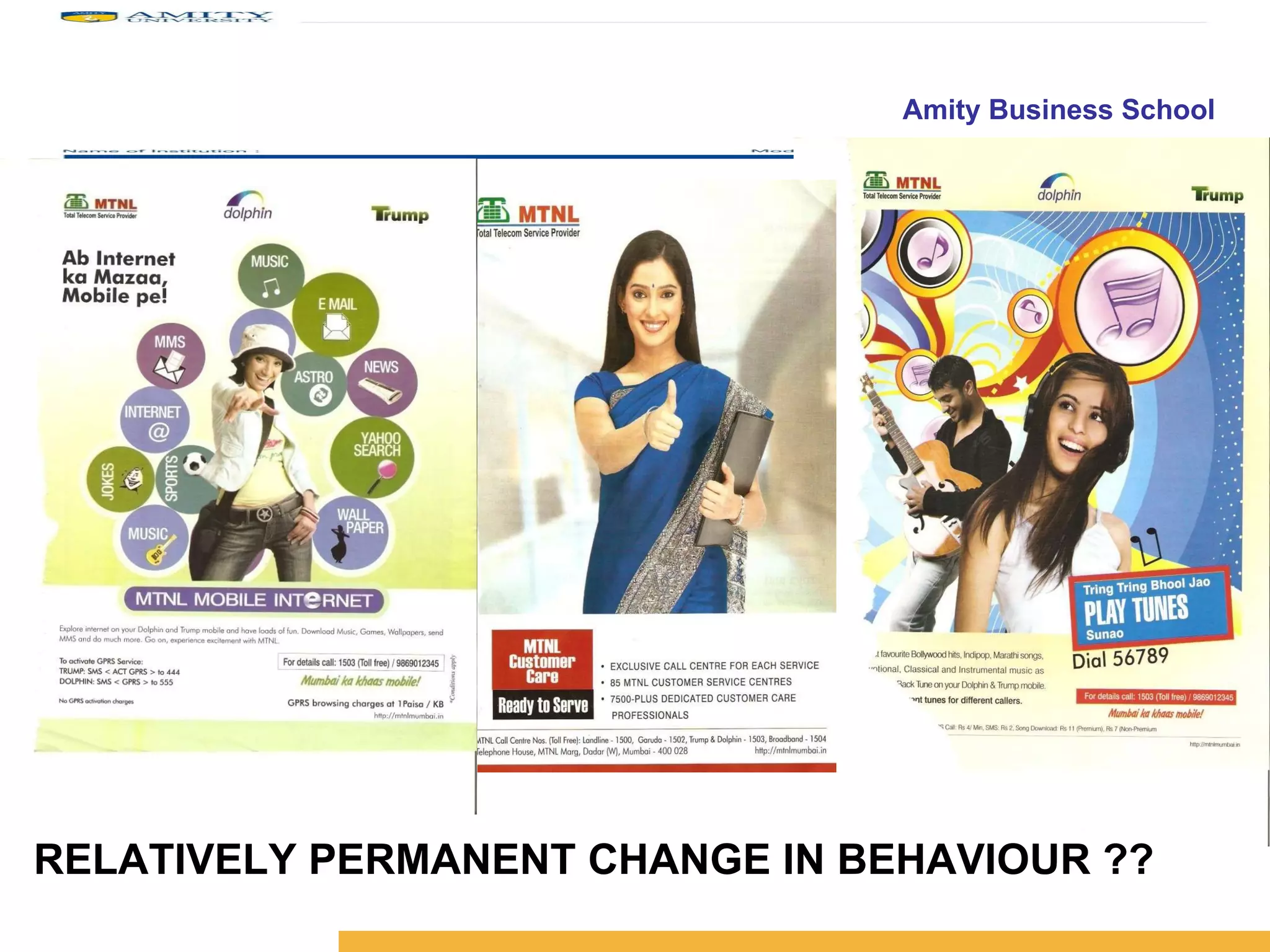
RELATIVELY PERMANENT CHANGE IN BEHAVIOUR ??
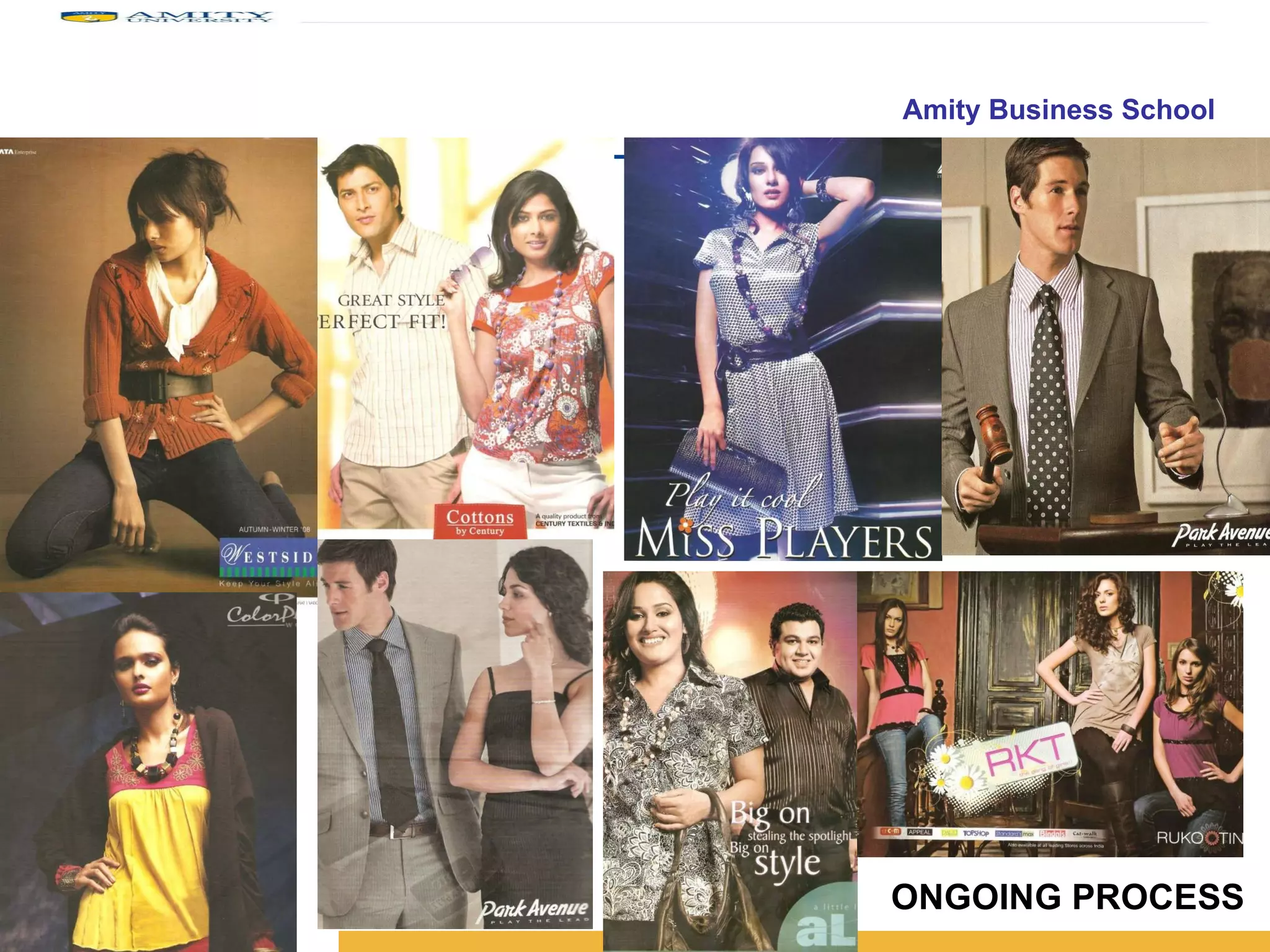
ONGOING PROCESS
Consumer learning Process by which individuals acquire the purchase and consumption knowledge and experience that they apply to future related behavior. Marketers must teach consumers: where to buy how to use how to maintain how to dispose of products Aparna Goyal
 
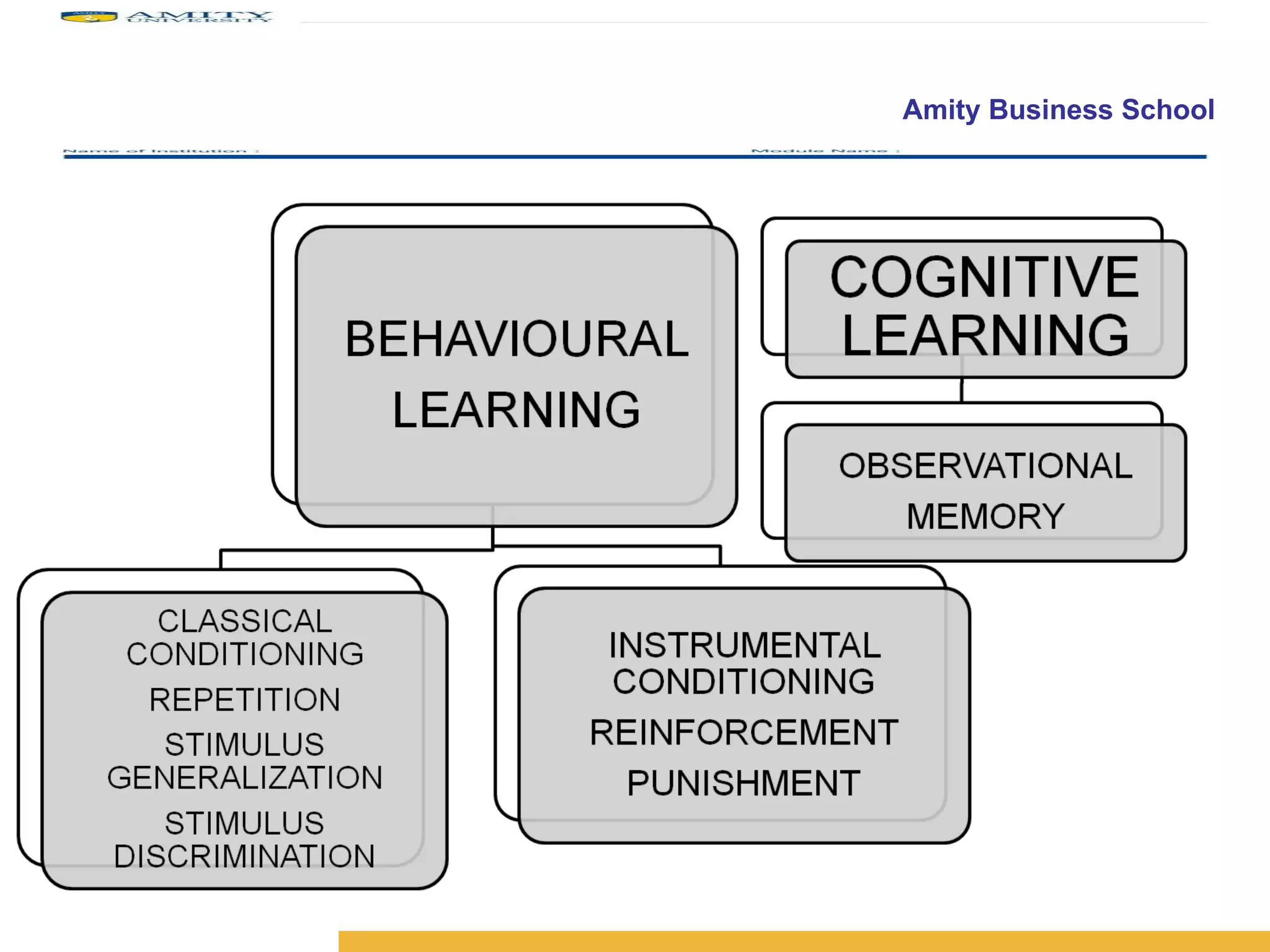
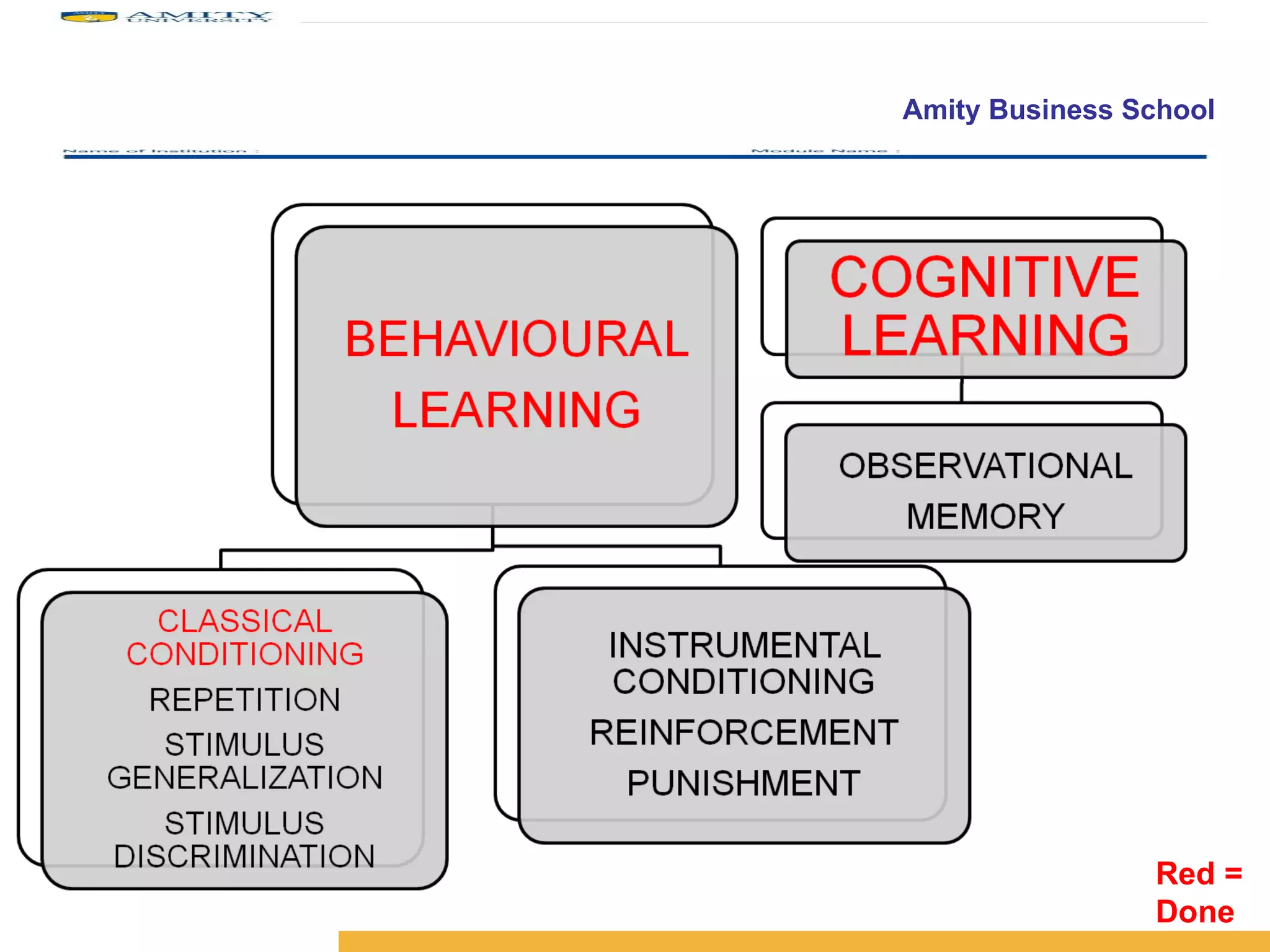
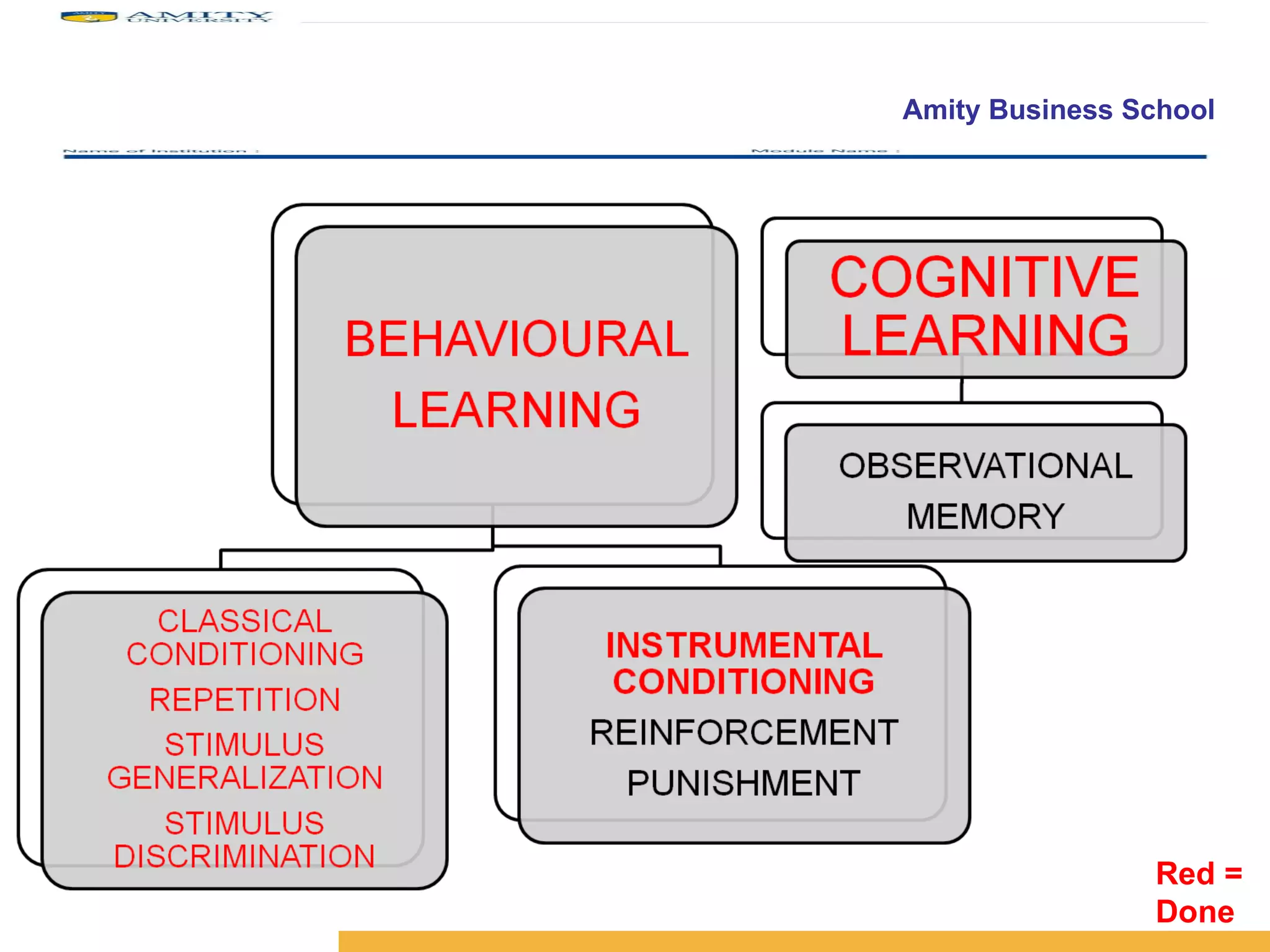
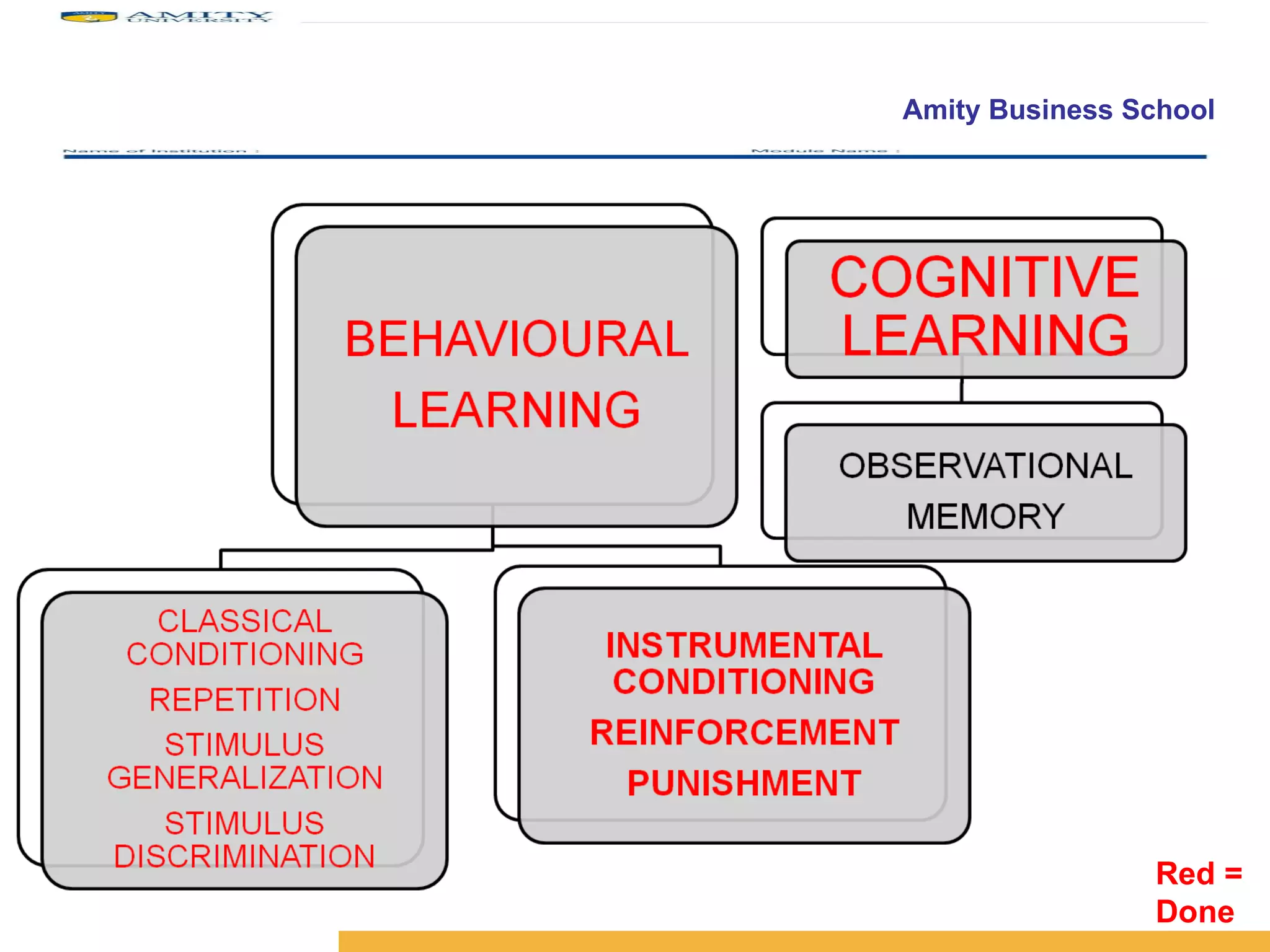
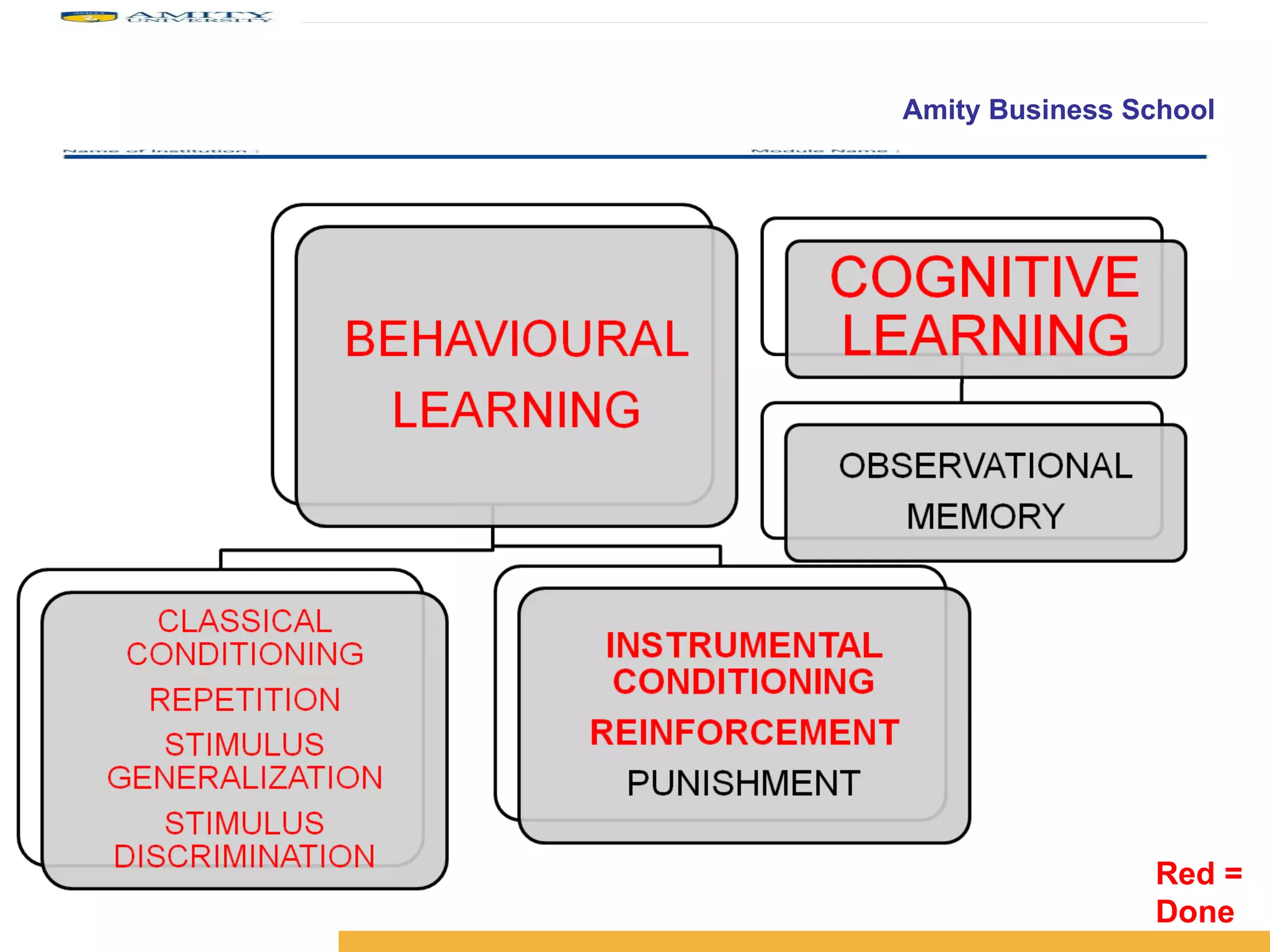
APPROACHES  TO LEARNING
 
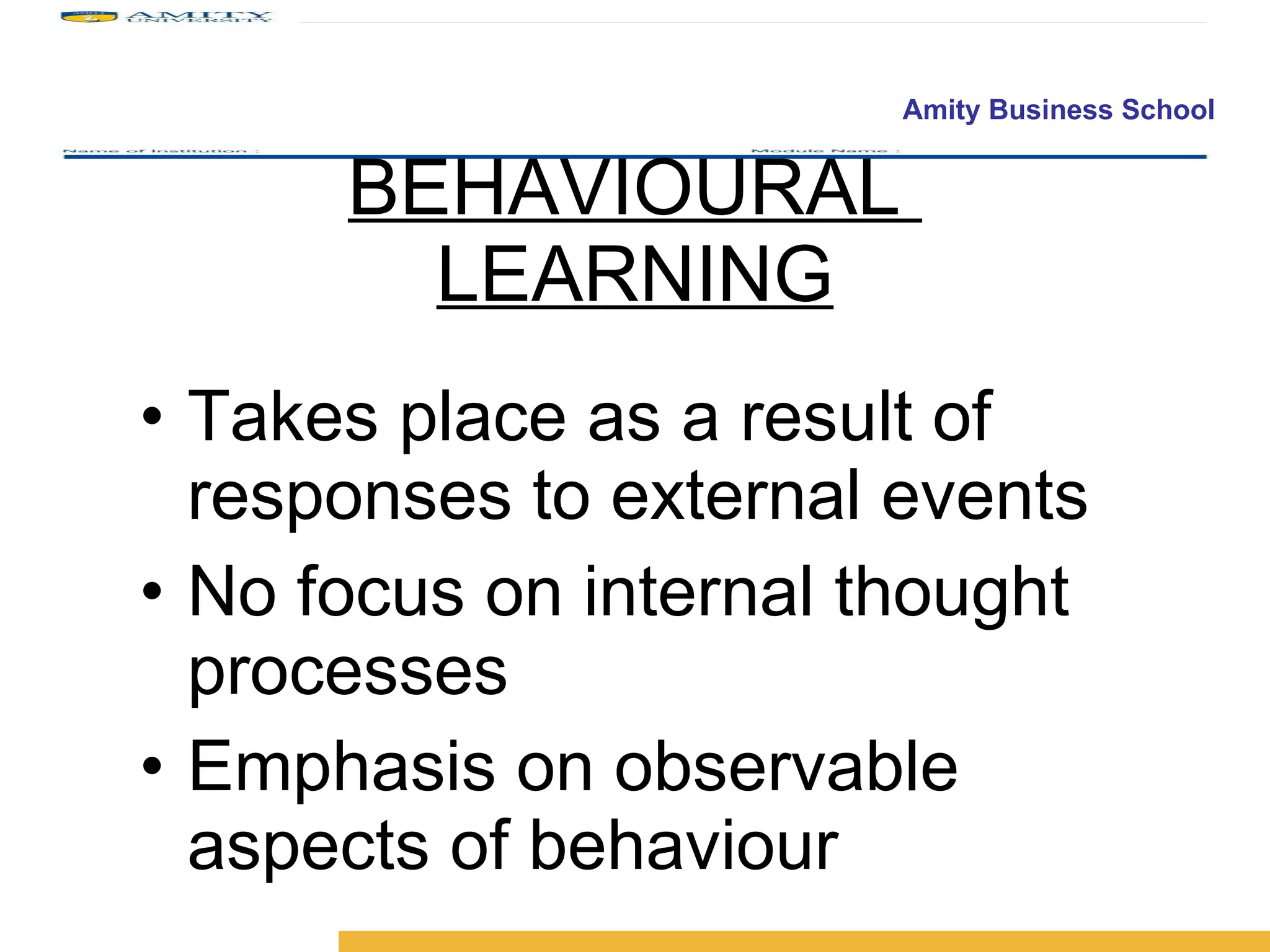
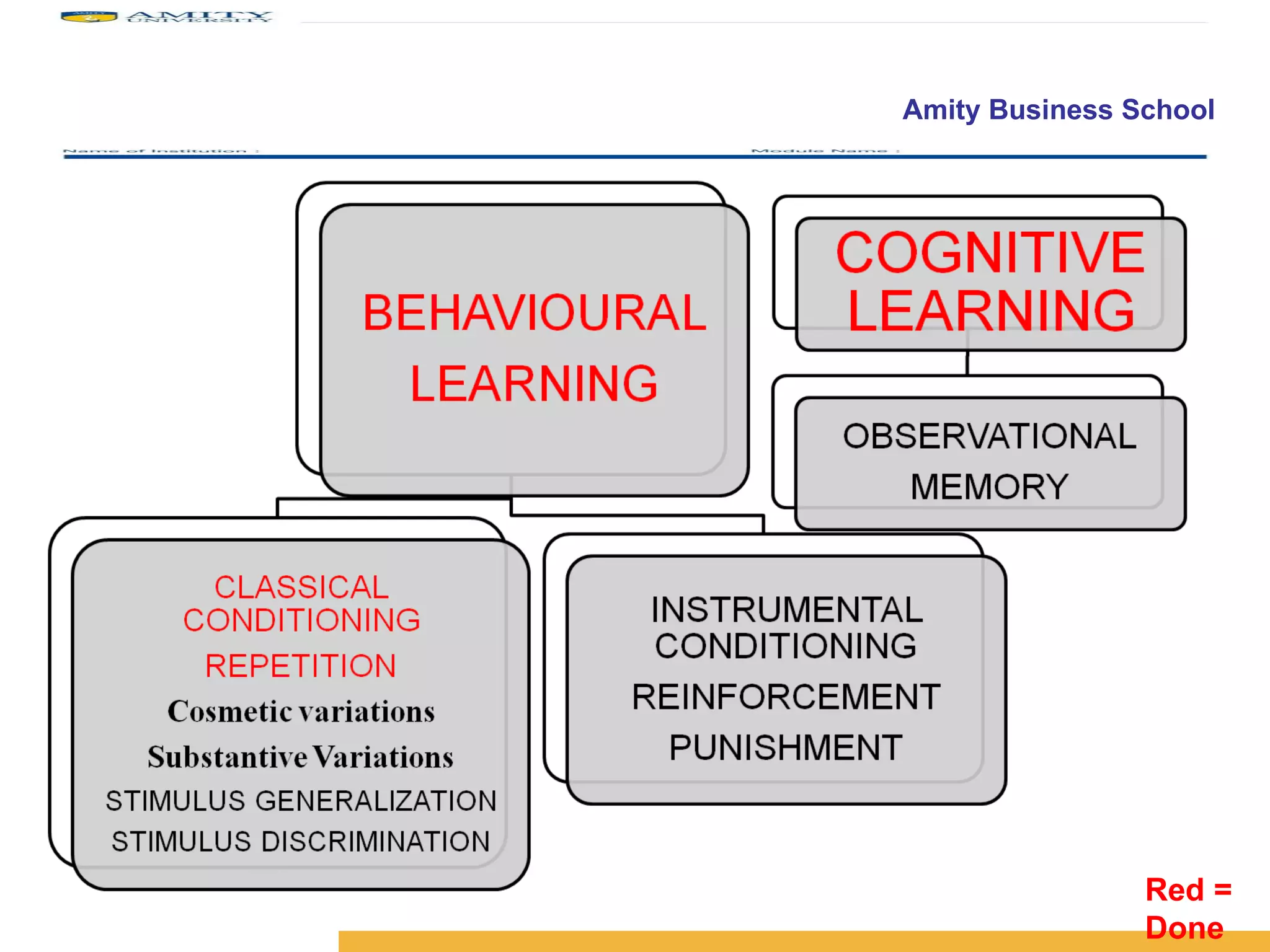
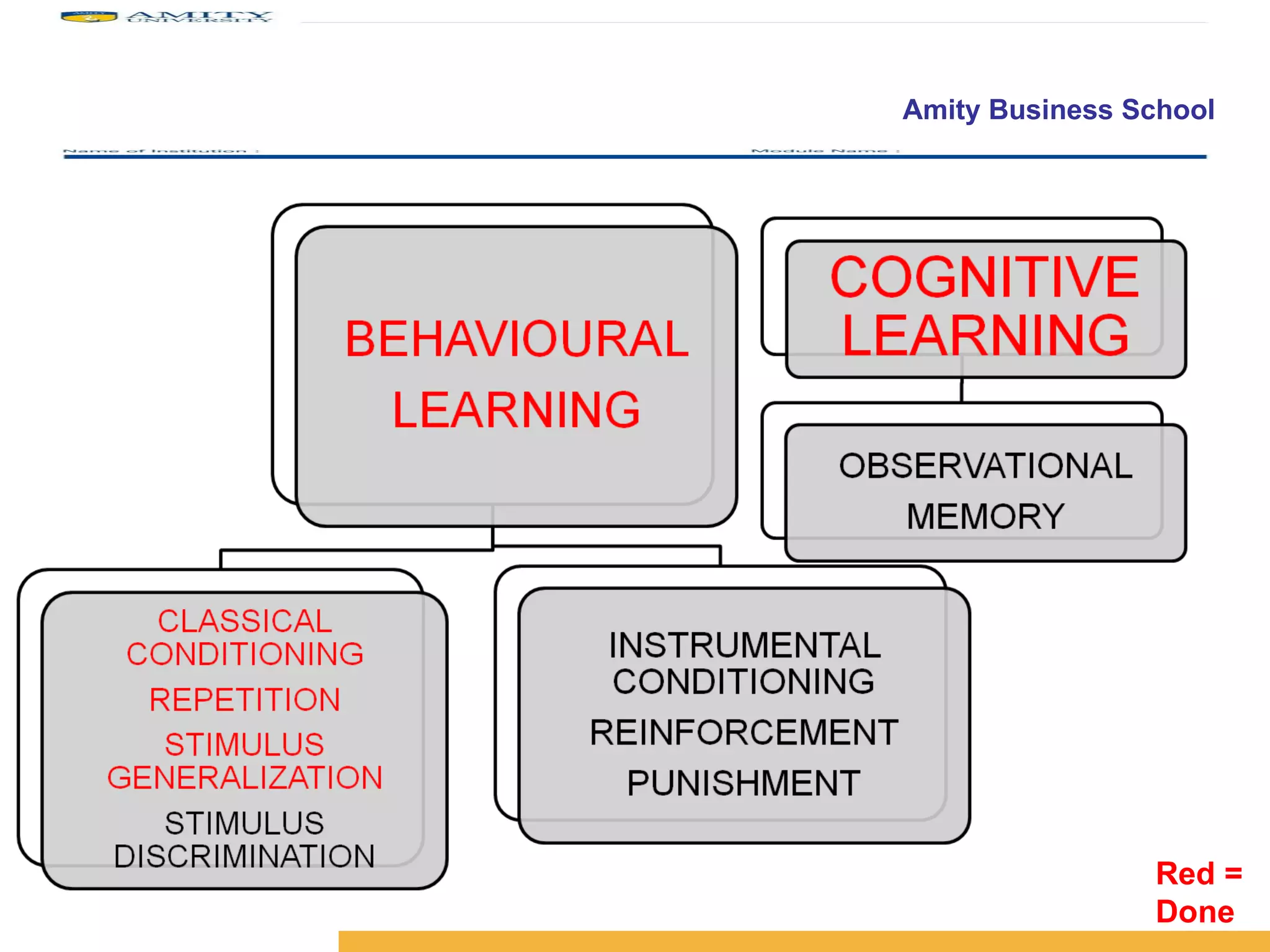
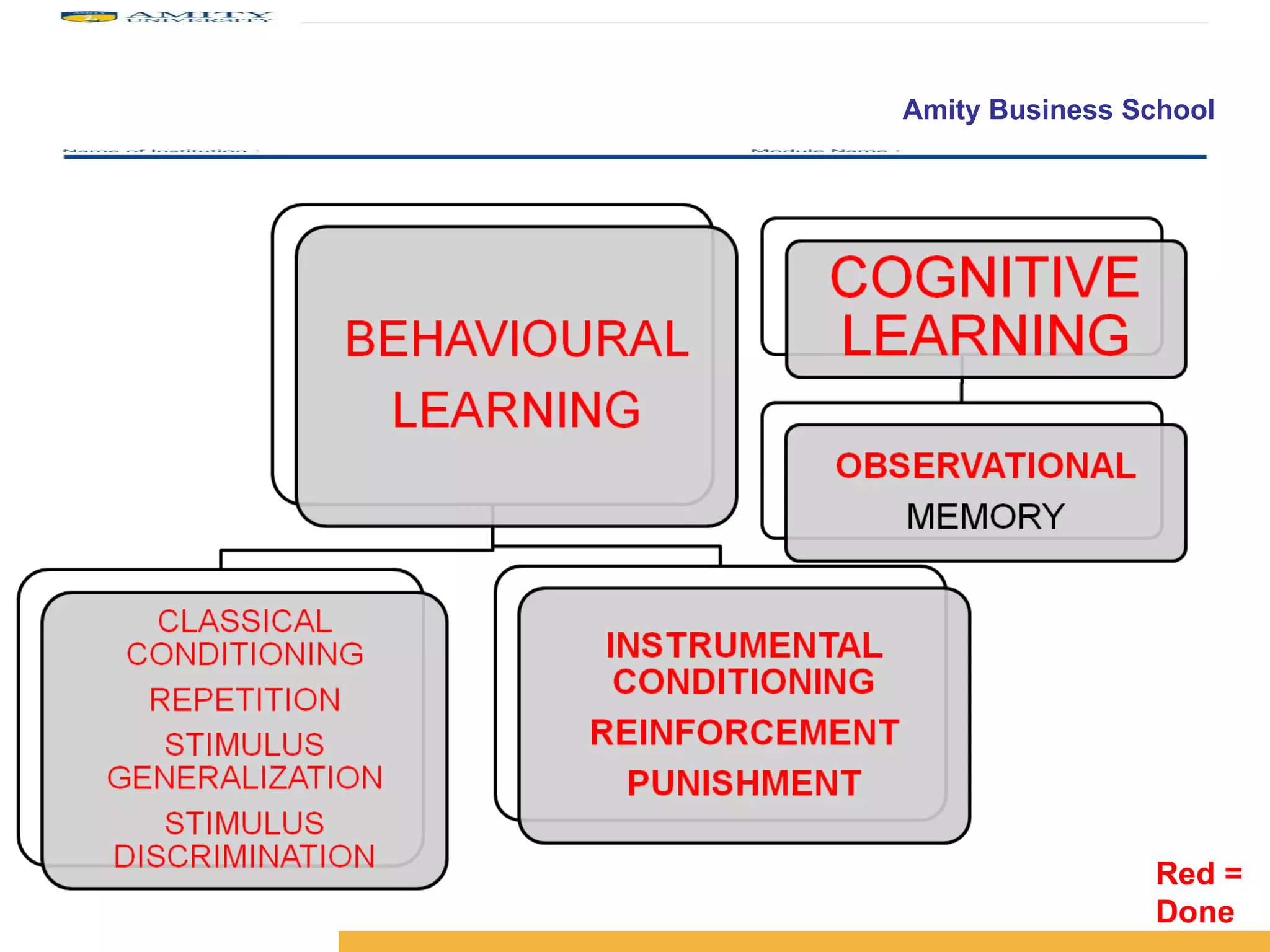
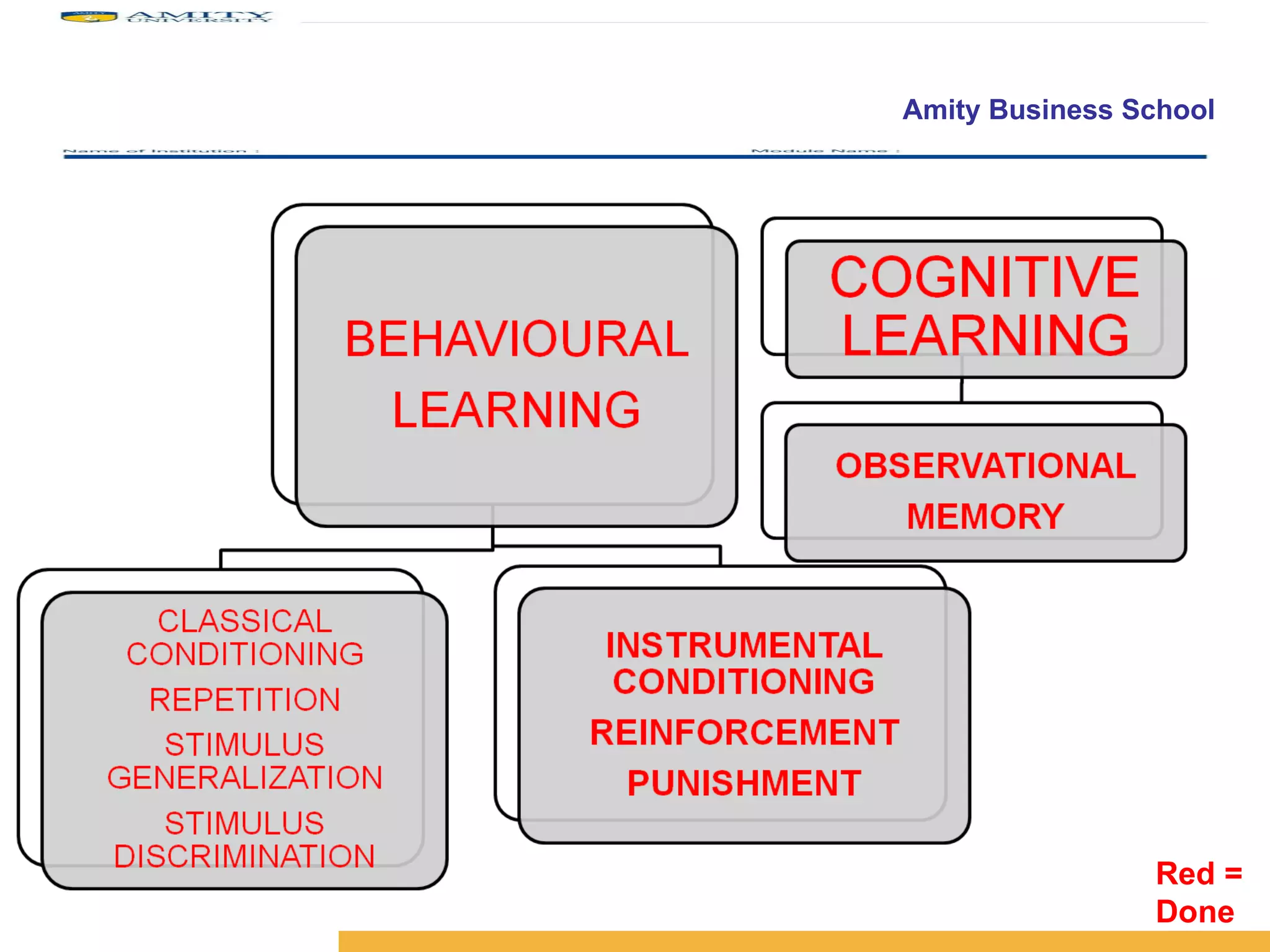
BEHAVIOURAL  LEARNING Takes place as a result of responses to external events  No focus on internal thought processes Emphasis on observable aspects of behaviour
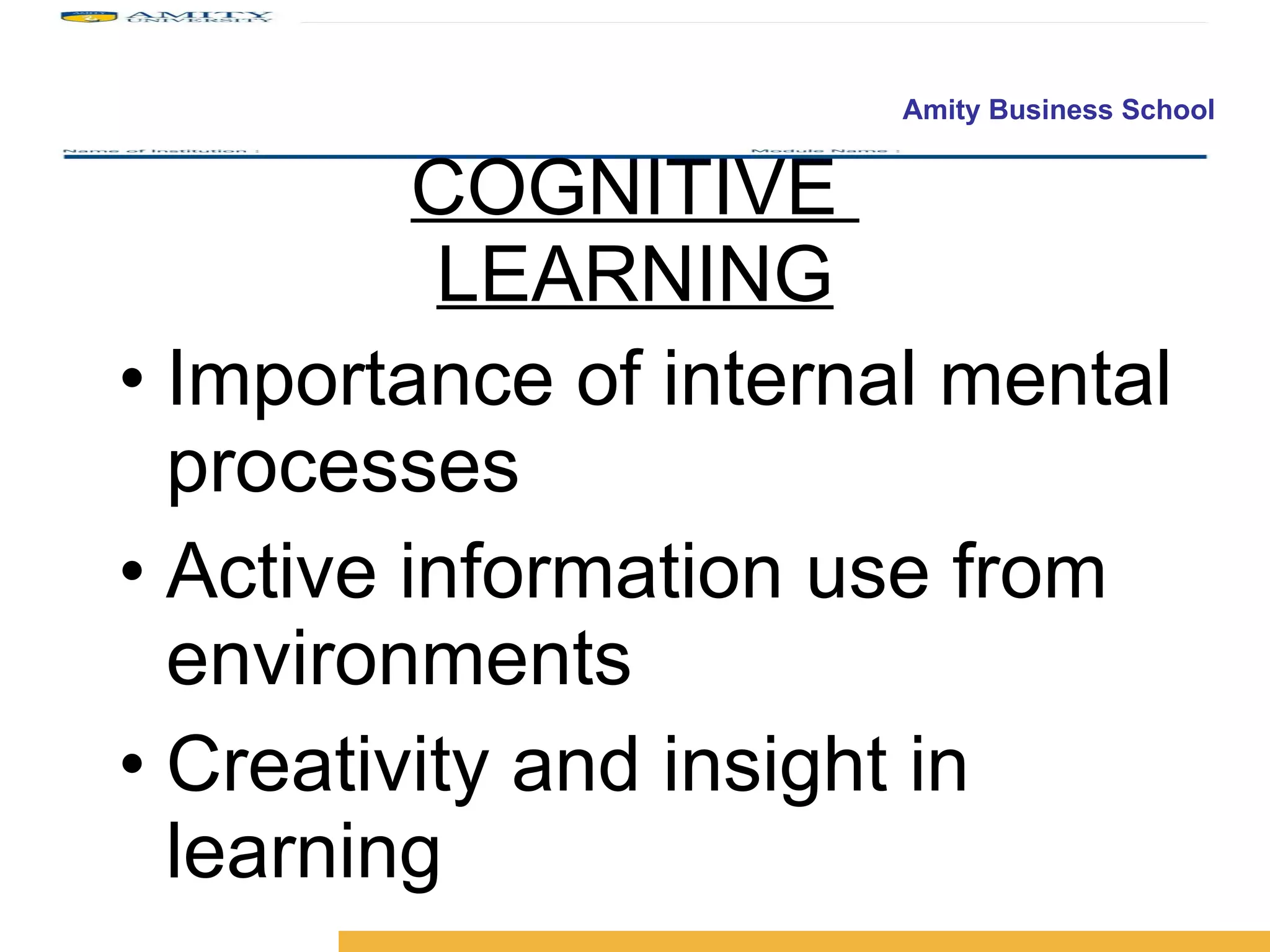
COGNITIVE  LEARNING Importance of internal mental processes Active information use from environments Creativity and insight in learning
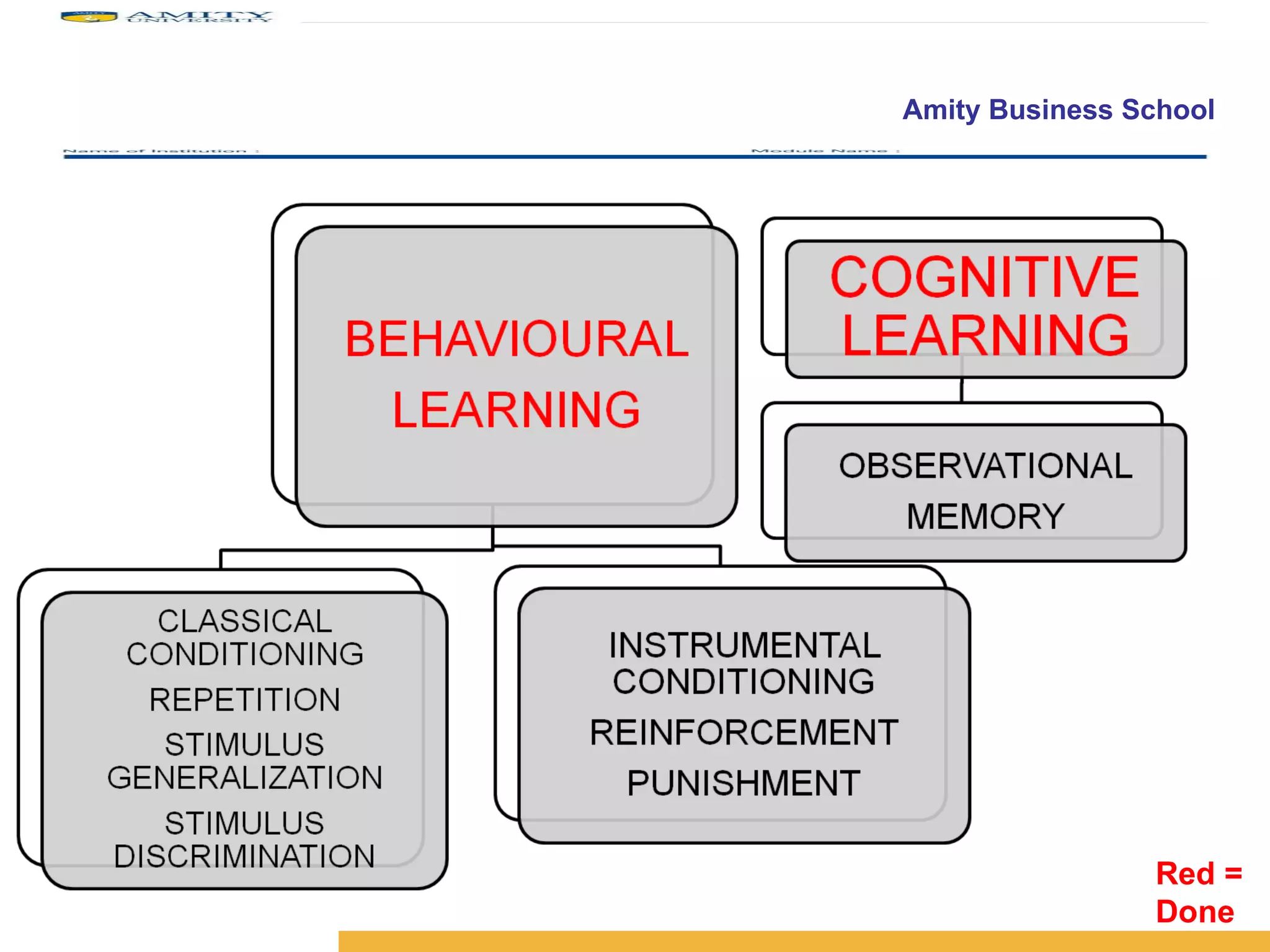
Red = Done
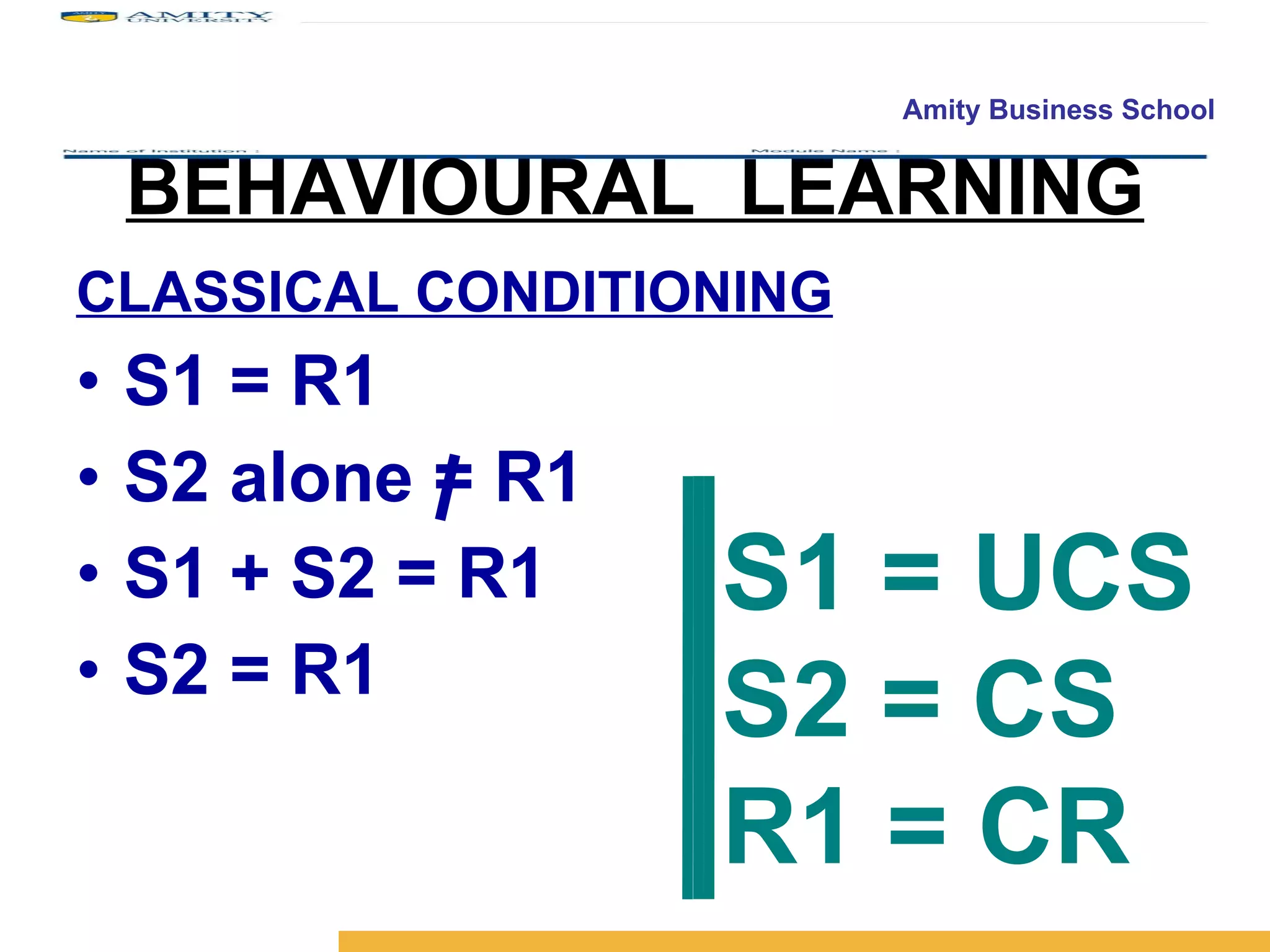
BEHAVIOURAL  LEARNING CLASSICAL CONDITIONING S1 = R1 S2 alone = R1 S1 + S2 = R1 S2 = R1 S1 = UCS S2 = CS R1 = CR
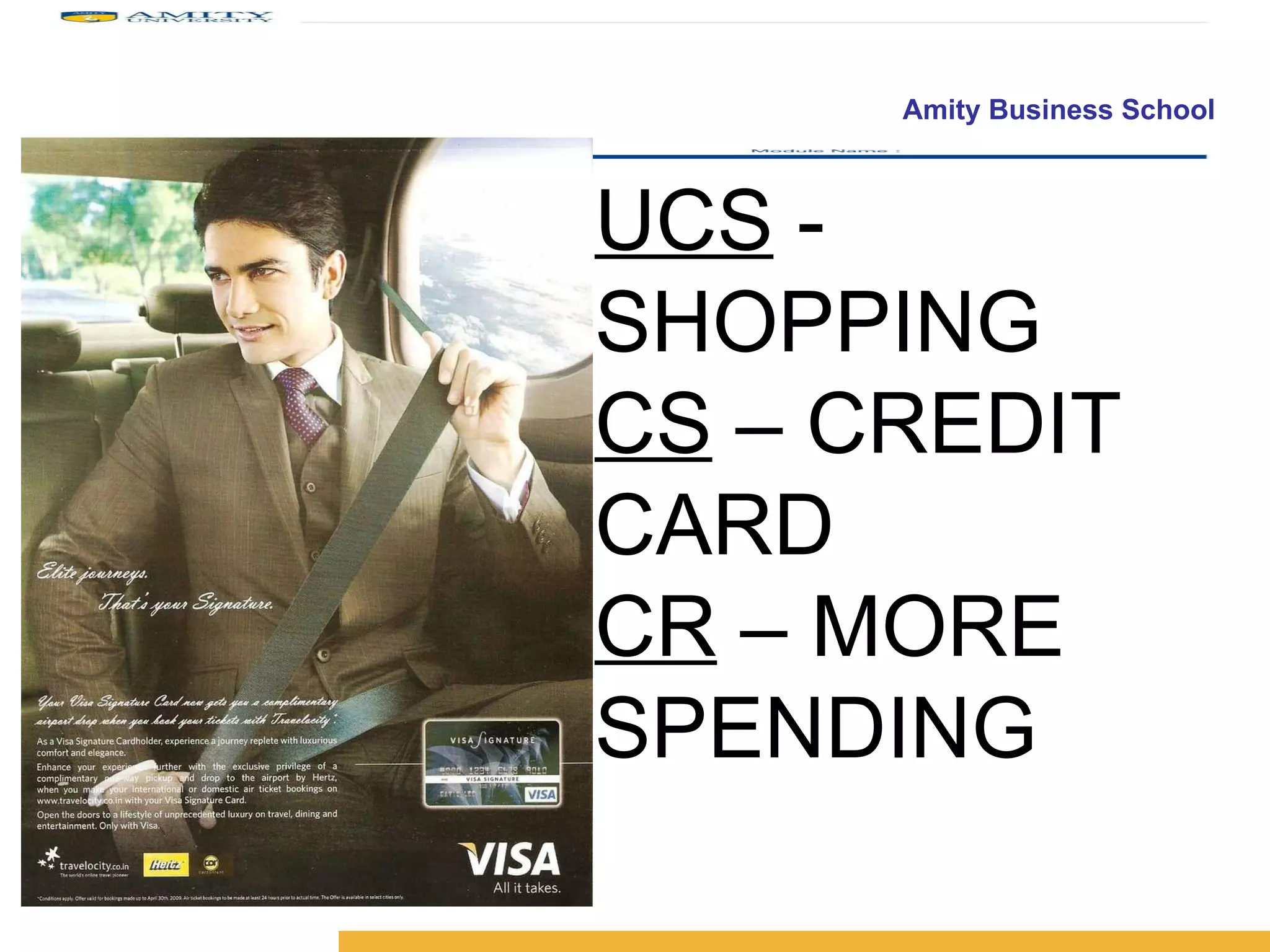
UCS  - SHOPPING CS  – CREDIT CARD CR  – MORE SPENDING
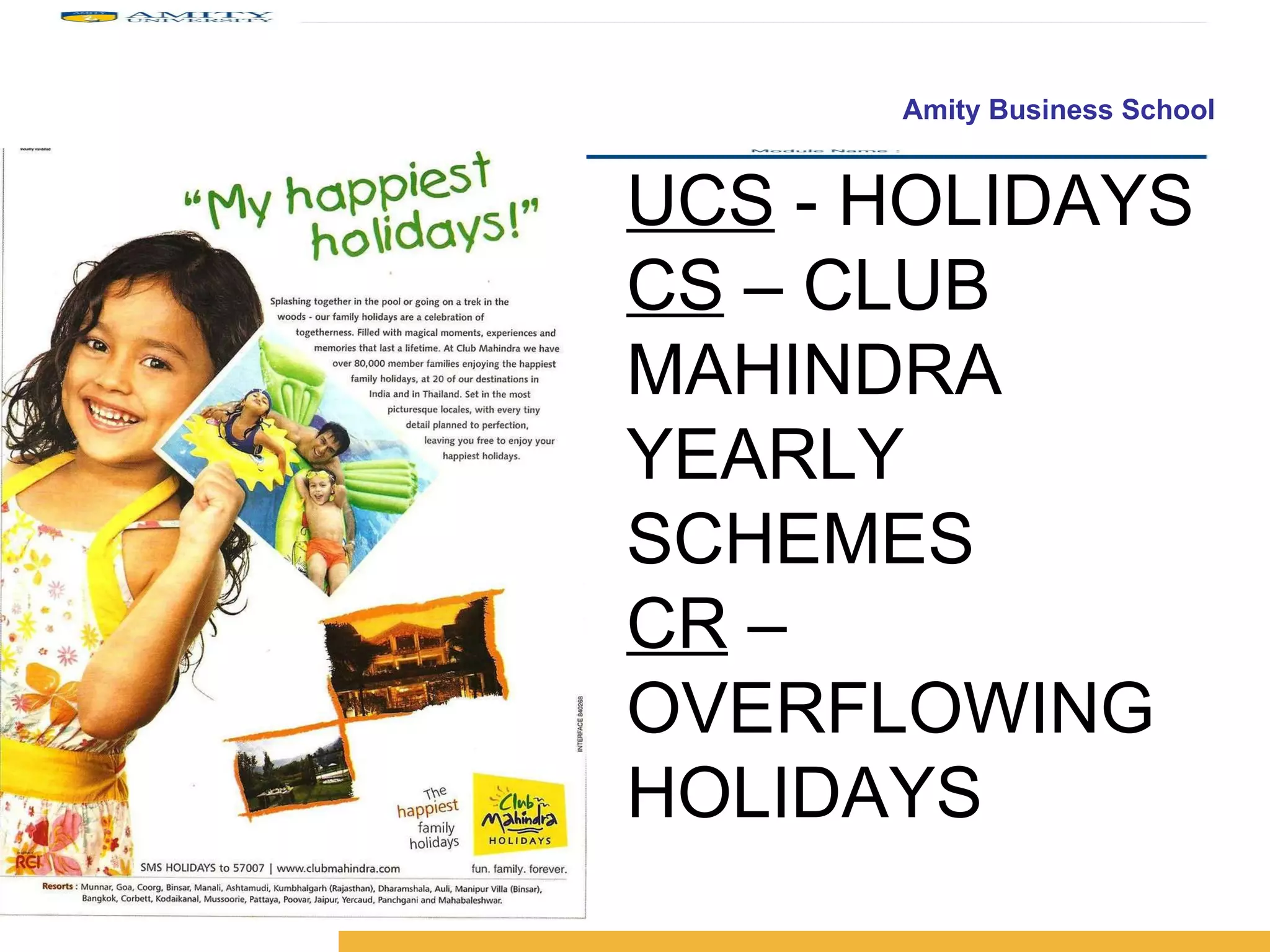
UCS  - HOLIDAYS CS  – CLUB MAHINDRA YEARLY SCHEMES CR  – OVERFLOWING HOLIDAYS
Red = Done
BEHAVIOURAL  LEARNING REPETITION Repeated exposures increases the strength of SR relationships and prevents decay too Lack of association leads to extinction and disappearance Increases strength of associations between CS and UCS and slows forgetting but over time may result in  advertising wear out.
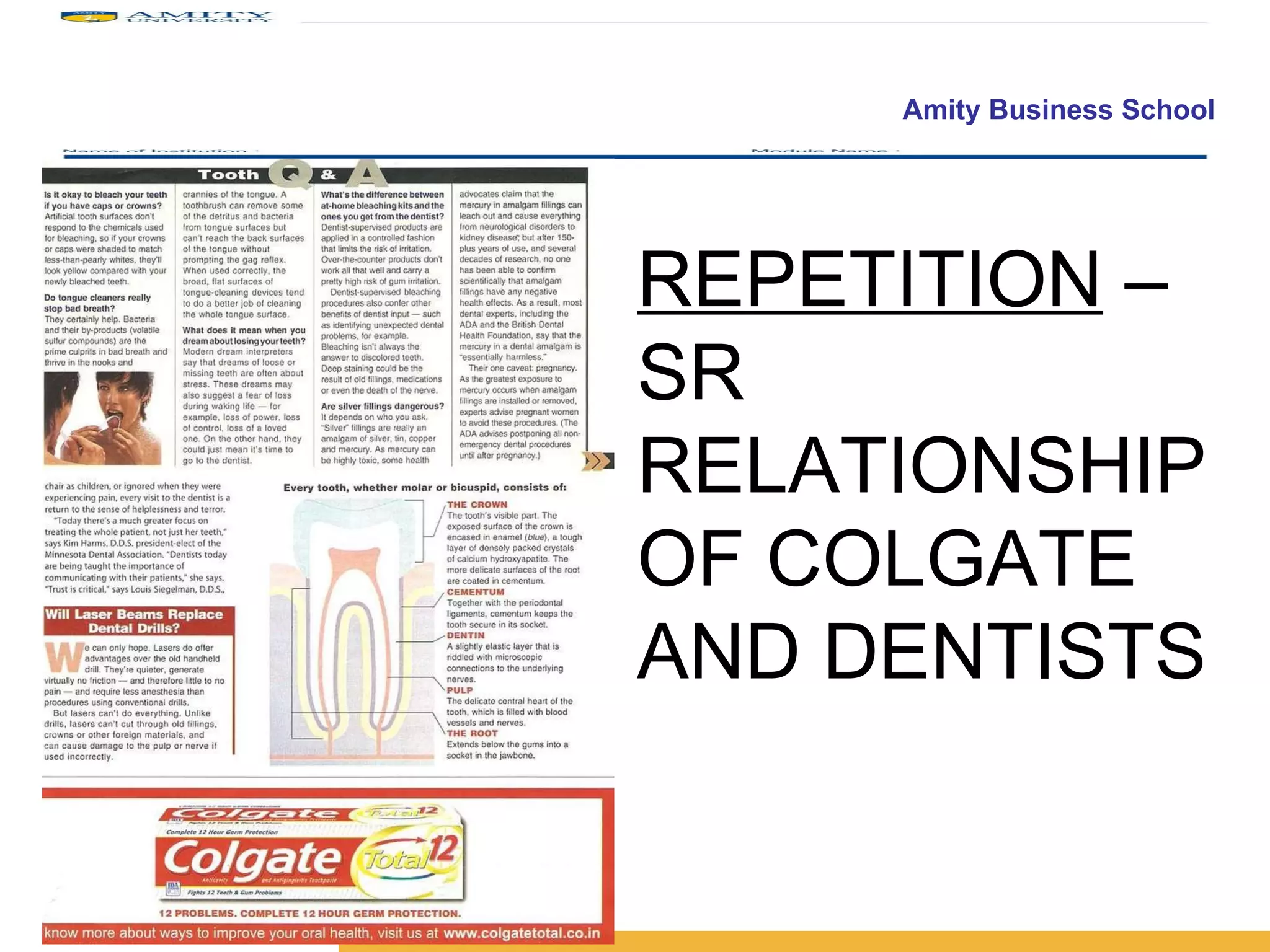
REPETITION  – SR RELATIONSHIP OF COLGATE AND DENTISTS
 
Red = Done
Cosmetic variations   reduce satiation like different backgrounds, spokespersons, etc Substantive Variations -  changes in advertisement contents across different versions Stimulus Generalization Stimulus Discrimination
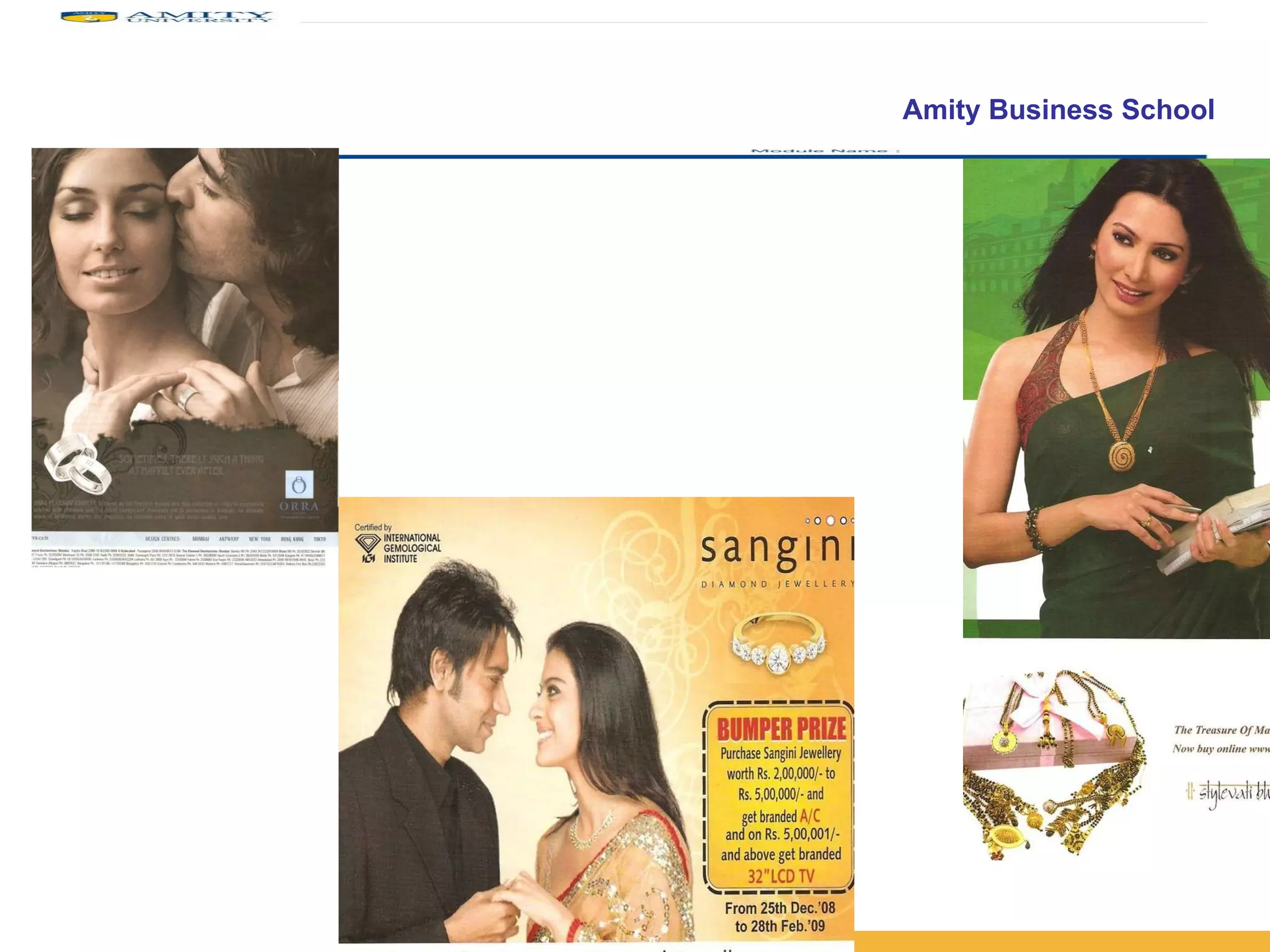
BEHAVIOURAL  LEARNING STIMULUS GENERALIZATION Stimuli similar to original CS evokes similar CR (Halo Effect) Piggybacking
 
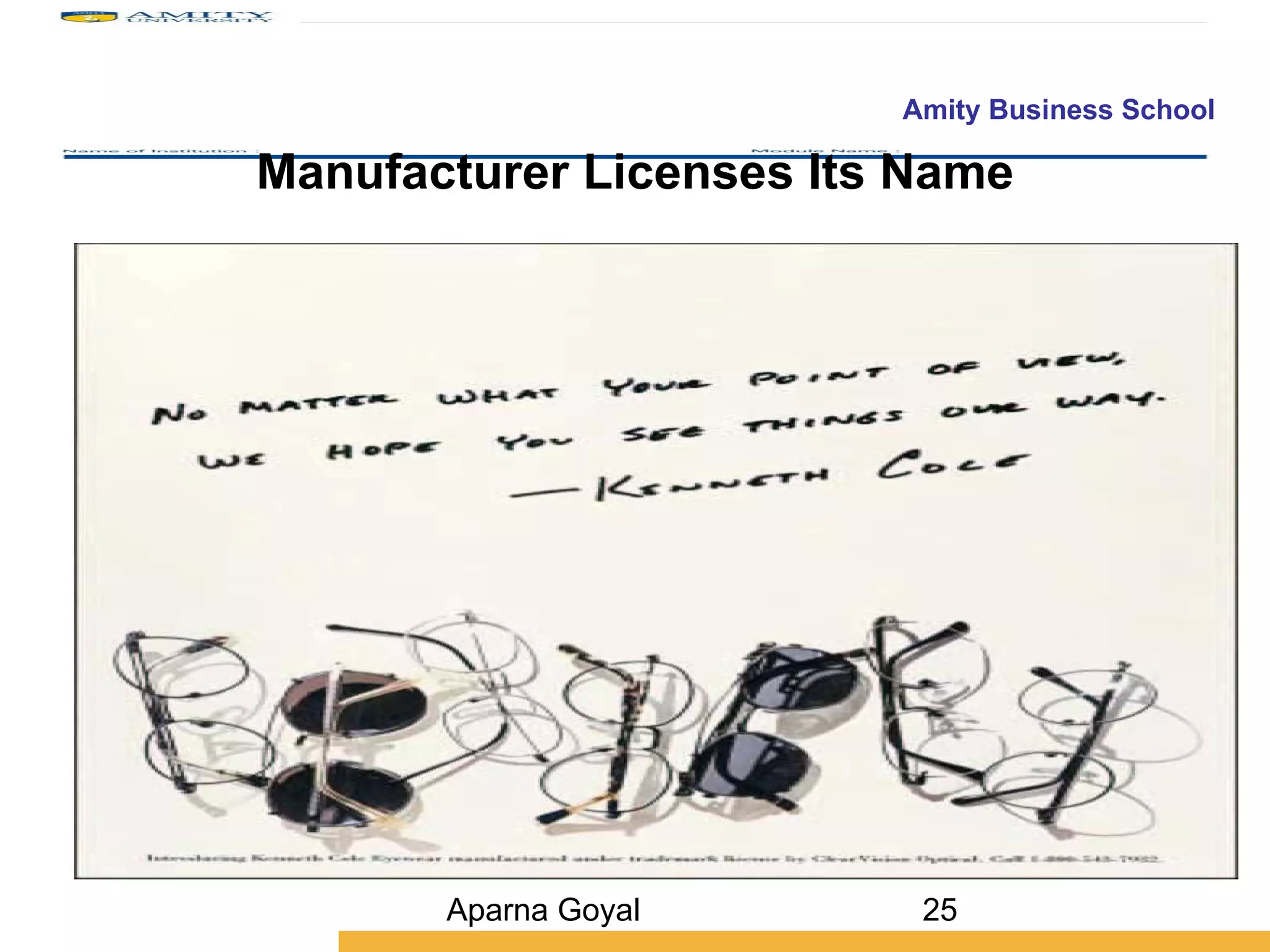
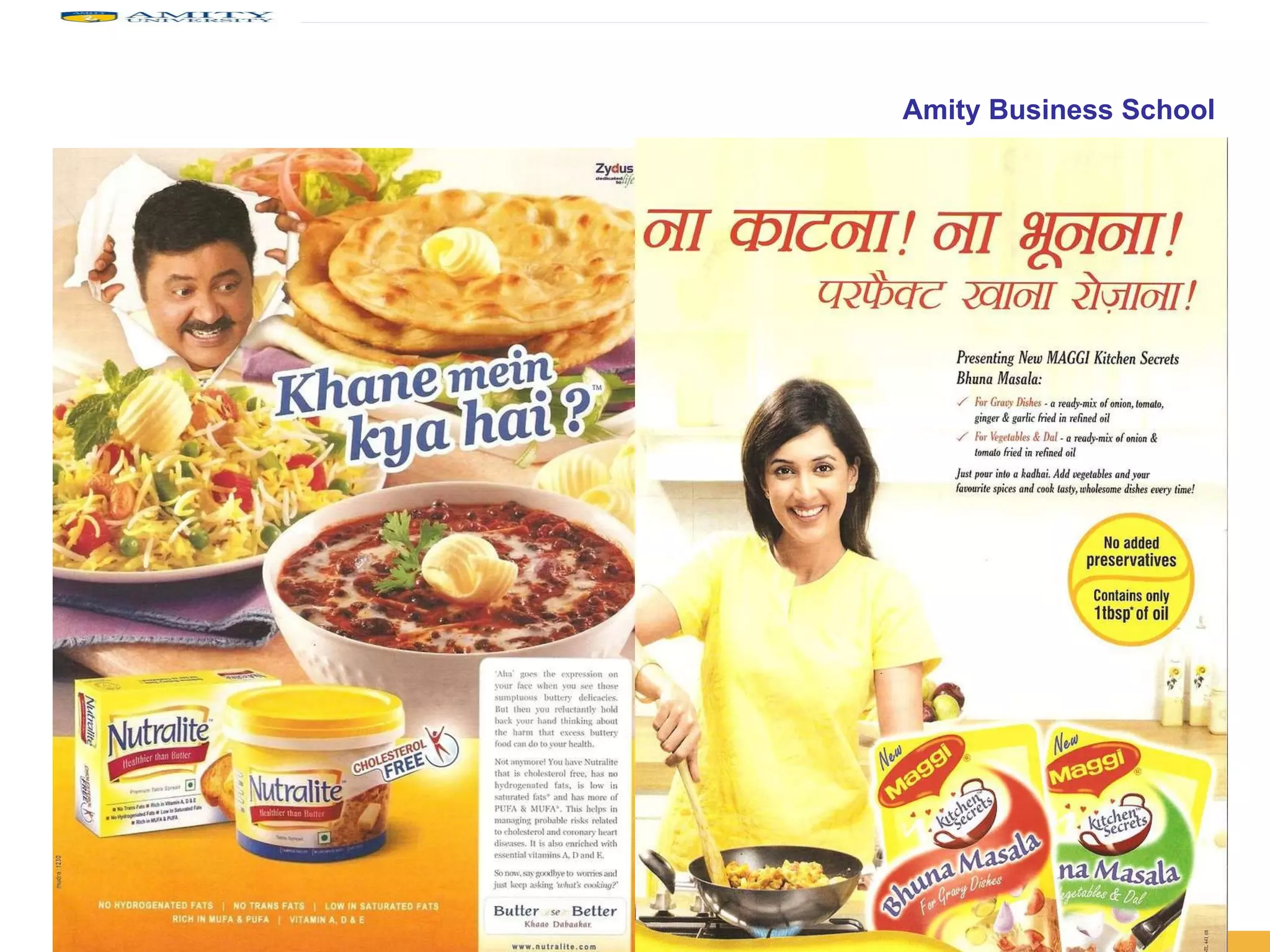
Stimulus Generalization (SG) Making the same response to slightly different stimuli. The inability to perceive differences between slightly dissimilar stimuli. Marketing Strategies Me- To products Product Line Extensions Family Branding Licensing Aparna Goyal
Manufacturer Licenses Its Name Aparna Goyal
Red = Done
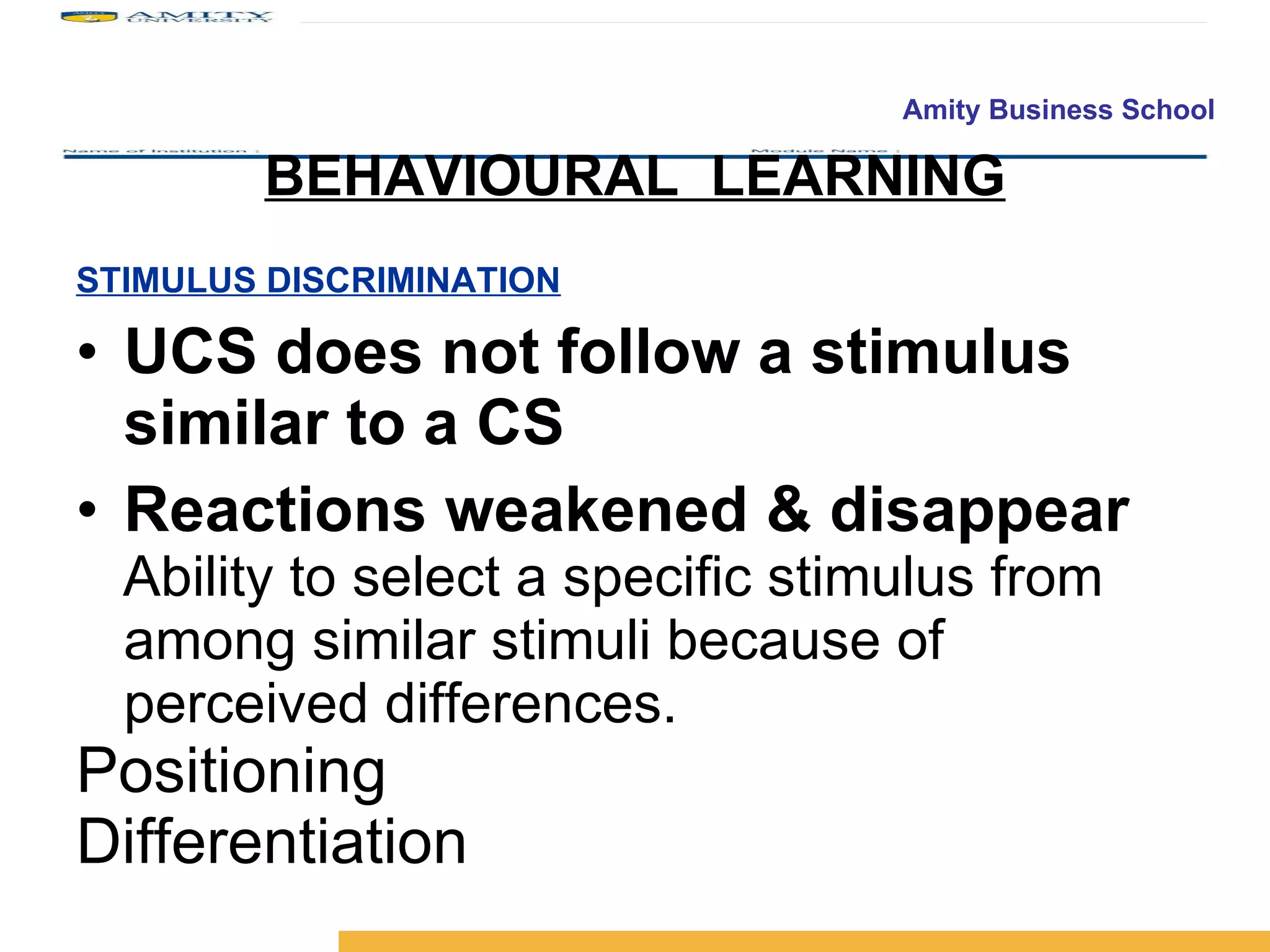
STIMULUS DISCRIMINATION UCS does not follow a stimulus similar to a CS Reactions weakened & disappear Ability to select a specific stimulus from among similar stimuli because of perceived differences. Positioning Differentiation BEHAVIOURAL  LEARNING
 
Red = Done
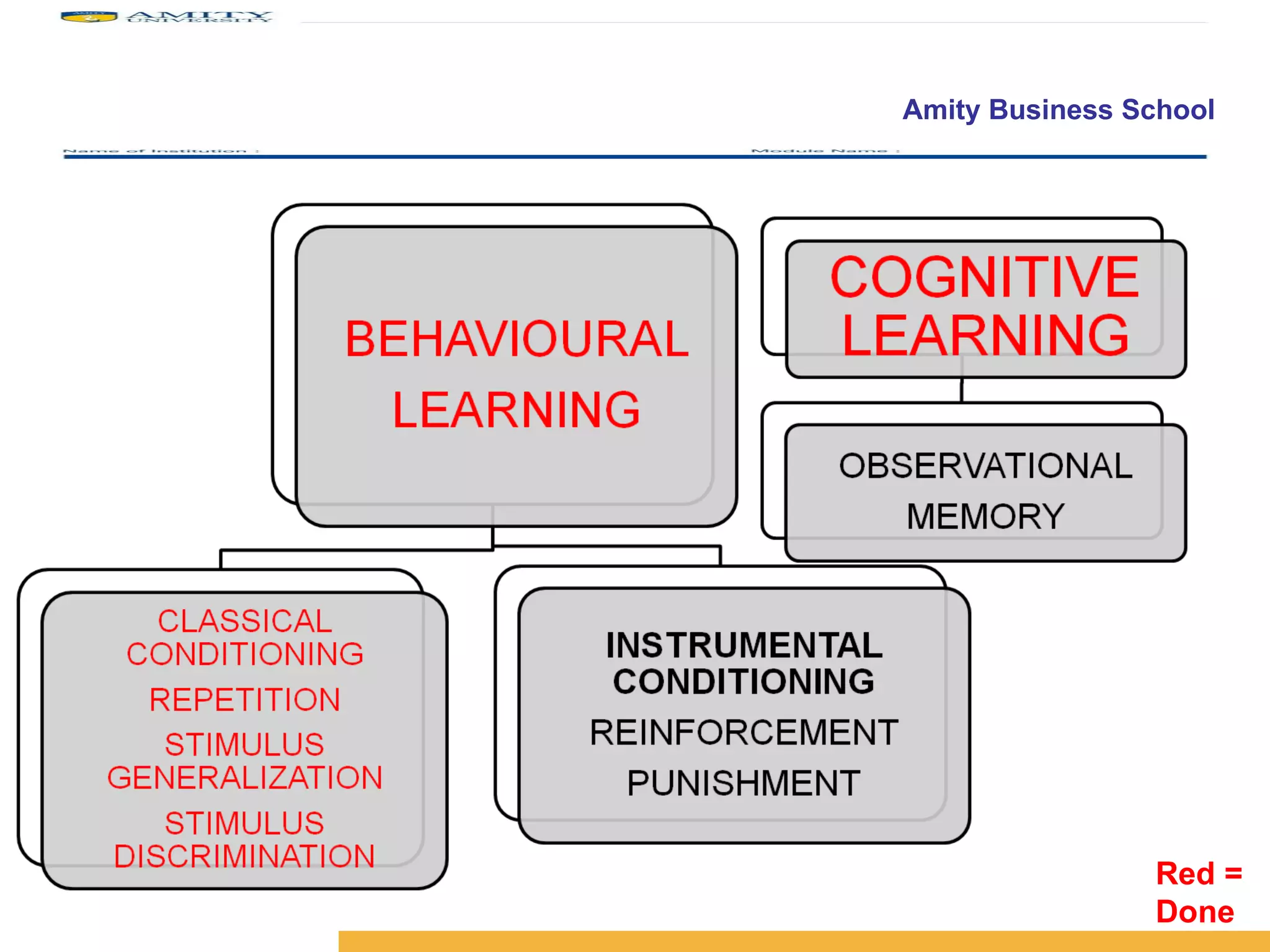
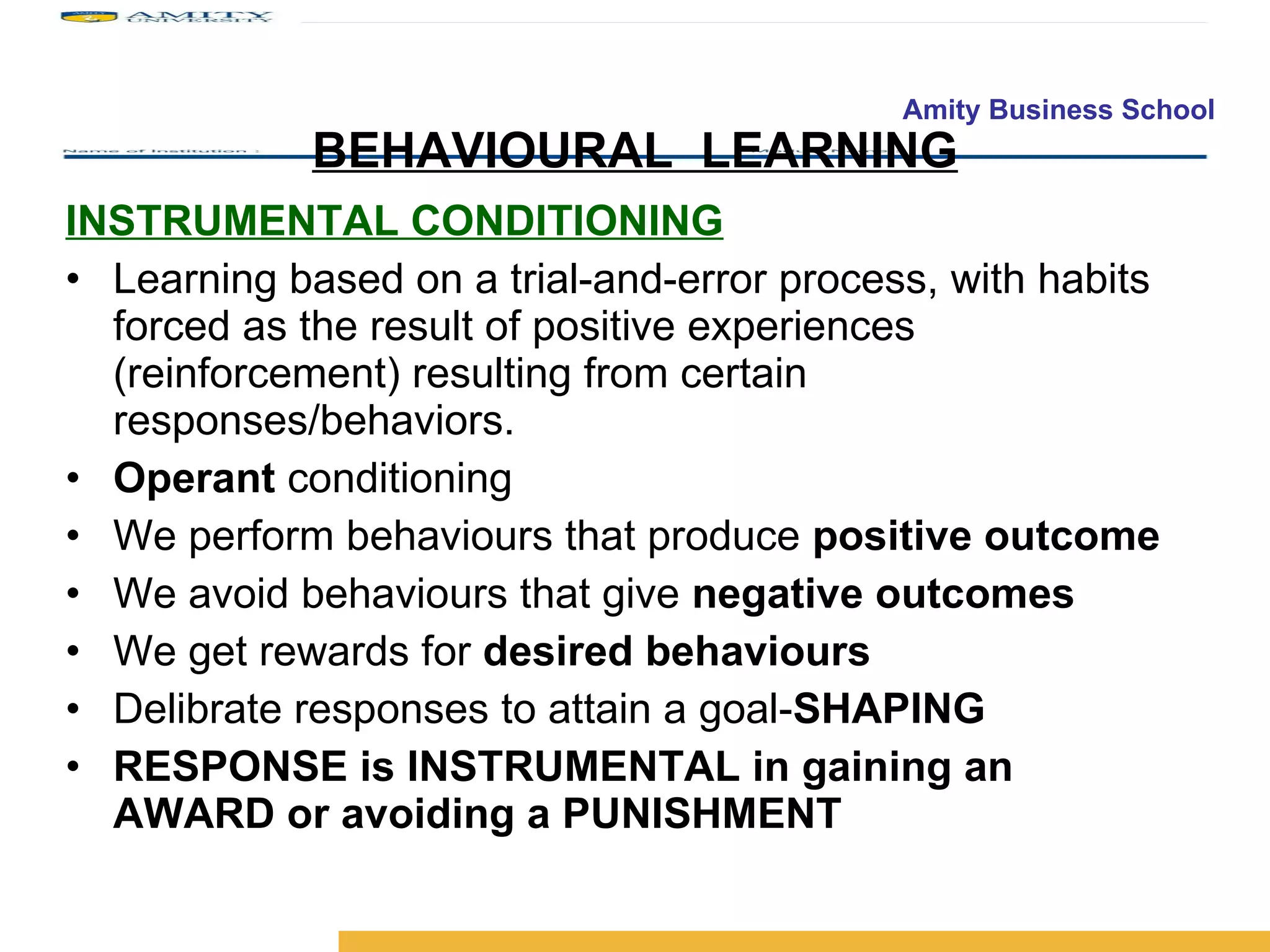
BEHAVIOURAL  LEARNING INSTRUMENTAL CONDITIONING Learning based on a trial-and-error process, with habits forced as the result of positive experiences (reinforcement) resulting from certain responses/behaviors. Operant  conditioning We perform behaviours that produce  positive outcome We avoid behaviours that give  negative outcomes We get rewards for  desired behaviours Delibrate responses to attain a goal- SHAPING RESPONSE is INSTRUMENTAL in gaining an AWARD or avoiding a PUNISHMENT
 
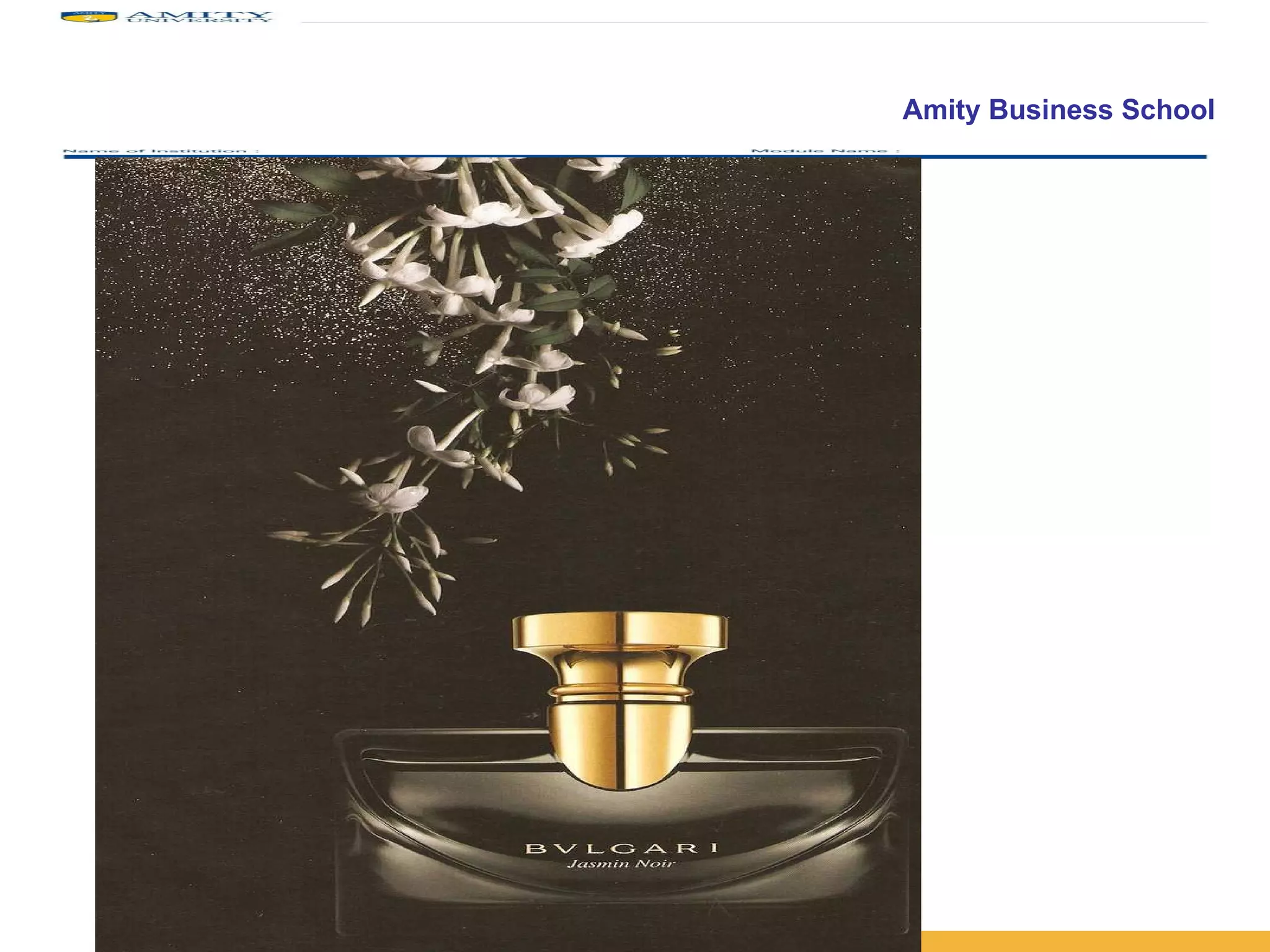
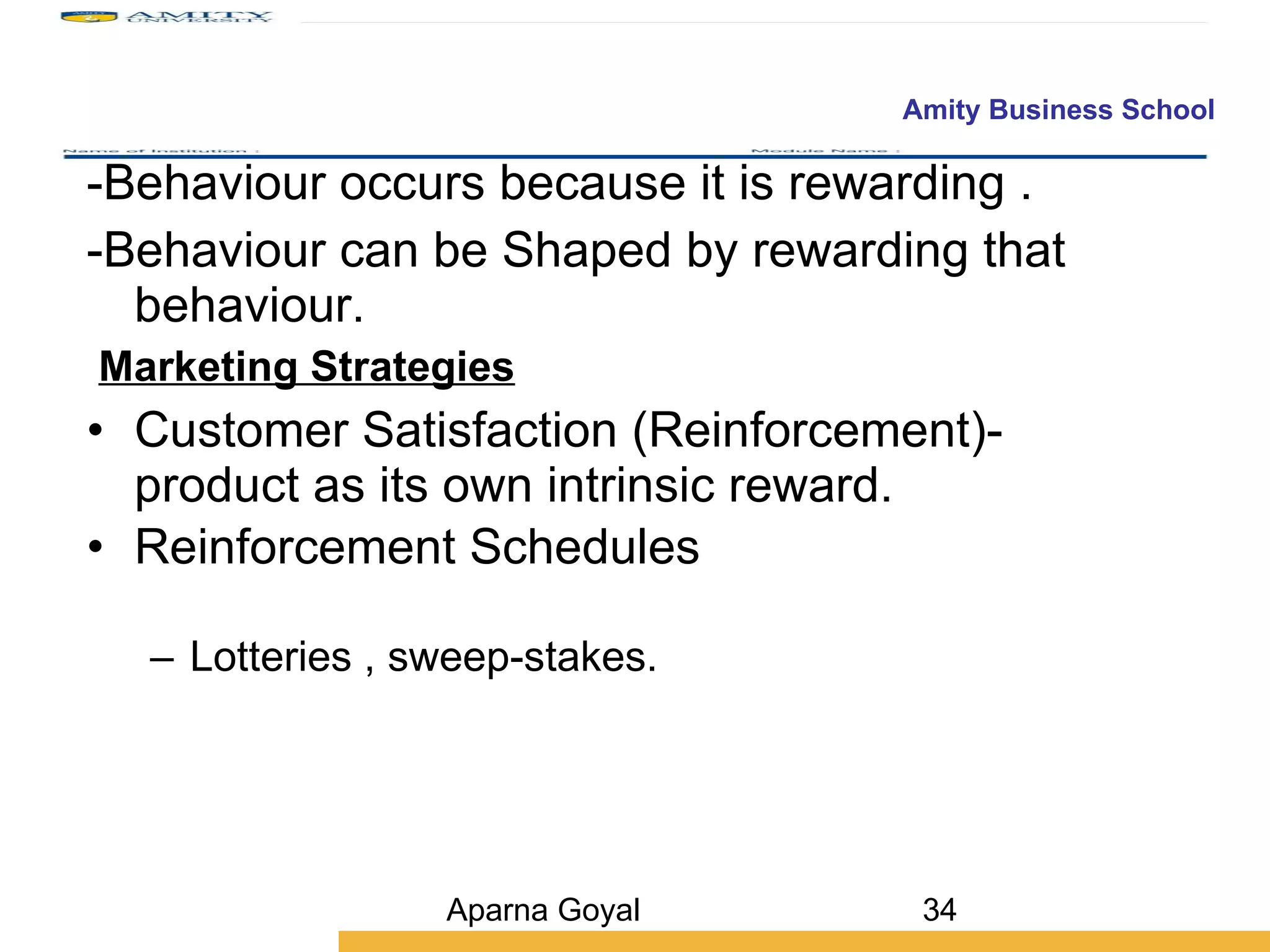
-Behaviour occurs because it is rewarding . -Behaviour can be Shaped by rewarding that behaviour. Marketing Strategies   Customer Satisfaction (Reinforcement)- product as its own intrinsic reward. Reinforcement Schedules Lotteries , sweep-stakes. Aparna Goyal
Red = Done
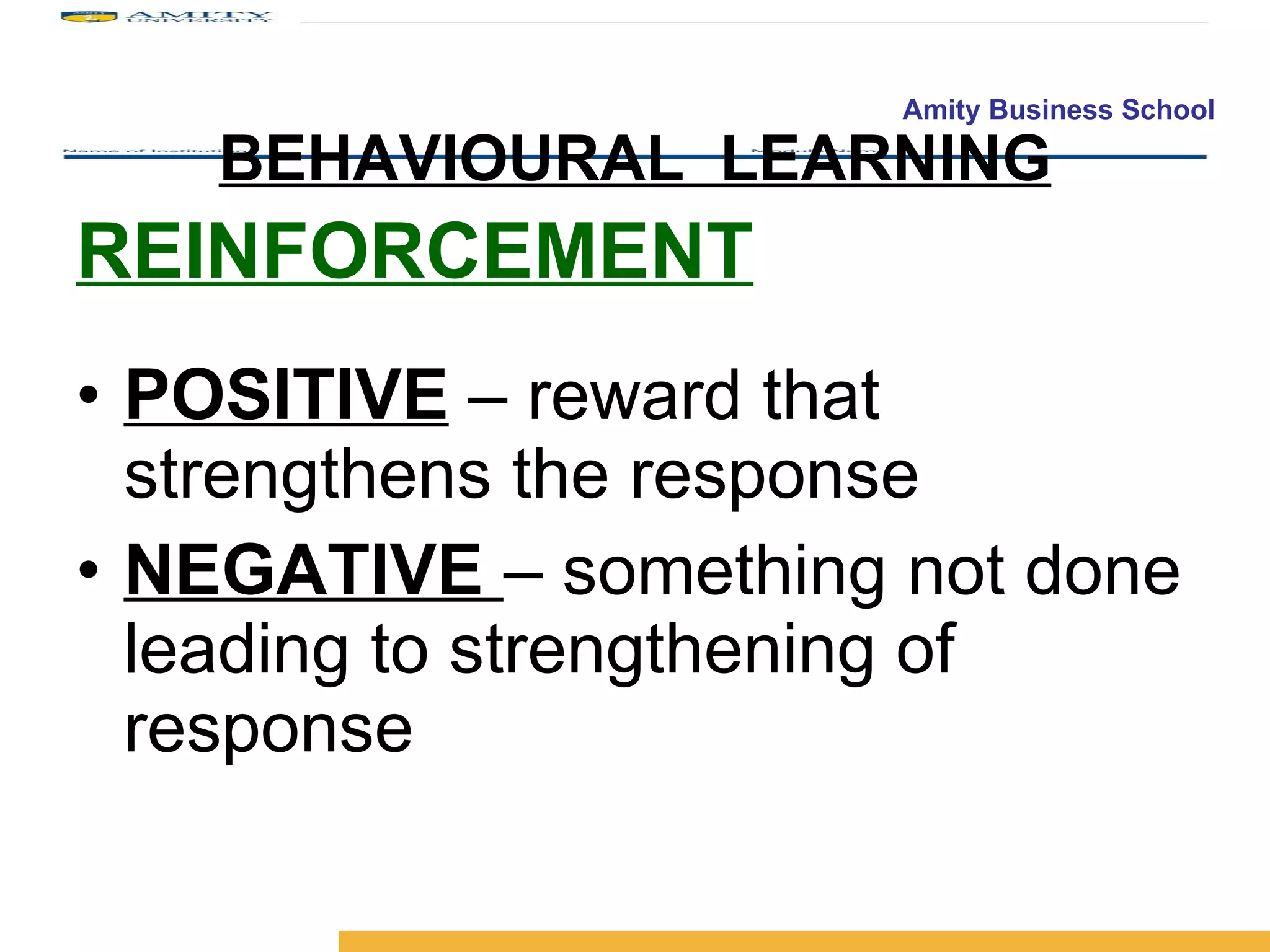
BEHAVIOURAL  LEARNING REINFORCEMENT POSITIVE  – reward that strengthens the response NEGATIVE  – something not done leading to strengthening of response
 
Red = Done
BEHAVIOURAL  LEARNING PUNISHMENT Unpleasant events follow a response
 
Red = Done
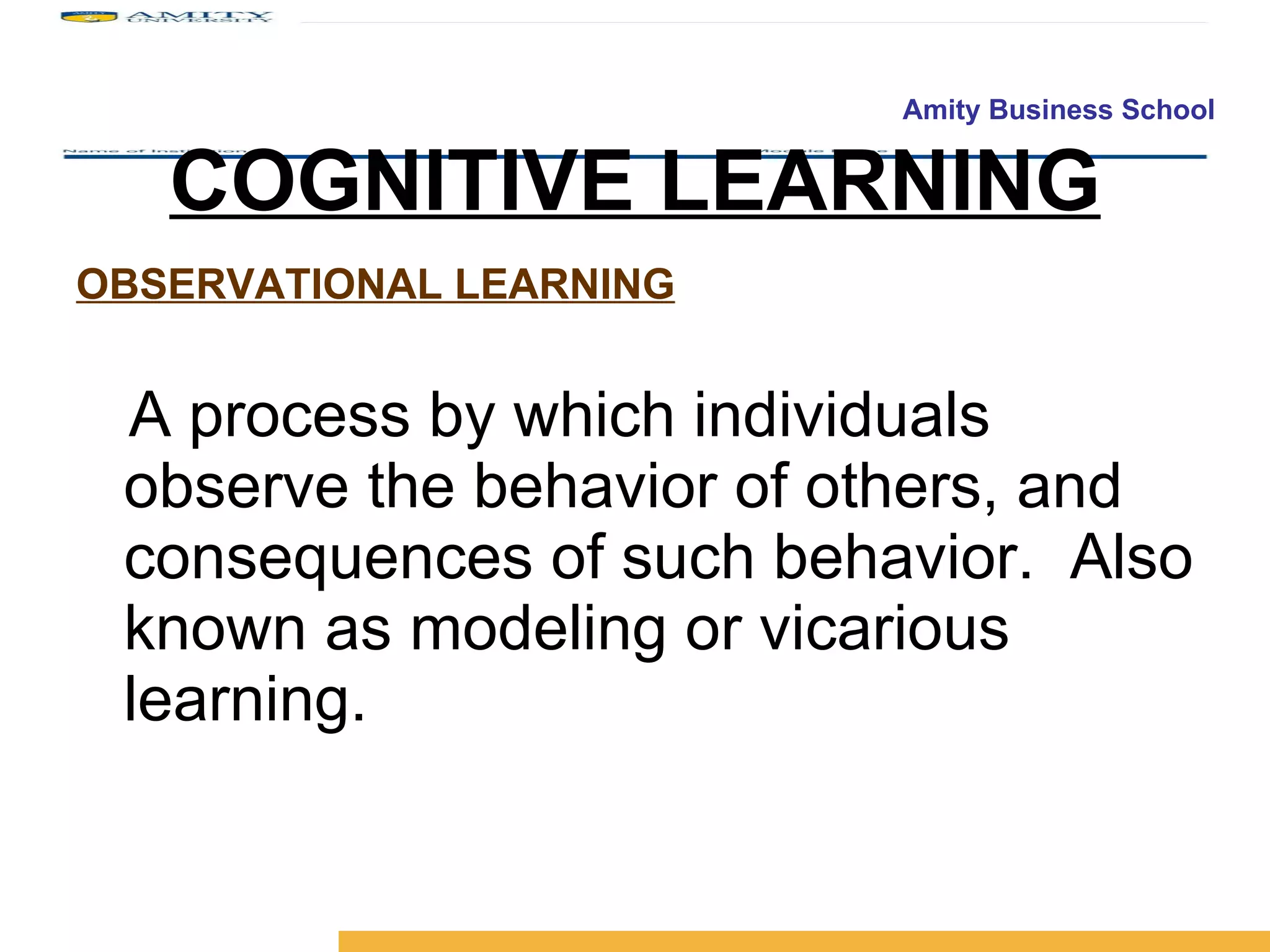
COGNITIVE LEARNING OBSERVATIONAL LEARNING A process by which individuals observe the behavior of others, and consequences of such behavior.  Also known as modeling or   vicarious learning.
 
Red = Done
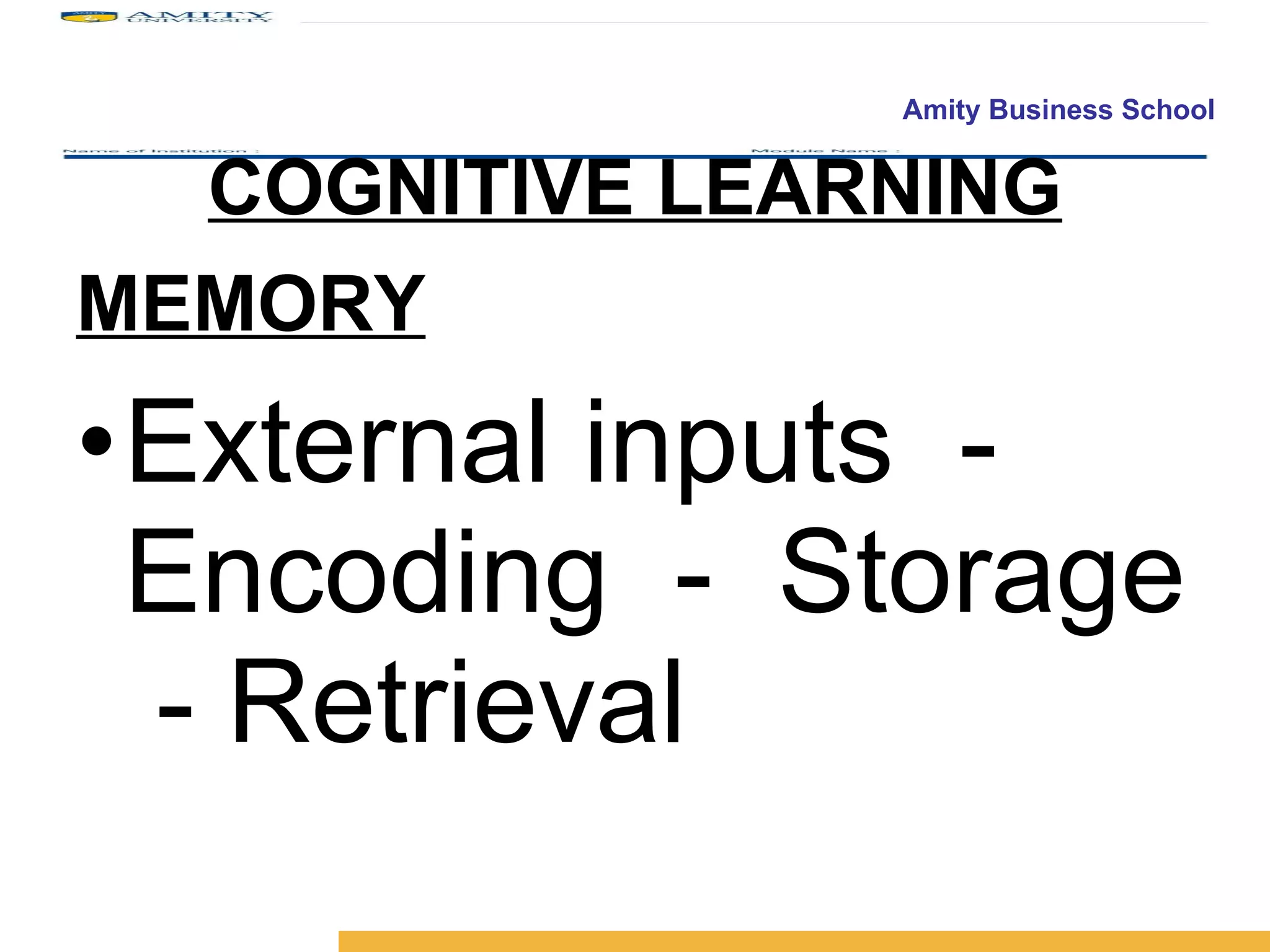
COGNITIVE LEARNING MEMORY External inputs  -  Encoding  -  Storage  - Retrieval
Red = Done
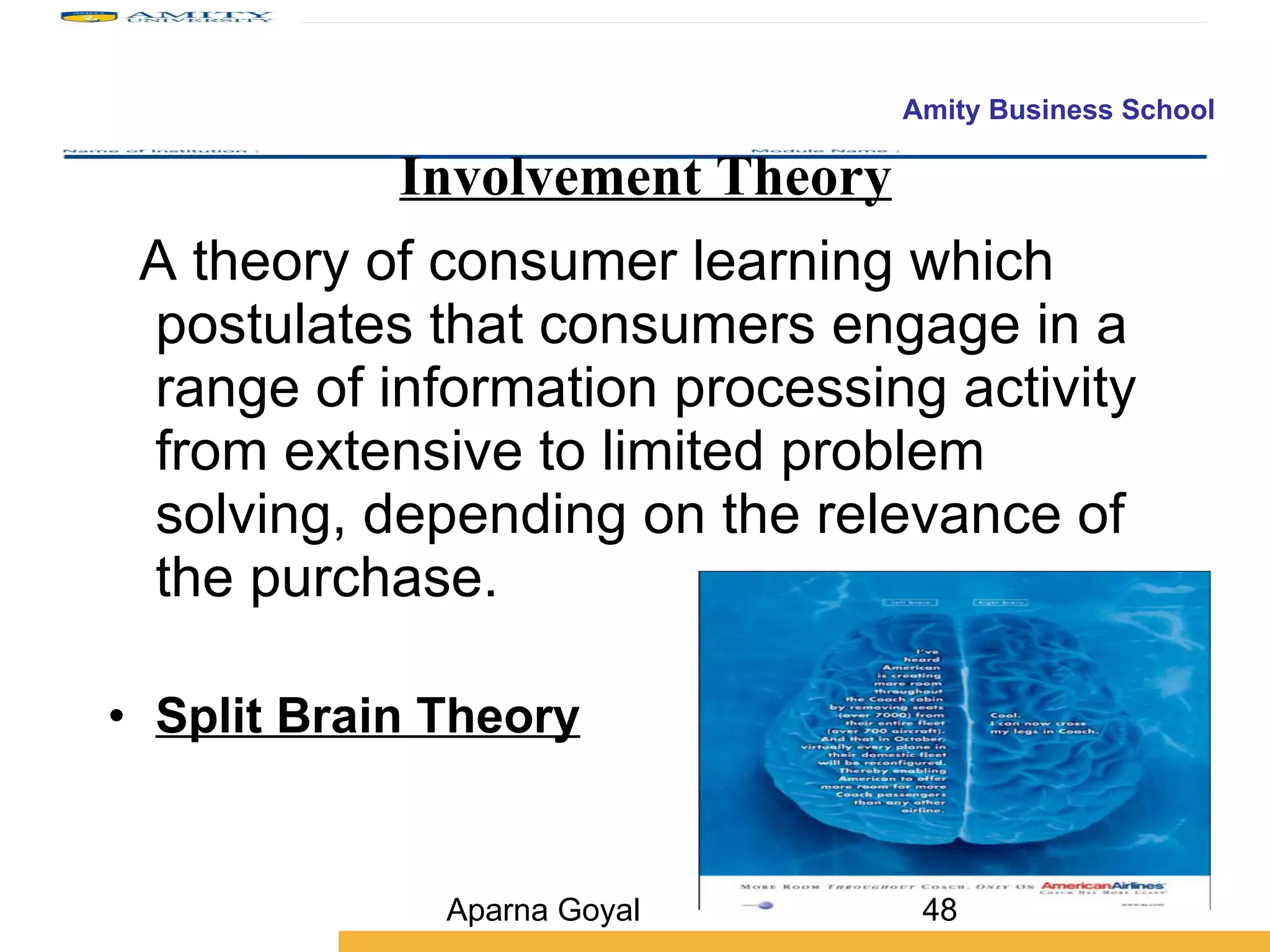
Involvement Theory A theory of consumer learning which postulates that consumers engage in a range of information processing activity from extensive to limited problem solving, depending on the relevance of the purchase. Split Brain Theory Aparna Goyal
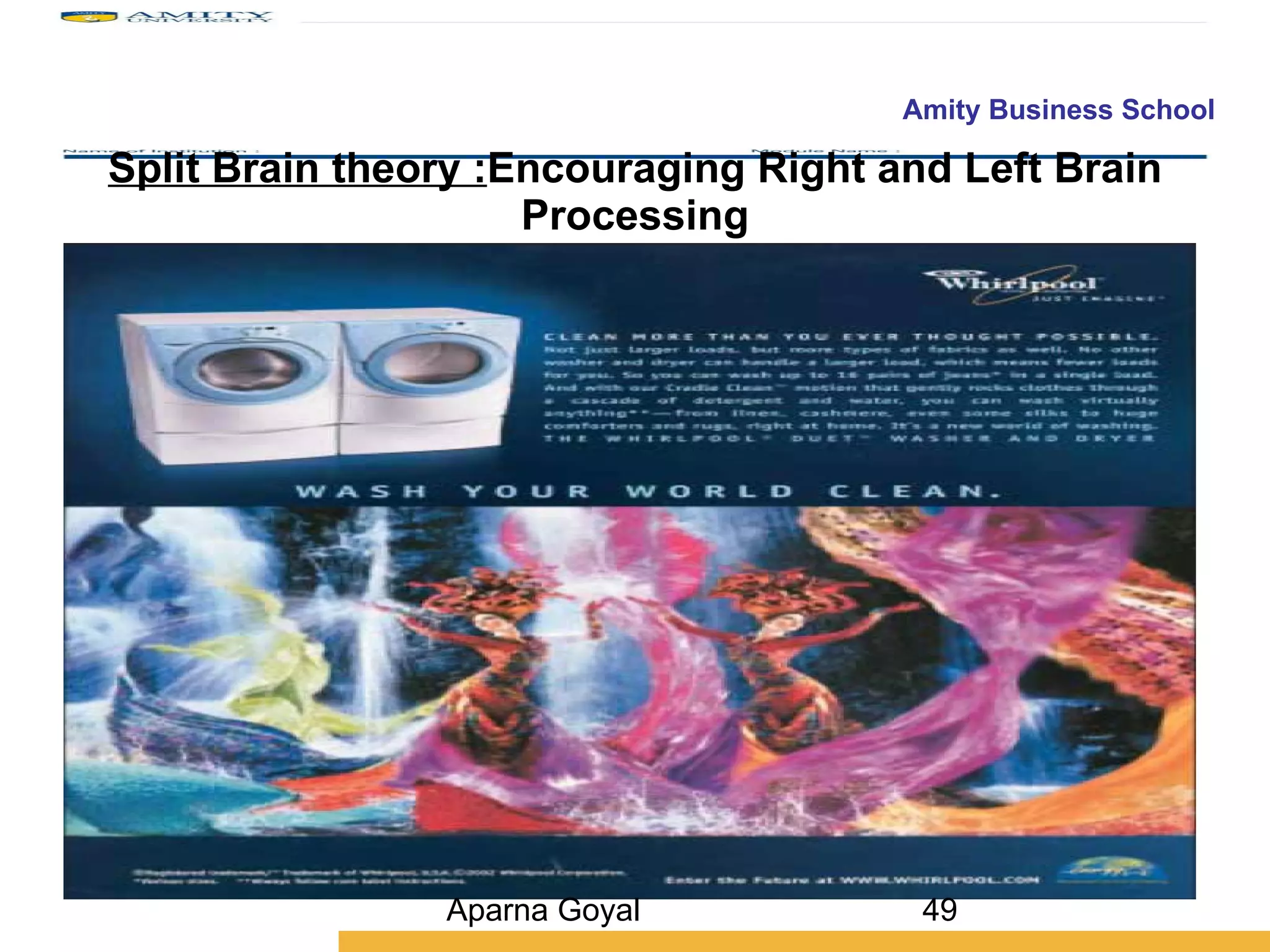
Split Brain theory : Encouraging Right and Left Brain Processing Aparna Goyal
Involvement Theory and CB Involvement Theory and Media Strategy It proposes   that  highly involved consumers  are best reached through ads that focus on the specific attributes of the product (the central route) while  uninvolved consumers  can be attracted through peripheral advertising cues such as the model or the setting (the peripheral route) Aparna Goyal
Assignment  IS LEARNING CONSCIOUS OR NOT. EXPLAIN. ELABORATE THE MEMORY PROCESS ARE PRODUCTS MEMORY MARKERS PROBLEMS WITH MEMORY MEASURES

Mbag Learning 27.8.09

  • 1.
    Amity Business SchoolMBA Class of 2010, Semester III Consumer Behaviour “LEARNING” Aparna Goyal
  • 2.
    TAKE AWAYS Wewill understand how the Consumer Learning about products and services take place. Conditioning results in Learning. Consumers can generalize learned associations to other things. We learn by observing others’ behaviour Marketing Strategies using “Learning”
  • 3.
    Introduction Learning isa relatively permanent change in behaviour caused by experience – direct or observed. Learning is an ongoing process – new stimuli. Casual, unintentional acquisition of knowledge is called Incidental Learning
  • 4.
  • 5.
  • 6.
    Consumer learning Processby which individuals acquire the purchase and consumption knowledge and experience that they apply to future related behavior. Marketers must teach consumers: where to buy how to use how to maintain how to dispose of products Aparna Goyal
  • 7.
  • 8.
    APPROACHES TOLEARNING
  • 9.
  • 10.
    BEHAVIOURAL LEARNINGTakes place as a result of responses to external events No focus on internal thought processes Emphasis on observable aspects of behaviour
  • 11.
    COGNITIVE LEARNINGImportance of internal mental processes Active information use from environments Creativity and insight in learning
  • 12.
  • 13.
    BEHAVIOURAL LEARNINGCLASSICAL CONDITIONING S1 = R1 S2 alone = R1 S1 + S2 = R1 S2 = R1 S1 = UCS S2 = CS R1 = CR
  • 14.
    UCS -SHOPPING CS – CREDIT CARD CR – MORE SPENDING
  • 15.
    UCS -HOLIDAYS CS – CLUB MAHINDRA YEARLY SCHEMES CR – OVERFLOWING HOLIDAYS
  • 16.
  • 17.
    BEHAVIOURAL LEARNINGREPETITION Repeated exposures increases the strength of SR relationships and prevents decay too Lack of association leads to extinction and disappearance Increases strength of associations between CS and UCS and slows forgetting but over time may result in advertising wear out.
  • 18.
    REPETITION –SR RELATIONSHIP OF COLGATE AND DENTISTS
  • 19.
  • 20.
  • 21.
    Cosmetic variations reduce satiation like different backgrounds, spokespersons, etc Substantive Variations - changes in advertisement contents across different versions Stimulus Generalization Stimulus Discrimination
  • 22.
    BEHAVIOURAL LEARNINGSTIMULUS GENERALIZATION Stimuli similar to original CS evokes similar CR (Halo Effect) Piggybacking
  • 23.
  • 24.
    Stimulus Generalization (SG)Making the same response to slightly different stimuli. The inability to perceive differences between slightly dissimilar stimuli. Marketing Strategies Me- To products Product Line Extensions Family Branding Licensing Aparna Goyal
  • 25.
    Manufacturer Licenses ItsName Aparna Goyal
  • 26.
  • 27.
    STIMULUS DISCRIMINATION UCSdoes not follow a stimulus similar to a CS Reactions weakened & disappear Ability to select a specific stimulus from among similar stimuli because of perceived differences. Positioning Differentiation BEHAVIOURAL LEARNING
  • 28.
  • 30.
  • 31.
    BEHAVIOURAL LEARNINGINSTRUMENTAL CONDITIONING Learning based on a trial-and-error process, with habits forced as the result of positive experiences (reinforcement) resulting from certain responses/behaviors. Operant conditioning We perform behaviours that produce positive outcome We avoid behaviours that give negative outcomes We get rewards for desired behaviours Delibrate responses to attain a goal- SHAPING RESPONSE is INSTRUMENTAL in gaining an AWARD or avoiding a PUNISHMENT
  • 32.
  • 34.
    -Behaviour occurs becauseit is rewarding . -Behaviour can be Shaped by rewarding that behaviour. Marketing Strategies Customer Satisfaction (Reinforcement)- product as its own intrinsic reward. Reinforcement Schedules Lotteries , sweep-stakes. Aparna Goyal
  • 35.
  • 36.
    BEHAVIOURAL LEARNINGREINFORCEMENT POSITIVE – reward that strengthens the response NEGATIVE – something not done leading to strengthening of response
  • 37.
  • 38.
  • 39.
    BEHAVIOURAL LEARNINGPUNISHMENT Unpleasant events follow a response
  • 40.
  • 41.
  • 42.
    COGNITIVE LEARNING OBSERVATIONALLEARNING A process by which individuals observe the behavior of others, and consequences of such behavior. Also known as modeling or vicarious learning.
  • 43.
  • 45.
  • 46.
    COGNITIVE LEARNING MEMORYExternal inputs - Encoding - Storage - Retrieval
  • 47.
  • 48.
    Involvement Theory Atheory of consumer learning which postulates that consumers engage in a range of information processing activity from extensive to limited problem solving, depending on the relevance of the purchase. Split Brain Theory Aparna Goyal
  • 49.
    Split Brain theory: Encouraging Right and Left Brain Processing Aparna Goyal
  • 50.
    Involvement Theory andCB Involvement Theory and Media Strategy It proposes that highly involved consumers are best reached through ads that focus on the specific attributes of the product (the central route) while uninvolved consumers can be attracted through peripheral advertising cues such as the model or the setting (the peripheral route) Aparna Goyal
  • 51.
    Assignment ISLEARNING CONSCIOUS OR NOT. EXPLAIN. ELABORATE THE MEMORY PROCESS ARE PRODUCTS MEMORY MARKERS PROBLEMS WITH MEMORY MEASURES

Editor's Notes

  • #2 Amity Business School
  • #7 Listerine, dettol, boroline, nirma bath, tomco, gorgia…. Context, training, reinforcement, and cue are the four steps to behavioural marketing, says Neale Martin in Habit: The 95% Behavior Marketers Ignore ( www.ftpress.com ). Context holds the key to the why and where of behaviour. For instance, users can access music in many different ways, including listening to a radio, playing a CD, and using Internet radio, satellite, and MP3 players, the author explains. The wireless carrier and handset manufacturer have to, therefore, create a new context or replace habitual use in an existing context to get you to listen to music on a cell phone! Talking about training, the author advises that the lure of sexy new applications should be tempered with the knowledge that companies are looking for relationships with their customers, not one-night stands. Reinforcement is the feedback mechanism that alters the firing patterns of neurons in the part of your brain that is learning unconsciously, Martin
  • #25 Pavolian bell, conditioned response to similar objects like jingling sound of the keys. maggie soups, noodles , pickles , sauce etc. Calvien klien , Christan Doir- licence to sheets to shoes , perfumes
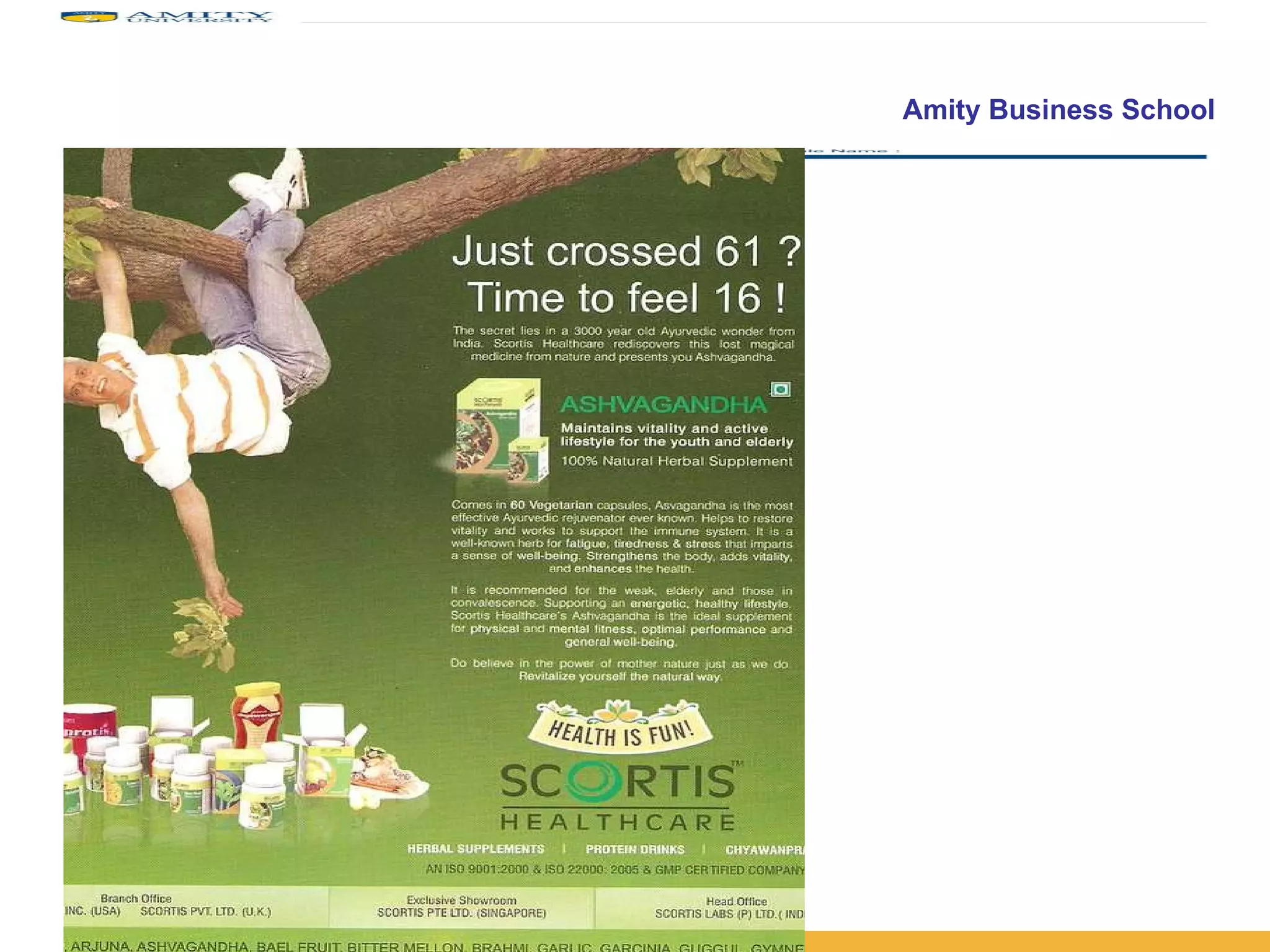
  • #35 Q why we frequent the same barber?perfect hair cut Q Why we eat green veg? even when they are not to our tases? Good for us. B. F Skinner1953 harvard univ -A favorable experience is instrumental in teaching the individual to repeat a specific behavior. Reinforcement Positive Reinforcement : Positive outcomes that strengthen the likelihood of a specific response Example: Ad showing beautiful hair as a reinforcement to buy shampoo Negative Reinforcement : Unpleasant or negative outcomes that serve to encourage a specific behavior Example: Ad showing wrinkled skin as reinforcement to buy skin cream Free test drive and gifts.