BMGT 204: Sales Strategies and Techniques
Chapter 6: Prospecting: The Lifeblood of Selling
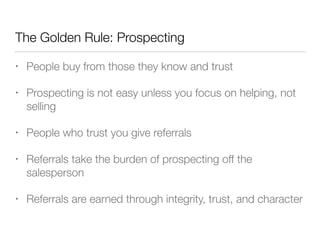
The Golden Rule: Prospecting
•

People buy from those they know and trust

•

Prospecting is not easy unless you focus on helping, not
selling

•

People who trust you give referrals

•

Referrals take the burden of prospecting off the
salesperson

•

Referrals are earned through integrity, trust, and character
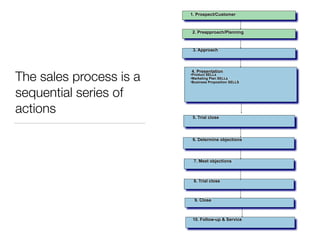
1. Prospect/Customer

2. Preapproach/Planning

3. Approach

The sales process is a
sequential series of
actions

4. Presentation

•Product SELLs
•Marketing Plan SELLs
•Business Proposition SELLS

5. Trial close

6. Determine objections

7. Meet objections

8. Trial close

9. Close

10. Follow-up & Service
Compensation for the
Salesperson that Prospects is
Often:
•

Based upon 100% commission
– if you do not sell, you do not
earn


•

Can be lucrative but highly
competitive
Some Prospect,
Some Do Not
•

Many organizations do not
prospect


•

Examples are large consumer
goods firms as General Mills*
and Colgate*
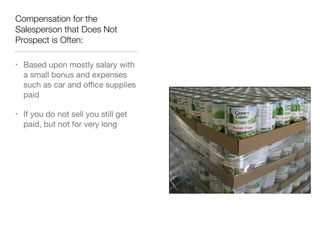
Compensation for the
Salesperson that Does Not
Prospect is Often:
•

Based upon mostly salary with
a small bonus and expenses
such as car and office supplies
paid


•

If you do not sell you still get
paid, but not for very long
The Prospector Has the Most Challenging Sales
Career
•

This is the “order getter” who:
•
•

Converts the lead into a prospect

•

Sells one day, and

•
•

Finds a lead

Sells in the future too

That is a challenge
Steps Before the Sales Presentation
•

Prospecting > appointment > planning

•

Rule of thumb
•

40% preparation

•

20% presentation

•

40% follow-up
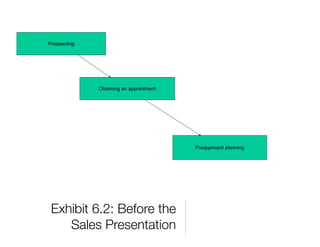
Prospecting

Obtaining an appointment

Preapproach planning

Exhibit 6.2: Before the
Sales Presentation
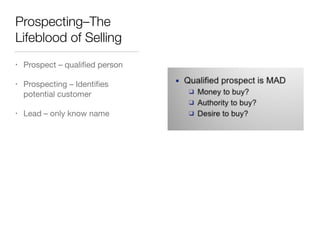
Prospecting–The
Lifeblood of Selling
•

Prospect – qualified person


•

Prospecting – Identifies
potential customer


•

Lead – only know name
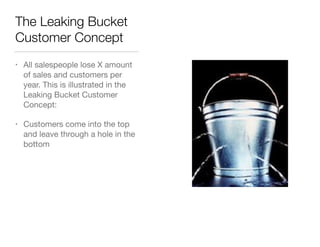
The Leaking Bucket
Customer Concept
•

All salespeople lose X amount
of sales and customers per
year. This is illustrated in the
Leaking Bucket Customer
Concept:


•

Customers come into the top
and leave through a hole in the
bottom
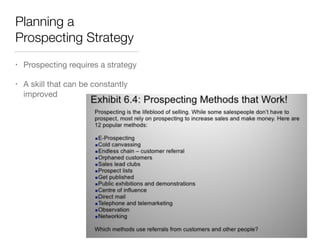
Planning a
Prospecting Strategy
•

Prospecting requires a strategy


•

A skill that can be constantly
improved
http://www.youtube.com/watch?v=RmOcFund1AM
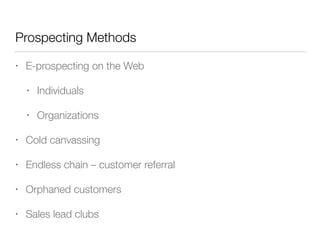
Prospecting Methods
•

E-prospecting on the Web
•

Individuals

•

Organizations

•

Cold canvassing

•

Endless chain – customer referral

•

Orphaned customers

•

Sales lead clubs
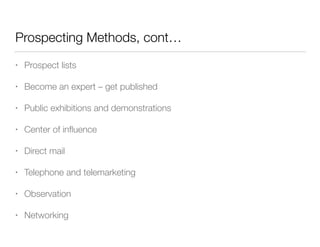
Prospecting Methods, cont…
•

Prospect lists

•

Become an expert – get published

•

Public exhibitions and demonstrations

•

Center of influence

•

Direct mail

•

Telephone and telemarketing

•

Observation

•

Networking
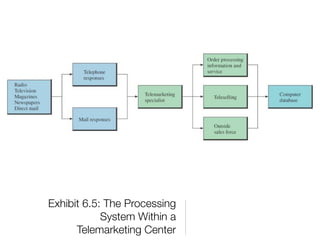
Exhibit 6.5: The Processing
System Within a
Telemarketing Center
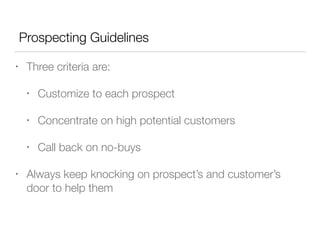
Prospecting Guidelines
•

Three criteria are:
•
•

Concentrate on high potential customers

•
•

Customize to each prospect

Call back on no-buys

Always keep knocking on prospect’s and customer’s
door to help them
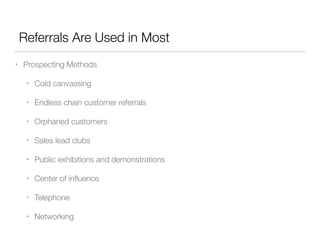
Referrals Are Used in Most
•

Prospecting Methods
•

Cold canvassing

•

Endless chain customer referrals

•

Orphaned customers

•

Sales lead clubs

•

Public exhibitions and demonstrations

•

Center of influence

•

Telephone

•

Networking
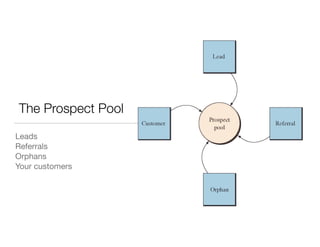
The Prospect Pool
Leads

Referrals

Orphans

Your customers
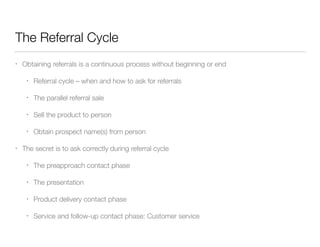
The Referral Cycle
•

Obtaining referrals is a continuous process without beginning or end
•
•

The parallel referral sale

•

Sell the product to person

•
•

Referral cycle – when and how to ask for referrals

Obtain prospect name(s) from person

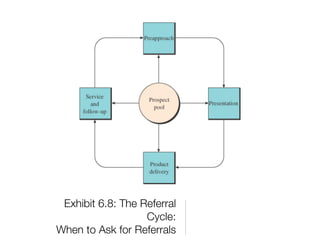
The secret is to ask correctly during referral cycle
•

The preapproach contact phase

•

The presentation

•

Product delivery contact phase

•

Service and follow-up contact phase: Customer service
Exhibit 6.8: The Referral
Cycle: 

When to Ask for Referrals
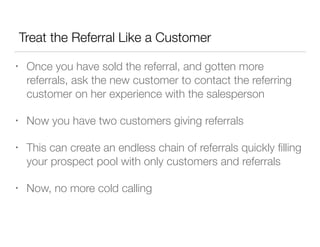
Treat the Referral Like a Customer
•

Once you have sold the referral, and gotten more
referrals, ask the new customer to contact the referring
customer on her experience with the salesperson

•

Now you have two customers giving referrals

•

This can create an endless chain of referrals quickly filling
your prospect pool with only customers and referrals

•

Now, no more cold calling
Don’t Mistreat the Referral
•

Mistreatment can have a ripple effect

•

The mistreated referral tells your customer – you may
lose both!

•

Remember to follow the Golden Rule
Call Reluctance Costs You Money!
•

Call reluctance refers to not wanting to contact a
prospect or customer

•

For many salespeople, owning up to call reluctance is the
most difficult part of combating it

•

Call reluctance keeps you from:
•

Helping others

•

Earning what you’re worth
Obtaining the Sales Interview
•

Key factor in selling process is obtaining a sales interview

•

The benefits of appointment making

•

Telephone appointment

•

Personally making the appointment
•

Believe in yourself

•

Develop friends in the prospect’s firm

•

Call at the right time on the right person

•

Do not waste time waiting

Bmgt 204 chapter_6

  • 1.
    BMGT 204: SalesStrategies and Techniques Chapter 6: Prospecting: The Lifeblood of Selling
  • 2.
    The Golden Rule:Prospecting • People buy from those they know and trust • Prospecting is not easy unless you focus on helping, not selling • People who trust you give referrals • Referrals take the burden of prospecting off the salesperson • Referrals are earned through integrity, trust, and character
  • 3.
    1. Prospect/Customer 2. Preapproach/Planning 3.Approach The sales process is a sequential series of actions 4. Presentation •Product SELLs •Marketing Plan SELLs •Business Proposition SELLS 5. Trial close 6. Determine objections 7. Meet objections 8. Trial close 9. Close 10. Follow-up & Service
  • 4.
    Compensation for the Salespersonthat Prospects is Often: • Based upon 100% commission – if you do not sell, you do not earn • Can be lucrative but highly competitive
  • 5.
    Some Prospect, Some DoNot • Many organizations do not prospect • Examples are large consumer goods firms as General Mills* and Colgate*
  • 6.
    Compensation for the Salespersonthat Does Not Prospect is Often: • Based upon mostly salary with a small bonus and expenses such as car and office supplies paid • If you do not sell you still get paid, but not for very long
  • 7.
    The Prospector Hasthe Most Challenging Sales Career • This is the “order getter” who: • • Converts the lead into a prospect • Sells one day, and • • Finds a lead Sells in the future too That is a challenge
  • 8.
    Steps Before theSales Presentation • Prospecting > appointment > planning • Rule of thumb • 40% preparation • 20% presentation • 40% follow-up
  • 9.
    Prospecting Obtaining an appointment Preapproachplanning Exhibit 6.2: Before the Sales Presentation
  • 10.
    Prospecting–The Lifeblood of Selling • Prospect– qualified person • Prospecting – Identifies potential customer • Lead – only know name
  • 11.
    The Leaking Bucket CustomerConcept • All salespeople lose X amount of sales and customers per year. This is illustrated in the Leaking Bucket Customer Concept: • Customers come into the top and leave through a hole in the bottom
  • 12.
    Planning a Prospecting Strategy • Prospectingrequires a strategy • A skill that can be constantly improved
  • 13.
  • 14.
    Prospecting Methods • E-prospecting onthe Web • Individuals • Organizations • Cold canvassing • Endless chain – customer referral • Orphaned customers • Sales lead clubs
  • 15.
    Prospecting Methods, cont… • Prospectlists • Become an expert – get published • Public exhibitions and demonstrations • Center of influence • Direct mail • Telephone and telemarketing • Observation • Networking
  • 16.
    Exhibit 6.5: TheProcessing System Within a Telemarketing Center
  • 17.
    Prospecting Guidelines • Three criteriaare: • • Concentrate on high potential customers • • Customize to each prospect Call back on no-buys Always keep knocking on prospect’s and customer’s door to help them
  • 18.
    Referrals Are Usedin Most • Prospecting Methods • Cold canvassing • Endless chain customer referrals • Orphaned customers • Sales lead clubs • Public exhibitions and demonstrations • Center of influence • Telephone • Networking
  • 19.
  • 20.
    The Referral Cycle • Obtainingreferrals is a continuous process without beginning or end • • The parallel referral sale • Sell the product to person • • Referral cycle – when and how to ask for referrals Obtain prospect name(s) from person The secret is to ask correctly during referral cycle • The preapproach contact phase • The presentation • Product delivery contact phase • Service and follow-up contact phase: Customer service
  • 21.
    Exhibit 6.8: TheReferral Cycle: 
 When to Ask for Referrals
  • 22.
    Treat the ReferralLike a Customer • Once you have sold the referral, and gotten more referrals, ask the new customer to contact the referring customer on her experience with the salesperson • Now you have two customers giving referrals • This can create an endless chain of referrals quickly filling your prospect pool with only customers and referrals • Now, no more cold calling
  • 23.
    Don’t Mistreat theReferral • Mistreatment can have a ripple effect • The mistreated referral tells your customer – you may lose both! • Remember to follow the Golden Rule
  • 24.
    Call Reluctance CostsYou Money! • Call reluctance refers to not wanting to contact a prospect or customer • For many salespeople, owning up to call reluctance is the most difficult part of combating it • Call reluctance keeps you from: • Helping others • Earning what you’re worth
  • 25.
    Obtaining the SalesInterview • Key factor in selling process is obtaining a sales interview • The benefits of appointment making • Telephone appointment • Personally making the appointment • Believe in yourself • Develop friends in the prospect’s firm • Call at the right time on the right person • Do not waste time waiting