
Chapter 6
Consumer Learning
Learning Objectives
1.To Understand the Process and Four
Elements of Consumer Learning.(slide 4-10)
2.To Study Behavioral Learning and
Understand Its Applications to Consumption
Behavior. (11-27)
3.To Study Information Processing and
Cognitive Learning and Understand Their
Strategic Applications to Consumer
Behavior.(28-37)
4. To Study Consumer Involvement and
Passive Learning and Understand Their
Strategic Affects on Consumer
Behavior.(slide 38-47)
5. To Understand How Consumer
Learning and Its Results Are
Measured.(slide 47-50)
Learning Objectives
A process by which
individuals acquire
the purchase and
consumption
knowledge
and experience
that they apply to
future related
behavior.
Consumer
Learning
Importance of Learning
●Marketers must teach consumers:
–where to buy
–how to use
–how to maintain
–how to dispose of products
Learning Processes
-Incidental
-- learning acquired by accident
or without much effort
-Intentional
– learning acquired as a result of a
careful search for information
Elements of Learning Theories
●Motivation
●Cues
●Response
●Reinforcement
Reinforcement
A positive or negative outcome that
influences the likelihood that a
specific behaviour will be repeated in
the future in response to a particular
cue or stimulus.
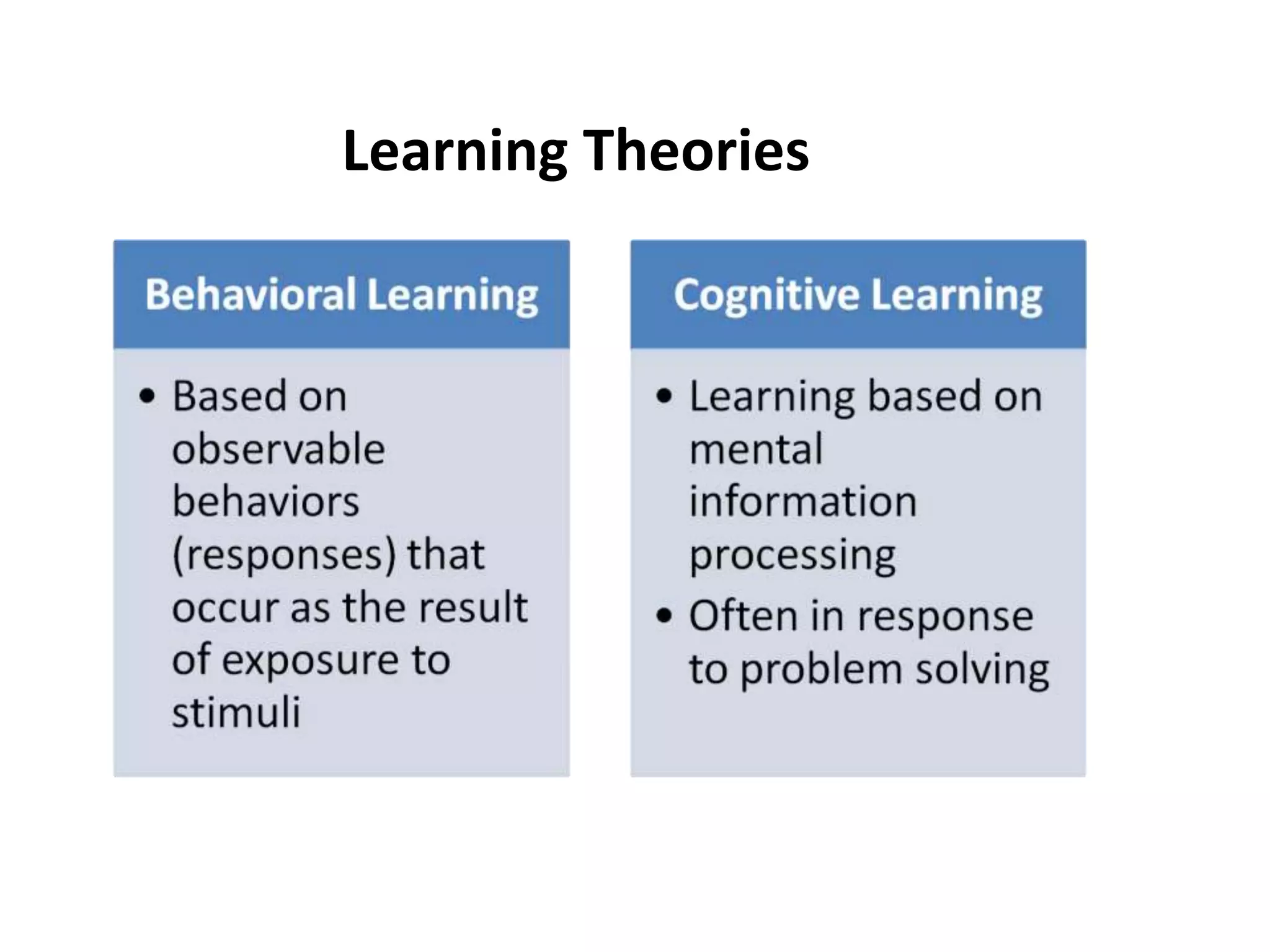
Learning Theories
Discussion Question
●For Coca-Cola:
●How have they used behavioral theory in
their marketing?
●Cognitive theory?
●How have they built brand loyalty?
Behavioral Learning Theories
●Classical Conditioning
●Instrumental Conditioning
●Modeling or Observational Learning
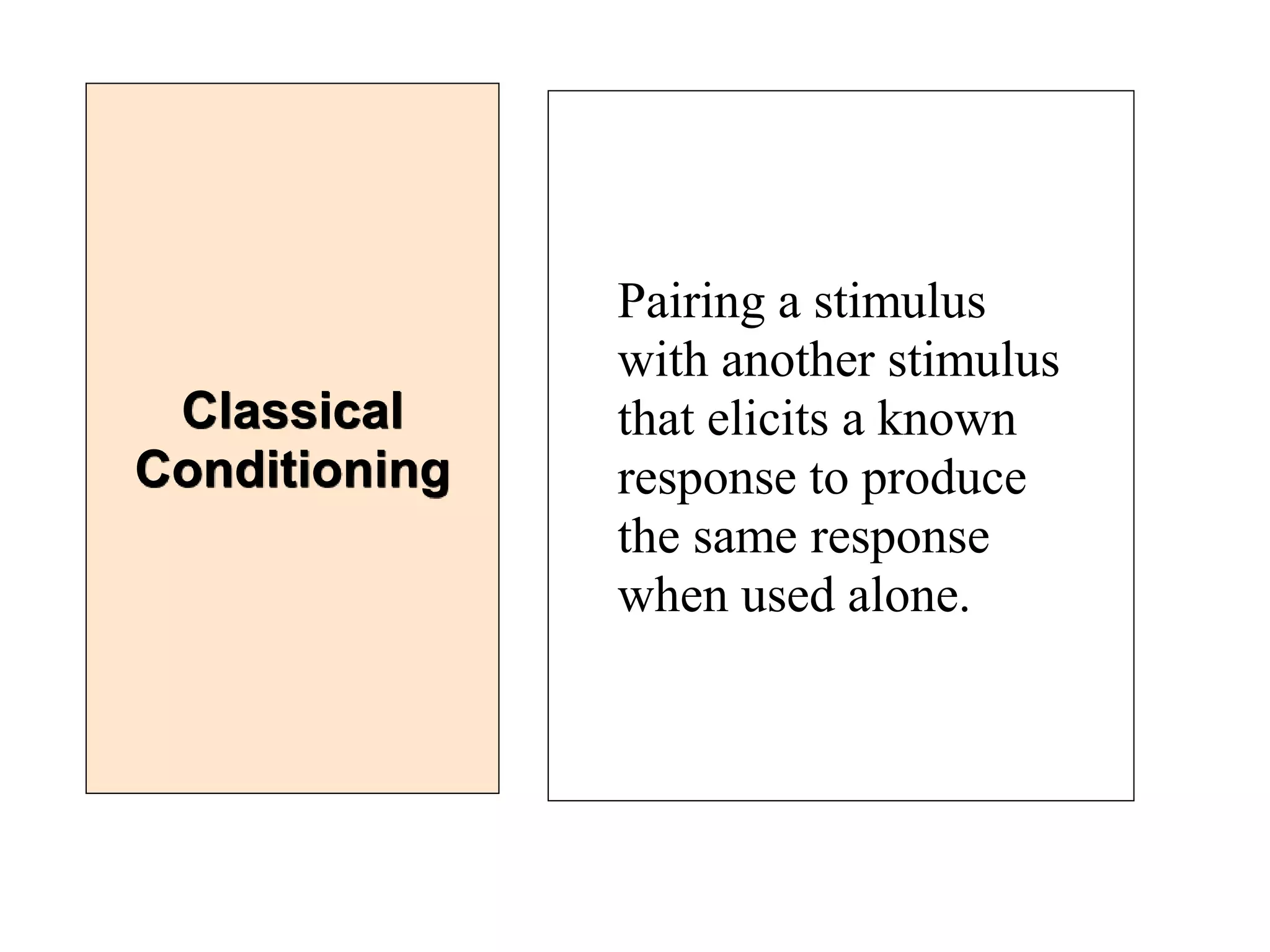
Classical
Conditioning
Pairing a stimulus
with another stimulus
that elicits a known
response to produce
the same response
when used alone.
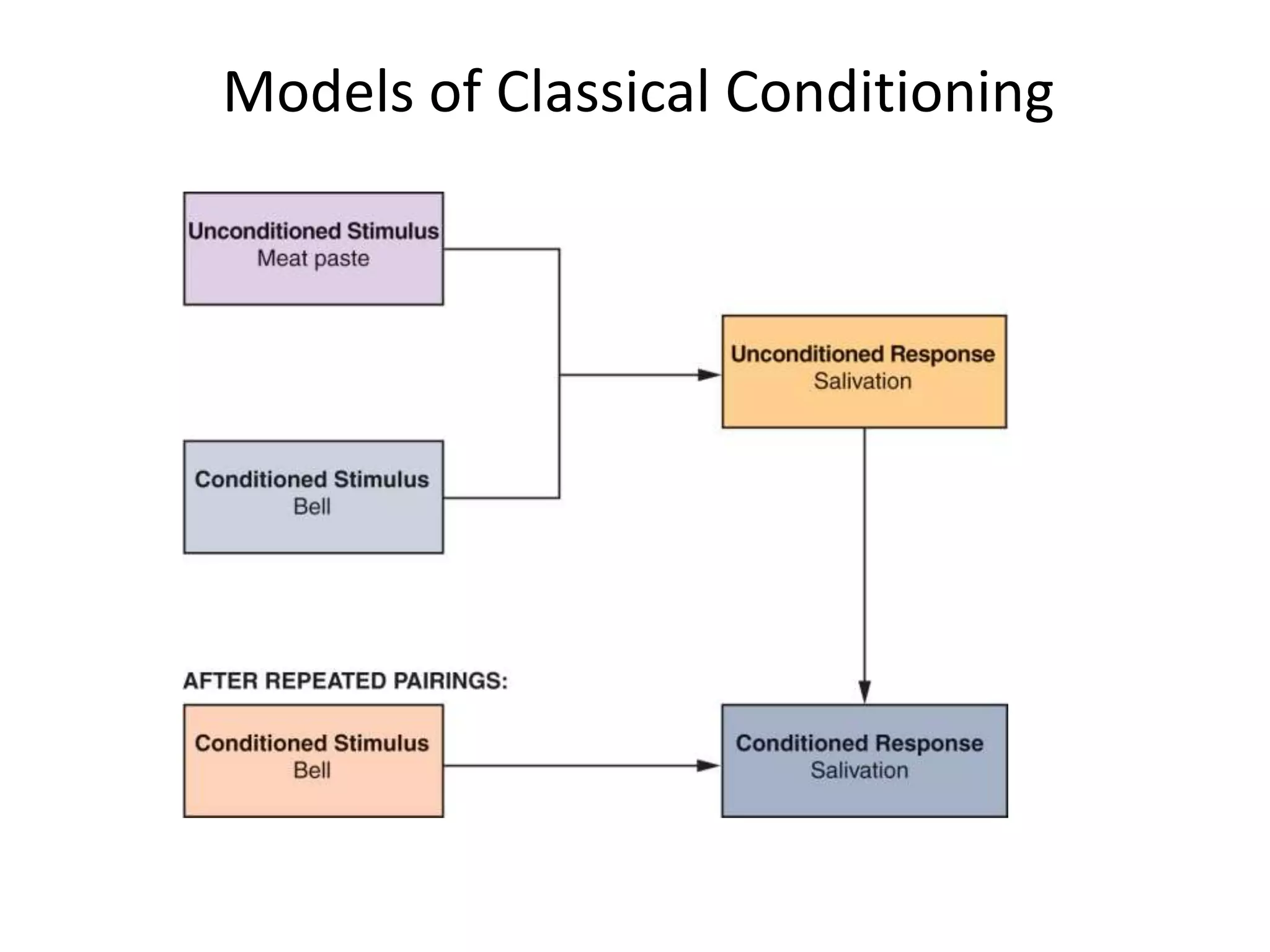
Models of Classical Conditioning
Strategic Applications of Classical
Conditioning
Basic Concepts
●Repetition
•Stimulus
generalization
•Stimulus
discrimination
•Increases the
association between the
conditioned and
unconditioned stimulus
•Slows the pace of
forgetting
•Advertising wearout is a
problem
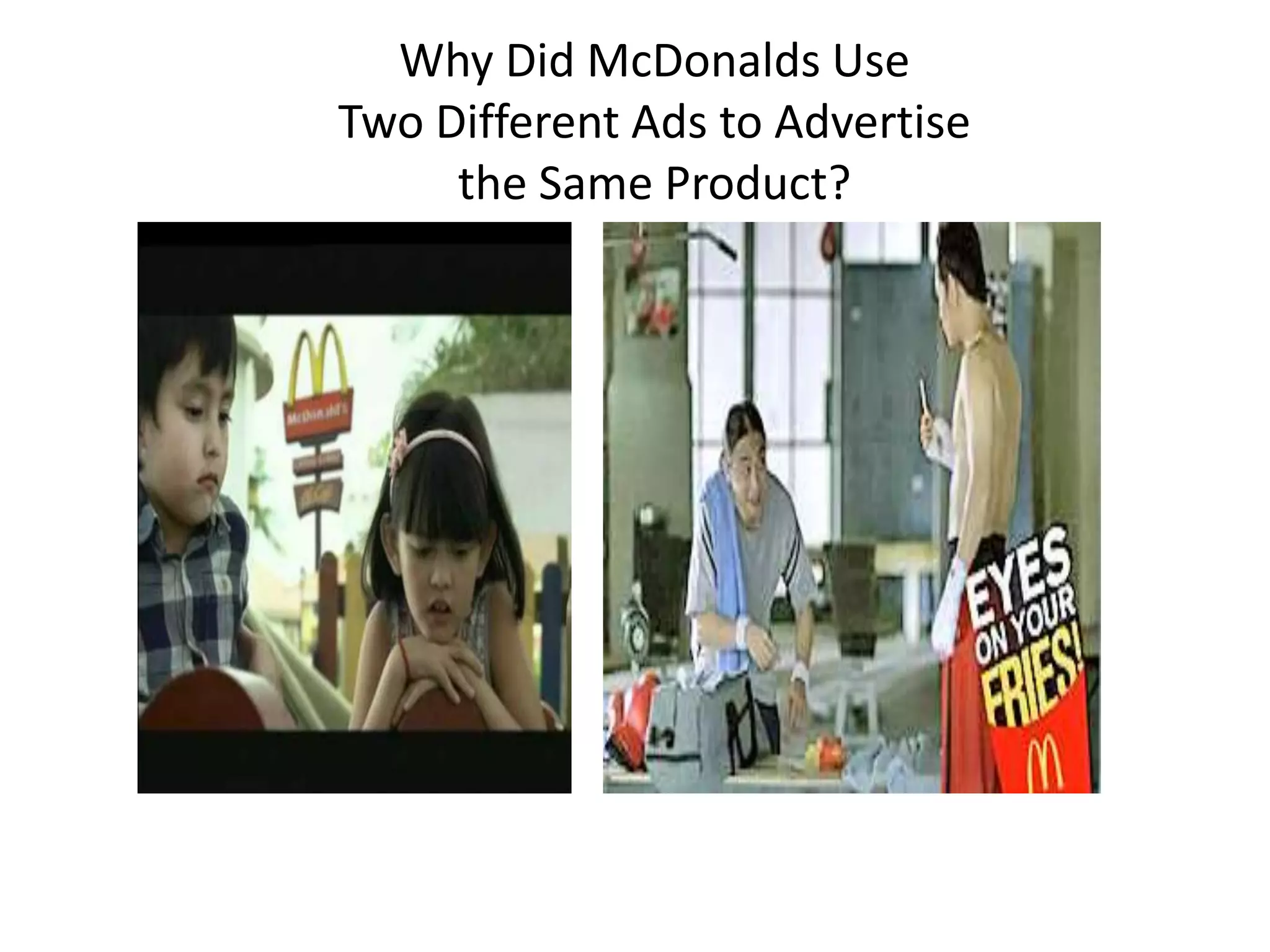
Why Did McDonalds Use
Two Different Ads to Advertise
the Same Product?
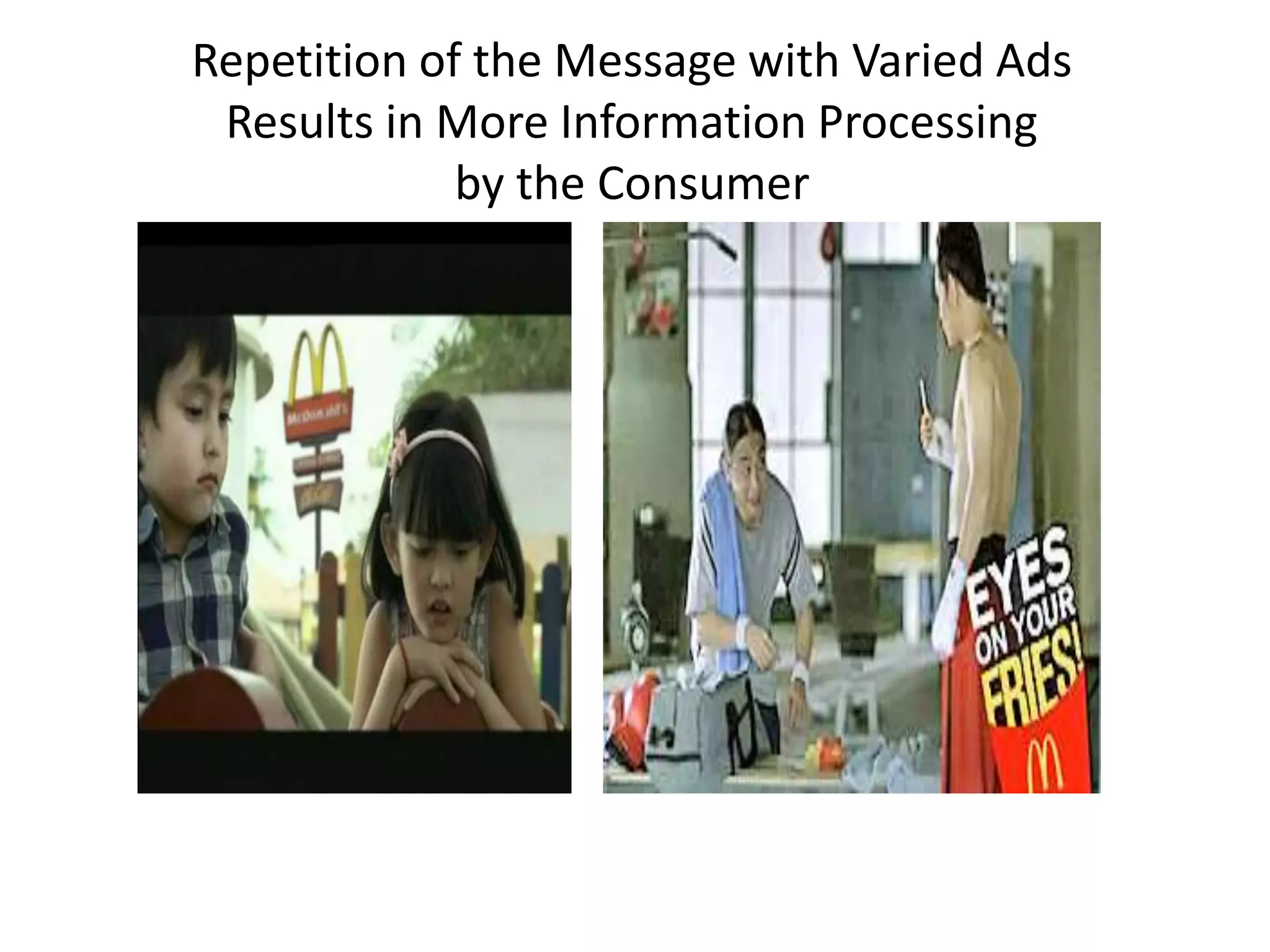
Repetition of the Message with Varied Ads
Results in More Information Processing
by the Consumer
Strategic Applications of Classical
Conditioning
Basic Concepts
•Repetition
●Stimulus
generalization
•Stimulus
discrimination
•Having the same
response to slightly
different stimuli
•Helps “me-too”
products to succeed
•Useful in product
extensions
Strategic Applications of Classical
Conditioning
Basic Concepts
•Repetition
•Stimulus
generalization
●Stimulus
discrimination
•Selection of a specific
stimulus from similar
stimuli
•This discrimination is
the basis of positioning
which looks for unique
ways to fill needs
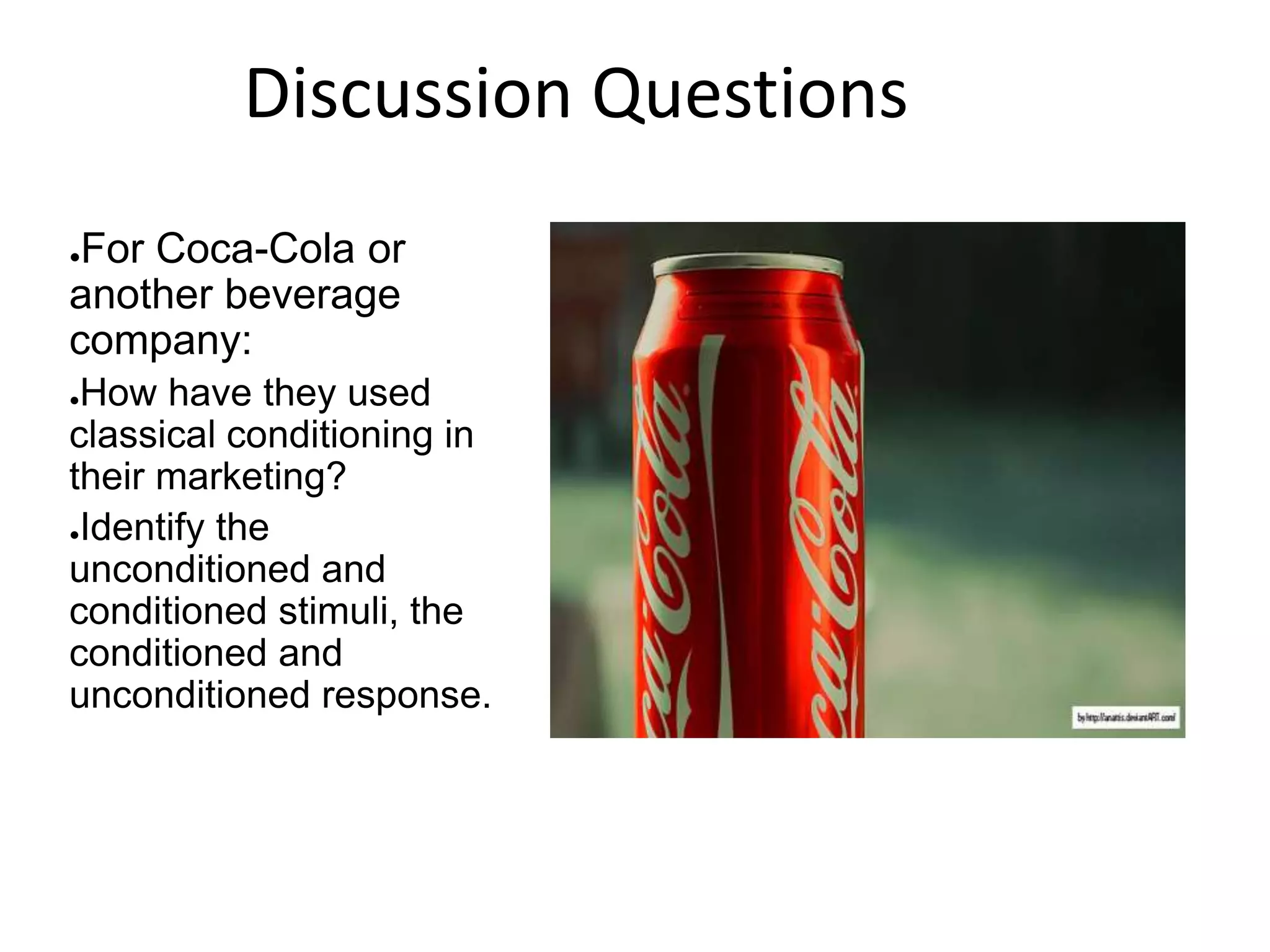
●For Coca-Cola or
another beverage
company:
●How have they used
classical conditioning in
their marketing?
●Identify the
unconditioned and
conditioned stimuli, the
conditioned and
unconditioned response.
Discussion Questions
Classical Conditioning and
Marketing Strategy
●Identify and pair product with a
known, well-liked stimulus
–More attention
–More favourable attitudes
–Greater intention to buy the product
–Learning of key attributes
●Use stimulus generalization
effectively
–Continued
Instrumental
(Operant)
Conditioning
learning based on a
trial-and-error process,
with habits forced as
the result of positive
experiences
(reinforcement)
Types of Reinforcement
●Positive
●Negative
●Extinction
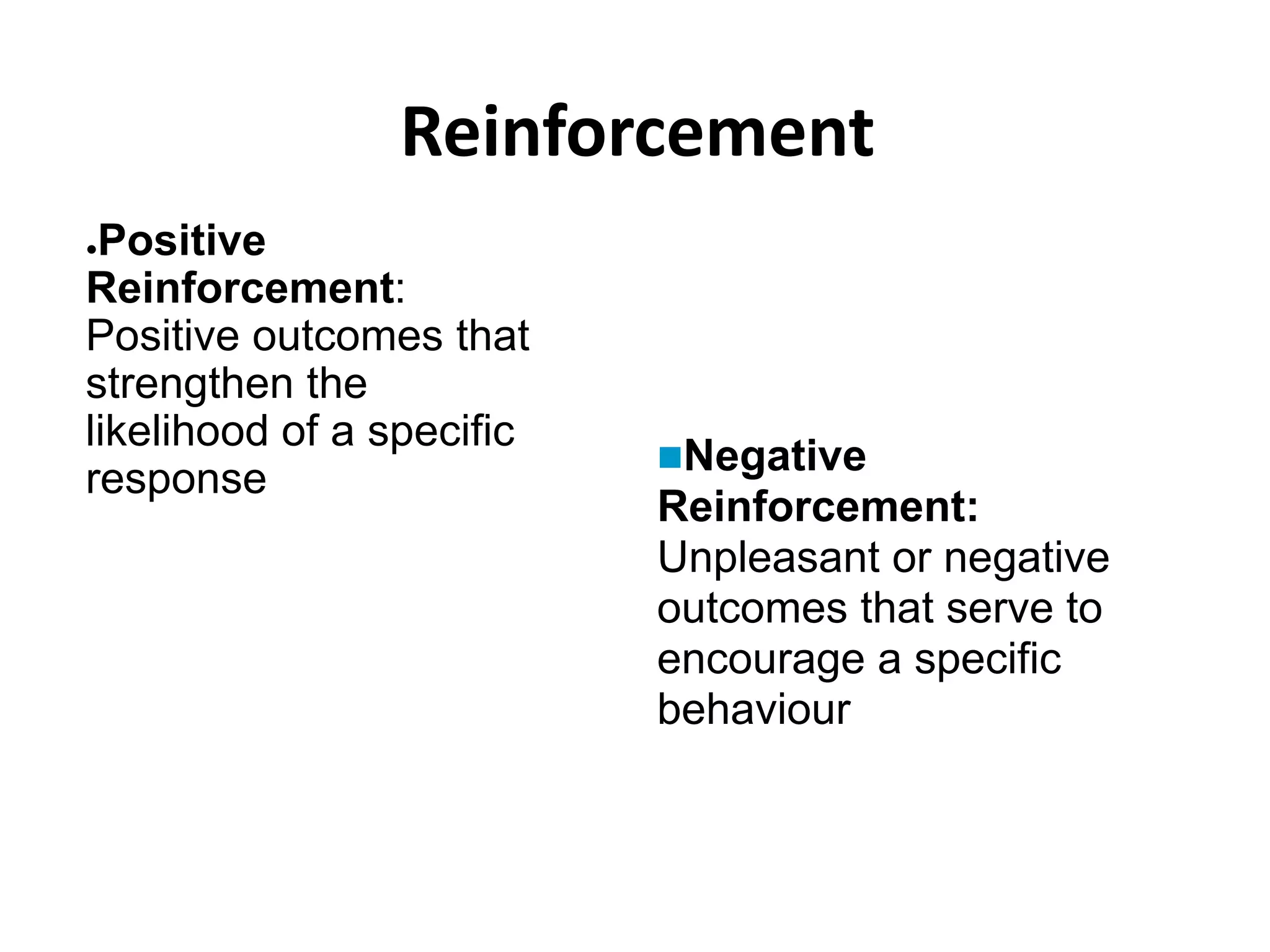
●Positive
Reinforcement:
Positive outcomes that
strengthen the
likelihood of a specific
response
Negative
Reinforcement:
Unpleasant or negative
outcomes that serve to
encourage a specific
behaviour
Reinforcement
Positive Reinforcement: Negative Reinforcement:
Reinforcement
Other Concepts in Reinforcement
●Punishment
●Extinction
●Forgetting
●Combat with repetition
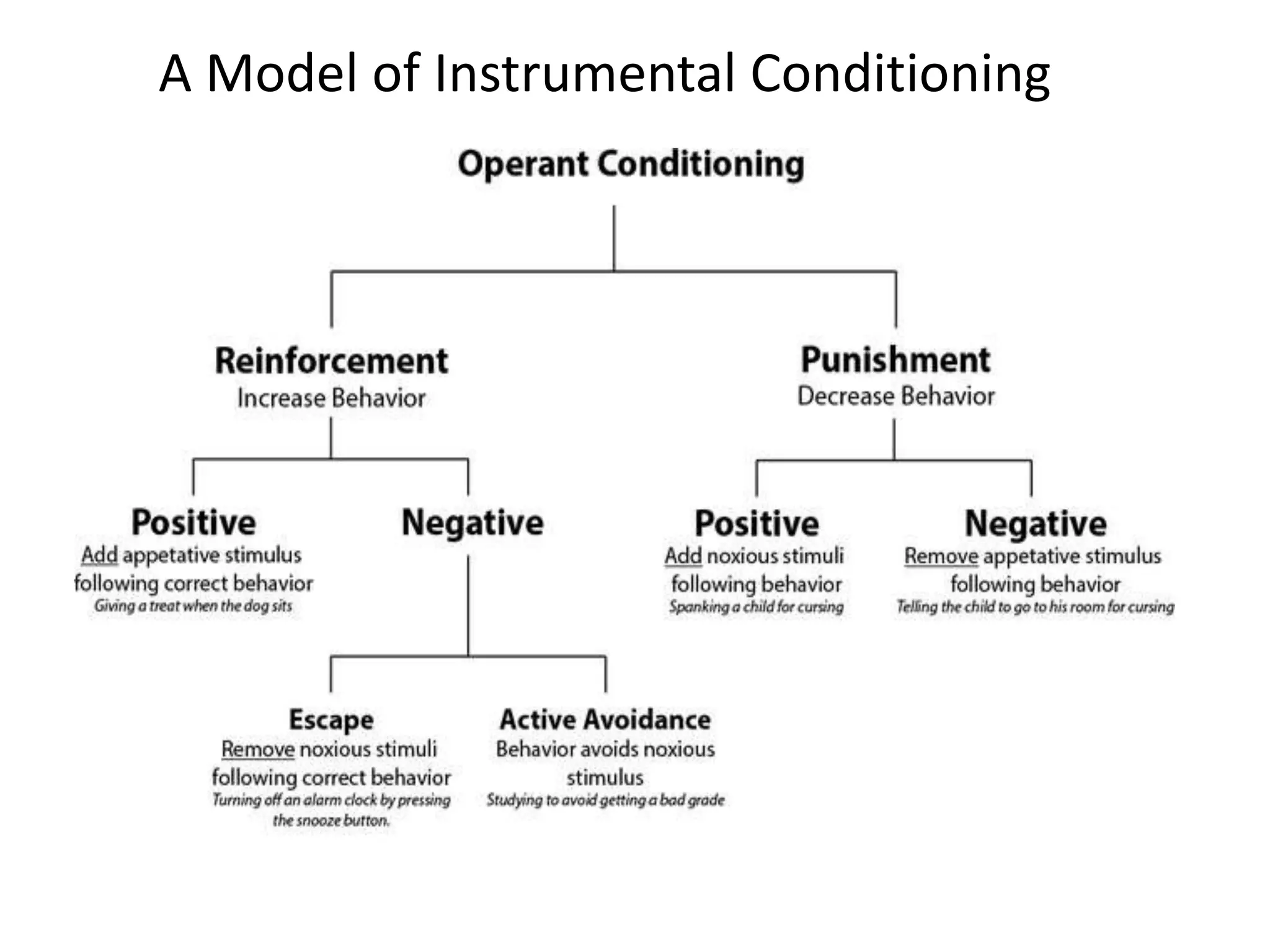
A Model of Instrumental Conditioning
Instrumental Conditioning
and Marketing
●Make the product the ultimate reward
●Provide samples and free trials
●Provide non-product rewards
●Practice relationship marketing
●Reinforcement Schedules
–Shaping
●Massed versus Distributed Learning
Cognitive
Learning
Theory
Holds that the kind
of learning most
characteristic of
human beings is
problem solving,
which enables
individuals to gain
some control over
their environment.
Information Processing
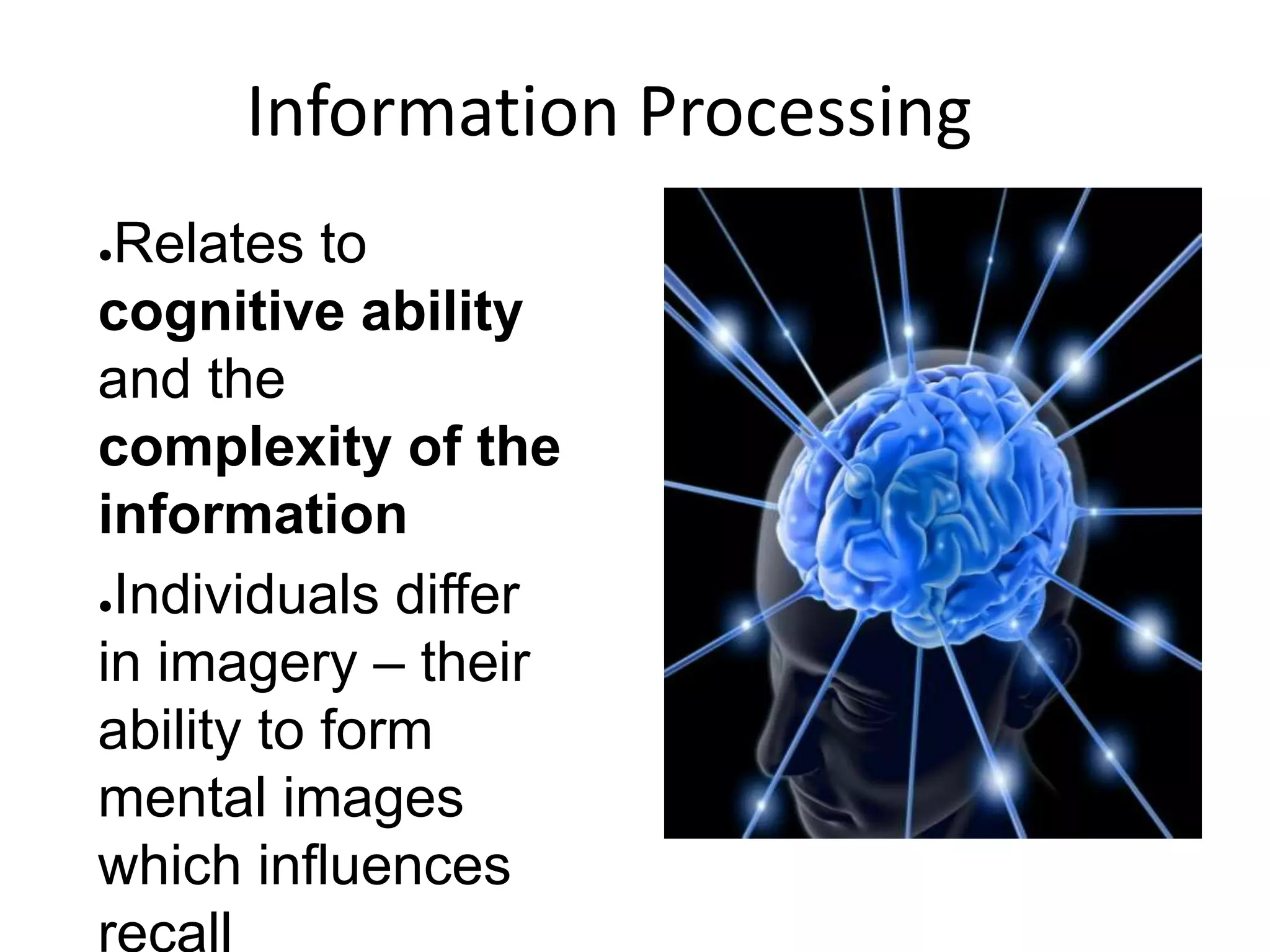
●Relates to
cognitive ability
and the
complexity of the
information
●Individuals differ
in imagery – their
ability to form
mental images
which influences
recall
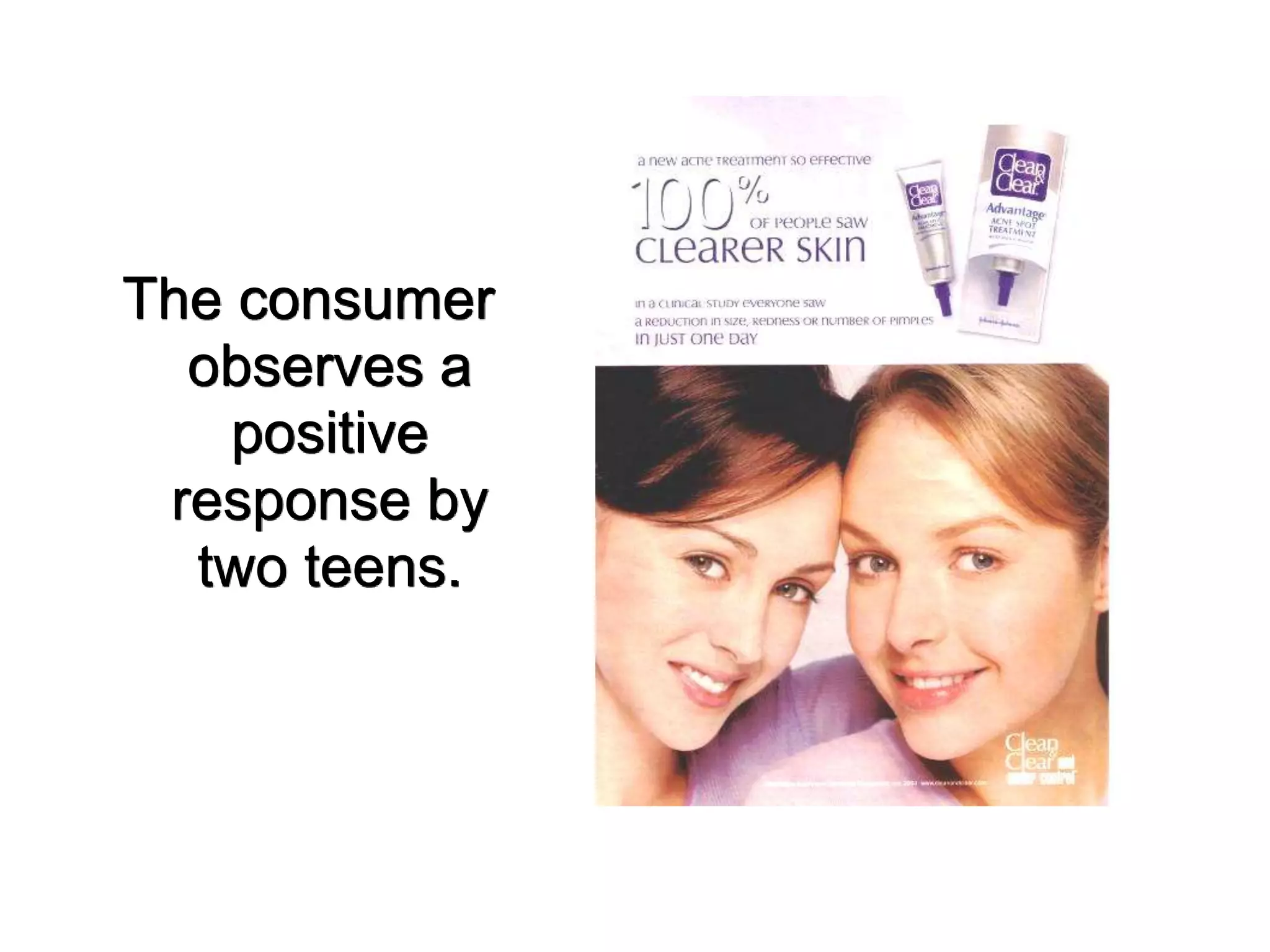
The consumer
observes a
positive
response by
two teens.
- Observational learning
- Rote Learning
- Reasoning
Three types of Learning
Observational Learning
●individuals learn by observing the
behaviour of others, and
consequences of such behaviour.
●Also known as modeling or
vicarious learning.
Iconic Rote Learning
● Learning concepts through simple
repetition
● Key is Repitition
● Similar to classical conditioning
but do not try to stimulate a
direct affective response.
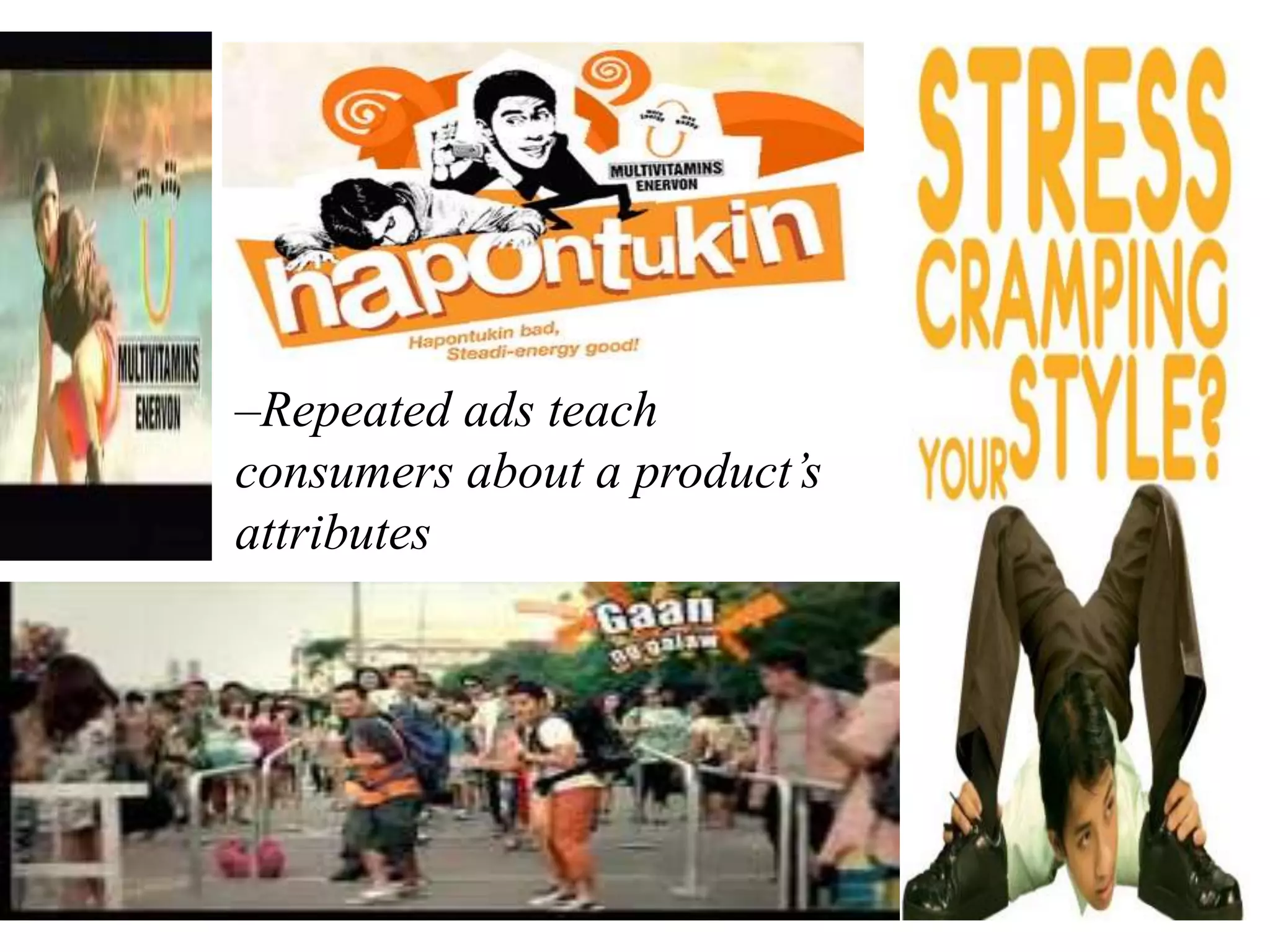
–Repeated ads teach
consumers about a product’s
attributes
Reasoning
●Highest level of cognitive learning
●Involves creative thinking
●Depends on how information is
processed and stored
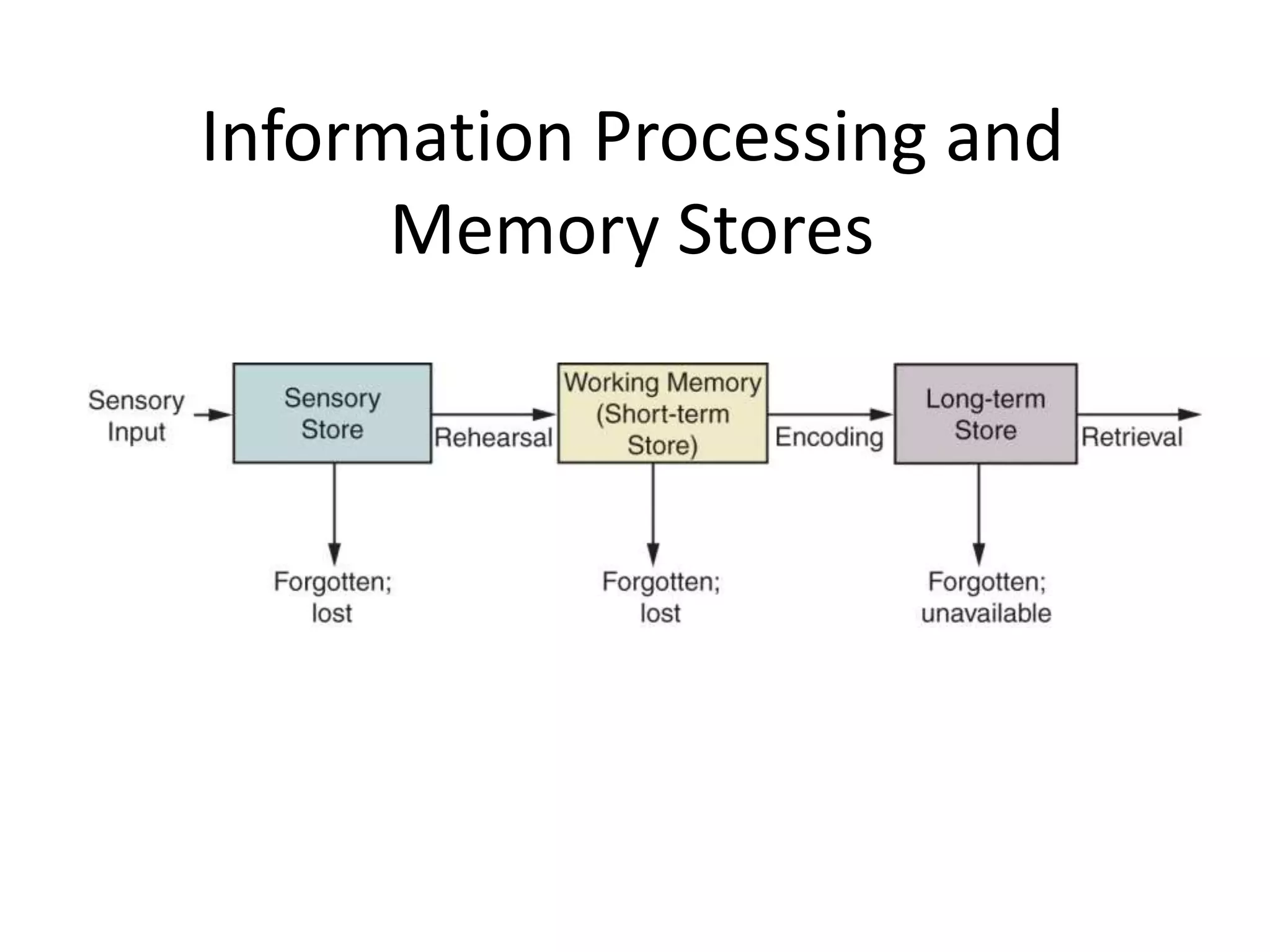
Information Processing and
Memory Stores
Involvement and Passive
Learning Topics
●Definitions and Measures of
Involvement
●Marketing Applications of Involvement
●Central and Peripheral Routes to
Persuasion
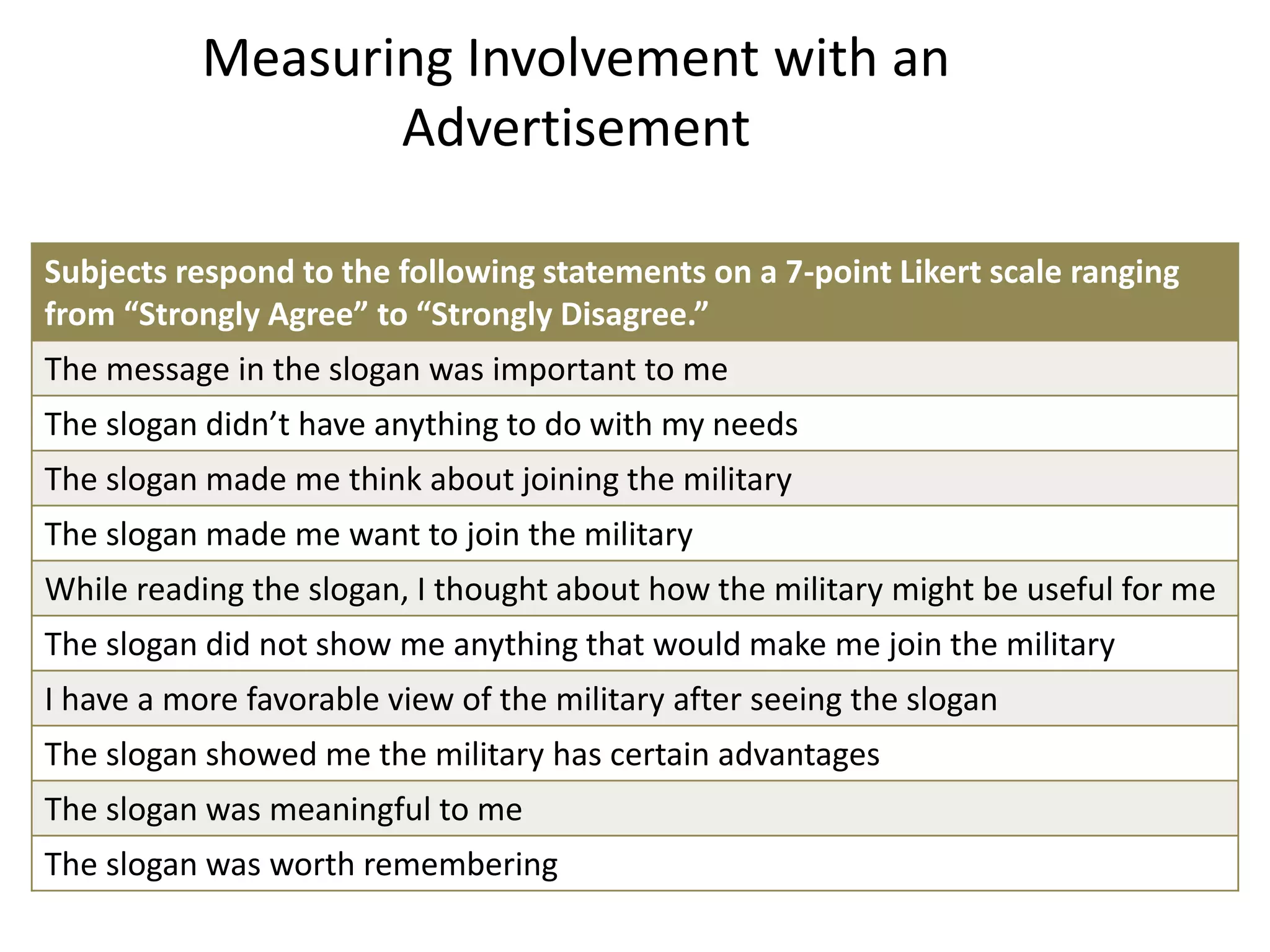
Measuring Involvement with an
Advertisement
Subjects respond to the following statements on a 7-point Likert scale ranging
from “Strongly Agree” to “Strongly Disagree.”
The message in the slogan was important to me
The slogan didn’t have anything to do with my needs
The slogan made me think about joining the military
The slogan made me want to join the military
While reading the slogan, I thought about how the military might be useful for me
The slogan did not show me anything that would make me join the military
I have a more favorable view of the military after seeing the slogan
The slogan showed me the military has certain advantages
The slogan was meaningful to me
The slogan was worth remembering
●How do advertisers drive consumers to
rehearse information?
●When does this work against the
advertiser?
●Can you think of examples of
advertisements which drive you to
rehearse?
Discussion Question
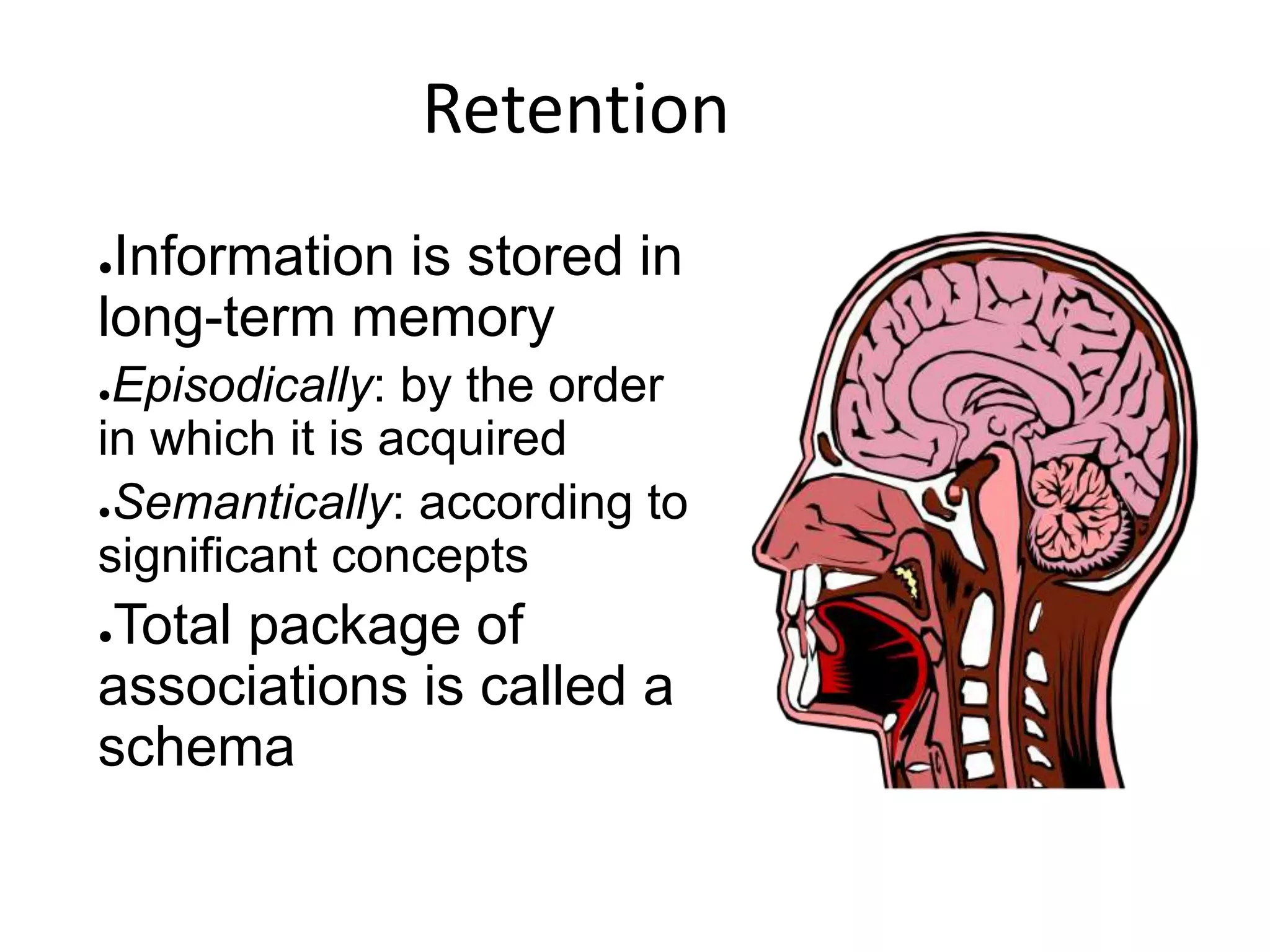
●Information is stored in
long-term memory
●Episodically: by the order
in which it is acquired
●Semantically: according to
significant concepts
●Total package of
associations is called a
schema
Retention
Information processing and
Involvement Theory
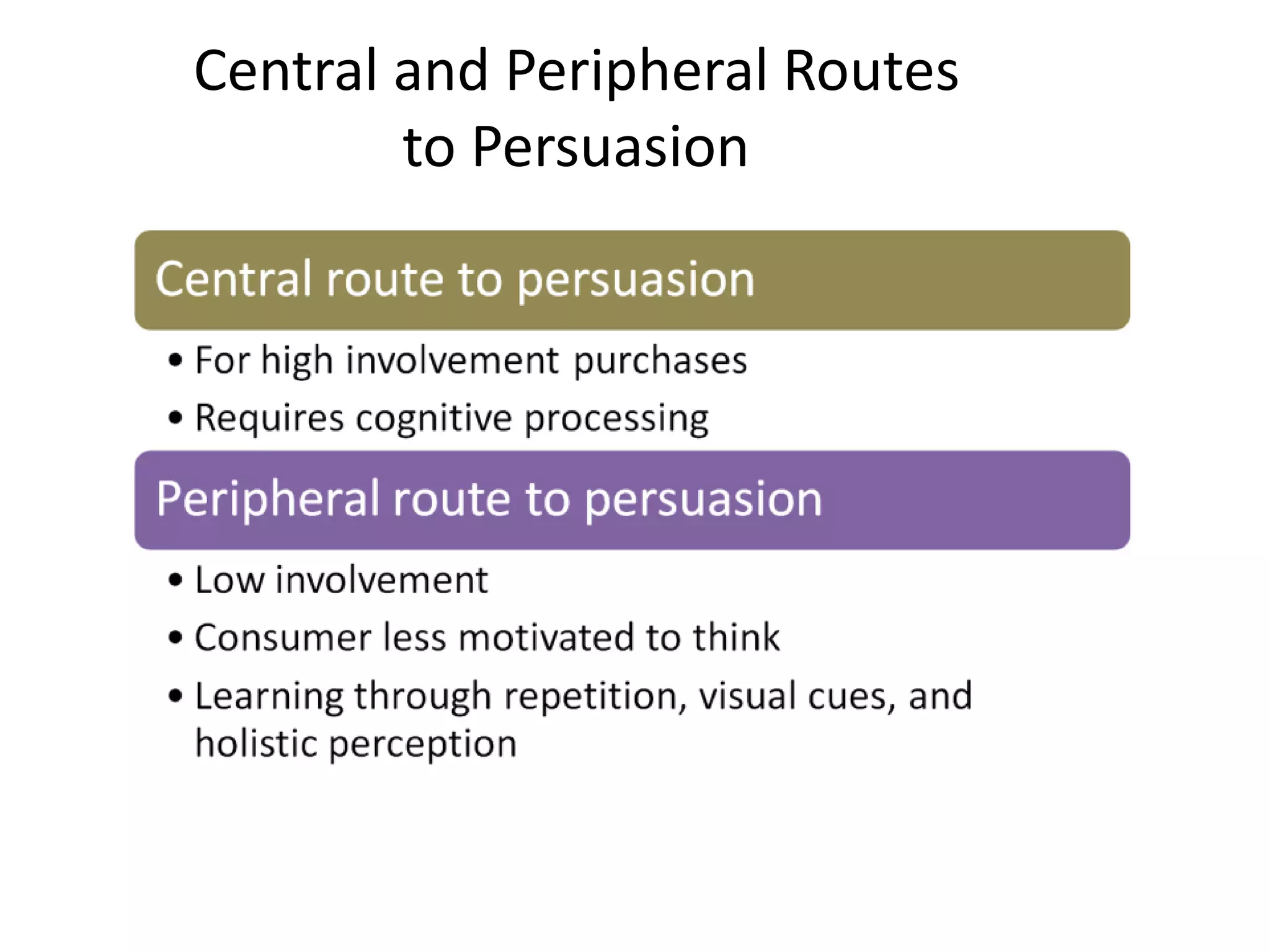
●Central and Peripheral Routes to
Persuasion
–highly involved consumers are best reached
through ads that focus on the specific attributes
of the product (the central route)
–uninvolved consumers can be attracted
through peripheral advertising cues such as the
model or the setting (the peripheral route).
Elaboration Likelihood Model (ELM)
●a person’s level of involvement
during message processing
determines which route to persuasion
is likely to be effective
Central and Peripheral Routes
to Persuasion
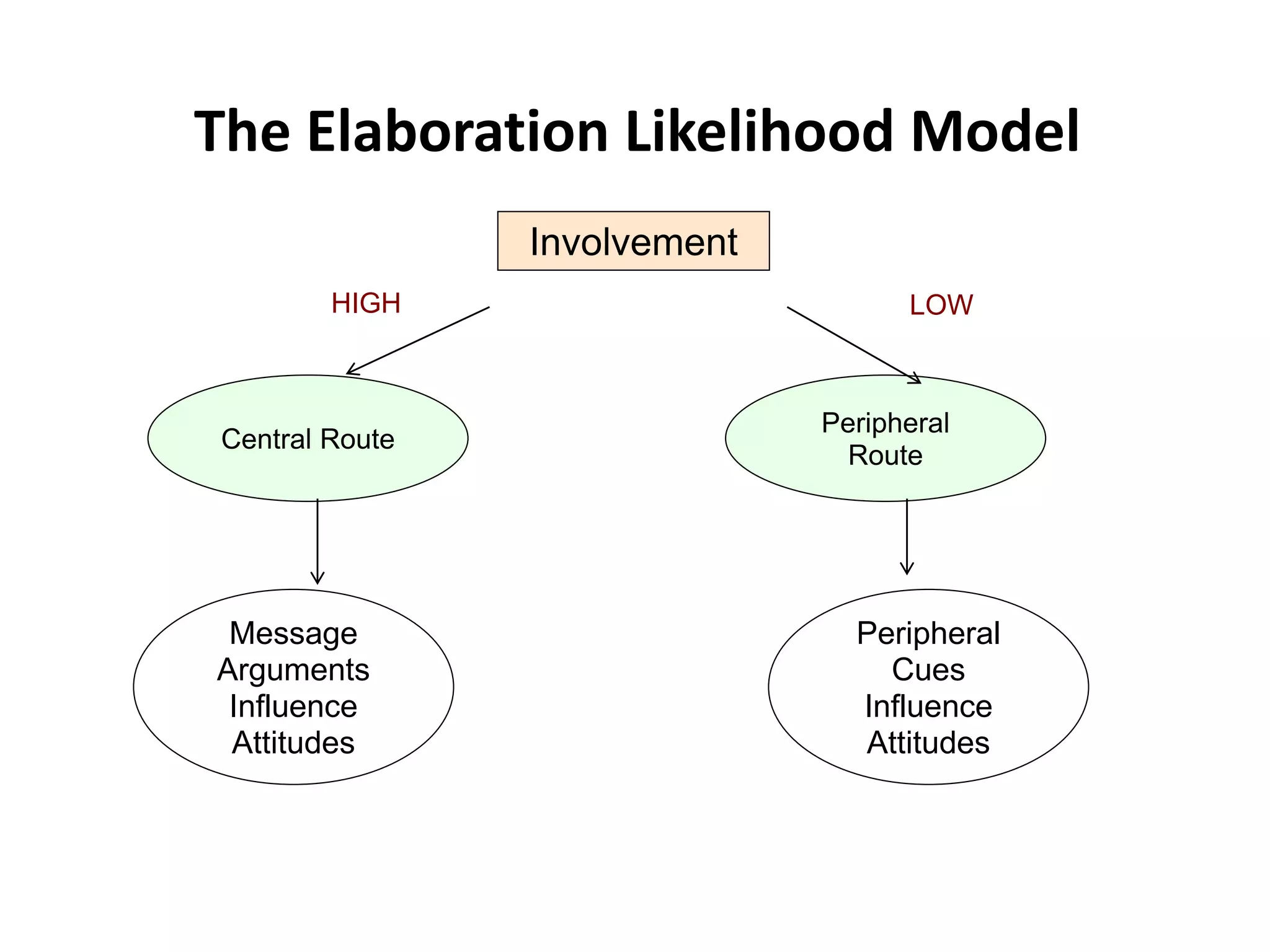
The Elaboration Likelihood Model
Involvement
Central Route
Peripheral
Route
Message
Arguments
Influence
Attitudes
Peripheral
Cues
Influence
Attitudes
HIGH LOW
Cognitive Learning and
Marketing Strategy
●Use rote learning to teach
consumers about the brand
●Use reasoning or problem solving for
complex or high-involvement products
●Use modelling to extinguish negative
behaviour
●Use knowledge of information
processing to help consumers store,
retain and retrieve messages.
Outcomes and Measures of
Consumer Learning
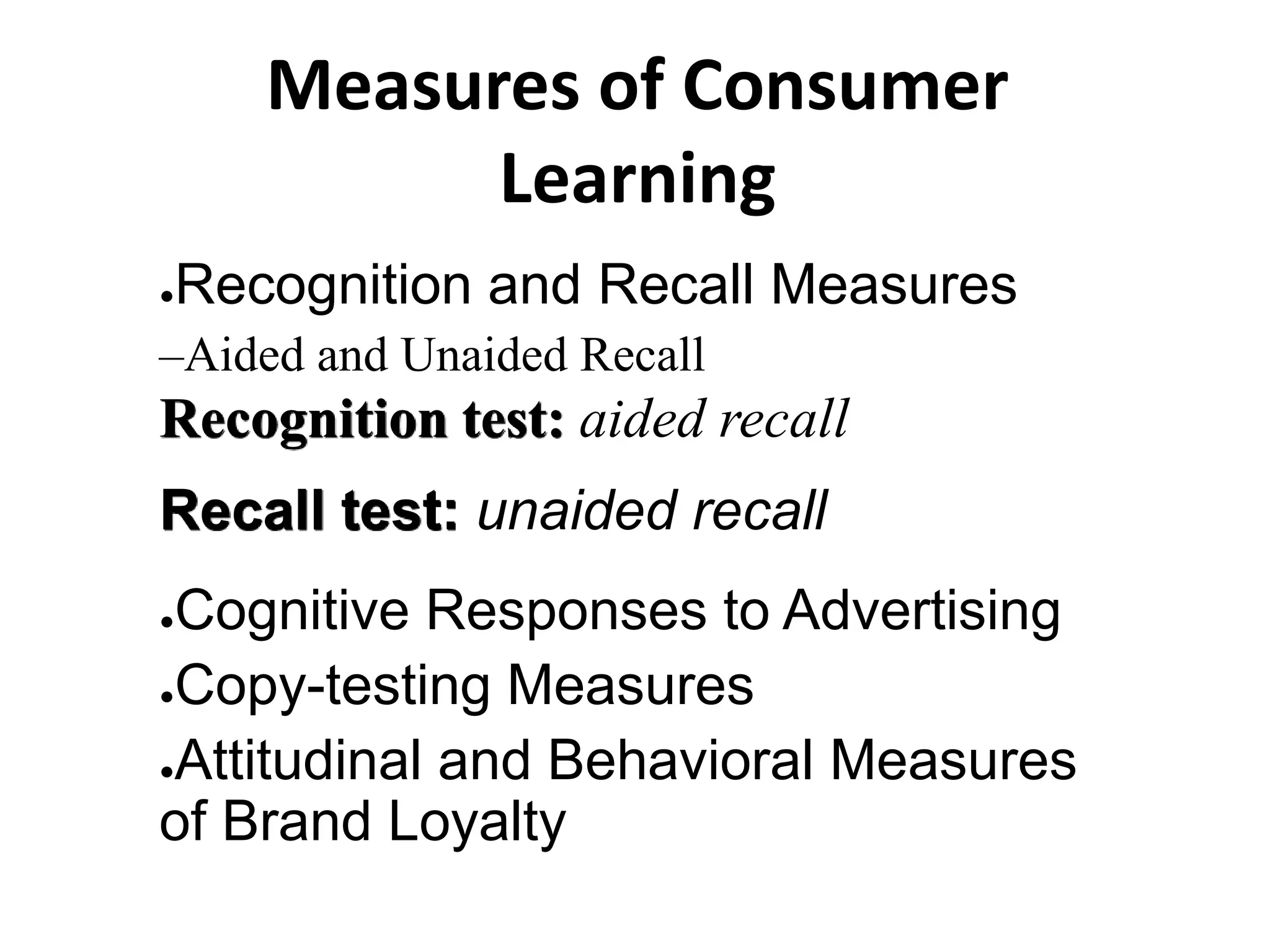
Measures of Consumer
Learning
●Recognition and Recall Measures
–Aided and Unaided Recall
Recognition test: aided recall
Recall test: unaided recall
●Cognitive Responses to Advertising
●Copy-testing Measures
●Attitudinal and Behavioral Measures
of Brand Loyalty
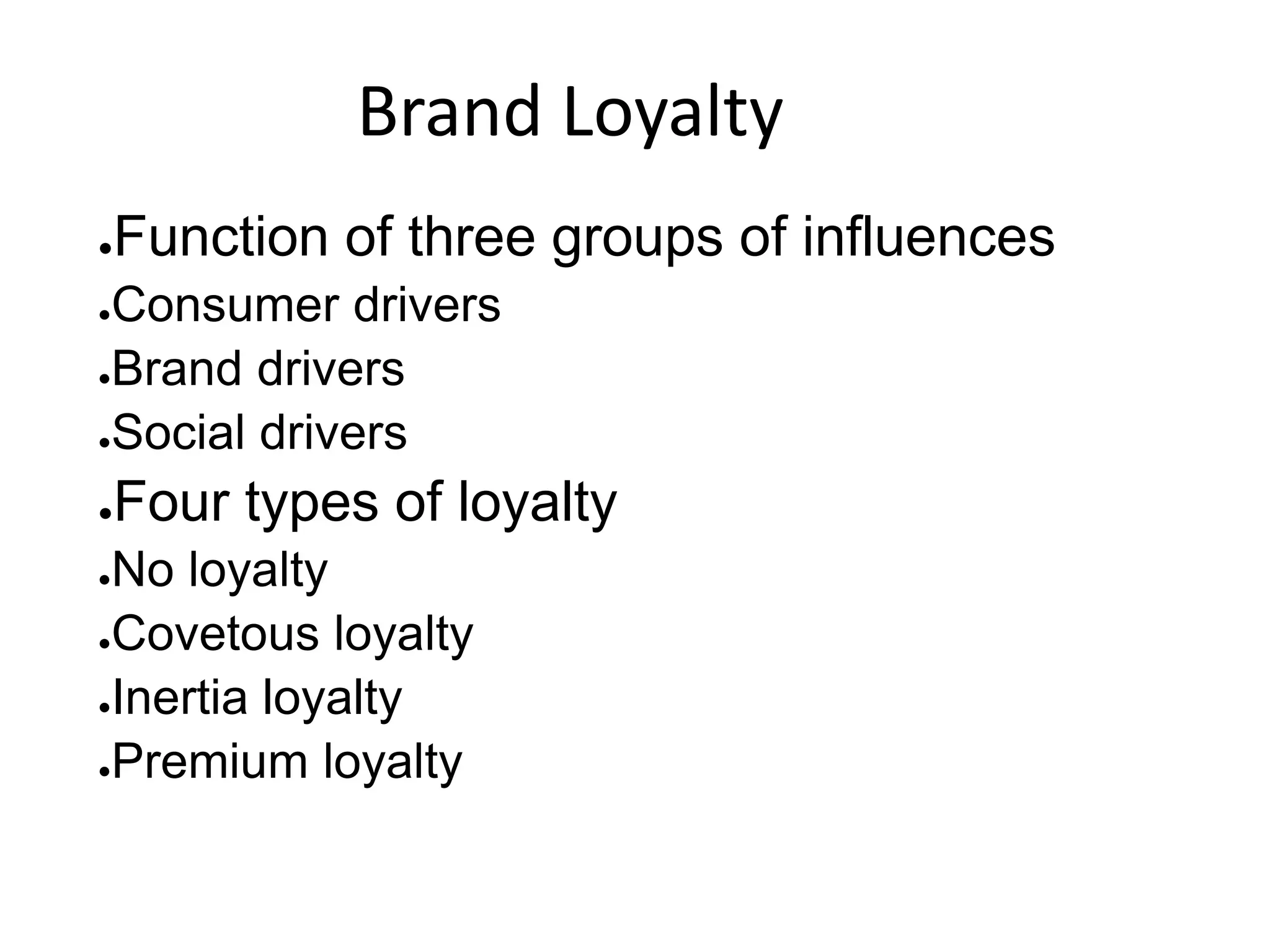
Brand Loyalty
●Function of three groups of influences
●Consumer drivers
●Brand drivers
●Social drivers
●Four types of loyalty
●No loyalty
●Covetous loyalty
●Inertia loyalty
●Premium loyalty
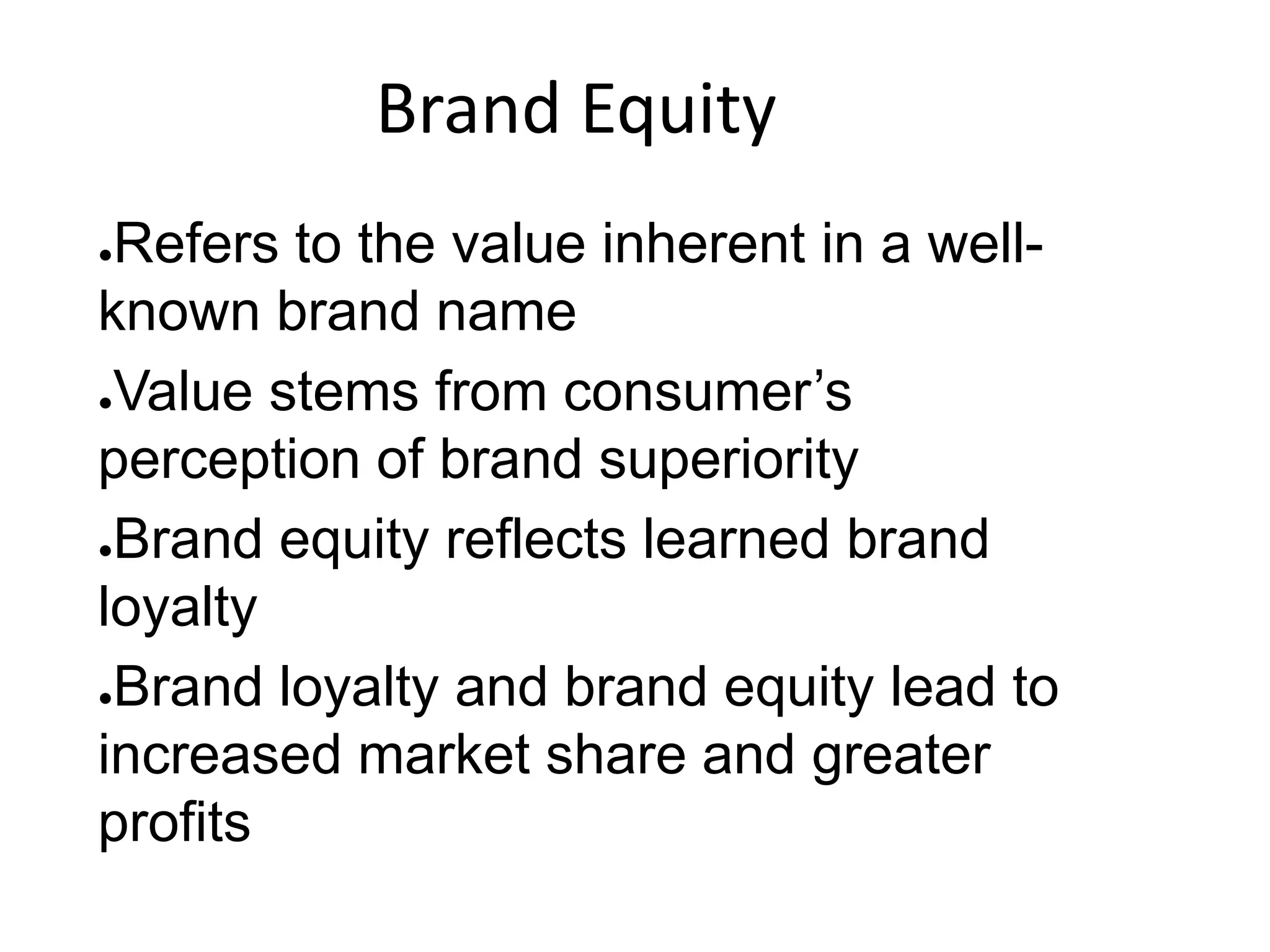
Brand Equity
●Refers to the value inherent in a well-
known brand name
●Value stems from consumer’s
perception of brand superiority
●Brand equity reflects learned brand
loyalty
●Brand loyalty and brand equity lead to
increased market share and greater
profits
“The best teachers are
those who show you
where to loo, but don't
tell you what to see”
Alexandra K.
Trenfor

Consumer presentation finalized

  • 1.
  • 2.
    Learning Objectives 1.To Understandthe Process and Four Elements of Consumer Learning.(slide 4-10) 2.To Study Behavioral Learning and Understand Its Applications to Consumption Behavior. (11-27) 3.To Study Information Processing and Cognitive Learning and Understand Their Strategic Applications to Consumer Behavior.(28-37)
  • 3.
    4. To StudyConsumer Involvement and Passive Learning and Understand Their Strategic Affects on Consumer Behavior.(slide 38-47) 5. To Understand How Consumer Learning and Its Results Are Measured.(slide 47-50) Learning Objectives
  • 4.
    A process bywhich individuals acquire the purchase and consumption knowledge and experience that they apply to future related behavior. Consumer Learning
  • 5.
    Importance of Learning ●Marketersmust teach consumers: –where to buy –how to use –how to maintain –how to dispose of products
  • 6.
    Learning Processes -Incidental -- learningacquired by accident or without much effort -Intentional – learning acquired as a result of a careful search for information
  • 7.
    Elements of LearningTheories ●Motivation ●Cues ●Response ●Reinforcement
  • 8.
    Reinforcement A positive ornegative outcome that influences the likelihood that a specific behaviour will be repeated in the future in response to a particular cue or stimulus.
  • 9.
  • 10.
    Discussion Question ●For Coca-Cola: ●Howhave they used behavioral theory in their marketing? ●Cognitive theory? ●How have they built brand loyalty?
  • 11.
    Behavioral Learning Theories ●ClassicalConditioning ●Instrumental Conditioning ●Modeling or Observational Learning
  • 12.
    Classical Conditioning Pairing a stimulus withanother stimulus that elicits a known response to produce the same response when used alone.
  • 13.
    Models of ClassicalConditioning
  • 14.
    Strategic Applications ofClassical Conditioning Basic Concepts ●Repetition •Stimulus generalization •Stimulus discrimination •Increases the association between the conditioned and unconditioned stimulus •Slows the pace of forgetting •Advertising wearout is a problem
  • 15.
    Why Did McDonaldsUse Two Different Ads to Advertise the Same Product?
  • 16.
    Repetition of theMessage with Varied Ads Results in More Information Processing by the Consumer
  • 17.
    Strategic Applications ofClassical Conditioning Basic Concepts •Repetition ●Stimulus generalization •Stimulus discrimination •Having the same response to slightly different stimuli •Helps “me-too” products to succeed •Useful in product extensions
  • 18.
    Strategic Applications ofClassical Conditioning Basic Concepts •Repetition •Stimulus generalization ●Stimulus discrimination •Selection of a specific stimulus from similar stimuli •This discrimination is the basis of positioning which looks for unique ways to fill needs
  • 19.
    ●For Coca-Cola or anotherbeverage company: ●How have they used classical conditioning in their marketing? ●Identify the unconditioned and conditioned stimuli, the conditioned and unconditioned response. Discussion Questions
  • 20.
    Classical Conditioning and MarketingStrategy ●Identify and pair product with a known, well-liked stimulus –More attention –More favourable attitudes –Greater intention to buy the product –Learning of key attributes ●Use stimulus generalization effectively –Continued
  • 21.
    Instrumental (Operant) Conditioning learning based ona trial-and-error process, with habits forced as the result of positive experiences (reinforcement)
  • 22.
  • 23.
    ●Positive Reinforcement: Positive outcomes that strengthenthe likelihood of a specific response Negative Reinforcement: Unpleasant or negative outcomes that serve to encourage a specific behaviour Reinforcement
  • 24.
    Positive Reinforcement: NegativeReinforcement: Reinforcement
  • 25.
    Other Concepts inReinforcement ●Punishment ●Extinction ●Forgetting ●Combat with repetition
  • 26.
    A Model ofInstrumental Conditioning
  • 27.
    Instrumental Conditioning and Marketing ●Makethe product the ultimate reward ●Provide samples and free trials ●Provide non-product rewards ●Practice relationship marketing ●Reinforcement Schedules –Shaping ●Massed versus Distributed Learning
  • 28.
    Cognitive Learning Theory Holds that thekind of learning most characteristic of human beings is problem solving, which enables individuals to gain some control over their environment.
  • 29.
    Information Processing ●Relates to cognitiveability and the complexity of the information ●Individuals differ in imagery – their ability to form mental images which influences recall
  • 30.
  • 31.
    - Observational learning -Rote Learning - Reasoning Three types of Learning
  • 32.
    Observational Learning ●individuals learnby observing the behaviour of others, and consequences of such behaviour. ●Also known as modeling or vicarious learning.
  • 33.
    Iconic Rote Learning ●Learning concepts through simple repetition ● Key is Repitition ● Similar to classical conditioning but do not try to stimulate a direct affective response.
  • 34.
    –Repeated ads teach consumersabout a product’s attributes
  • 35.
    Reasoning ●Highest level ofcognitive learning ●Involves creative thinking ●Depends on how information is processed and stored
  • 36.
  • 37.
    Involvement and Passive LearningTopics ●Definitions and Measures of Involvement ●Marketing Applications of Involvement ●Central and Peripheral Routes to Persuasion
  • 39.
    Measuring Involvement withan Advertisement Subjects respond to the following statements on a 7-point Likert scale ranging from “Strongly Agree” to “Strongly Disagree.” The message in the slogan was important to me The slogan didn’t have anything to do with my needs The slogan made me think about joining the military The slogan made me want to join the military While reading the slogan, I thought about how the military might be useful for me The slogan did not show me anything that would make me join the military I have a more favorable view of the military after seeing the slogan The slogan showed me the military has certain advantages The slogan was meaningful to me The slogan was worth remembering
  • 40.
    ●How do advertisersdrive consumers to rehearse information? ●When does this work against the advertiser? ●Can you think of examples of advertisements which drive you to rehearse? Discussion Question
  • 41.
    ●Information is storedin long-term memory ●Episodically: by the order in which it is acquired ●Semantically: according to significant concepts ●Total package of associations is called a schema Retention
  • 42.
    Information processing and InvolvementTheory ●Central and Peripheral Routes to Persuasion –highly involved consumers are best reached through ads that focus on the specific attributes of the product (the central route) –uninvolved consumers can be attracted through peripheral advertising cues such as the model or the setting (the peripheral route).
  • 43.
    Elaboration Likelihood Model(ELM) ●a person’s level of involvement during message processing determines which route to persuasion is likely to be effective
  • 44.
    Central and PeripheralRoutes to Persuasion
  • 45.
    The Elaboration LikelihoodModel Involvement Central Route Peripheral Route Message Arguments Influence Attitudes Peripheral Cues Influence Attitudes HIGH LOW
  • 46.
    Cognitive Learning and MarketingStrategy ●Use rote learning to teach consumers about the brand ●Use reasoning or problem solving for complex or high-involvement products ●Use modelling to extinguish negative behaviour ●Use knowledge of information processing to help consumers store, retain and retrieve messages.
  • 47.
    Outcomes and Measuresof Consumer Learning
  • 48.
    Measures of Consumer Learning ●Recognitionand Recall Measures –Aided and Unaided Recall Recognition test: aided recall Recall test: unaided recall ●Cognitive Responses to Advertising ●Copy-testing Measures ●Attitudinal and Behavioral Measures of Brand Loyalty
  • 49.
    Brand Loyalty ●Function ofthree groups of influences ●Consumer drivers ●Brand drivers ●Social drivers ●Four types of loyalty ●No loyalty ●Covetous loyalty ●Inertia loyalty ●Premium loyalty
  • 50.
    Brand Equity ●Refers tothe value inherent in a well- known brand name ●Value stems from consumer’s perception of brand superiority ●Brand equity reflects learned brand loyalty ●Brand loyalty and brand equity lead to increased market share and greater profits
  • 51.
    “The best teachersare those who show you where to loo, but don't tell you what to see” Alexandra K. Trenfor

Editor's Notes

  • #29 Learning through problem solving, which enables individuals to gain some control over their environment. Three types: Observational learning Rote Learning Reasoning