MATERIAL SCIENCE !!!
ENRICHMENT WORKSHOP FOR GIFTED CHILDREN
NO LIMITS TO LEARNING!
BELIEVE & YOU CAN ACHIEVE!
Dr Lakshmi Sharma
www.drlakshmisharma.com
What is Science?
Science is ……….
Biology
Physics
Chemistry
What is Material Science?
Material Science
Material Science
Investigation of the relationship among processing,
structure, properties and performance of materials.
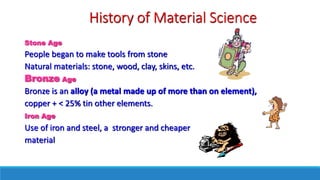
History of Material Science
Stone Age
People began to make tools from stone
Natural materials: stone, wood, clay, skins, etc.
Bronze Age
Bronze is an alloy (a metal made up of more than on element),
copper + < 25% tin other elements.
Iron Age
Use of iron and steel, a stronger and cheaper
material
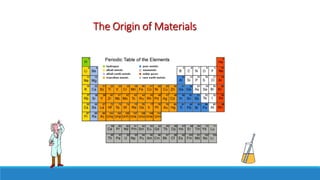
The Origin of Materials
Game 1
On the table are some items
How would you classify them, what similar properties do
they have ????
You have 5 minutes !!!!
Classification of Materials
Metals
Ceramics: inorganic nonmetallic solid – clay, bricks, pipes
Polymers
Semiconductors:material with electrical conductivity Semiconductor
materials are the foundation of modern electronics, including radio,
computers, telephones, and many other devices.
Polymers
The most important group of materials
Long chain carbon backbone
Plastics are a type of polymer
Polymers occur naturally and can be synthesised (made)
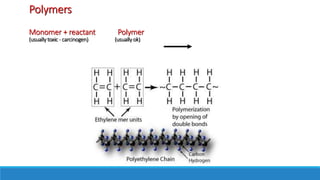
Polymers
Monomer + reactant Polymer
(usually toxic - carcinogen) (usually ok)
Game 2
In front of you are objects which do you think are
polymers?
You have 2 minutes to decide !
Can you eat polymers ?!!!!
Game 3
Imagine life without polymers !
Discuss what you would miss most !
Structure
Structure is the fundamental issue
Decides on the performance of the Material.
DIAMOND OR GRAPHITE ?????
Game 4
You have spaghetti sticks in front of you can you
construct the molecular structure on the sheet
provided ?????
You have 5 minutes.
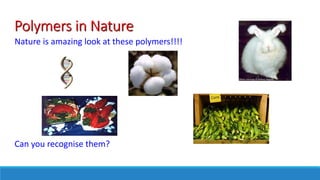
Polymers in Nature
Nature is amazing look at these polymers!!!!
Can you recognise them?
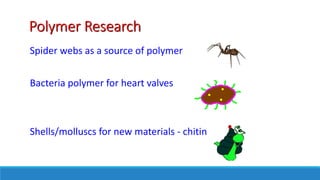
Polymer Research
Spider webs as a source of polymer
Bacteria polymer for heart valves
Shells/molluscs for new materials - chitin
Current Material Development
Biodegradable materials
Nanomaterials:one billionth of a metre, Human hair: ~10,000 nanometers in
diameter, sunscreens coat your skin with a layer of nanoscopic titanium
dioxide.
Nano-coatings on scratch-resistant car bumpers, corrosion resistant paints,
andwound dressings.
Current Material Development
“Smart” materials:Self-healing materials ability to repair damage due to
normal usage, thus expanding the material's lifetime : Shape memory
materials maintain fixed shape even after distortion
New Materials Challenge !
Can you think of Future Materials?????
HOPE YOU ENJOYED THIS WORKSHOP ON MATERIAL SCIENCE !!!
NO LIMITS TO LEARNING!
BELIEVE & YOU CAN ACHIEVE!
Dr Lakshmi Sharma
www.drlakshmisharma.com

Gifted Students - Material Science - The Gifted Child - Giftedness Enrichment Workshop

  • 1.
    MATERIAL SCIENCE !!! ENRICHMENTWORKSHOP FOR GIFTED CHILDREN NO LIMITS TO LEARNING! BELIEVE & YOU CAN ACHIEVE! Dr Lakshmi Sharma www.drlakshmisharma.com
  • 2.
  • 3.
  • 4.
  • 5.
    Material Science Material Science Investigationof the relationship among processing, structure, properties and performance of materials.
  • 6.
    History of MaterialScience Stone Age People began to make tools from stone Natural materials: stone, wood, clay, skins, etc. Bronze Age Bronze is an alloy (a metal made up of more than on element), copper + < 25% tin other elements. Iron Age Use of iron and steel, a stronger and cheaper material
  • 7.
    The Origin ofMaterials
  • 9.
    Game 1 On thetable are some items How would you classify them, what similar properties do they have ???? You have 5 minutes !!!!
  • 10.
    Classification of Materials Metals Ceramics:inorganic nonmetallic solid – clay, bricks, pipes Polymers Semiconductors:material with electrical conductivity Semiconductor materials are the foundation of modern electronics, including radio, computers, telephones, and many other devices.
  • 11.
    Polymers The most importantgroup of materials Long chain carbon backbone Plastics are a type of polymer Polymers occur naturally and can be synthesised (made)
  • 12.
    Polymers Monomer + reactantPolymer (usually toxic - carcinogen) (usually ok)
  • 14.
    Game 2 In frontof you are objects which do you think are polymers? You have 2 minutes to decide !
  • 15.
    Can you eatpolymers ?!!!!
  • 17.
    Game 3 Imagine lifewithout polymers ! Discuss what you would miss most !
  • 18.
    Structure Structure is thefundamental issue Decides on the performance of the Material. DIAMOND OR GRAPHITE ?????
  • 20.
    Game 4 You havespaghetti sticks in front of you can you construct the molecular structure on the sheet provided ????? You have 5 minutes.
  • 21.
    Polymers in Nature Natureis amazing look at these polymers!!!! Can you recognise them?
  • 22.
    Polymer Research Spider websas a source of polymer Bacteria polymer for heart valves Shells/molluscs for new materials - chitin
  • 23.
    Current Material Development Biodegradablematerials Nanomaterials:one billionth of a metre, Human hair: ~10,000 nanometers in diameter, sunscreens coat your skin with a layer of nanoscopic titanium dioxide. Nano-coatings on scratch-resistant car bumpers, corrosion resistant paints, andwound dressings.
  • 24.
    Current Material Development “Smart”materials:Self-healing materials ability to repair damage due to normal usage, thus expanding the material's lifetime : Shape memory materials maintain fixed shape even after distortion
  • 25.
    New Materials Challenge! Can you think of Future Materials?????
  • 26.
    HOPE YOU ENJOYEDTHIS WORKSHOP ON MATERIAL SCIENCE !!! NO LIMITS TO LEARNING! BELIEVE & YOU CAN ACHIEVE! Dr Lakshmi Sharma www.drlakshmisharma.com