Processing And Performance.
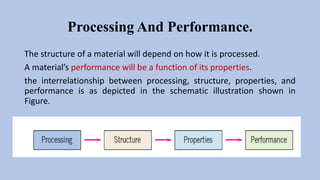
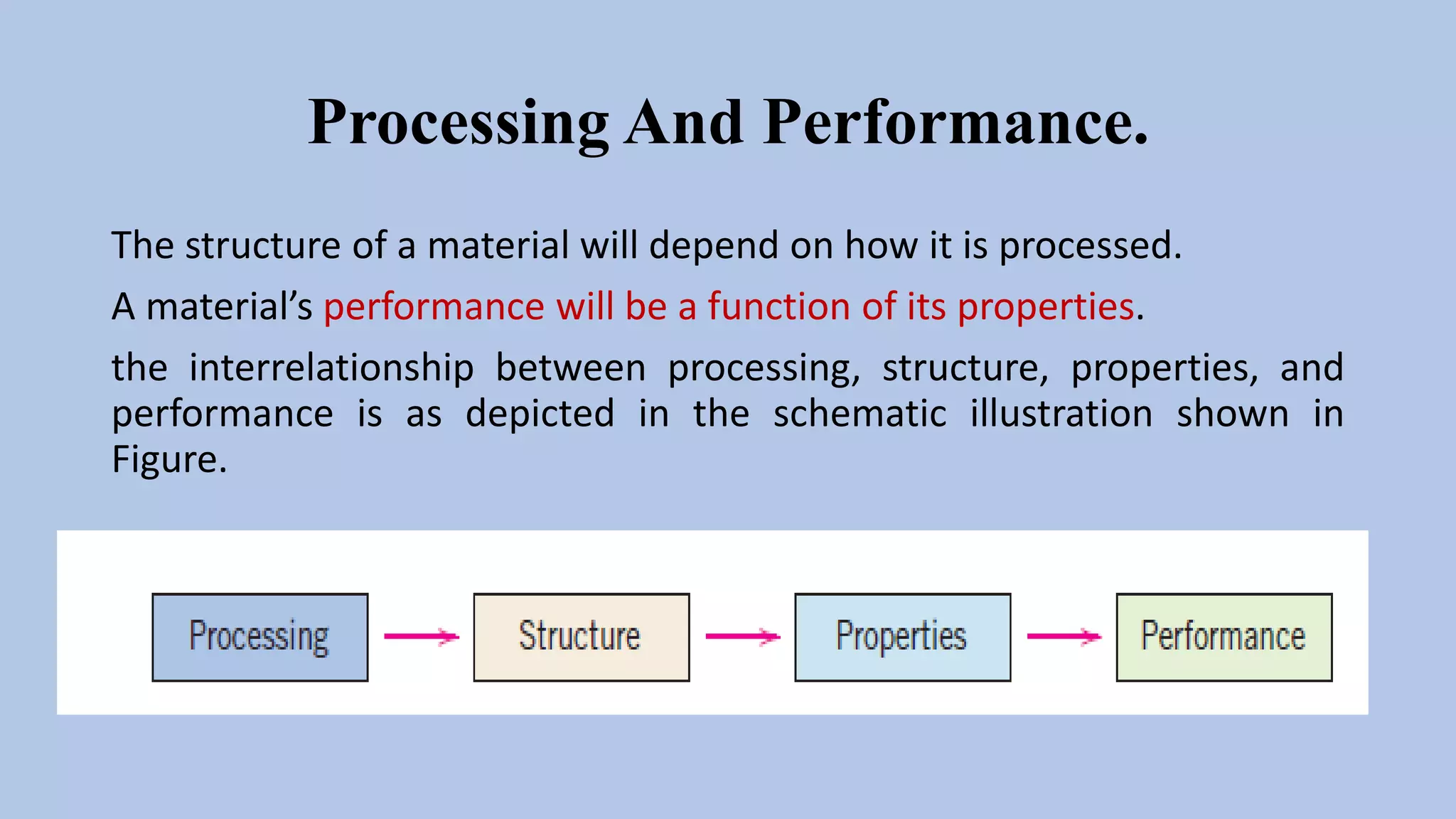
The structure of a material will depend on how it is processed.
A material’s performance will be a function of its properties.
the interrelationship between processing, structure, properties, and
performance is as depicted in the schematic illustration shown in
Figure.
Example of these Processing, Structure, Properties
Performance Principles
➢Photograph showing three thin disk specimens placed over some
printed matter. It is obvious that the optical properties of each of
the three materials are different.
➢The one on the left is transparent whereas the disks in the center
and on the right are, respectively, translucent and opaque.
➢All of these specimens are of the same material, aluminum oxide.
➢Leftmost one is what we call a single crystal that is, it is highly
perfect which gives rise to its transparency.
➢The center one is composed of numerous and very small single
crystals that are all connected. The boundaries between these
small crystals scatter a portion of the light reflected from the
printed page, which makes this material optically translucent.
➢The specimen on the right is composed not only of many small,
interconnected crystals, but also of a large number of very small
pores or void spaces. These pores also effectively scatter the
reflected light and render this material opaque.
Why Study Materials Science and Engineering
• Many an applied scientist or engineer, whether mechanical, civil, chemical,
or electrical, will at one time or another be exposed to design problem
involving materials.
• Many times, a materials problem is one of selecting the right material from
the many thousands that are available.
• There are several criteria on which the final decision is normally based
• First of all, the in-service conditions must be characterized, for these will
dictate the properties required of the material.
• On only rare occasions does a material possess the maximum or ideal
combination of properties.
Thus, it may be necessary to trade off one characteristic for another.
The classic example involves strength and ductility normally, a material
having a high strength will have only a limited ductility.
In such cases a reasonable compromise between two or more properties
may be necessary.
A second selection consideration is any deterioration of material
properties that may occur during service operation. For example,
significant reductions in mechanical strength may result from exposure
to elevated temperatures or corrosive environments.
Finally, probably the overriding consideration is that of economics.
What will the finished product cost?
A material may be found that has the ideal set of properties but is
prohibitively expensive. Here again, some compromise is inevitable.
The cost of a finished piece also includes any expense incurred during
fabrication to produce the desired shape.
The more familiar an Engineer or Scientist is with the various
characteristics and structure property relationships, as well as
processing techniques of materials, the more proficient and confident
he or she will be to make materials choices based on these criteria.
CLASSIFICATION OF MATERIALS
➢Metals
➢Ceramics
➢Polymers
➢Composites
Metals
➢Materials in this group are composed of one or more metallic elements (such as iron, aluminum,
copper, titanium, gold, and nickel), and often also nonmetallic elements (for example, carbon,
nitrogen, and oxygen) in relatively small amounts
➢ Atoms in metals and their alloys are arranged in a very orderly manner and in comparison to the
ceramics and polymers, are relatively dense.
➢these materials are relatively stiff and strong yet are ductile and are resistant to fracture which
accounts for their widespread use in structural applications.
➢ Metallic materials have large numbers of nonlocalized electrons that is these electrons are not
bound to particular atoms.
➢Many properties of metals are directly attributable to these electrons. For example, metals are
extremely good conductors of electricity and heat, and are not transparent to visible light
➢a polished metal surface has a lustrous appearance.
➢ In addition, some of the metals (viz., Fe, Co, and Ni) have desirable magnetic properties.
Ceramics
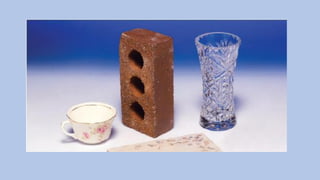
Ceramics are compounds between metallic and nonmetallic elements they are most
frequently oxides, nitrides, and carbides.
Common ceramic materials include aluminum oxide (or alumina,Al2O3), silicon dioxide (or
silica, SiO2), silicon carbide (SiC), silicon nitride (Si3N4), and, in addition, traditional
ceramics those composed of clay minerals as well as cement, and glass.
With regard to mechanical behavior, ceramic materials are relatively stiff and strong
stiffnesses and strengths are comparable to those of the metals.
In addition, ceramics are typically very hard.
They are extremely brittle (lack ductility), and are highly susceptible to fracture.
These materials are typically insulative to the passage of heat and electricity have low
electrical conductivities, and are more resistant to high temperatures and harsh
environments than metals and polymers.
With regard to optical characteristics, ceramics may be transparent, translucent, or opaque
and some of the oxide ceramics e.g.Fe3O4 exhibit magnetic behavior.
Polymers
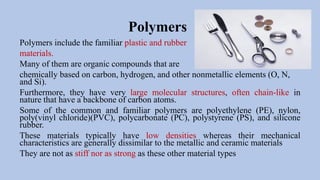
Polymers include the familiar plastic and rubber
materials.
Many of them are organic compounds that are
chemically based on carbon, hydrogen, and other nonmetallic elements (O, N,
and Si).
Furthermore, they have very large molecular structures, often chain-like in
nature that have a backbone of carbon atoms.
Some of the common and familiar polymers are polyethylene (PE), nylon,
poly(vinyl chloride)(PVC), polycarbonate (PC), polystyrene (PS), and silicone
rubber.
These materials typically have low densities whereas their mechanical
characteristics are generally dissimilar to the metallic and ceramic materials
They are not as stiff nor as strong as these other material types
Composites
A composite is composed of two (or more) individual materials, which
come from the categories discussed above metals, ceramics, and polymers.
The design goal of a composite is to achieve a combination of properties
that is not displayed by any single material, and also to incorporate the best
characteristics of each of the component materials.
A large number of composite types exist that are represented by different
combinations of metals, ceramics, and polymers.
Furthermore, some naturally-occurring materials are also considered to be
composites—for example, wood and bone.
However, most of those we consider in our discussions are synthetic (or
man-made) composites.
One of the most common and familiar composites is fiberglass, in which
small glass fibers are embedded within a polymeric material (normally
an epoxy or polyester).
The glass fibers are relatively strong and stiff (but also brittle), whereas
the polymer is ductile (but also weak and flexible).Thus, the resulting
fiberglass is relatively stiff, strong, flexible, and ductile.
In addition, it has a low density
Another of these technologically important materials is the “carbon fiber
reinforced polymer” (or “CFRP”) composite—carbon fibers that are
embedded within a polymer.
These materials are stiffer and stronger than the glass fiber-reinforced
materials yet they are more expensive

Processing And Performance.

  • 1.
    Processing And Performance. Thestructure of a material will depend on how it is processed. A material’s performance will be a function of its properties. the interrelationship between processing, structure, properties, and performance is as depicted in the schematic illustration shown in Figure.
  • 2.
    Example of theseProcessing, Structure, Properties Performance Principles ➢Photograph showing three thin disk specimens placed over some printed matter. It is obvious that the optical properties of each of the three materials are different. ➢The one on the left is transparent whereas the disks in the center and on the right are, respectively, translucent and opaque. ➢All of these specimens are of the same material, aluminum oxide. ➢Leftmost one is what we call a single crystal that is, it is highly perfect which gives rise to its transparency. ➢The center one is composed of numerous and very small single crystals that are all connected. The boundaries between these small crystals scatter a portion of the light reflected from the printed page, which makes this material optically translucent. ➢The specimen on the right is composed not only of many small, interconnected crystals, but also of a large number of very small pores or void spaces. These pores also effectively scatter the reflected light and render this material opaque.
  • 3.
    Why Study MaterialsScience and Engineering • Many an applied scientist or engineer, whether mechanical, civil, chemical, or electrical, will at one time or another be exposed to design problem involving materials. • Many times, a materials problem is one of selecting the right material from the many thousands that are available. • There are several criteria on which the final decision is normally based • First of all, the in-service conditions must be characterized, for these will dictate the properties required of the material. • On only rare occasions does a material possess the maximum or ideal combination of properties.
  • 4.
    Thus, it maybe necessary to trade off one characteristic for another. The classic example involves strength and ductility normally, a material having a high strength will have only a limited ductility. In such cases a reasonable compromise between two or more properties may be necessary. A second selection consideration is any deterioration of material properties that may occur during service operation. For example, significant reductions in mechanical strength may result from exposure to elevated temperatures or corrosive environments. Finally, probably the overriding consideration is that of economics. What will the finished product cost?
  • 5.
    A material maybe found that has the ideal set of properties but is prohibitively expensive. Here again, some compromise is inevitable. The cost of a finished piece also includes any expense incurred during fabrication to produce the desired shape. The more familiar an Engineer or Scientist is with the various characteristics and structure property relationships, as well as processing techniques of materials, the more proficient and confident he or she will be to make materials choices based on these criteria.
  • 6.
  • 7.
    Metals ➢Materials in thisgroup are composed of one or more metallic elements (such as iron, aluminum, copper, titanium, gold, and nickel), and often also nonmetallic elements (for example, carbon, nitrogen, and oxygen) in relatively small amounts ➢ Atoms in metals and their alloys are arranged in a very orderly manner and in comparison to the ceramics and polymers, are relatively dense. ➢these materials are relatively stiff and strong yet are ductile and are resistant to fracture which accounts for their widespread use in structural applications. ➢ Metallic materials have large numbers of nonlocalized electrons that is these electrons are not bound to particular atoms. ➢Many properties of metals are directly attributable to these electrons. For example, metals are extremely good conductors of electricity and heat, and are not transparent to visible light ➢a polished metal surface has a lustrous appearance. ➢ In addition, some of the metals (viz., Fe, Co, and Ni) have desirable magnetic properties.
  • 8.
    Ceramics Ceramics are compoundsbetween metallic and nonmetallic elements they are most frequently oxides, nitrides, and carbides. Common ceramic materials include aluminum oxide (or alumina,Al2O3), silicon dioxide (or silica, SiO2), silicon carbide (SiC), silicon nitride (Si3N4), and, in addition, traditional ceramics those composed of clay minerals as well as cement, and glass. With regard to mechanical behavior, ceramic materials are relatively stiff and strong stiffnesses and strengths are comparable to those of the metals. In addition, ceramics are typically very hard. They are extremely brittle (lack ductility), and are highly susceptible to fracture. These materials are typically insulative to the passage of heat and electricity have low electrical conductivities, and are more resistant to high temperatures and harsh environments than metals and polymers. With regard to optical characteristics, ceramics may be transparent, translucent, or opaque and some of the oxide ceramics e.g.Fe3O4 exhibit magnetic behavior.
  • 10.
    Polymers Polymers include thefamiliar plastic and rubber materials. Many of them are organic compounds that are chemically based on carbon, hydrogen, and other nonmetallic elements (O, N, and Si). Furthermore, they have very large molecular structures, often chain-like in nature that have a backbone of carbon atoms. Some of the common and familiar polymers are polyethylene (PE), nylon, poly(vinyl chloride)(PVC), polycarbonate (PC), polystyrene (PS), and silicone rubber. These materials typically have low densities whereas their mechanical characteristics are generally dissimilar to the metallic and ceramic materials They are not as stiff nor as strong as these other material types
  • 11.
    Composites A composite iscomposed of two (or more) individual materials, which come from the categories discussed above metals, ceramics, and polymers. The design goal of a composite is to achieve a combination of properties that is not displayed by any single material, and also to incorporate the best characteristics of each of the component materials. A large number of composite types exist that are represented by different combinations of metals, ceramics, and polymers. Furthermore, some naturally-occurring materials are also considered to be composites—for example, wood and bone. However, most of those we consider in our discussions are synthetic (or man-made) composites.
  • 12.
    One of themost common and familiar composites is fiberglass, in which small glass fibers are embedded within a polymeric material (normally an epoxy or polyester). The glass fibers are relatively strong and stiff (but also brittle), whereas the polymer is ductile (but also weak and flexible).Thus, the resulting fiberglass is relatively stiff, strong, flexible, and ductile. In addition, it has a low density Another of these technologically important materials is the “carbon fiber reinforced polymer” (or “CFRP”) composite—carbon fibers that are embedded within a polymer. These materials are stiffer and stronger than the glass fiber-reinforced materials yet they are more expensive