CONTENT
 Introduction
 Hardness
 Creep
 Elasticity
 Hardening
 Plasticity
 Reference
Introduction
 The substances which are useful in the field of engineering are
called Engineering materials. A particular material is selected is
on the basis of following considerations
 Properties of material
 Mechanical properties - strength, ductility, toughness, hardness,
strength to weight ratio etc.
 Physical properties - density, specific heat, thermal expansion,
conductivity , melting point etc.
 Chemical properties - oxidation , corrosion, flammability,
toxicity etc.
 Manufacturing properties - formed, casting, machined, welding
Hardness
 Hardness is the resistance of material to permanent
deformation of the surface.
 Hardness is not a fundamental property of a material,
but a combined effect of compressive, elastic and
plastic properties
 It can be measured by nondestructive testing.
Hardness Measurement
 Hardness measurement can be in Macro, Micro &
nano – scale.
 Measurement of the Macro-hardness of materials
is a quick and simple method of obtaining
mechanical property data.
 The Macro-hardness measurement will be highly
variable.
 Micro-hardness measurements are appropriate.
Hardness Measurement Methods
 Rockwell hardness test
 Brinell hardness
 Vickers
 Knoop hardness
 shore
Hardness Testers
Creep
 When materials under severe service conditions are
required to sustain steady loads for long periods of
time, they undergo a time dependent deformation.
 the slow and progressive deformation of a material
with time at constant stress.
Factors affecting creep
 Load
 Temperature
 Composition
 Grain size
 Heat treatment
Elasticity
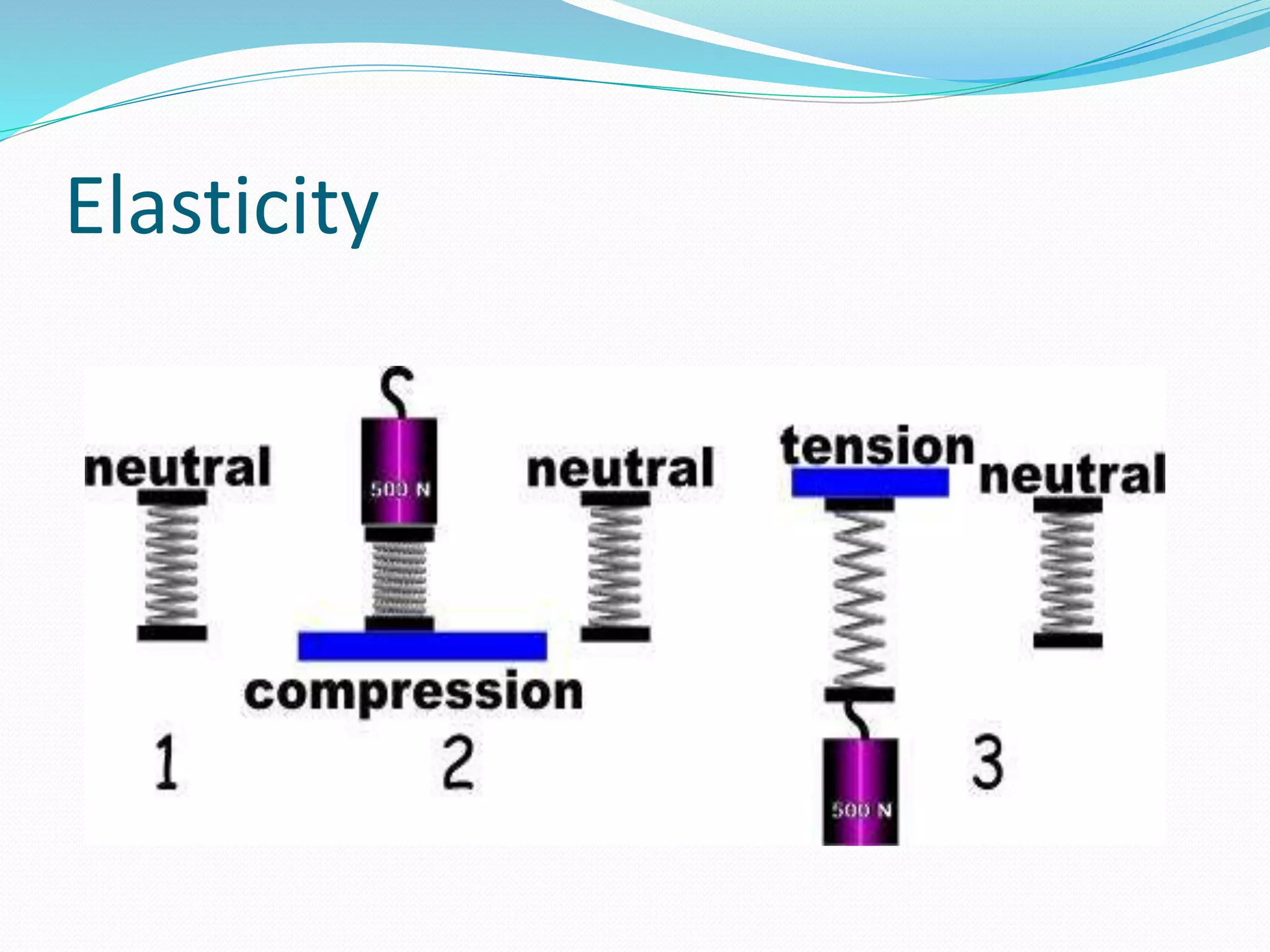
 The property of a material to regain its original
configuration after removal of external forces.
Elasticity
Hardening
 The heat treatment process in which we can improve
the hardness of the material is called hardening.
 Hardening is a metallurgical and metalworking
process used to increase the hardness of a metal.
Hardening process
Plasticity
 Property of material to be deformed repeatedly
without rupture by the action of a force, and remain
deformed after the force is removed.
 Property of material due to material does to regain its
original configuration that property is termed as
Plasticity
Plastic Deformation (Metals)
15
1. Initial 2. Small load 3. Unload
Plastic means permanent.
F

linear
elastic
linear
elastic
plastic
Plastic Deformation (permanent)
 From an atomic perspective, plastic deformation
corresponds to the breaking of bonds with original
atom neighbors and then reforming bonds with new
neighbors.
 After removal of the stress, the large number of atoms
that have relocated, do not return to original position.
 Yield strength is a measure of resistance to plastic
deformation.
Reference
 O.P. KHANNA , DHANPAT RAI PUBLICATIONS,
2013
END

Mechanical properties of Material

  • 2.
    CONTENT  Introduction  Hardness Creep  Elasticity  Hardening  Plasticity  Reference
  • 3.
    Introduction  The substanceswhich are useful in the field of engineering are called Engineering materials. A particular material is selected is on the basis of following considerations  Properties of material  Mechanical properties - strength, ductility, toughness, hardness, strength to weight ratio etc.  Physical properties - density, specific heat, thermal expansion, conductivity , melting point etc.  Chemical properties - oxidation , corrosion, flammability, toxicity etc.  Manufacturing properties - formed, casting, machined, welding
  • 4.
    Hardness  Hardness isthe resistance of material to permanent deformation of the surface.  Hardness is not a fundamental property of a material, but a combined effect of compressive, elastic and plastic properties  It can be measured by nondestructive testing.
  • 5.
    Hardness Measurement  Hardnessmeasurement can be in Macro, Micro & nano – scale.  Measurement of the Macro-hardness of materials is a quick and simple method of obtaining mechanical property data.  The Macro-hardness measurement will be highly variable.  Micro-hardness measurements are appropriate.
  • 6.
    Hardness Measurement Methods Rockwell hardness test  Brinell hardness  Vickers  Knoop hardness  shore
  • 7.
  • 8.
    Creep  When materialsunder severe service conditions are required to sustain steady loads for long periods of time, they undergo a time dependent deformation.  the slow and progressive deformation of a material with time at constant stress.
  • 9.
    Factors affecting creep Load  Temperature  Composition  Grain size  Heat treatment
  • 10.
    Elasticity  The propertyof a material to regain its original configuration after removal of external forces.
  • 11.
  • 12.
    Hardening  The heattreatment process in which we can improve the hardness of the material is called hardening.  Hardening is a metallurgical and metalworking process used to increase the hardness of a metal.
  • 13.
  • 14.
    Plasticity  Property ofmaterial to be deformed repeatedly without rupture by the action of a force, and remain deformed after the force is removed.  Property of material due to material does to regain its original configuration that property is termed as Plasticity
  • 15.
    Plastic Deformation (Metals) 15 1.Initial 2. Small load 3. Unload Plastic means permanent. F  linear elastic linear elastic plastic
  • 16.
    Plastic Deformation (permanent) From an atomic perspective, plastic deformation corresponds to the breaking of bonds with original atom neighbors and then reforming bonds with new neighbors.  After removal of the stress, the large number of atoms that have relocated, do not return to original position.  Yield strength is a measure of resistance to plastic deformation.
  • 17.
    Reference  O.P. KHANNA, DHANPAT RAI PUBLICATIONS, 2013
  • 18.