

Managment of Failure
To Thrive
Abdullatiff Sami Al-Rashed
Block 3.4
College of Medicine, KFU
Al-Ahsa, Saudi Arabia
How do you treat a case of
failure to thrive with special
reference to nutritional
management?
How do you treat a case of
failure to thrive with special
reference to nutritional
management?
Introduction
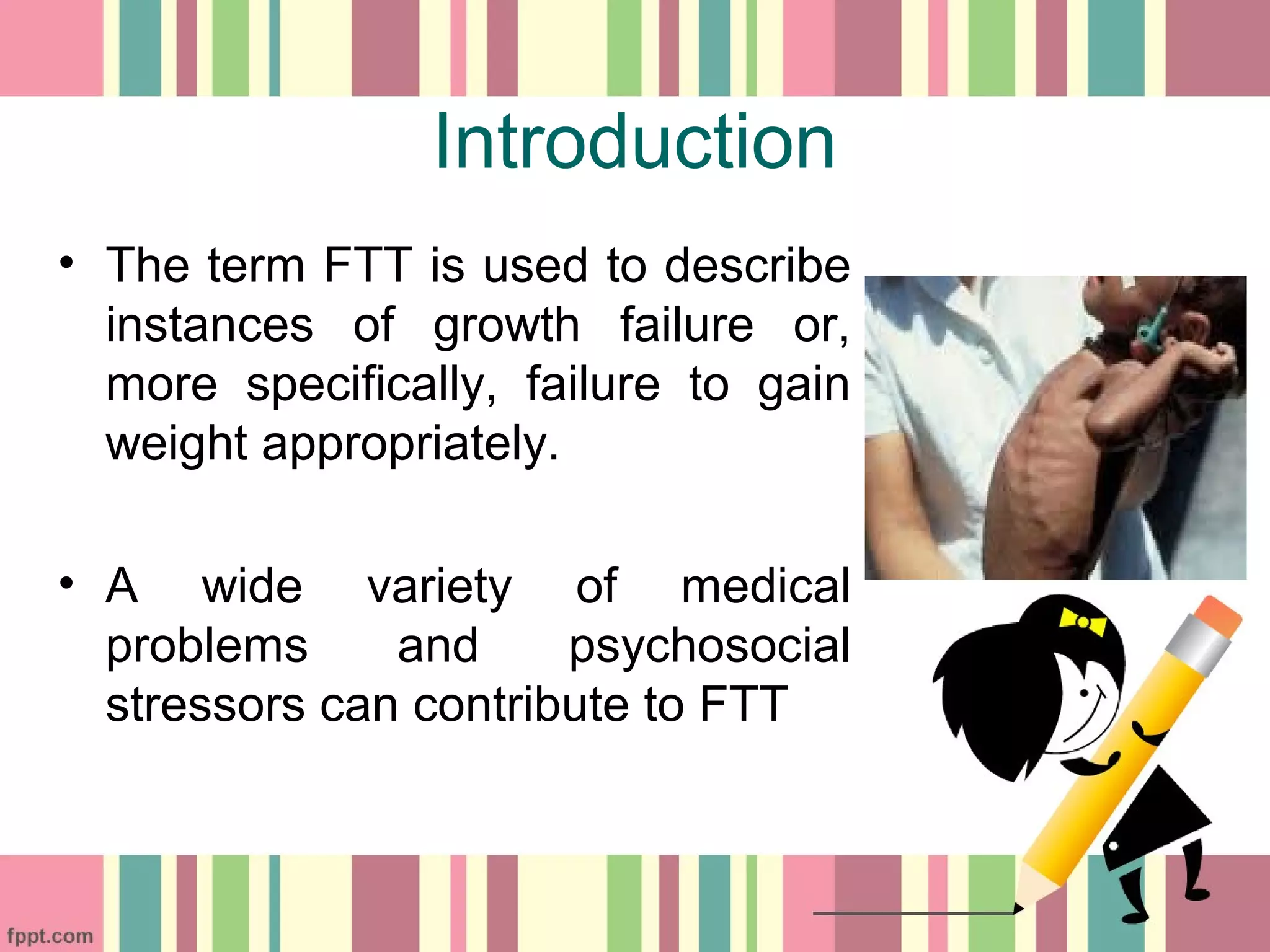
• The term FTT is used to describe
instances of growth failure or,
more specifically, failure to gain
weight appropriately.
• A wide variety of medical
problems and psychosocial
stressors can contribute to FTT
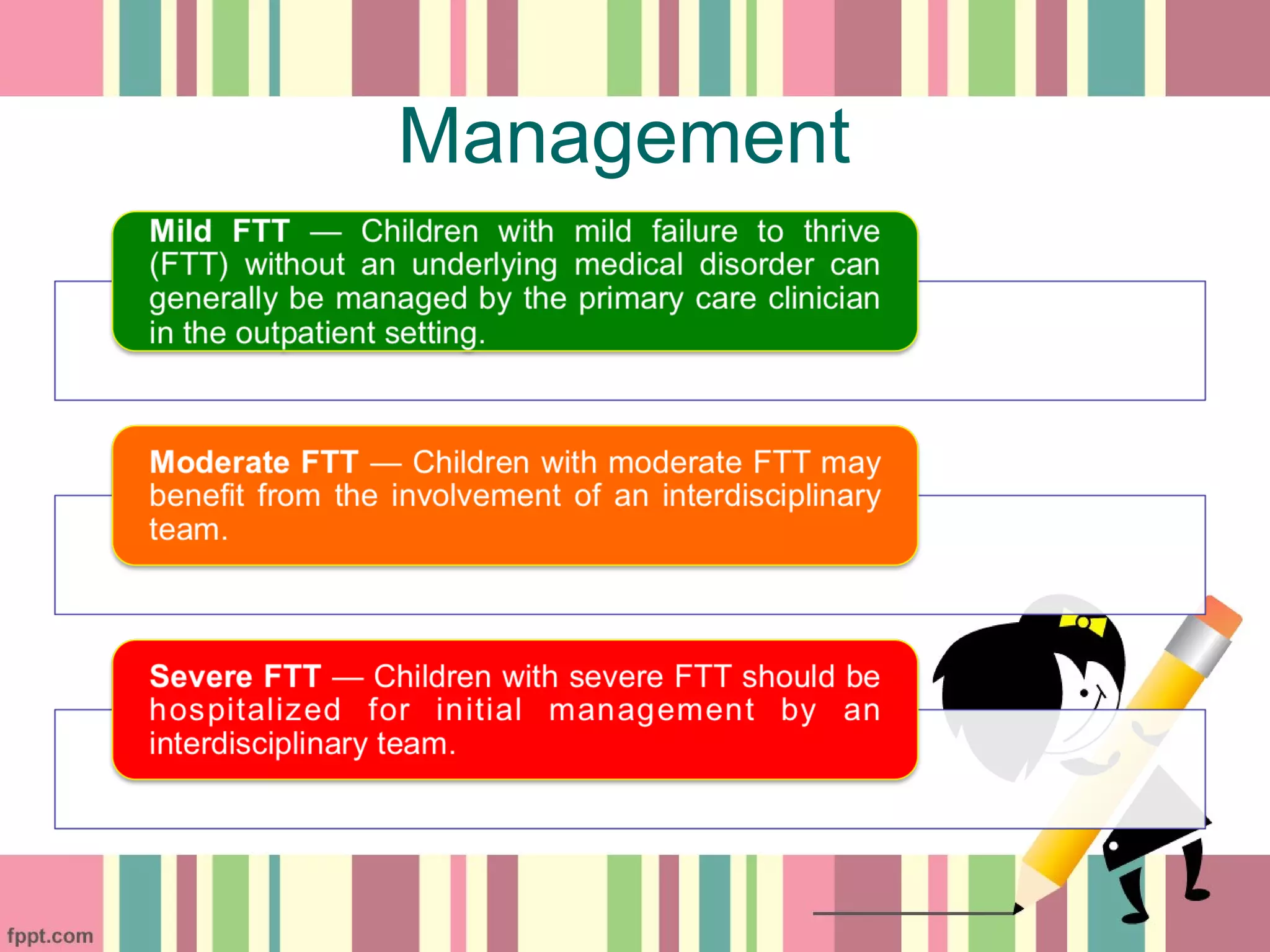
Management
• The primary goal of management of
failure to thrive (FTT) is improved
nutritional status through provision of
adequate nutrient intake for catch-up
growth.
• Provision of adequate nutrient intake
may require changes to the diet, feeding
schedule, or feeding environment;
psychosocial stressors contributing to
undernutrition also must be addressed.
Management
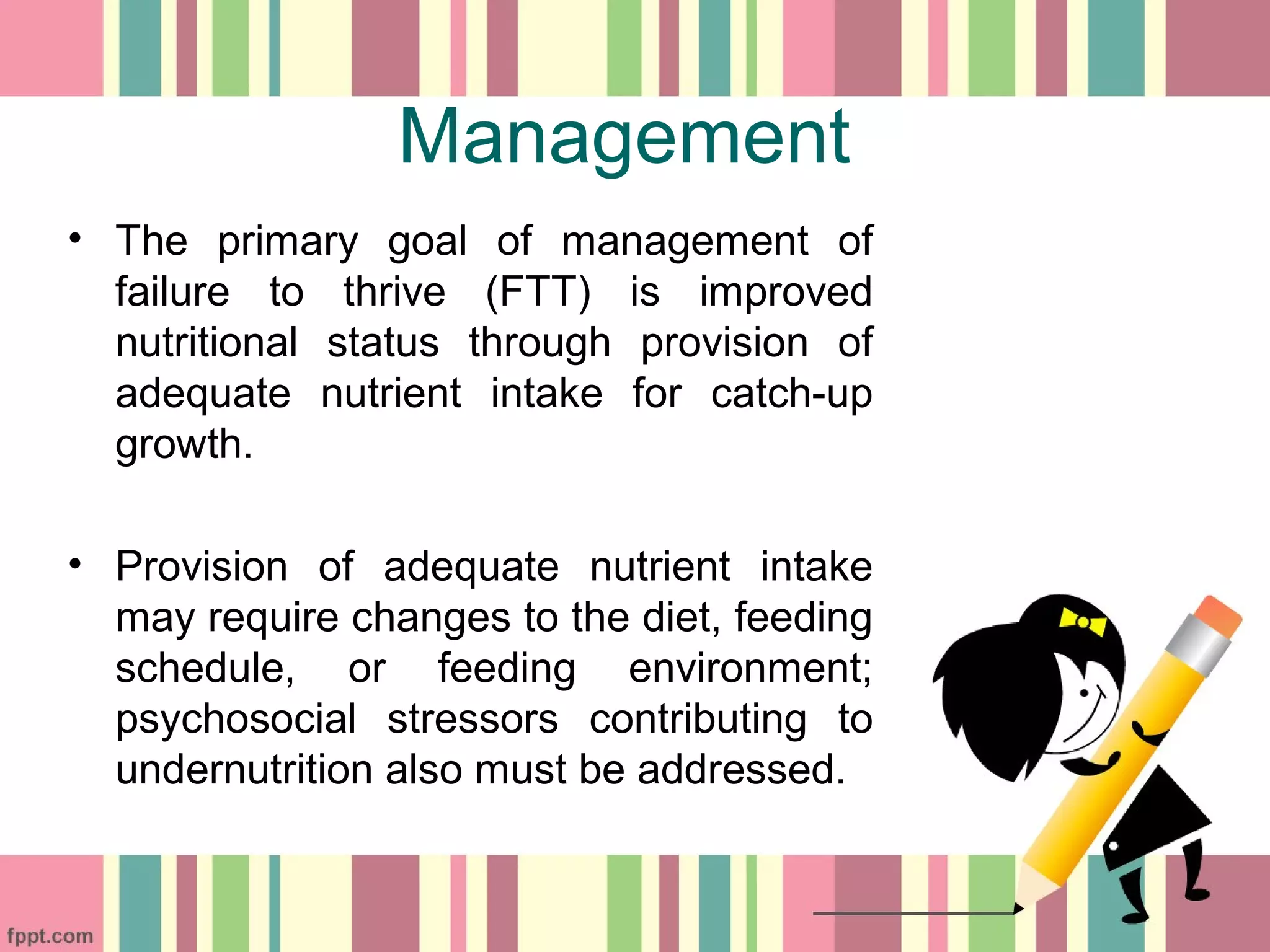
• Management of children with FTT is
individualized according to the
needs of the child and family that
were identified during the evaluation
and the severity of the FTT.
• Successful management of FTT
requires a plan to address
contributing medical, nutritional,
developmental/behavioral, and
psychosocial factors.
Management
Management
• Nutritional therapy is the mainstay of
management.
• The goal of nutritional therapy is to enable
"catch-up" weight gain (ie, weight gain at a
rate that is two to three times greater than
average for age or approximately 45 to 60
g/day) so that the weight deficit is repaired
or overcome.
• The pace and aggressiveness of nutritional
repletion is determined by the degree of
malnutrition.
Nutritional Requirements
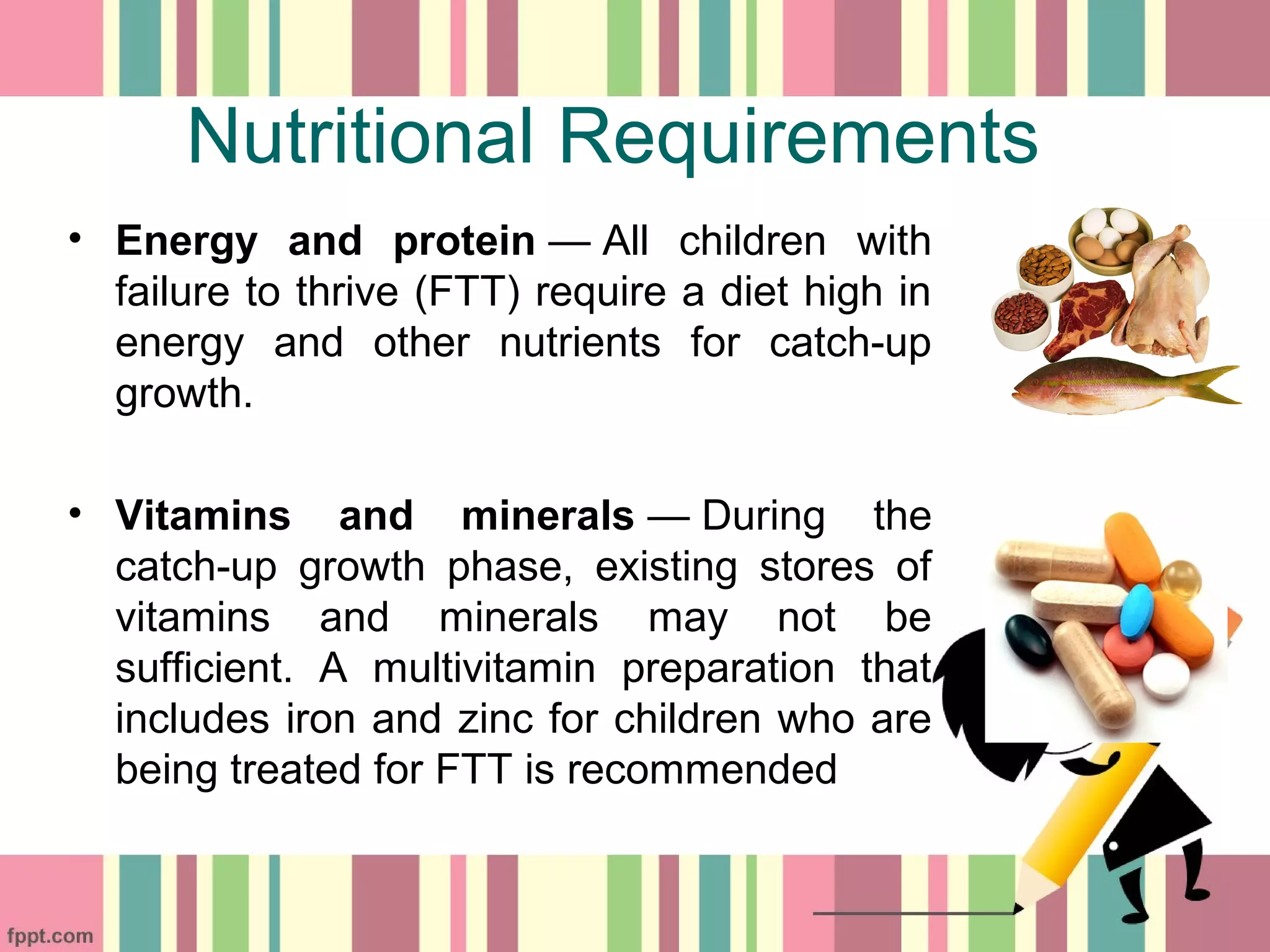
• Energy and protein — All children with
failure to thrive (FTT) require a diet high in
energy and other nutrients for catch-up
growth.
• Vitamins and minerals — During the
catch-up growth phase, existing stores of
vitamins and minerals may not be
sufficient. A multivitamin preparation that
includes iron and zinc for children who are
being treated for FTT is recommended
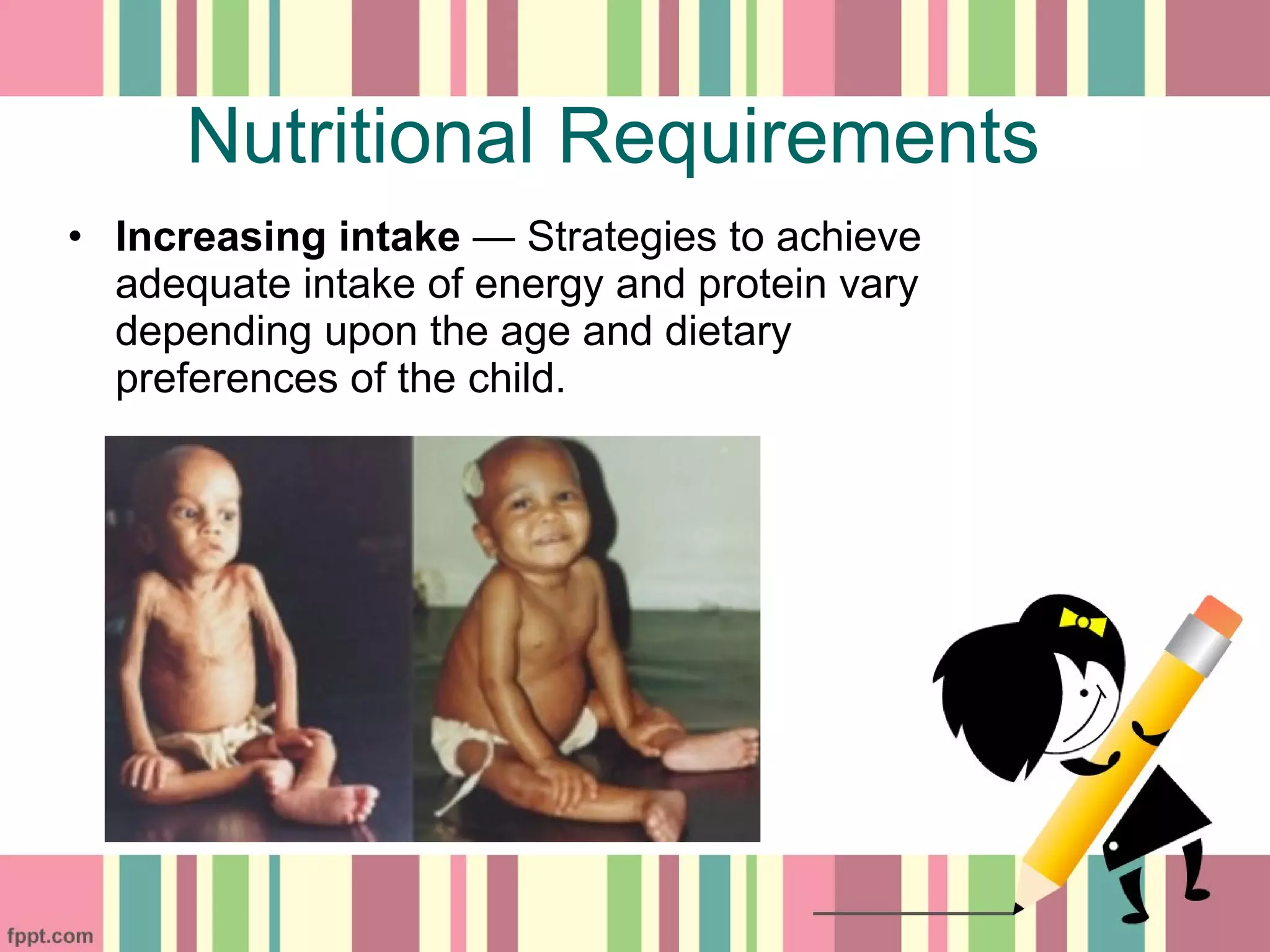
• Increasing intake — Strategies to achieve 
adequate intake of energy and protein vary 
depending upon the age and dietary 
preferences of the child.
Nutritional Requirements  
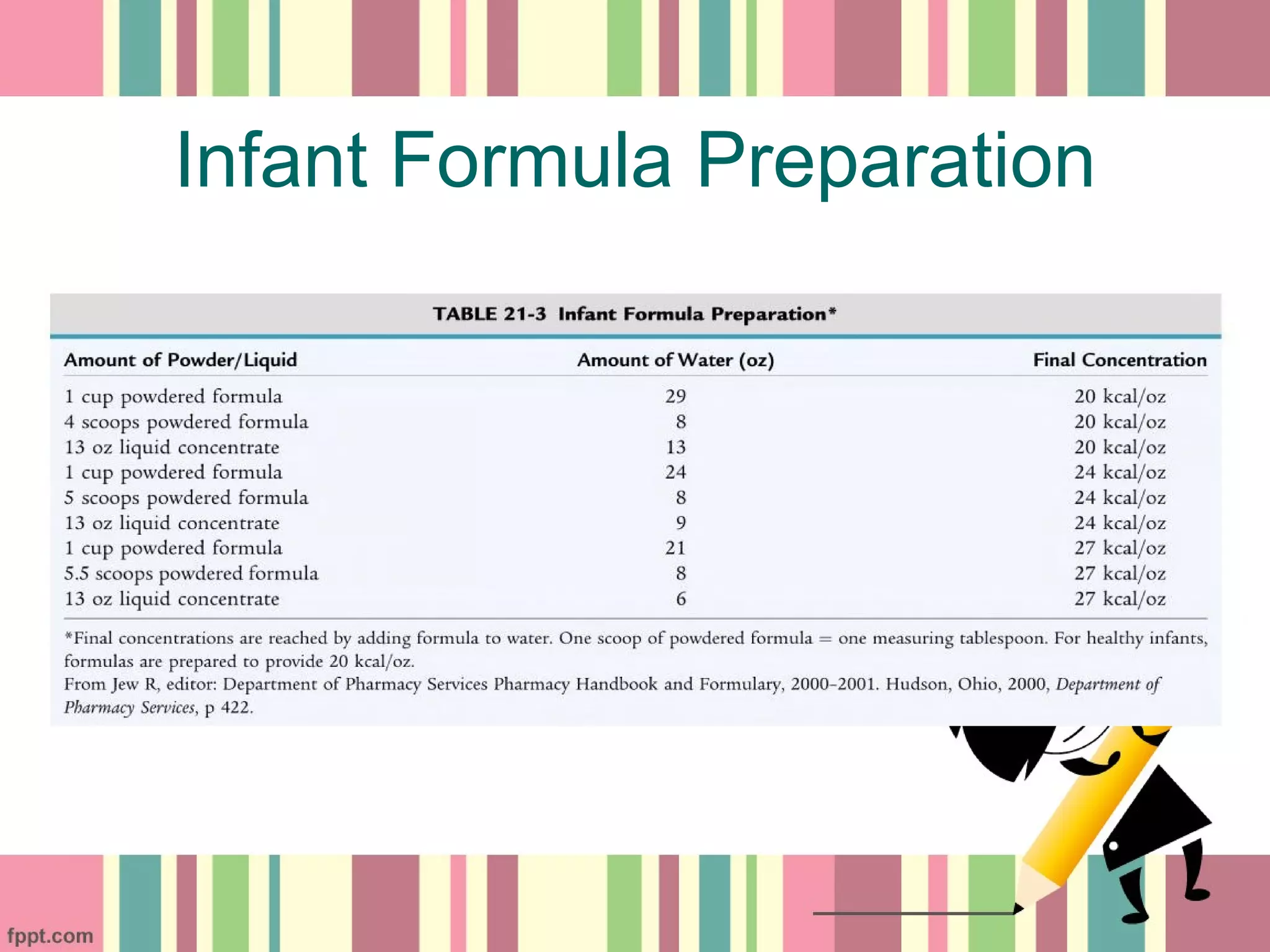
Infant Formula Preparation 
OTHER INTERVENTIONS
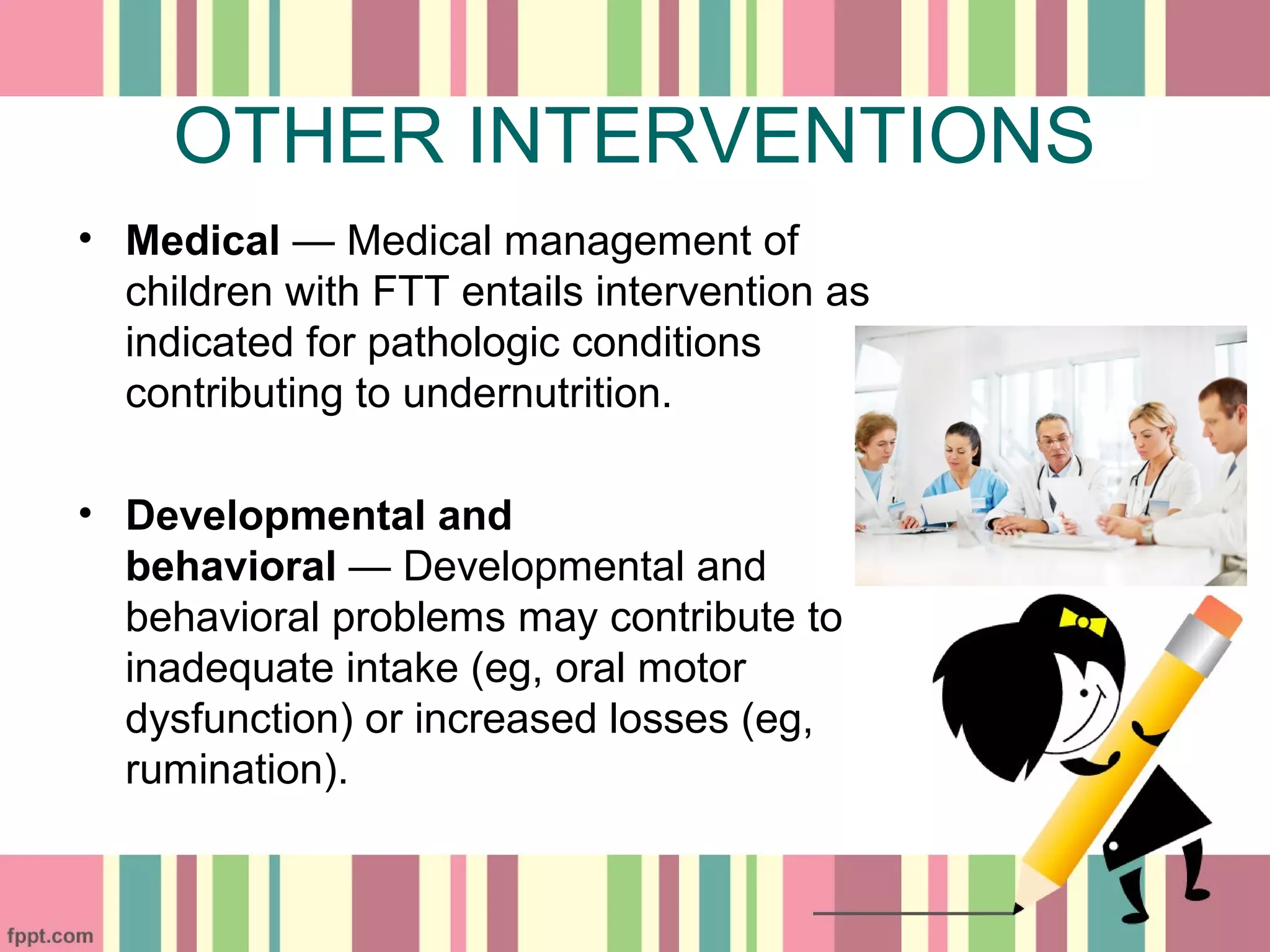
• Medical — Medical management of 
children with FTT entails intervention as 
indicated for pathologic conditions 
contributing to undernutrition.
• Developmental and
behavioral — Developmental and 
behavioral problems may contribute to 
inadequate intake (eg, oral motor 
dysfunction) or increased losses (eg, 
rumination). 
OTHER INTERVENTIONS
• Psychosocial — The  primary  goal  for 
improved  nutrition  must  be  accompanied 
by  addressing  the  psychosocial 
difficulties.  Effective  treatment,  whether 
inpatient  or  outpatient,  requires 
involvement  and  support  of  the 
caretakers.
References
Management Of Failure To Thrive

Management Of Failure To Thrive