Pica
Dr. Maria Sheraz Khan
CASE SCENARIO
A 5 years old girl presented with H/O abdominal
pain and distension examination shows long pink
and round worms in stool. Blood count shows
eosinophilia. Her mother told she has a habit of
eating soil.
A) What is your diagnosis?
B) How will treat the patient?
KEY POINTS
A 5 years old girl presented with H/O abdominal
pain and distension examination of stool shows
long pink and round worms. Blood count shows
eosinophilia. Her mother told she has a habit of
eating soil.
A) What is your diagnosis?
B) How will treat the patient?
DIAGNOSIS: Ascaris Lumbricoides infestation
due to pica.
TREATMENT:
A) Mebendazole (100mg twice daily foe 3 days) OR
B) Pyrantel pamoate (10mg/kg as a single dose) OR
C) Albendazole (200-400mg as a single dose) OR
D) Piperazine.
E) Counseling.
Pica
PICA
 Pica involves the persistent eating of non nutritive
substances (e.g., plaster, charcoal, clay, wool,
ashes, paint, earth) for a period of at least 1 month
at an age in which this behavior is developmentally
inappropriate (e.g. >18-24 months).
 The eating behavior is inappropriate to the
developmental level (e.g. the normal mouthing and
tasting of objects in infants and toddlers) and not
part of culturally sanctioned practice.
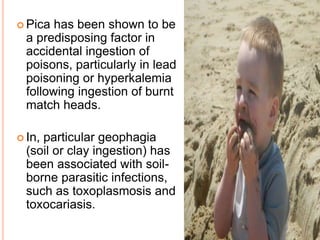
 Pica has been shown to be
a predisposing factor in
accidental ingestion of
poisons, particularly in lead
poisoning or hyperkalemia
following ingestion of burnt
match heads.
 In, particular geophagia
(soil or clay ingestion) has
been associated with soil-
borne parasitic infections,
such as toxoplasmosis and
toxocariasis.
 Although firm empirical data supporting any of the
nutritional deficiency etiology hypothesis are absent,
deficiencies in iron, calcium, zinc, and other nutrients (e.g.
thiamine, niacin, vitamin C and D) have been associated
with pica.
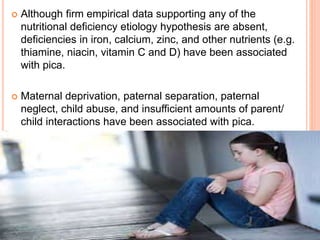
 Maternal deprivation, paternal separation, paternal
neglect, child abuse, and insufficient amounts of parent/
child interactions have been associated with pica.
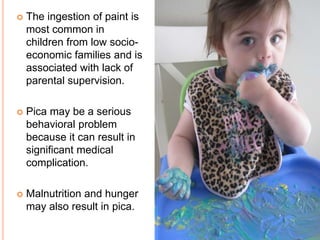
 The ingestion of paint is
most common in
children from low socio-
economic families and is
associated with lack of
parental supervision.
 Pica may be a serious
behavioral problem
because it can result in
significant medical
complication.
 Malnutrition and hunger
may also result in pica.
EPIDEMIOLOGY
 Pica appears to be more common in
children with mental retardation. Pervasive
developmental disorders, (e.g., Kleine-Levin
syndrome, schizophrenia).
 Geophagia (eating earth) is associated with
pregnancy and not seen as abnormal in
some cultures (e.g., rural or preindustrial
societies in parts of India and Africa)
Children with pica are
at increased risk for
lead poisoning, iron
deficiency anemia,
obstruction, dental
injury, and parasitic
infections.
It usually remits in
childhood but can
continuo into
adolescence and adult
hood.
ETIOLOGY
 Numerous etiologies have been proposed
but not proved, ranging from psychosocial
causes to physical ones. They include
nutritional deficiencies (e.g., iron, zinc, and
calcium), low socioeconomic factors (e.g.,
lead paint), child abuse and neglect, family
disorganization (e.g., poor supervision),
psychopathy, learned behavior, underlying
(but undetermined) biochemical disorder,
and cultural and familial factors.
CLINICAL FEATURES
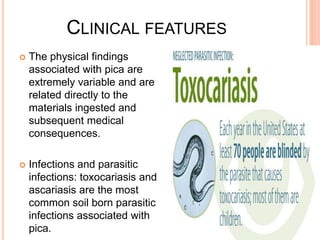
 The physical findings
associated with pica are
extremely variable and are
related directly to the
materials ingested and
subsequent medical
consequences.
 Infections and parasitic
infections: toxocariasis and
ascariasis are the most
common soil born parasitic
infections associated with
pica.
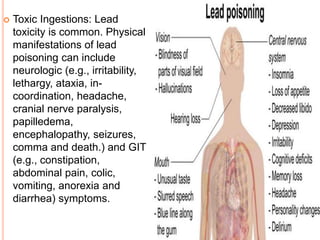
 Toxic Ingestions: Lead
toxicity is common. Physical
manifestations of lead
poisoning can include
neurologic (e.g., irritability,
lethargy, ataxia, in-
coordination, headache,
cranial nerve paralysis,
papilledema,
encephalopathy, seizures,
comma and death.) and GIT
(e.g., constipation,
abdominal pain, colic,
vomiting, anorexia and
diarrhea) symptoms.
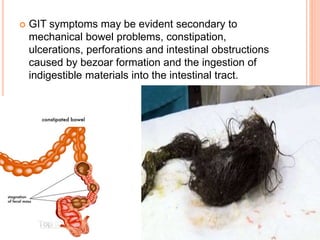
 GIT symptoms may be evident secondary to
mechanical bowel problems, constipation,
ulcerations, perforations and intestinal obstructions
caused by bezoar formation and the ingestion of
indigestible materials into the intestinal tract.
TREATMENT
 A combined medical and psychological
approach is generally indicated for pica. The
complication related to ingested item can
require specific treatment (e.g., lead toxicity,
iron deficiency anemia, parasitic
infestation).
 Ingestion of hair can require medical or
surgical intervention for a gastric bezoar.
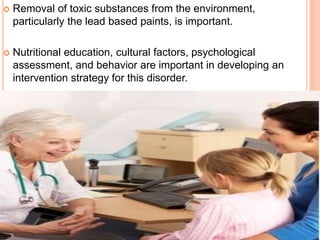
 Removal of toxic substances from the environment,
particularly the lead based paints, is important.
 Nutritional education, cultural factors, psychological
assessment, and behavior are important in developing an
intervention strategy for this disorder.
 For more slides visit:
 https://www.slideshare.net/MariaSherazKhan
 Or subscribe my youtube channel :
https://www.youtube.com/channel/UCA4-
MGz2m5bGfTTNrhyp9QA
 For comments, questions and if you want more similar
slides inbox on twitter @mariasherazkhan

Pica (In pediatrics)

  • 1.
  • 2.
    CASE SCENARIO A 5years old girl presented with H/O abdominal pain and distension examination shows long pink and round worms in stool. Blood count shows eosinophilia. Her mother told she has a habit of eating soil. A) What is your diagnosis? B) How will treat the patient?
  • 3.
    KEY POINTS A 5years old girl presented with H/O abdominal pain and distension examination of stool shows long pink and round worms. Blood count shows eosinophilia. Her mother told she has a habit of eating soil. A) What is your diagnosis? B) How will treat the patient?
  • 4.
    DIAGNOSIS: Ascaris Lumbricoidesinfestation due to pica. TREATMENT: A) Mebendazole (100mg twice daily foe 3 days) OR B) Pyrantel pamoate (10mg/kg as a single dose) OR C) Albendazole (200-400mg as a single dose) OR D) Piperazine. E) Counseling.
  • 5.
  • 7.
    PICA  Pica involvesthe persistent eating of non nutritive substances (e.g., plaster, charcoal, clay, wool, ashes, paint, earth) for a period of at least 1 month at an age in which this behavior is developmentally inappropriate (e.g. >18-24 months).  The eating behavior is inappropriate to the developmental level (e.g. the normal mouthing and tasting of objects in infants and toddlers) and not part of culturally sanctioned practice.
  • 8.
     Pica hasbeen shown to be a predisposing factor in accidental ingestion of poisons, particularly in lead poisoning or hyperkalemia following ingestion of burnt match heads.  In, particular geophagia (soil or clay ingestion) has been associated with soil- borne parasitic infections, such as toxoplasmosis and toxocariasis.
  • 9.
     Although firmempirical data supporting any of the nutritional deficiency etiology hypothesis are absent, deficiencies in iron, calcium, zinc, and other nutrients (e.g. thiamine, niacin, vitamin C and D) have been associated with pica.  Maternal deprivation, paternal separation, paternal neglect, child abuse, and insufficient amounts of parent/ child interactions have been associated with pica.
  • 10.
     The ingestionof paint is most common in children from low socio- economic families and is associated with lack of parental supervision.  Pica may be a serious behavioral problem because it can result in significant medical complication.  Malnutrition and hunger may also result in pica.
  • 11.
    EPIDEMIOLOGY  Pica appearsto be more common in children with mental retardation. Pervasive developmental disorders, (e.g., Kleine-Levin syndrome, schizophrenia).  Geophagia (eating earth) is associated with pregnancy and not seen as abnormal in some cultures (e.g., rural or preindustrial societies in parts of India and Africa)
  • 12.
    Children with picaare at increased risk for lead poisoning, iron deficiency anemia, obstruction, dental injury, and parasitic infections. It usually remits in childhood but can continuo into adolescence and adult hood.
  • 13.
    ETIOLOGY  Numerous etiologieshave been proposed but not proved, ranging from psychosocial causes to physical ones. They include nutritional deficiencies (e.g., iron, zinc, and calcium), low socioeconomic factors (e.g., lead paint), child abuse and neglect, family disorganization (e.g., poor supervision), psychopathy, learned behavior, underlying (but undetermined) biochemical disorder, and cultural and familial factors.
  • 14.
    CLINICAL FEATURES  Thephysical findings associated with pica are extremely variable and are related directly to the materials ingested and subsequent medical consequences.  Infections and parasitic infections: toxocariasis and ascariasis are the most common soil born parasitic infections associated with pica.
  • 15.
     Toxic Ingestions:Lead toxicity is common. Physical manifestations of lead poisoning can include neurologic (e.g., irritability, lethargy, ataxia, in- coordination, headache, cranial nerve paralysis, papilledema, encephalopathy, seizures, comma and death.) and GIT (e.g., constipation, abdominal pain, colic, vomiting, anorexia and diarrhea) symptoms.
  • 16.
     GIT symptomsmay be evident secondary to mechanical bowel problems, constipation, ulcerations, perforations and intestinal obstructions caused by bezoar formation and the ingestion of indigestible materials into the intestinal tract.
  • 17.
    TREATMENT  A combinedmedical and psychological approach is generally indicated for pica. The complication related to ingested item can require specific treatment (e.g., lead toxicity, iron deficiency anemia, parasitic infestation).  Ingestion of hair can require medical or surgical intervention for a gastric bezoar.
  • 18.
     Removal oftoxic substances from the environment, particularly the lead based paints, is important.  Nutritional education, cultural factors, psychological assessment, and behavior are important in developing an intervention strategy for this disorder.
  • 20.
     For moreslides visit:  https://www.slideshare.net/MariaSherazKhan  Or subscribe my youtube channel : https://www.youtube.com/channel/UCA4- MGz2m5bGfTTNrhyp9QA  For comments, questions and if you want more similar slides inbox on twitter @mariasherazkhan