

Drinking
Alcohol
+
Respiratory
system

Design by : Maryam
AL-Qhatany
Present by :
Maryam AL-Qhatany.
Esra Takrouni
Zainab AL-kamise
Learning Objectives
• The effect of alcohol in the body.
• Alcohol and brain.
• Definition of coma and Vegetative State
(VS).
• Define wheezing, shallow breathing and
shortness of breath (SOB).
• Path physiology of pneumothorax and
rib fracture.
Introduction

Alcohol and depression are among the
most prevalent mental health
conditions in the United States
Alcoholism has the potential to impact
on the quality of life (QOL) of an
`alcoholic,' their family, healthy , and
friends in both the short and long
term
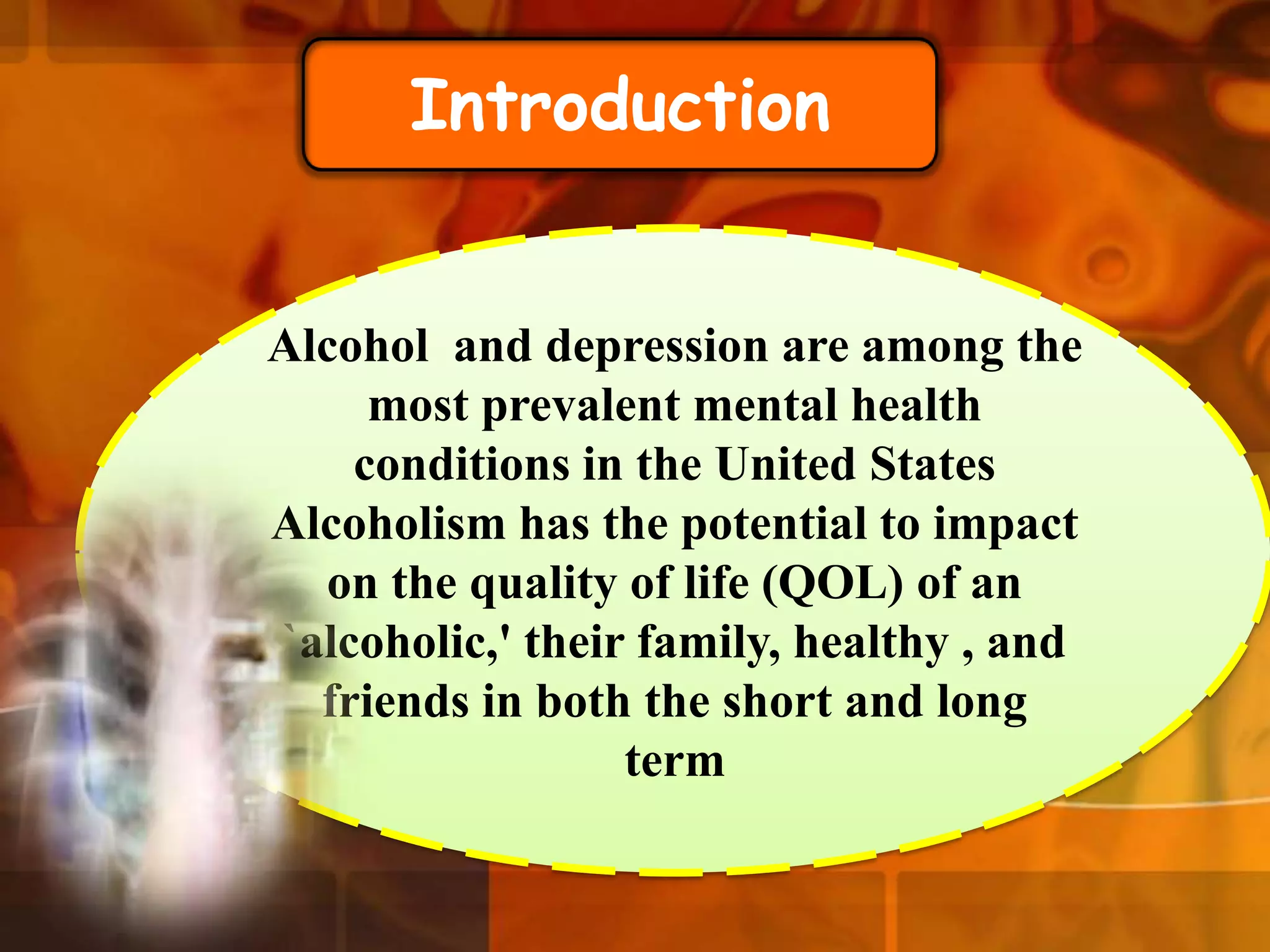
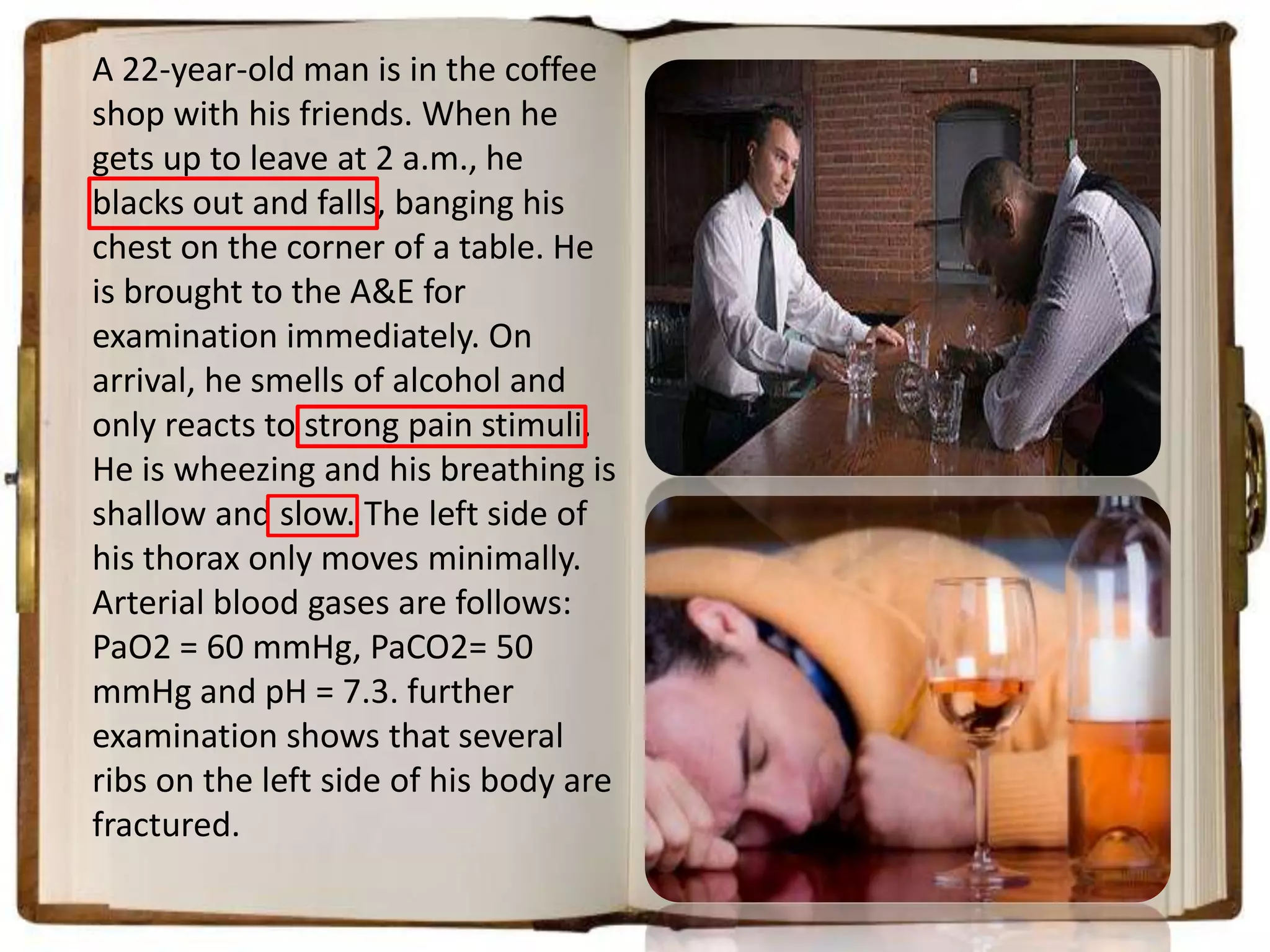
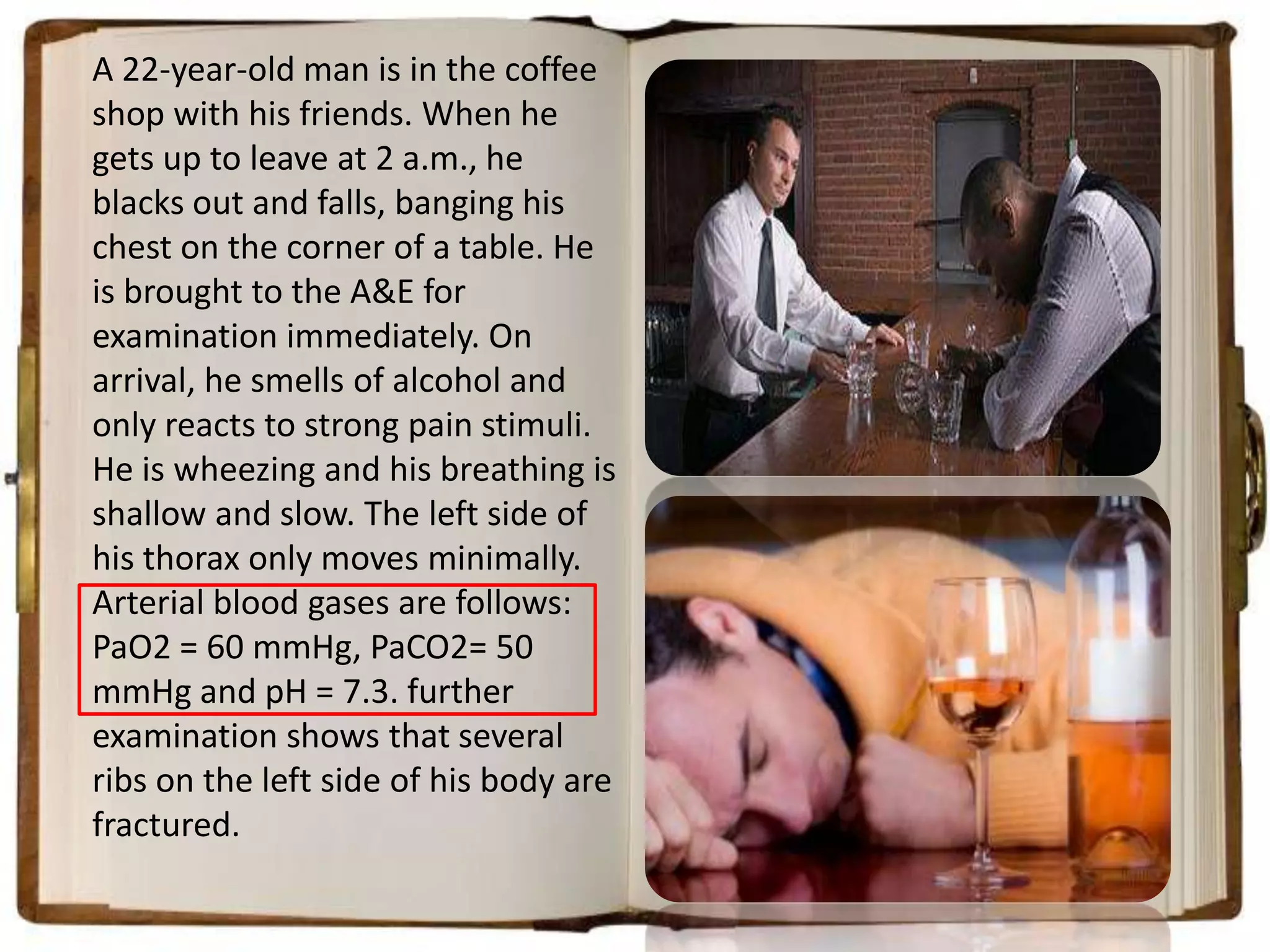
A 22-year-old man is in the coffee
shop with his friends. When he
gets up to leave at 2 a.m., he
blacks out and falls, banging his
chest on the corner of a table. He
is brought to the A&E for
examination immediately. On
arrival, he smells of alcohol and
only reacts to strong pain stimuli.
He is wheezing and his breathing is
shallow and slow. The left side of
his thorax only moves minimally.
Arterial blood gases are follows:
PaO2 = 60 mmHg, PaCO2= 50
mmHg and pH = 7.3. further
examination shows that several
ribs on the left side of his body are
fractured.
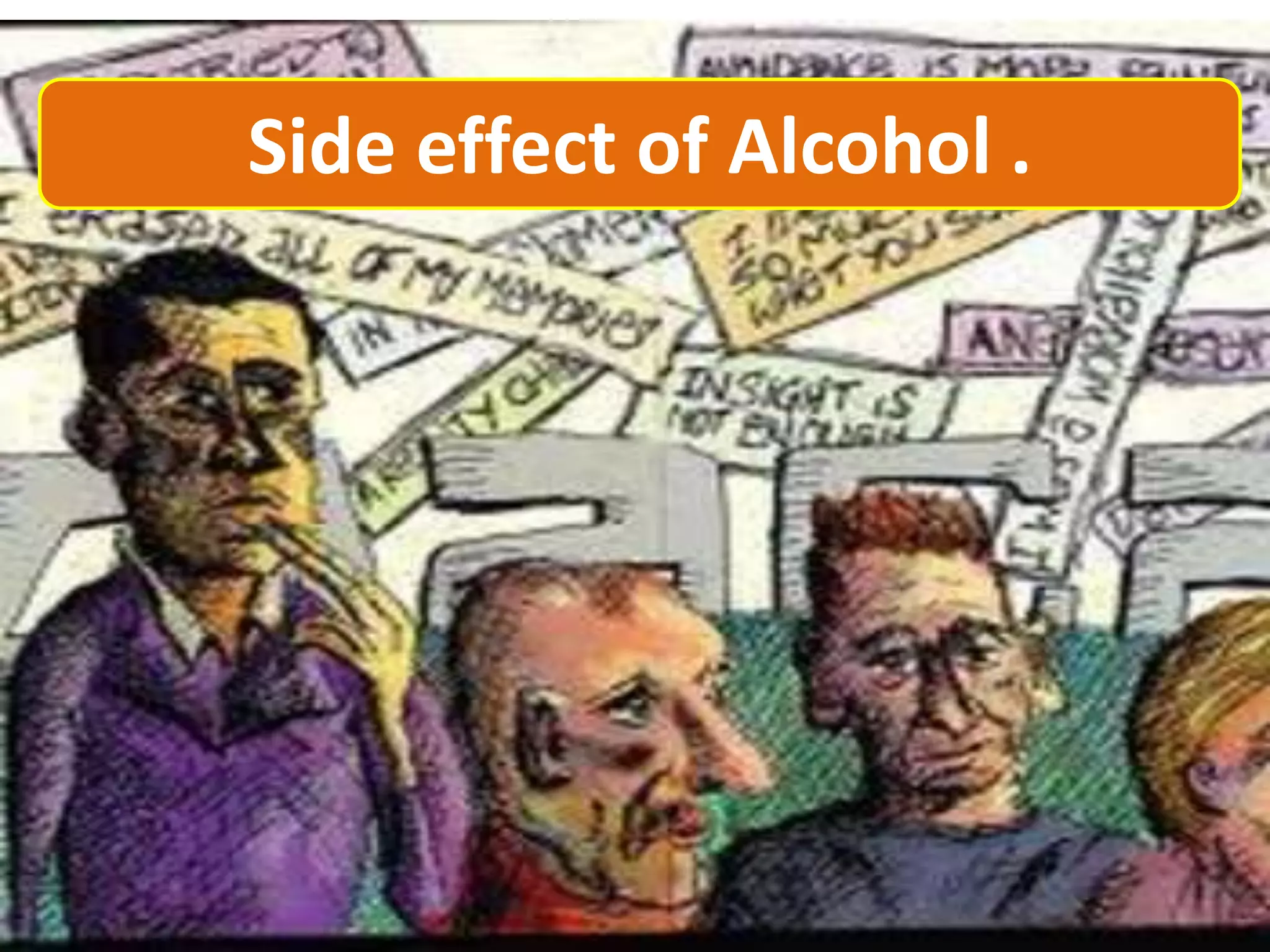
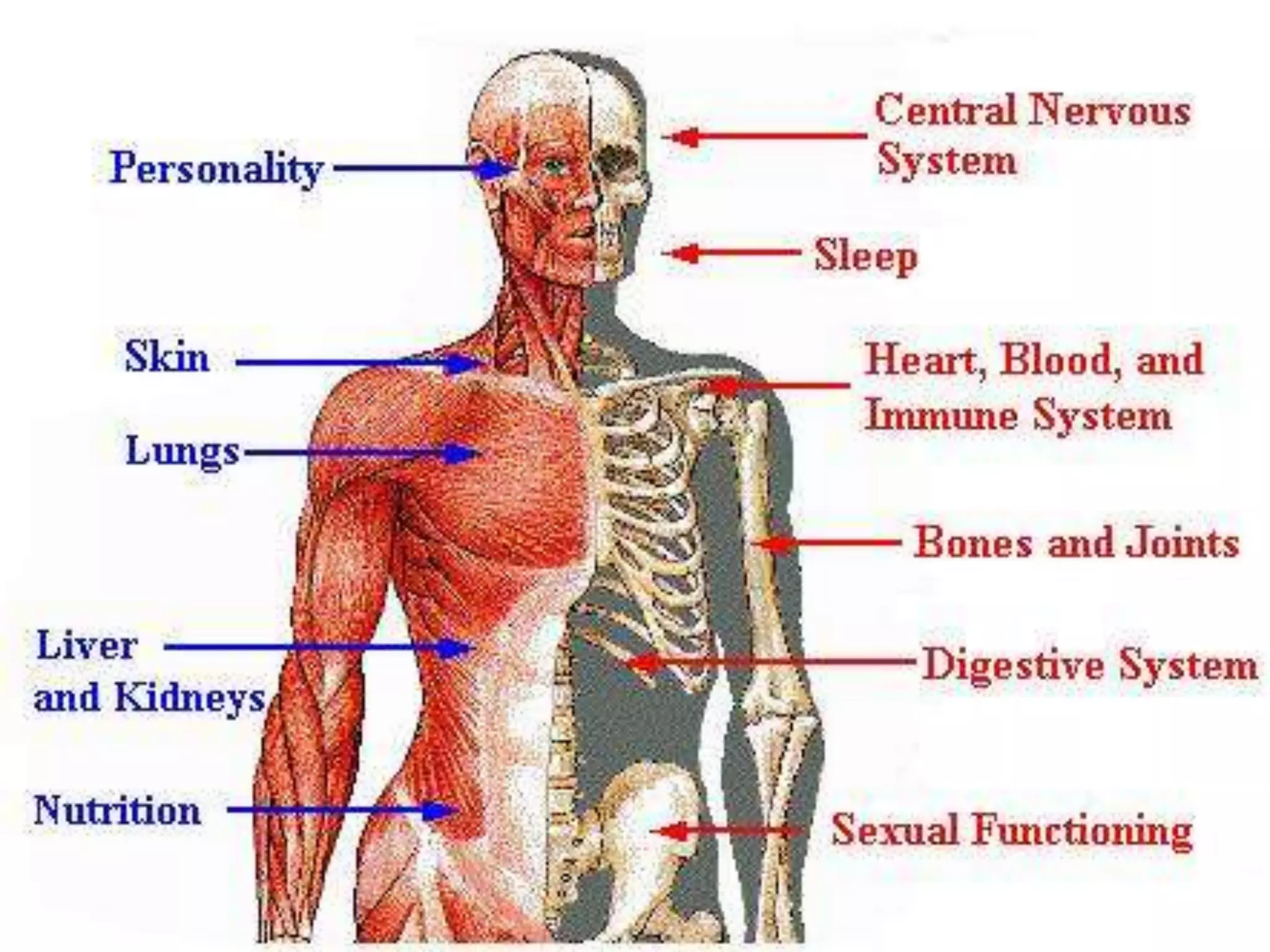
Side effect of Alcohol .
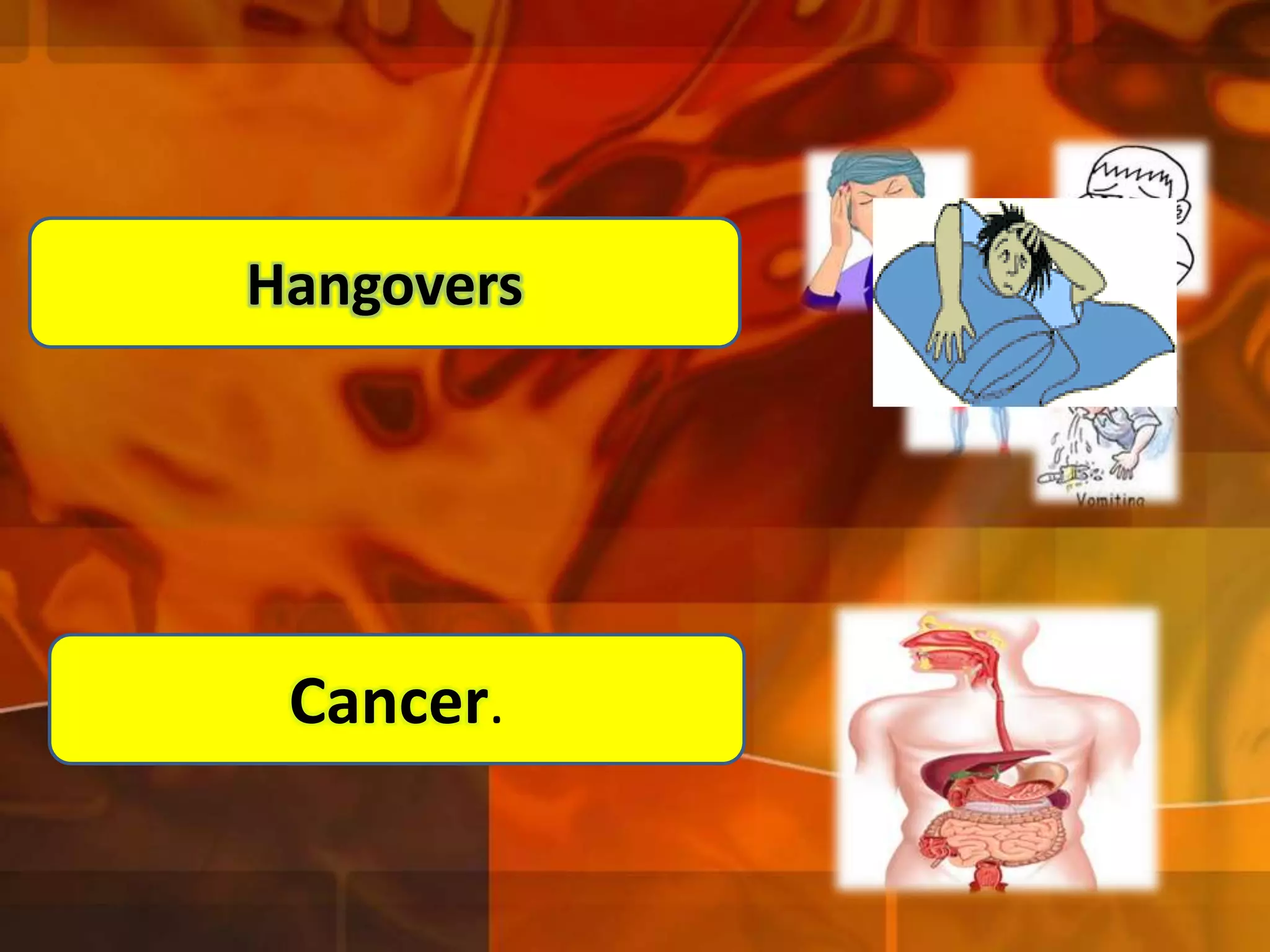
Hangovers
effects of alcohol on the respiratory system

Cancer.
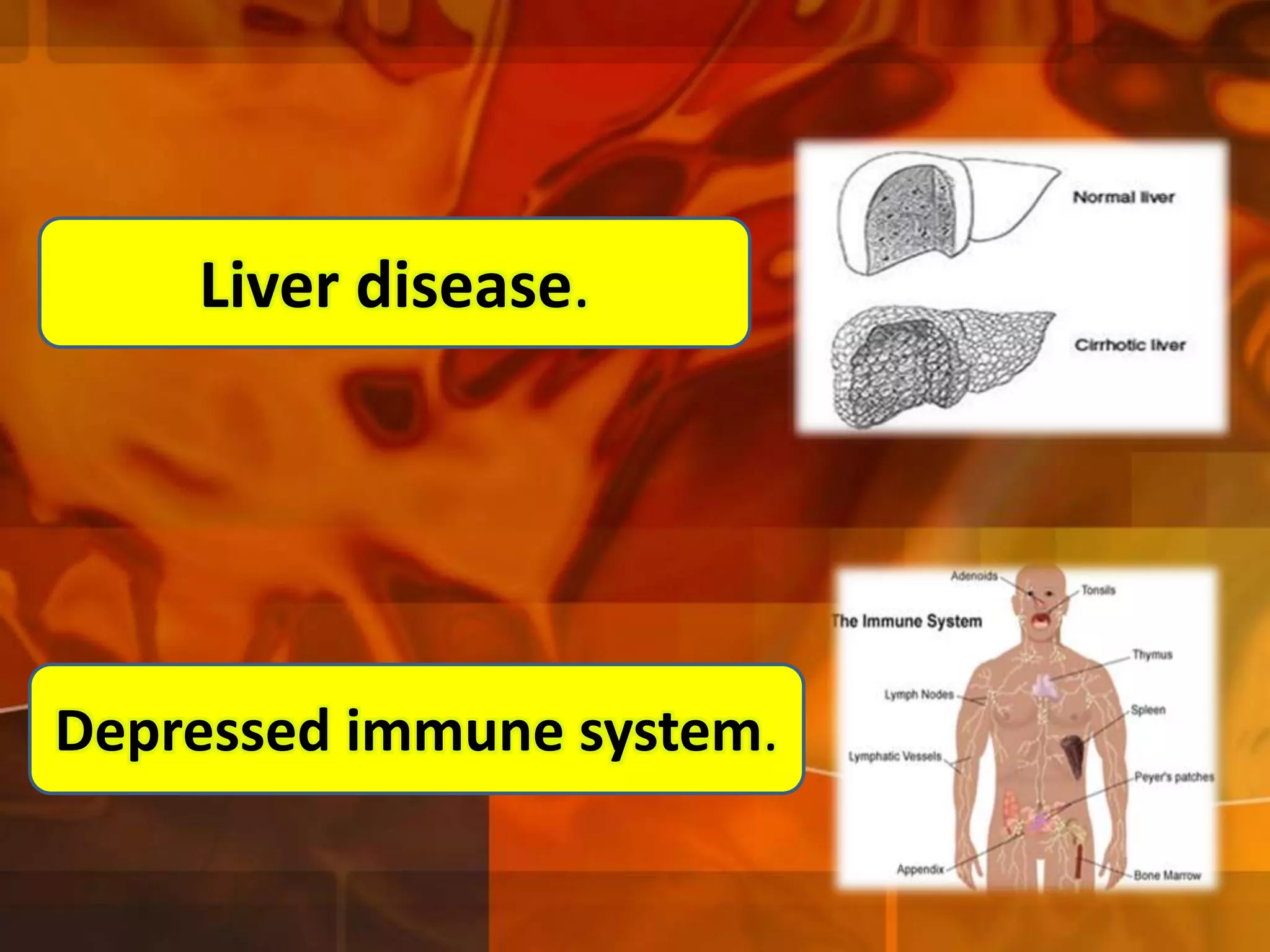
Liver disease.

Depressed immune system.
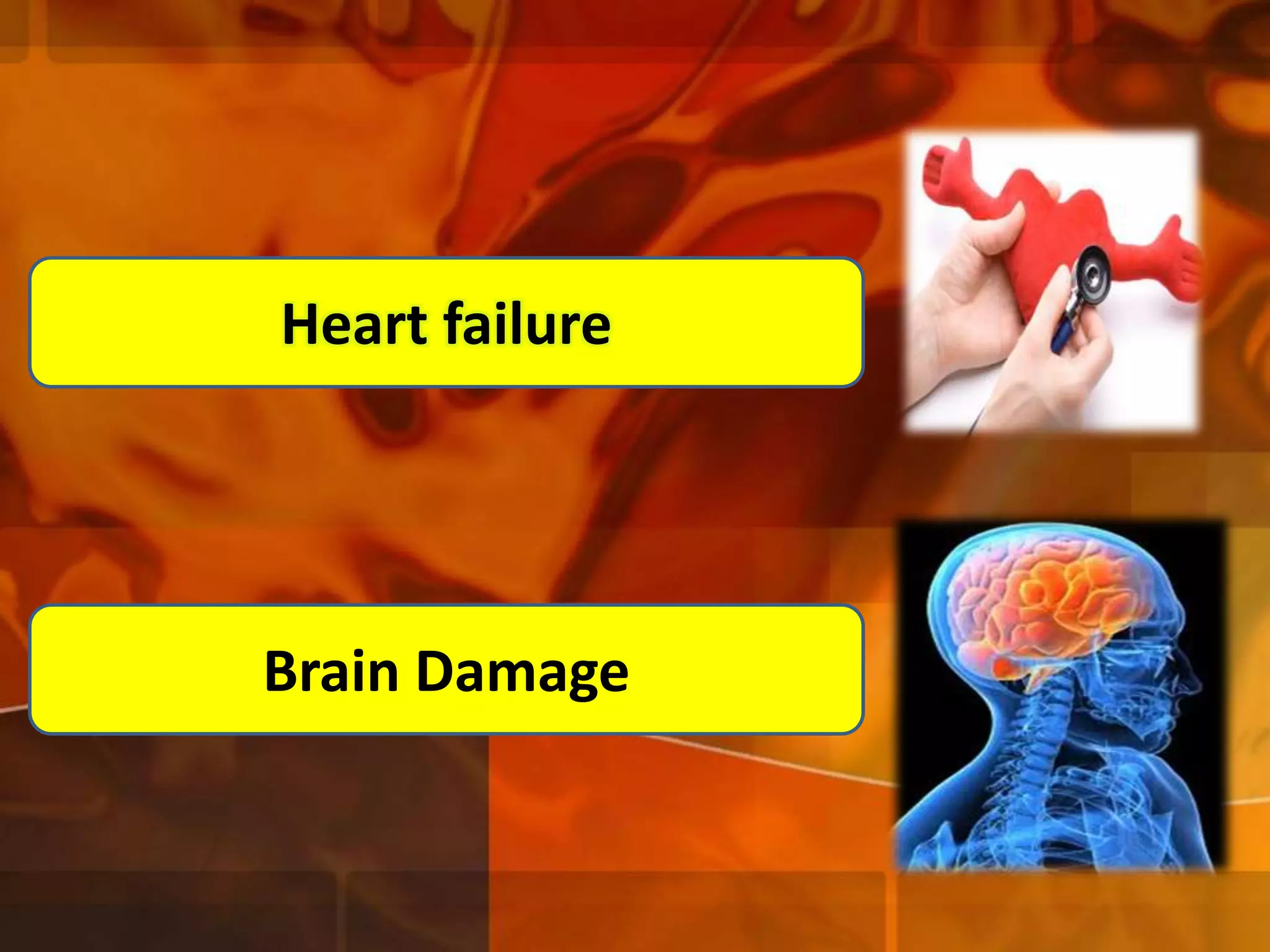
Heart failure

Brain Damage
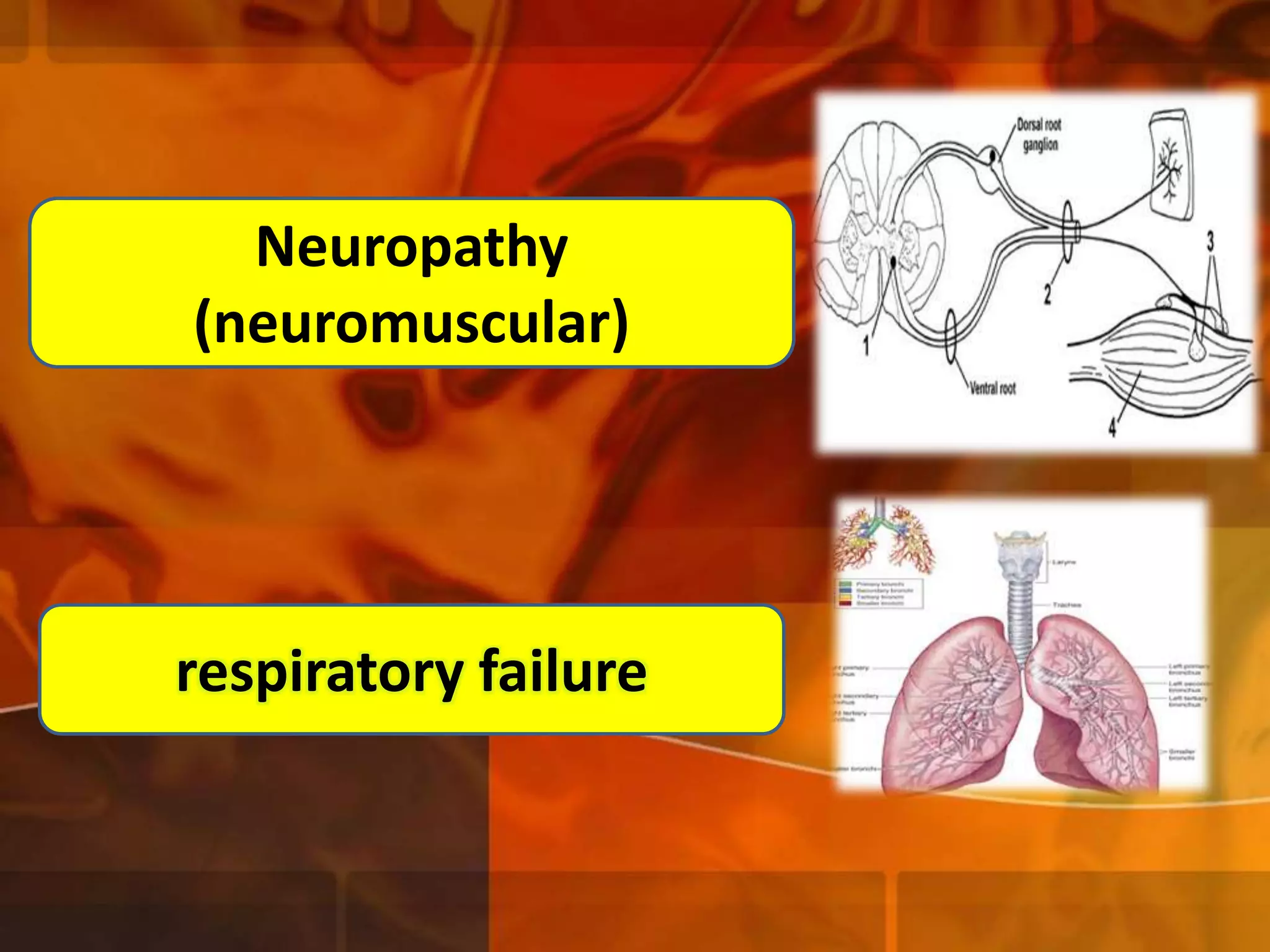
Neuropathy
(neuromuscular)

respiratory failure
and
the Brain
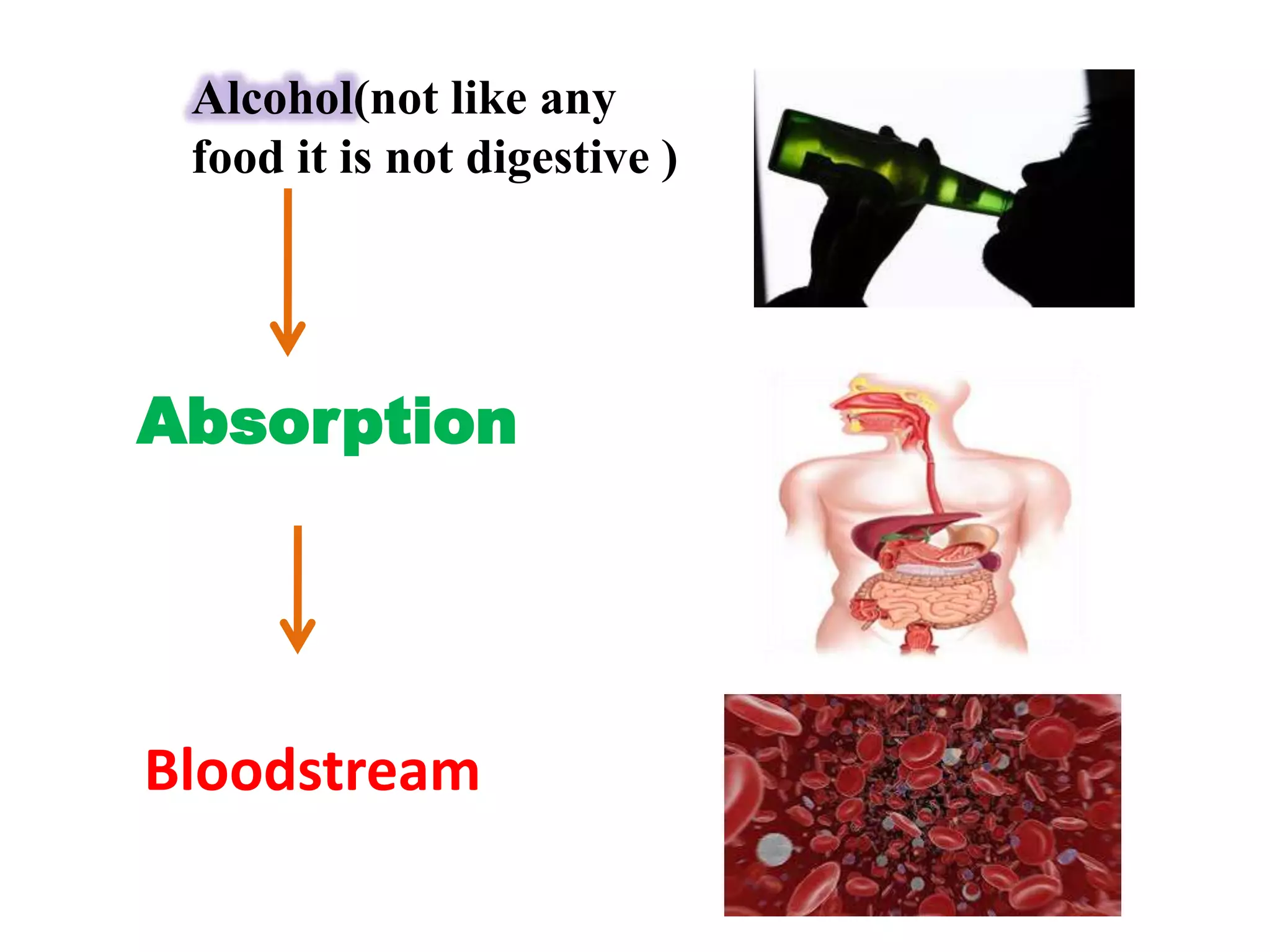
Alcohol(not like any
food it is not digestive )

Absorption

Bloodstream
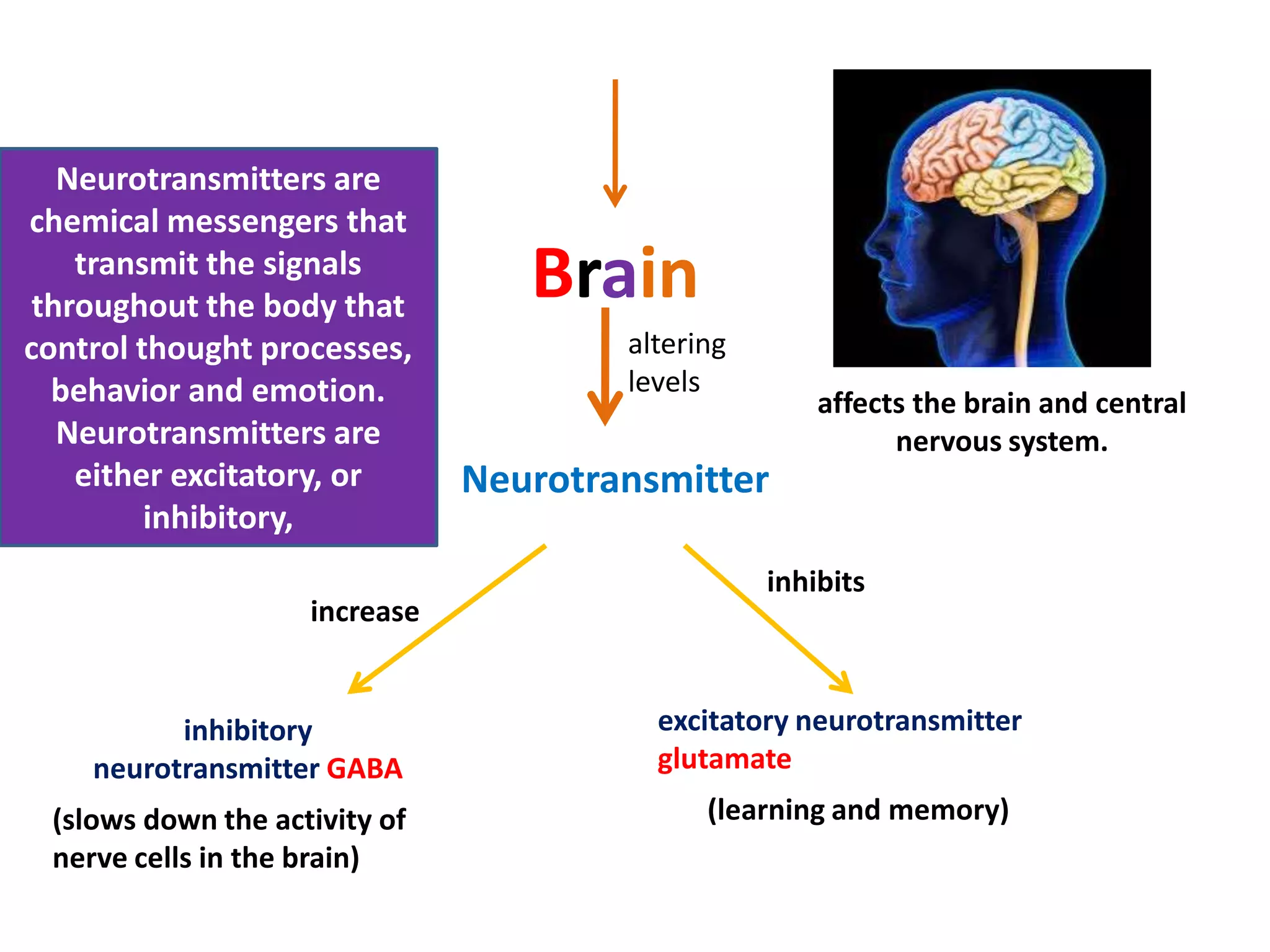
Neurotransmitters are
chemical messengers that
transmit the signals
throughout the body that
control thought processes,
behavior and emotion.
Neurotransmitters are
either excitatory, or
inhibitory,
increase

inhibitory
neurotransmitter GABA
(slows down the activity of
nerve cells in the brain)

Brain
altering
levels

affects the brain and central
nervous system.

Neurotransmitter
inhibits

excitatory neurotransmitter
glutamate
(learning and memory)
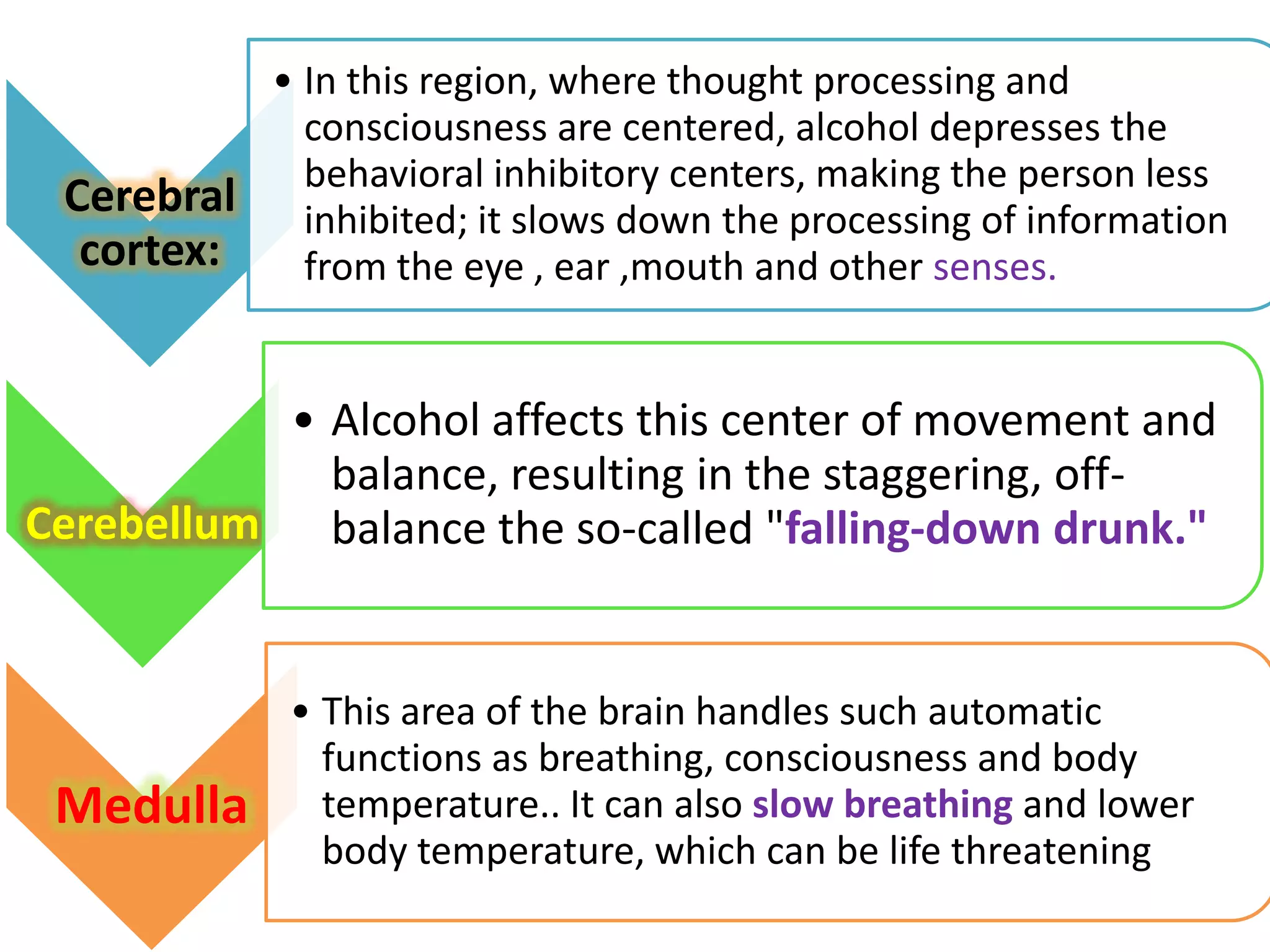
• In this region, where thought processing and
consciousness are centered, alcohol depresses the
Cerebral behavioralitinhibitory centers, making the person less
inhibited; slows down the processing of information
cortex:
from the eye , ear ,mouth and other senses.

• Alcohol affects this center of movement and
balance, resulting in the staggering, offCerebellum balance the so-called "falling-down drunk."

Medulla

• This area of the brain handles such automatic
functions as breathing, consciousness and body
temperature.. It can also slow breathing and lower
body temperature, which can be life threatening
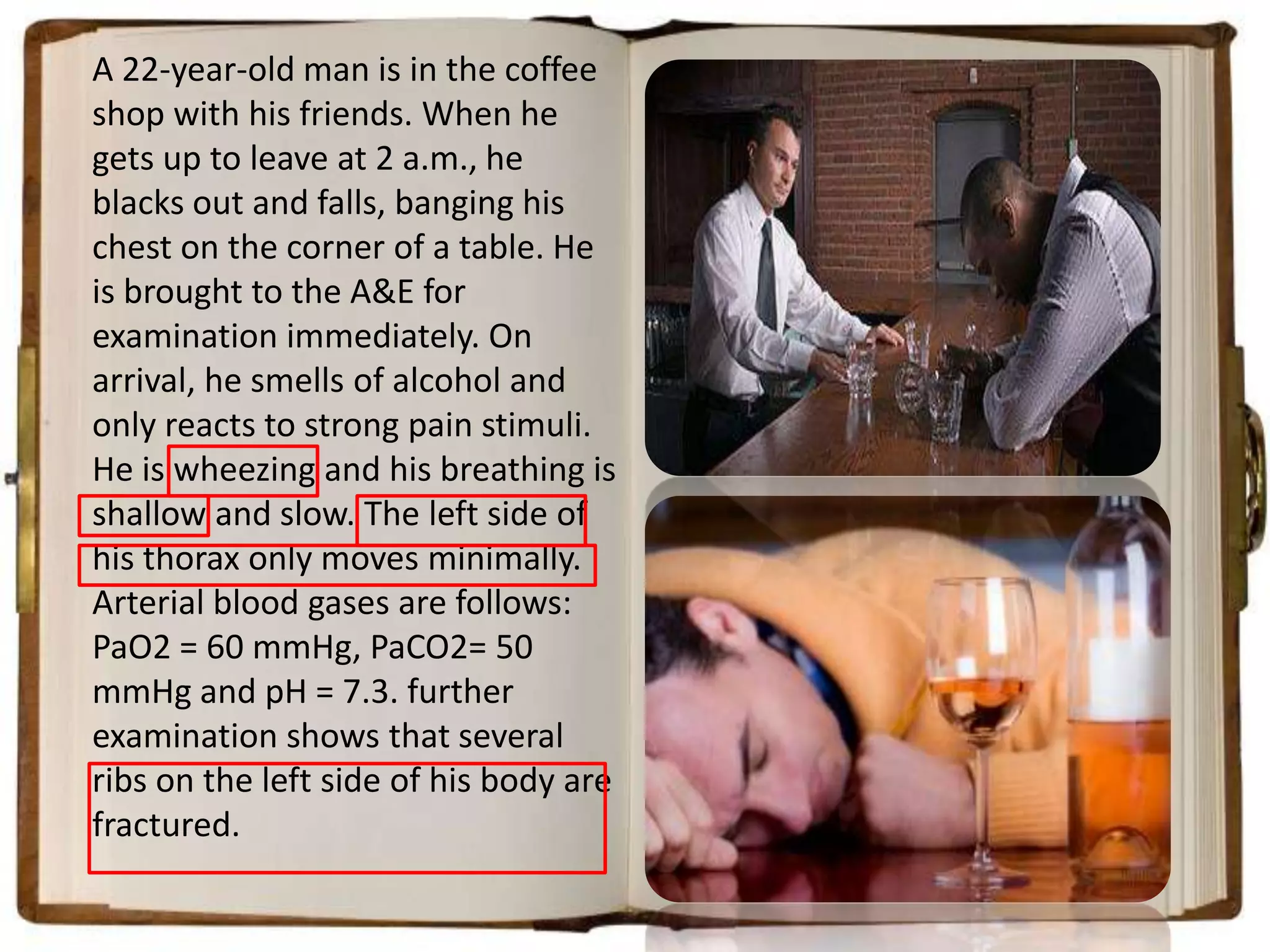
A 22-year-old man is in the coffee
shop with his friends. When he
gets up to leave at 2 a.m., he
blacks out and falls, banging his
chest on the corner of a table. He
is brought to the A&E for
examination immediately. On
arrival, he smells of alcohol and
only reacts to strong pain stimuli.
He is wheezing and his breathing is
shallow and slow. The left side of
his thorax only moves minimally.
Arterial blood gases are follows:
PaO2 = 60 mmHg, PaCO2= 50
mmHg and pH = 7.3. further
examination shows that several
ribs on the left side of his body are
fractured.
Case analysis
• Coma:

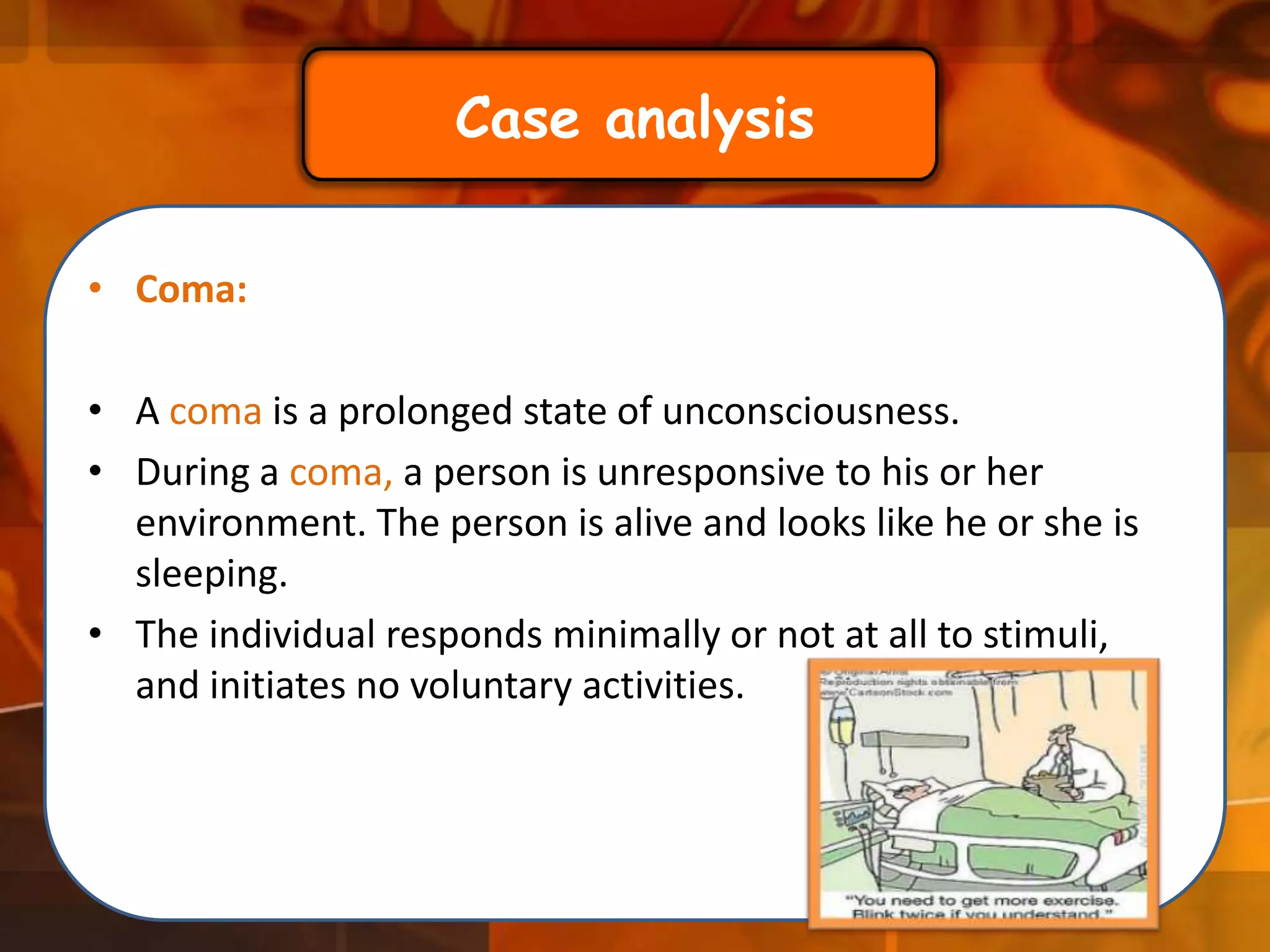
• A coma is a prolonged state of unconsciousness.
• During a coma, a person is unresponsive to his or her
environment. The person is alive and looks like he or she is
sleeping.
• The individual responds minimally or not at all to stimuli,
and initiates no voluntary activities.
Case analysis
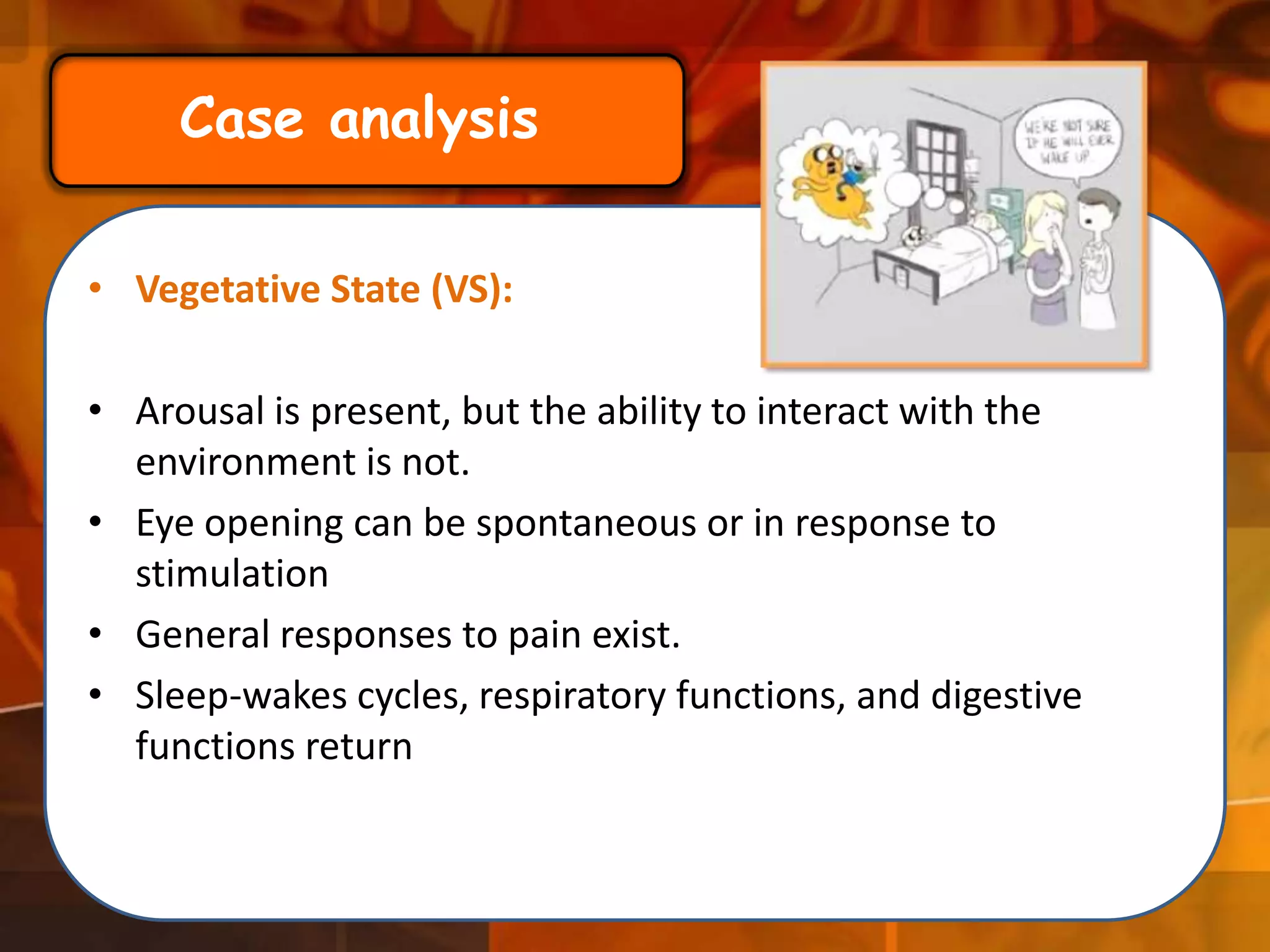
• Vegetative State (VS):

• Arousal is present, but the ability to interact with the
environment is not.
• Eye opening can be spontaneous or in response to
stimulation
• General responses to pain exist.
• Sleep-wakes cycles, respiratory functions, and digestive
functions return
Case analysis
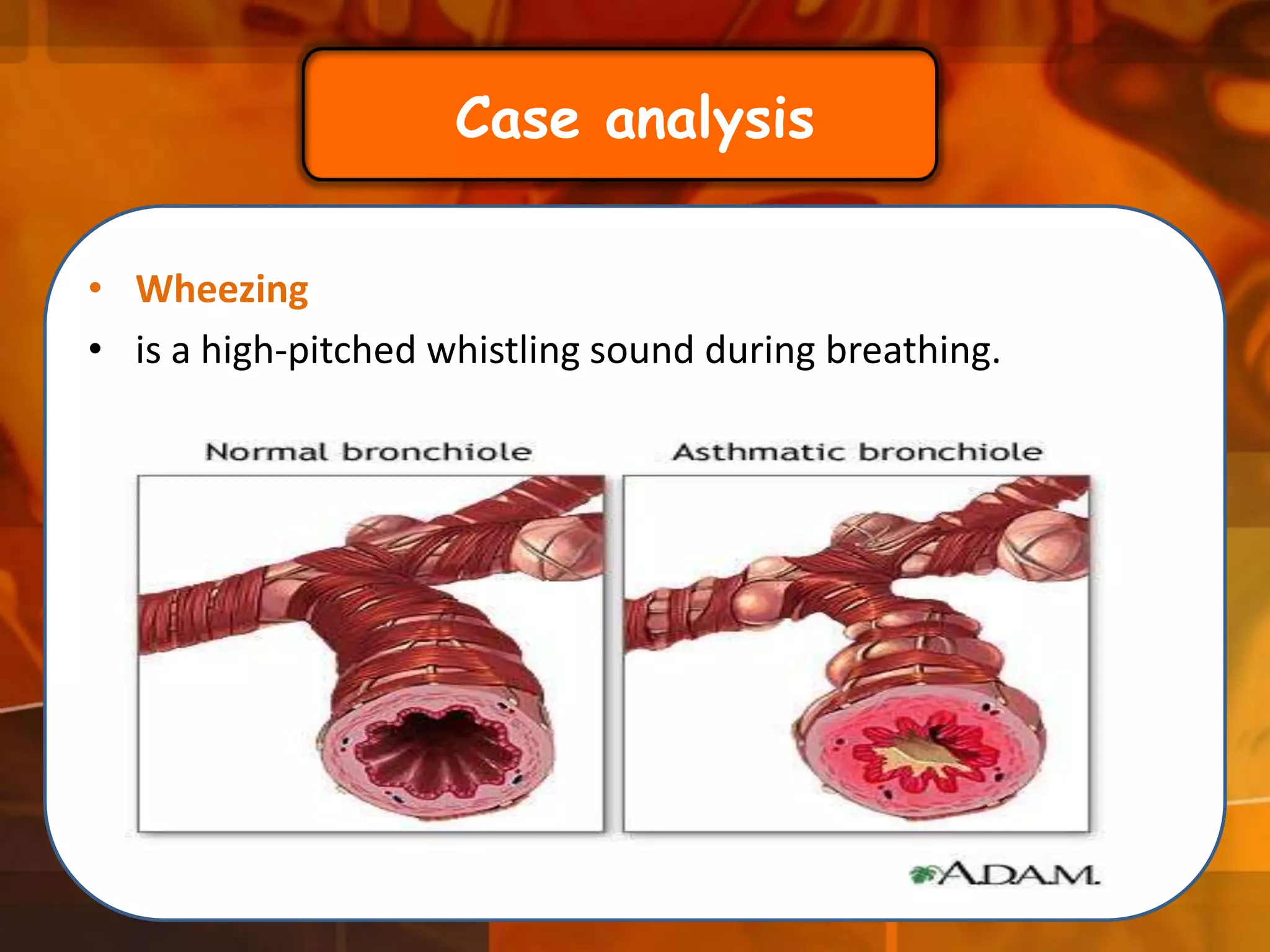
• Wheezing
• is a high-pitched whistling sound during breathing.
Shallow breathing
•
•
•
•

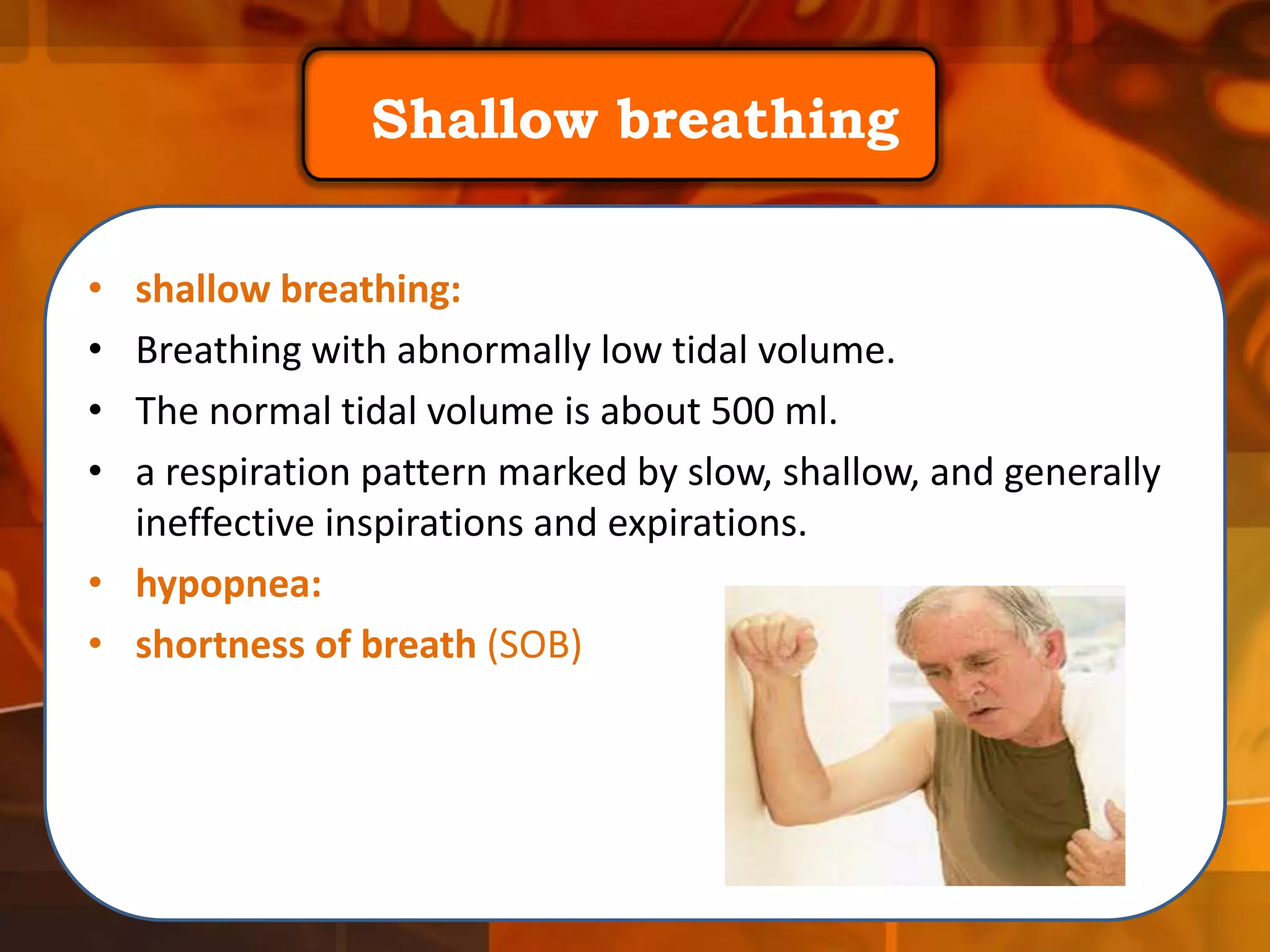
shallow breathing:
Breathing with abnormally low tidal volume.
The normal tidal volume is about 500 ml.
a respiration pattern marked by slow, shallow, and generally
ineffective inspirations and expirations.
• hypopnea:
• shortness of breath (SOB)
Shallow breathing
•
•
•
•
•
•
•

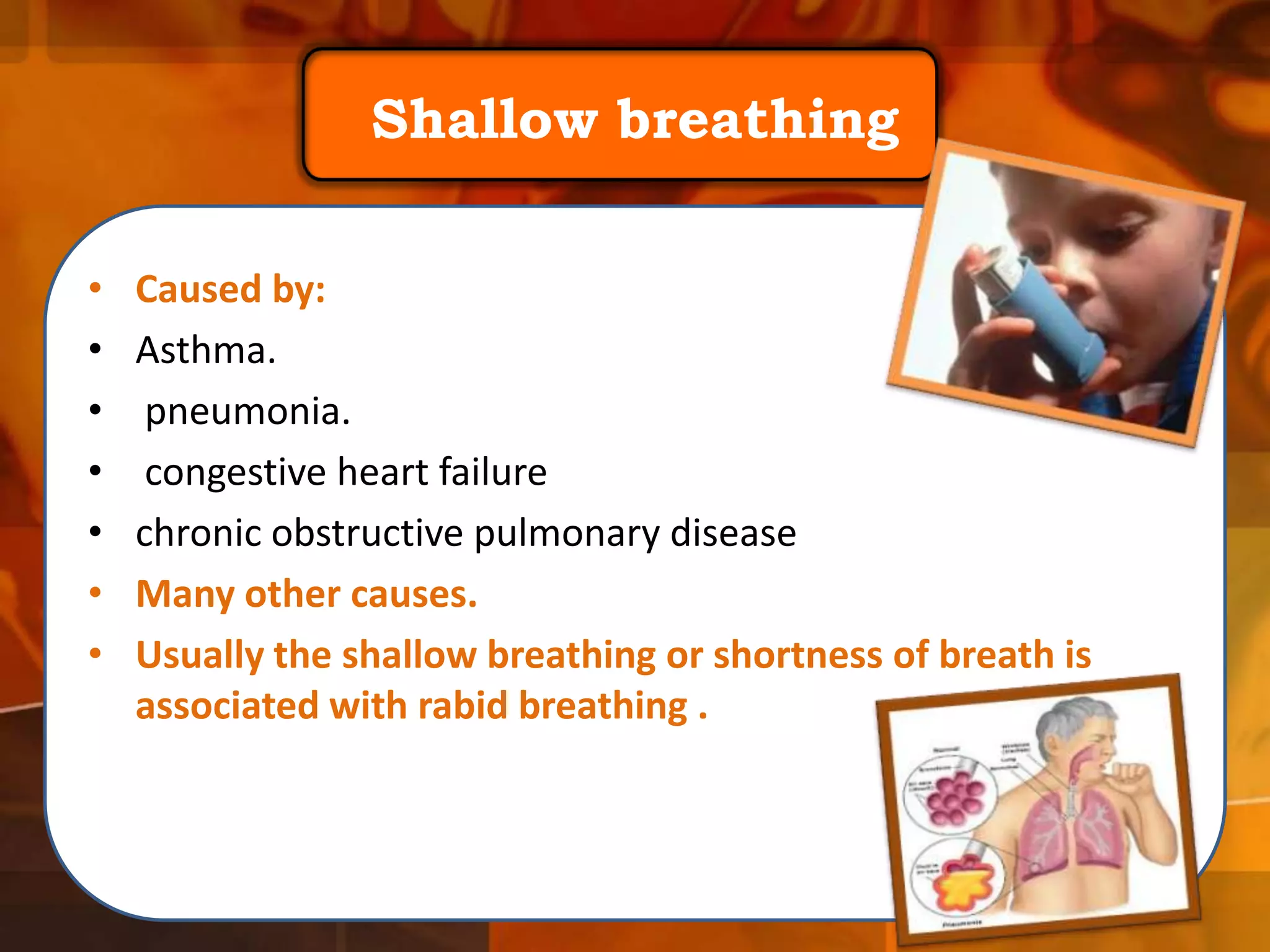
Caused by:
Asthma.
pneumonia.
congestive heart failure
chronic obstructive pulmonary disease
Many other causes.
Usually the shallow breathing or shortness of breath is
associated with rabid breathing .
Minimum movement
of the lung

Minimum
movement of the
lung caused by:

The effect of a
trauma

Pathological
effect
Pneumothorax
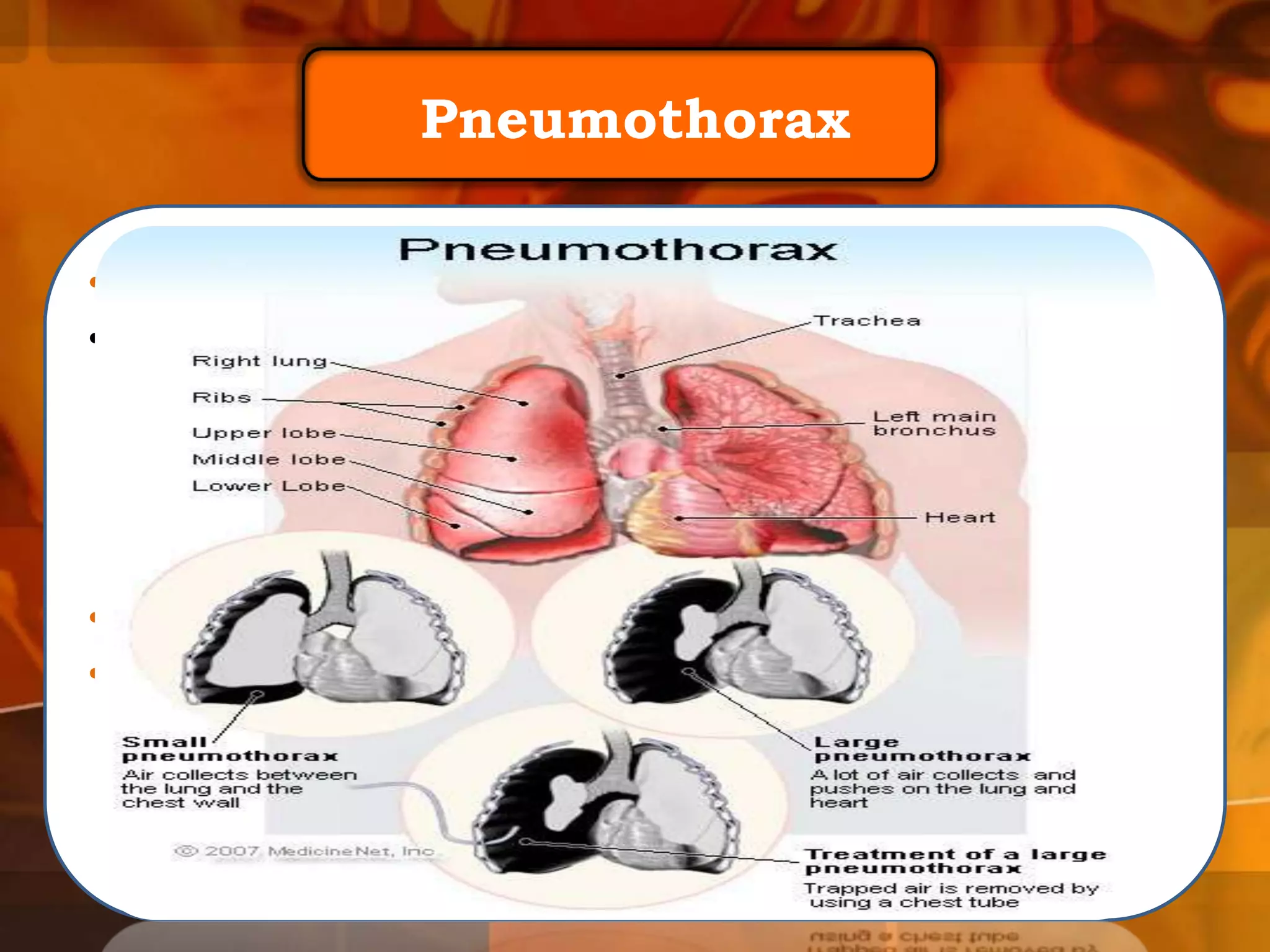
Pneumothorax
• Pneumothorax
• laterally means (air in the chest).

• There are many type of pneumothorax:
• Traumatic pneumothorax :is that results from injury to the
pleura, with air introduced into the pleural space .
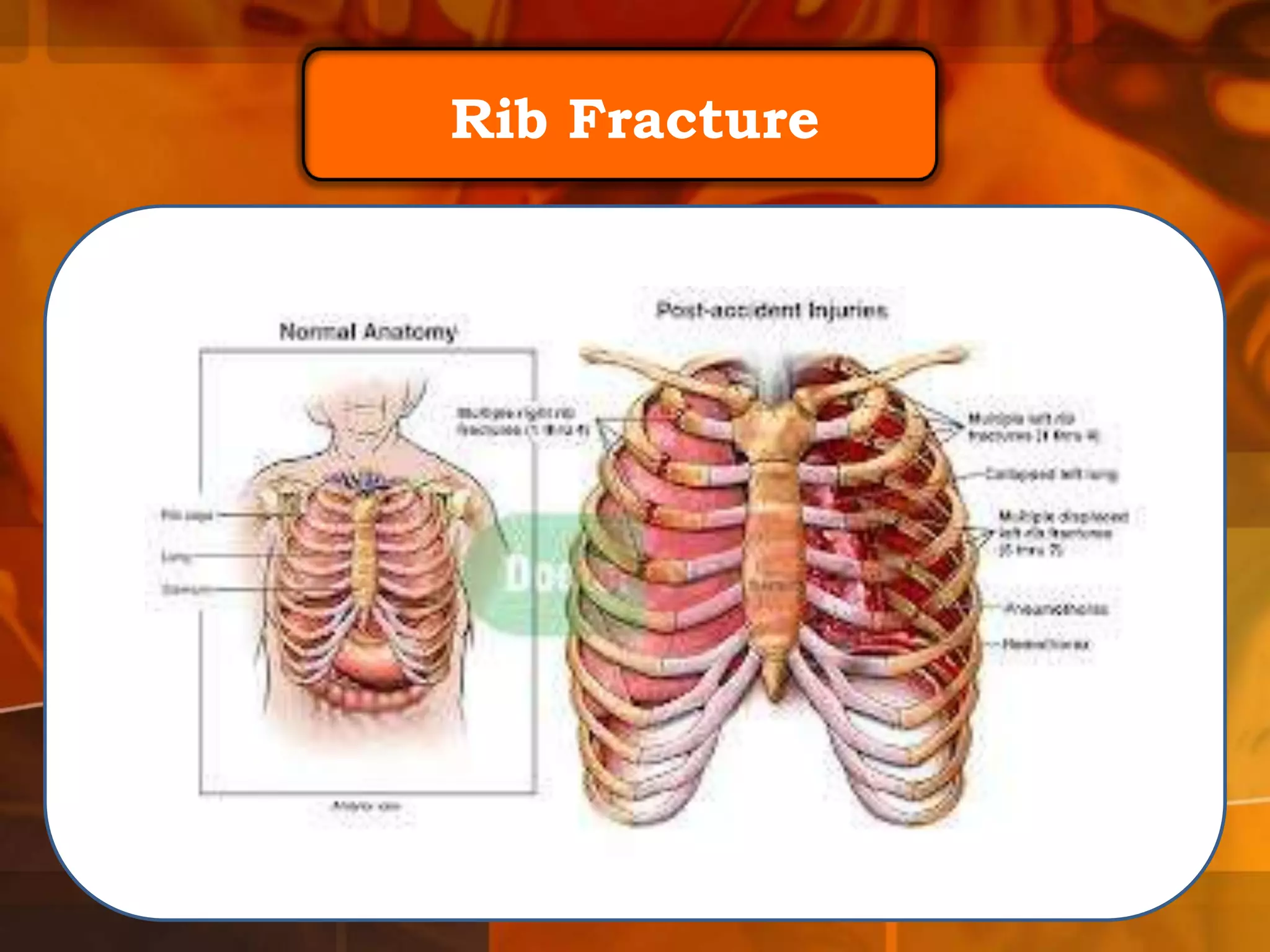
Rib Fracture
A 22-year-old man is in the coffee
shop with his friends. When he
gets up to leave at 2 a.m., he
blacks out and falls, banging his
chest on the corner of a table. He
is brought to the A&E for
examination immediately. On
arrival, he smells of alcohol and
only reacts to strong pain stimuli.
He is wheezing and his breathing is
shallow and slow. The left side of
his thorax only moves minimally.
Arterial blood gases are follows:
PaO2 = 60 mmHg, PaCO2= 50
mmHg and pH = 7.3. further
examination shows that several
ribs on the left side of his body are
fractured.
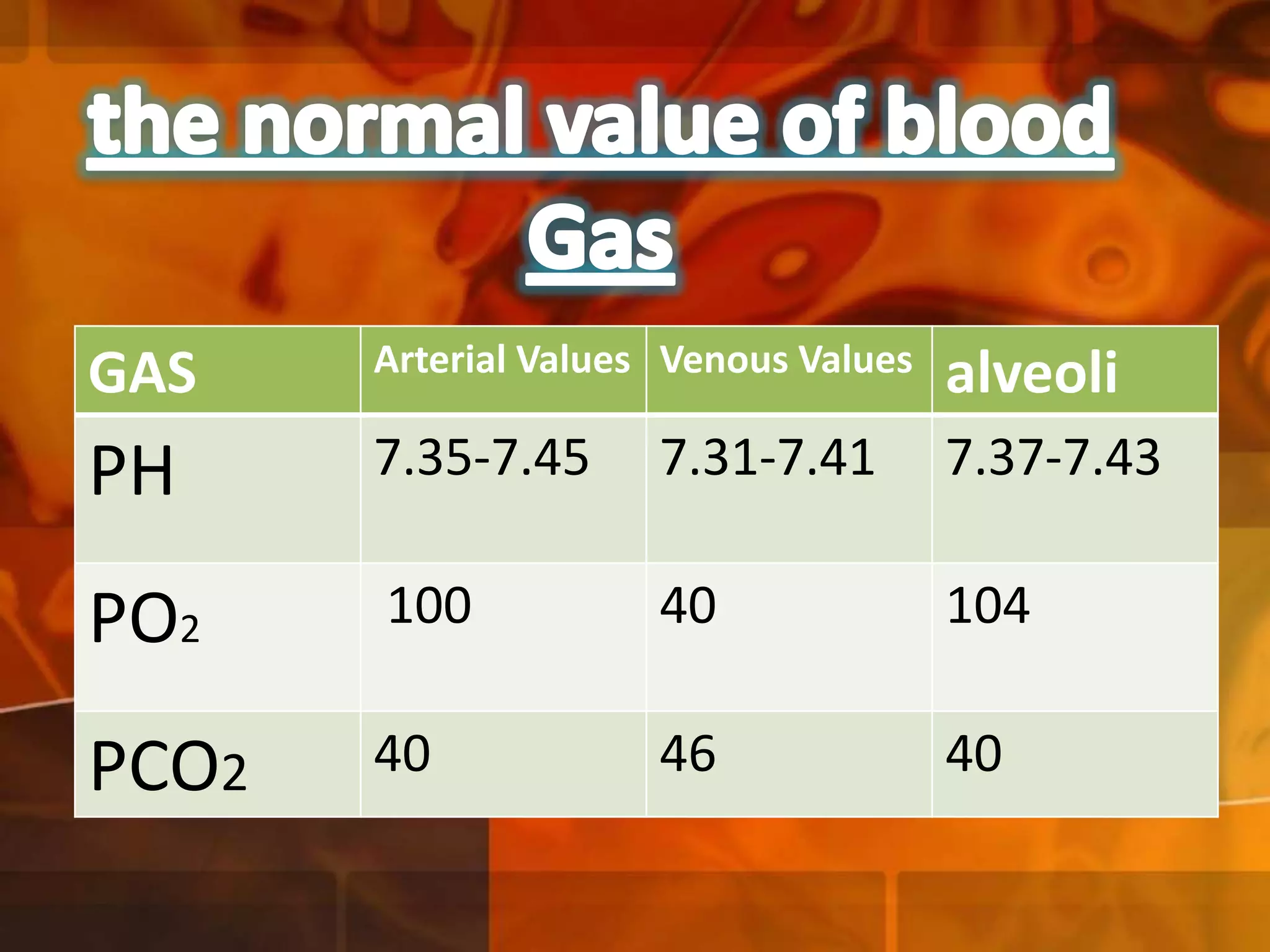
GAS

Arterial Values Venous Values

alveoli

PH

7.35-7.45

7.31-7.41

7.37-7.43

PO2

100

40

104

PCO2

40

46

40
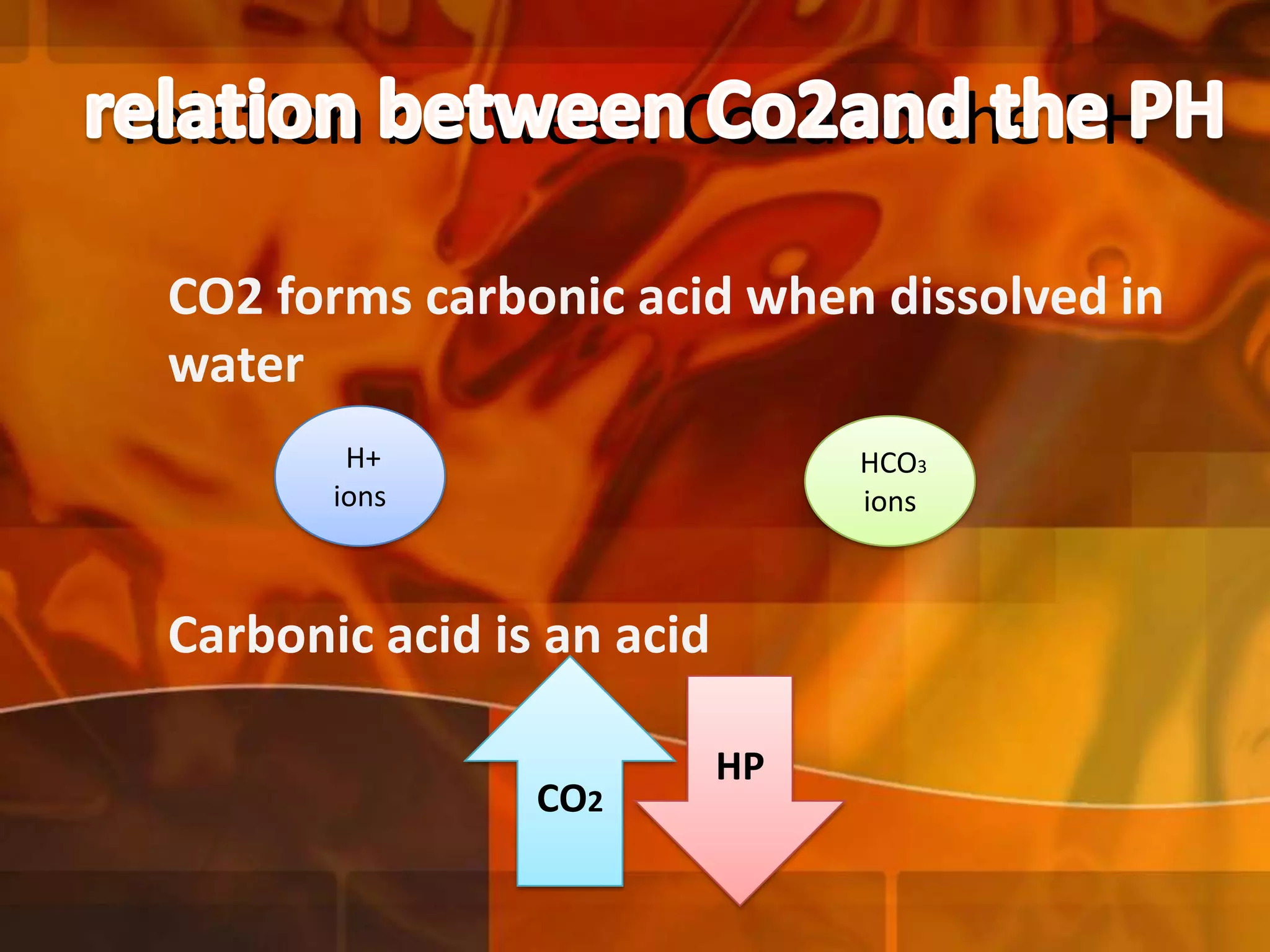
relation between Co2and the PH
CO2 forms carbonic acid when dissolved in
water
H+
ions

HCO3
ions

Carbonic acid is an acid
CO2

HP
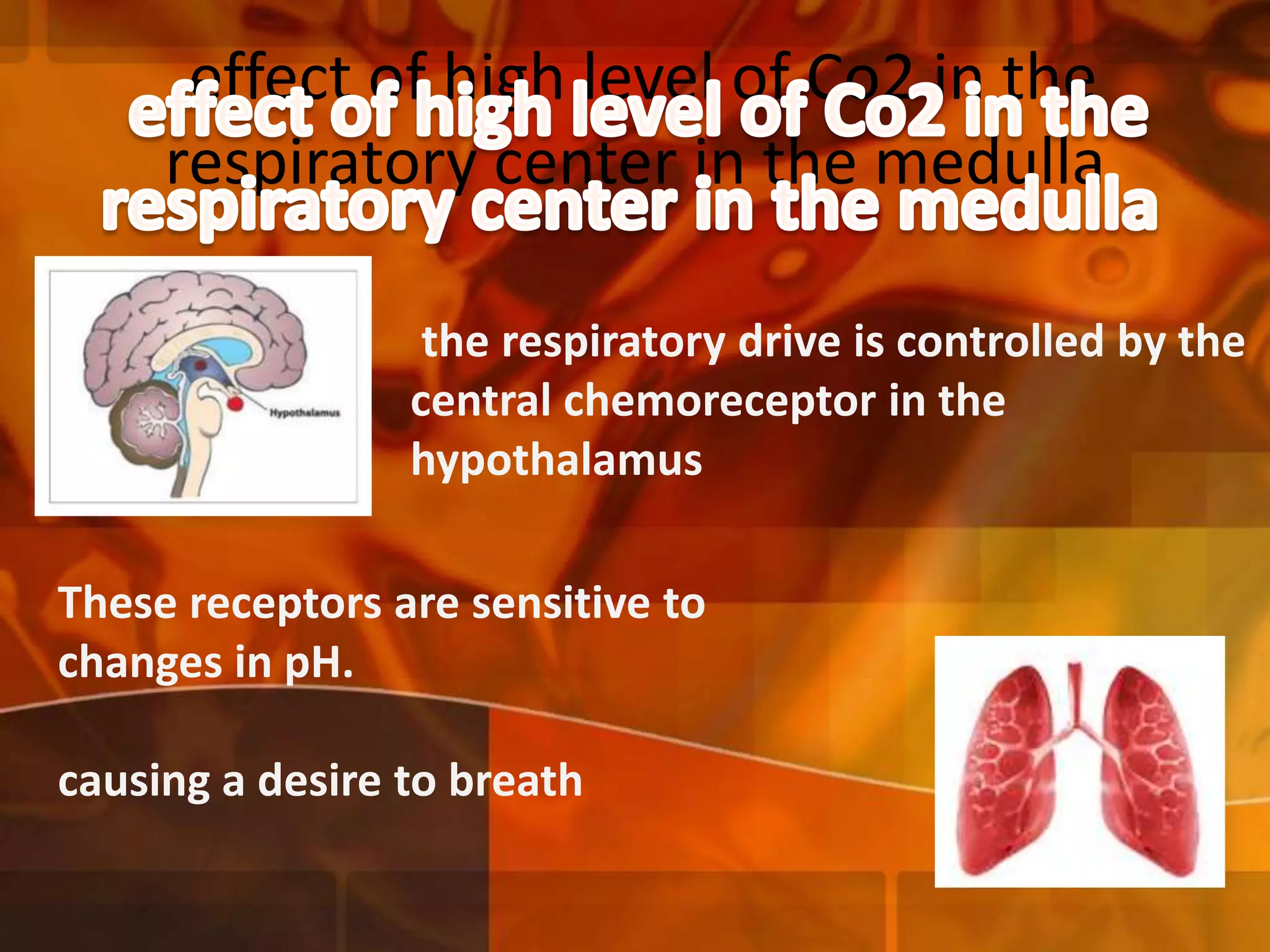
effect of high level of Co2 in the
respiratory center in the medulla
the respiratory drive is controlled by the
central chemoreceptor in the
hypothalamus

These receptors are sensitive to
changes in pH.
causing a desire to breath
References
http://www.med.unc.edu/alcohol/prevention/health.html
http://www.buzzle.com/articles/alcohol-side effects.html
http://www.addiction411.com/alcoholism-health-abuse-issues/
http://www.oregoncounseling.org/articlespapers/documents/etohbiofx.
htm
http://www.physioweb.org/respiration/control_breath.html
http://www.brooksidepress.org/Products/OperationalMedicine/DATA/operationalm
ed/Lab/ABG_ArterialBloodGas.htm
http://www.nlm.nih.gov/medlineplus/ency/article/003070.htm
http://medical-dictionary.thefreedictionary.com/wheezing
http://www.webmd.com/brain/coma-types-causes-treatments-prognosis
http://medical-dictionary.thefreedictionary.com/respiratory+failure
http://www.webmd.com/a-to-z-guides/fractured-rib-topic-overview
Hard copy pneumothorax.
Thank you

Drinking alcohol + respiratory system

Editor's Notes

  • #18 Brain:Alcohol interferes with the brain’s communication pathways, and can affect the way the brain looks and works. These disruptions can change mood and behavior, and make it harder to think clearly and move with coordination. 
  • #20 Wheezing most often comes from the small breathing tubes (bronchial tubes) deep in the chest, but it may be due to a blockage in larger airways or in persons with certain vocal cord
  • #25 is a disease caused by entering the air into the plural cavity due to disruption in transmural pressure that led to collapsing of the lung into its unstretched form and also springing of the thoracic wall outward to its unrestricted form .