z
Failure to Thrive
Dr. Vasanth Kumar R MD(Ped)
z
Background
â–Ş Failure to Thrive (FTT) is a common
problem in pediatric populations
▪ Accounts for 1-5% of referrals to children’s
hospitals/tertiary care centers
â–Ş May be under diagnosed
â–Ş 20-50% may not be picked up by physician
z
Background
â–Ş In low-income countries, poverty is the most
common cause of Failure to Thrive;
however, medical providers, social services
and law enforcement must learn about the
entire family to see if this child – for any
reason – was not given food that was given
to others in the family.
z
GROWTH
CHARTS
z
Growth Charts
â–Ş U.S. Centers for Disease Control (CDC)
â–Ş Growth reference
â–Ş How children grow in the U.S.
â–Ş World Health Organization (WHO)
â–Ş Growth standard
â–Ş How children should grow in ideal conditions
â–Ş Recommended for use in children under 2
z
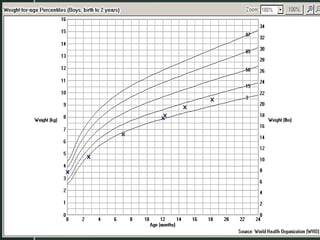
WHO Chart
z
FAILURE TO
THRIVE
z
Failure to Thrive
â–Ş Not a diagnosis - a description
â–Ş Inadequate nutrition to sustain normal growth and
development
â–Ş Significantly prolonged cessationof appropriate weight gain
compared with recognized norms for age/gender after having
achieved stable pattern
z
C
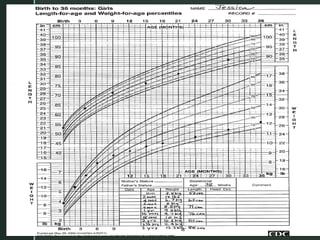
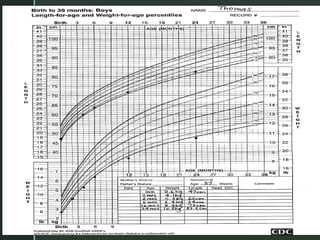
â–Ş Weight curve crossing 2 major percentile
lines on growth chart after achieving stable
pattern
â–Ş Weight for age or weight for height more
than 2 standard deviations below mean for
gender/age
z
Organic vs. Non-Organic
â–Ş Not a helpful distinction
â–Ş Both overlap
â–Ş Too simplistic
â–Ş Malnutrition causes growth
failure
z
Causes of FTT
â–Ş Inadequate calories
â–Ş Inability to utilize calories
â–Ş Increased caloric needs
More than one of these causes can overlap!!
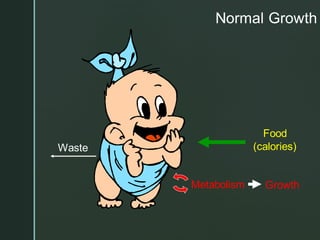
Normal Growth
Food
(calories)
Waste
Metabolism Growth
z
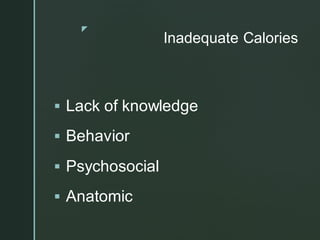
Inadequate Calories
â–Ş Lack of knowledge
â–Ş Behavior
â–Ş Psychosocial
â–Ş Anatomic
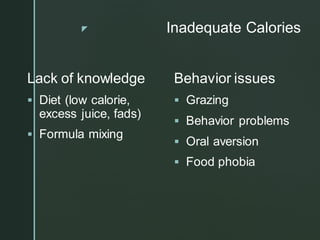
z Inadequate Calories
Lack of knowledge
â–Ş Diet (low calorie,
excess juice, fads)
â–Ş Formula mixing
Behavior issues
â–Ş Grazing
â–Ş Behavior problems
â–Ş Oral aversion
â–Ş Food phobia
z
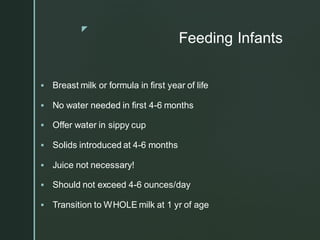
Feeding Infants
â–Ş Breast milk or formula in first year of life
â–Ş No water needed in first 4-6 months
â–Ş Offer water in sippy cup
â–Ş Solids introduced at 4-6 months
â–Ş Juice not necessary!
â–Ş Should not exceed 4-6 ounces/day
â–Ş Transition to WHOLE milk at 1 yr of age
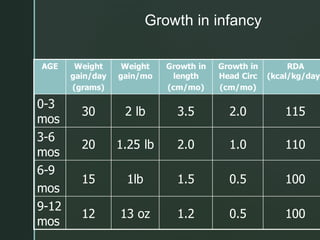
Growth in infancy
AGE Weight
gain/day
(grams)
Weight
gain/mo
Growth in
length
(cm/mo)
Growth in
Head Circ
(cm/mo)
RDA
(kcal/kg/day)
0-3
mos
30 2 lb 3.5 2.0 115
3-6
mos
20 1.25 lb 2.0 1.0 110
6-9
mos
15 1lb 1.5 0.5 100
9-12
mos
12 13 oz 1.2 0.5 100
z
Toddlers
â–Ş Growth less rapid
â–Ş Can become picky
▪ Food “jags”
â–Ş Bottle should be discontinued
â–Ş Self feeding encouraged
â–Ş Avoid battles over food
z
Stop Grazing
â–Ş Offer 3 meals and 3 snacks per day
â–Ş Separate meals and snacks by 2-2.5 hours
â–Ş Only water between meals and snacks
â–Ş Meals and snacks should be offered at a table or highchair and
should last 20-25 minutes
â–Ş Solid foods should be offered before liquids
z
Inadequate Calories
Psychosocial
â–Ş Poverty/financial
â–Ş Formula mixing
â–Ş Abuse/neglect/IPV
â–Ş Parental mental health issues
â–Ş Parental eating disorders
z
Inadequate Calories
Anatomic
â–ŞCongenital anomalies
â–ŞOromotor dysfunction
â–ŞDental caries
â–ŞGastroesophageal reflux
â–ŞObstruction (i.e. pyloric stenosis)
Inability to Utilize Calories
Malabsorption
â–Ş Milk protein allergy
â–Ş Cystic fibrosis
â–Ş Pancreatic insufficiency
â–Ş Biliary atresia
â–Ş Short gut or necrotizing
enterocolitis
â–Ş Inflammatory bowel disease
â–Ş Chronic diarrhea
â–Ş Disaccharidasedeficiency
Improper utilization
â–Ş Inborn errors of
metabolism
â–Ş Storage disorders
â–Ş Growth hormone
deficiency
z
Increased Caloric Needs
â–Ş Prematurity
â–Ş Recurrent infection
â–Ş Cardiac disorders
â–Ş Congenital heart
disease, heart
failure
â–Ş Pulmonary disorders
â–Ş Chronic lung
disease, poorly
controlled asthma
â–Ş Cancer
â–Ş Kidney problems
â–Ş Renal tubular
acidosis, chronic
renal failure
â–Ş Chronic liver disease
â–Ş Obstructive sleep apnea
â–Ş Chronic infection (HIV,
Tuberculosis)
CHILD ABUSE
CAUSES OF
FTT
z
Child abuse causing FTT
â–Ş Neglect
â–Ş Pediatric Condition Falsification
â–Ş Other- effects of physical abuse, sexual
abuse
z Child Abuse Causing FTT
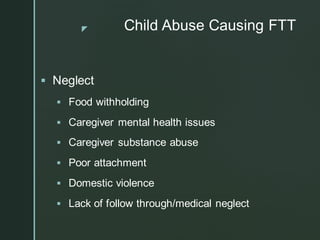
â–Ş Neglect
â–Ş Food withholding
â–Ş Caregiver mental health issues
â–Ş Caregiver substance abuse
â–Ş Poor attachment
â–Ş Domestic violence
â–Ş Lack of follow through/medical neglect
z
Child Abuse Causing FTT
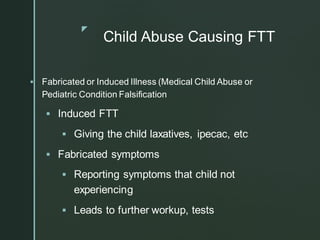
â–Ş Fabricated or Induced Illness (Medical Child Abuse or
Pediatric Condition Falsification
â–Ş Induced FTT
â–Ş Giving the child laxatives, ipecac, etc
â–Ş Fabricated symptoms
â–Ş Reporting symptoms that child not
experiencing
â–Ş Leads to further workup, tests
z
Child Abuse Causing FTT
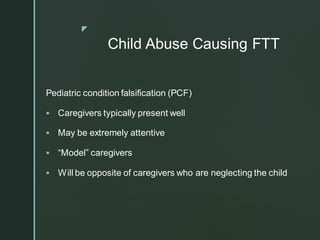
Pediatric condition falsification (PCF)
â–Ş Caregivers typically present well
â–Ş May be extremely attentive
▪ “Model” caregivers
â–Ş Will be opposite of caregivers who are neglecting the child
z
Child Abuse Causing FTT
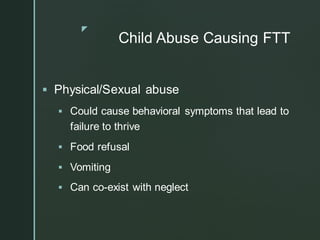
â–Ş Physical/Sexual abuse
â–Ş Could cause behavioral symptoms that lead to
failure to thrive
â–Ş Food refusal
â–Ş Vomiting
â–Ş Can co-exist with neglect
z
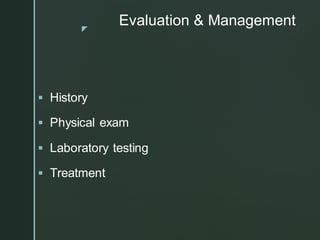
Evaluation & Management
â–Ş History
â–Ş Physical exam
â–Ş Laboratory testing
â–Ş Treatment
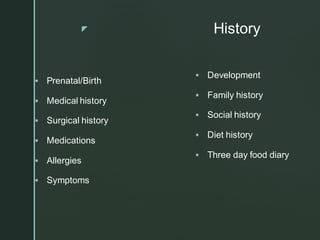
z History
â–Ş Prenatal/Birth
â–Ş Medical history
â–Ş Surgical history
â–Ş Medications
â–Ş Allergies
â–Ş Symptoms
â–Ş Development
â–Ş Family history
â–Ş Social history
â–Ş Diet history
â–Ş Three day food diary
z
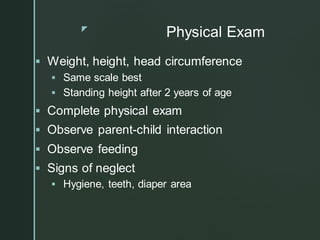
Physical Exam
â–Ş Weight, height, head circumference
â–Ş Same scale best
â–Ş Standing height after 2 years of age
â–Ş Complete physical exam
â–Ş Observe parent-child interaction
â–Ş Observe feeding
â–Ş Signs of neglect
â–Ş Hygiene, teeth, diaper area
z
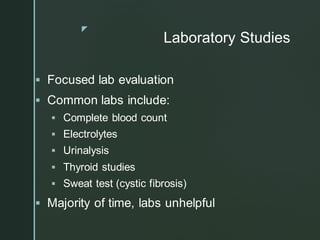
Laboratory Studies
â–Ş Focused lab evaluation
â–Ş Common labs include:
â–Ş Complete blood count
â–Ş Electrolytes
â–Ş Urinalysis
â–Ş Thyroid studies
â–Ş Sweat test (cystic fibrosis)
â–Ş Majority of time, labs unhelpful
z
Treatment: Aimed at
Cause of FTT
â–Ş Dietary changes
â–Ş Increase calories
â–Ş Behavioral changes
â–Ş Scheduled, structured mealtimes
â–Ş Home visitation
â–Ş Document weight, check in with family, observe
home dynamics
â–Ş Hospitalization
â–Ş Severe cases, suspected abuse, failure of
outpatient treatment
z
Multidisciplinary Teams
â–Ş Best way to address FTT
â–Ş Medical Provider
â–Ş Dietician
â–Ş Social Worker
â–Ş Visiting nurse
â–Ş Occupational therapy
â–Ş Developmental specialist
z
Outcomes
â–Ş Depends on case
â–Ş Prognosis on growth typically good; however 25-60% may
remain small
â–Ş Cognitive deficits, learning disability, behavioral problems seen
in follow up
â–Ş Hard to tease out affects of FTT because of co-morbidities
References
â–Ş Kleinman R, Pediatric Nutrition Handbook 6th edition. American
Academy of Pediatrics; 2009.
â–Ş Reece R, Christian C, eds. Child Abuse, Medical Diagnosis and
Management. 3rd edition. AmericanAcademy of Pediatrics; 2009.
â–Ş Block, BW, Krebs, NF, et al. Failure to Thrive as a Manifestation of
Child Neglect. Pediatrics 2005; 116:1234-1237.
â–Ş Krugman, SD, Dubowitz, H. Failure to Thrive. Amer Fam Phys
2003; 68(5): 879-884
â–Ş Bools,C. Fabricated or Induced Illness in a Child by a Carer: A
Reader. Radcliffe Publishing, Oxford 2007

2-Failure-to-Thrive.pdf Failure-to-Thrive

  • 1.
    z Failure to Thrive Dr.Vasanth Kumar R MD(Ped)
  • 2.
    z Background ▪ Failure toThrive (FTT) is a common problem in pediatric populations ▪ Accounts for 1-5% of referrals to children’s hospitals/tertiary care centers ▪ May be under diagnosed ▪ 20-50% may not be picked up by physician
  • 3.
    z Background ▪ In low-incomecountries, poverty is the most common cause of Failure to Thrive; however, medical providers, social services and law enforcement must learn about the entire family to see if this child – for any reason – was not given food that was given to others in the family.
  • 4.
  • 5.
    z Growth Charts â–Ş U.S.Centers for Disease Control (CDC) â–Ş Growth reference â–Ş How children grow in the U.S. â–Ş World Health Organization (WHO) â–Ş Growth standard â–Ş How children should grow in ideal conditions â–Ş Recommended for use in children under 2
  • 6.
  • 7.
  • 8.
    z Failure to Thrive â–ŞNot a diagnosis - a description â–Ş Inadequate nutrition to sustain normal growth and development â–Ş Significantly prolonged cessationof appropriate weight gain compared with recognized norms for age/gender after having achieved stable pattern
  • 9.
    z C â–Ş Weight curvecrossing 2 major percentile lines on growth chart after achieving stable pattern â–Ş Weight for age or weight for height more than 2 standard deviations below mean for gender/age
  • 12.
    z Organic vs. Non-Organic â–ŞNot a helpful distinction â–Ş Both overlap â–Ş Too simplistic â–Ş Malnutrition causes growth failure
  • 13.
    z Causes of FTT â–ŞInadequate calories â–Ş Inability to utilize calories â–Ş Increased caloric needs More than one of these causes can overlap!!
  • 14.
  • 15.
    z Inadequate Calories â–Ş Lackof knowledge â–Ş Behavior â–Ş Psychosocial â–Ş Anatomic
  • 16.
    z Inadequate Calories Lackof knowledge â–Ş Diet (low calorie, excess juice, fads) â–Ş Formula mixing Behavior issues â–Ş Grazing â–Ş Behavior problems â–Ş Oral aversion â–Ş Food phobia
  • 17.
    z Feeding Infants â–Ş Breastmilk or formula in first year of life â–Ş No water needed in first 4-6 months â–Ş Offer water in sippy cup â–Ş Solids introduced at 4-6 months â–Ş Juice not necessary! â–Ş Should not exceed 4-6 ounces/day â–Ş Transition to WHOLE milk at 1 yr of age
  • 18.
    Growth in infancy AGEWeight gain/day (grams) Weight gain/mo Growth in length (cm/mo) Growth in Head Circ (cm/mo) RDA (kcal/kg/day) 0-3 mos 30 2 lb 3.5 2.0 115 3-6 mos 20 1.25 lb 2.0 1.0 110 6-9 mos 15 1lb 1.5 0.5 100 9-12 mos 12 13 oz 1.2 0.5 100
  • 19.
    z Toddlers ▪ Growth lessrapid ▪ Can become picky ▪ Food “jags” ▪ Bottle should be discontinued ▪ Self feeding encouraged ▪ Avoid battles over food
  • 20.
    z Stop Grazing â–Ş Offer3 meals and 3 snacks per day â–Ş Separate meals and snacks by 2-2.5 hours â–Ş Only water between meals and snacks â–Ş Meals and snacks should be offered at a table or highchair and should last 20-25 minutes â–Ş Solid foods should be offered before liquids
  • 21.
    z Inadequate Calories Psychosocial â–Ş Poverty/financial â–ŞFormula mixing â–Ş Abuse/neglect/IPV â–Ş Parental mental health issues â–Ş Parental eating disorders
  • 22.
    z Inadequate Calories Anatomic â–ŞCongenital anomalies â–ŞOromotordysfunction â–ŞDental caries â–ŞGastroesophageal reflux â–ŞObstruction (i.e. pyloric stenosis)
  • 23.
    Inability to UtilizeCalories Malabsorption â–Ş Milk protein allergy â–Ş Cystic fibrosis â–Ş Pancreatic insufficiency â–Ş Biliary atresia â–Ş Short gut or necrotizing enterocolitis â–Ş Inflammatory bowel disease â–Ş Chronic diarrhea â–Ş Disaccharidasedeficiency Improper utilization â–Ş Inborn errors of metabolism â–Ş Storage disorders â–Ş Growth hormone deficiency
  • 24.
    z Increased Caloric Needs â–ŞPrematurity â–Ş Recurrent infection â–Ş Cardiac disorders â–Ş Congenital heart disease, heart failure â–Ş Pulmonary disorders â–Ş Chronic lung disease, poorly controlled asthma â–Ş Cancer â–Ş Kidney problems â–Ş Renal tubular acidosis, chronic renal failure â–Ş Chronic liver disease â–Ş Obstructive sleep apnea â–Ş Chronic infection (HIV, Tuberculosis)
  • 25.
  • 26.
    z Child abuse causingFTT â–Ş Neglect â–Ş Pediatric Condition Falsification â–Ş Other- effects of physical abuse, sexual abuse
  • 27.
    z Child AbuseCausing FTT â–Ş Neglect â–Ş Food withholding â–Ş Caregiver mental health issues â–Ş Caregiver substance abuse â–Ş Poor attachment â–Ş Domestic violence â–Ş Lack of follow through/medical neglect
  • 28.
    z Child Abuse CausingFTT â–Ş Fabricated or Induced Illness (Medical Child Abuse or Pediatric Condition Falsification â–Ş Induced FTT â–Ş Giving the child laxatives, ipecac, etc â–Ş Fabricated symptoms â–Ş Reporting symptoms that child not experiencing â–Ş Leads to further workup, tests
  • 29.
    z Child Abuse CausingFTT Pediatric condition falsification (PCF) ▪ Caregivers typically present well ▪ May be extremely attentive ▪ “Model” caregivers ▪ Will be opposite of caregivers who are neglecting the child
  • 30.
    z Child Abuse CausingFTT â–Ş Physical/Sexual abuse â–Ş Could cause behavioral symptoms that lead to failure to thrive â–Ş Food refusal â–Ş Vomiting â–Ş Can co-exist with neglect
  • 31.
    z Evaluation & Management â–ŞHistory â–Ş Physical exam â–Ş Laboratory testing â–Ş Treatment
  • 32.
    z History â–Ş Prenatal/Birth â–ŞMedical history â–Ş Surgical history â–Ş Medications â–Ş Allergies â–Ş Symptoms â–Ş Development â–Ş Family history â–Ş Social history â–Ş Diet history â–Ş Three day food diary
  • 33.
    z Physical Exam â–Ş Weight,height, head circumference â–Ş Same scale best â–Ş Standing height after 2 years of age â–Ş Complete physical exam â–Ş Observe parent-child interaction â–Ş Observe feeding â–Ş Signs of neglect â–Ş Hygiene, teeth, diaper area
  • 34.
    z Laboratory Studies â–Ş Focusedlab evaluation â–Ş Common labs include: â–Ş Complete blood count â–Ş Electrolytes â–Ş Urinalysis â–Ş Thyroid studies â–Ş Sweat test (cystic fibrosis) â–Ş Majority of time, labs unhelpful
  • 35.
    z Treatment: Aimed at Causeof FTT â–Ş Dietary changes â–Ş Increase calories â–Ş Behavioral changes â–Ş Scheduled, structured mealtimes â–Ş Home visitation â–Ş Document weight, check in with family, observe home dynamics â–Ş Hospitalization â–Ş Severe cases, suspected abuse, failure of outpatient treatment
  • 36.
    z Multidisciplinary Teams â–Ş Bestway to address FTT â–Ş Medical Provider â–Ş Dietician â–Ş Social Worker â–Ş Visiting nurse â–Ş Occupational therapy â–Ş Developmental specialist
  • 37.
    z Outcomes â–Ş Depends oncase â–Ş Prognosis on growth typically good; however 25-60% may remain small â–Ş Cognitive deficits, learning disability, behavioral problems seen in follow up â–Ş Hard to tease out affects of FTT because of co-morbidities
  • 38.
    References â–Ş Kleinman R,Pediatric Nutrition Handbook 6th edition. American Academy of Pediatrics; 2009. â–Ş Reece R, Christian C, eds. Child Abuse, Medical Diagnosis and Management. 3rd edition. AmericanAcademy of Pediatrics; 2009. â–Ş Block, BW, Krebs, NF, et al. Failure to Thrive as a Manifestation of Child Neglect. Pediatrics 2005; 116:1234-1237. â–Ş Krugman, SD, Dubowitz, H. Failure to Thrive. Amer Fam Phys 2003; 68(5): 879-884 â–Ş Bools,C. Fabricated or Induced Illness in a Child by a Carer: A Reader. Radcliffe Publishing, Oxford 2007