FAILURE TO THRIVE
&
SHORT STATURE
Dr. PavanKumar J
Associate Professor
Department of Paediatrics
• PE- 2.1 Discuss etiopathogenesis clinical features, and
management of a child who faIls to thrive
• PE - 2.2 Assessment of a child with FTT including eliciting an
appropriate history and examinations
• PE -2.3 Counselling a parent with FTT child
• PE - 2.4 Discuss etiopathogenesis, clinical features, and
management of a child with short stature
• PE - 2.5 Assessment : history, perform examination, document,
and present
• PE - 2.6 Enumerate the referral criteria for growth related
problems.
INTRODUCTION
INTRODUCTION
• FTT results from inadequate usable calories necessary for childs
metabolic and growth demands
• FTT objectively denotes growth failure.
• For practical purpose, weight remains the most common and
simplest parameter to define FTT as it is affected first during any
illness, much before stunting manifests.
• FTT should never be considered as a primary disease.
– Manifestation of an underlying cause which should be
investigated through proper clinical examination
ETIOLOGY
Dependent on various physiological processes
Chief determinant is food intake
• Quality and quantity.
FTT - taking less food, not absorbed, or nutrients and fluids are being lost
excessively.
Underlying organic disease
• (renal, cardiac, gastrointestinal, and respiratory)
• Metabolic cause-increased expenditure- energy deficit.
Psychosocial or environmental deprivation
Child abuse and neglect
BOX 2.1: Diagnostic criteria of failure to thrive
1. Weight for age below 5th percentile
2. Weight deceleration
Serial weight monitoring shows downward trend and has
crossed two major growth percentiles
75th percentile to below 25th percentile in short time
3. Body mass index <5th percentile
Systemic complications of failure to thrive
• Short-term
– Hypothermia
– Hypoproteinaemia
– Predisposition to infections
– Nutritional deficiencies and electrolyte imbalance
• Long-term
– Neurocognitive delay
– Behavioural problems
– Short stature
– Adult onset metabolic diseases
Major organic causes of failure to thrive
Gastrointestinal :
• Recurrent diarrhoea (poor sanitation)
• Gastroesophageal reflux disease
• Celiac disease
• Pyloric stenosis
• Cleft palate/lip
• Lactose intolerance
• Hirschsprung disease
• Milk protein intolerance
• Hepatitis
• Cirrhosis
• Pancreatic insufficiency
• Biliary disease
• Inflammatory bowel disease, and
• Malabsorption
Major organic causes of failure to thrive
Renal
• Urinary tract infection
• Renal tubular acidosis
• Diabetes insipidus
• Chronic renal insufficiency
Cardiopulmonary
• Cardiac diseases leading to
congestive heart failure,
• Asthma
• Bronchopulmonary
dysplasia
• Cystic fibrosis
• Anatomic abnormalities of
upper airway
• Obstructive sleep apnea
(snoring)
Major organic causes of failure to thrive
Endocrine :
• Hypothyroidism
• Diabetes mellitus
• Adrenal insufficiency
or excess
• Parathyroid disorders
• Pituitary disorders
• Growth hormone
deficiency
Neurological:
• Global
developmental delay
• Cerebral hemorrhage
• Degenerative
disorders
Major organic causes of failure to thrive
Infectious :
• Parasitic or
bacterial infections
of the GIT
• Human
immunodeficiency
virus disease
Metabolic
• Inborn errors of
metabolism
Congenital :
• Chromosomal
infections
• Congenital
syndromes (fetal
alcohol
syndrome), and
perinatal
infections
Causes of failure to thrive based on energy balance
Inadequate caloric intake
• Infancy
• Inadequate breastmilk
• Inadequate amount or improper dilution of top/formula milk
• Inadequate complementary feeding
• Gastroesophageal reflux disease
• Cleft palate/cleft lip
• Maternal factors-low education and younger age
• Childhood
• Food scarcity
• Neurodevelopmental disorders-swallowing coordination -like CP
• Gastroesophageal reflux disease
• Behavioural disorders and eating disorders
Inadequate caloric absorption
• Infancy
• GI anomalies duodenal atresia and malrotation of gut
• Cow milk protein allergy
• GI parasitic infections
• Chronic liver disease
• Short gut syndrome (ileal resection post-surgery)
• Childhood
• Food allergy
• Malabsorption-celiac disease and chronic diarrhoea
• Inflammatory bowel disease
• Inborn errors of metabolism
Causes of failure to thrive based on energy balance
Excessive caloric expenditure
• Infancy
• Chronic systemic diseases-CCHD, lung disease, renal disease, cystic fibrosis
and endocrinal causes
• Chronic infection
• Intrauterine infections and tuberculosis
• HIV
• Genetic syndromes
• Inborn errors of metabolism
• Malignancy
• Childhood
• Chronic systemic illness
• Chronic systemic infections
• Malignancy
• Inborn errors of metabolism
Causes of failure to thrive based on energy balance
Detailed evaluation of the following aspects:
•Dietary assessment
•Medical assessment
•Psychosocial assessment
•Developmental
assessment.
A child with
FTT should
have a
Dietary
assessment
History
Onset of growth failure
• To differentiate between congenital and acquired.
• Common symptoms of possible organic disorders
• Dietary intake and dietary habits
• Amount of food offered and consumed
• Milk preparation, dilution, and reconstitution
• Feeding at home and outside home (day-care and
school)
History
• Sociocultural environment
– Family dynamics parental education, employment, substance abuse
and cultural factors
• Psychosocial assessment
– Socioeconomic status
– Family dysfunction, and feeding problems
– Child's drive for autonomy, attention seeking, gaining independence,
and expressing anger or dislike
• Physical or mental abuse
• Developmental assessment
– Developmental delay
– Abnormalities of posture, tone
– Attention and language
– Any delay in two or more domains is abnormal.
• Serially measured values rather than a single
observation - mainstay for diagnosing FTT.
• Organic disorders (facial dysmorphism, neuro-
cutaneous markers, and clubbing).
• Physical abuse (fractures, bruises, hematomas, and
cigarette marks).
Laboratory Evaluation
• Clinical diagnosis
• Most do not need investigations
• Importance when an organic etiology is suspected or in
presence of a red flag sign.
• Initial tests
– Hb, blood counts, RFT, LFT, electrolytes, total proteins,
antiendomysial bodies (to screen for celiac disease), and
urinalysis.
Other tests
• Sweat chloride test for cystic fibrosis
• Blood pH, anion gap,
• Urine pH for RTA
• Stool examination - diarrhoea or suspected
malabsorption.
• Radiological assessment
– Bone age
– Fractures
• Karyotype Chromosomal disorder
Dietary therapy
• RUTF (Ready to Use Therapeutic Food) can be
provided
• Breastfeeding on demand
• Provision of safe and clean drinking water
NUTRITIONAL REHABILITATION
CENTRES
• After treatment of acute phase,the child will
be transferred to NRC
• This acts as a bridge between hospital and
home.
• Provides nutritional therapy along with
growth and developmental stimulation and
support
Indications of hospitalization are as follows:
• Severe malnutrition with life-threatening complications
• Child unresponsive to initial management.
• Where parent neglect, abuse, or maltreatment is suspected
• Multidisciplinary and stepwise approach - most effective.
• Dietary management:
– Nutritional rehabilitation to achieve
• Ideal weight for height and correction of nutritional deficits, allowing
catch up growth, restoration of optimal body composition,
• Parental education regarding nutritional requirements and feeding
Parental counselling and education:
• Requirements and how they can be met.
• Calorie content of different food items
• How to make calorie rich, simple, and appealing
• Right techniques of feeding
• Inculcate good feeding habits
• Misconceptions and food fads
• Counselling a parent/caregiver in continued rehabilitation and
psychosocial care.
Medical management
• Special diets
– e.g celiac disease or special enzyme supplements
for cystic fibrosis.
• Drugs
– e.g., for gastroesophageal reflux disease)
• Special training
– Neuromotor dysfunction (e.g., cerebral palsy).
Psychosocial management:
• Good rapport
• Psychiatrist in cases of depression, substance
abuse, and behavioural problems
• Behavioural modifications in feeding disorders,
• Relief organizations in case of poverty
• Hospitalization or foster homes in cases of
Severe abuse, neglect, and maltreatment
Developmental management
• Minor deficits like language, subnormal IQ,
decreased HC, can be detected on follow-up.
• Early recognition of condition, and management,
before a permanent brain deficit occurs.
PROGNOSIS
• FTT in first year of life regardless of etiology –
prognosis is ominous
• Maximal brain growth occurs during the first
six to twelve months of age .
• One third of children with Psycho social FTT
have developmental delay, social & emotional
problems
• Prognosis for organic FTT ‐ variable ‐ depends
on the etiology
IN A NUTSHELL
• 1. Failure to thrive - denote overall nutritional status of a child with
respect to less energy intake or more energy expenditure.
• 2. Weight for age remains the most common parameter
• 3. Serial weight monitoring if showing downward trend and crossing
two major growth percentiles defines FTT.
• 4. Approach to clinical diagnosis should include detailed history and
examination clues of underlying organic causes.
• 5. The management should be based on nutritional rehabilitation,
parental counselling, development supportive practices, and
appropriate medical therapy, as appropriate.
SHORT STATURE
Short stature
DEFINITION
• Height below 3rd percentile or 2SD below the mean for age
and sex of the population reference standard .
• Growth velocity of less than 25th centile on a velocity curve
when assessed over a minimum period of 12 months .
Normal growth velocity
• Velocity
1. 1st year - 25cms
2. 2nd year - 12.5 cm
3. 3rd and 4th year - 6-7 cm
4. 5-9 years - 5cm per year
5. Prepubertal -4cm per year
6. Pubertal : boys -9-11 cm per year
girls -7-9 cm per year
DETERMINANTS OF GROWTH
– Dependent on
• Age
• Gender
• Nutrition
• Genetics
• Ethnicity
• Racial differences.
• Child may remain short, if he is born to shorter parents
– MPH at 18/20 years.
– Height at any given age corresponds to lie within 2 SD of MPH
when extrapolated till adult height on growth chart (target height
range).
Calculation of midparental height (MPH)
• MPH (boy) = (Father's height + Mother's height + 13)/2, or
– [(Father's height + Mother's height)/2] +6.5
• MPH (girls) = (Father's height + Mother's height - 13)/2, or
– [(Father's height + Mother's height)/2] - 6.5
ETIOLOGY
• Physiological variants account for over 2/3rds
• Pathological
– Genetics of nutrition, systemic diseases, endocrine imbalance
• Depending on Ratio of upper and lower segment length
– Proportionate or
– Disproportionate
Disproportionate Short Stature
Abnormal skeletal growth
Either limbs or the trunk is short.
Short limb dwarfism
• Rhizomelic (shortening of proximal limb segment),
• Mesomelic (shortening of middle segments)
• Acromelic (shortening of the distal segments)
Short limb dysplasia : High US/LS ratio
• Achondroplasia
• Chondrodysplasia.
Short trunk anomalies :Low US/LS ratio
• Mucopolysaccharidosis,
• Spondyloepiphyseal dysplasia
Proportionate Short Stature
Normal variants
• Familial short stature
• Constitutional growth delay
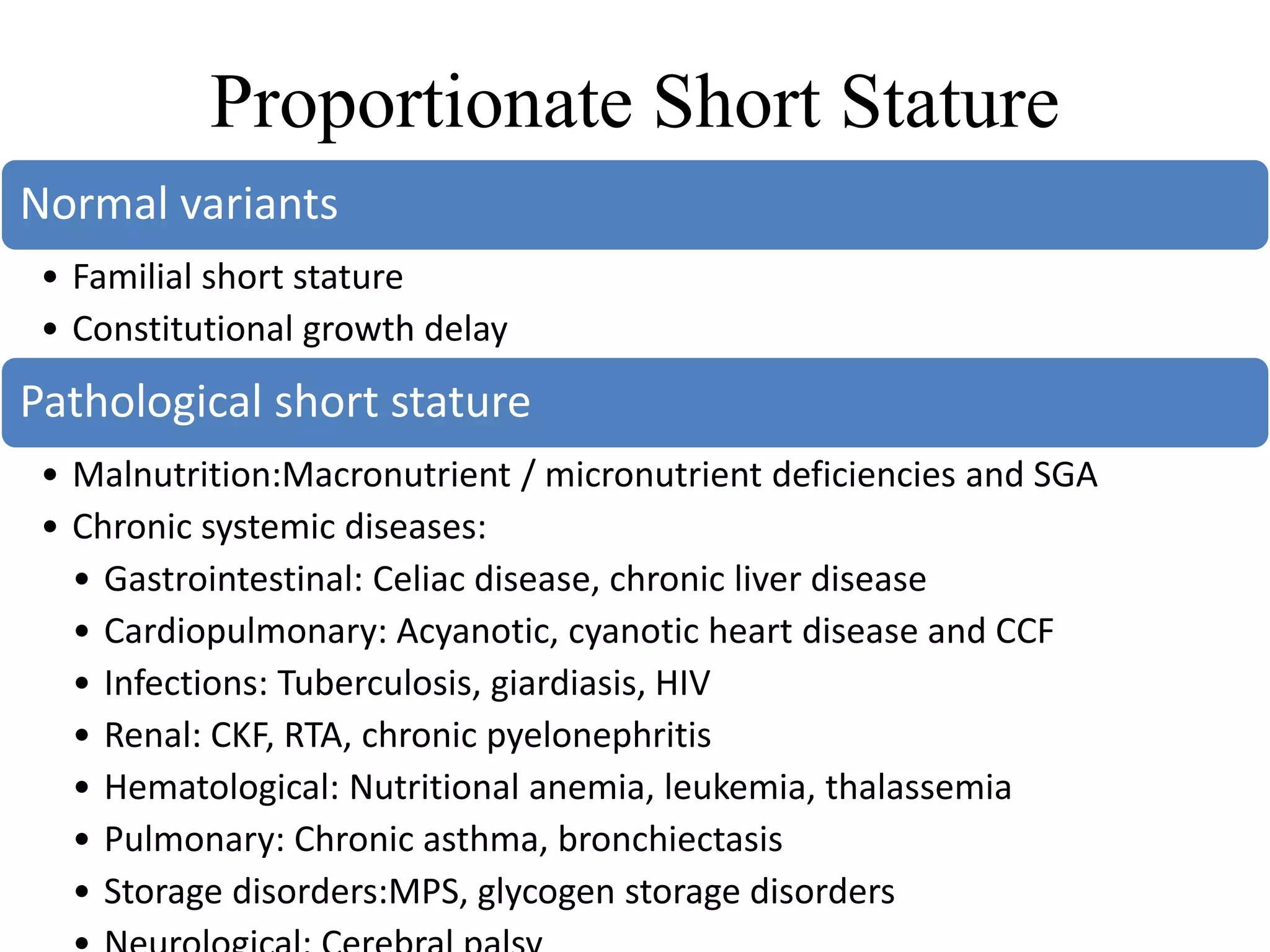
Pathological short stature
• Malnutrition:Macronutrient / micronutrient deficiencies and SGA
• Chronic systemic diseases:
• Gastrointestinal: Celiac disease, chronic liver disease
• Cardiopulmonary: Acyanotic, cyanotic heart disease and CCF
• Infections: Tuberculosis, giardiasis, HIV
• Renal: CKF, RTA, chronic pyelonephritis
• Hematological: Nutritional anemia, leukemia, thalassemia
• Pulmonary: Chronic asthma, bronchiectasis
• Storage disorders:MPS, glycogen storage disorders
Proportionate Short Stature
Metabolic bone disease - Rickets
Endocrine causes:
• Hypothalamic-pituitary axis: Growth hormone deficiency, growth hormone
receptor defect (Laron dwarfism)
• Other endocrine organs:
• Hypothyroidism,
• Cushing syndrome
• Diabetes
• Precocious puberty
Genetic syndromes:
• Turner syndrome, Prader-Willi syndrome, Russell-Silver syndrome, and Noonan
syndrome
Psychosocial dwarfism
Drugs: Systemic steroids and substance abuse
Malnutrition
• Common pathological cause
• Growth failure preceded by poor weight gain
• This contrasts endocrine short stature where weight is usually
normal.
• Zinc deficiency is an important rare but treatable cause
Intrauterine growth retardation (IUGR)
• Genetic disorders
• Intrauterine infections,
• Maternal malnutrition
• Placental disorders
• Most achieve catch-up growth in the first 2 years of life and have
final height in target height range.
Proportionate Short Stature
Step 1: History Taking
Age at onset :since when is child not growing
Previous growth records :school, physician records
Antenatal history :
Symptoms pertaining to illness :
Dietary history: elicit weaning practice, calorie and protein intake
Drug history: corticosteroids, amphetamine
Family history of short stature
Delay in puberty in both patients
Social history
Step 2: Growth Assessment
height/ length
Calculate height age : chronological age at which measurement
of height is on 50th percentile of reference curve
Correlate height to mid parental height range
Measure body proportions
Other parameters :weight, head circumference
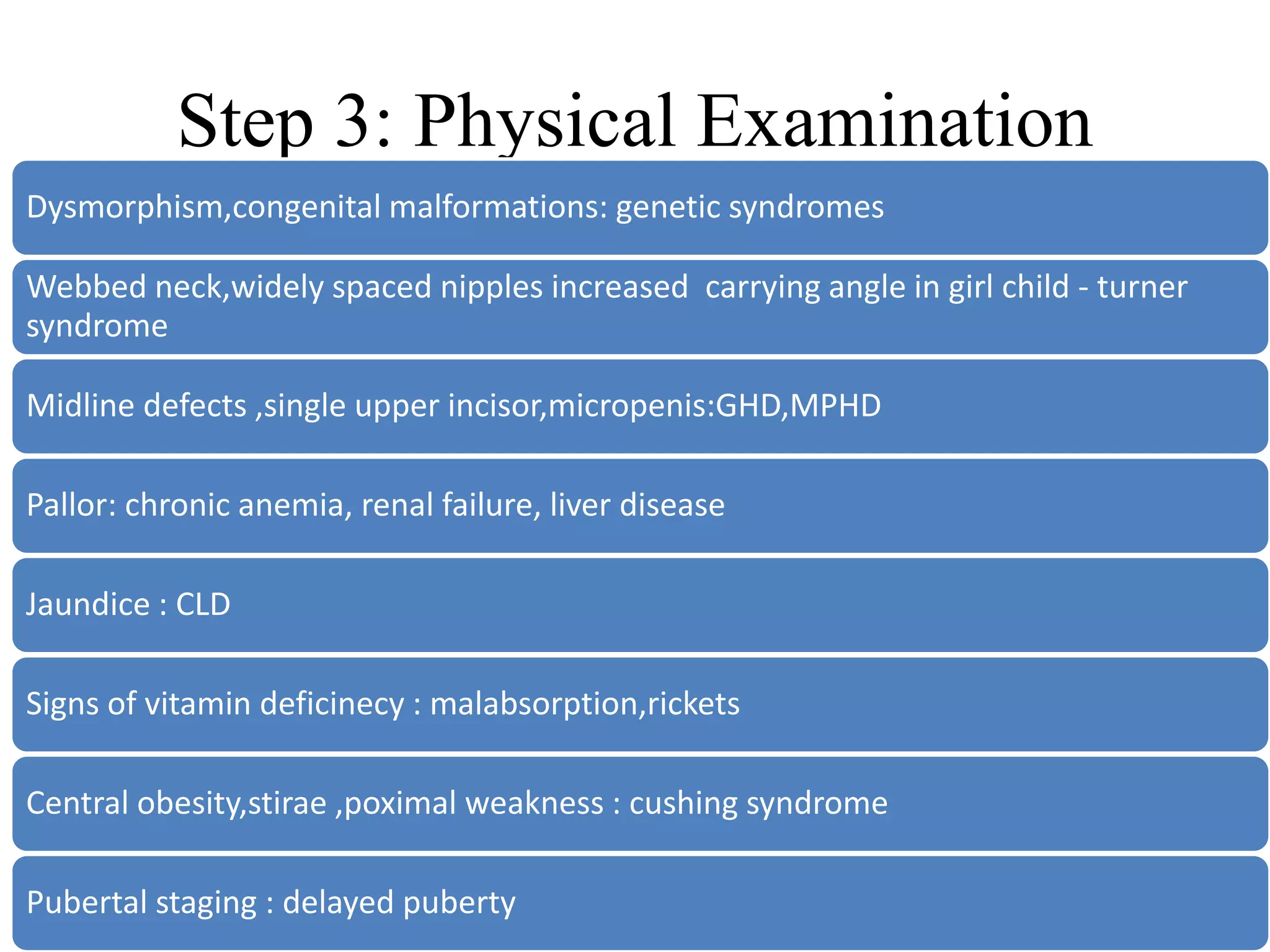
Step 3: Physical Examination
Dysmorphism,congenital malformations: genetic syndromes
Webbed neck,widely spaced nipples increased carrying angle in girl child - turner
syndrome
Midline defects ,single upper incisor,micropenis:GHD,MPHD
Pallor: chronic anemia, renal failure, liver disease
Jaundice : CLD
Signs of vitamin deficinecy : malabsorption,rickets
Central obesity,stirae ,poximal weakness : cushing syndrome
Pubertal staging : delayed puberty
Step 4: Investigations
• Bone age estimation : x ray of left hand,wrist
(Greulich-pyle atlas or tanner whitehouse method)
• Screening tests
1. Hemogram :CBC,PS,ESR
2. RFT/LFT/S electrolytes
3. Serum calcium, phosphorus, alkaline phosphatase ,blood gas,GRBS
4. Urine routine and microscopy
5. Stool for ova and cyst
• Karyotyping if suspecting turner syndrome
• Hormone studies if indicated
Proportionate Short Stature
Constitutional delay
• Common in boys
• Normal birth weight and growth during 1st year
• Decelerate during 2 and 3 rd year to reach below 3rd centile
• Continue to grow with normal velocity later
• Onset of puberty is delayed ,final catchup of height later occurs .
• One of parents have similar history of delayed puberty
• BA=HA < CA
Familial short stature (FSS)
• Normal birth weight
• Fall below growth centiles between 6-18 months
• Continue to grow with normal velocity as determined by MPH
• Achieve puberty at normal age
• HA is less than BA and CA
• Parents are short
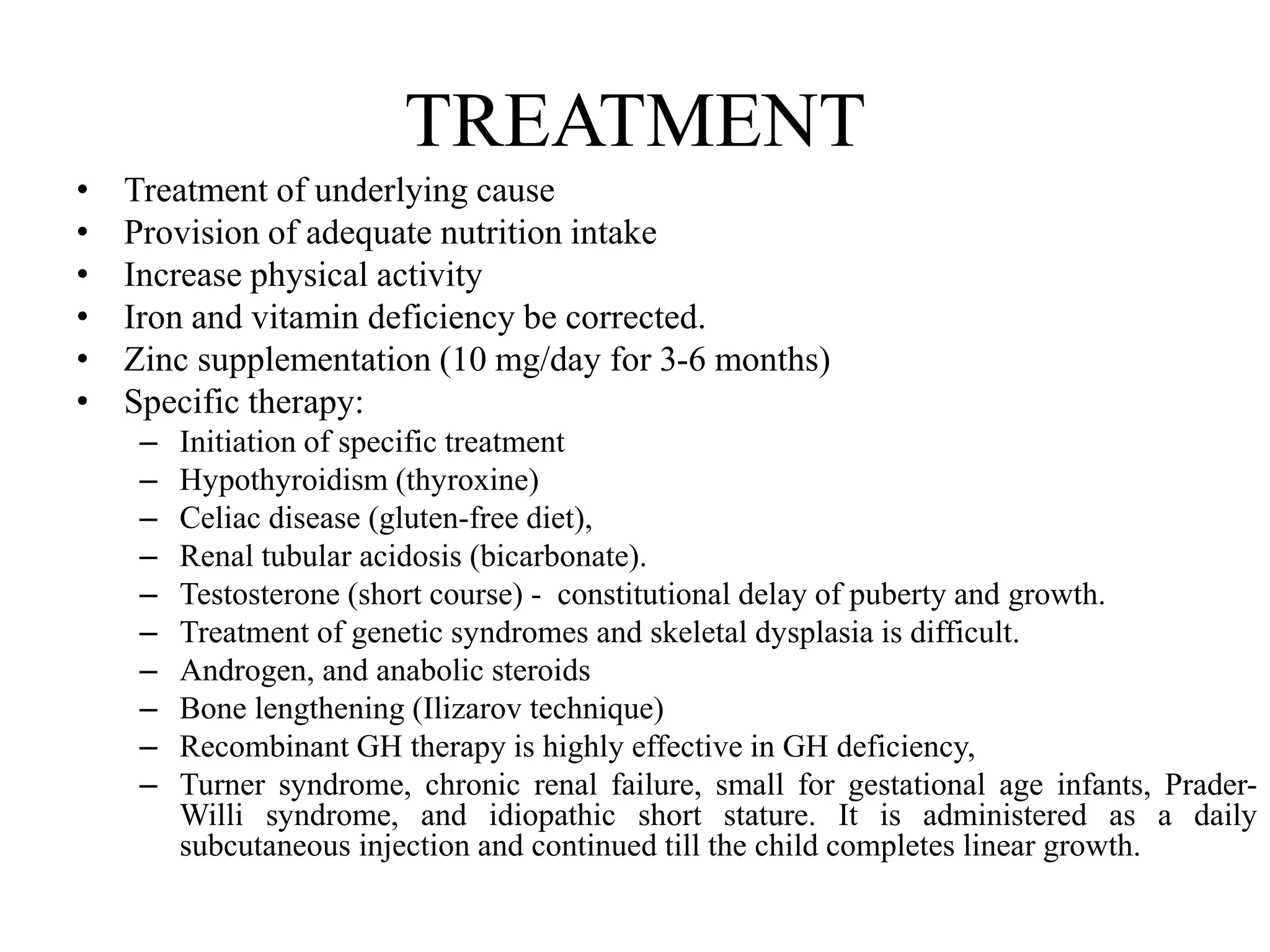
TREATMENT
• Treatment of underlying cause
• Provision of adequate nutrition intake
• Increase physical activity
• Iron and vitamin deficiency be corrected.
• Zinc supplementation (10 mg/day for 3-6 months)
• Specific therapy:
– Initiation of specific treatment
– Hypothyroidism (thyroxine)
– Celiac disease (gluten-free diet),
– Renal tubular acidosis (bicarbonate).
– Testosterone (short course) - constitutional delay of puberty and growth.
– Treatment of genetic syndromes and skeletal dysplasia is difficult.
– Androgen, and anabolic steroids
– Bone lengthening (Ilizarov technique)
– Recombinant GH therapy is highly effective in GH deficiency,
– Turner syndrome, chronic renal failure, small for gestational age infants, Prader-
Willi syndrome, and idiopathic short stature. It is administered as a daily
subcutaneous injection and continued till the child completes linear growth.
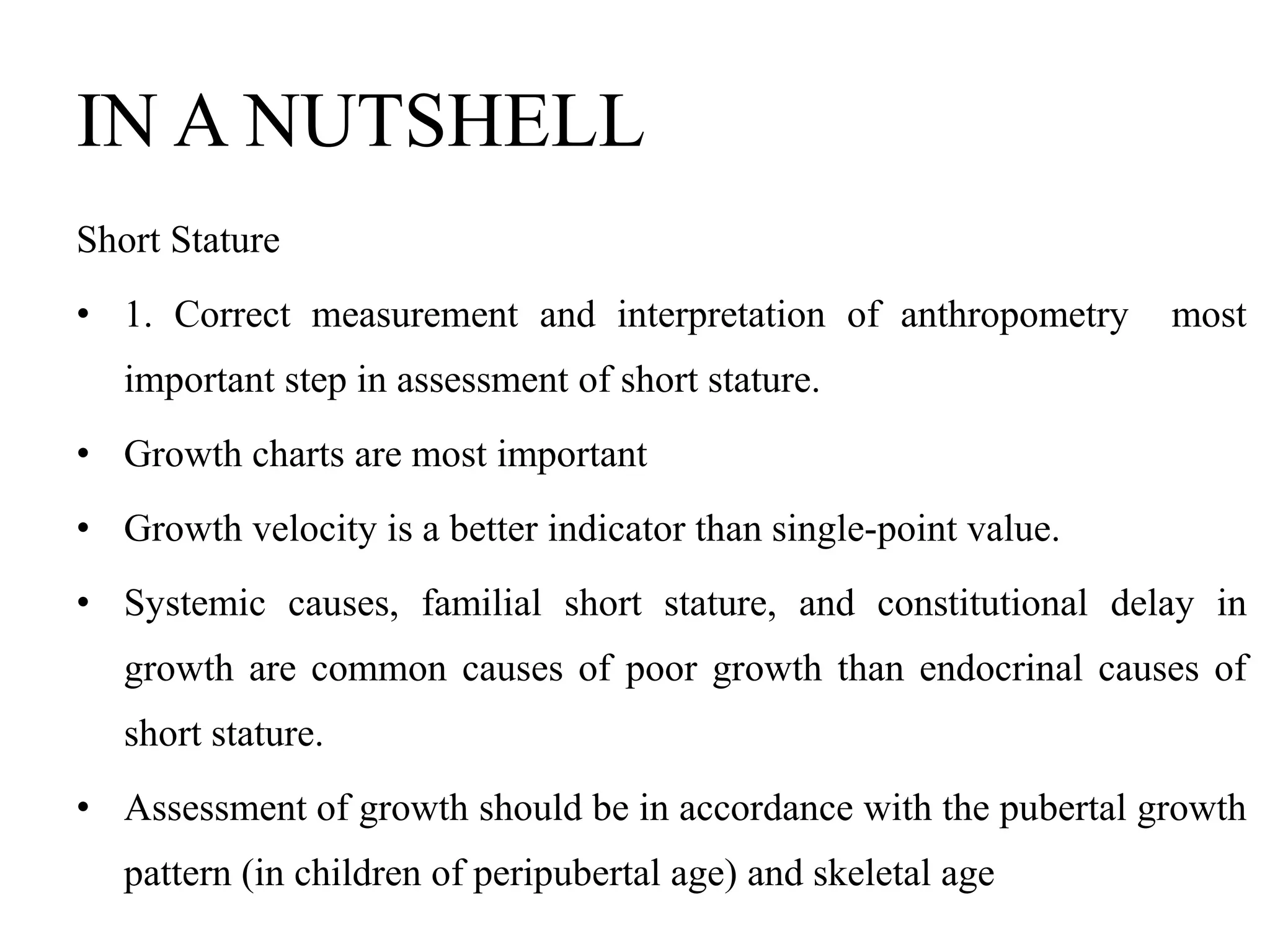
IN A NUTSHELL
Short Stature
• 1. Correct measurement and interpretation of anthropometry most
important step in assessment of short stature.
• Growth charts are most important
• Growth velocity is a better indicator than single-point value.
• Systemic causes, familial short stature, and constitutional delay in
growth are common causes of poor growth than endocrinal causes of
short stature.
• Assessment of growth should be in accordance with the pubertal growth
pattern (in children of peripubertal age) and skeletal age
What is the cause of FTT? Justify.
• Likely cause is organic
• Dietary assessment seems normal which rules out nutritional
etiology
• Clinical clues - suggest an organic cause in a previously normal
growing child
• Urinary Incontinence and excessive urination (other systemic
symptoms).
THANK YOU

FTT & Short Stature.pptx

  • 1.
    FAILURE TO THRIVE & SHORTSTATURE Dr. PavanKumar J Associate Professor Department of Paediatrics
  • 2.
    • PE- 2.1Discuss etiopathogenesis clinical features, and management of a child who faIls to thrive • PE - 2.2 Assessment of a child with FTT including eliciting an appropriate history and examinations • PE -2.3 Counselling a parent with FTT child • PE - 2.4 Discuss etiopathogenesis, clinical features, and management of a child with short stature • PE - 2.5 Assessment : history, perform examination, document, and present • PE - 2.6 Enumerate the referral criteria for growth related problems. INTRODUCTION
  • 3.
    INTRODUCTION • FTT resultsfrom inadequate usable calories necessary for childs metabolic and growth demands • FTT objectively denotes growth failure. • For practical purpose, weight remains the most common and simplest parameter to define FTT as it is affected first during any illness, much before stunting manifests. • FTT should never be considered as a primary disease. – Manifestation of an underlying cause which should be investigated through proper clinical examination
  • 4.
    ETIOLOGY Dependent on variousphysiological processes Chief determinant is food intake • Quality and quantity. FTT - taking less food, not absorbed, or nutrients and fluids are being lost excessively. Underlying organic disease • (renal, cardiac, gastrointestinal, and respiratory) • Metabolic cause-increased expenditure- energy deficit. Psychosocial or environmental deprivation Child abuse and neglect
  • 5.
    BOX 2.1: Diagnosticcriteria of failure to thrive 1. Weight for age below 5th percentile 2. Weight deceleration Serial weight monitoring shows downward trend and has crossed two major growth percentiles 75th percentile to below 25th percentile in short time 3. Body mass index <5th percentile
  • 7.
    Systemic complications offailure to thrive • Short-term – Hypothermia – Hypoproteinaemia – Predisposition to infections – Nutritional deficiencies and electrolyte imbalance • Long-term – Neurocognitive delay – Behavioural problems – Short stature – Adult onset metabolic diseases
  • 8.
    Major organic causesof failure to thrive Gastrointestinal : • Recurrent diarrhoea (poor sanitation) • Gastroesophageal reflux disease • Celiac disease • Pyloric stenosis • Cleft palate/lip • Lactose intolerance • Hirschsprung disease • Milk protein intolerance • Hepatitis • Cirrhosis • Pancreatic insufficiency • Biliary disease • Inflammatory bowel disease, and • Malabsorption
  • 9.
    Major organic causesof failure to thrive Renal • Urinary tract infection • Renal tubular acidosis • Diabetes insipidus • Chronic renal insufficiency Cardiopulmonary • Cardiac diseases leading to congestive heart failure, • Asthma • Bronchopulmonary dysplasia • Cystic fibrosis • Anatomic abnormalities of upper airway • Obstructive sleep apnea (snoring)
  • 10.
    Major organic causesof failure to thrive Endocrine : • Hypothyroidism • Diabetes mellitus • Adrenal insufficiency or excess • Parathyroid disorders • Pituitary disorders • Growth hormone deficiency Neurological: • Global developmental delay • Cerebral hemorrhage • Degenerative disorders
  • 11.
    Major organic causesof failure to thrive Infectious : • Parasitic or bacterial infections of the GIT • Human immunodeficiency virus disease Metabolic • Inborn errors of metabolism Congenital : • Chromosomal infections • Congenital syndromes (fetal alcohol syndrome), and perinatal infections
  • 12.
    Causes of failureto thrive based on energy balance Inadequate caloric intake • Infancy • Inadequate breastmilk • Inadequate amount or improper dilution of top/formula milk • Inadequate complementary feeding • Gastroesophageal reflux disease • Cleft palate/cleft lip • Maternal factors-low education and younger age • Childhood • Food scarcity • Neurodevelopmental disorders-swallowing coordination -like CP • Gastroesophageal reflux disease • Behavioural disorders and eating disorders
  • 13.
    Inadequate caloric absorption •Infancy • GI anomalies duodenal atresia and malrotation of gut • Cow milk protein allergy • GI parasitic infections • Chronic liver disease • Short gut syndrome (ileal resection post-surgery) • Childhood • Food allergy • Malabsorption-celiac disease and chronic diarrhoea • Inflammatory bowel disease • Inborn errors of metabolism Causes of failure to thrive based on energy balance
  • 14.
    Excessive caloric expenditure •Infancy • Chronic systemic diseases-CCHD, lung disease, renal disease, cystic fibrosis and endocrinal causes • Chronic infection • Intrauterine infections and tuberculosis • HIV • Genetic syndromes • Inborn errors of metabolism • Malignancy • Childhood • Chronic systemic illness • Chronic systemic infections • Malignancy • Inborn errors of metabolism Causes of failure to thrive based on energy balance
  • 15.
    Detailed evaluation ofthe following aspects: •Dietary assessment •Medical assessment •Psychosocial assessment •Developmental assessment. A child with FTT should have a Dietary assessment
  • 16.
    History Onset of growthfailure • To differentiate between congenital and acquired. • Common symptoms of possible organic disorders • Dietary intake and dietary habits • Amount of food offered and consumed • Milk preparation, dilution, and reconstitution • Feeding at home and outside home (day-care and school)
  • 17.
    History • Sociocultural environment –Family dynamics parental education, employment, substance abuse and cultural factors • Psychosocial assessment – Socioeconomic status – Family dysfunction, and feeding problems – Child's drive for autonomy, attention seeking, gaining independence, and expressing anger or dislike • Physical or mental abuse • Developmental assessment – Developmental delay – Abnormalities of posture, tone – Attention and language – Any delay in two or more domains is abnormal.
  • 18.
    • Serially measuredvalues rather than a single observation - mainstay for diagnosing FTT. • Organic disorders (facial dysmorphism, neuro- cutaneous markers, and clubbing). • Physical abuse (fractures, bruises, hematomas, and cigarette marks).
  • 19.
    Laboratory Evaluation • Clinicaldiagnosis • Most do not need investigations • Importance when an organic etiology is suspected or in presence of a red flag sign. • Initial tests – Hb, blood counts, RFT, LFT, electrolytes, total proteins, antiendomysial bodies (to screen for celiac disease), and urinalysis.
  • 20.
    Other tests • Sweatchloride test for cystic fibrosis • Blood pH, anion gap, • Urine pH for RTA • Stool examination - diarrhoea or suspected malabsorption. • Radiological assessment – Bone age – Fractures • Karyotype Chromosomal disorder
  • 22.
    Dietary therapy • RUTF(Ready to Use Therapeutic Food) can be provided • Breastfeeding on demand • Provision of safe and clean drinking water
  • 23.
    NUTRITIONAL REHABILITATION CENTRES • Aftertreatment of acute phase,the child will be transferred to NRC • This acts as a bridge between hospital and home. • Provides nutritional therapy along with growth and developmental stimulation and support
  • 24.
    Indications of hospitalizationare as follows: • Severe malnutrition with life-threatening complications • Child unresponsive to initial management. • Where parent neglect, abuse, or maltreatment is suspected • Multidisciplinary and stepwise approach - most effective. • Dietary management: – Nutritional rehabilitation to achieve • Ideal weight for height and correction of nutritional deficits, allowing catch up growth, restoration of optimal body composition, • Parental education regarding nutritional requirements and feeding
  • 25.
    Parental counselling andeducation: • Requirements and how they can be met. • Calorie content of different food items • How to make calorie rich, simple, and appealing • Right techniques of feeding • Inculcate good feeding habits • Misconceptions and food fads • Counselling a parent/caregiver in continued rehabilitation and psychosocial care.
  • 26.
    Medical management • Specialdiets – e.g celiac disease or special enzyme supplements for cystic fibrosis. • Drugs – e.g., for gastroesophageal reflux disease) • Special training – Neuromotor dysfunction (e.g., cerebral palsy).
  • 27.
    Psychosocial management: • Goodrapport • Psychiatrist in cases of depression, substance abuse, and behavioural problems • Behavioural modifications in feeding disorders, • Relief organizations in case of poverty • Hospitalization or foster homes in cases of Severe abuse, neglect, and maltreatment
  • 28.
    Developmental management • Minordeficits like language, subnormal IQ, decreased HC, can be detected on follow-up. • Early recognition of condition, and management, before a permanent brain deficit occurs.
  • 29.
    PROGNOSIS • FTT infirst year of life regardless of etiology – prognosis is ominous • Maximal brain growth occurs during the first six to twelve months of age . • One third of children with Psycho social FTT have developmental delay, social & emotional problems • Prognosis for organic FTT ‐ variable ‐ depends on the etiology
  • 30.
    IN A NUTSHELL •1. Failure to thrive - denote overall nutritional status of a child with respect to less energy intake or more energy expenditure. • 2. Weight for age remains the most common parameter • 3. Serial weight monitoring if showing downward trend and crossing two major growth percentiles defines FTT. • 4. Approach to clinical diagnosis should include detailed history and examination clues of underlying organic causes. • 5. The management should be based on nutritional rehabilitation, parental counselling, development supportive practices, and appropriate medical therapy, as appropriate.
  • 31.
  • 32.
    Short stature DEFINITION • Heightbelow 3rd percentile or 2SD below the mean for age and sex of the population reference standard . • Growth velocity of less than 25th centile on a velocity curve when assessed over a minimum period of 12 months .
  • 33.
    Normal growth velocity •Velocity 1. 1st year - 25cms 2. 2nd year - 12.5 cm 3. 3rd and 4th year - 6-7 cm 4. 5-9 years - 5cm per year 5. Prepubertal -4cm per year 6. Pubertal : boys -9-11 cm per year girls -7-9 cm per year
  • 34.
    DETERMINANTS OF GROWTH –Dependent on • Age • Gender • Nutrition • Genetics • Ethnicity • Racial differences. • Child may remain short, if he is born to shorter parents – MPH at 18/20 years. – Height at any given age corresponds to lie within 2 SD of MPH when extrapolated till adult height on growth chart (target height range).
  • 35.
    Calculation of midparentalheight (MPH) • MPH (boy) = (Father's height + Mother's height + 13)/2, or – [(Father's height + Mother's height)/2] +6.5 • MPH (girls) = (Father's height + Mother's height - 13)/2, or – [(Father's height + Mother's height)/2] - 6.5
  • 36.
    ETIOLOGY • Physiological variantsaccount for over 2/3rds • Pathological – Genetics of nutrition, systemic diseases, endocrine imbalance • Depending on Ratio of upper and lower segment length – Proportionate or – Disproportionate
  • 37.
    Disproportionate Short Stature Abnormalskeletal growth Either limbs or the trunk is short. Short limb dwarfism • Rhizomelic (shortening of proximal limb segment), • Mesomelic (shortening of middle segments) • Acromelic (shortening of the distal segments) Short limb dysplasia : High US/LS ratio • Achondroplasia • Chondrodysplasia. Short trunk anomalies :Low US/LS ratio • Mucopolysaccharidosis, • Spondyloepiphyseal dysplasia
  • 38.
    Proportionate Short Stature Normalvariants • Familial short stature • Constitutional growth delay Pathological short stature • Malnutrition:Macronutrient / micronutrient deficiencies and SGA • Chronic systemic diseases: • Gastrointestinal: Celiac disease, chronic liver disease • Cardiopulmonary: Acyanotic, cyanotic heart disease and CCF • Infections: Tuberculosis, giardiasis, HIV • Renal: CKF, RTA, chronic pyelonephritis • Hematological: Nutritional anemia, leukemia, thalassemia • Pulmonary: Chronic asthma, bronchiectasis • Storage disorders:MPS, glycogen storage disorders
  • 39.
    Proportionate Short Stature Metabolicbone disease - Rickets Endocrine causes: • Hypothalamic-pituitary axis: Growth hormone deficiency, growth hormone receptor defect (Laron dwarfism) • Other endocrine organs: • Hypothyroidism, • Cushing syndrome • Diabetes • Precocious puberty Genetic syndromes: • Turner syndrome, Prader-Willi syndrome, Russell-Silver syndrome, and Noonan syndrome Psychosocial dwarfism Drugs: Systemic steroids and substance abuse
  • 40.
    Malnutrition • Common pathologicalcause • Growth failure preceded by poor weight gain • This contrasts endocrine short stature where weight is usually normal. • Zinc deficiency is an important rare but treatable cause Intrauterine growth retardation (IUGR) • Genetic disorders • Intrauterine infections, • Maternal malnutrition • Placental disorders • Most achieve catch-up growth in the first 2 years of life and have final height in target height range. Proportionate Short Stature
  • 41.
    Step 1: HistoryTaking Age at onset :since when is child not growing Previous growth records :school, physician records Antenatal history : Symptoms pertaining to illness : Dietary history: elicit weaning practice, calorie and protein intake Drug history: corticosteroids, amphetamine Family history of short stature Delay in puberty in both patients Social history
  • 42.
    Step 2: GrowthAssessment height/ length Calculate height age : chronological age at which measurement of height is on 50th percentile of reference curve Correlate height to mid parental height range Measure body proportions Other parameters :weight, head circumference
  • 43.
    Step 3: PhysicalExamination Dysmorphism,congenital malformations: genetic syndromes Webbed neck,widely spaced nipples increased carrying angle in girl child - turner syndrome Midline defects ,single upper incisor,micropenis:GHD,MPHD Pallor: chronic anemia, renal failure, liver disease Jaundice : CLD Signs of vitamin deficinecy : malabsorption,rickets Central obesity,stirae ,poximal weakness : cushing syndrome Pubertal staging : delayed puberty
  • 44.
    Step 4: Investigations •Bone age estimation : x ray of left hand,wrist (Greulich-pyle atlas or tanner whitehouse method) • Screening tests 1. Hemogram :CBC,PS,ESR 2. RFT/LFT/S electrolytes 3. Serum calcium, phosphorus, alkaline phosphatase ,blood gas,GRBS 4. Urine routine and microscopy 5. Stool for ova and cyst • Karyotyping if suspecting turner syndrome • Hormone studies if indicated
  • 45.
    Proportionate Short Stature Constitutionaldelay • Common in boys • Normal birth weight and growth during 1st year • Decelerate during 2 and 3 rd year to reach below 3rd centile • Continue to grow with normal velocity later • Onset of puberty is delayed ,final catchup of height later occurs . • One of parents have similar history of delayed puberty • BA=HA < CA
  • 46.
    Familial short stature(FSS) • Normal birth weight • Fall below growth centiles between 6-18 months • Continue to grow with normal velocity as determined by MPH • Achieve puberty at normal age • HA is less than BA and CA • Parents are short
  • 47.
    TREATMENT • Treatment ofunderlying cause • Provision of adequate nutrition intake • Increase physical activity • Iron and vitamin deficiency be corrected. • Zinc supplementation (10 mg/day for 3-6 months) • Specific therapy: – Initiation of specific treatment – Hypothyroidism (thyroxine) – Celiac disease (gluten-free diet), – Renal tubular acidosis (bicarbonate). – Testosterone (short course) - constitutional delay of puberty and growth. – Treatment of genetic syndromes and skeletal dysplasia is difficult. – Androgen, and anabolic steroids – Bone lengthening (Ilizarov technique) – Recombinant GH therapy is highly effective in GH deficiency, – Turner syndrome, chronic renal failure, small for gestational age infants, Prader- Willi syndrome, and idiopathic short stature. It is administered as a daily subcutaneous injection and continued till the child completes linear growth.
  • 48.
    IN A NUTSHELL ShortStature • 1. Correct measurement and interpretation of anthropometry most important step in assessment of short stature. • Growth charts are most important • Growth velocity is a better indicator than single-point value. • Systemic causes, familial short stature, and constitutional delay in growth are common causes of poor growth than endocrinal causes of short stature. • Assessment of growth should be in accordance with the pubertal growth pattern (in children of peripubertal age) and skeletal age
  • 49.
    What is thecause of FTT? Justify. • Likely cause is organic • Dietary assessment seems normal which rules out nutritional etiology • Clinical clues - suggest an organic cause in a previously normal growing child • Urinary Incontinence and excessive urination (other systemic symptoms).
  • 50.