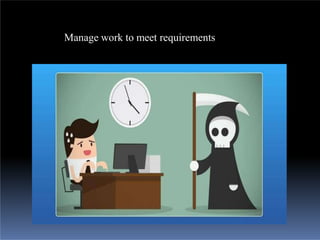
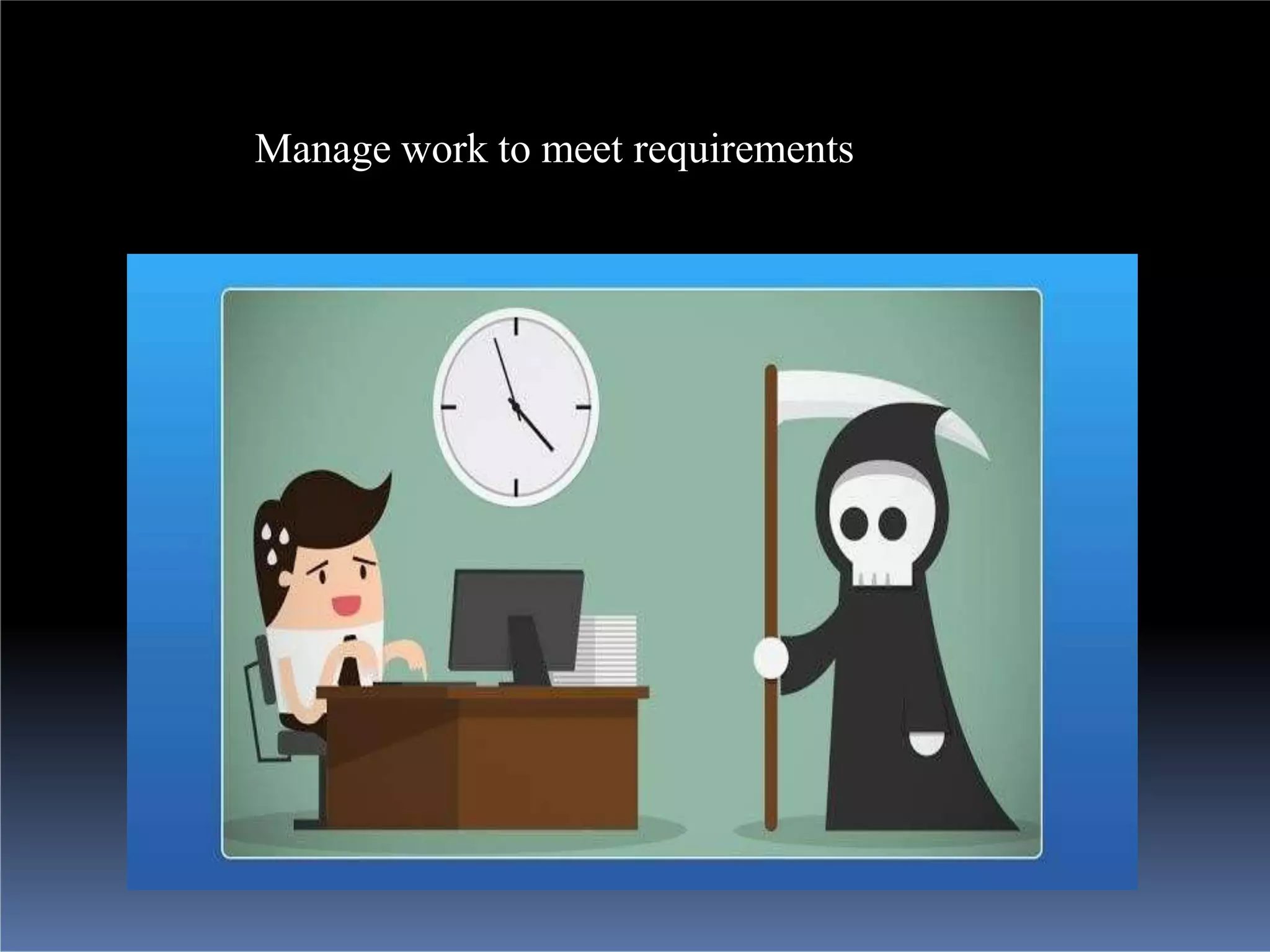
Manage work to meet requirements
Points to remember
•Listing Down Tasks on a Master
to-do List. ...
•Prioritizing Your Work....
•Ranking Your Priorities. ...
•Breaking Large Tasks into Smaller
Pieces. ...
•Estimating Time and Effort/Being
Realistic on What You Can do in a
Day. ...
•Managing Deadlines. ...
•Dealing with Interruptions. ...
•Asking for Help at Work.
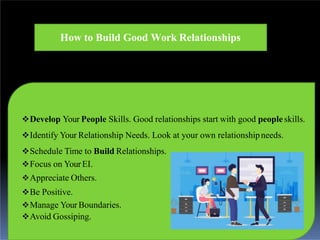
How to Build Good Work Relationships
Develop Your People Skills. Good relationships start with good peopleskills.
Identify Your Relationship Needs. Look at your own relationshipneeds.
Schedule Time to Build Relationships.
Focus on YourEI.
Appreciate Others.
Be Positive.
Manage Your Boundaries.
Avoid Gossiping.
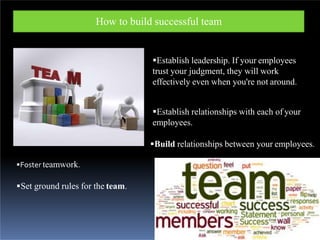
How to build successful team
Establish leadership. If your employees
trust your judgment, they will work
effectively even when you're not around.
Establish relationships with each of your
employees.
Build relationships between your employees.
Foster teamwork.
Set ground rules for the team.
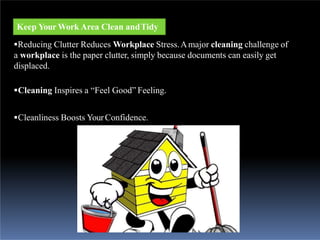
Keep Your Work Area Clean andTidy
Reducing Clutter Reduces Workplace Stress.Amajor cleaning challenge of
a workplace is the paper clutter, simply because documents can easily get
displaced.
Cleaning Inspires a “Feel Good” Feeling.
Cleanliness Boosts YourConfidence.
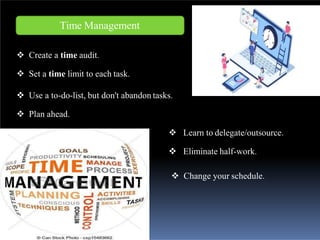
Time Management
 Create a time audit.
 Set a time limit to each task.
 Use a to-do-list, but don't abandon tasks.
 Plan ahead.
 Learn to delegate/outsource.
 Eliminate half-work.
 Change your schedule.
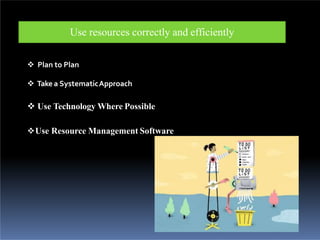
Use resources correctly and efficiently
 Plan to Plan
 Take a SystematicApproach
 Use Technology Where Possible
Use Resource Management Software
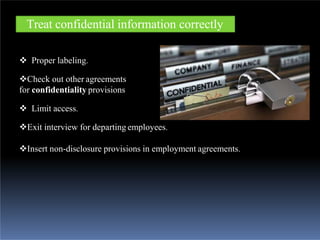
Treat confidential information correctly
 Proper labeling.
Check out other agreements
for confidentiality provisions
 Limit access.
Exit interview for departing employees.
Insert non-disclosure provisions in employment agreements.
Work in line with organization’s policies and procedures.
Policies and Procedures ?????
A procedure explains a specific action plan for carrying
out a policy. Procedures tells employees how to deal with a
situation and when.
A policy is a set of general guidelines that outlinethe
organization’s plan for tackling an issue. Policies
communicate the connection between the organization’s
vision and values and its day-to-day operations.
Work within the limits of job role.
Make sure that you have clearly understood the limits of your role and the
tasks which you are able and authorized to carry out.
Identify any gaps between your current knowledge, understanding and skills
and the activities you need to develop to carry out your roleeffectively.
Carry out the activities identified in your development plan and discusswith
your supervisor how the activities have improved your performance.
manage work to meet requirements

manage work to meet requirements

  • 1.
    Manage work tomeet requirements
  • 2.
    Points to remember •ListingDown Tasks on a Master to-do List. ... •Prioritizing Your Work.... •Ranking Your Priorities. ... •Breaking Large Tasks into Smaller Pieces. ... •Estimating Time and Effort/Being Realistic on What You Can do in a Day. ... •Managing Deadlines. ... •Dealing with Interruptions. ... •Asking for Help at Work.
  • 3.
    How to BuildGood Work Relationships Develop Your People Skills. Good relationships start with good peopleskills. Identify Your Relationship Needs. Look at your own relationshipneeds. Schedule Time to Build Relationships. Focus on YourEI. Appreciate Others. Be Positive. Manage Your Boundaries. Avoid Gossiping.
  • 4.
    How to buildsuccessful team Establish leadership. If your employees trust your judgment, they will work effectively even when you're not around. Establish relationships with each of your employees. Build relationships between your employees. Foster teamwork. Set ground rules for the team.
  • 5.
    Keep Your WorkArea Clean andTidy Reducing Clutter Reduces Workplace Stress.Amajor cleaning challenge of a workplace is the paper clutter, simply because documents can easily get displaced. Cleaning Inspires a “Feel Good” Feeling. Cleanliness Boosts YourConfidence.
  • 6.
    Time Management  Createa time audit.  Set a time limit to each task.  Use a to-do-list, but don't abandon tasks.  Plan ahead.  Learn to delegate/outsource.  Eliminate half-work.  Change your schedule.
  • 7.
    Use resources correctlyand efficiently  Plan to Plan  Take a SystematicApproach  Use Technology Where Possible Use Resource Management Software
  • 8.
    Treat confidential informationcorrectly  Proper labeling. Check out other agreements for confidentiality provisions  Limit access. Exit interview for departing employees. Insert non-disclosure provisions in employment agreements.
  • 9.
    Work in linewith organization’s policies and procedures. Policies and Procedures ????? A procedure explains a specific action plan for carrying out a policy. Procedures tells employees how to deal with a situation and when. A policy is a set of general guidelines that outlinethe organization’s plan for tackling an issue. Policies communicate the connection between the organization’s vision and values and its day-to-day operations.
  • 10.
    Work within thelimits of job role. Make sure that you have clearly understood the limits of your role and the tasks which you are able and authorized to carry out. Identify any gaps between your current knowledge, understanding and skills and the activities you need to develop to carry out your roleeffectively. Carry out the activities identified in your development plan and discusswith your supervisor how the activities have improved your performance.