Analysis and design of information system
introductionInformation Systems Analysis and DesignComplex organizational process whereby computer-based information systems are developed and maintained
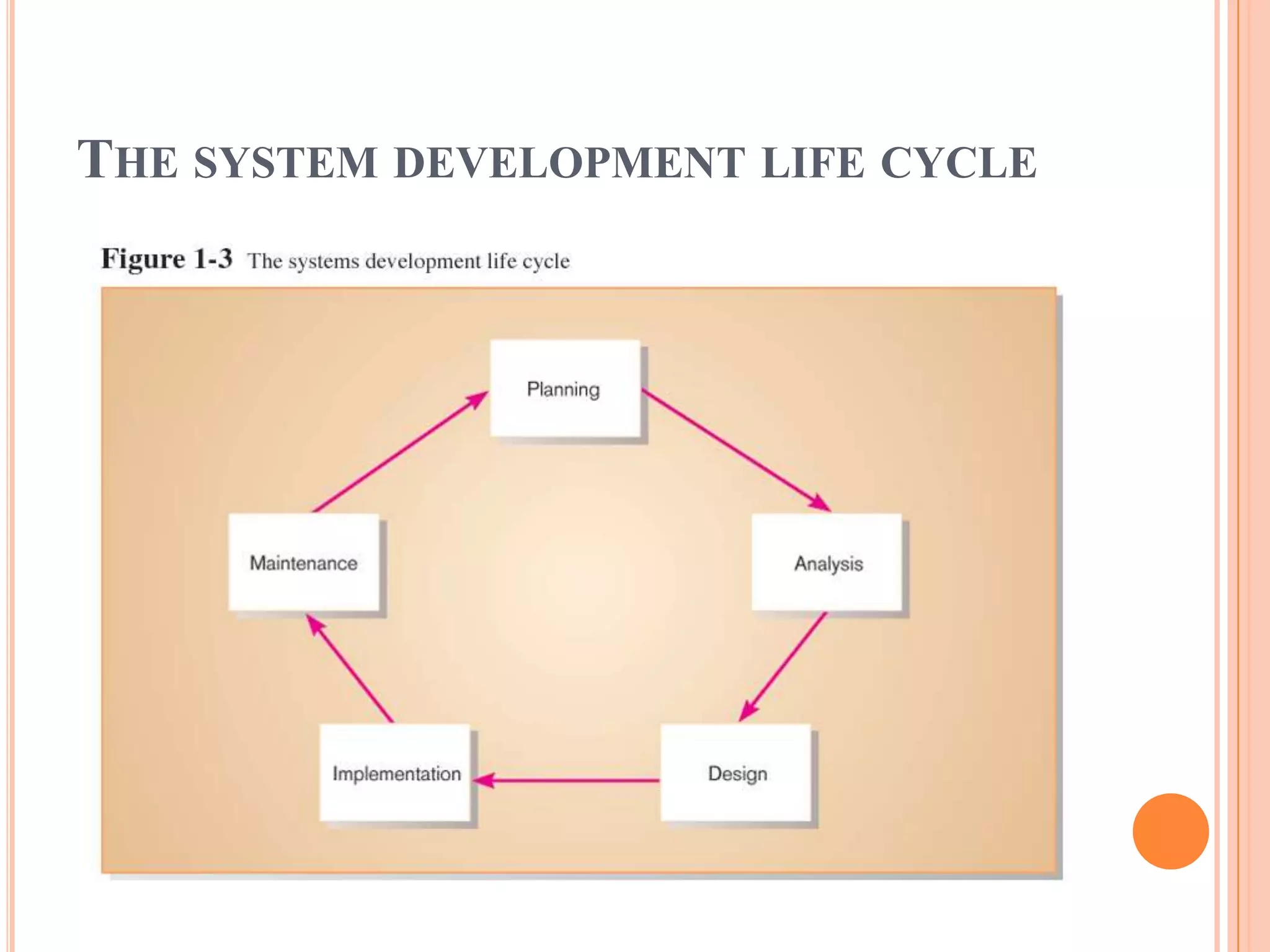
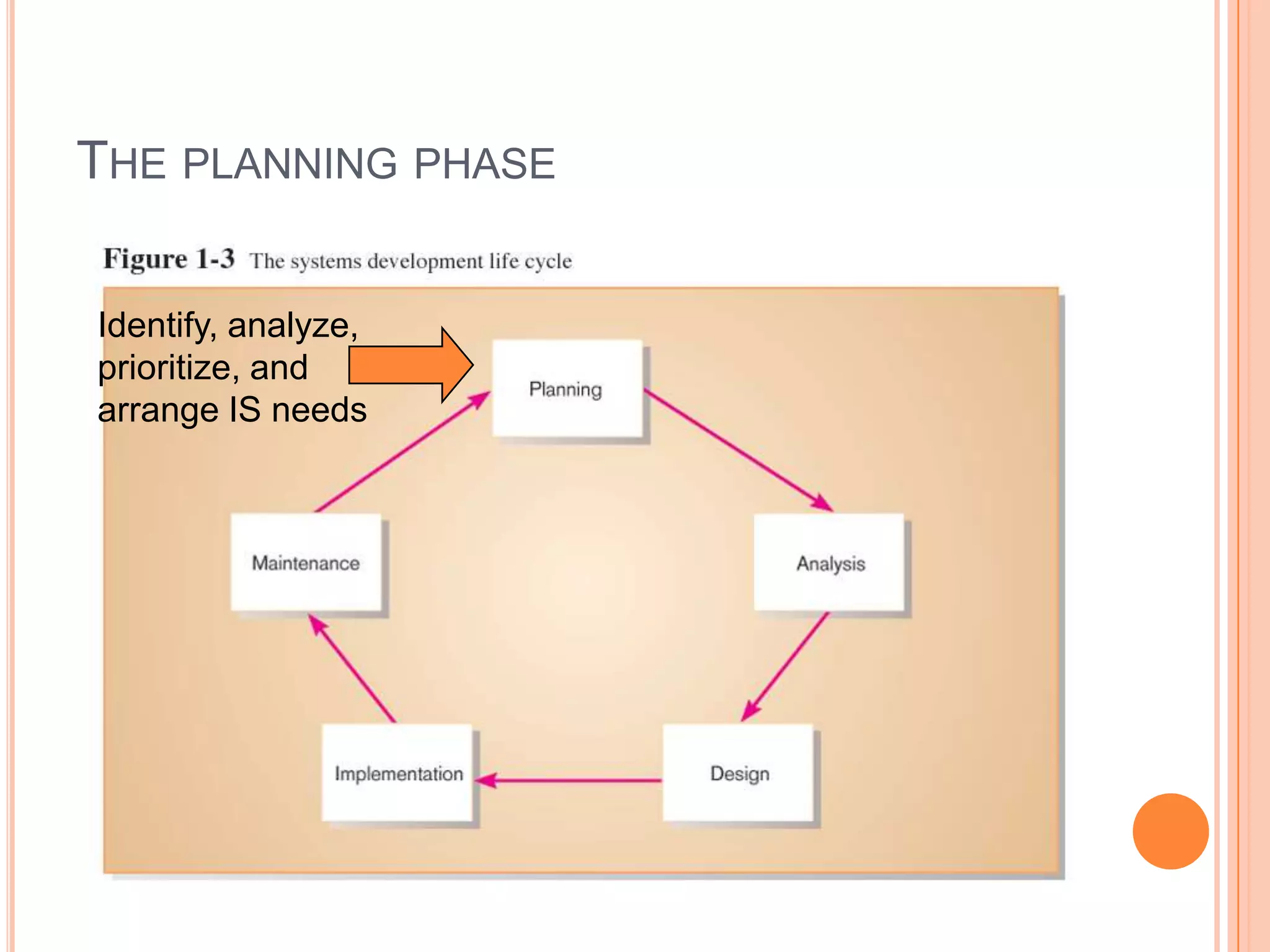
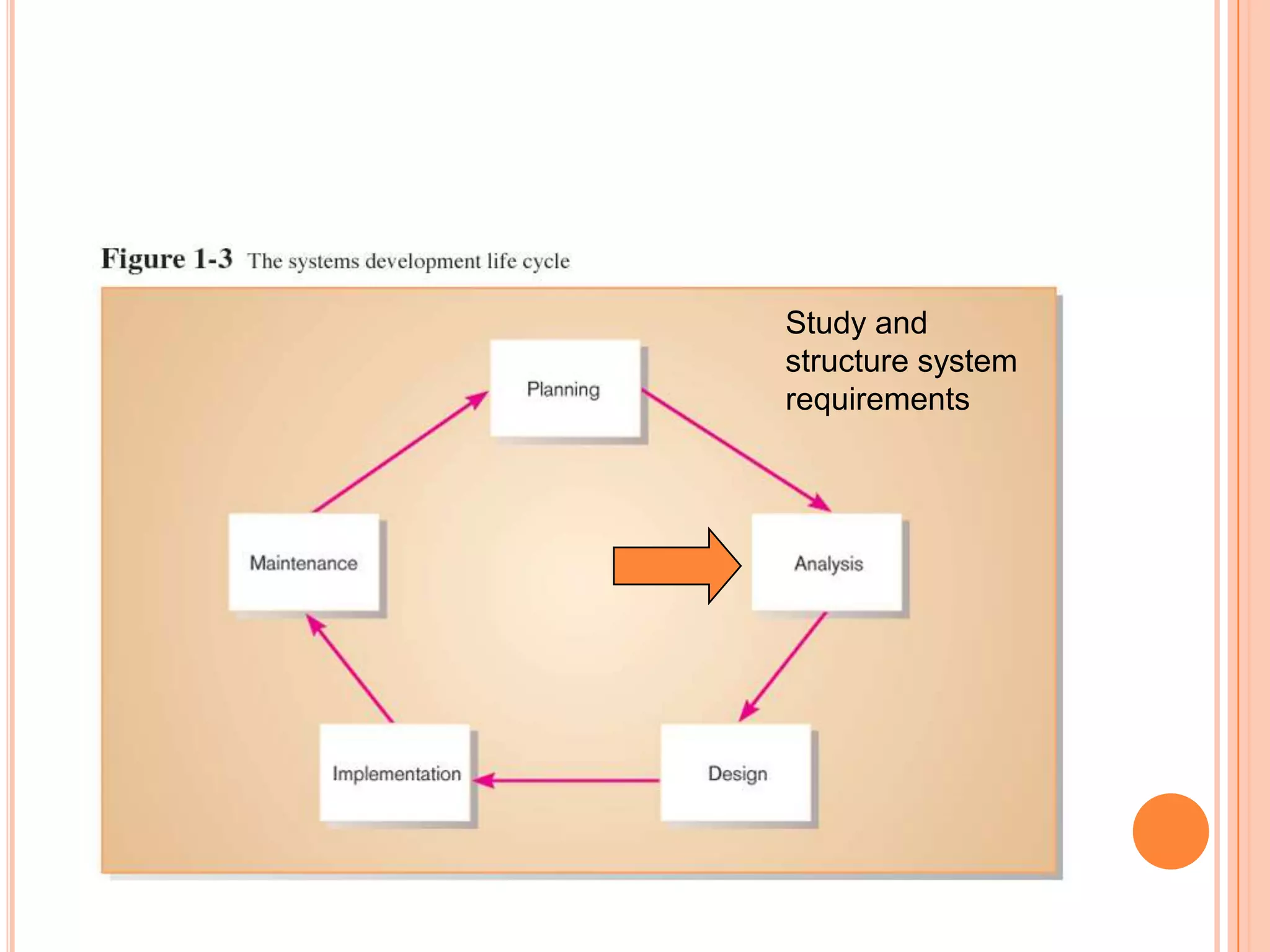
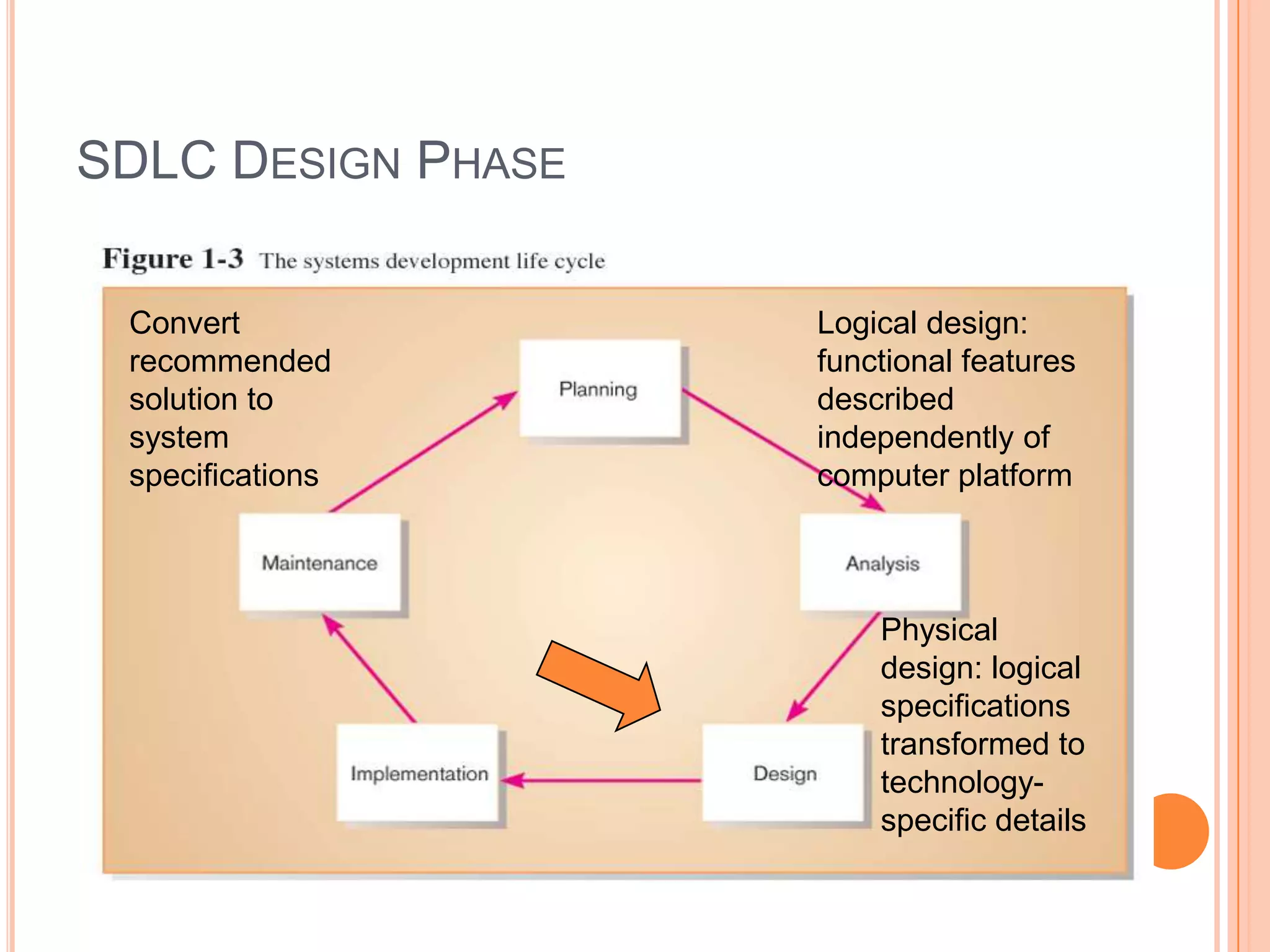
System  development life cycleTraditional methodology for developing, maintaining, and replacing information systemsPhases in SDLC:PlanningAnalysisDesignImplementationMaintenance
The system development life cycle
The planning phaseIdentify, analyze, prioritize, and arrange IS needs
introductionANALYSISAnalysis as ‘the breaking up of any whole so as to find out their nature, function etc.Analysis gives the conceptual understanding of a system from the logical point of view by detailing its functionality.
Study and structure system requirements
designDesign as ’to make preliminary sketches of; to sketch a pattern or outline for; to plan and carry out especially by artistic arrangement or in a skilful way.’Designing gives us the blueprint on the basis of which the actual system is developed
Analysis concepts and principlesRequirement analysisRequirement analysis is a formal process of interacting with a client to understand and then put in a formal document the requirement of the client.While initiating the process of requirement elicitation and analysis, some key issues must be understood so that analysis is easier, they are:The key people driving the request. This will help them to focus their information gathering activity.
Conti….The key people who will use the system.The financial benefit.What accounting to user is a good solution?What is the problem that system will address?
Analysis PrinciplesThe domain of information in which the problem operates has to be appreciated.The key functions of the system have to be defined.System must be modular. This is required to help create the system in a faster way.System has to be defined in abstract term. This helps reduce complexity.The ambiguity in the system must be reduced to enable designer to focus on the outcome clearly.
System requirement specificationInformation description :  where the detailed information description is given.Functional description : where the functionality required from the system is given.Validation description : this is the data validation and business rule description required in the system.
Design principleIt should have an overall macro view of the system rather than a tunnel viewThe design process should be logical.The design should reinvent the wheel.The design should be a very close abstraction of the problem.The design should be uniform and integratedThe design should be structuredThe design should be reviewed on a real-time basis to minimize errors.
Design conceptAbstractionProcedural abstractionData abstractionControl abstractionRefinementModularity
abstractionAbstraction is the conceptualization of an issue or problem or entity in terms of some level of generalization without regarding to irrelevant low-level details.Procedural abstraction : it is a named collection of several sequential procedural steps.Data abstraction : this is name of a set of data that defines of an object.Control abstraction : this is a named control mechanism, which has several steps.
refinementRefinement helps the designer in elaborating the system and bringing-out lower-level details as the design progress.This is a top- down design strategy in which design is refined after each successive step.
modularityIt helps the designer to compartmentalize the design into functional compartments as the entire system can be conceived to be composed of a set of modules, each having its own special feature and functionality rather than a monolithic entity.Modularity helps the designer to comprehend the system better.Effective modular design in general reduces the complexity of the system by dividing system into easily understandable modules.
Tool for designData flow diagram(DFD)Data dictionary(DD)
Data flow diagram(DFD)The data flow diagram is a powerful tool to understand the functional and information view of system.
It can be two types – Logical data flow diagram and Physical data flow diagramLogical data flow diagram deals with the functional views of the system.
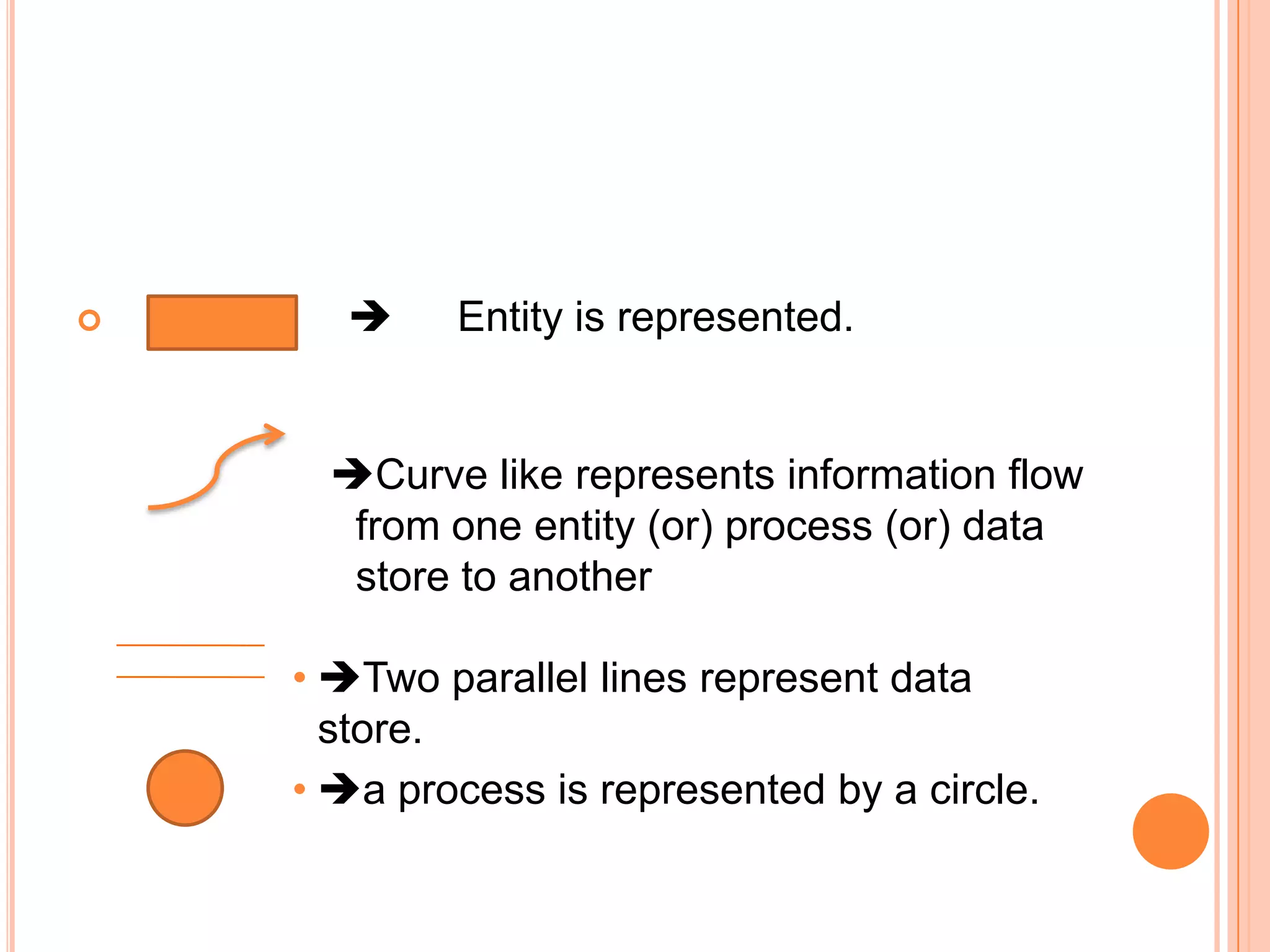
	Entity is represented.Curve like represents information flow from one entity (or) process (or) data store to anotherTwo parallel lines represent data store.a process is represented by a circle.
SDLC Design PhaseLogical design: functional features described independently of computer platformConvert recommended solution to system specificationsPhysical design: logical specifications transformed to technology-specific details
Data dictionary(DD)The data dictionary is a complete and comprehensive definition of all the data element in the system.
It is the source document for specifications of all inputs, protocols, outputs, data structures, database structures, meta data and algorithm.Cont………..A DD normally serves the following purpose:A summary of the documentationA tool to reduce redundant dataA background for I/O designAs a centralized control of all data in a systemAs a controller of data integrity.

analysis and design of information system

  • 1.
    Analysis and designof information system
  • 2.
    introductionInformation Systems Analysisand DesignComplex organizational process whereby computer-based information systems are developed and maintained
  • 3.
    System developmentlife cycleTraditional methodology for developing, maintaining, and replacing information systemsPhases in SDLC:PlanningAnalysisDesignImplementationMaintenance
  • 4.
  • 5.
    The planning phaseIdentify,analyze, prioritize, and arrange IS needs
  • 6.
    introductionANALYSISAnalysis as ‘thebreaking up of any whole so as to find out their nature, function etc.Analysis gives the conceptual understanding of a system from the logical point of view by detailing its functionality.
  • 7.
    Study and structuresystem requirements
  • 8.
    designDesign as ’tomake preliminary sketches of; to sketch a pattern or outline for; to plan and carry out especially by artistic arrangement or in a skilful way.’Designing gives us the blueprint on the basis of which the actual system is developed
  • 9.
    Analysis concepts andprinciplesRequirement analysisRequirement analysis is a formal process of interacting with a client to understand and then put in a formal document the requirement of the client.While initiating the process of requirement elicitation and analysis, some key issues must be understood so that analysis is easier, they are:The key people driving the request. This will help them to focus their information gathering activity.
  • 10.
    Conti….The key peoplewho will use the system.The financial benefit.What accounting to user is a good solution?What is the problem that system will address?
  • 11.
    Analysis PrinciplesThe domainof information in which the problem operates has to be appreciated.The key functions of the system have to be defined.System must be modular. This is required to help create the system in a faster way.System has to be defined in abstract term. This helps reduce complexity.The ambiguity in the system must be reduced to enable designer to focus on the outcome clearly.
  • 12.
    System requirement specificationInformationdescription : where the detailed information description is given.Functional description : where the functionality required from the system is given.Validation description : this is the data validation and business rule description required in the system.
  • 13.
    Design principleIt shouldhave an overall macro view of the system rather than a tunnel viewThe design process should be logical.The design should reinvent the wheel.The design should be a very close abstraction of the problem.The design should be uniform and integratedThe design should be structuredThe design should be reviewed on a real-time basis to minimize errors.
  • 14.
    Design conceptAbstractionProcedural abstractionDataabstractionControl abstractionRefinementModularity
  • 15.
    abstractionAbstraction is theconceptualization of an issue or problem or entity in terms of some level of generalization without regarding to irrelevant low-level details.Procedural abstraction : it is a named collection of several sequential procedural steps.Data abstraction : this is name of a set of data that defines of an object.Control abstraction : this is a named control mechanism, which has several steps.
  • 16.
    refinementRefinement helps thedesigner in elaborating the system and bringing-out lower-level details as the design progress.This is a top- down design strategy in which design is refined after each successive step.
  • 17.
    modularityIt helps thedesigner to compartmentalize the design into functional compartments as the entire system can be conceived to be composed of a set of modules, each having its own special feature and functionality rather than a monolithic entity.Modularity helps the designer to comprehend the system better.Effective modular design in general reduces the complexity of the system by dividing system into easily understandable modules.
  • 18.
    Tool for designDataflow diagram(DFD)Data dictionary(DD)
  • 19.
    Data flow diagram(DFD)Thedata flow diagram is a powerful tool to understand the functional and information view of system.
  • 20.
    It can betwo types – Logical data flow diagram and Physical data flow diagramLogical data flow diagram deals with the functional views of the system.
  • 21.
     Entity is represented.Curvelike represents information flow from one entity (or) process (or) data store to anotherTwo parallel lines represent data store.a process is represented by a circle.
  • 22.
    SDLC Design PhaseLogicaldesign: functional features described independently of computer platformConvert recommended solution to system specificationsPhysical design: logical specifications transformed to technology-specific details
  • 23.
    Data dictionary(DD)The datadictionary is a complete and comprehensive definition of all the data element in the system.
  • 24.
    It is thesource document for specifications of all inputs, protocols, outputs, data structures, database structures, meta data and algorithm.Cont………..A DD normally serves the following purpose:A summary of the documentationA tool to reduce redundant dataA background for I/O designAs a centralized control of all data in a systemAs a controller of data integrity.
  • 25.