
PROFESSIONAL
DEVELOPMENT TIPS FOR THE
BUSY PROFESSIONAL:
PLAN YOUR WORK AND WORK YOUR PLAN!
Created By: Alicia M. White, MBA
OVERVIEW
The purpose of this presentation is to
share best practice tips on managing
projects, tasks, and other priorities.
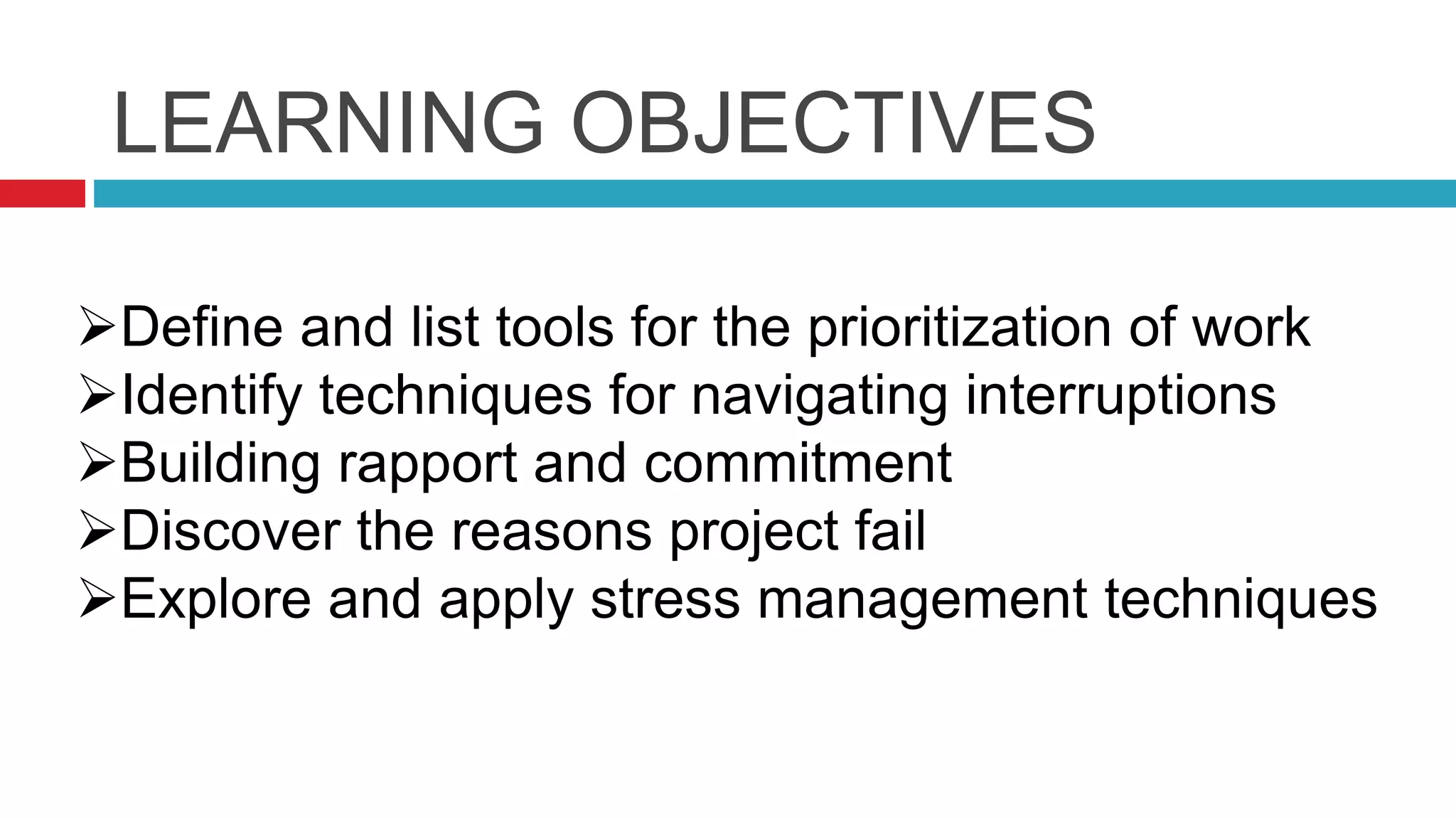
LEARNING OBJECTIVES
Identify strategies for conquering procrastination
Define and list tools for the prioritization of work
Identify techniques for navigating interruptions
Building rapport and commitment
Discover the reasons project fail
Explore and apply stress management techniques
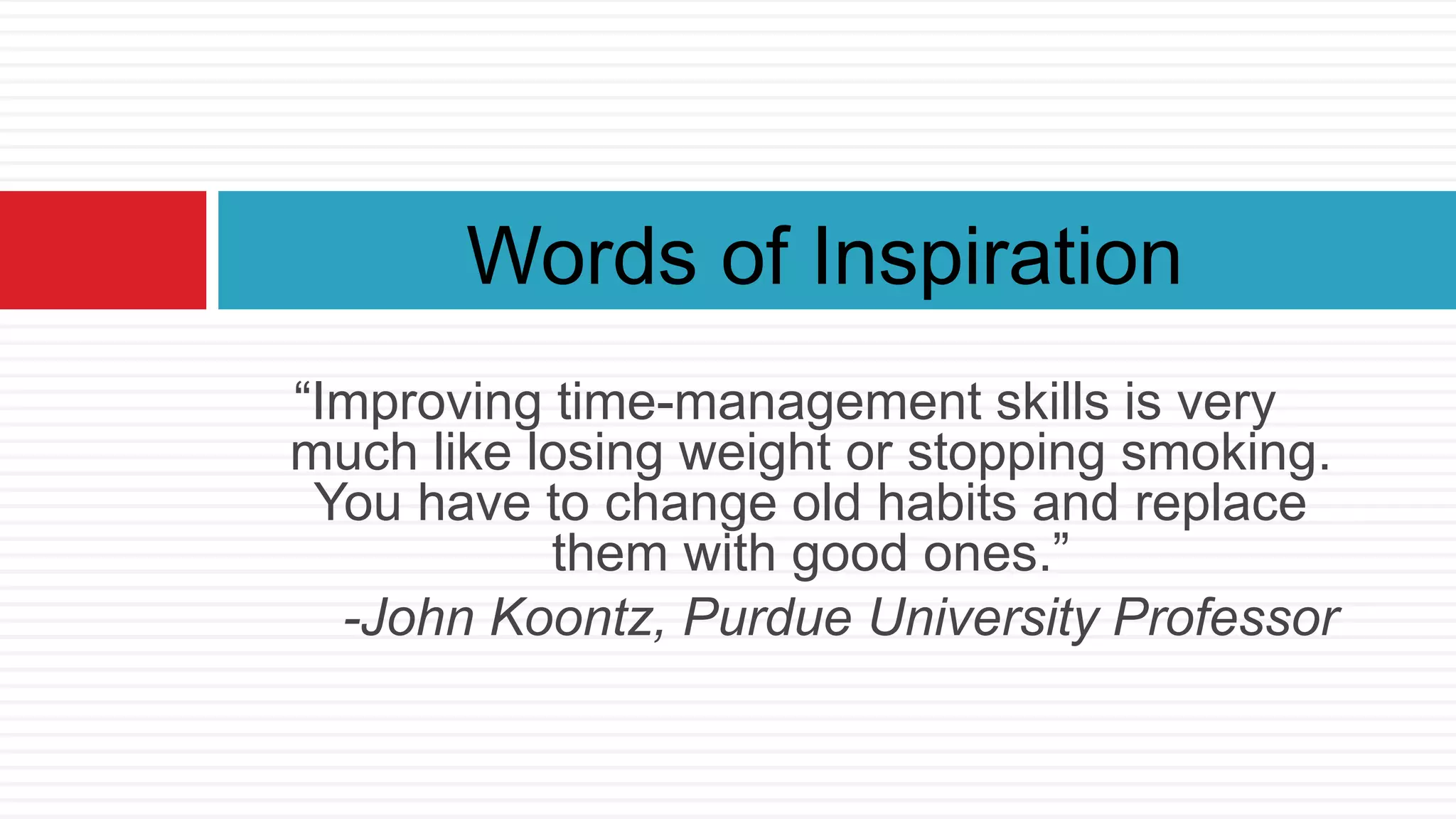
“Improving time-management skills is very
much like losing weight or stopping smoking.
You have to change old habits and replace
them with good ones.”
-John Koontz, Purdue University Professor
Words of Inspiration
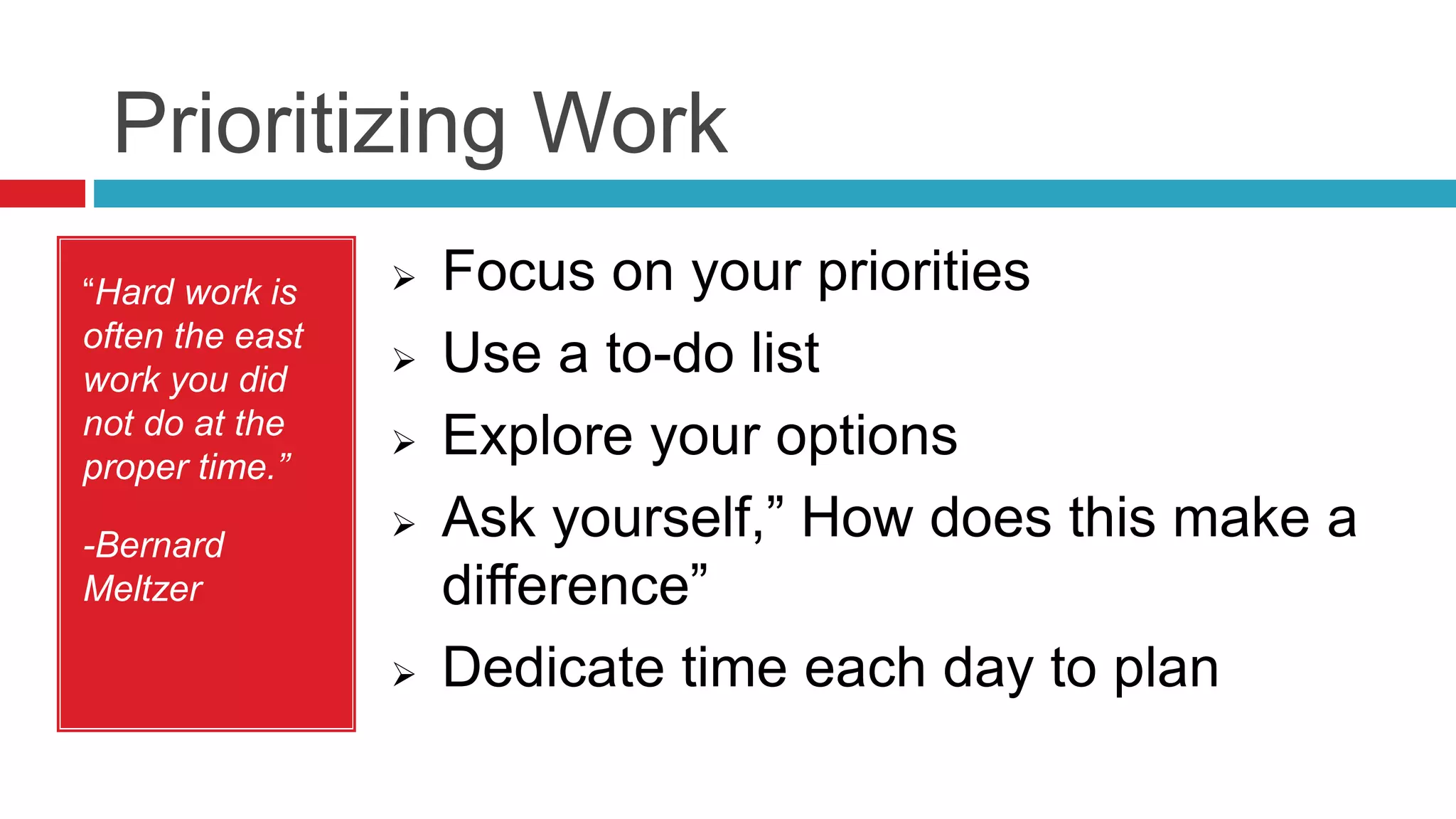
Prioritizing Work
“Hard work is
often the east
work you did
not do at the
proper time.”
-Bernard
Meltzer
 Focus on your priorities
 Use a to-do list
 Explore your options
 Ask yourself,” How does this make a
difference”
 Dedicate time each day to plan
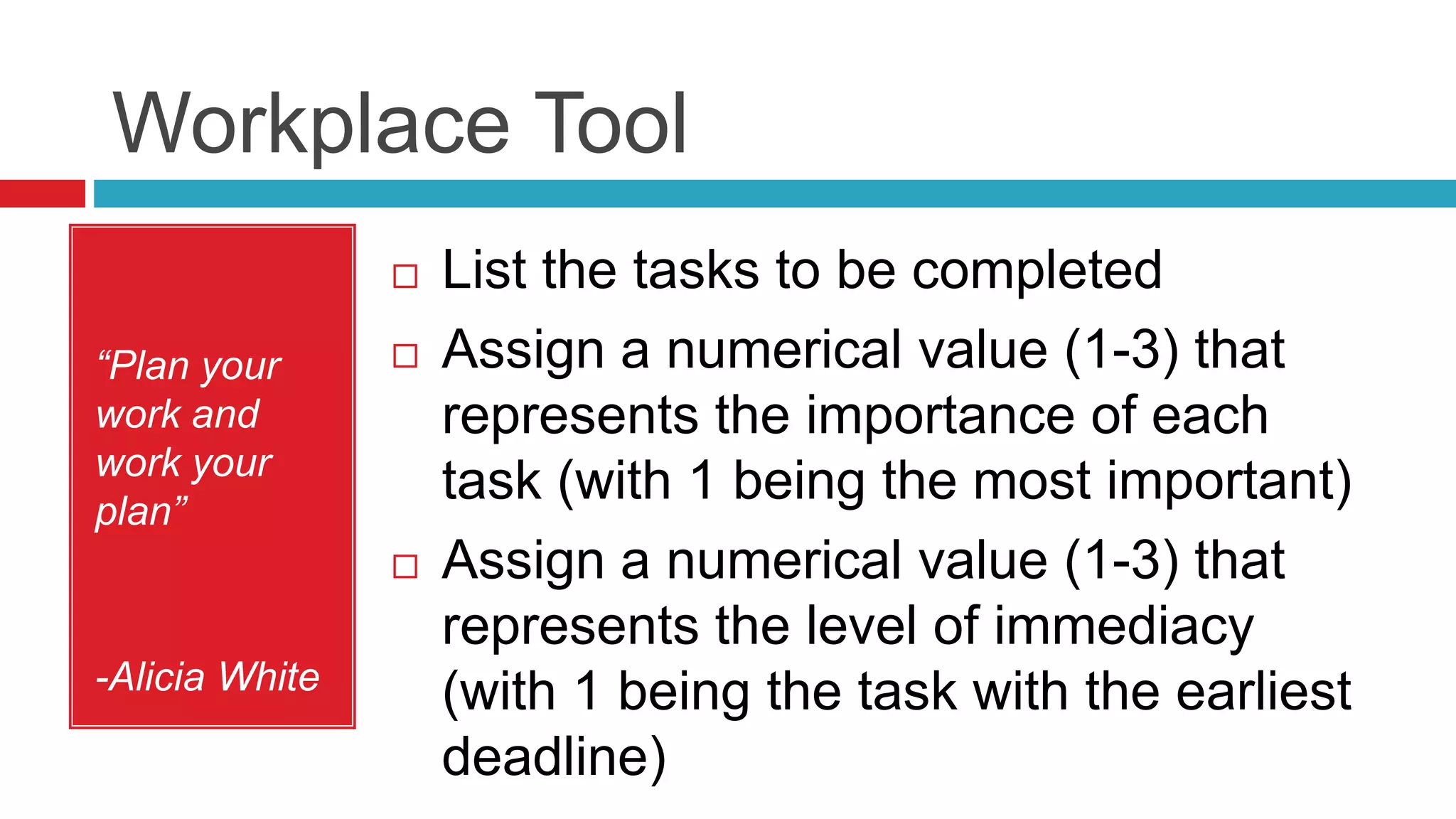
Workplace Tool
“Plan your
work and
work your
plan”
-Alicia White
 List the tasks to be completed
 Assign a numerical value (1-3) that
represents the importance of each
task (with 1 being the most important)
 Assign a numerical value (1-3) that
represents the level of immediacy
(with 1 being the task with the earliest
deadline)
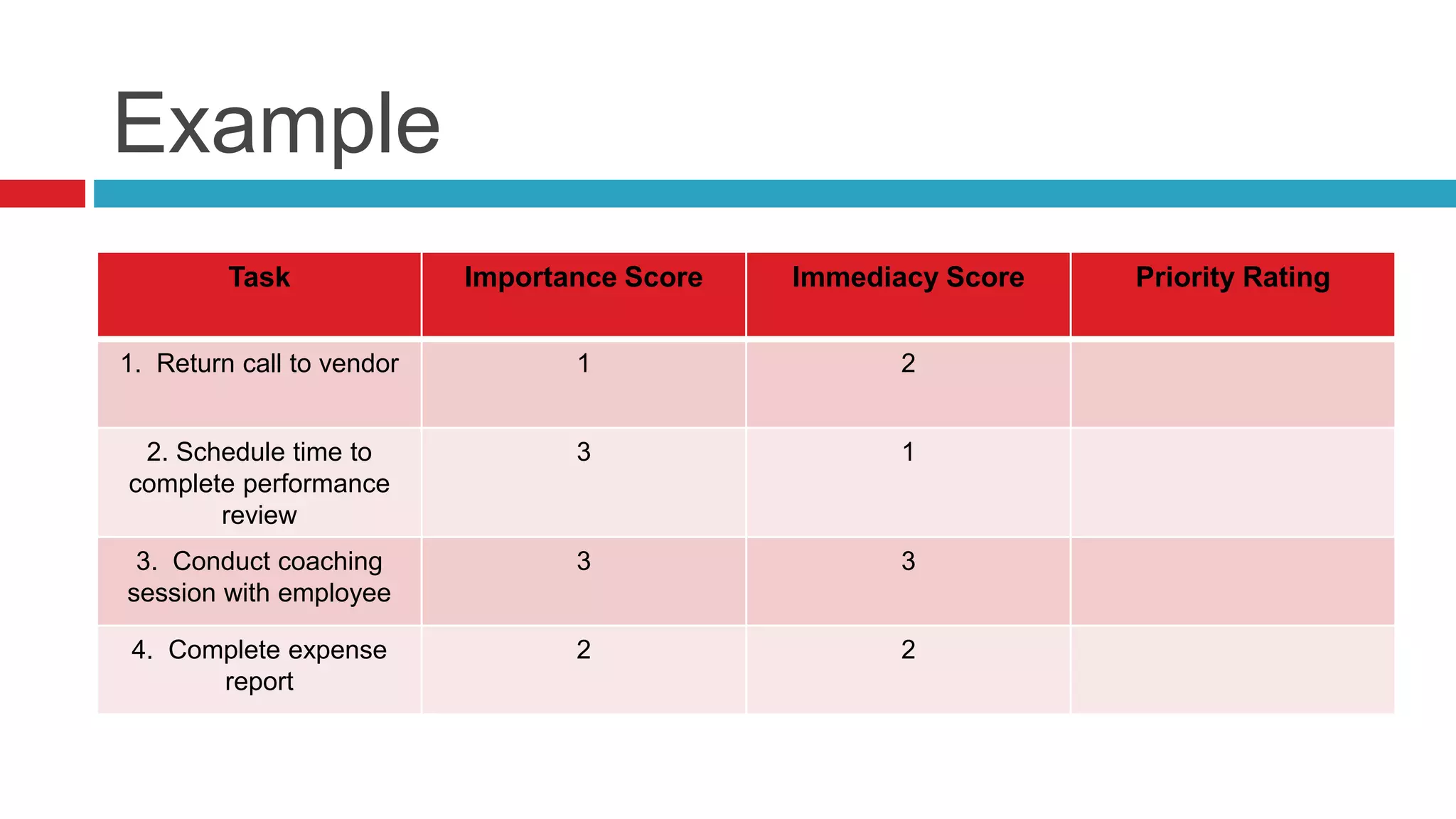
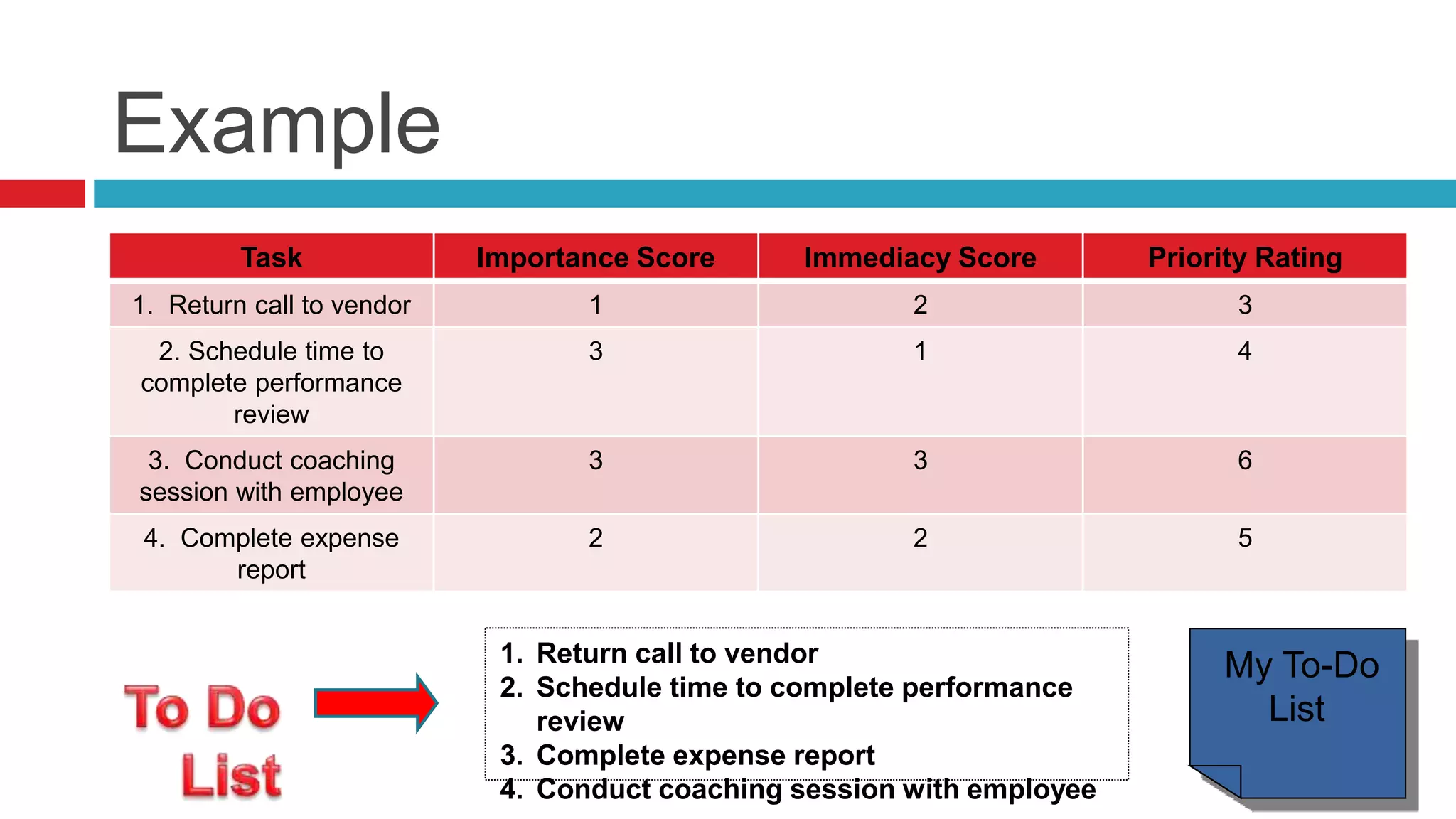
Example
Task Importance Score Immediacy Score Priority Rating
1. Return call to vendor 1 2
2. Schedule time to
complete performance
review
3 1
3. Conduct coaching
session with employee
3 3
4. Complete expense
report
2 2
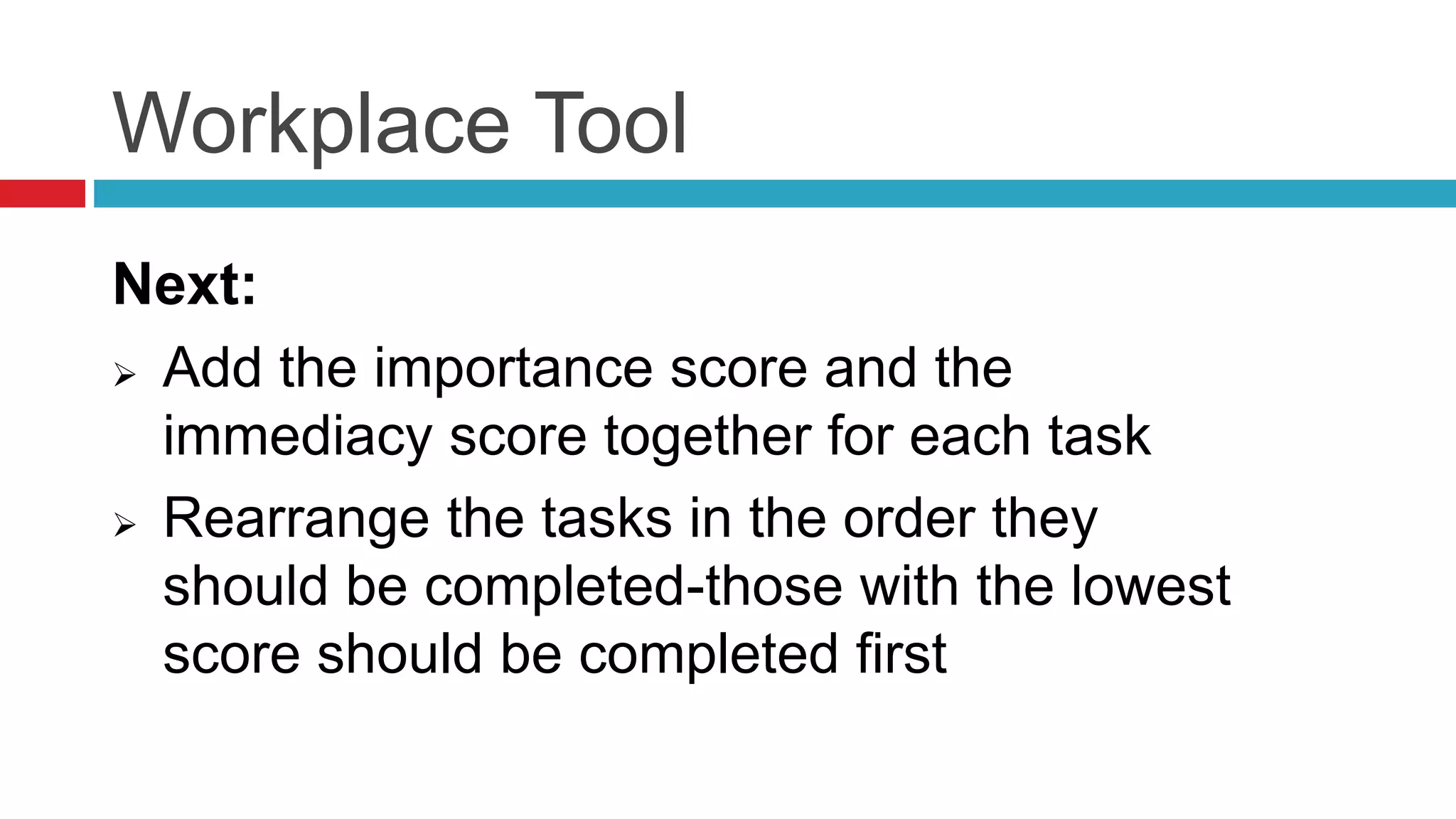
Workplace Tool
Next:
 Add the importance score and the
immediacy score together for each task
 Rearrange the tasks in the order they
should be completed-those with the lowest
score should be completed first
Example
1. Return call to vendor
2. Schedule time to complete performance
review
3. Complete expense report
4. Conduct coaching session with employee
My To-Do
List
Task Importance Score Immediacy Score Priority Rating
1. Return call to vendor 1 2 3
2. Schedule time to
complete performance
review
3 1 4
3. Conduct coaching
session with employee
3 3 6
4. Complete expense
report
2 2 5
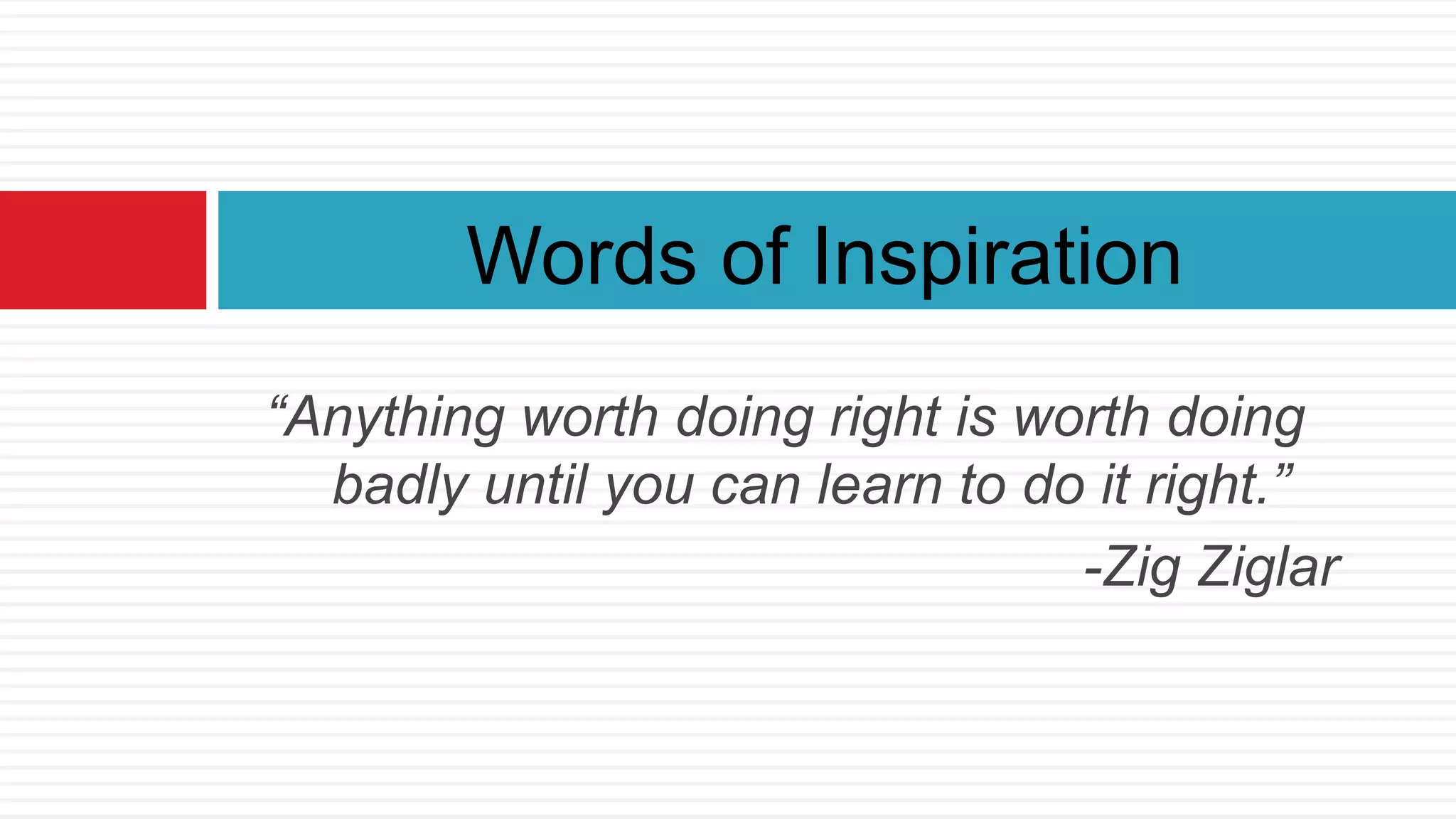
“Anything worth doing right is worth doing
badly until you can learn to do it right.”
-Zig Ziglar
Words of Inspiration
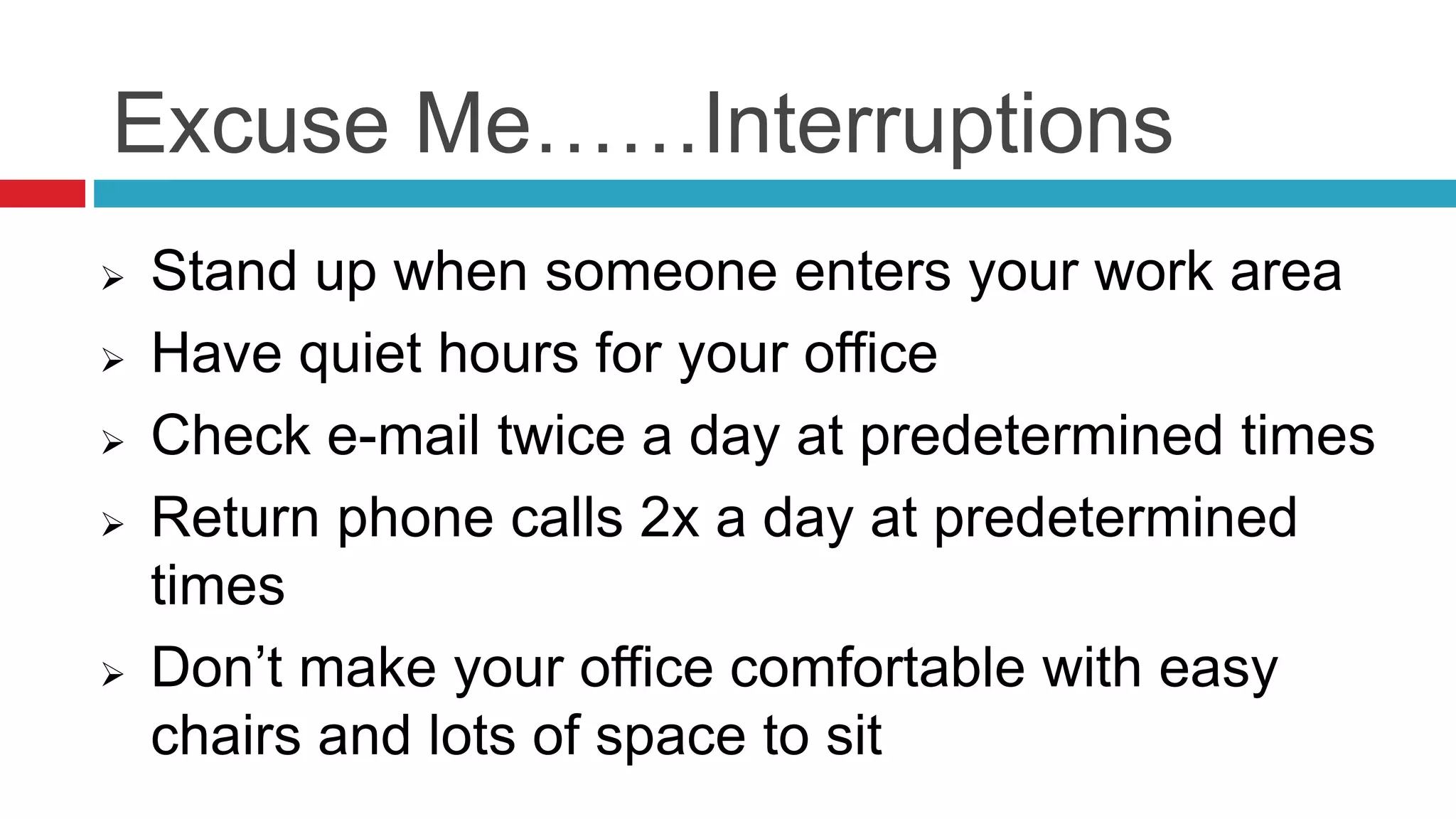
Excuse Me……Interruptions
 Stand up when someone enters your work area
 Have quiet hours for your office
 Check e-mail twice a day at predetermined times
 Return phone calls 2x a day at predetermined
times
 Don’t make your office comfortable with easy
chairs and lots of space to sit
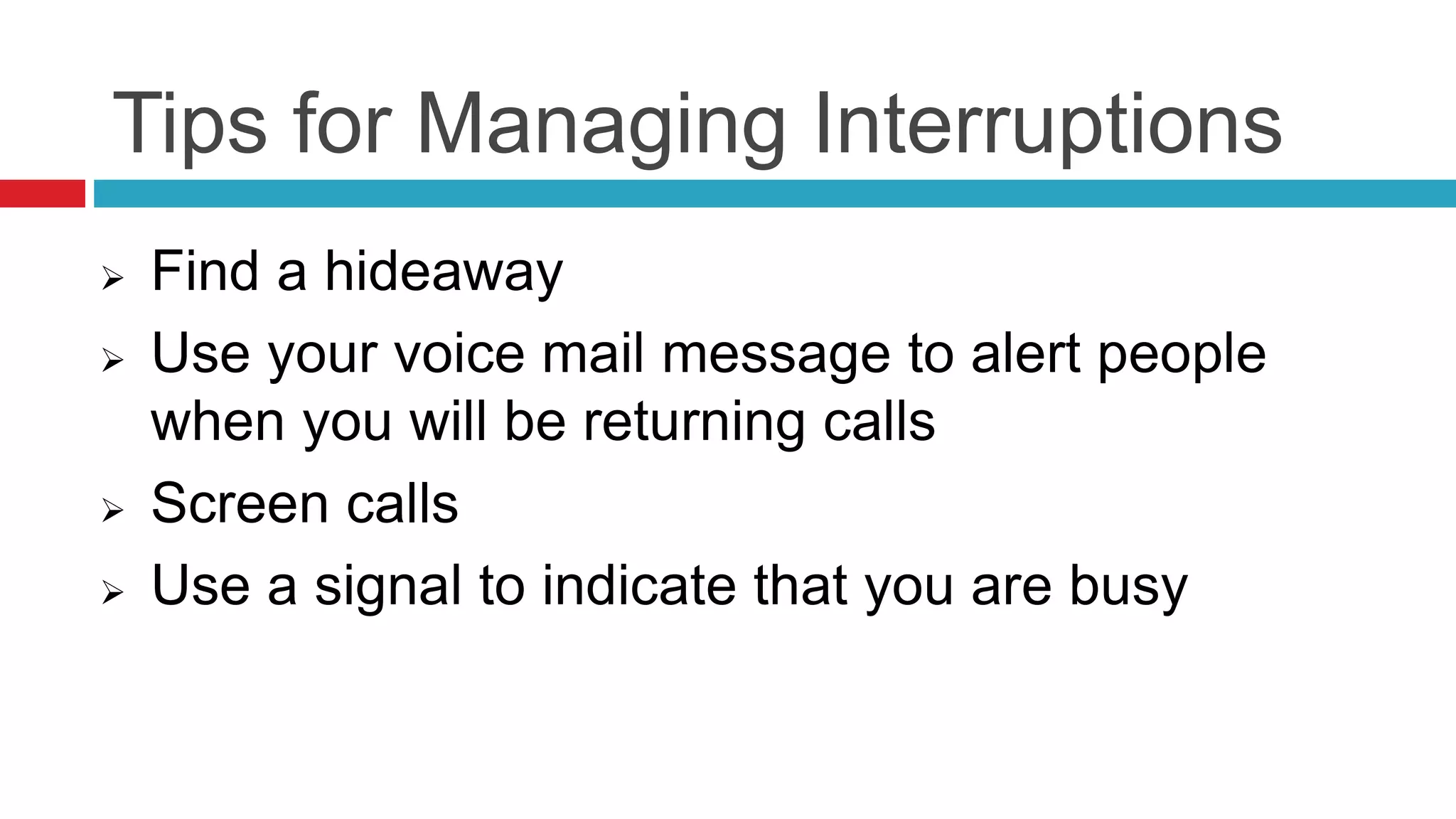
Tips for Managing Interruptions
 Find a hideaway
 Use your voice mail message to alert people
when you will be returning calls
 Screen calls
 Use a signal to indicate that you are busy
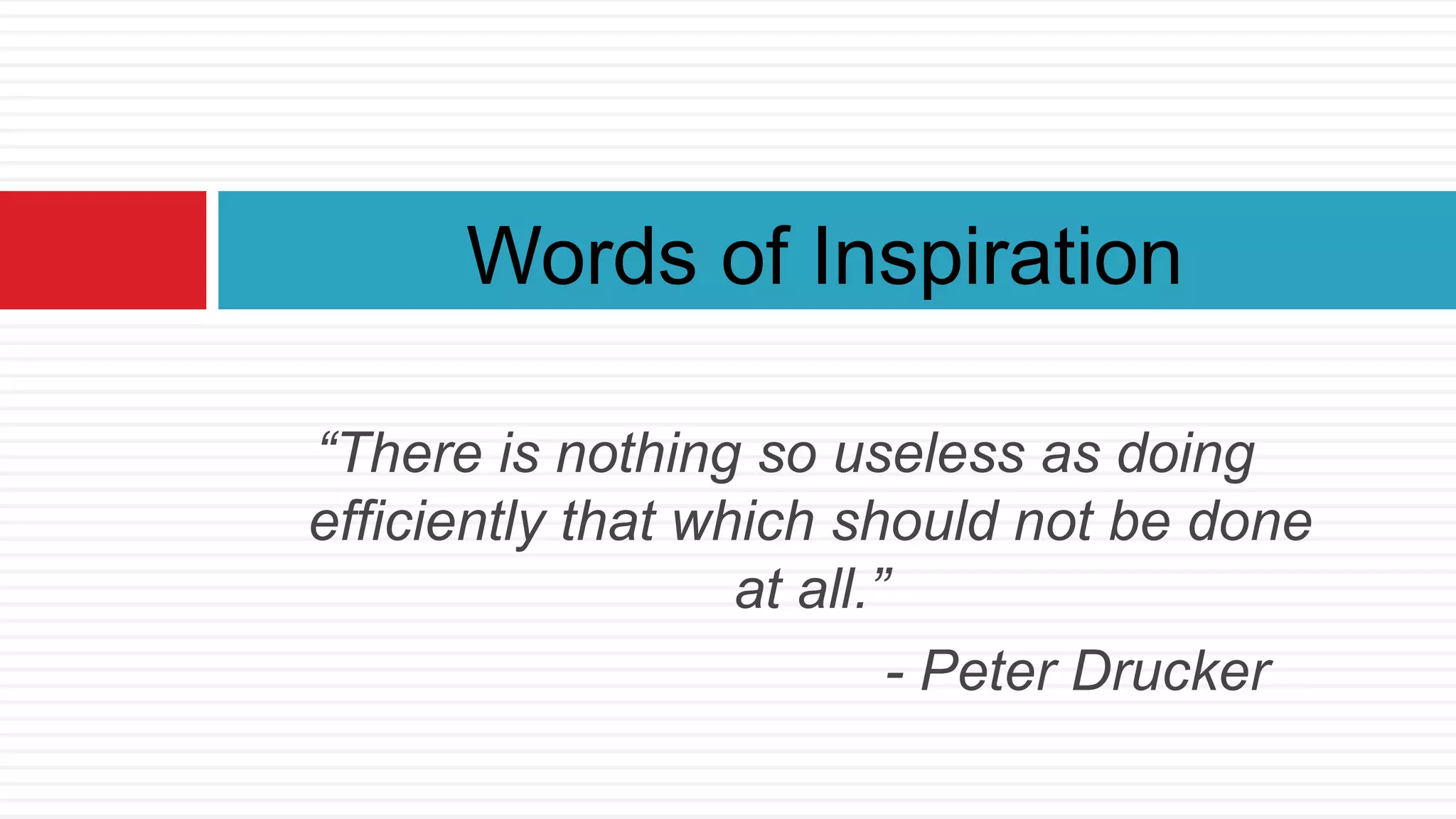
“There is nothing so useless as doing
efficiently that which should not be done
at all.”
- Peter Drucker
Words of Inspiration
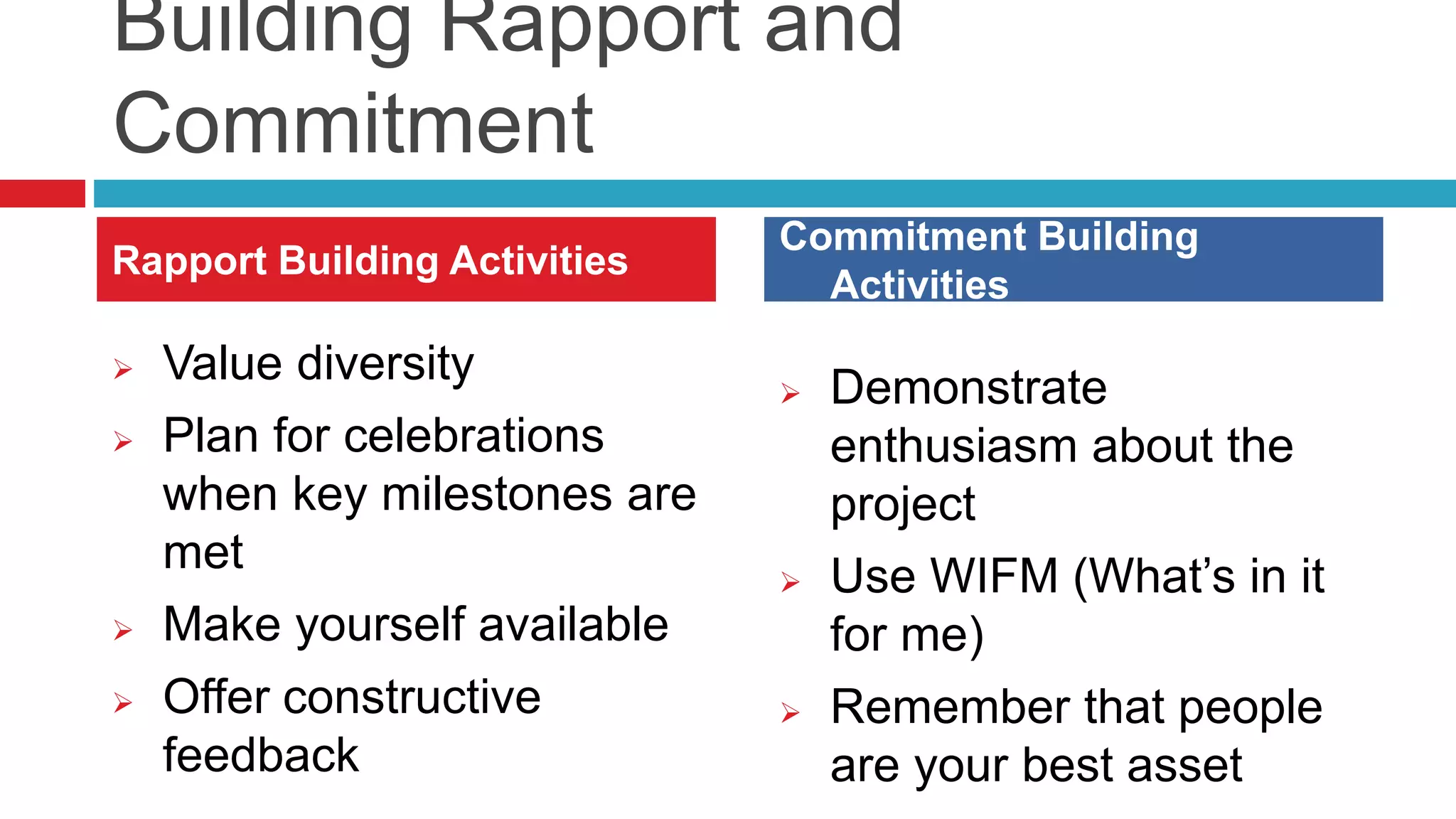
Building Rapport and
Commitment
 Value diversity
 Plan for celebrations
when key milestones are
met
 Make yourself available
 Offer constructive
feedback
Rapport Building Activities
Commitment Building
Activities
 Demonstrate
enthusiasm about the
project
 Use WIFM (What’s in it
for me)
 Remember that people
are your best asset
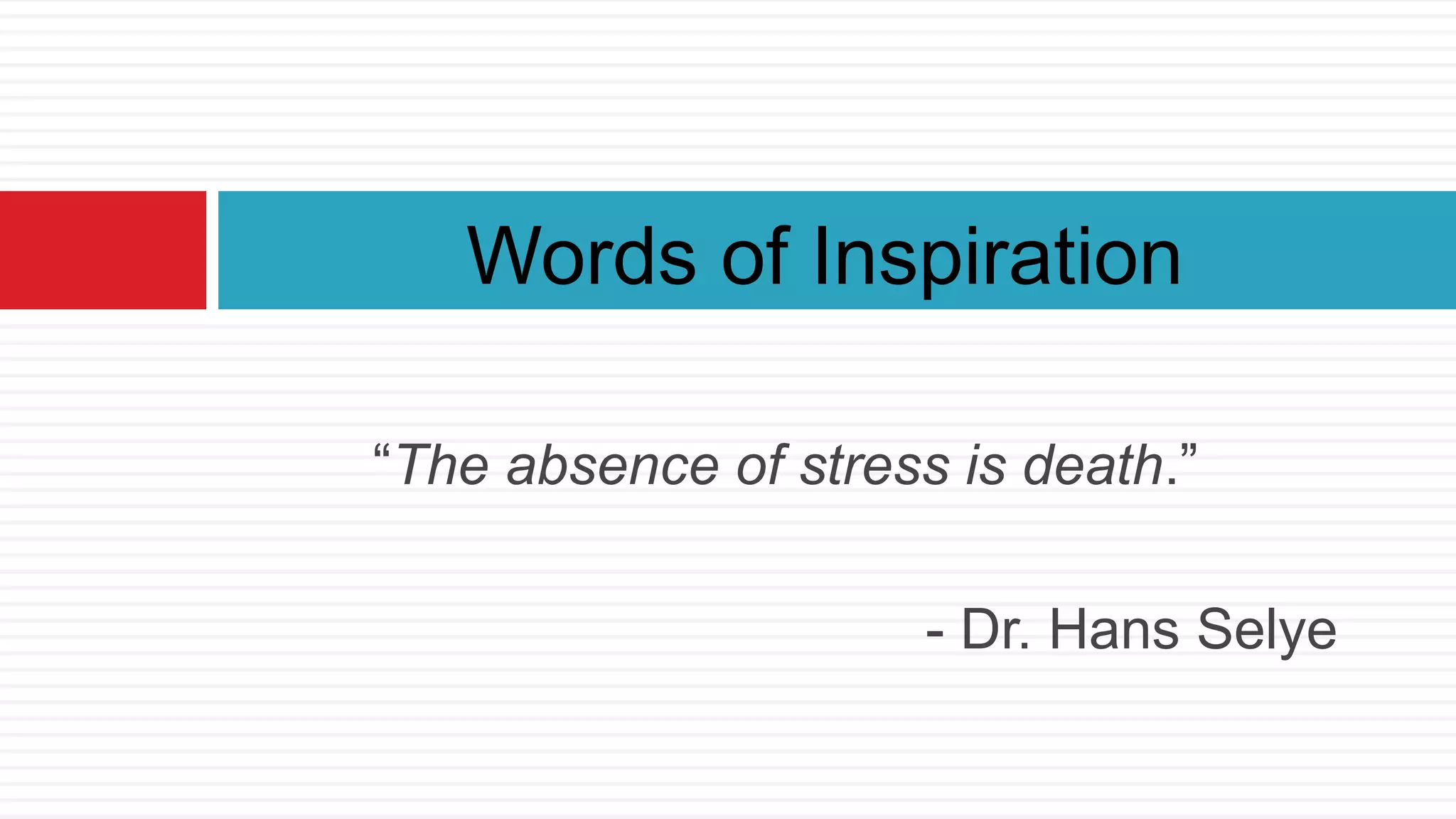
“The absence of stress is death.”
- Dr. Hans Selye
Words of Inspiration
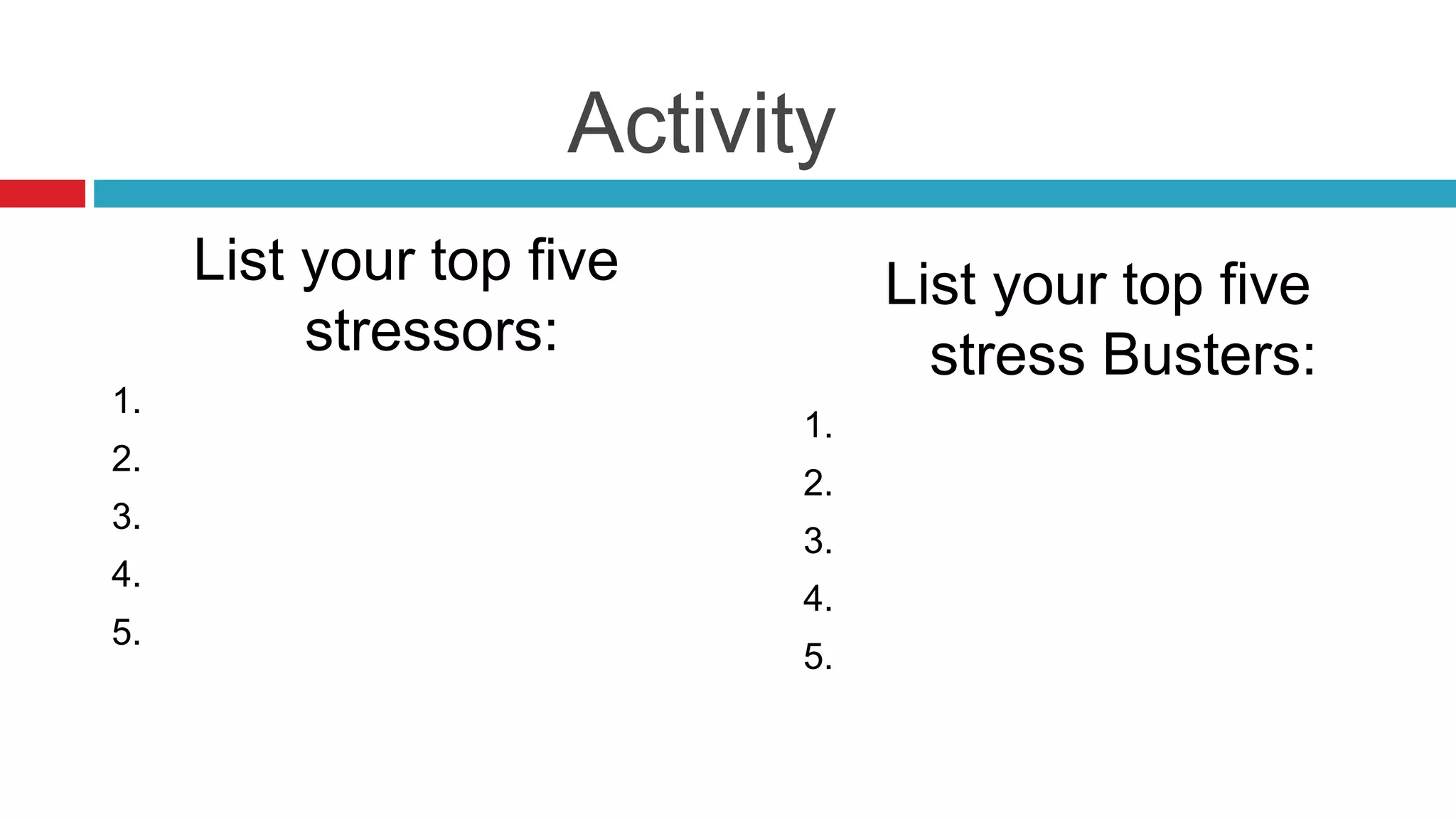
Activity
List your top five
stressors:
1.
2.
3.
4.
5.
List your top five
stress Busters:
1.
2.
3.
4.
5.
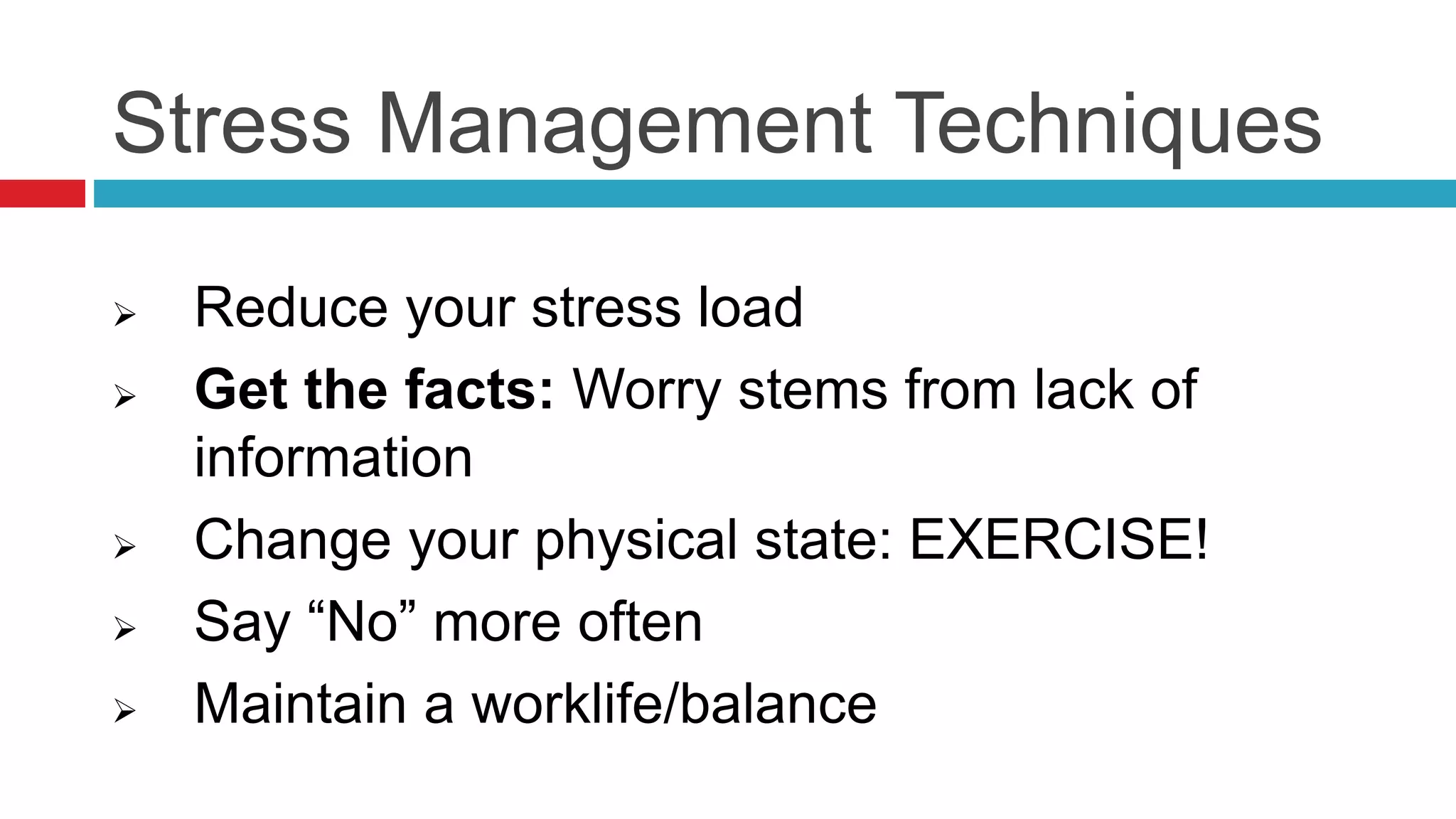
Stress Management Techniques
 Reduce your stress load
 Get the facts: Worry stems from lack of
information
 Change your physical state: EXERCISE!
 Say “No” more often
 Maintain a worklife/balance
Professional Development Tips: Plan Your Work and Work Your Plan

Professional Development Tips: Plan Your Work and Work Your Plan

  • 1.
    PROFESSIONAL DEVELOPMENT TIPS FORTHE BUSY PROFESSIONAL: PLAN YOUR WORK AND WORK YOUR PLAN! Created By: Alicia M. White, MBA
  • 2.
    OVERVIEW The purpose ofthis presentation is to share best practice tips on managing projects, tasks, and other priorities.
  • 3.
    LEARNING OBJECTIVES Identify strategiesfor conquering procrastination Define and list tools for the prioritization of work Identify techniques for navigating interruptions Building rapport and commitment Discover the reasons project fail Explore and apply stress management techniques
  • 4.
    “Improving time-management skillsis very much like losing weight or stopping smoking. You have to change old habits and replace them with good ones.” -John Koontz, Purdue University Professor Words of Inspiration
  • 5.
    Prioritizing Work “Hard workis often the east work you did not do at the proper time.” -Bernard Meltzer  Focus on your priorities  Use a to-do list  Explore your options  Ask yourself,” How does this make a difference”  Dedicate time each day to plan
  • 6.
    Workplace Tool “Plan your workand work your plan” -Alicia White  List the tasks to be completed  Assign a numerical value (1-3) that represents the importance of each task (with 1 being the most important)  Assign a numerical value (1-3) that represents the level of immediacy (with 1 being the task with the earliest deadline)
  • 7.
    Example Task Importance ScoreImmediacy Score Priority Rating 1. Return call to vendor 1 2 2. Schedule time to complete performance review 3 1 3. Conduct coaching session with employee 3 3 4. Complete expense report 2 2
  • 8.
    Workplace Tool Next:  Addthe importance score and the immediacy score together for each task  Rearrange the tasks in the order they should be completed-those with the lowest score should be completed first
  • 9.
    Example 1. Return callto vendor 2. Schedule time to complete performance review 3. Complete expense report 4. Conduct coaching session with employee My To-Do List Task Importance Score Immediacy Score Priority Rating 1. Return call to vendor 1 2 3 2. Schedule time to complete performance review 3 1 4 3. Conduct coaching session with employee 3 3 6 4. Complete expense report 2 2 5
  • 10.
    “Anything worth doingright is worth doing badly until you can learn to do it right.” -Zig Ziglar Words of Inspiration
  • 11.
    Excuse Me……Interruptions  Standup when someone enters your work area  Have quiet hours for your office  Check e-mail twice a day at predetermined times  Return phone calls 2x a day at predetermined times  Don’t make your office comfortable with easy chairs and lots of space to sit
  • 12.
    Tips for ManagingInterruptions  Find a hideaway  Use your voice mail message to alert people when you will be returning calls  Screen calls  Use a signal to indicate that you are busy
  • 13.
    “There is nothingso useless as doing efficiently that which should not be done at all.” - Peter Drucker Words of Inspiration
  • 14.
    Building Rapport and Commitment Value diversity  Plan for celebrations when key milestones are met  Make yourself available  Offer constructive feedback Rapport Building Activities Commitment Building Activities  Demonstrate enthusiasm about the project  Use WIFM (What’s in it for me)  Remember that people are your best asset
  • 15.
    “The absence ofstress is death.” - Dr. Hans Selye Words of Inspiration
  • 16.
    Activity List your topfive stressors: 1. 2. 3. 4. 5. List your top five stress Busters: 1. 2. 3. 4. 5.
  • 17.
    Stress Management Techniques Reduce your stress load  Get the facts: Worry stems from lack of information  Change your physical state: EXERCISE!  Say “No” more often  Maintain a worklife/balance