TRANSACTION PROCESSING SYSTEM
Definition
 ATransaction Processing system (TPS) is a
type of information system that collects,
stores, modifies and retrieves the data
transactions of an enterprise.
Features
 Rapid response: fast performance with rapid
results.
 Reliability: well designed backup and
recovery with a low failure rate.
 Inflexibility; treat every transaction equally.
 Controlled processing; maintain specific
requirement for the roles and responsibilities
of different employees.
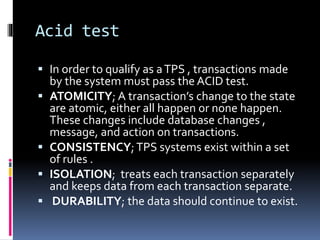
Acid test
 In order to qualify as aTPS , transactions made
by the system must pass the ACID test.
 ATOMICITY; A transaction’s change to the state
are atomic, either all happen or none happen.
These changes include database changes ,
message, and action on transactions.
 CONSISTENCY;TPS systems exist within a set
of rules .
 ISOLATION; treats each transaction separately
and keeps data from each transaction separate.
 DURABILITY; the data should continue to exist.
Types of TPS
 There are two types ofTPS
 Batch processing and Real time processing
1. Batch Processing system
 Batch processing is where the information is
collected as a batch and then processed later
on.
 Eg ; paying by Cheque
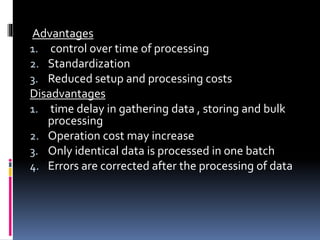
Advantages
1. control over time of processing
2. Standardization
3. Reduced setup and processing costs
Disadvantages
1. time delay in gathering data , storing and bulk
processing
2. Operation cost may increase
3. Only identical data is processed in one batch
4. Errors are corrected after the processing of data
2) Real Time Processing
 Real time processing is where all details of
the transaction are recorded and changed at
the time as it occurs
 Eg;ATM’s
Advantages
1. Error correction can be immediate
2. Data is processed as demand
3. No time delay
Disadvantages
1. Standardization may not exist or may be
more difficult
2. Processing needs make control difficult
3. System hardware and software is expensive
4. Security is critical
Transaction Processing Cycle
 Transaction processing system , capture and
process data describing business
transactions, update organizational
databases , and produce a variety of
information products. It should understand
this as a transaction processing cycle of
several basic activities .
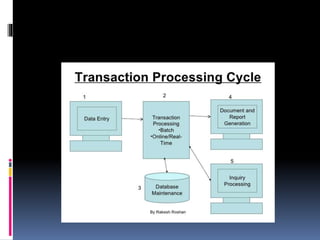
1 Data entry
 The first step of the transaction processing cycle is the
capture of business data.Transaction data must be entered
into the system.
 For eg; transaction data may be collected by point-of-sale
terminals using optical scanning of bar codes and credit
card readers at a retail store or other business.
 A number of input and output devices exist for entering
data .
 The documents generated at the source or point where the
transaction occurs are called source document and become
input data for the system.
 For eg; when a customer returns an items at a store , the
sales receipts becomes the source document for the
transaction ‘return items for refund / replacement’.
2)Transaction processing
 Transaction processing system process data
in two basic ways;
 1) batch processing , where transaction data
are accumulated over a period of time and
processed periodically.
 2) real-time processing , also called online
processing where data are processed
immediately after a transaction occurs.
3) Database maintenance
 An organizations databases must be updated by its
transaction processing systems so that they are
always correct and up-to-date.Therefore ,
transaction processing systems serve to assist in
maintaining the corporate databases of an
organization to reflect changes resulting from day-
to-day business transactions.
 For eg; credit sales made to customer will cause
customer a/c balance to be increased and the
amount of inventory on hand to be decreased .
 Database maintenance ensures that these and other
changes are reflected in the data records stored in
the company’s databases.
4) Document and report
generation
 Transaction processing system produce a
variety of documents and reports.
 Eg of Transaction documents include
purchase orders, sales receipts, customer
statement etc..
 Transaction reports might take the form of a
transaction listing such as a payroll register,
or edit reports that describe errors detected
during processing.
5) Inquiry Processing
 Many transaction processing systems allow you
to use the Internet, intranets, extranet, and web
browser or database management query
languages to make inquiries and receive
responses concerning the results of transaction
processing activity
 Typically , responses are displayed in a variety of
pre specified formats or screens.
 For example, you might check on the status of a
sales order , the balances in an account, or the
amount of stock in inventory and receive
immediate responSes at your PC.
Purpose of TPS
 To keep records about the state of the
organization.
 To process transaction that affects the
record.
 To produce output that reports on transaction
that have occurred.
Transaction processing system

Transaction processing system

  • 1.
  • 2.
    Definition  ATransaction Processingsystem (TPS) is a type of information system that collects, stores, modifies and retrieves the data transactions of an enterprise.
  • 3.
    Features  Rapid response:fast performance with rapid results.  Reliability: well designed backup and recovery with a low failure rate.  Inflexibility; treat every transaction equally.  Controlled processing; maintain specific requirement for the roles and responsibilities of different employees.
  • 4.
    Acid test  Inorder to qualify as aTPS , transactions made by the system must pass the ACID test.  ATOMICITY; A transaction’s change to the state are atomic, either all happen or none happen. These changes include database changes , message, and action on transactions.  CONSISTENCY;TPS systems exist within a set of rules .  ISOLATION; treats each transaction separately and keeps data from each transaction separate.  DURABILITY; the data should continue to exist.
  • 5.
    Types of TPS There are two types ofTPS  Batch processing and Real time processing
  • 6.
    1. Batch Processingsystem  Batch processing is where the information is collected as a batch and then processed later on.  Eg ; paying by Cheque
  • 7.
    Advantages 1. control overtime of processing 2. Standardization 3. Reduced setup and processing costs Disadvantages 1. time delay in gathering data , storing and bulk processing 2. Operation cost may increase 3. Only identical data is processed in one batch 4. Errors are corrected after the processing of data
  • 8.
    2) Real TimeProcessing  Real time processing is where all details of the transaction are recorded and changed at the time as it occurs  Eg;ATM’s
  • 9.
    Advantages 1. Error correctioncan be immediate 2. Data is processed as demand 3. No time delay Disadvantages 1. Standardization may not exist or may be more difficult 2. Processing needs make control difficult 3. System hardware and software is expensive 4. Security is critical
  • 10.
    Transaction Processing Cycle Transaction processing system , capture and process data describing business transactions, update organizational databases , and produce a variety of information products. It should understand this as a transaction processing cycle of several basic activities .
  • 12.
    1 Data entry The first step of the transaction processing cycle is the capture of business data.Transaction data must be entered into the system.  For eg; transaction data may be collected by point-of-sale terminals using optical scanning of bar codes and credit card readers at a retail store or other business.  A number of input and output devices exist for entering data .  The documents generated at the source or point where the transaction occurs are called source document and become input data for the system.  For eg; when a customer returns an items at a store , the sales receipts becomes the source document for the transaction ‘return items for refund / replacement’.
  • 13.
    2)Transaction processing  Transactionprocessing system process data in two basic ways;  1) batch processing , where transaction data are accumulated over a period of time and processed periodically.  2) real-time processing , also called online processing where data are processed immediately after a transaction occurs.
  • 14.
    3) Database maintenance An organizations databases must be updated by its transaction processing systems so that they are always correct and up-to-date.Therefore , transaction processing systems serve to assist in maintaining the corporate databases of an organization to reflect changes resulting from day- to-day business transactions.  For eg; credit sales made to customer will cause customer a/c balance to be increased and the amount of inventory on hand to be decreased .  Database maintenance ensures that these and other changes are reflected in the data records stored in the company’s databases.
  • 15.
    4) Document andreport generation  Transaction processing system produce a variety of documents and reports.  Eg of Transaction documents include purchase orders, sales receipts, customer statement etc..  Transaction reports might take the form of a transaction listing such as a payroll register, or edit reports that describe errors detected during processing.
  • 16.
    5) Inquiry Processing Many transaction processing systems allow you to use the Internet, intranets, extranet, and web browser or database management query languages to make inquiries and receive responses concerning the results of transaction processing activity  Typically , responses are displayed in a variety of pre specified formats or screens.  For example, you might check on the status of a sales order , the balances in an account, or the amount of stock in inventory and receive immediate responSes at your PC.
  • 17.
    Purpose of TPS To keep records about the state of the organization.  To process transaction that affects the record.  To produce output that reports on transaction that have occurred.