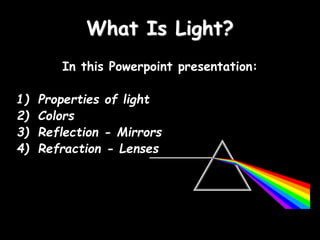
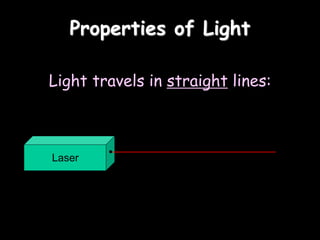
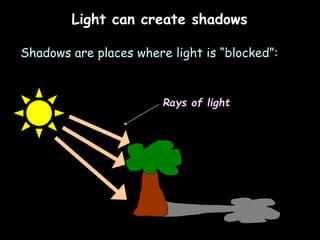
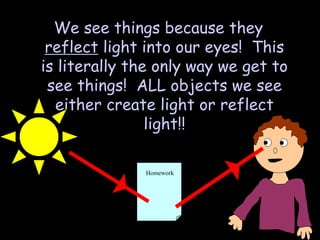
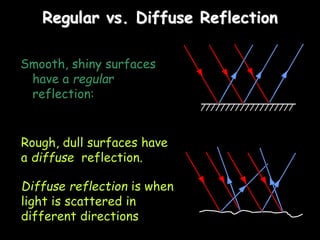
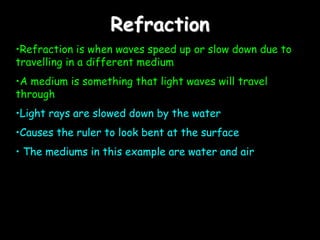
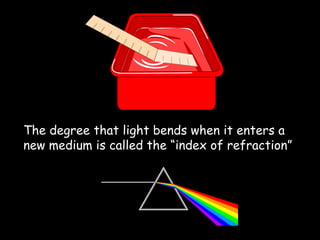
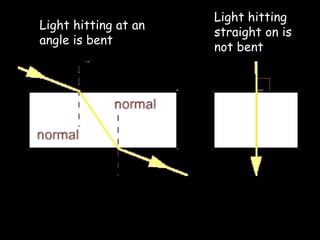
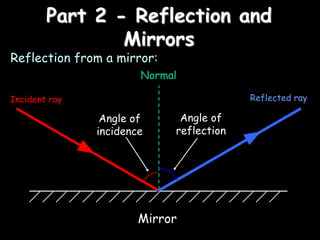
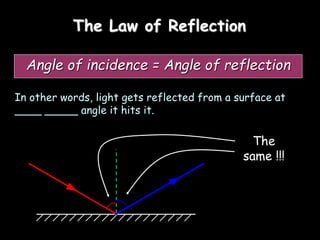
1. Light travels in straight lines and can be reflected or refracted. Reflection occurs when light bounces off a surface, while refraction is when light changes speed and direction when passing through different materials.
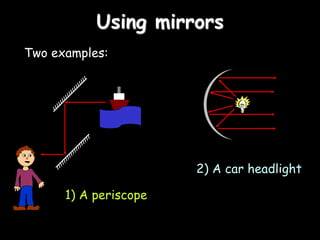
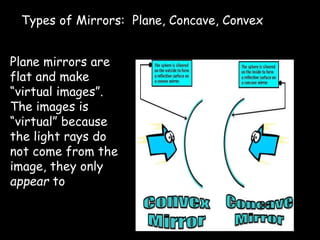
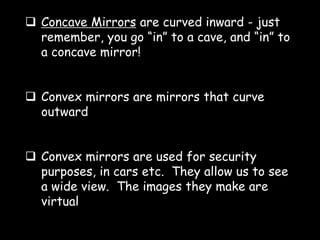
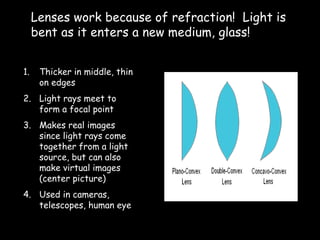
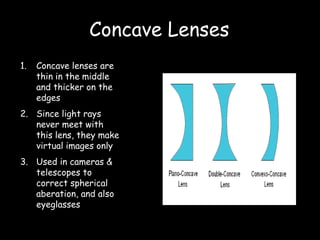
2. Mirrors come in different shapes that determine whether images are virtual or real, and lenses use refraction to bend light and form images. Concave lenses form virtual images while convex lenses form real images.
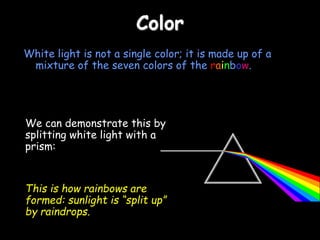
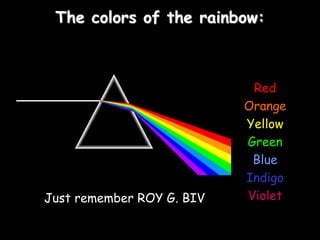
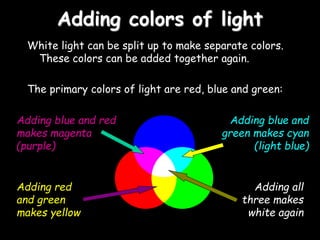
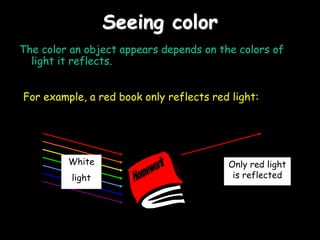
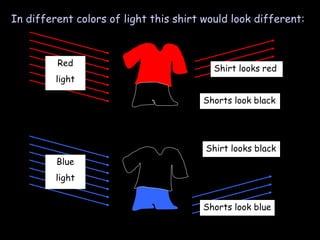
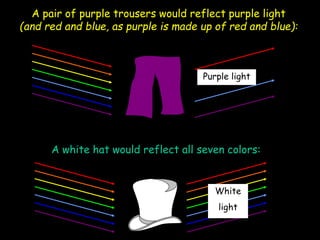
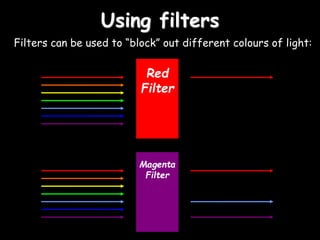
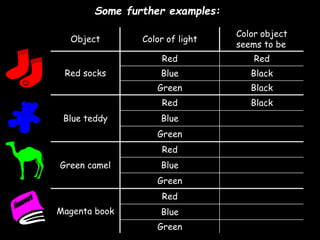
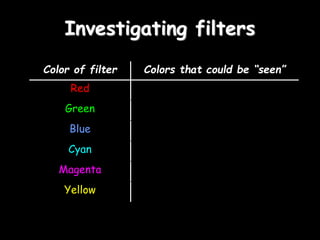
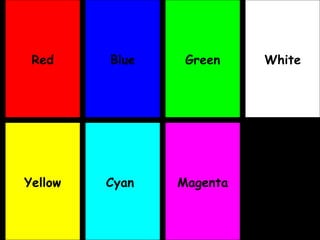
3. White light is composed of all visible wavelengths combined, and different materials reflect or absorb particular wavelengths, determining their perceived color. Color mixing with light follows the same principles as mixing with pigments. Filters can be used to selectively transmit or block certain wavelengths of light.



![谷歌留痕技术 [ 𝙩𝙤𝙥 𝟮𝟯𝟯. 𝙘 𝙤𝙢 ]](https://cdn.slidesharecdn.com/ss_thumbnails/top233-260130174328-3833018c-thumbnail.jpg?width=640&height=640&fit=bounds)


