Light Energy Vocabulary Notes
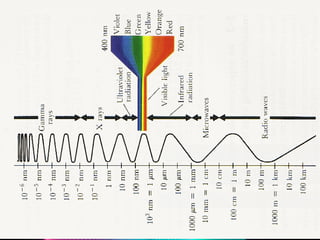
Light Energy Light energy is electromagnetic radiation. This means it is a combination of electrical energy and magnetic energy. Light energy is given off by electrons in an object. Light moves in waves. All light energy is in a spectrum that includes waves with different frequencies and wavelengths.  The light we see is only a tiny part of that spectrum.
 
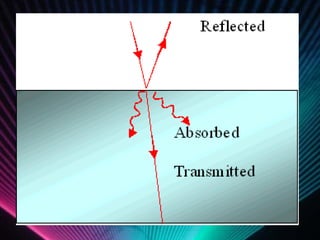
Absorption Absorption of light occurs when an object does not reflect or transmit the light. Black objects absorb all light and white objects absorb no light. Whatever color or wavelength of light is absorbed, the opposite color is relfected.  Ex: An object that appears red is absorbing blue and green wavelengths.
Reflection Reflection is when light bounces off an object.  Mirrors show reflection very well. Again, an object that appears red is absorbing the blue and green wave lengths but is reflecting the red.
Transmission The process in which light travels through a medium without being absorbed or scattered.  Light goes straight through the material.
 
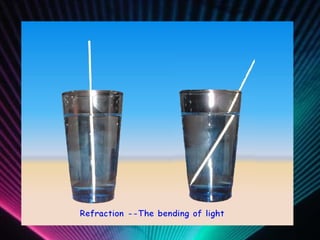
Refraction Refraction is the bending of light waves as they pass from one substance to another.  Light rays may bend as they move from one substance to another. An illusion is created when light rays go from air into water and “bends” the pencil. If light is transmitted “head-on” the direction does not change (no refraction). If the light strikes at an angle it is refracted.
 
Scattering Scattering of light is caused by light bouncing off an object in a bunch of different directions.  Scattering is caused by differences present in materials, which the light is striking.  This includes bubbles, droplets, surface roughness, and textile fibers in clothing. This is what causes the sky to be blue.
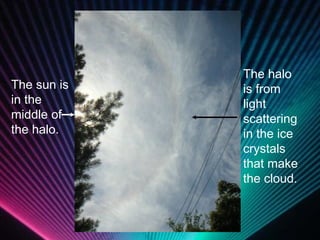
The halo is from light scattering in the ice crystals that make the cloud. The sun is in the middle of the halo.
Transparent Sometimes when light strikes matter, almost all the light gets through. Transparent  materials allow light to pass through with almost no disturbance. It may or may not color the light but you can clearly see objects through them. Ex: glass
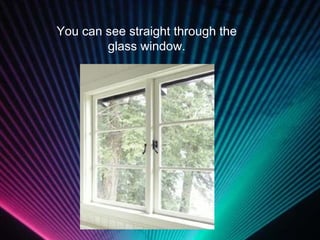
You can see straight through the glass window.
Translucent Sometimes only some light gets through Translucent  materials allow only part of the light to pass through, while also bouncing it in many new directions. It gives you a blurry view but lets in light. Example: a frosted glass door (like a shower door)
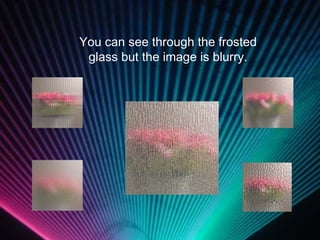
You can see through the frosted glass but the image is blurry.
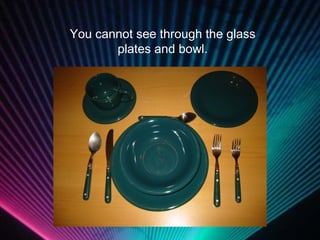
Opaque Sometimes no light gets through. Opaque  materials completely block light from passing. Example: dark colored cardstock paper
You cannot see through the glass plates and bowl.

Light Energy

  • 1.
  • 2.
    Light Energy Lightenergy is electromagnetic radiation. This means it is a combination of electrical energy and magnetic energy. Light energy is given off by electrons in an object. Light moves in waves. All light energy is in a spectrum that includes waves with different frequencies and wavelengths. The light we see is only a tiny part of that spectrum.
  • 3.
  • 4.
    Absorption Absorption oflight occurs when an object does not reflect or transmit the light. Black objects absorb all light and white objects absorb no light. Whatever color or wavelength of light is absorbed, the opposite color is relfected. Ex: An object that appears red is absorbing blue and green wavelengths.
  • 5.
    Reflection Reflection iswhen light bounces off an object. Mirrors show reflection very well. Again, an object that appears red is absorbing the blue and green wave lengths but is reflecting the red.
  • 6.
    Transmission The processin which light travels through a medium without being absorbed or scattered. Light goes straight through the material.
  • 7.
  • 8.
    Refraction Refraction isthe bending of light waves as they pass from one substance to another. Light rays may bend as they move from one substance to another. An illusion is created when light rays go from air into water and “bends” the pencil. If light is transmitted “head-on” the direction does not change (no refraction). If the light strikes at an angle it is refracted.
  • 9.
  • 10.
    Scattering Scattering oflight is caused by light bouncing off an object in a bunch of different directions. Scattering is caused by differences present in materials, which the light is striking. This includes bubbles, droplets, surface roughness, and textile fibers in clothing. This is what causes the sky to be blue.
  • 11.
    The halo isfrom light scattering in the ice crystals that make the cloud. The sun is in the middle of the halo.
  • 12.
    Transparent Sometimes whenlight strikes matter, almost all the light gets through. Transparent materials allow light to pass through with almost no disturbance. It may or may not color the light but you can clearly see objects through them. Ex: glass
  • 13.
    You can seestraight through the glass window.
  • 14.
    Translucent Sometimes onlysome light gets through Translucent materials allow only part of the light to pass through, while also bouncing it in many new directions. It gives you a blurry view but lets in light. Example: a frosted glass door (like a shower door)
  • 15.
    You can seethrough the frosted glass but the image is blurry.
  • 16.
    Opaque Sometimes nolight gets through. Opaque materials completely block light from passing. Example: dark colored cardstock paper
  • 17.
    You cannot seethrough the glass plates and bowl.