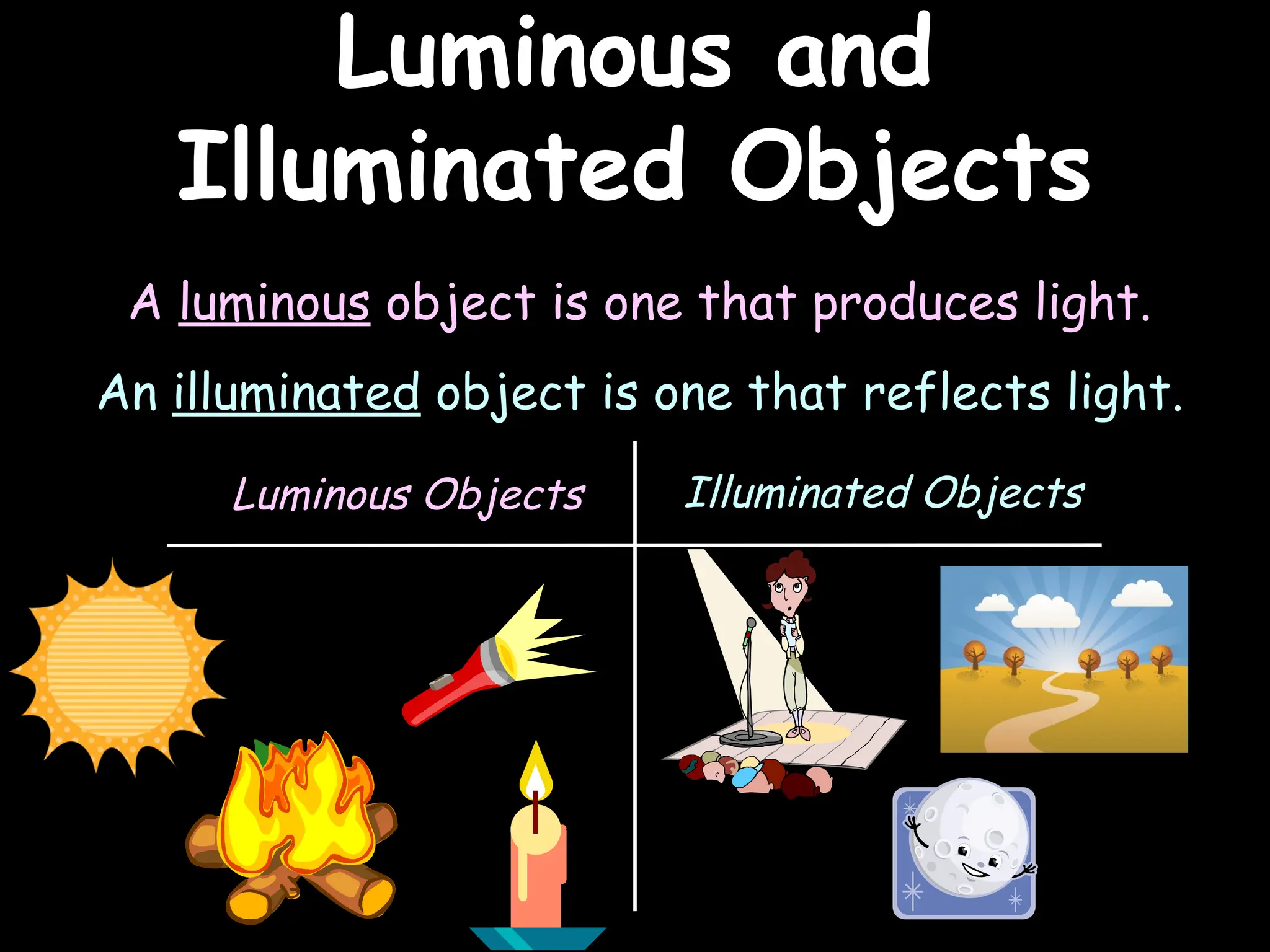
A luminous objectis one that produces light.
An illuminated object is one that reflects light.
Luminous Objects Illuminated Objects
Luminous and
Luminous and
Illuminated Objects
Illuminated Objects
3.
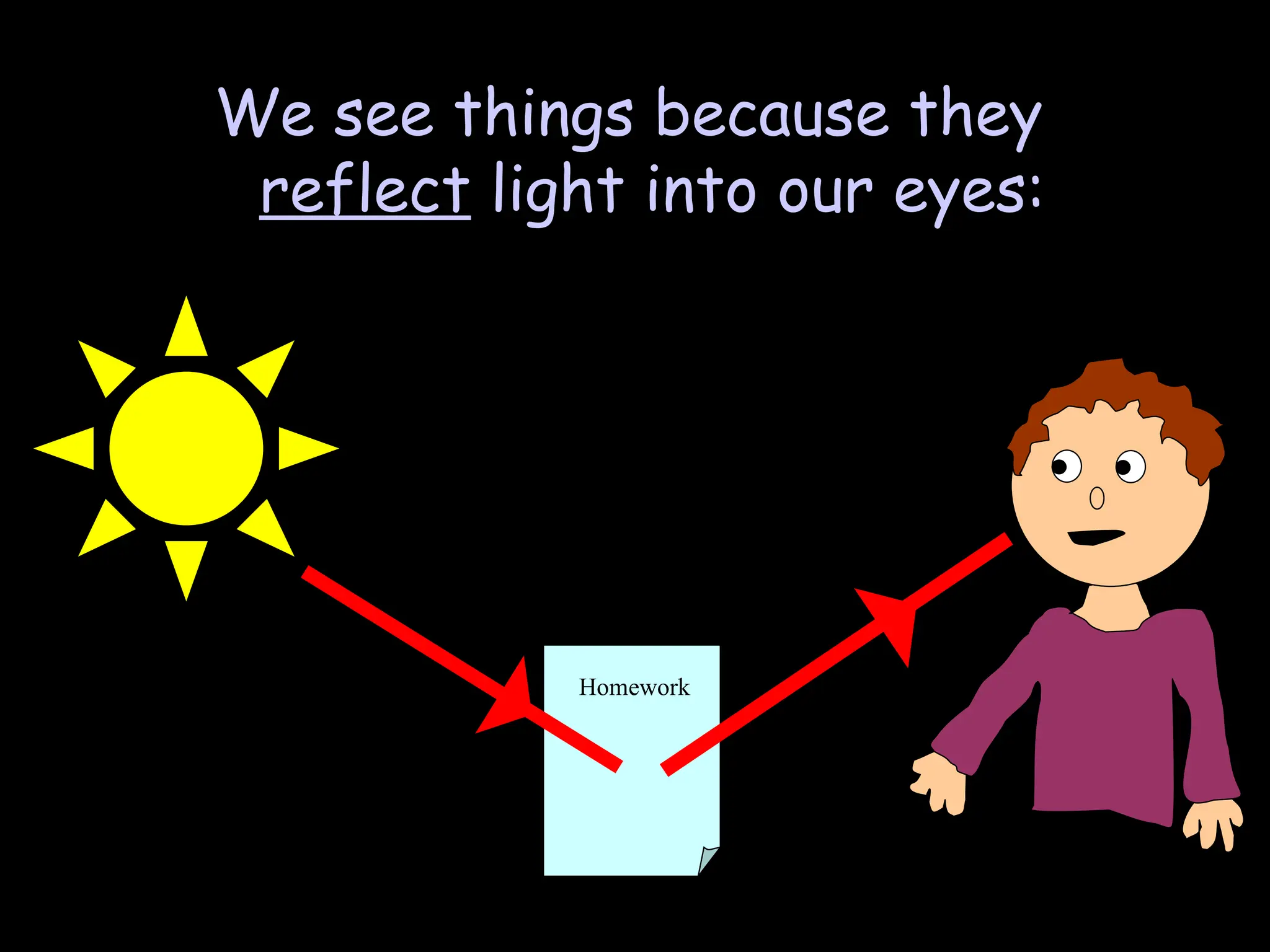
We see thingsbecause they
reflect light into our eyes:
Homework
Reflection
Reflection of Light
ofLight
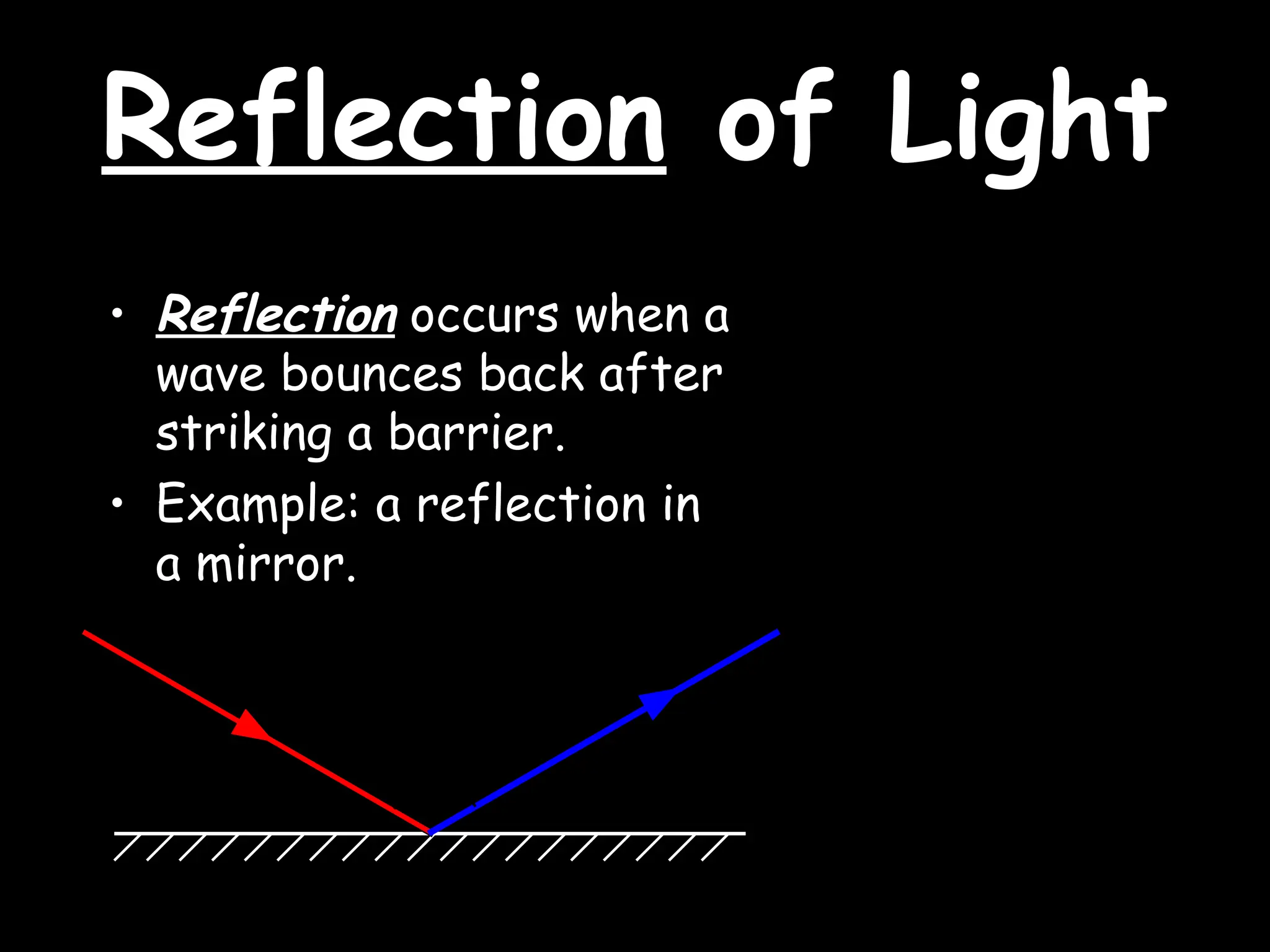
• Reflection occurs when a
wave bounces back after
striking a barrier.
• Example: a reflection in
a mirror.
6.
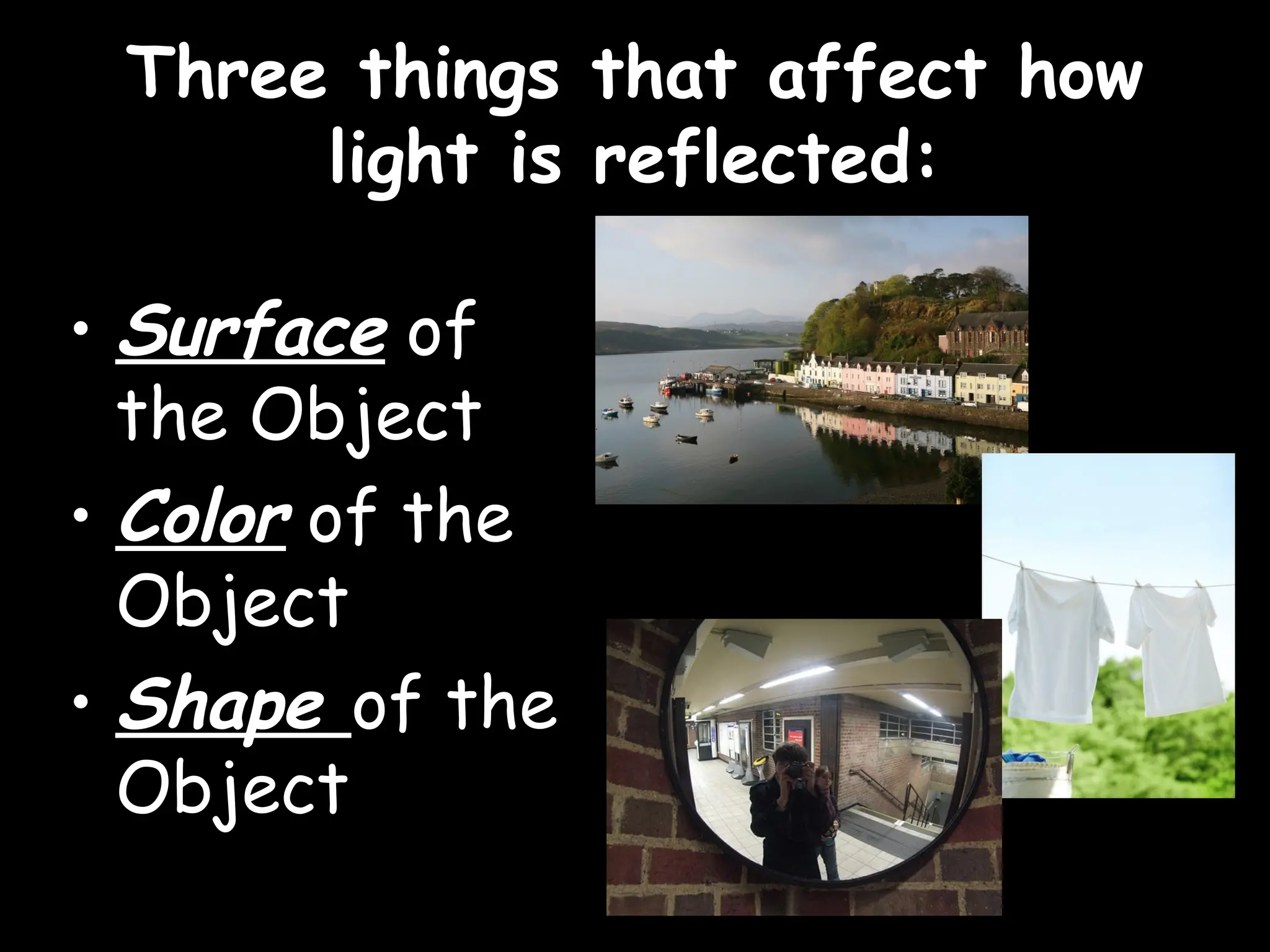
Three things thataffect how
Three things that affect how
light is reflected:
light is reflected:
• Surface of
the Object
• Color of the
Object
• Shape of the
Object
7.
Clear vs. Diffuse
Clearvs. Diffuse
Reflection
Reflection
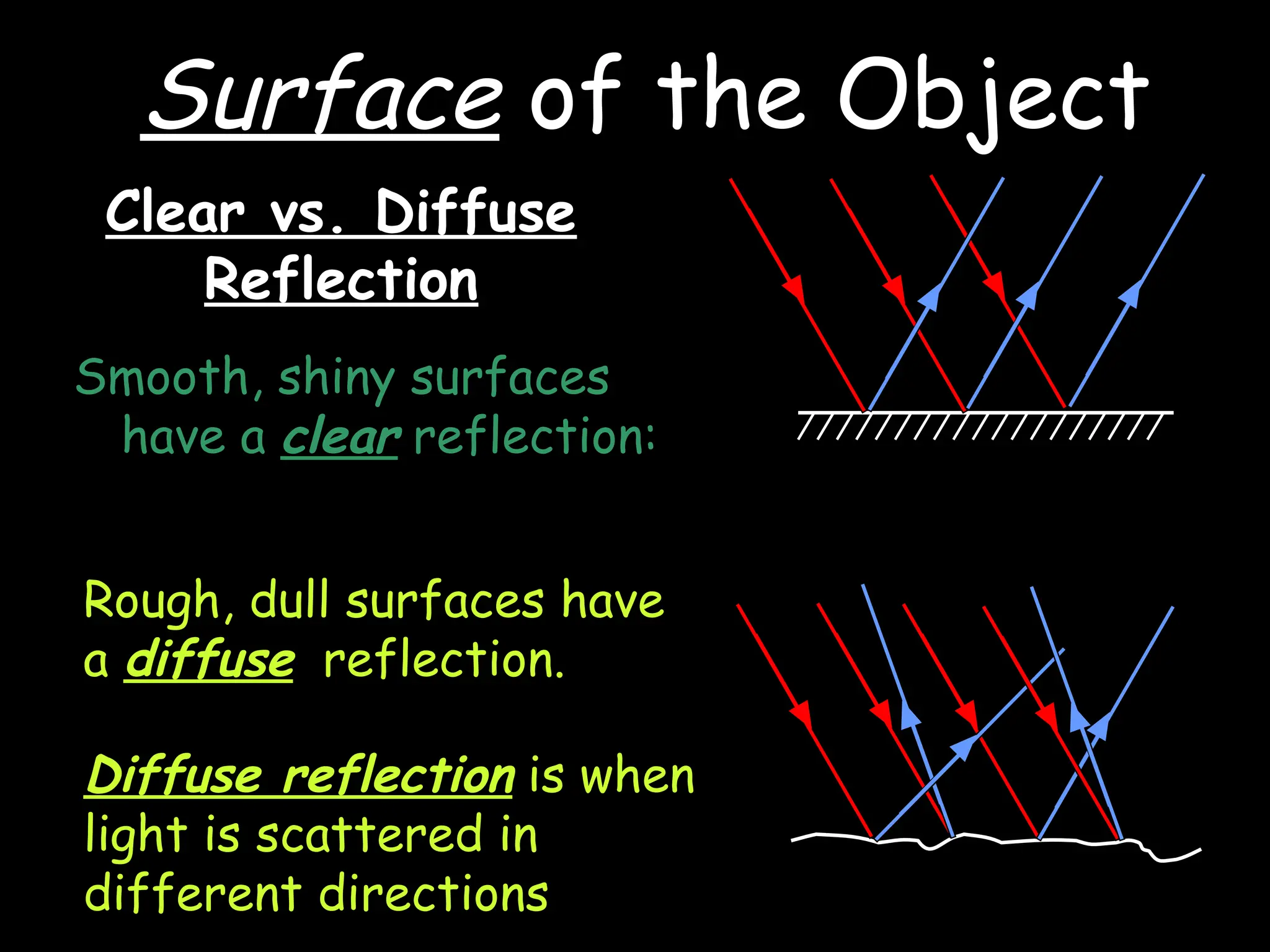
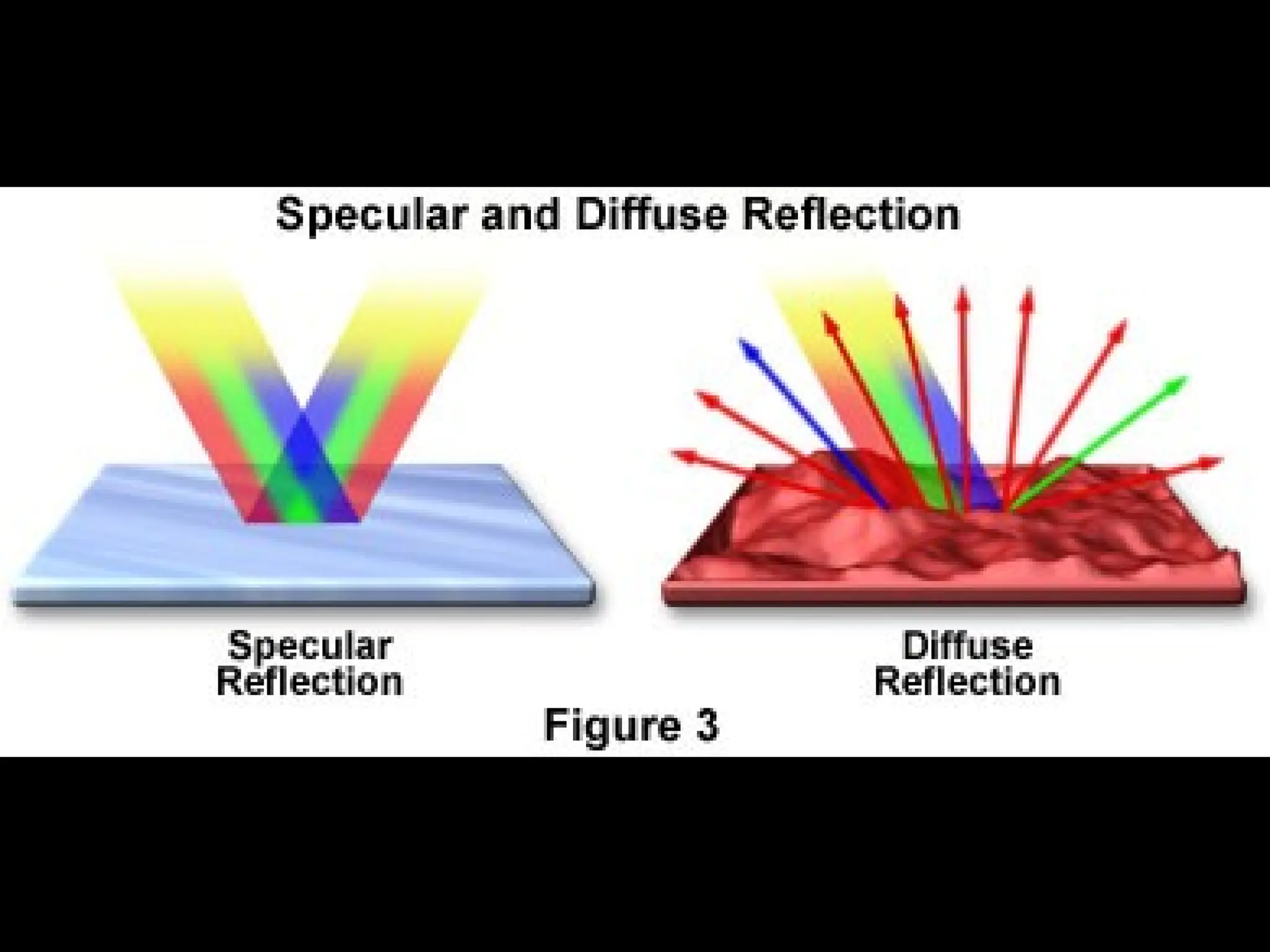
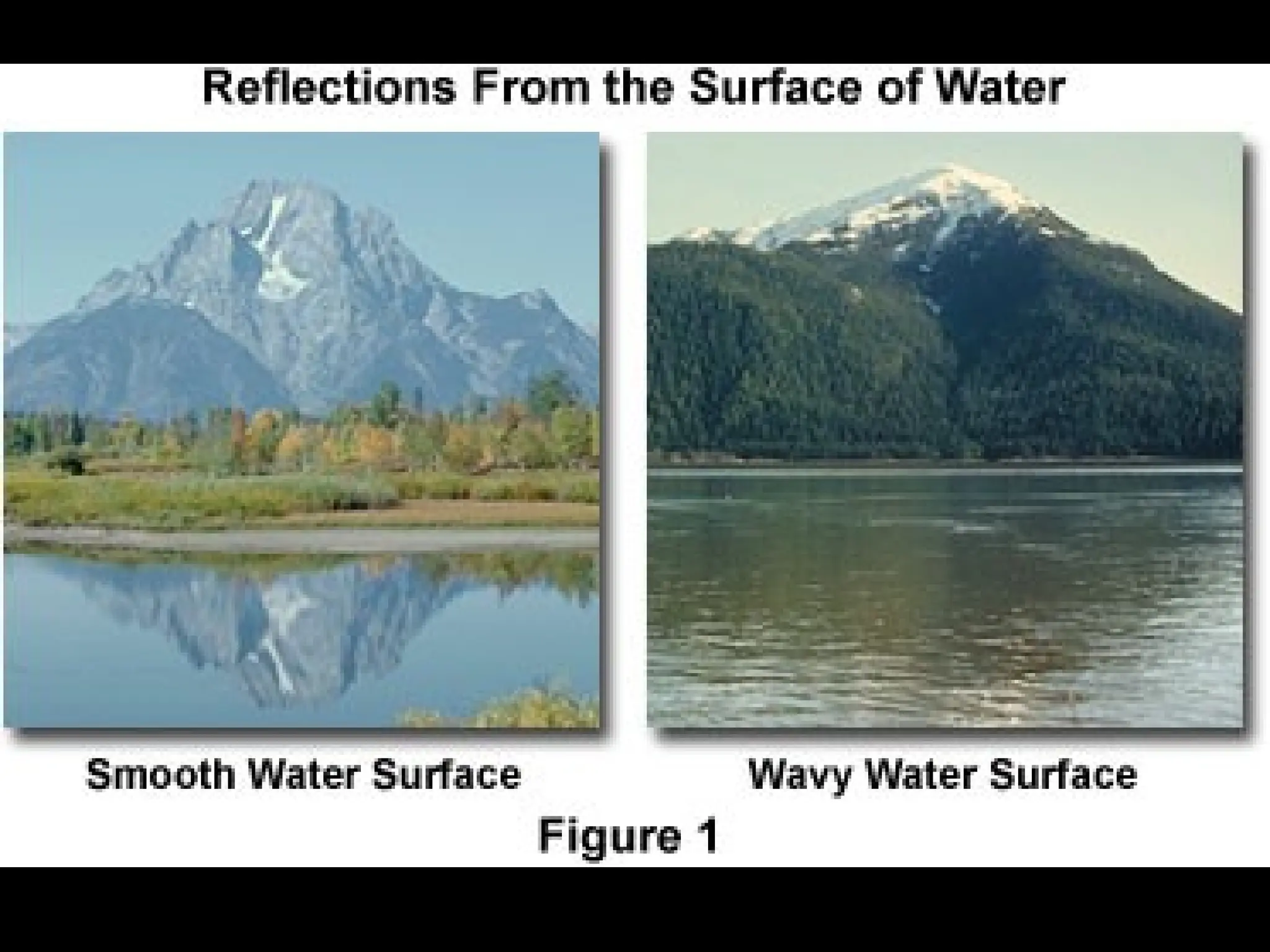
Smooth, shiny surfaces
have a clear reflection:
Rough, dull surfaces have
a diffuse reflection.
Diffuse reflection is when
light is scattered in
different directions
Surface of the Object
10.
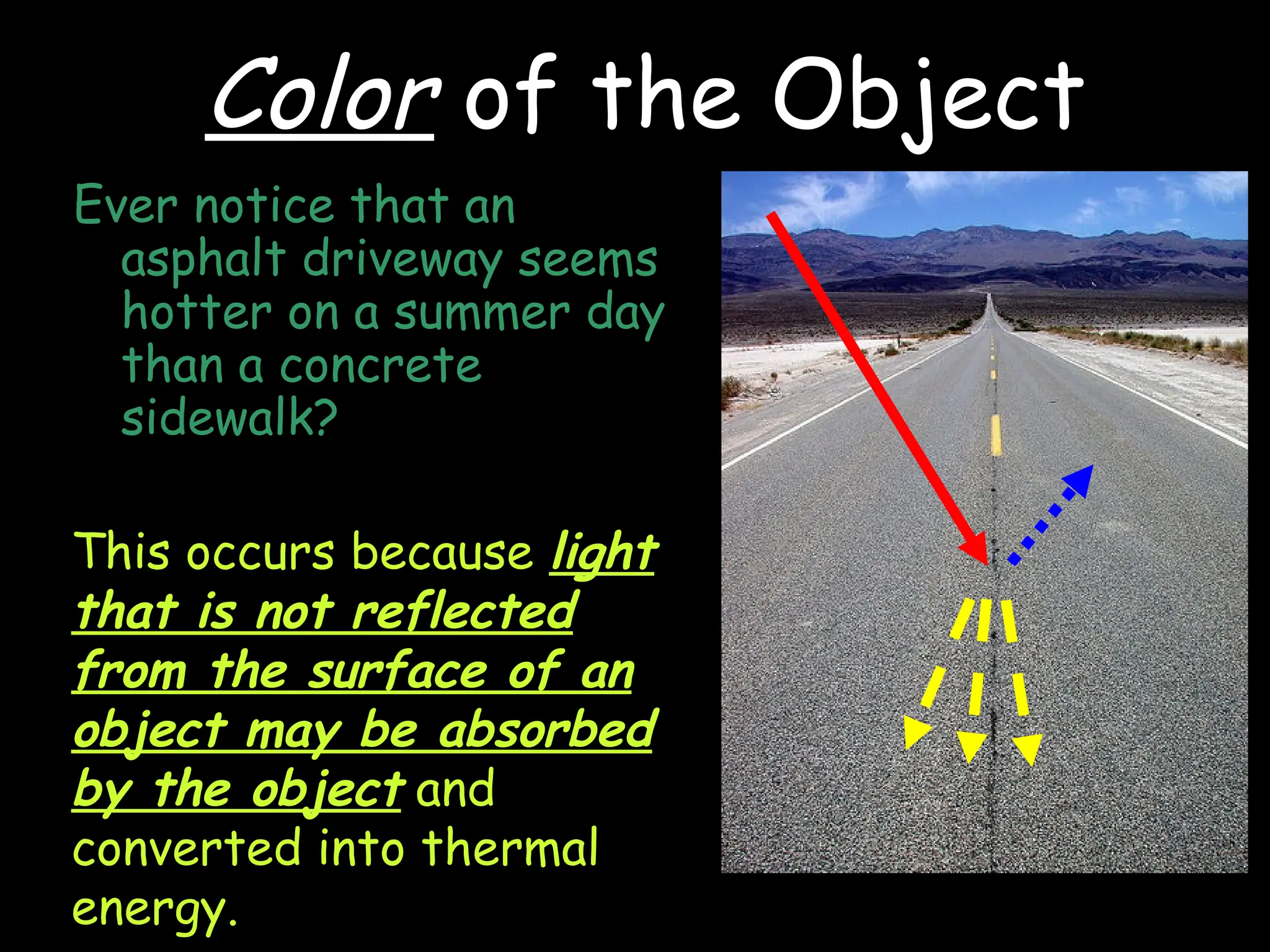
Ever notice thatan
asphalt driveway seems
hotter on a summer day
than a concrete
sidewalk?
This occurs because light
that is not reflected
from the surface of an
object may be absorbed
by the object and
converted into thermal
energy.
Color of the Object
11.
Shape
Shape of theObject
of the Object
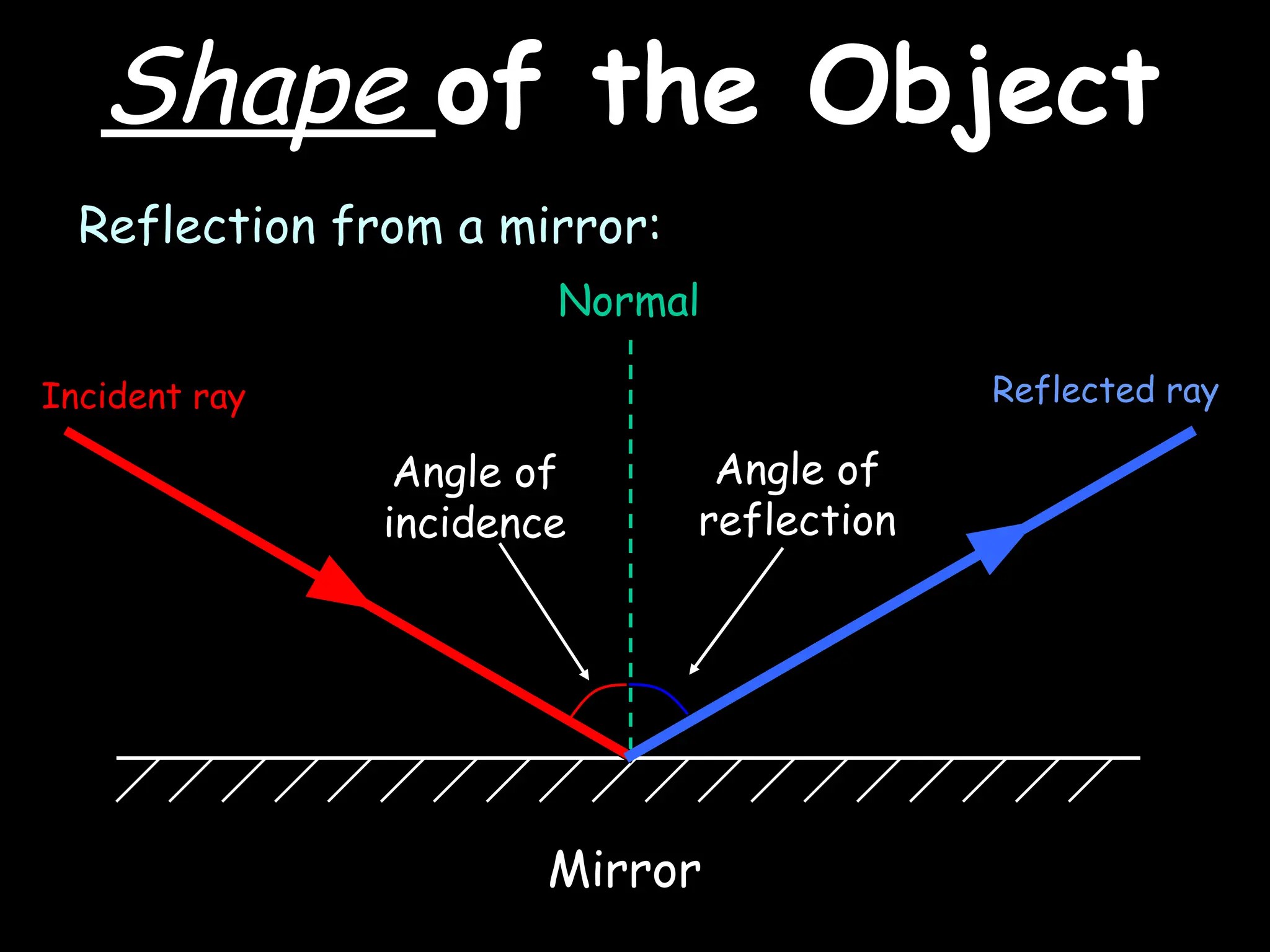
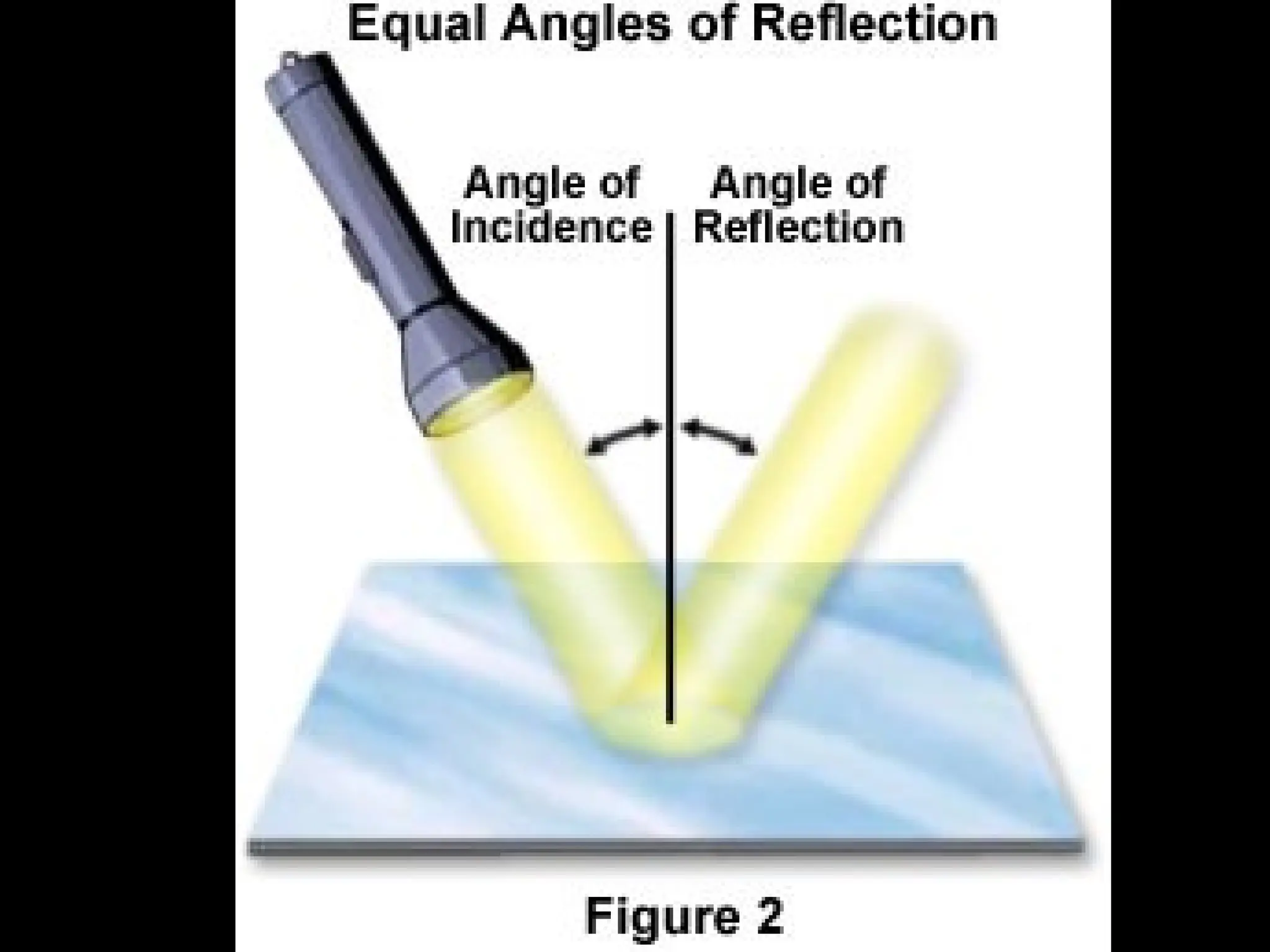
Reflection from a mirror:
Incident ray
Normal
Reflected ray
Angle of
incidence
Angle of
reflection
Mirror
12.
The Law ofReflection
The Law of Reflection
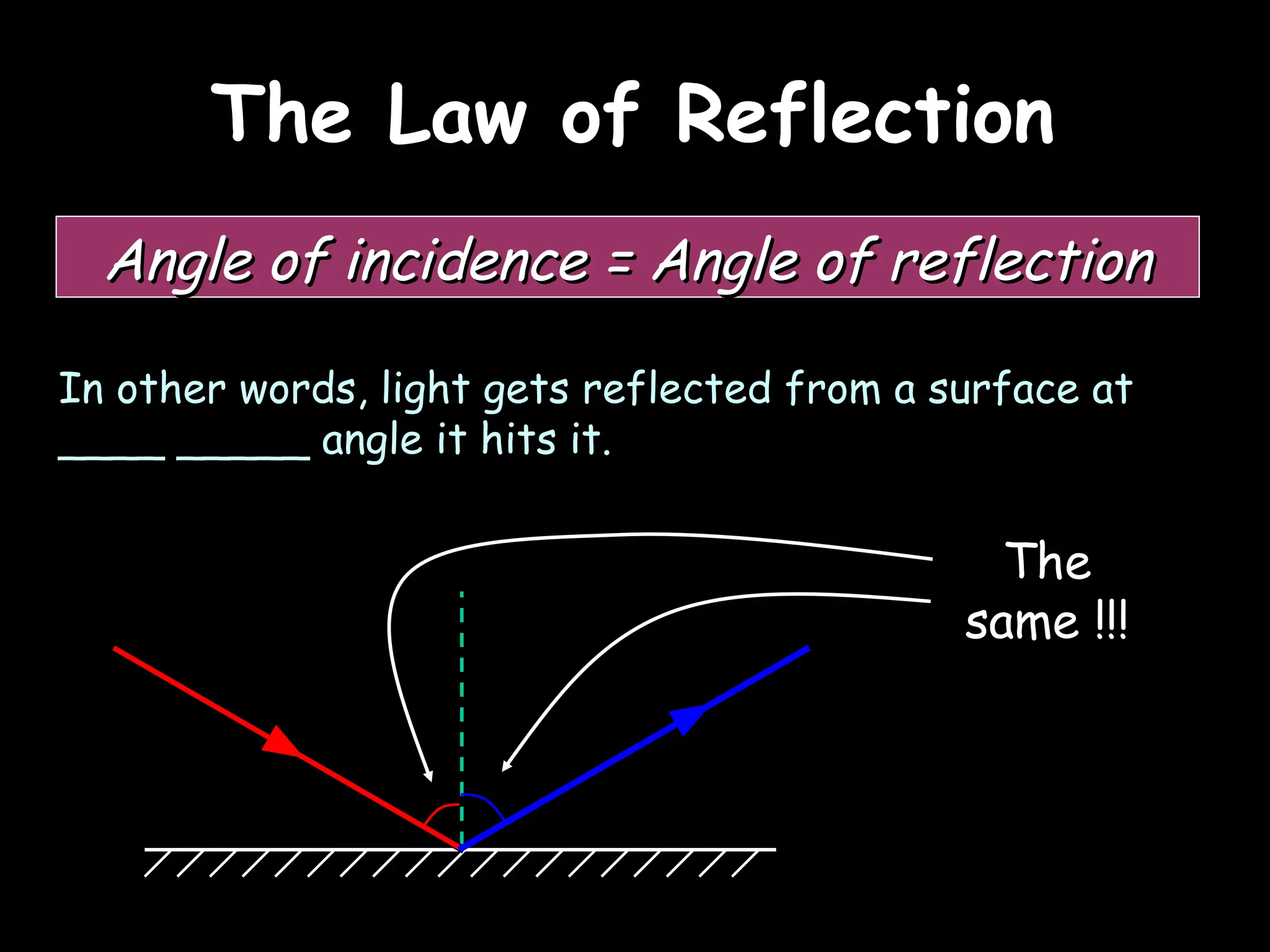
Angle of incidence = Angle of reflection
Angle of incidence = Angle of reflection
In other words, light gets reflected from a surface at
____ _____ angle it hits it.
The
same !!!
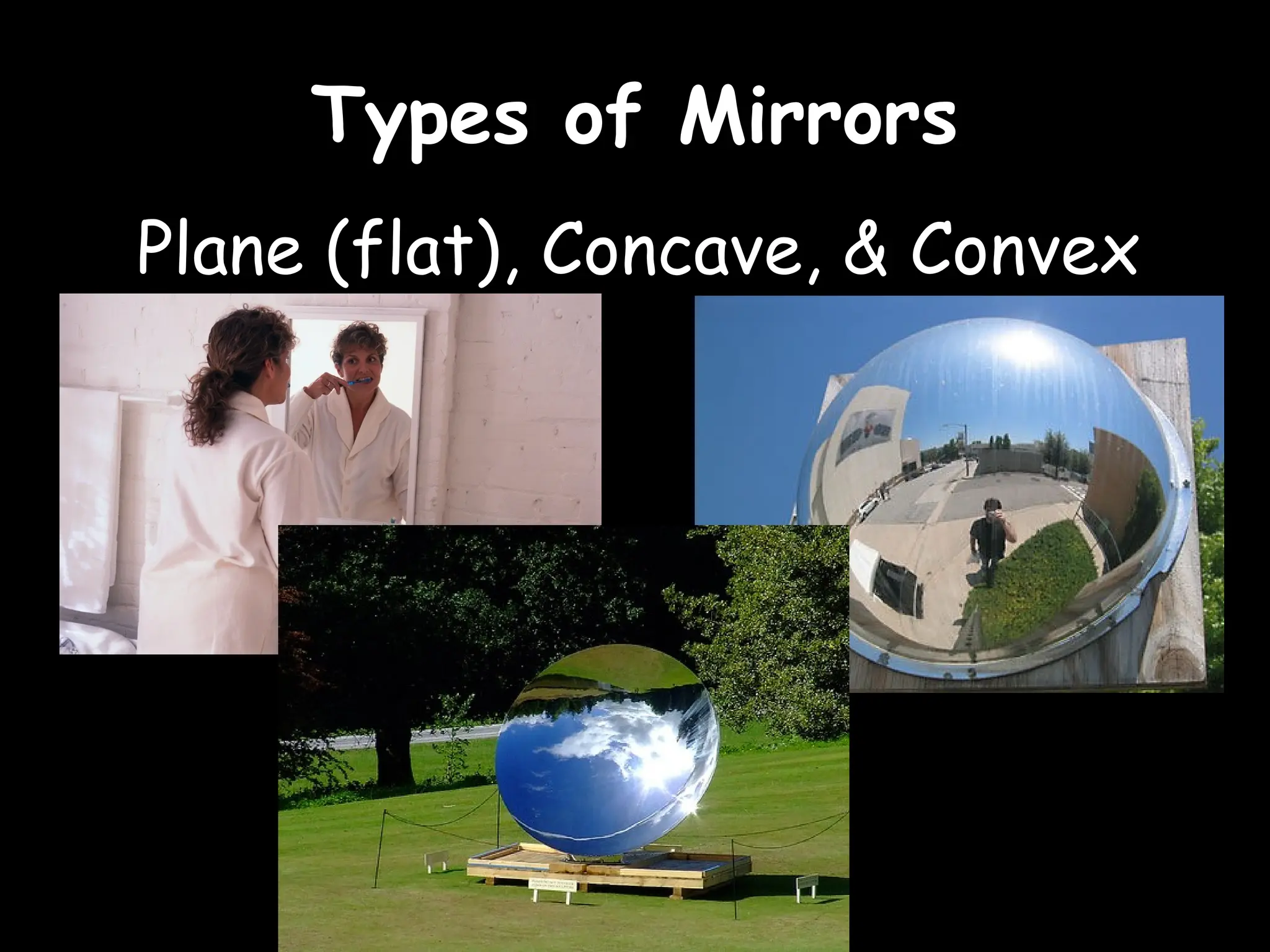
Plane Mirrors
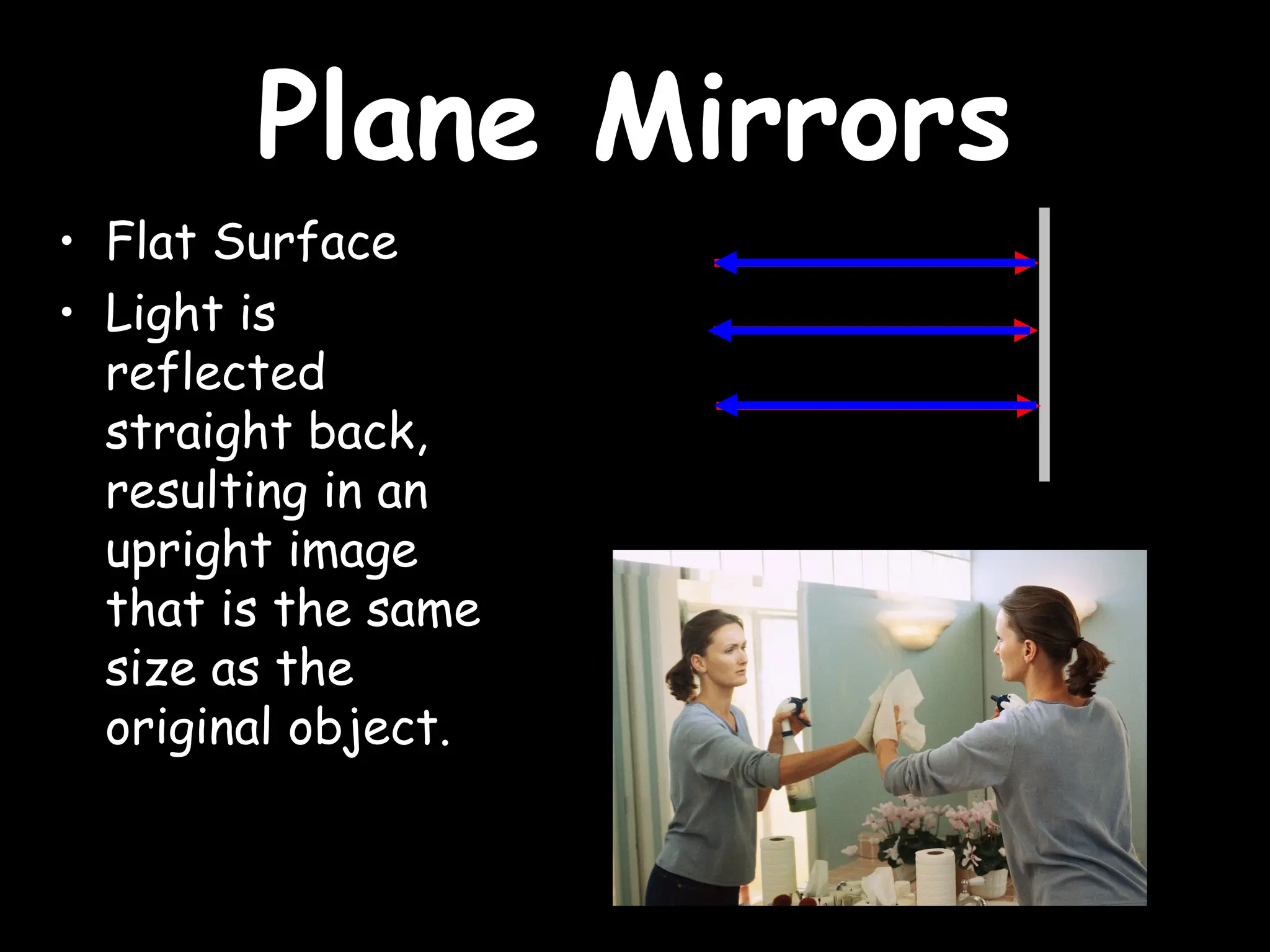
Plane Mirrors
•Flat Surface
• Light is
reflected
straight back,
resulting in an
upright image
that is the same
size as the
original object.
16.
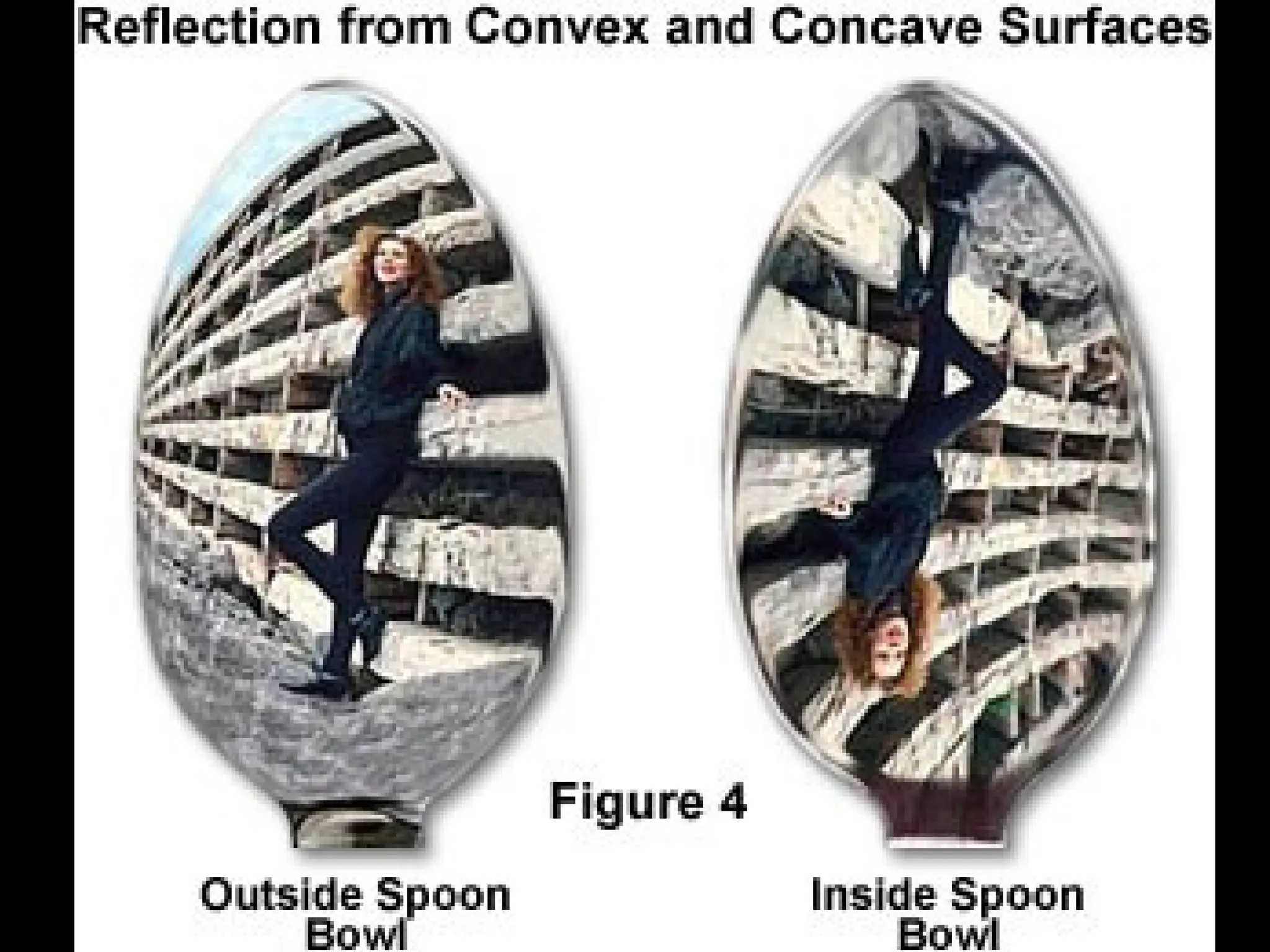
Concave Mirrors
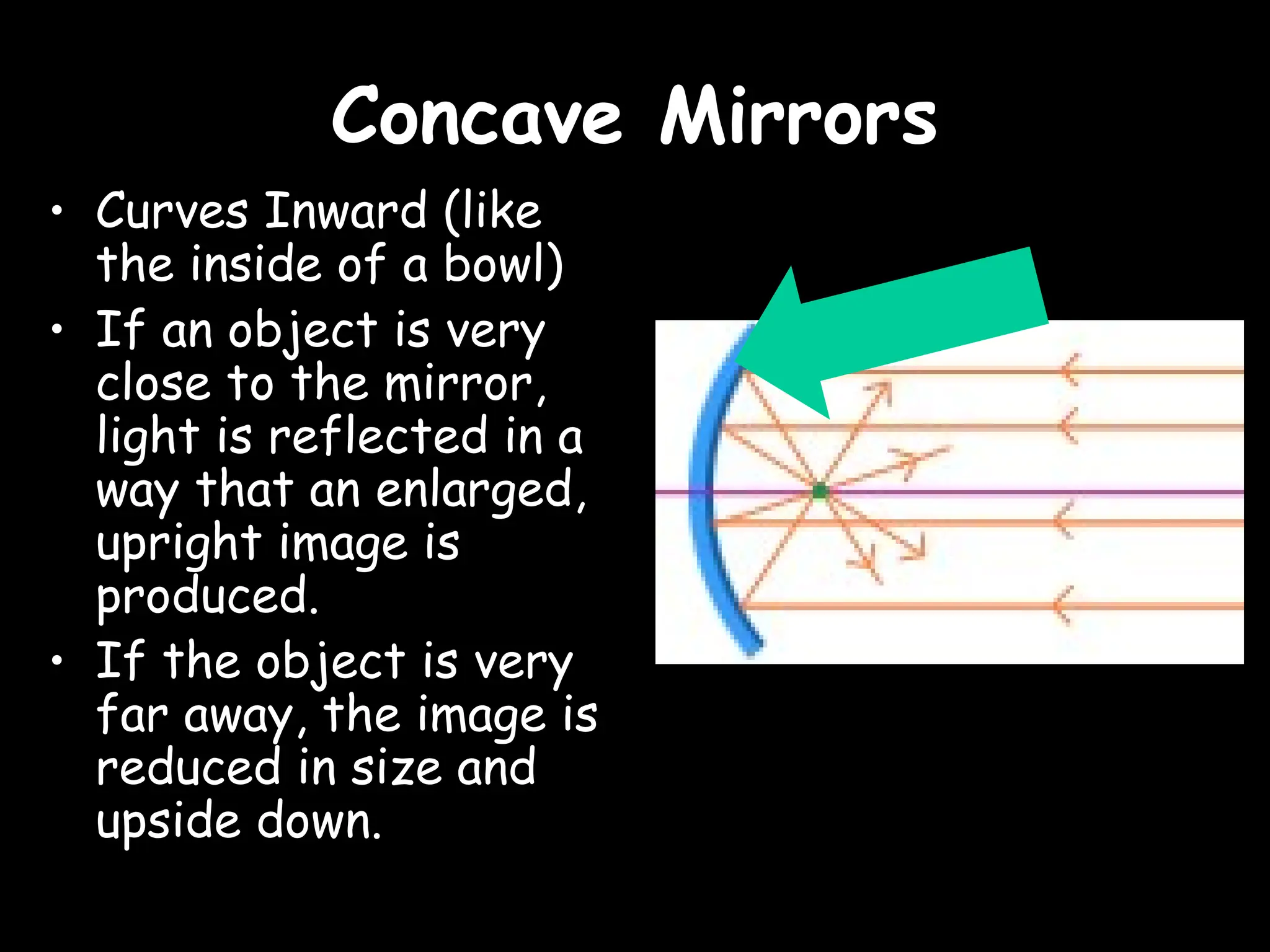
Concave Mirrors
•Curves Inward (like
the inside of a bowl)
• If an object is very
close to the mirror,
light is reflected in a
way that an enlarged,
upright image is
produced.
• If the object is very
far away, the image is
reduced in size and
upside down.
17.
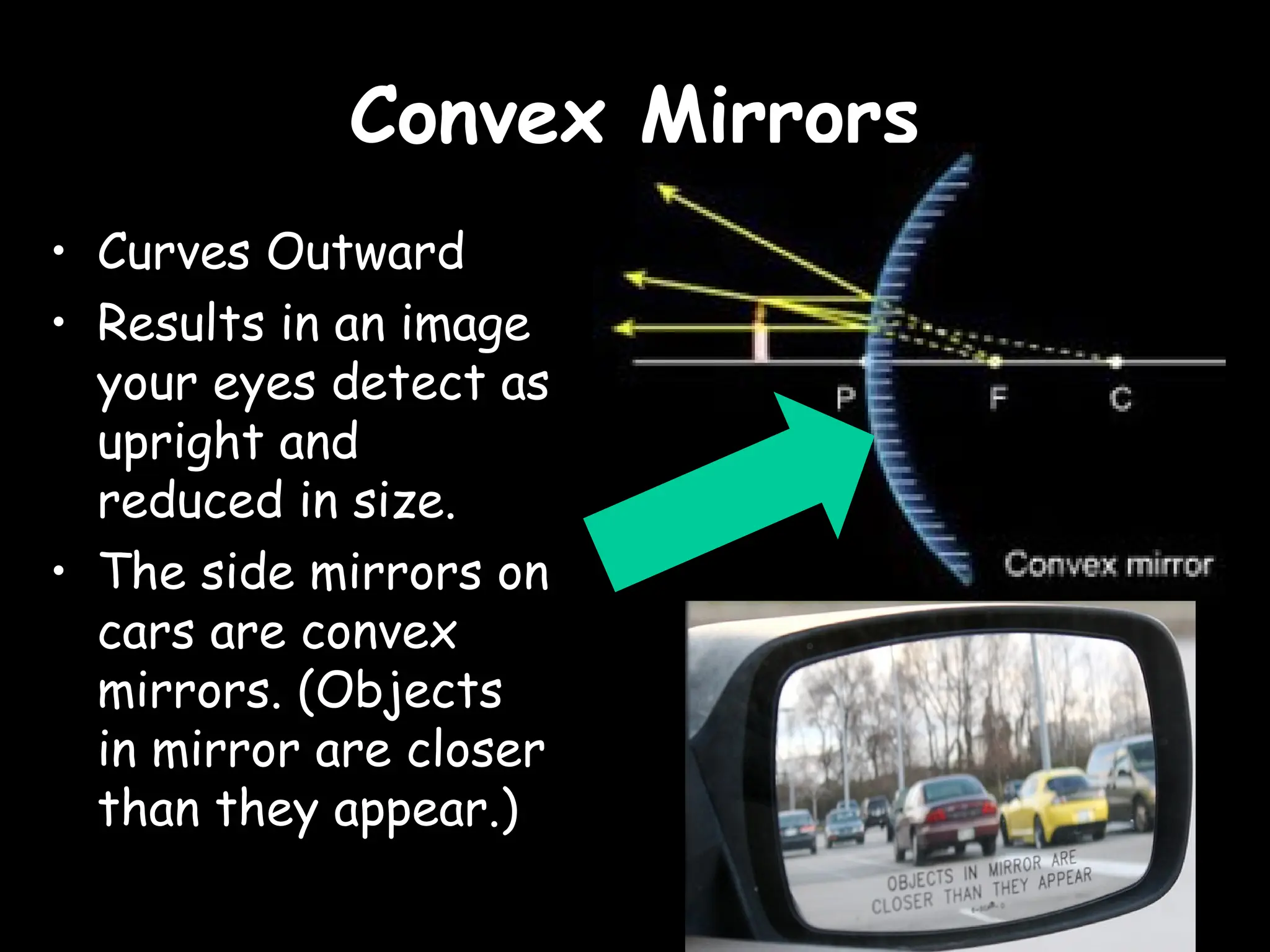
Convex Mirrors
Convex Mirrors
•Curves Outward
• Results in an image
your eyes detect as
upright and
reduced in size.
• The side mirrors on
cars are convex
mirrors. (Objects
in mirror are closer
than they appear.)
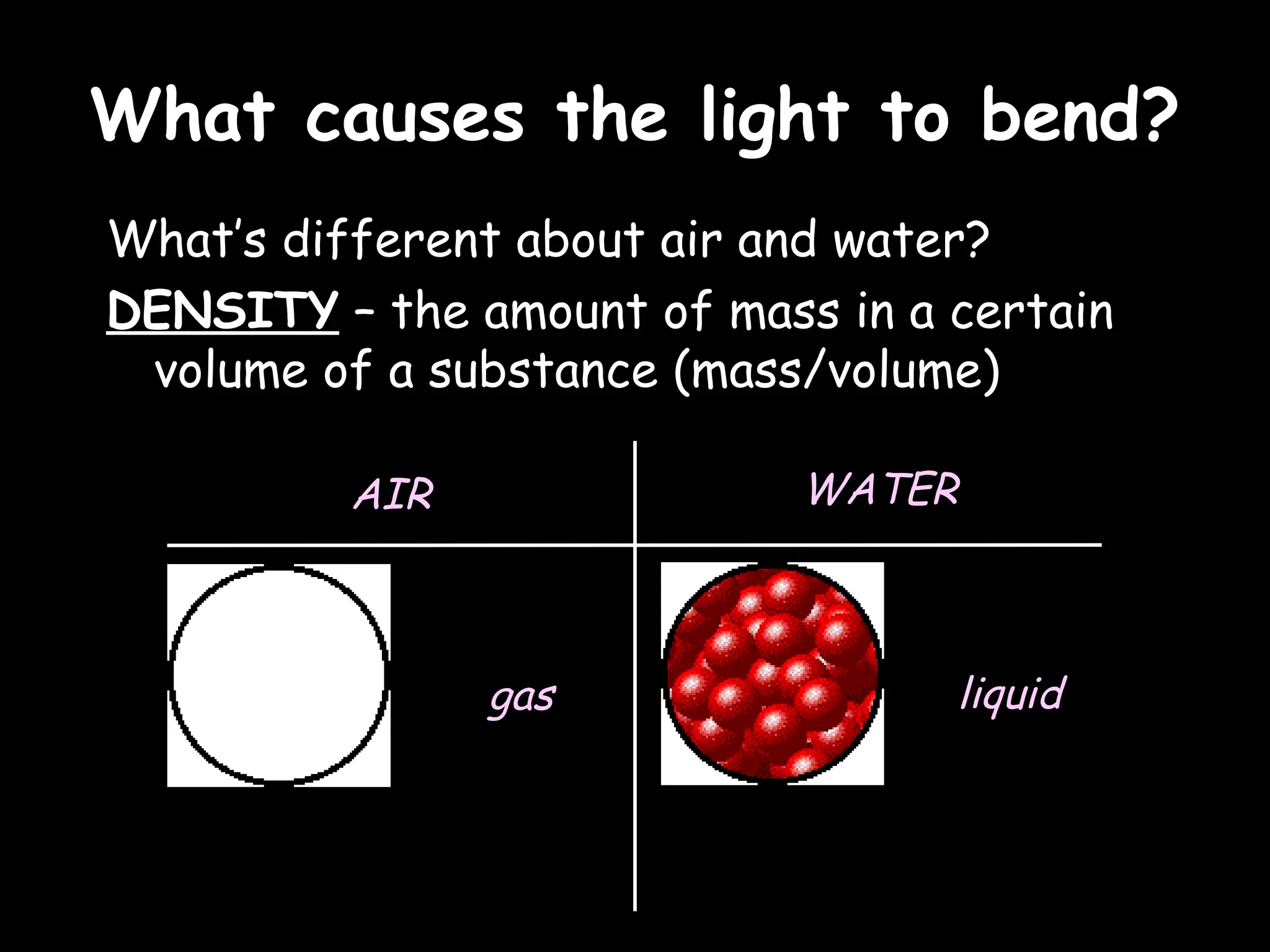
What causes thelight to bend?
What causes the light to bend?
What’s different about air and water?
DENSITY – the amount of mass in a certain
volume of a substance (mass/volume)
AIR WATER
gas liquid
21.
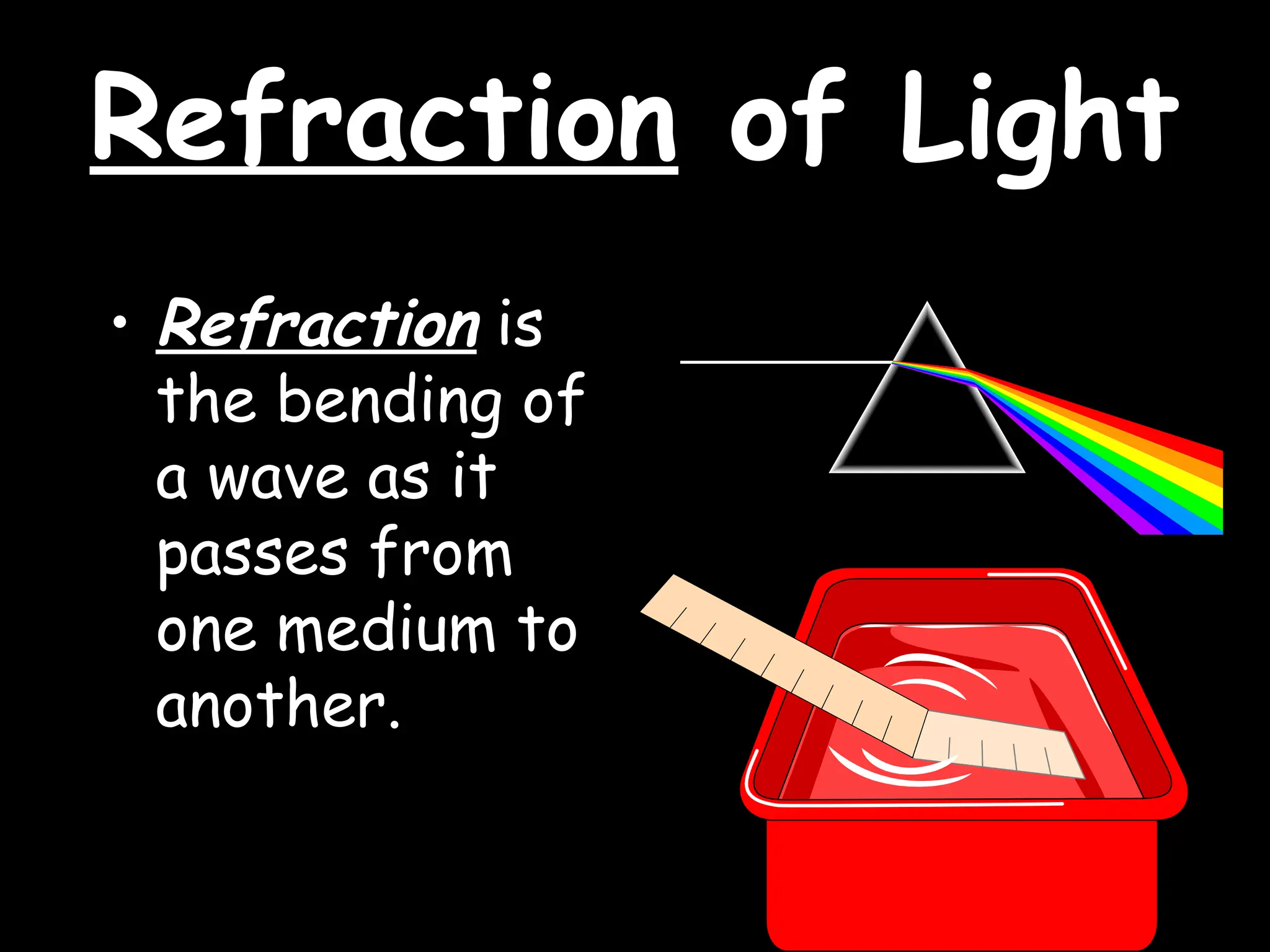
Example of Refraction
Exampleof Refraction
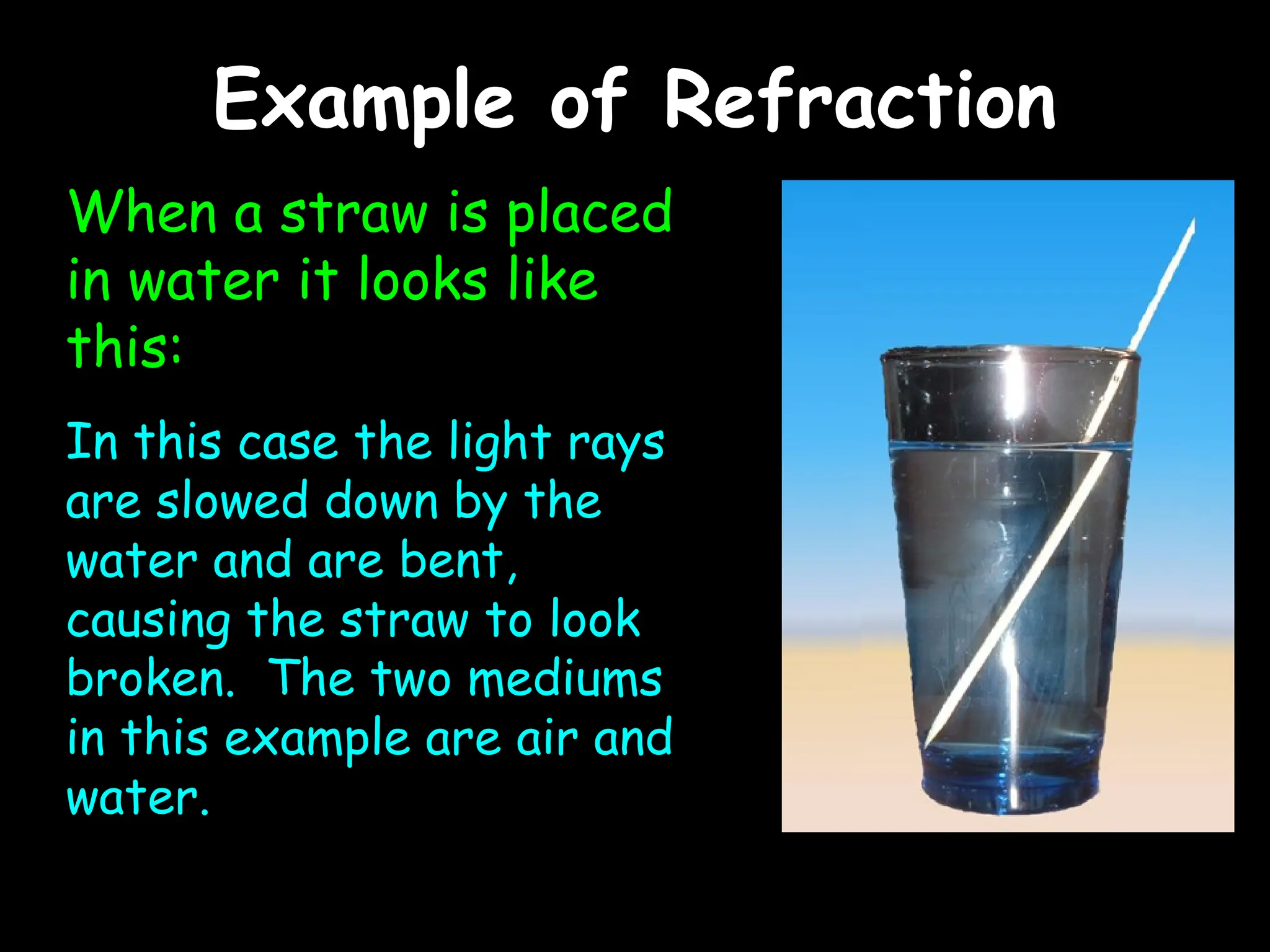
When a straw is placed
in water it looks like
this:
In this case the light rays
are slowed down by the
water and are bent,
causing the straw to look
broken. The two mediums
in this example are air and
water.
22.
Another Example:
Another Example:
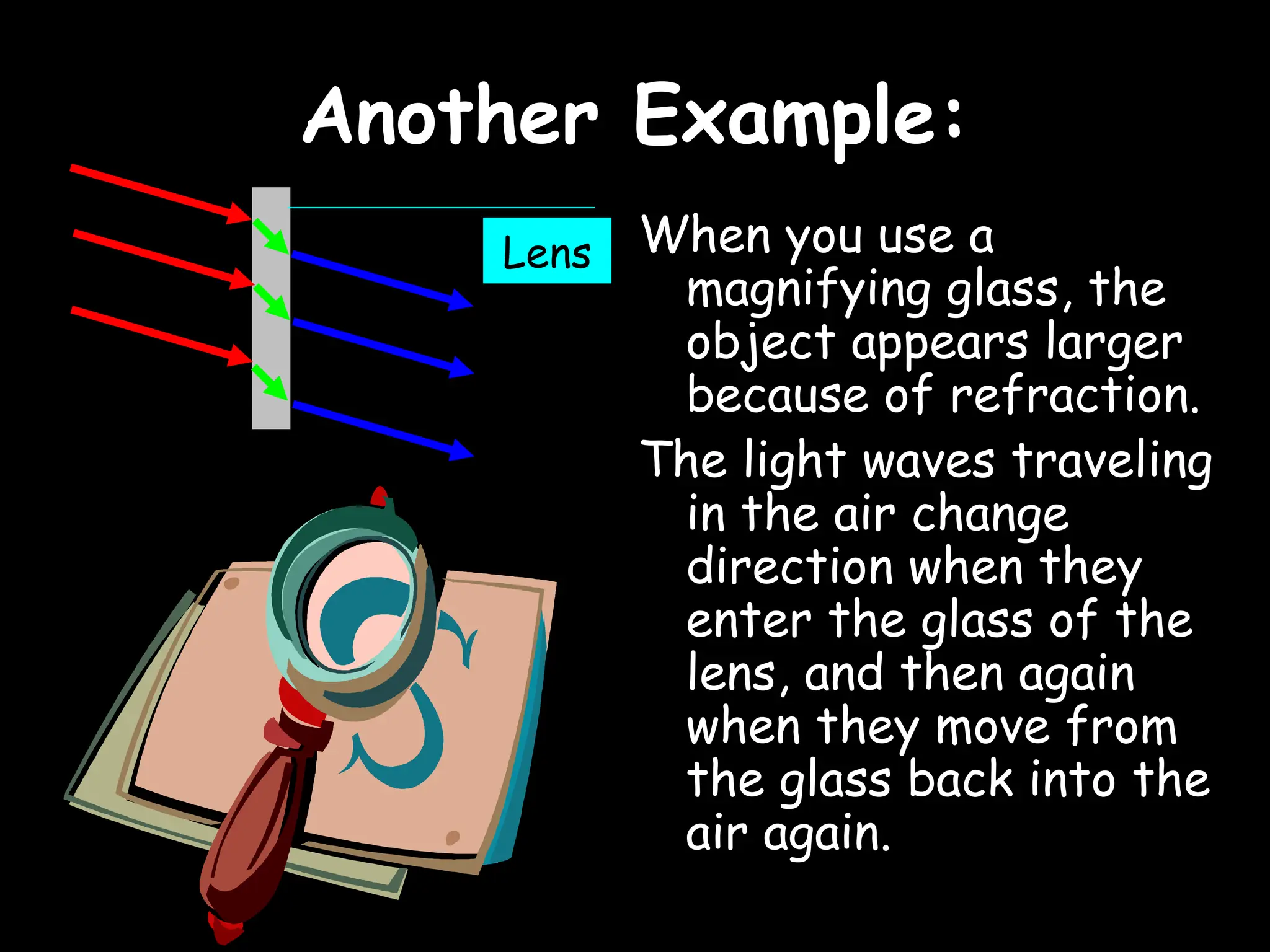
Whenyou use a
magnifying glass, the
object appears larger
because of refraction.
The light waves traveling
in the air change
direction when they
enter the glass of the
lens, and then again
when they move from
the glass back into the
air again.
Lens
23.
Diffraction
Diffraction of Light
ofLight
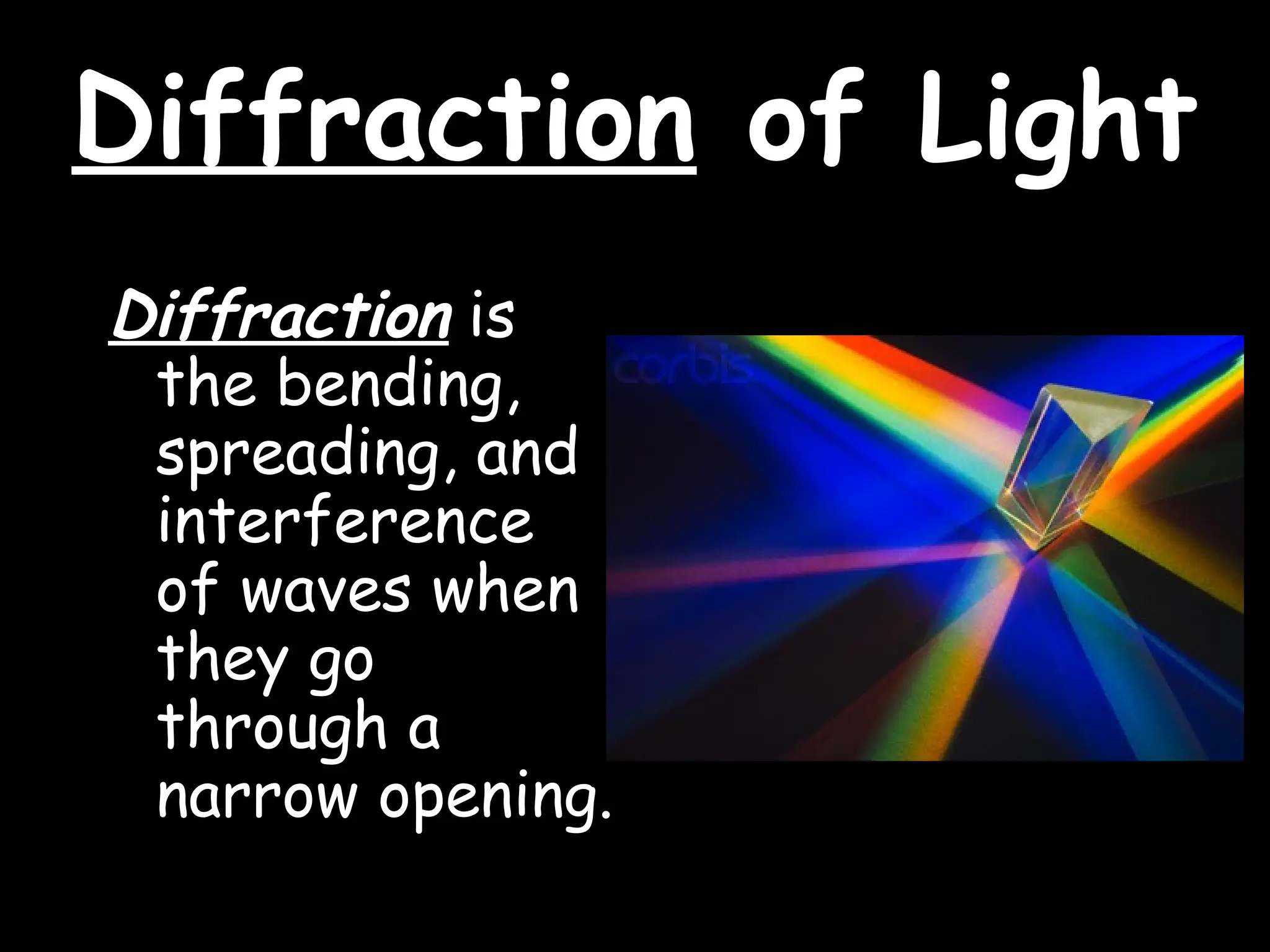
Diffraction is
the bending,
spreading, and
interference
of waves when
they go
through a
narrow opening.
24.
Diffraction Patterns
Diffraction Patterns
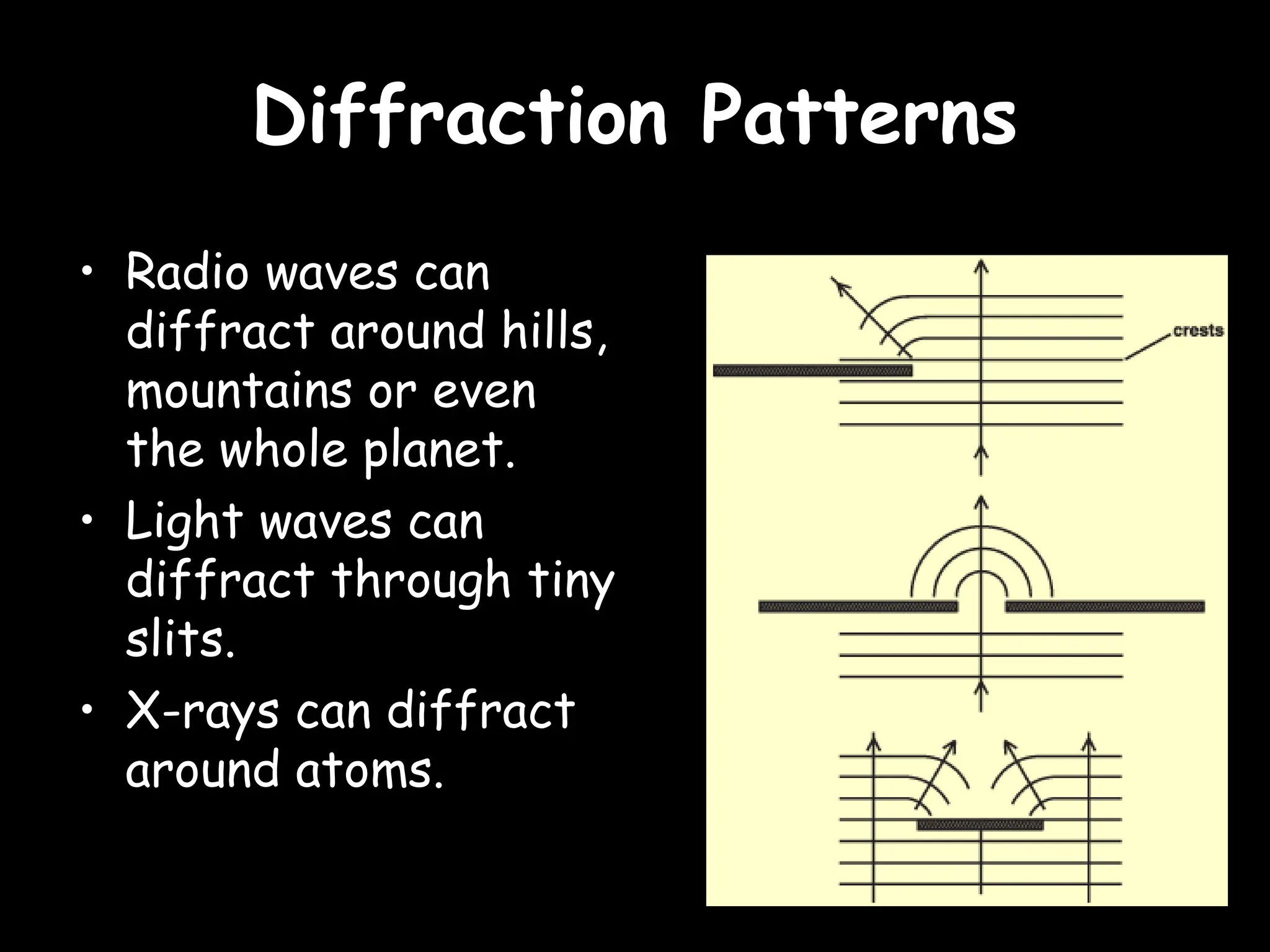
•Radio waves can
diffract around hills,
mountains or even
the whole planet.
• Light waves can
diffract through tiny
slits.
• X-rays can diffract
around atoms.
25.
Electromagnetic waves havea
Electromagnetic waves have a
huge range of wavelengths.
huge range of wavelengths.
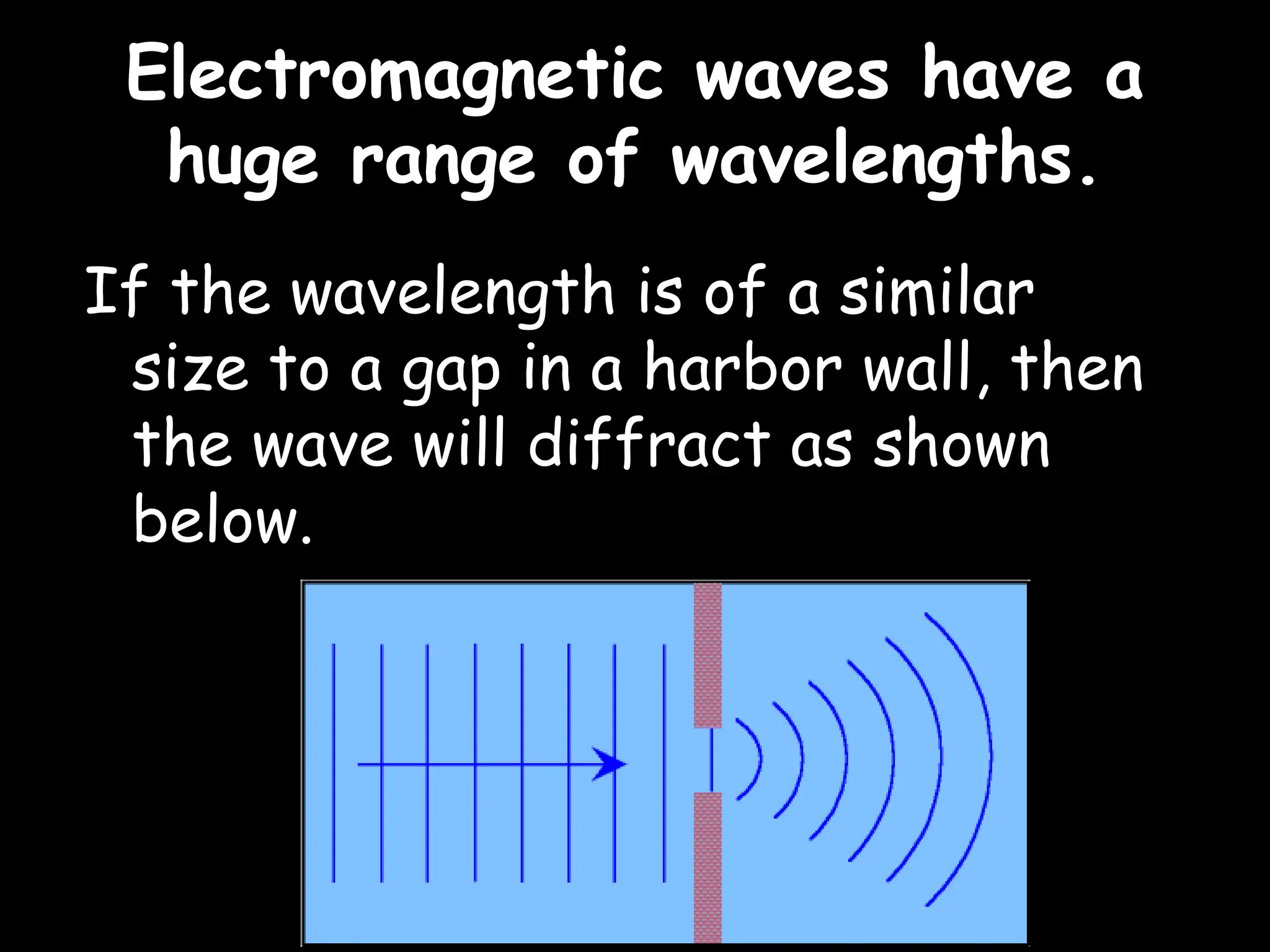
If the wavelength is of a similar
size to a gap in a harbor wall, then
the wave will diffract as shown
below.
26.
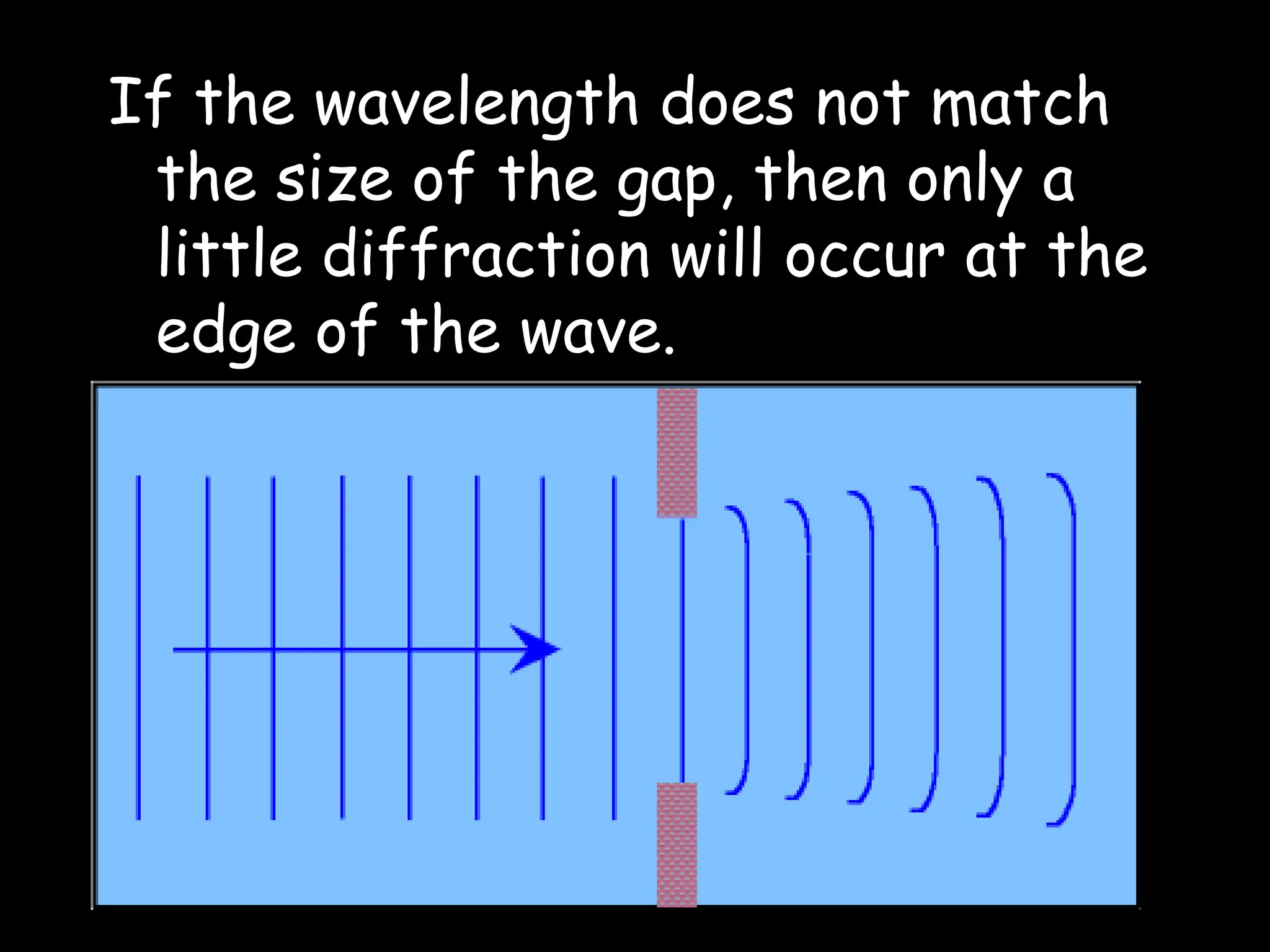
If the wavelengthdoes not match
the size of the gap, then only a
little diffraction will occur at the
edge of the wave.
Think about aradio station…
Think about a radio station…
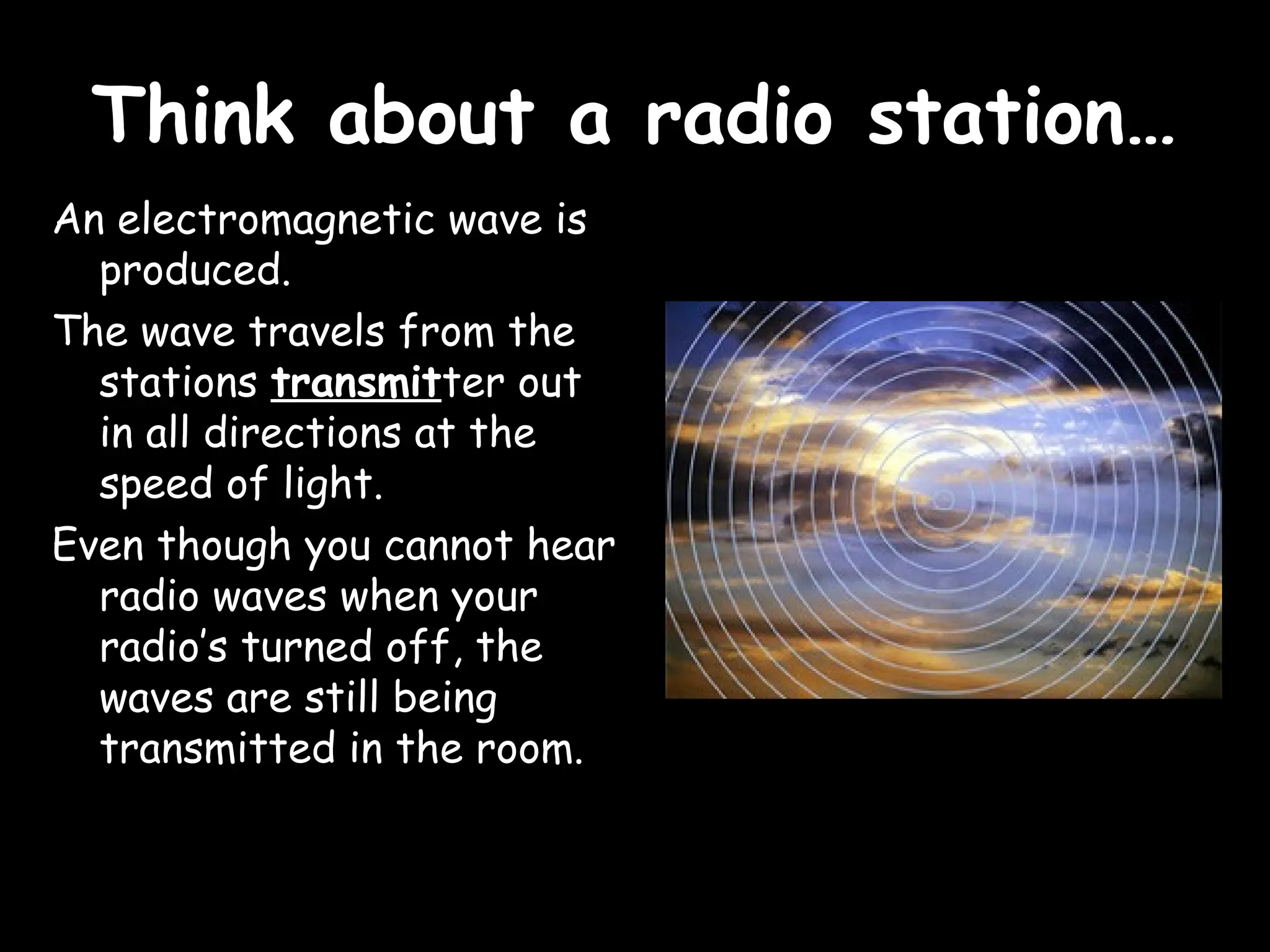
An electromagnetic wave is
produced.
The wave travels from the
stations transmitter out
in all directions at the
speed of light.
Even though you cannot hear
radio waves when your
radio’s turned off, the
waves are still being
transmitted in the room.
29.
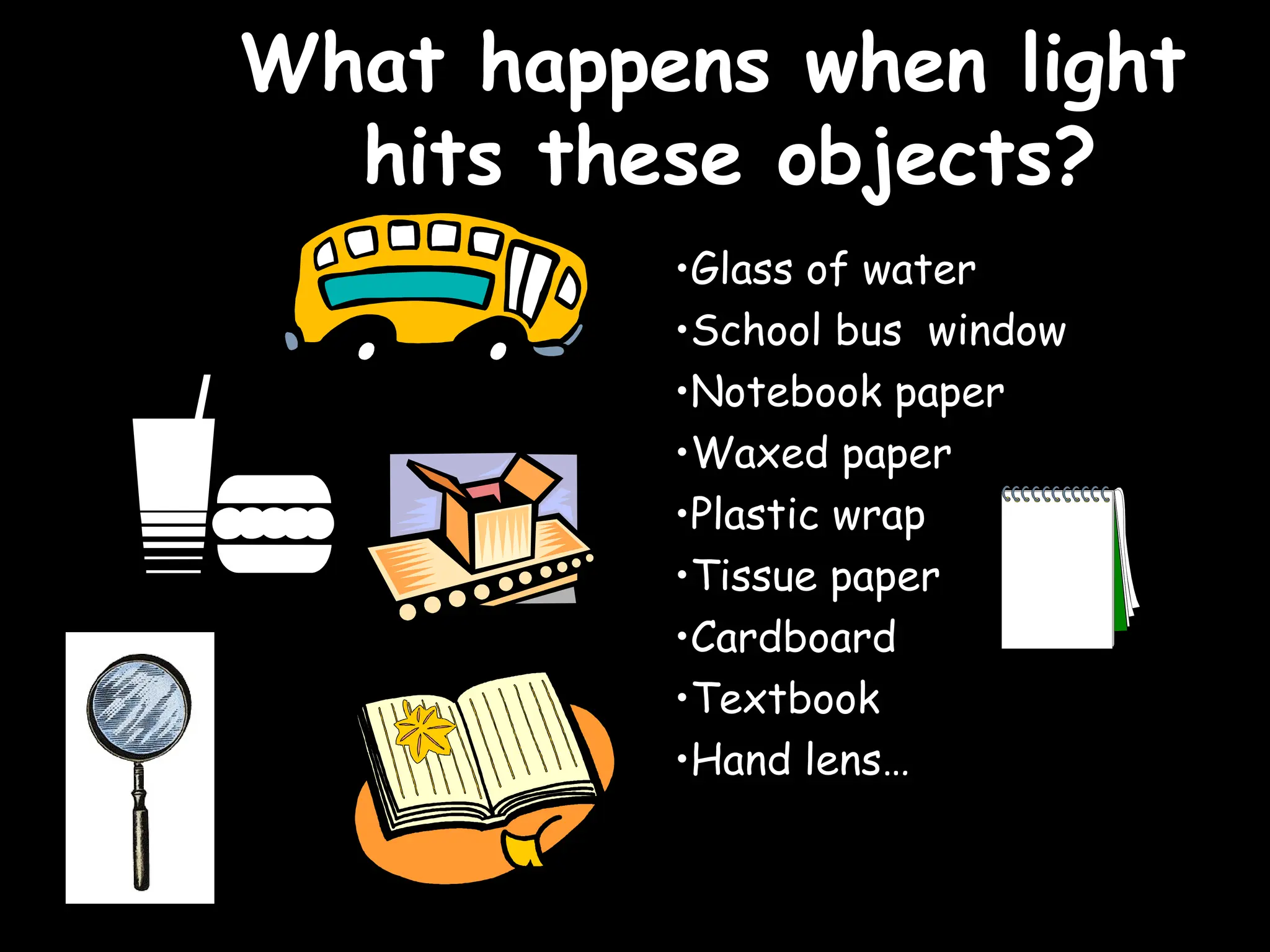
What happens whenlight
What happens when light
hits these objects?
hits these objects?
•Glass of water
•School bus window
•Notebook paper
•Waxed paper
•Plastic wrap
•Tissue paper
•Cardboard
•Textbook
•Hand lens…
30.
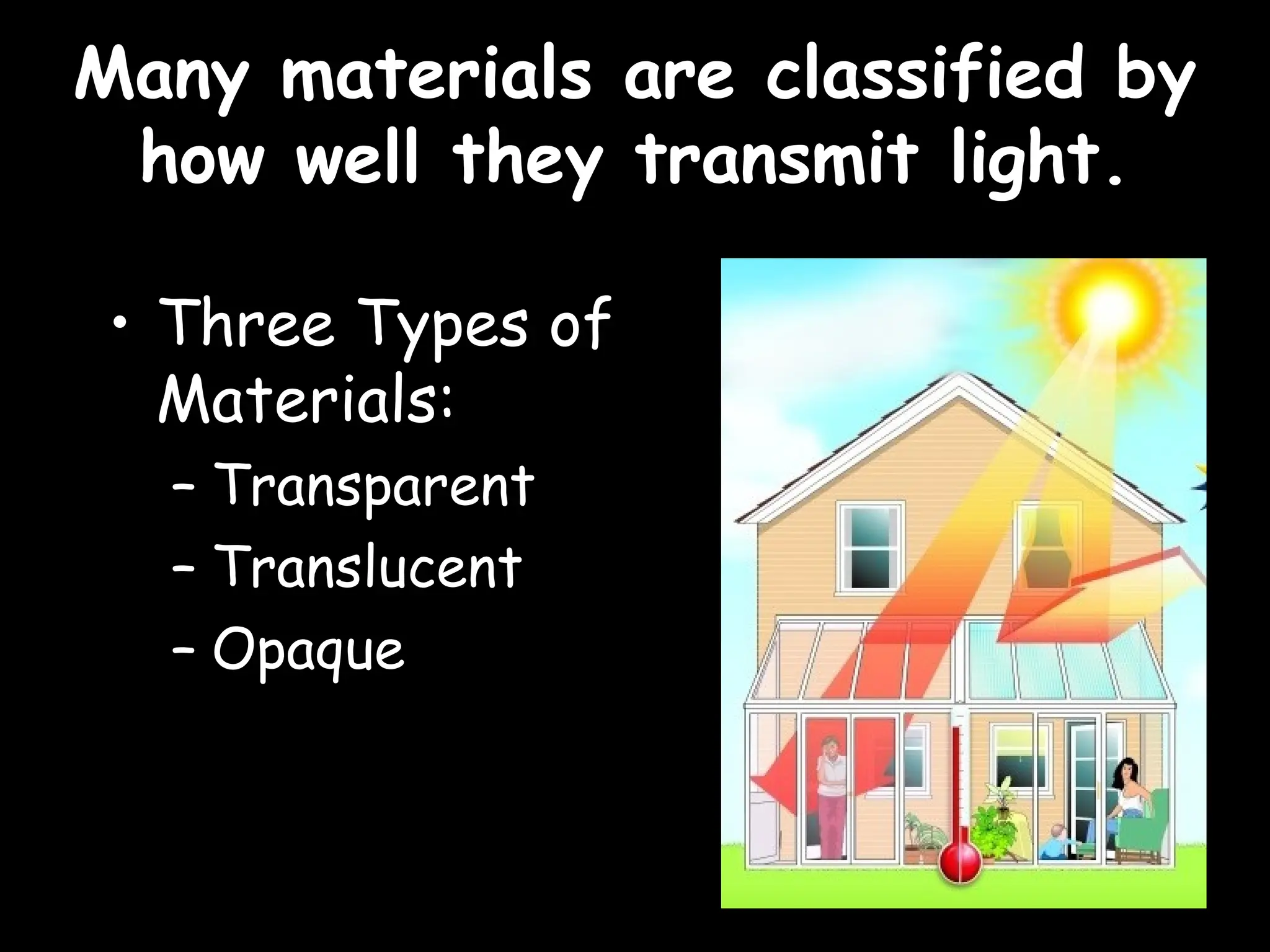
Many materials areclassified by
Many materials are classified by
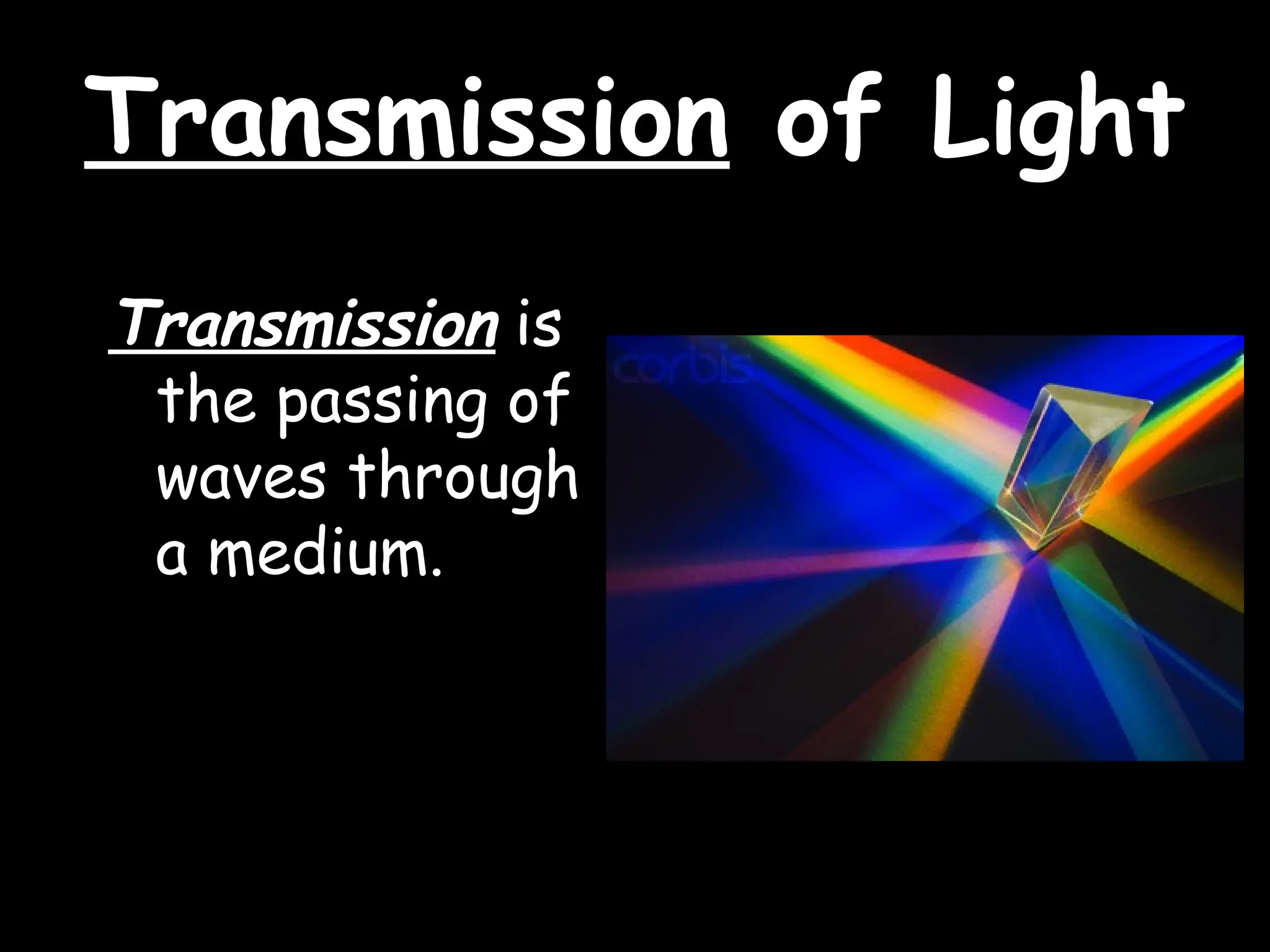
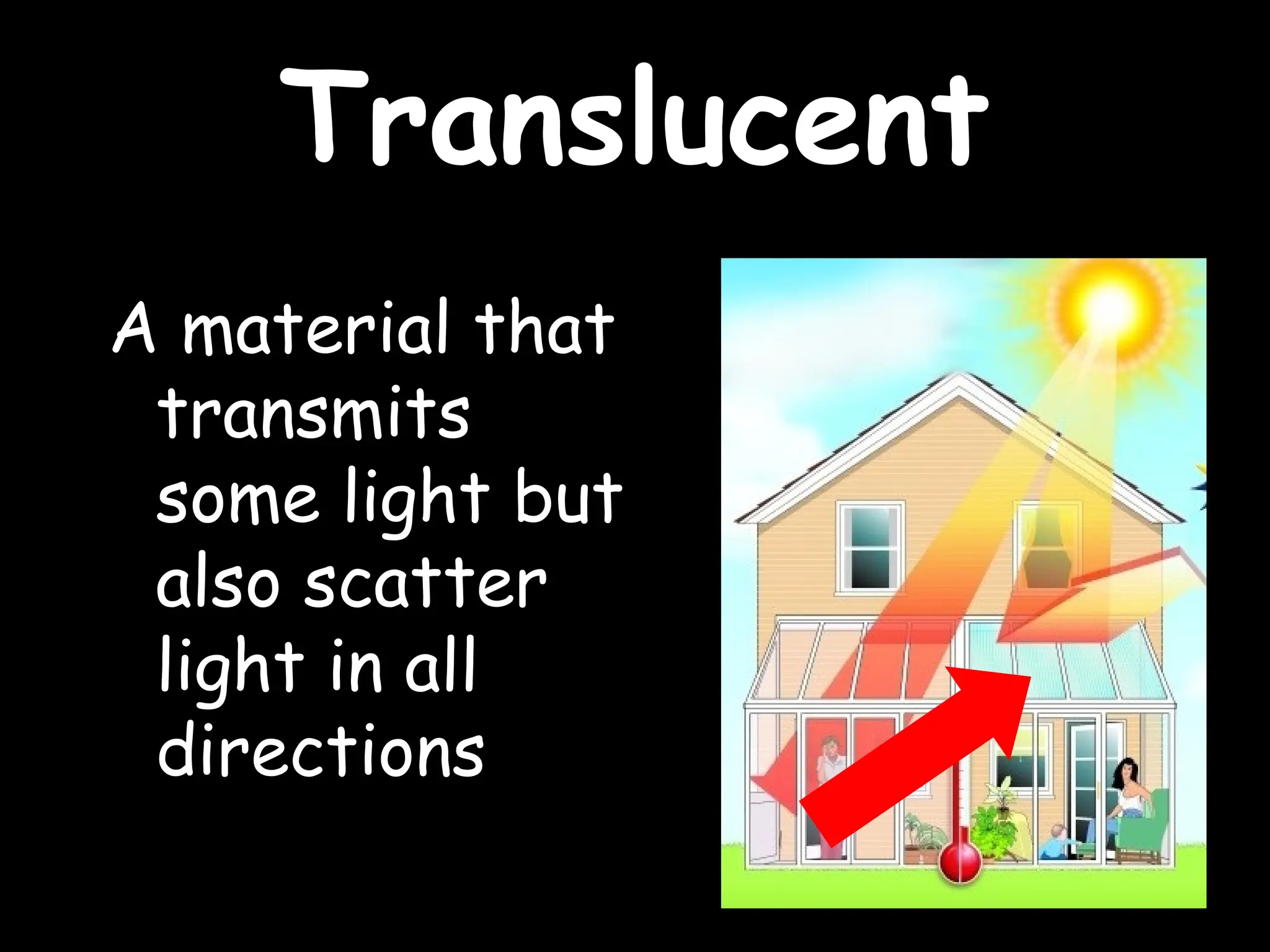
how well they transmit light.
how well they transmit light.
• Three Types of
Materials:
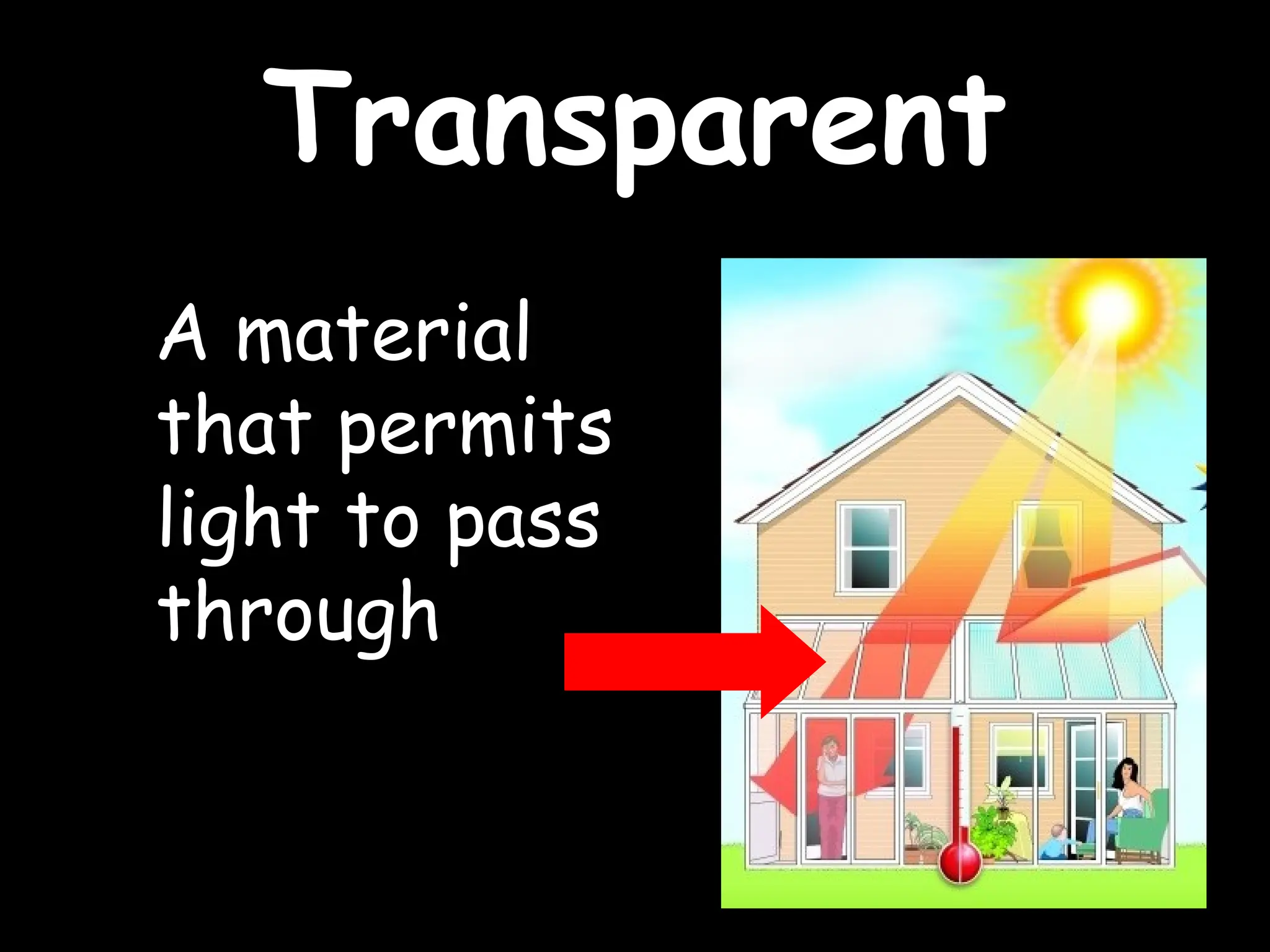
– Transparent
– Translucent
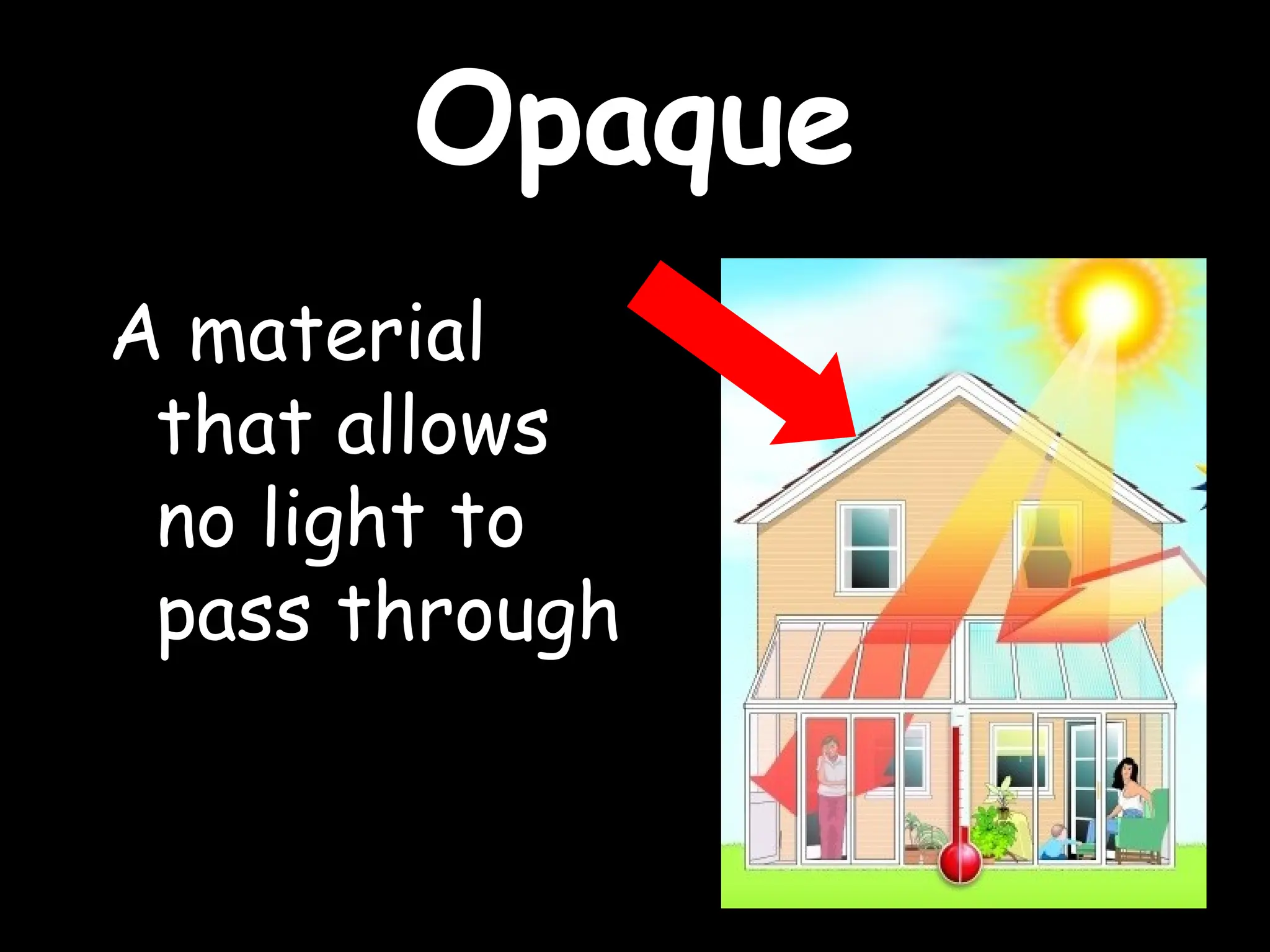
– Opaque
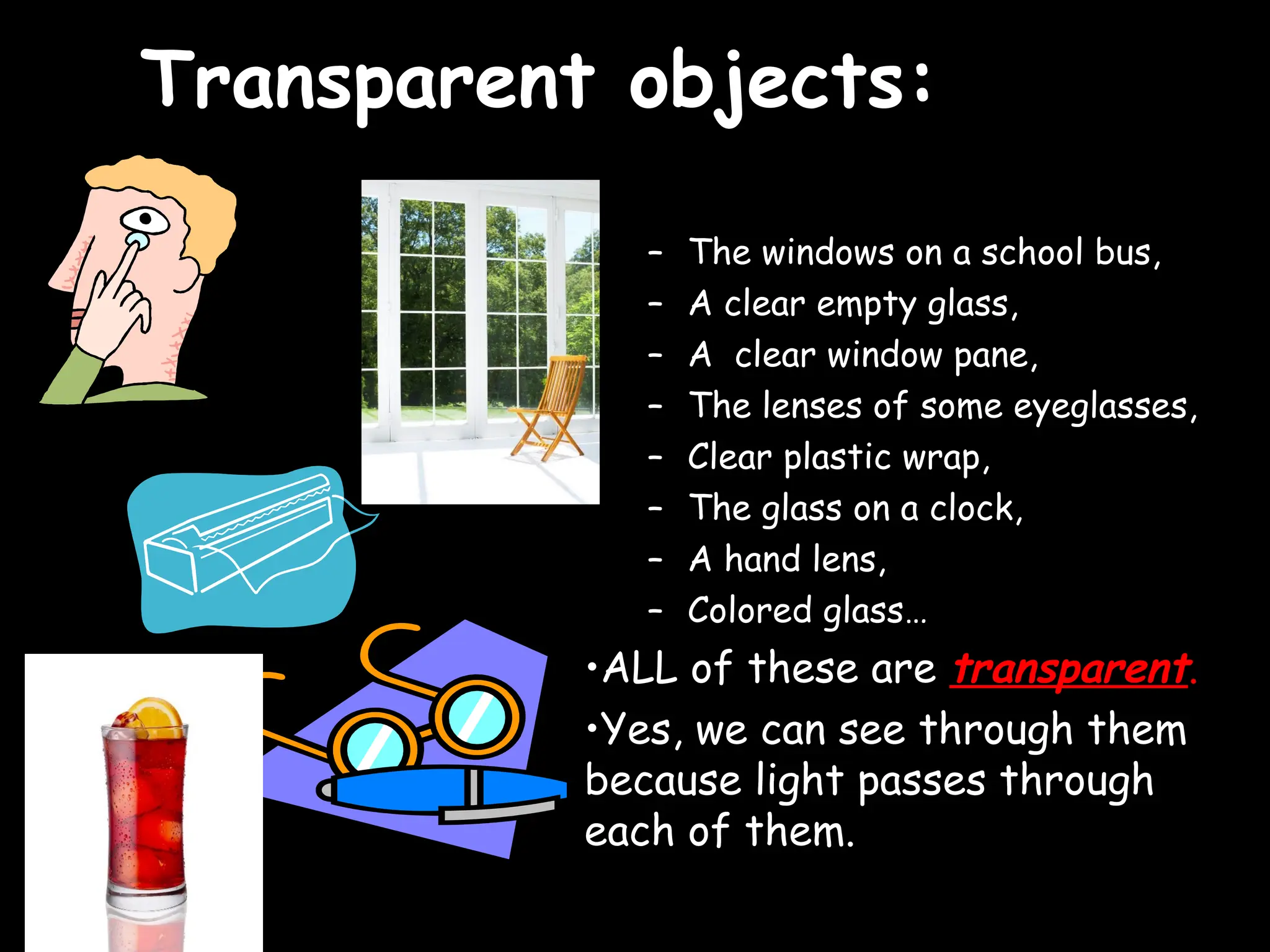
Transparent objects:
Transparent objects:
–The windows on a school bus,
– A clear empty glass,
– A clear window pane,
– The lenses of some eyeglasses,
– Clear plastic wrap,
– The glass on a clock,
– A hand lens,
– Colored glass…
•ALL of these are transparent.
•Yes, we can see through them
because light passes through
each of them.
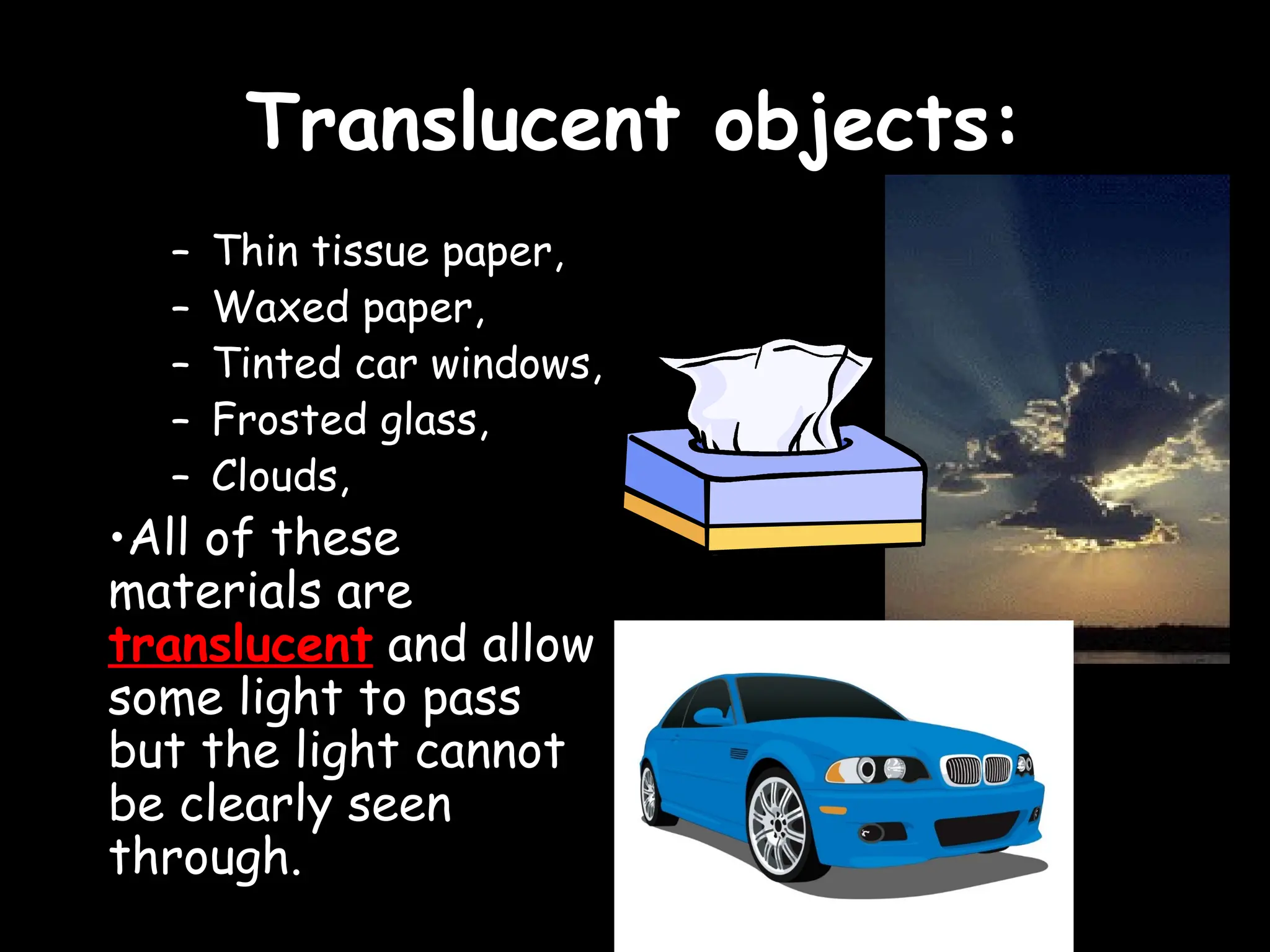
Translucent objects:
Translucent objects:
–Thin tissue paper,
– Waxed paper,
– Tinted car windows,
– Frosted glass,
– Clouds,
•All of these
materials are
translucent and allow
some light to pass
but the light cannot
be clearly seen
through.
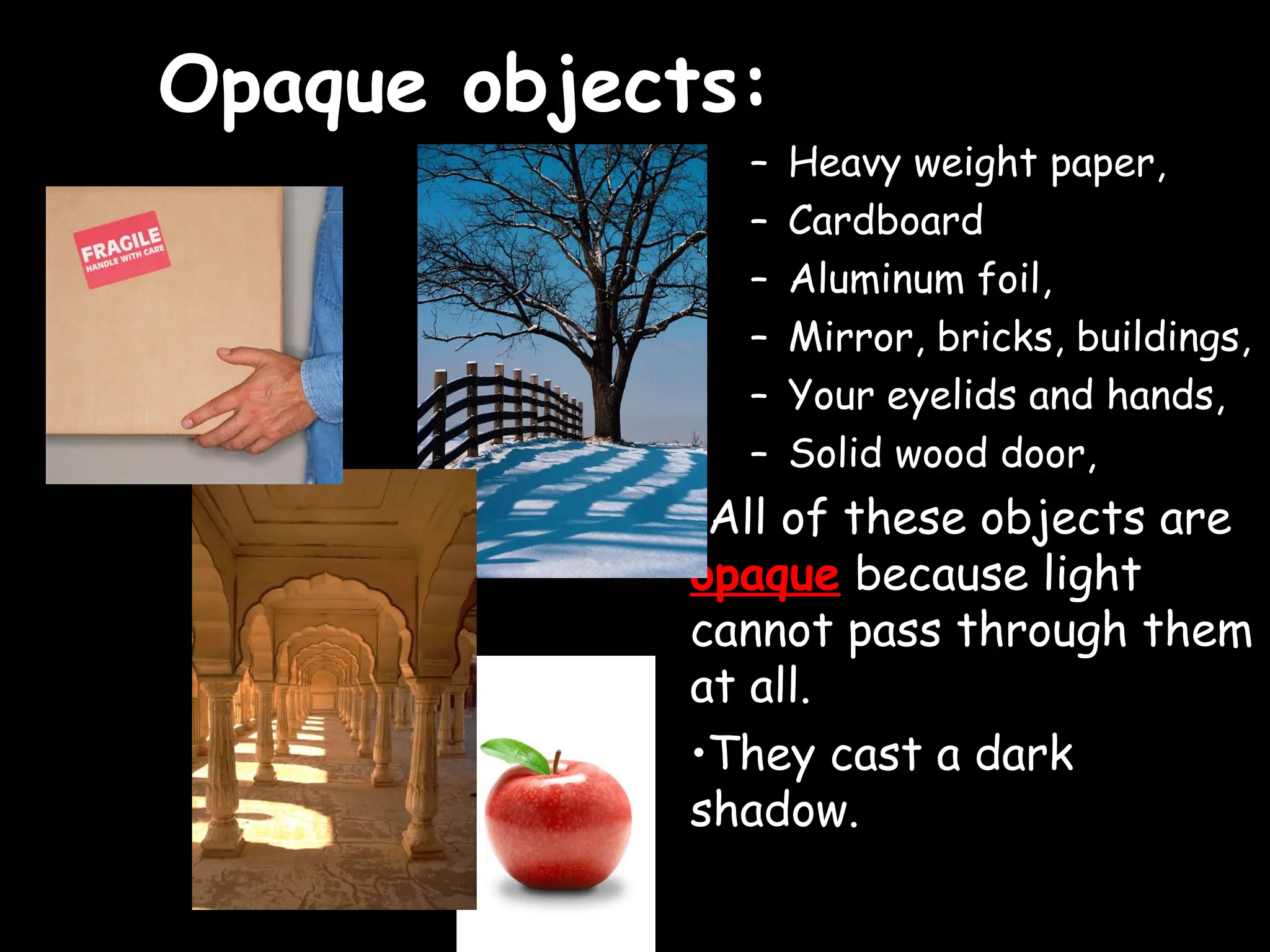
Opaque objects:
Opaque objects:
–Heavy weight paper,
– Cardboard
– Aluminum foil,
– Mirror, bricks, buildings,
– Your eyelids and hands,
– Solid wood door,
•All of these objects are
opaque because light
cannot pass through them
at all.
•They cast a dark
shadow.