P R E P A E D B Y :
A R P A N A B H U S A L
B N S
Leukemia
Leukemia
 Leukemia is cancer that starts in the tissue that forms
blood.
 Fatal neoplastic disease that involves that blood forming
tissues, abnormal, uncontrolled and destructive
proliferation of one type of white cell and its precures.
 Leukemia affects the bone marrow, causing anaemia,
leukopenia, the production of immature cells,
thrombocytopenia and a decline in immunity
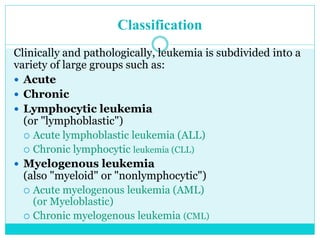
Classification
Clinically and pathologically, leukemia is subdivided into a
variety of large groups such as:
 Acute
 Chronic
 Lymphocytic leukemia
(or "lymphoblastic")
 Acute lymphoblastic leukemia (ALL)
 Chronic lymphocytic leukemia (CLL)
 Myelogenous leukemia
(also "myeloid" or "nonlymphocytic")
 Acute myelogenous leukemia (AML)
(or Myeloblastic)
 Chronic myelogenous leukemia (CML)
Acute leukemia
 Rapid increase in the numbers of immature blood
cells.
 Crowding due to such cells makes the bone marrow
unable to produce healthy blood cells.
 Immediate treatment is required due to the rapid
progression and accumulation of the malignant cells,
which then spill over into the bloodstream and
spread to other organs of the body
 Most common in children.
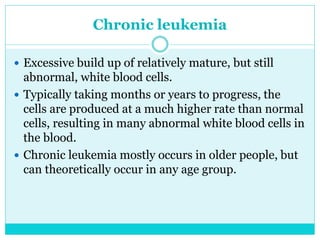
Chronic leukemia
 Excessive build up of relatively mature, but still
abnormal, white blood cells.
 Typically taking months or years to progress, the
cells are produced at a much higher rate than normal
cells, resulting in many abnormal white blood cells in
the blood.
 Chronic leukemia mostly occurs in older people, but
can theoretically occur in any age group.
1. Lymphoblastic or lymphocytic leukemias
 The cancerous change takes place in a type of
marrow cell that normally goes on to form
lymphocytes, which are infection-fighting immune
system cells.
 Most lymphocytic leukemias involve a specific
subtype of lymphocyte, the B cell.
2. Myeloid or myelogenous leukemias
 The cancerous change takes place in a type of
marrow cell that normally goes on to form red blood
cells, some other types of white cells, and platelets.
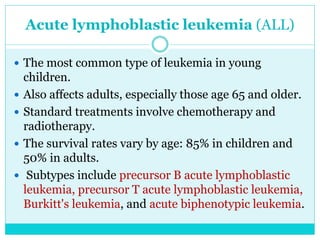
Acute lymphoblastic leukemia (ALL)
 The most common type of leukemia in young
children.
 Also affects adults, especially those age 65 and older.
 Standard treatments involve chemotherapy and
radiotherapy.
 The survival rates vary by age: 85% in children and
50% in adults.
 Subtypes include precursor B acute lymphoblastic
leukemia, precursor T acute lymphoblastic leukemia,
Burkitt's leukemia, and acute biphenotypic leukemia.
Chronic lymphocytic leukemia (CLL)
 Most often affects adults over the age of 55.
 Sometimes occurs in younger adults, but it almost never
affects children.
 Two-thirds of affected people are men. The five-year
survival rate is 75%.
 It is incurable, but there are many effective treatments.
One subtype is B-cell prolymphocytic leukemia, a more
aggressive disease.
Acute myelogenous leukemia (AML)
 Occurs more commonly in adults than in children, and
more commonly in men than women.
 Treated with chemotherapy.
 The five-year survival rate is 40%.
 Subtypes of AML include acute promyelocytic
leukemia, acute myeloblastic leukemia, and acute
megakaryoblastic leukemia.
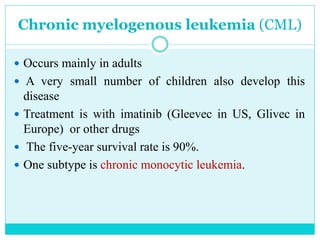
Chronic myelogenous leukemia (CML)
 Occurs mainly in adults
 A very small number of children also develop this
disease
 Treatment is with imatinib (Gleevec in US, Glivec in
Europe) or other drugs
 The five-year survival rate is 90%.
 One subtype is chronic monocytic leukemia.
Pathophysiology of leukemia
Characterized by
 Diffuse replacement of bone marrow with leukemic cells
 Appearance of abnormal immature white blood cells in
the peripheral circulation
 Wide spread infiltration of the liver, spleen, lymphnodes
and other tissue throughout the body
Leukemic cells are an immature and mobile type poorly
differentiated, capable of high rate of proliferation and prolonged
life span.
Immature cells
Unable to perform
normal function
Ineffective
phagocytosis or
immune cells
Being mobile
Able to travel
throughout the
circulatory system
Cross the blood-brain
barrier
Infiltrate many body
organs
Rapidly proliferation
Little room for
normal cell
production
Interfere with the
maturation of normal
bone marrow cells
Erythroblasts and
megakakaryoblasts
Signs and symptoms
 Anorexia, fatigue, weakness, weight loss
 Anaemia, lethargy
 Bleeding gum, nose bleed, rectal bleeding, echymosis,
petechiae, retinal hemorrhage, hematuria, metrorrhagia
etc
 Prolonged bleeding after minor abrasions or lacerations
 High temperatue
 Lymphadenopathy and splenomegaly
 Palpitation, tachycardia, orthoptic hypotension
 Pallor
 Dyspnea on exertion
 Bone pain
 Normal, elevated or reduced WBC count
 Low hemoglobin and hematocrit level
 Low platelet count
 Positive bone marrow biopsy
Diagnosis
 History
 Personal and family (medical)
 Physical examination
 Blood test: TC, DC, ESR
 Bone marrow biopsy
 Chest X-ray
Treatment
 Chemotherapy- to kill leukemia cells using strong
anticancer drugs
 Biologicla therapy: Interferon therapy to slow the
reproduction of leukemia cells and promote the immune
systems , anti-leukemia activity
 Radiation therapy
 Bone marrow transplantation
 Colony stimulating factors eg epogen
Nursing management
 Infection:
 Monitor for signs of infection
 Initiate protective isolation procedures
 Use strict aseptic technique for all procedure
 Strict hand washing
 Eliminate fresh or raw fruits and vegetables from the
diet and fresh flower from the client’s room and not
leave standing water in the client’s room
 Avoid invasive procedure
 Assess the urine for color and cloudiness
 Avoid crowd
 Administered prescribed medications
 Instruct the client about a low bacteria diet and avoid
drinking water that hasbeen satnding for 15 minute
 Instruct the client to avoid activities that expose the
client to infection, such as changing a pet’s litter box or
working with houseplants or in the garden
 Instruct clients that neither the client nor their household
contacts should receive immunization a live vaccine
 Maintain a personal hygiene
Bleeding
 The client is at risk for bleeding when the platelet count
falls below 50,000 cells/mm3 and spontaneous bleeding
frequently occurs when the platelet count is fewer than
20,000 cells/mm3
 Monitor for signs of bleeding
 Administer blood product as order
 Handle the client gently
 Pad side rails and sharp corners of the bed and furniture
 Provide soft foods
 Avoid injections if possible, apply firm and gentle
pressure to a needle stick site for at least 10 minute
 Avoid rectal suppositories, enemas, thermometers
 For female client; count the number of pads or tampons
used
 Instruct the client to use soft toothbrush and avoid
dental floss
 Instruct the client:
 Use only electric razor for saving
 Avoid blowing the nose
 Avoid constrictive or tight clothing or shoes
 Avoid using NSAID and product that contain aspirin
 Discourage the client from engaging in activites
involving the use of sharp objects
 Fatigue and nutrition:
 Assist the client in selecting a well balanced diet
 Provide small, frequent meals (little chewing)
 Allow adequate rest period
 Nursing care provide if chemotherapy, radiation
therapy
 Provide psychological support
 Instruct home care
 Good oral hygiene
 Monitor blood transfusion
 Protect from sources of infection
Leukemia

Leukemia

  • 1.
    P R EP A E D B Y : A R P A N A B H U S A L B N S Leukemia
  • 2.
    Leukemia  Leukemia iscancer that starts in the tissue that forms blood.  Fatal neoplastic disease that involves that blood forming tissues, abnormal, uncontrolled and destructive proliferation of one type of white cell and its precures.  Leukemia affects the bone marrow, causing anaemia, leukopenia, the production of immature cells, thrombocytopenia and a decline in immunity
  • 3.
    Classification Clinically and pathologically,leukemia is subdivided into a variety of large groups such as:  Acute  Chronic  Lymphocytic leukemia (or "lymphoblastic")  Acute lymphoblastic leukemia (ALL)  Chronic lymphocytic leukemia (CLL)  Myelogenous leukemia (also "myeloid" or "nonlymphocytic")  Acute myelogenous leukemia (AML) (or Myeloblastic)  Chronic myelogenous leukemia (CML)
  • 4.
    Acute leukemia  Rapidincrease in the numbers of immature blood cells.  Crowding due to such cells makes the bone marrow unable to produce healthy blood cells.  Immediate treatment is required due to the rapid progression and accumulation of the malignant cells, which then spill over into the bloodstream and spread to other organs of the body  Most common in children.
  • 5.
    Chronic leukemia  Excessivebuild up of relatively mature, but still abnormal, white blood cells.  Typically taking months or years to progress, the cells are produced at a much higher rate than normal cells, resulting in many abnormal white blood cells in the blood.  Chronic leukemia mostly occurs in older people, but can theoretically occur in any age group.
  • 6.
    1. Lymphoblastic orlymphocytic leukemias  The cancerous change takes place in a type of marrow cell that normally goes on to form lymphocytes, which are infection-fighting immune system cells.  Most lymphocytic leukemias involve a specific subtype of lymphocyte, the B cell. 2. Myeloid or myelogenous leukemias  The cancerous change takes place in a type of marrow cell that normally goes on to form red blood cells, some other types of white cells, and platelets.
  • 7.
    Acute lymphoblastic leukemia(ALL)  The most common type of leukemia in young children.  Also affects adults, especially those age 65 and older.  Standard treatments involve chemotherapy and radiotherapy.  The survival rates vary by age: 85% in children and 50% in adults.  Subtypes include precursor B acute lymphoblastic leukemia, precursor T acute lymphoblastic leukemia, Burkitt's leukemia, and acute biphenotypic leukemia.
  • 8.
    Chronic lymphocytic leukemia(CLL)  Most often affects adults over the age of 55.  Sometimes occurs in younger adults, but it almost never affects children.  Two-thirds of affected people are men. The five-year survival rate is 75%.  It is incurable, but there are many effective treatments. One subtype is B-cell prolymphocytic leukemia, a more aggressive disease.
  • 9.
    Acute myelogenous leukemia(AML)  Occurs more commonly in adults than in children, and more commonly in men than women.  Treated with chemotherapy.  The five-year survival rate is 40%.  Subtypes of AML include acute promyelocytic leukemia, acute myeloblastic leukemia, and acute megakaryoblastic leukemia.
  • 10.
    Chronic myelogenous leukemia(CML)  Occurs mainly in adults  A very small number of children also develop this disease  Treatment is with imatinib (Gleevec in US, Glivec in Europe) or other drugs  The five-year survival rate is 90%.  One subtype is chronic monocytic leukemia.
  • 11.
    Pathophysiology of leukemia Characterizedby  Diffuse replacement of bone marrow with leukemic cells  Appearance of abnormal immature white blood cells in the peripheral circulation  Wide spread infiltration of the liver, spleen, lymphnodes and other tissue throughout the body
  • 12.
    Leukemic cells arean immature and mobile type poorly differentiated, capable of high rate of proliferation and prolonged life span. Immature cells Unable to perform normal function Ineffective phagocytosis or immune cells Being mobile Able to travel throughout the circulatory system Cross the blood-brain barrier Infiltrate many body organs Rapidly proliferation Little room for normal cell production Interfere with the maturation of normal bone marrow cells Erythroblasts and megakakaryoblasts
  • 13.
    Signs and symptoms Anorexia, fatigue, weakness, weight loss  Anaemia, lethargy  Bleeding gum, nose bleed, rectal bleeding, echymosis, petechiae, retinal hemorrhage, hematuria, metrorrhagia etc  Prolonged bleeding after minor abrasions or lacerations  High temperatue  Lymphadenopathy and splenomegaly
  • 14.
     Palpitation, tachycardia,orthoptic hypotension  Pallor  Dyspnea on exertion  Bone pain  Normal, elevated or reduced WBC count  Low hemoglobin and hematocrit level  Low platelet count  Positive bone marrow biopsy
  • 15.
    Diagnosis  History  Personaland family (medical)  Physical examination  Blood test: TC, DC, ESR  Bone marrow biopsy  Chest X-ray
  • 16.
    Treatment  Chemotherapy- tokill leukemia cells using strong anticancer drugs  Biologicla therapy: Interferon therapy to slow the reproduction of leukemia cells and promote the immune systems , anti-leukemia activity  Radiation therapy  Bone marrow transplantation  Colony stimulating factors eg epogen
  • 17.
    Nursing management  Infection: Monitor for signs of infection  Initiate protective isolation procedures  Use strict aseptic technique for all procedure  Strict hand washing  Eliminate fresh or raw fruits and vegetables from the diet and fresh flower from the client’s room and not leave standing water in the client’s room  Avoid invasive procedure
  • 18.
     Assess theurine for color and cloudiness  Avoid crowd  Administered prescribed medications  Instruct the client about a low bacteria diet and avoid drinking water that hasbeen satnding for 15 minute  Instruct the client to avoid activities that expose the client to infection, such as changing a pet’s litter box or working with houseplants or in the garden  Instruct clients that neither the client nor their household contacts should receive immunization a live vaccine  Maintain a personal hygiene
  • 19.
    Bleeding  The clientis at risk for bleeding when the platelet count falls below 50,000 cells/mm3 and spontaneous bleeding frequently occurs when the platelet count is fewer than 20,000 cells/mm3  Monitor for signs of bleeding  Administer blood product as order  Handle the client gently  Pad side rails and sharp corners of the bed and furniture  Provide soft foods  Avoid injections if possible, apply firm and gentle pressure to a needle stick site for at least 10 minute
  • 20.
     Avoid rectalsuppositories, enemas, thermometers  For female client; count the number of pads or tampons used  Instruct the client to use soft toothbrush and avoid dental floss  Instruct the client:  Use only electric razor for saving  Avoid blowing the nose  Avoid constrictive or tight clothing or shoes  Avoid using NSAID and product that contain aspirin  Discourage the client from engaging in activites involving the use of sharp objects
  • 21.
     Fatigue andnutrition:  Assist the client in selecting a well balanced diet  Provide small, frequent meals (little chewing)  Allow adequate rest period  Nursing care provide if chemotherapy, radiation therapy  Provide psychological support  Instruct home care  Good oral hygiene  Monitor blood transfusion  Protect from sources of infection