Statistics  for Management Introduction and Data Collection
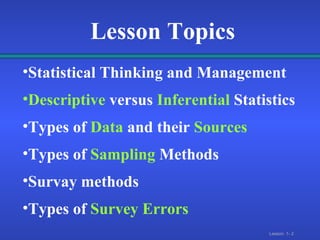
Lesson Topics Statistical Thinking and Management Descriptive   versus  Inferential  Statistics Types of  Data  and their  Sources  Types of  Sampling  Methods Survay methods Types of  Survey Errors
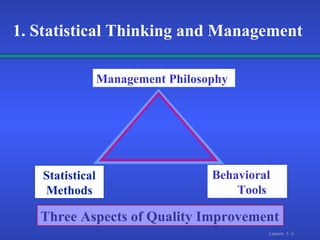
1. Statistical Thinking and Management Three Aspects of Quality Improvement Management Philosophy Behavioral  Tools Statistical Methods
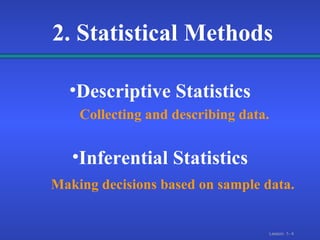
2. Statistical Methods Descriptive Statistics Inferential Statistics Collecting and describing data. Making decisions based on sample data.
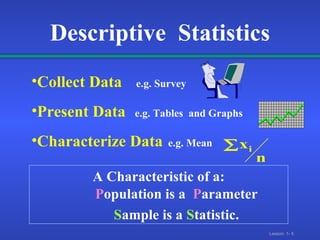
Descriptive  Statistics Collect Data   e.g. Survey Present Data   e.g. Tables  and Graphs Characterize Data   e.g. Mean A Characteristic of a:   P opulation is a  P arameter   S ample is a  S tatistic.
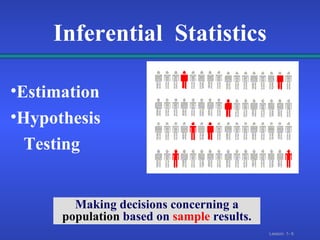
Inferential  Statistics Estimation Hypothesis  Testing  Making decisions concerning a  population  based on  sample  results.
3. Types of Data
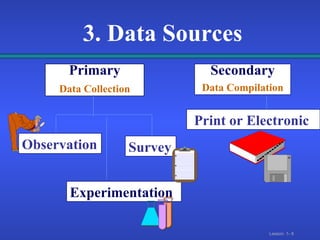
3. Data Sources Primary Data Collection Secondary Data Compilation Observation Experimentation Survey Print or Electronic
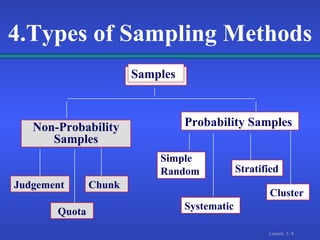
Quota 4.Types of Sampling Methods Samples Non-Probability Samples Judgement Chunk Probability Samples Simple  Random Systematic Stratified Cluster
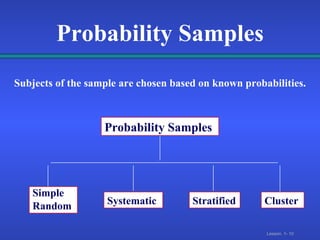
Probability Samples Probability Samples Simple  Random Systematic Stratified Cluster Subjects of the sample are chosen based on known probabilities.
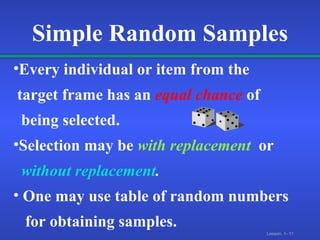
Simple Random Samples Every individual or item from the  target frame has an   equal chance   of  being selected. Selection may be   with replacement   or without replacement . One may use table of random numbers  for obtaining samples.
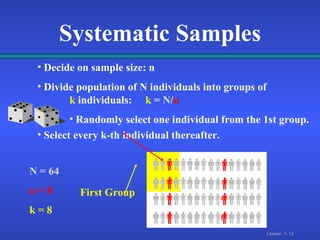
Systematic Samples Decide on sample size: n Divide population of N individuals into groups of  k   individuals:   k   =  N / n Randomly select one individual from the 1st group. Select every k-th individual thereafter. N = 64 n = 8 k = 8 First Group
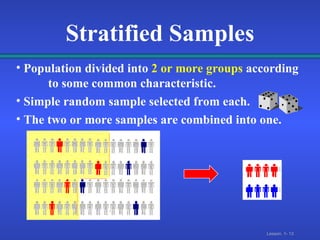
Stratified Samples Population divided into  2 or more groups  according  to some common characteristic. Simple random sample selected from each. The two or more samples are combined into one.
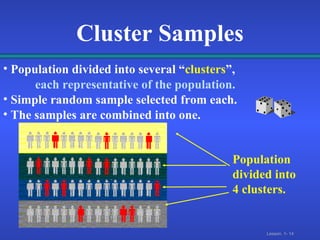
Cluster Samples Population divided into several   “ clusters ”,  each representative of the population.   Simple random sample selected from each. The samples are combined into one. Population divided into 4 clusters.
5. Survey methods Interview (Anket, Face to face, Telephon, Letter) Observation Experimentation Data compilation
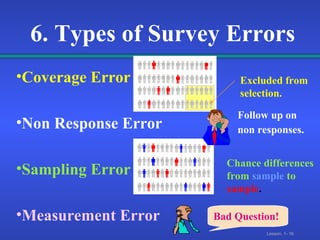
6. Types of Survey Errors Coverage Error Non Response Error Sampling Error Measurement Error Excluded from selection. Follow up on  non responses.   Chance differences from   sample   to  sample . Bad Question!
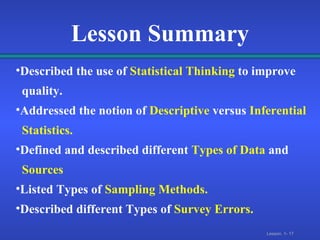
Lesson Summary Described the use of   Statistical Thinking   to improve  quality. Addressed the notion of   Descriptive  versus   Inferential  Statistics. Defined and described different   Types of Data   and  Sources Listed Types of   Sampling Methods. Described different Types of   Survey Errors.

Lesson01_Static.11

  • 1.
    Statistics forManagement Introduction and Data Collection
  • 2.
    Lesson Topics StatisticalThinking and Management Descriptive versus Inferential Statistics Types of Data and their Sources Types of Sampling Methods Survay methods Types of Survey Errors
  • 3.
    1. Statistical Thinkingand Management Three Aspects of Quality Improvement Management Philosophy Behavioral Tools Statistical Methods
  • 4.
    2. Statistical MethodsDescriptive Statistics Inferential Statistics Collecting and describing data. Making decisions based on sample data.
  • 5.
    Descriptive StatisticsCollect Data e.g. Survey Present Data e.g. Tables and Graphs Characterize Data e.g. Mean A Characteristic of a: P opulation is a P arameter S ample is a S tatistic.
  • 6.
    Inferential StatisticsEstimation Hypothesis Testing Making decisions concerning a population based on sample results.
  • 7.
  • 8.
    3. Data SourcesPrimary Data Collection Secondary Data Compilation Observation Experimentation Survey Print or Electronic
  • 9.
    Quota 4.Types ofSampling Methods Samples Non-Probability Samples Judgement Chunk Probability Samples Simple Random Systematic Stratified Cluster
  • 10.
    Probability Samples ProbabilitySamples Simple Random Systematic Stratified Cluster Subjects of the sample are chosen based on known probabilities.
  • 11.
    Simple Random SamplesEvery individual or item from the target frame has an equal chance of being selected. Selection may be with replacement or without replacement . One may use table of random numbers for obtaining samples.
  • 12.
    Systematic Samples Decideon sample size: n Divide population of N individuals into groups of k individuals: k = N / n Randomly select one individual from the 1st group. Select every k-th individual thereafter. N = 64 n = 8 k = 8 First Group
  • 13.
    Stratified Samples Populationdivided into 2 or more groups according to some common characteristic. Simple random sample selected from each. The two or more samples are combined into one.
  • 14.
    Cluster Samples Populationdivided into several “ clusters ”, each representative of the population. Simple random sample selected from each. The samples are combined into one. Population divided into 4 clusters.
  • 15.
    5. Survey methodsInterview (Anket, Face to face, Telephon, Letter) Observation Experimentation Data compilation
  • 16.
    6. Types ofSurvey Errors Coverage Error Non Response Error Sampling Error Measurement Error Excluded from selection. Follow up on non responses. Chance differences from sample to sample . Bad Question!
  • 17.
    Lesson Summary Describedthe use of Statistical Thinking to improve quality. Addressed the notion of Descriptive versus Inferential Statistics. Defined and described different Types of Data and Sources Listed Types of Sampling Methods. Described different Types of Survey Errors.