LESSON PLAN AND BLOOM’S TAXONOMY
Dr.C.THANVATHI
Assistant Professor of History
V.O.C.College of Education
Thoothukudi – 628008
Tamil Nadu. India.
LESSON PLAN
•A lesson plan is a guide which helps execute a
mission that is to be accomplished in the classroom
with the children.
•A lesson plan can also be defined as a creative
process which provides a frame work for purposeful
learning.
LESSON PLAN NEEDS IN B.ED. PROGRAMME
• Lesson plan is important throughout the service of a teacher.
• Every class or generation of students offer different experience to
the teacher.
• Lesson plan is important for A newly trained teacher who could be
faced with varied unpredictable situation.
• Teachers and persons who are participating in some kind of
training program especially that much includes observation.
• Teachers who want to reduce over reliance on textbooks and to
adapt situations.
IMPORTANTS OF LESSON PLAN
• Lesson plan serves as a checklist that guides teachers to be
systematic in the delivery of their lessons.
• Teachers know what to do next at every point of delivery.
• Lesson are orderly presented.
• The teacher is able to look back, reorganize and update his lesson
future usage.
• This helps influence positive attitudes of students towards
learning. Learning does not create cumbersome and clumsy
atmosphere.
IMPORTANTS OF LESSON PLAN CONTD.,
•Lesson plan prevents the over reliance on text books as
a direct material for teaching some books are written in
such a way that they serve as guide to teachers.
• A good lesson plan minimizes the negative effect of
learning on the children when there is swapping of
teachers.
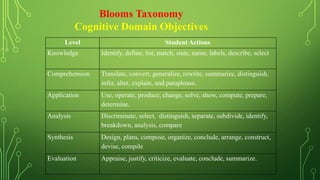
Level Student Actions
Knowledge Identify, define, list, match, state, name, labels, describe, select
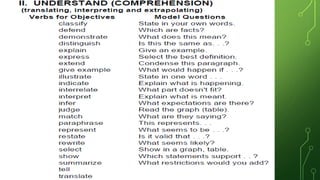
Comprehension Translate, convert, generalize, rewrite, summarize, distinguish,
infer, alter, explain, and paraphrase.
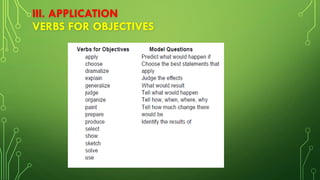
Application Use, operate, produce, change, solve, show, compute, prepare,
determine.
Analysis Discriminate, select, distinguish, separate, subdivide, identify,
breakdown, analysis, compare
Synthesis Design, plans, compose, organize, conclude, arrange, construct,
devise, compile
Evaluation Appraise, justify, criticize, evaluate, conclude, summarize.
Blooms Taxonomy
Cognitive Domain Objectives
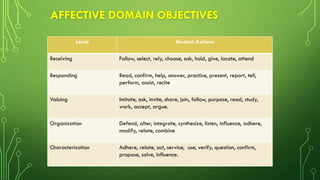
AFFECTIVE DOMAIN OBJECTIVES
Level Student Actions
Receiving Follow, select, rely, choose, ask, hold, give, locate, attend
Responding Read, confirm, help, answer, practice, present, report, tell,
perform, assist, recite
Valuing Imitate, ask, invite, share, join, follow, purpose, read, study,
work, accept, argue.
Organization Defend, alter, integrate, synthesize, listen, influence, adhere,
modify, relate, combine
Characterization Adhere, relate, act, service, use, verify, question, confirm,
propose, solve, influence.
AFFECTIVE DOMAIN OBJECTIVES
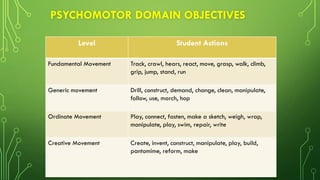
PSYCHOMOTOR DOMAIN OBJECTIVES
Level Student Actions
Fundamental Movement Track, crawl, hears, react, move, grasp, walk, climb,
grip, jump, stand, run
Generic movement Drill, construct, demand, change, clean, manipulate,
follow, use, march, hop
Ordinate Movement Play, connect, fasten, make a sketch, weigh, wrap,
manipulate, play, swim, repair, write
Creative Movement Create, invent, construct, manipulate, play, build,
pantomime, reform, make
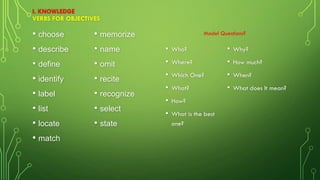
I. KNOWLEDGE
VERBS FOR OBJECTIVES
• choose
• describe
• define
• identify
• label
• list
• locate
• match
• memorize
• name
• omit
• recite
• recognize
• select
• state
• Who?
• Where?
• Which One?
• What?
• How?
• What is the best
one?
• Why?
• How much?
• When?
• What does It mean?
Model Questions?
I. KNOWLEDGE
VERBS FOR OBJECTIVES
• அறிந்து க ொள்ளுதல்
மீட்டறிதல்
மீள கெய்தல்
நினைவு கூர்தல்
வனையறுக்
பட்டியலிடு
II. UNDERSTANDING
VERBS FOR OBJECTIVES
• புரிந்துக ொள்ளுதல்
விளக்குதல்
ொைணம் கூறுதல்
வவறுபடுத்துதல்
விவரித்தல்
III. APPLICATION
VERBS FOR OBJECTIVES
• பயன்படுத்துதல்
பின்பற்றுதல்
உற்று வநொக்குதல்
முடிகவடுத்தல்
III. APPLICATION
VERBS FOR OBJECTIVES
• ஆய்வு கெய்தல்
திறன் கபறுதல்
அட்டவனண படுத்தும் திறன் கபறுதல்
வவறுபடுத்தி அறியும் திறன் கபறுதல்
ஆய்வு கெய்யும் திறன் கபறுதல்
சுட்டிக் ொட்டுதல்
சுட்டிக் ொட்டும் திறன் கபறுதல்
IV. SKILL
VERBS FOR OBJECTIVES
LESSON PLAN FRAMEWORK
• Name of the Pre-Service Teacher :
gapw;rpMrphpah; ngah;
Name of the School :
gs;spapd; ngah;
• Class/Section and session :
tFg;G/gphpT kw;Wk; fhyk;
• Subject ghlk; :
Unit myF :
• Topic jiyg;G :

Lesson Plan and Bloom's Taxonomy

  • 1.
    LESSON PLAN ANDBLOOM’S TAXONOMY Dr.C.THANVATHI Assistant Professor of History V.O.C.College of Education Thoothukudi – 628008 Tamil Nadu. India.
  • 2.
    LESSON PLAN •A lessonplan is a guide which helps execute a mission that is to be accomplished in the classroom with the children. •A lesson plan can also be defined as a creative process which provides a frame work for purposeful learning.
  • 3.
    LESSON PLAN NEEDSIN B.ED. PROGRAMME • Lesson plan is important throughout the service of a teacher. • Every class or generation of students offer different experience to the teacher. • Lesson plan is important for A newly trained teacher who could be faced with varied unpredictable situation. • Teachers and persons who are participating in some kind of training program especially that much includes observation. • Teachers who want to reduce over reliance on textbooks and to adapt situations.
  • 4.
    IMPORTANTS OF LESSONPLAN • Lesson plan serves as a checklist that guides teachers to be systematic in the delivery of their lessons. • Teachers know what to do next at every point of delivery. • Lesson are orderly presented. • The teacher is able to look back, reorganize and update his lesson future usage. • This helps influence positive attitudes of students towards learning. Learning does not create cumbersome and clumsy atmosphere.
  • 5.
    IMPORTANTS OF LESSONPLAN CONTD., •Lesson plan prevents the over reliance on text books as a direct material for teaching some books are written in such a way that they serve as guide to teachers. • A good lesson plan minimizes the negative effect of learning on the children when there is swapping of teachers.
  • 6.
    Level Student Actions KnowledgeIdentify, define, list, match, state, name, labels, describe, select Comprehension Translate, convert, generalize, rewrite, summarize, distinguish, infer, alter, explain, and paraphrase. Application Use, operate, produce, change, solve, show, compute, prepare, determine. Analysis Discriminate, select, distinguish, separate, subdivide, identify, breakdown, analysis, compare Synthesis Design, plans, compose, organize, conclude, arrange, construct, devise, compile Evaluation Appraise, justify, criticize, evaluate, conclude, summarize. Blooms Taxonomy Cognitive Domain Objectives
  • 7.
    AFFECTIVE DOMAIN OBJECTIVES LevelStudent Actions Receiving Follow, select, rely, choose, ask, hold, give, locate, attend Responding Read, confirm, help, answer, practice, present, report, tell, perform, assist, recite Valuing Imitate, ask, invite, share, join, follow, purpose, read, study, work, accept, argue. Organization Defend, alter, integrate, synthesize, listen, influence, adhere, modify, relate, combine Characterization Adhere, relate, act, service, use, verify, question, confirm, propose, solve, influence. AFFECTIVE DOMAIN OBJECTIVES
  • 8.
    PSYCHOMOTOR DOMAIN OBJECTIVES LevelStudent Actions Fundamental Movement Track, crawl, hears, react, move, grasp, walk, climb, grip, jump, stand, run Generic movement Drill, construct, demand, change, clean, manipulate, follow, use, march, hop Ordinate Movement Play, connect, fasten, make a sketch, weigh, wrap, manipulate, play, swim, repair, write Creative Movement Create, invent, construct, manipulate, play, build, pantomime, reform, make
  • 9.
    I. KNOWLEDGE VERBS FOROBJECTIVES • choose • describe • define • identify • label • list • locate • match • memorize • name • omit • recite • recognize • select • state • Who? • Where? • Which One? • What? • How? • What is the best one? • Why? • How much? • When? • What does It mean? Model Questions?
  • 10.
    I. KNOWLEDGE VERBS FOROBJECTIVES • அறிந்து க ொள்ளுதல் மீட்டறிதல் மீள கெய்தல் நினைவு கூர்தல் வனையறுக் பட்டியலிடு
  • 12.
    II. UNDERSTANDING VERBS FOROBJECTIVES • புரிந்துக ொள்ளுதல் விளக்குதல் ொைணம் கூறுதல் வவறுபடுத்துதல் விவரித்தல்
  • 13.
  • 14.
  • 15.
    • ஆய்வு கெய்தல் திறன்கபறுதல் அட்டவனண படுத்தும் திறன் கபறுதல் வவறுபடுத்தி அறியும் திறன் கபறுதல் ஆய்வு கெய்யும் திறன் கபறுதல் சுட்டிக் ொட்டுதல் சுட்டிக் ொட்டும் திறன் கபறுதல் IV. SKILL VERBS FOR OBJECTIVES
  • 16.
    LESSON PLAN FRAMEWORK •Name of the Pre-Service Teacher : gapw;rpMrphpah; ngah; Name of the School : gs;spapd; ngah; • Class/Section and session : tFg;G/gphpT kw;Wk; fhyk; • Subject ghlk; : Unit myF : • Topic jiyg;G :