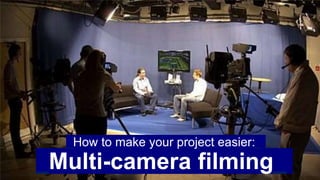

_Multi-camera filming_
_How to make your project easier:_
Today
We’re going to investigate different programme formats which use multi-camera
filming, before you begin to work on planning your own multi-camera TV
programme.
First off, remind me….
What’s the difference between multi-
camera & single camera filming
technique?
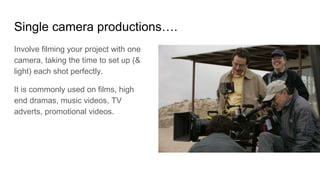
Single camera productions….
Involve filming your project with one
camera, taking the time to set up (&
light) each shot perfectly.
It is commonly used on films, high
end dramas, music videos, TV
adverts, promotional videos.
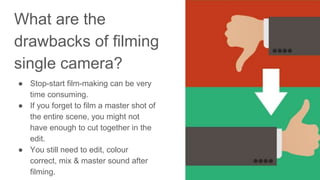
What are the
drawbacks of filming
single camera?
● Stop-start film-making can be very
time consuming.
● If you forget to film a master shot of
the entire scene, you might not
have enough to cut together in the
edit.
● You still need to edit, colour
correct, mix & master sound after
filming.
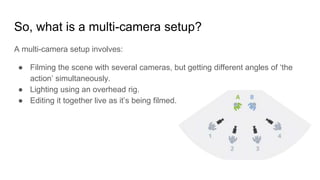
So, what is a multi-camera setup?
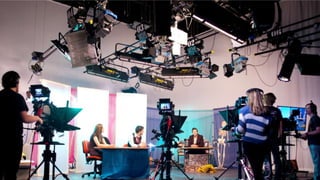
A multi-camera setup involves:
● Filming the scene with several cameras, but getting different angles of ‘the
action’ simultaneously.
● Lighting using an overhead rig.
● Editing it together live as it’s being filmed.
Which is more likely to use a multi-cam
setup: a film production, or TV?
Multi-camera is widely used across a range of different factual TV programmes,
but is less widely used in film, where the pursuit of the perfect shot is often seen
as one of the most important parts of the process.
Why do you think a multi-cam setup is more useful for filming factual productions?
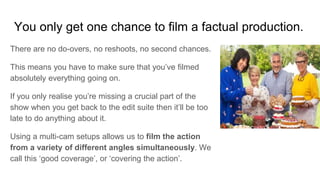
You only get one chance to film a factual production.
There are no do-overs, no reshoots, no second chances.
This means you have to make sure that you’ve filmed
absolutely everything going on.
If you only realise you’re missing a crucial part of the
show when you get back to the edit suite then it’ll be too
late to do anything about it.
Using a multi-cam setups allows us to film the action
from a variety of different angles simultaneously. We
call this ‘good coverage’, or ‘covering the action’.
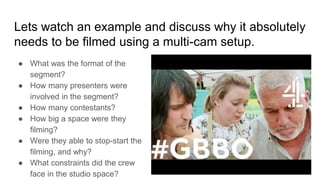
Lets watch an example and discuss why it absolutely
needs to be filmed using a multi-cam setup.
● What was the format of the
segment?
● How many presenters were
involved in the segment?
● How many contestants?
● How big a space were they
filming?
● Were they able to stop-start the
filming, and why?
● What constraints did the crew
face in the studio space?
Are all factual productions filmed using a multi-cam
setup?
No, it all depends on the individual production.
Lot’s of documentaries and news features are filmed single-cam, because they
often involve a presenter or PD filming interviews or cutaways on location, so they
don’t need to cover lots of angles / contributors simultaneously.
However, if you are planning on filming a show/event/scene/project where several
contributors are involved, or if you need to broadcast live, then filming using a
multi-camera setup might be the best choice.
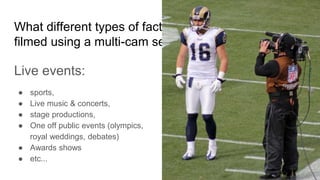
What different types of factual programmes are
filmed using a multi-cam setup?
Live events:
● sports,
● Live music & concerts,
● stage productions,
● One off public events (olympics,
royal weddings, debates)
● Awards shows
● etc...
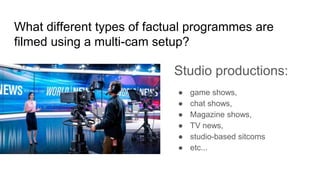
What different types of factual programmes are
filmed using a multi-cam setup?
Studio productions:
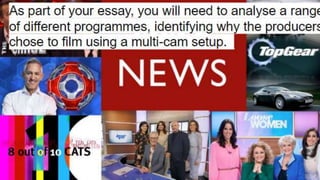
● game shows,
● chat shows,
● Magazine shows,
● TV news,
● studio-based sitcoms
● etc...
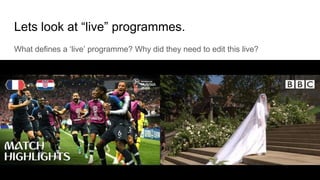
Lets look at “live” programmes.
What defines a ‘live’ programme? Why did they need to edit this live?
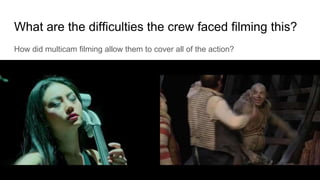
What are the difficulties the crew faced filming this?
How did multicam filming allow them to cover all of the action?
Task 1:
Log onto Moodle and go to Multi-Camera week 1. You need to find and analyse
examples for different TV formats that use multicam, analysing how and why they
need to film using a multicam setup.
Analyse at least 1 programme for each format:
1. Sports
2. Live arts events eg. Concerts, theatre, opera
3. Public event: Olympics opening ceremony
Multi camera filming lesson

Multi camera filming lesson

  • 1.
    _Multi-camera filming_ _How tomake your project easier:_
  • 2.
    Today We’re going toinvestigate different programme formats which use multi-camera filming, before you begin to work on planning your own multi-camera TV programme.
  • 3.
    First off, remindme…. What’s the difference between multi- camera & single camera filming technique?
  • 4.
    Single camera productions…. Involvefilming your project with one camera, taking the time to set up (& light) each shot perfectly. It is commonly used on films, high end dramas, music videos, TV adverts, promotional videos.
  • 5.
    What are the drawbacksof filming single camera? ● Stop-start film-making can be very time consuming. ● If you forget to film a master shot of the entire scene, you might not have enough to cut together in the edit. ● You still need to edit, colour correct, mix & master sound after filming.
  • 6.
    So, what isa multi-camera setup? A multi-camera setup involves: ● Filming the scene with several cameras, but getting different angles of ‘the action’ simultaneously. ● Lighting using an overhead rig. ● Editing it together live as it’s being filmed.
  • 7.
    Which is morelikely to use a multi-cam setup: a film production, or TV? Multi-camera is widely used across a range of different factual TV programmes, but is less widely used in film, where the pursuit of the perfect shot is often seen as one of the most important parts of the process. Why do you think a multi-cam setup is more useful for filming factual productions?
  • 8.
    You only getone chance to film a factual production. There are no do-overs, no reshoots, no second chances. This means you have to make sure that you’ve filmed absolutely everything going on. If you only realise you’re missing a crucial part of the show when you get back to the edit suite then it’ll be too late to do anything about it. Using a multi-cam setups allows us to film the action from a variety of different angles simultaneously. We call this ‘good coverage’, or ‘covering the action’.
  • 9.
    Lets watch anexample and discuss why it absolutely needs to be filmed using a multi-cam setup. ● What was the format of the segment? ● How many presenters were involved in the segment? ● How many contestants? ● How big a space were they filming? ● Were they able to stop-start the filming, and why? ● What constraints did the crew face in the studio space?
  • 10.
    Are all factualproductions filmed using a multi-cam setup? No, it all depends on the individual production. Lot’s of documentaries and news features are filmed single-cam, because they often involve a presenter or PD filming interviews or cutaways on location, so they don’t need to cover lots of angles / contributors simultaneously. However, if you are planning on filming a show/event/scene/project where several contributors are involved, or if you need to broadcast live, then filming using a multi-camera setup might be the best choice.
  • 11.
    What different typesof factual programmes are filmed using a multi-cam setup? Live events: ● sports, ● Live music & concerts, ● stage productions, ● One off public events (olympics, royal weddings, debates) ● Awards shows ● etc...
  • 12.
    What different typesof factual programmes are filmed using a multi-cam setup? Studio productions: ● game shows, ● chat shows, ● Magazine shows, ● TV news, ● studio-based sitcoms ● etc...
  • 13.
    Lets look at“live” programmes. What defines a ‘live’ programme? Why did they need to edit this live?
  • 14.
    What are thedifficulties the crew faced filming this? How did multicam filming allow them to cover all of the action?
  • 16.
    Task 1: Log ontoMoodle and go to Multi-Camera week 1. You need to find and analyse examples for different TV formats that use multicam, analysing how and why they need to film using a multicam setup. Analyse at least 1 programme for each format: 1. Sports 2. Live arts events eg. Concerts, theatre, opera 3. Public event: Olympics opening ceremony