SOUNDTRACK
ANALYSIS
Last week – what did you learn about
in soundtrack?
 Diegetic sound is...
 Non-Diegetic sound is...
 External diegetic sound is...
 Internal diegetic sound is...
 Parallel sound is....
 Contrapuntal sound is...
This week
 I want to build on those concepts by
beginning to think about how sound can
be used to create
1. MOOD (happy, sad, somber,
upbeat, kooky, hopeless)
2. MEANING
3. TENSION
Today
 MUST understand how different sound
elements are used in a scene to create mood
 SHOULD understand how sound is used to
create meaning
 COULD explain how different sound is used to
create tension
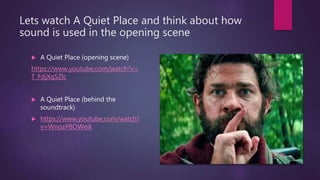
Lets watch A Quiet Place and think about how
sound is used in the opening scene
 A Quiet Place (opening scene)
https://www.youtube.com/watch?v=
T_FdjXqSZlc
 A Quiet Place (behind the
soundtrack)
 https://www.youtube.com/watch?
v=WnozP8OWeik
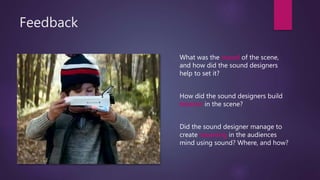
Feedback
What was the mood of the scene,
and how did the sound designers
help to set it?
How did the sound designers build
tension in the scene?
Did the sound designer manage to
create meaning in the audiences
mind using sound? Where, and how?
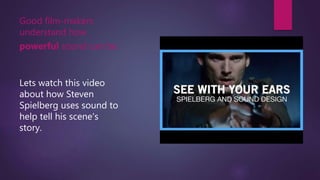
Good film-makers
understand how
powerful sound can be.
Lets watch this video
about how Steven
Spielberg uses sound to
help tell his scene's
story.
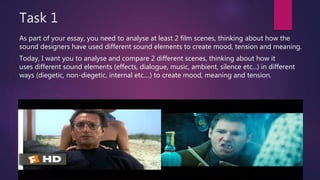
Task 1
As part of your essay, you need to analyse at least 2 film scenes, thinking about how the
sound designers have used different sound elements to create mood, tension and meaning.
Today, I want you to analyse and compare 2 different scenes, thinking about how it
uses different sound elements (effects, dialogue, music, ambient, silence etc...) in different
ways (diegetic, non-diegetic, internal etc....) to create mood, meaning and tension.
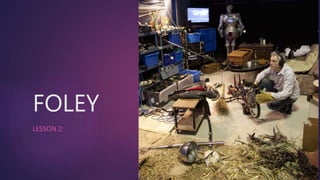
FOLEY
LESSON 2:
Intro: What is Foley?
https://www.youtube.com/watch?v=tQl_-MghIjo
What is a Foley Artist?
 What responsibilities do they have?
The Foley Process:
What do you need to do to record good foley?
 Plan: what sounds do we need?
 Prep: gather together props needed
 Record: steps, moves & spots
 Mix:
For this project you will each be your
own foley artist & sound designer.
 You will need to produce the soundtrack for a 3 minute segment of your
interactive film, including:
1. Planning your sound (audio plan, flow charts, marked up storyboards,
finding props etc...)
2. Recording your foley in the foley studio & dialogue in the ADR booth.
3. Mixing your final soundtrack
Preparation is crucial.
 Identify what sounds you need by:
 Marking up your script & storyboard
 Watching your edit and writing an audio plan, foley list, ADR list
 Find props and bring these in
 Book the foley studio out through Philip (it'll be busy)
 Organise dates to re-record ADR

Soundtrack lesson 2

  • 1.
  • 2.
    Last week –what did you learn about in soundtrack?  Diegetic sound is...  Non-Diegetic sound is...  External diegetic sound is...  Internal diegetic sound is...  Parallel sound is....  Contrapuntal sound is...
  • 3.
    This week  Iwant to build on those concepts by beginning to think about how sound can be used to create 1. MOOD (happy, sad, somber, upbeat, kooky, hopeless) 2. MEANING 3. TENSION
  • 4.
    Today  MUST understandhow different sound elements are used in a scene to create mood  SHOULD understand how sound is used to create meaning  COULD explain how different sound is used to create tension
  • 5.
    Lets watch AQuiet Place and think about how sound is used in the opening scene  A Quiet Place (opening scene) https://www.youtube.com/watch?v= T_FdjXqSZlc  A Quiet Place (behind the soundtrack)  https://www.youtube.com/watch? v=WnozP8OWeik
  • 6.
    Feedback What was themood of the scene, and how did the sound designers help to set it? How did the sound designers build tension in the scene? Did the sound designer manage to create meaning in the audiences mind using sound? Where, and how?
  • 7.
    Good film-makers understand how powerfulsound can be. Lets watch this video about how Steven Spielberg uses sound to help tell his scene's story.
  • 8.
    Task 1 As partof your essay, you need to analyse at least 2 film scenes, thinking about how the sound designers have used different sound elements to create mood, tension and meaning. Today, I want you to analyse and compare 2 different scenes, thinking about how it uses different sound elements (effects, dialogue, music, ambient, silence etc...) in different ways (diegetic, non-diegetic, internal etc....) to create mood, meaning and tension.
  • 9.
  • 10.
    Intro: What isFoley? https://www.youtube.com/watch?v=tQl_-MghIjo
  • 11.
    What is aFoley Artist?  What responsibilities do they have?
  • 12.
    The Foley Process: Whatdo you need to do to record good foley?  Plan: what sounds do we need?  Prep: gather together props needed  Record: steps, moves & spots  Mix:
  • 13.
    For this projectyou will each be your own foley artist & sound designer.  You will need to produce the soundtrack for a 3 minute segment of your interactive film, including: 1. Planning your sound (audio plan, flow charts, marked up storyboards, finding props etc...) 2. Recording your foley in the foley studio & dialogue in the ADR booth. 3. Mixing your final soundtrack
  • 14.
    Preparation is crucial. Identify what sounds you need by:  Marking up your script & storyboard  Watching your edit and writing an audio plan, foley list, ADR list  Find props and bring these in  Book the foley studio out through Philip (it'll be busy)  Organise dates to re-record ADR