TV PRODUCTION
LAST LESSON WE LOOKED AT PRODUCTION RESEARCH
What is production research?
● Finding out useful new information about your programmes subject, or potential
contributors, or potential filming locations.
GOOD RESEARCH SHOULD NEVER BE BUSY WORK.
WHAT IS BUSY WORK?
● ‘Busy work’ is any piece of work that we just do for the sake of doing it, it doesn’t add
any value to our project, it doesn’t improve anything, it doesn’t help us.
GOOD RESEARCH IS ALWAYS USEFUL:
● IT UNDERPINS OUR WHOLE PROJECT…
● HELPS OUR CREW TO UNDERSTAND THE SUBJECT BETTER
● HELPS US FIND GREAT GUESTS
● HELPS US FIND GREAT PLACES TO FILM
● …ALL OF WHICH MAKES OUR ENTIRE SHOW BETTER
FOR YOUR FIRST PROJECT, YOU WILL MAKE A MAGAZINE SHOW
ON KNIFE CRIME IN COVENTRY.
Working alone, each of you will need to:
● Conduct thorough production research for your show (subject, guests, locations).
● Find suitable guests to interview, and arrange filming dates/locations (studio, zoom or
on location).
Working as a team, you will then need to:
● Create a run order for the show.
● Script PTC intros, outros, links and at least 1 studio based segment.
● Complete a full planning document.
YOUR FIRST STEP IS YOUR PRODUCTION RESEARCH
You will each be marked individually on the production research you undertake, and how
you present this to me.
You will need to write up all the production research you undertake in an Individual
Research Portfolio.
YOUR FIRST STEP IS YOUR PRODUCTION RESEARCH
This should be a written document, with links to where you found your information, an
analysis of what the source has told you, and how you plan to actually use this information.
Your Individual Research Portfolio should be made up of 3 different sections:
1. subject research
2. contributor research
3. location research
SECTION 1: SUBJECT RESEARCH
1. Knife crime trends nationally
2. Knife crime trends locally
3. Secondary research on incidents of knife crime in the area
4. Secondary research on reasons for rise in knife crime
5. Primary research on trends/incidents/reasons for knife crime
6. Primary research on public opinion about knife crime locally
SECTION 2: CONTRIBUTOR RESEARCH
1. Biographies and details of potential contribs (who are they, what are they an expert
in, who do they work for/with?).
2. Contact details for potential contribs (phone, email, address, websites etc…).
3. Notes on your conversations/screenshots of emails sent & received.
SECTION 3: LOCATION RESEARCH
1. Location scout (screenshots, photos of potential filming sites)
2. Contact with the lands owner to gain filming permission (screenshots of emails
sent/received)
3. Detailed risk assessments for each location
A RESEARCH PORTFOLIO IS A SHARED DOCUMENT
This means other members of the team will read it.
What problems might stop other members of the crew being able to fully understand or
use your research?
LOOKS MESSY
● Too much text on the page
● Too cluttered together
● No paragraphs, or too few
paragraphs
● No sections, meaning you have to sift
through all the information to find
the bit you need
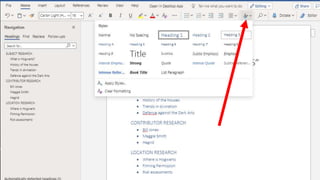
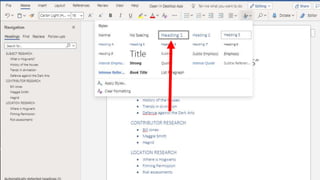
1. USE HEADINGS
● They allow you to
break up the document
into different sections,
and in word you can
use the headings outline
to browse the document
quickly and easily
1. USE HEADINGS
● They allow you to
break up the document
into different sections,
and in word you can
use the headings outline
to browse the document
quickly and easily
1. USE HEADINGS
● They allow you to
break up the document
into different sections,
and in word you can
use the headings outline
to browse the document
quickly and easily
2. USE GRAMMARLY
● Its free, it checks spelling, grammar, punctuation, and it will make your document
read easier.
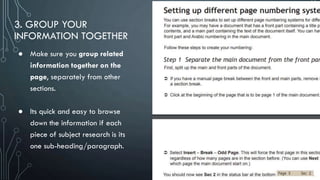
3. GROUP YOUR
INFORMATION TOGETHER
● Make sure you group related
information together on the
page, separately from other
sections.
● Its quick and easy to browse
down the information if each
piece of subject research is its
one sub-heading/paragraph.
TODAY
I want you to each begin your research in earnest.
Each of you must
● Conduct detailed subject research
● Find at least 4 different potential contributors
● Contact them to ask if they would be interested in being interviewed for your
programme
● Research potential filming locations
● Record all of this information in your portfolio.
TASK 1: MAKE YOUR PORTFOLIO, WITH HEADINGS
● Share the document with ibruce@coventrycollege.ac.uk
TASK 2: BEGIN SUBJECT RESEARCH
● Collate all your notes so far, and write up your findings in your document. Remember
to break up the information into easy-to-see sections
TASK 3: CONTRIB RESEARCH
● Working alone find at least 4 different contributors, and record their contact details
and a biography in your research portfolio.

Week 3 - research workshop

  • 1.
  • 2.
    LAST LESSON WELOOKED AT PRODUCTION RESEARCH What is production research? ● Finding out useful new information about your programmes subject, or potential contributors, or potential filming locations.
  • 3.
    GOOD RESEARCH SHOULDNEVER BE BUSY WORK. WHAT IS BUSY WORK? ● ‘Busy work’ is any piece of work that we just do for the sake of doing it, it doesn’t add any value to our project, it doesn’t improve anything, it doesn’t help us.
  • 4.
    GOOD RESEARCH ISALWAYS USEFUL: ● IT UNDERPINS OUR WHOLE PROJECT… ● HELPS OUR CREW TO UNDERSTAND THE SUBJECT BETTER ● HELPS US FIND GREAT GUESTS ● HELPS US FIND GREAT PLACES TO FILM ● …ALL OF WHICH MAKES OUR ENTIRE SHOW BETTER
  • 5.
    FOR YOUR FIRSTPROJECT, YOU WILL MAKE A MAGAZINE SHOW ON KNIFE CRIME IN COVENTRY. Working alone, each of you will need to: ● Conduct thorough production research for your show (subject, guests, locations). ● Find suitable guests to interview, and arrange filming dates/locations (studio, zoom or on location). Working as a team, you will then need to: ● Create a run order for the show. ● Script PTC intros, outros, links and at least 1 studio based segment. ● Complete a full planning document.
  • 6.
    YOUR FIRST STEPIS YOUR PRODUCTION RESEARCH You will each be marked individually on the production research you undertake, and how you present this to me. You will need to write up all the production research you undertake in an Individual Research Portfolio.
  • 7.
    YOUR FIRST STEPIS YOUR PRODUCTION RESEARCH This should be a written document, with links to where you found your information, an analysis of what the source has told you, and how you plan to actually use this information. Your Individual Research Portfolio should be made up of 3 different sections: 1. subject research 2. contributor research 3. location research
  • 8.
    SECTION 1: SUBJECTRESEARCH 1. Knife crime trends nationally 2. Knife crime trends locally 3. Secondary research on incidents of knife crime in the area 4. Secondary research on reasons for rise in knife crime 5. Primary research on trends/incidents/reasons for knife crime 6. Primary research on public opinion about knife crime locally
  • 9.
    SECTION 2: CONTRIBUTORRESEARCH 1. Biographies and details of potential contribs (who are they, what are they an expert in, who do they work for/with?). 2. Contact details for potential contribs (phone, email, address, websites etc…). 3. Notes on your conversations/screenshots of emails sent & received.
  • 10.
    SECTION 3: LOCATIONRESEARCH 1. Location scout (screenshots, photos of potential filming sites) 2. Contact with the lands owner to gain filming permission (screenshots of emails sent/received) 3. Detailed risk assessments for each location
  • 11.
    A RESEARCH PORTFOLIOIS A SHARED DOCUMENT This means other members of the team will read it. What problems might stop other members of the crew being able to fully understand or use your research?
  • 12.
    LOOKS MESSY ● Toomuch text on the page ● Too cluttered together ● No paragraphs, or too few paragraphs ● No sections, meaning you have to sift through all the information to find the bit you need
  • 13.
    1. USE HEADINGS ●They allow you to break up the document into different sections, and in word you can use the headings outline to browse the document quickly and easily
  • 14.
    1. USE HEADINGS ●They allow you to break up the document into different sections, and in word you can use the headings outline to browse the document quickly and easily
  • 15.
    1. USE HEADINGS ●They allow you to break up the document into different sections, and in word you can use the headings outline to browse the document quickly and easily
  • 16.
    2. USE GRAMMARLY ●Its free, it checks spelling, grammar, punctuation, and it will make your document read easier.
  • 17.
    3. GROUP YOUR INFORMATIONTOGETHER ● Make sure you group related information together on the page, separately from other sections. ● Its quick and easy to browse down the information if each piece of subject research is its one sub-heading/paragraph.
  • 18.
    TODAY I want youto each begin your research in earnest. Each of you must ● Conduct detailed subject research ● Find at least 4 different potential contributors ● Contact them to ask if they would be interested in being interviewed for your programme ● Research potential filming locations ● Record all of this information in your portfolio.
  • 19.
    TASK 1: MAKEYOUR PORTFOLIO, WITH HEADINGS ● Share the document with ibruce@coventrycollege.ac.uk
  • 20.
    TASK 2: BEGINSUBJECT RESEARCH ● Collate all your notes so far, and write up your findings in your document. Remember to break up the information into easy-to-see sections
  • 21.
    TASK 3: CONTRIBRESEARCH ● Working alone find at least 4 different contributors, and record their contact details and a biography in your research portfolio.