LED Power Output and
Efficiency
MEC
Contents
• Excess Minority Carrier Density
• Carrier Generation.
• Carrier Recombination
• Power Generated.
• Quantum Efficiency.
• Power Efficiency.
• Problems and Solutions.
Internal Power Generated
• Power generated internally determined by
considering excess electrons and holes in
p- and n-type material (minority carriers)
when forward biased.
• Charge Neutrality - excess density of
electrons & holes equal, Δn = Δp - injected
carriers created and recombine in pairs.
• Extrinsic materials - one carrier type have
much higher concentration than other.
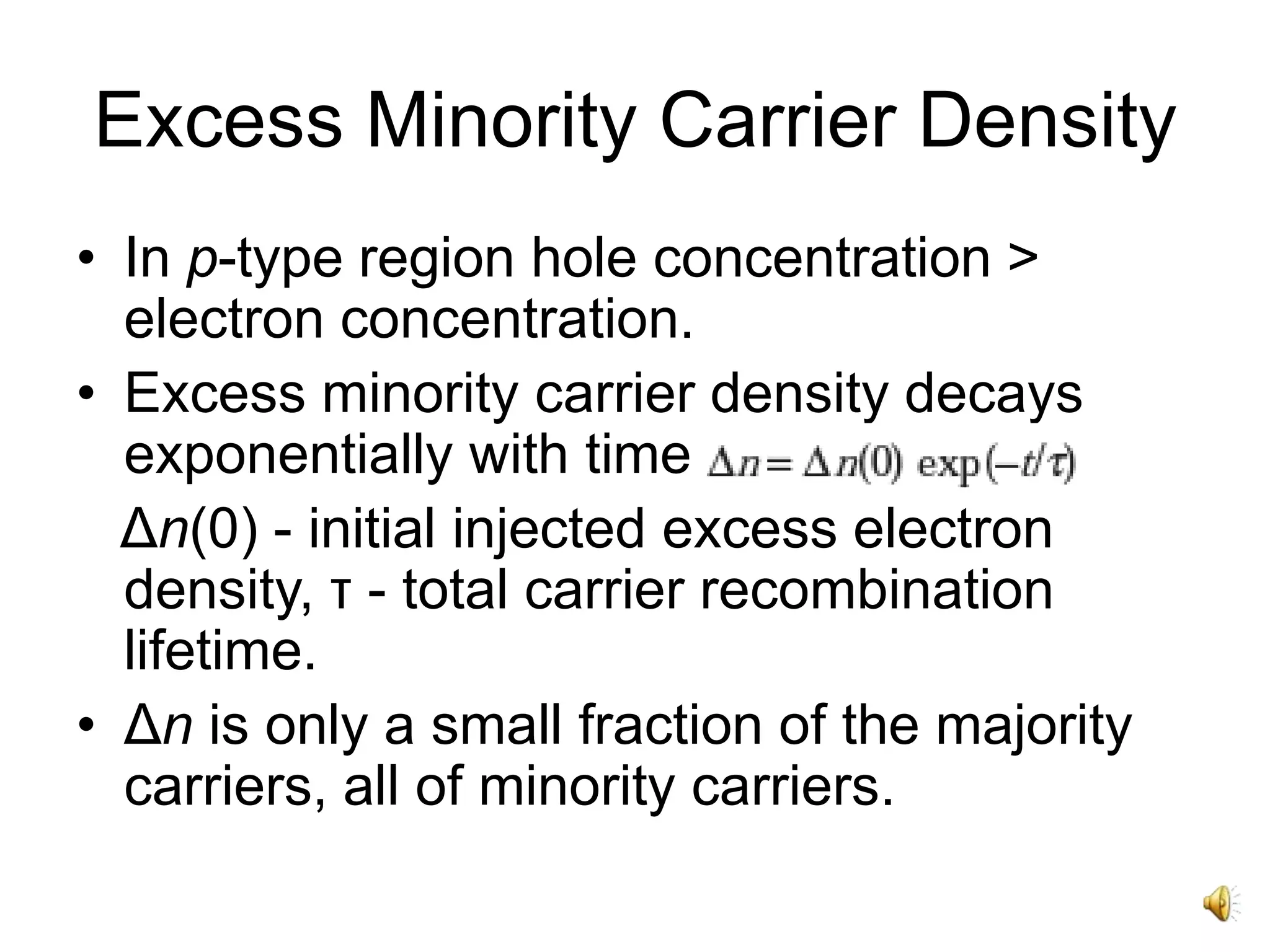
Excess Minority Carrier Density
• In p-type region hole concentration >
electron concentration.
• Excess minority carrier density decays
exponentially with time
Δn(0) - initial injected excess electron
density, τ - total carrier recombination
lifetime.
• Δn is only a small fraction of the majority
carriers, all of minority carriers.
Carrier Generation
• Carrier recombination lifetime becomes
minority/injected carrier lifetime τi.
• Constant current flow into the junction
diode – equilibrium.
• Total rate of carrier generation - sum of
externally supplied and thermal generation
rates.
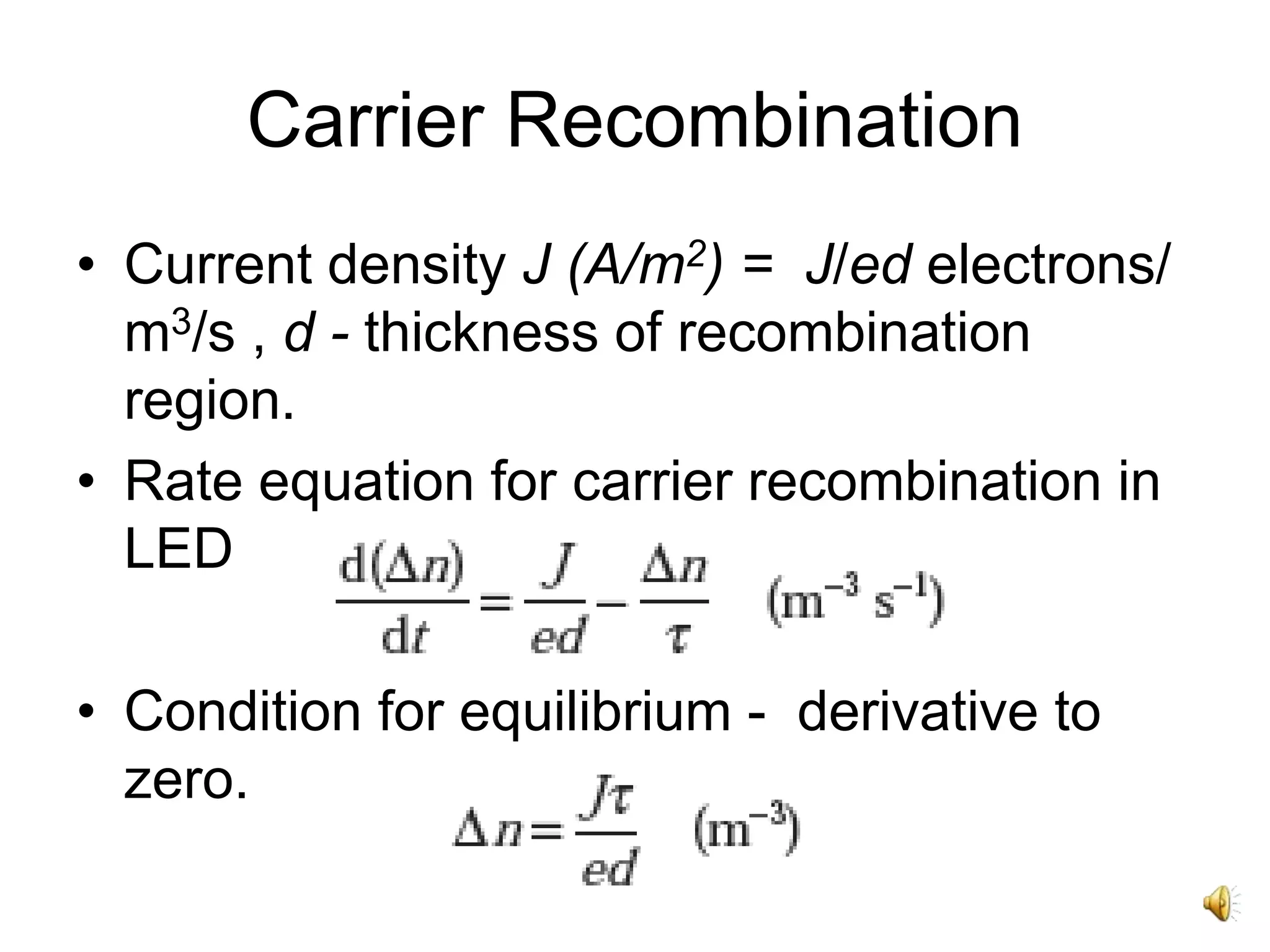
Carrier Recombination
• Current density J (A/m2) = J/ed electrons/
m3/s , d - thickness of recombination
region.
• Rate equation for carrier recombination in
LED
• Condition for equilibrium - derivative to
zero.
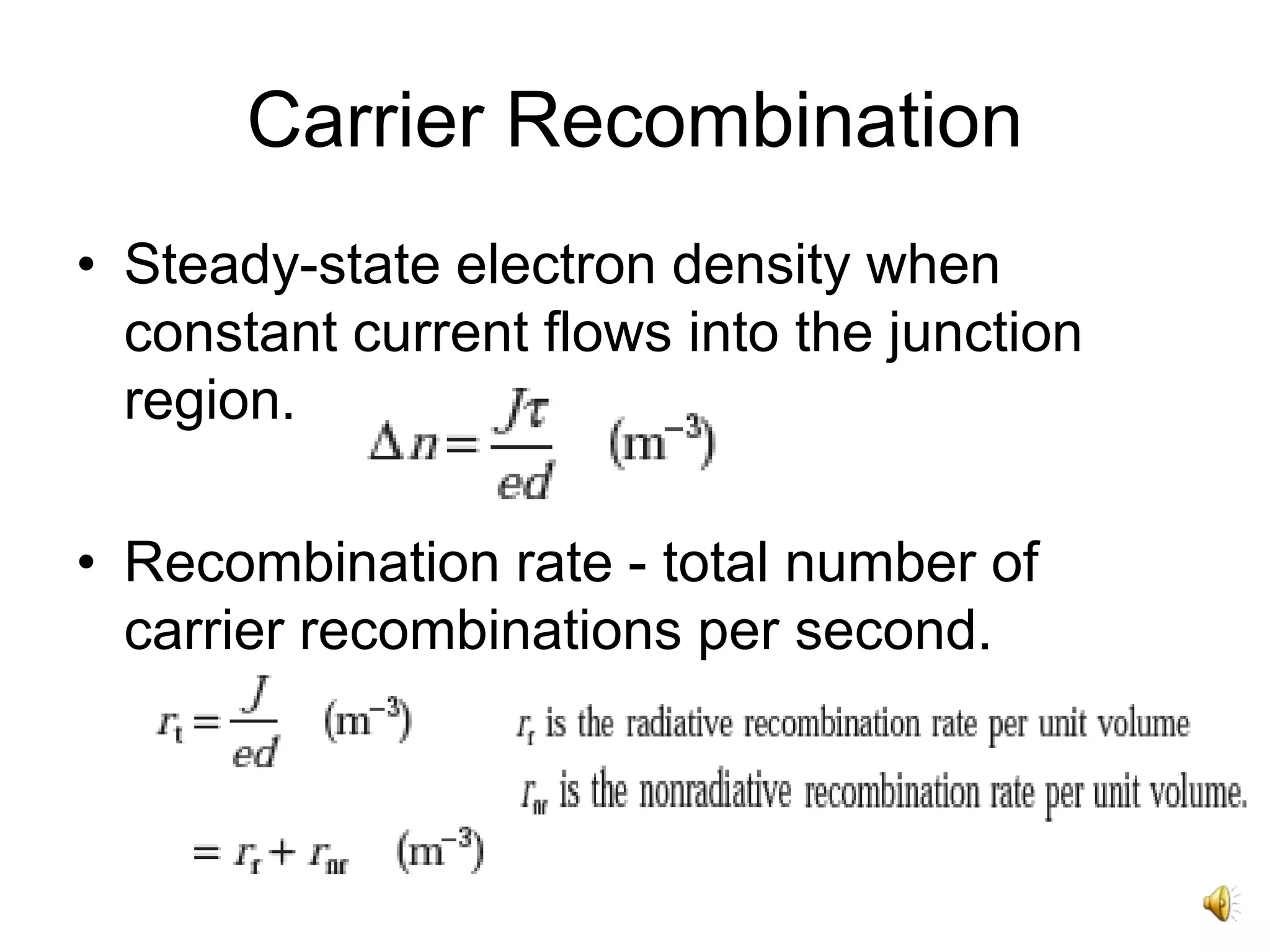
Carrier Recombination
• Steady-state electron density when
constant current flows into the junction
region.
• Recombination rate - total number of
carrier recombinations per second.
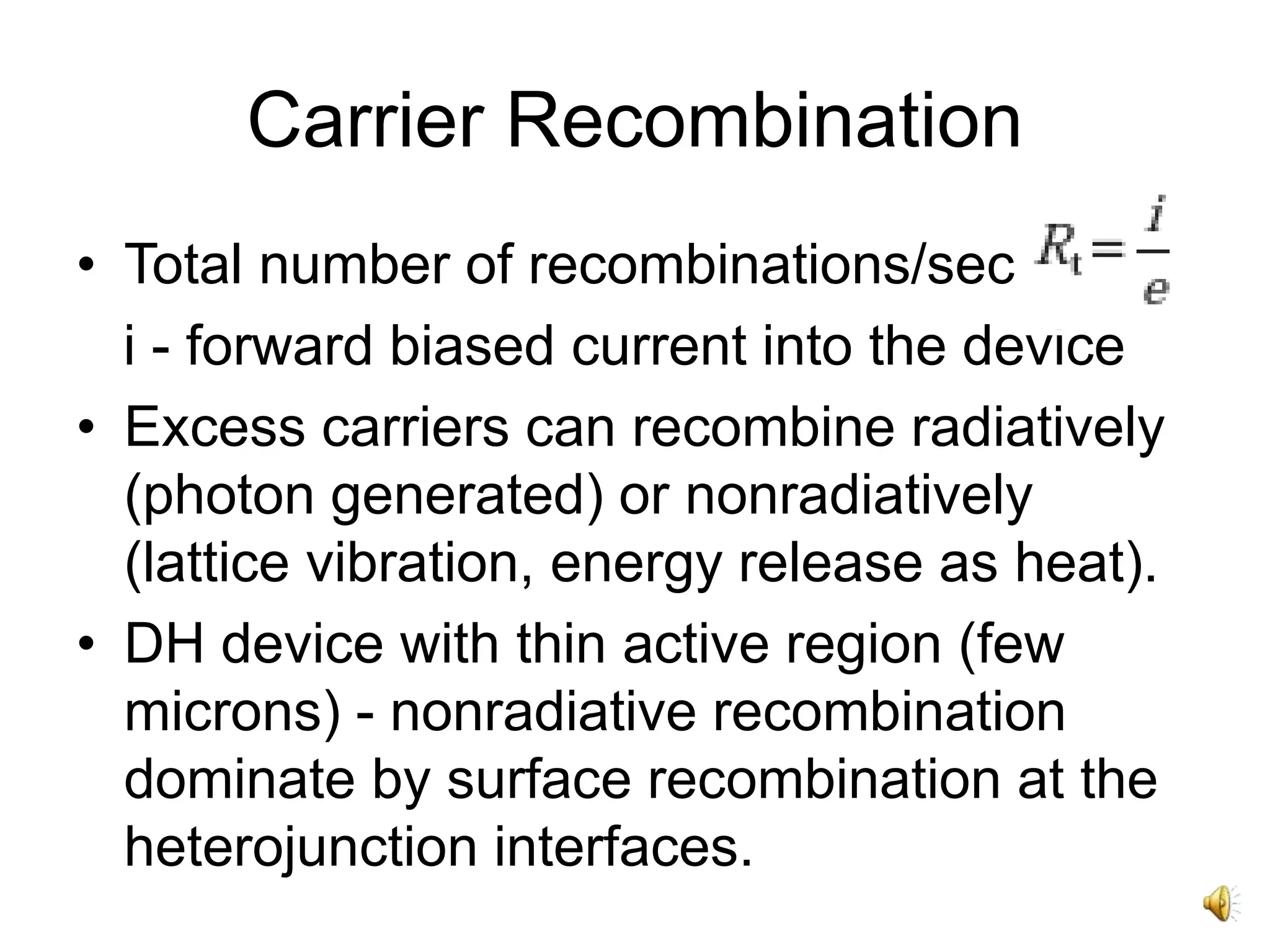
Carrier Recombination
• Total number of recombinations/sec
i - forward biased current into the device
• Excess carriers can recombine radiatively
(photon generated) or nonradiatively
(lattice vibration, energy release as heat).
• DH device with thin active region (few
microns) - nonradiative recombination
dominate by surface recombination at the
heterojunction interfaces.
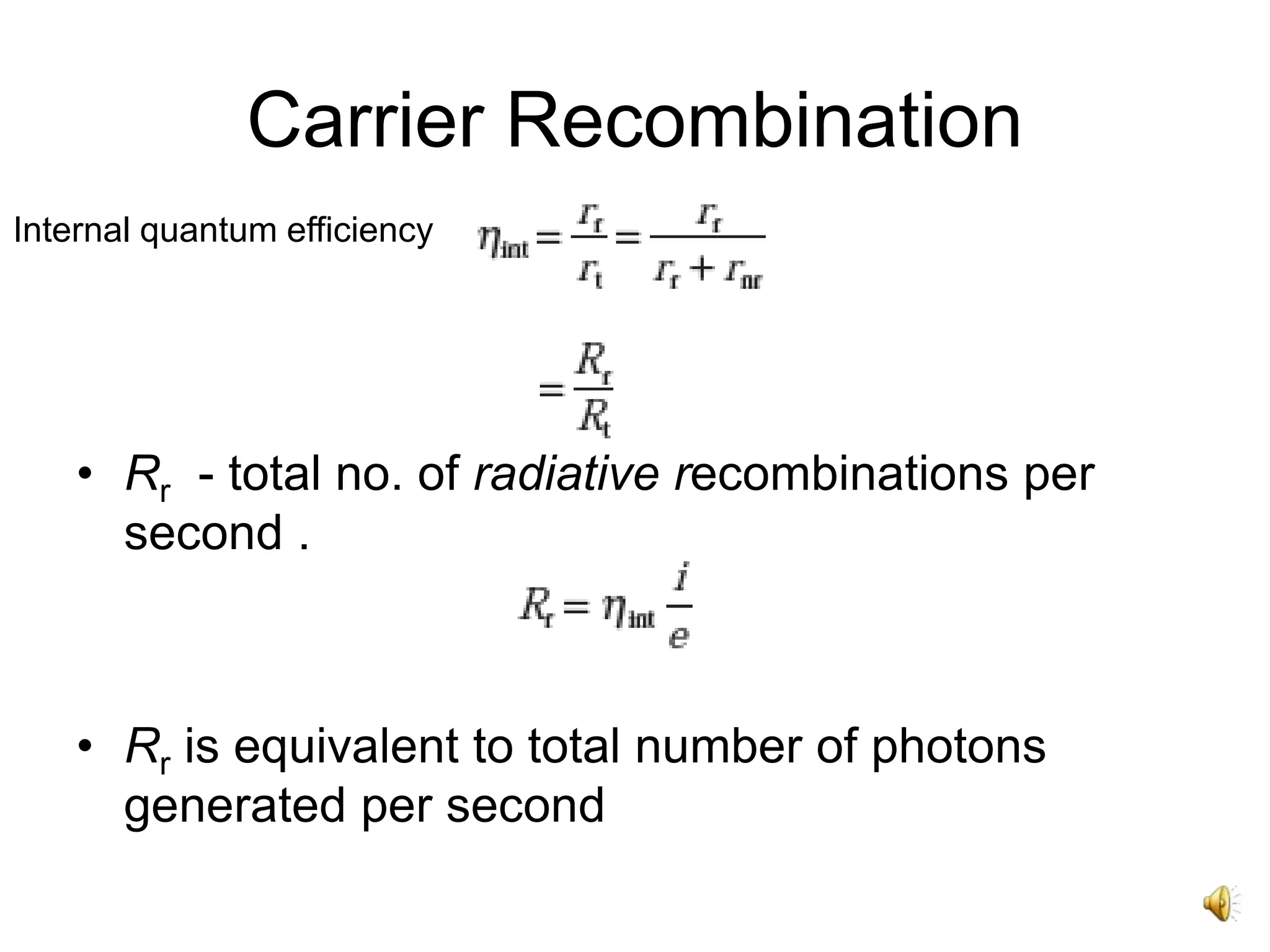
Carrier Recombination
• Rr - total no. of radiative recombinations per
second .
• Rr is equivalent to total number of photons
generated per second
Internal quantum efficiency
Recombination Coefficient
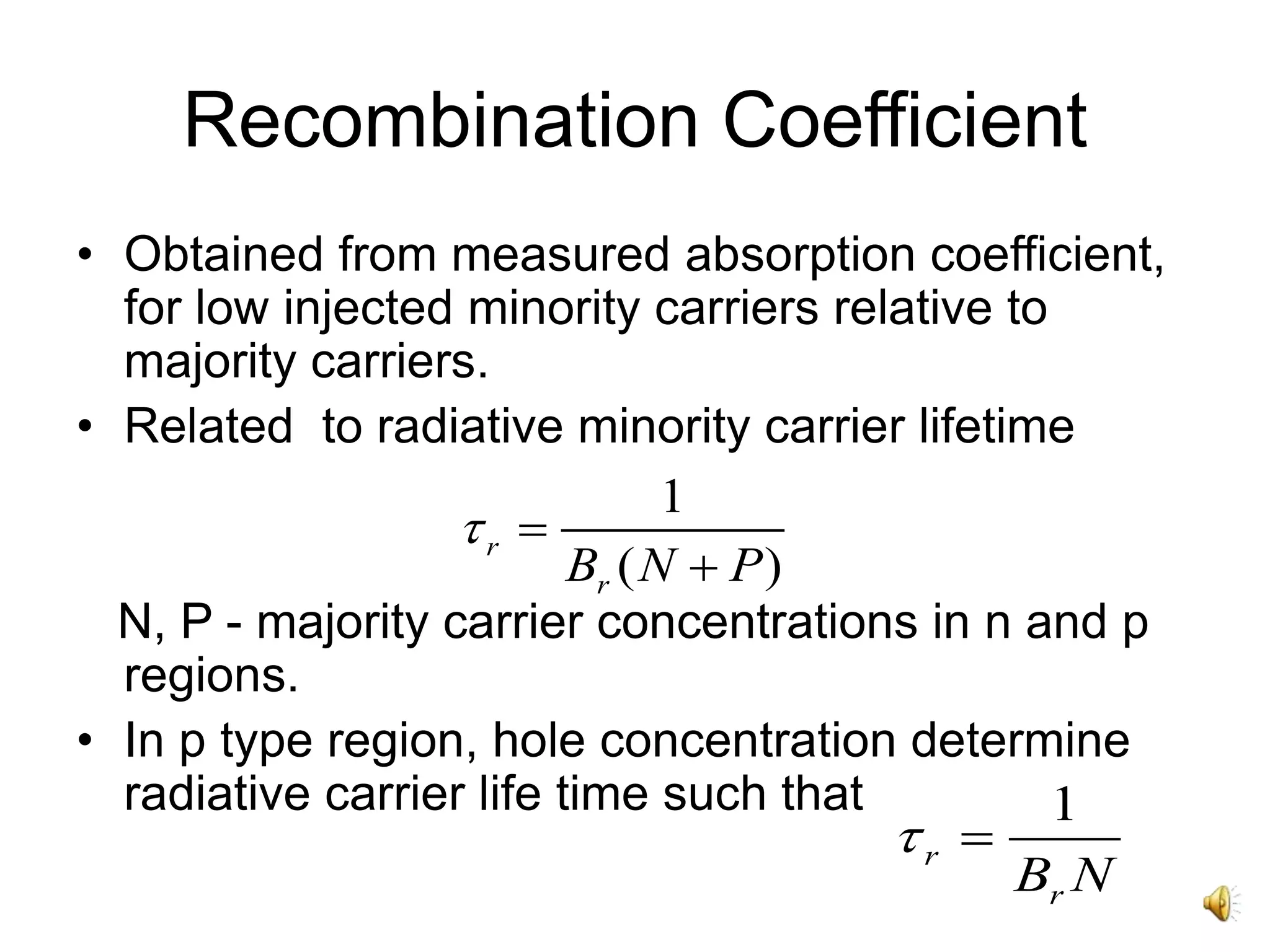
• Obtained from measured absorption coefficient,
for low injected minority carriers relative to
majority carriers.
• Related to radiative minority carrier lifetime
N, P - majority carrier concentrations in n and p
regions.
• In p type region, hole concentration determine
radiative carrier life time such that 1
r
rB N
 
1
( )
r
rB N P
 

Optical Power Generated
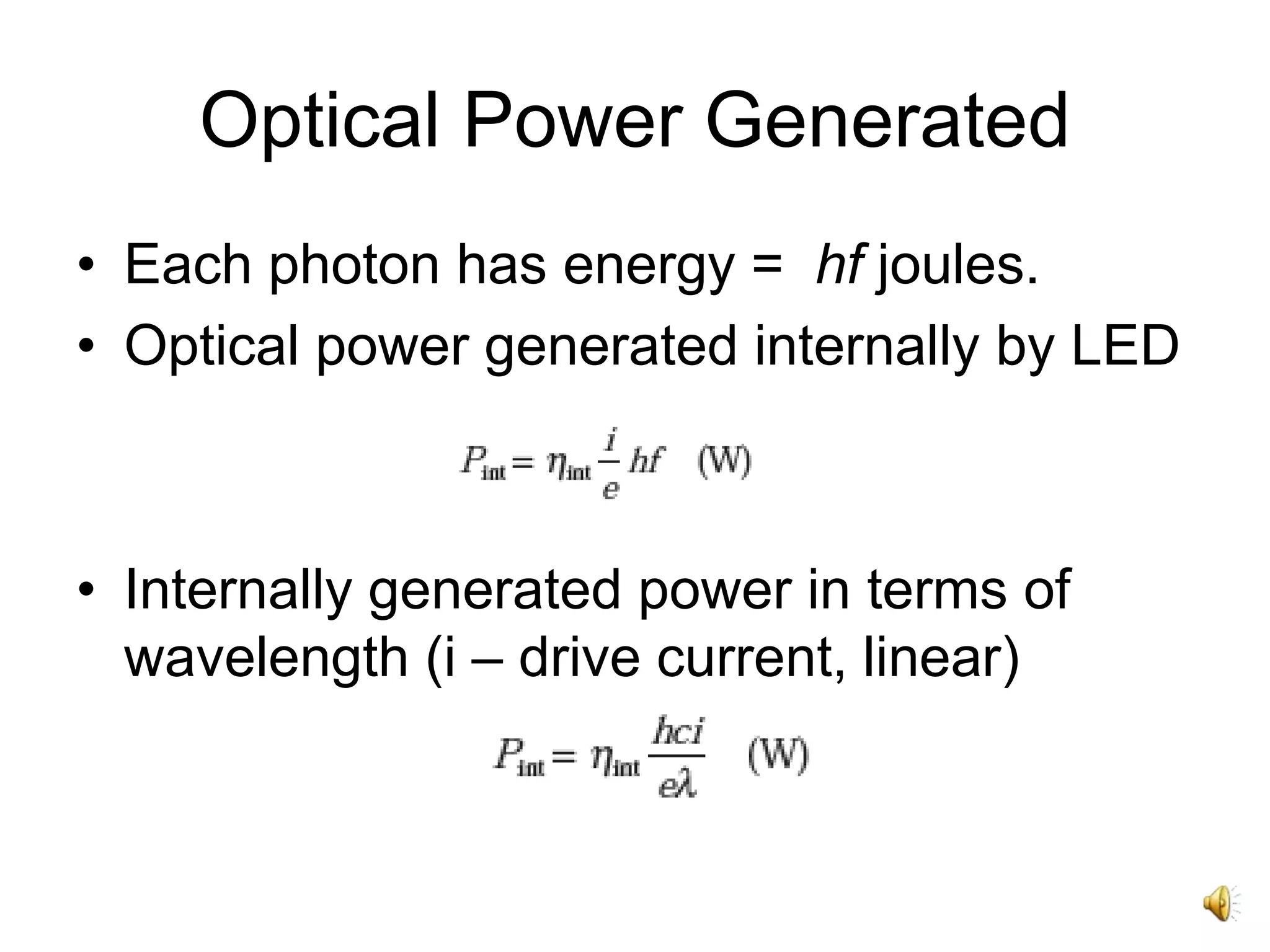
• Each photon has energy = hf joules.
• Optical power generated internally by LED
• Internally generated power in terms of
wavelength (i – drive current, linear)
Power Emitted
• External quantum efficiency - ratio of the
photons emitted from the device to the
photons internally generated
• Also ratio of number of photons emitted to
total number of carrier recombinations
(radiative and nonradiative).
• Optical power emitted from LED - constant
of proportionality ηint multiplied by external
quantum efficiency ηext
Internal
Quantum Efficiency
• Internal quantum efficiency - ratio of photons
generated to injected electrons, ratio of radiative
recombination rate to total recombination rate.
• Absence of optical amplification through
stimulated emission in LED limits internal
quantum efficiency.
• Double-heterojunction (DH) structures give
internal quantum efficiencies of 60 to 80%.
Internal Quantum Efficiency
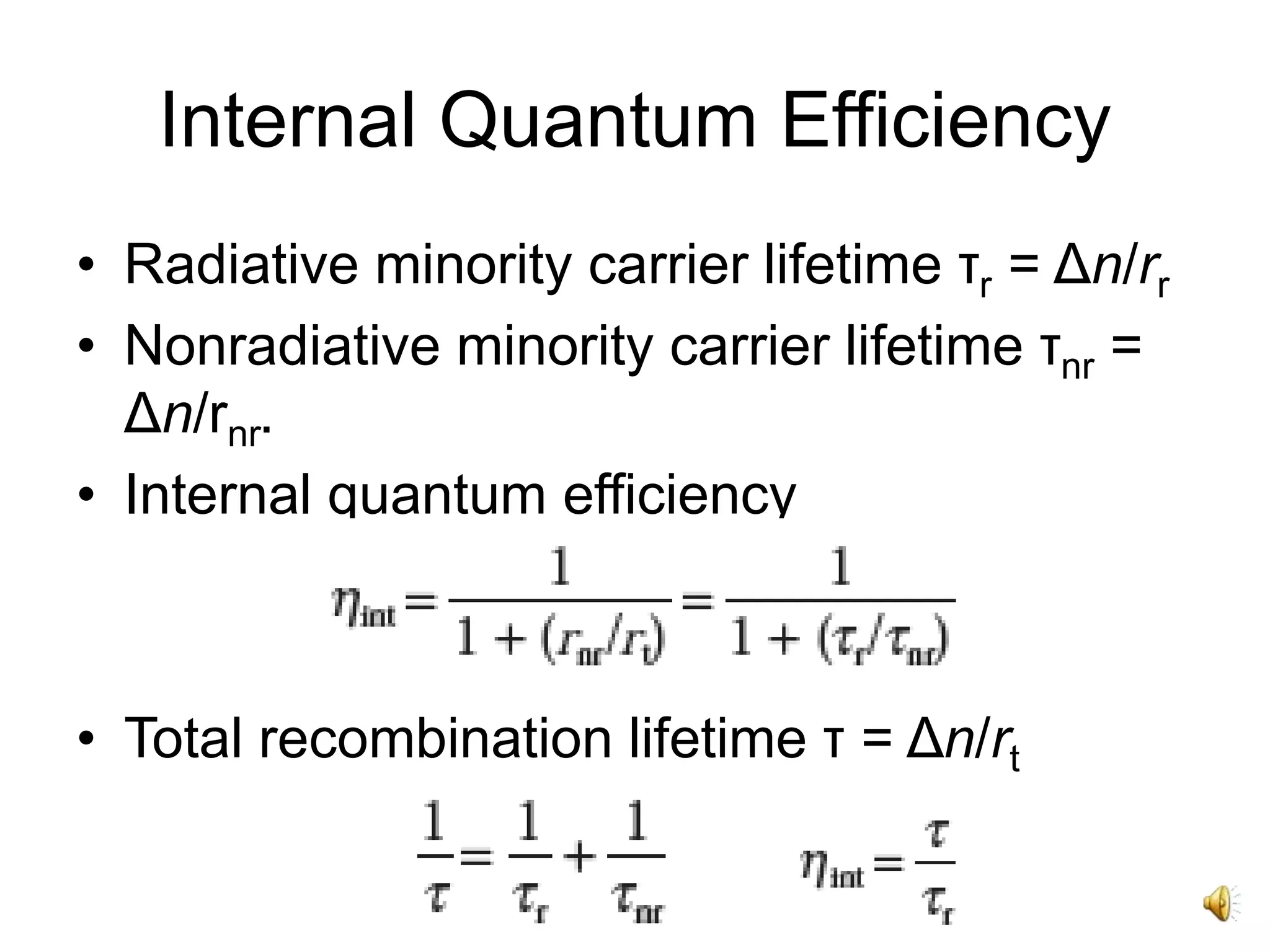
• Radiative minority carrier lifetime τr = Δn/rr
• Nonradiative minority carrier lifetime τnr =
Δn/rnr.
• Internal quantum efficiency
• Total recombination lifetime τ = Δn/rt
Example
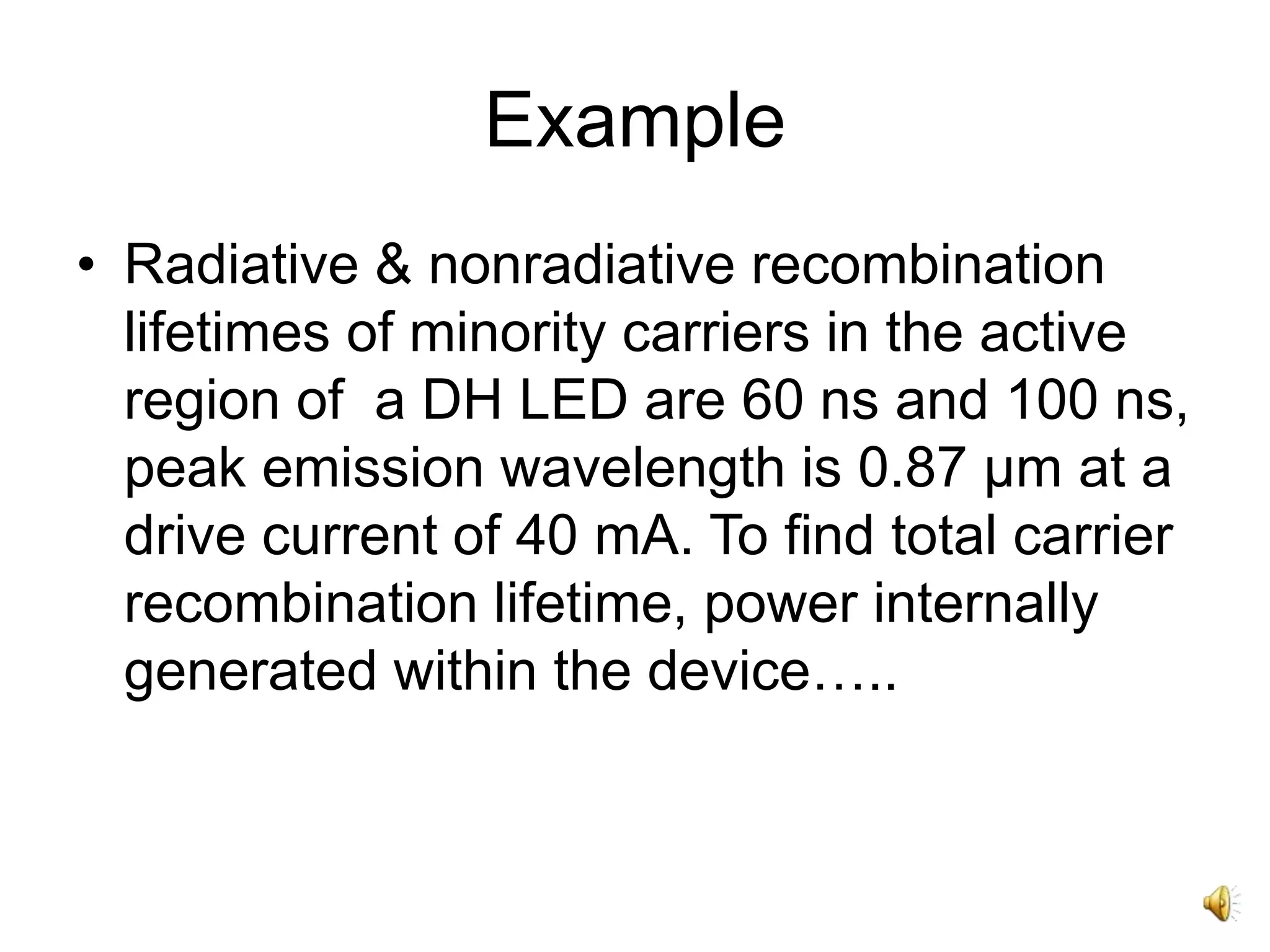
• Radiative & nonradiative recombination
lifetimes of minority carriers in the active
region of a DH LED are 60 ns and 100 ns,
peak emission wavelength is 0.87 μm at a
drive current of 40 mA. To find total carrier
recombination lifetime, power internally
generated within the device…..
Example
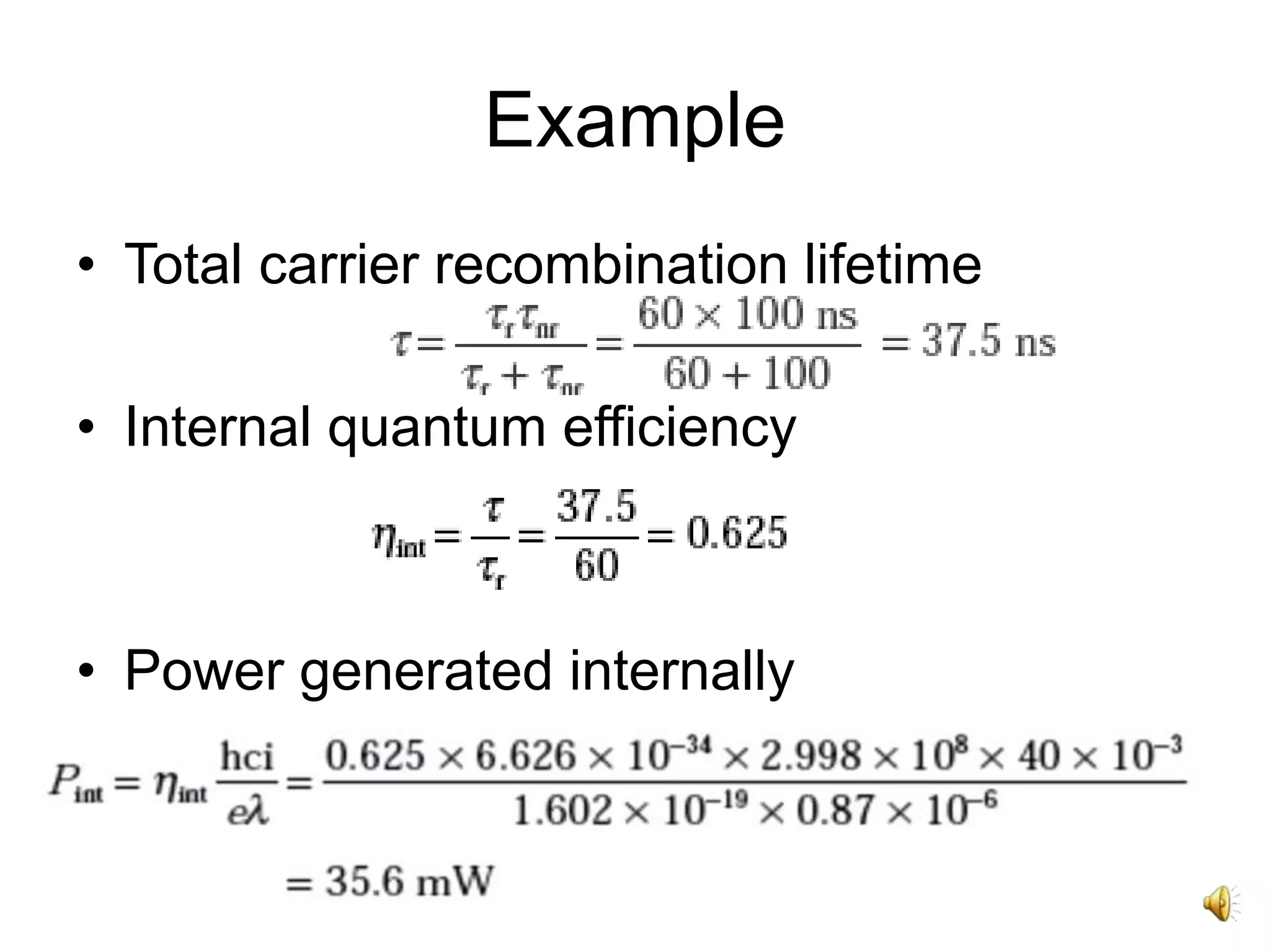
• Total carrier recombination lifetime
• Internal quantum efficiency
• Power generated internally
Example
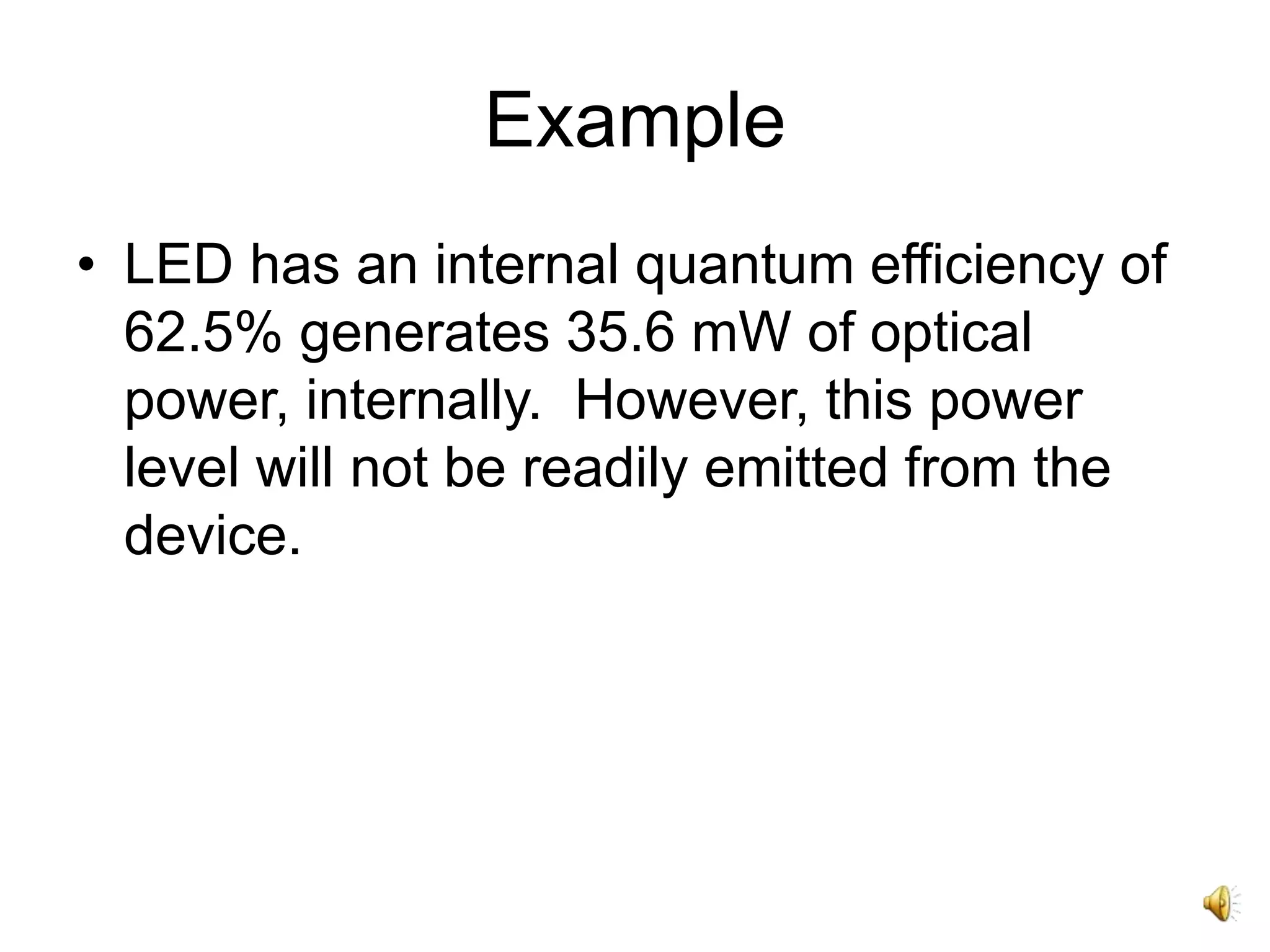
• LED has an internal quantum efficiency of
62.5% generates 35.6 mW of optical
power, internally. However, this power
level will not be readily emitted from the
device.
Radiation Geometry
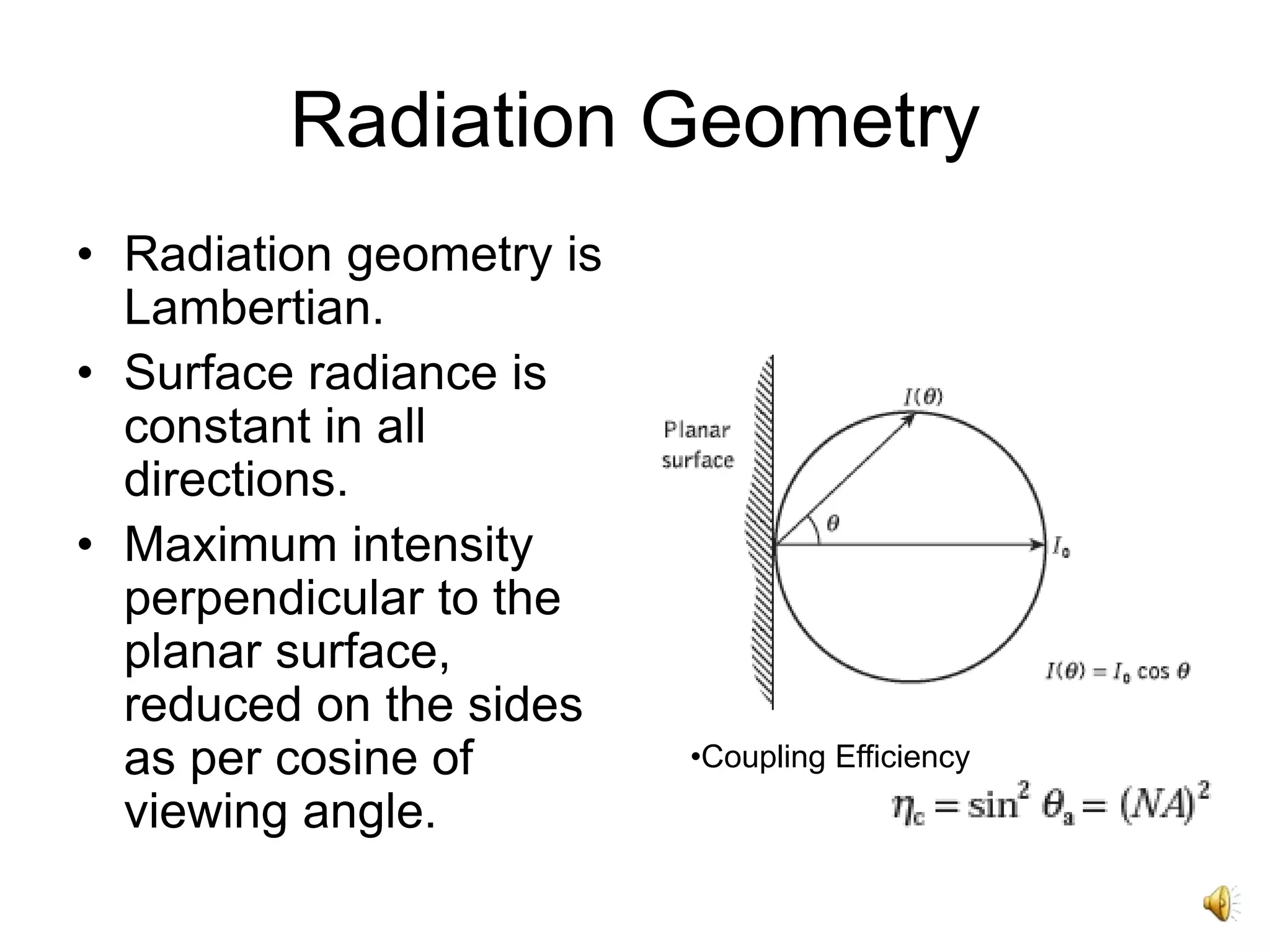
• Radiation geometry is
Lambertian.
• Surface radiance is
constant in all
directions.
• Maximum intensity
perpendicular to the
planar surface,
reduced on the sides
as per cosine of
viewing angle.
•Coupling Efficiency
External Power Efficiency
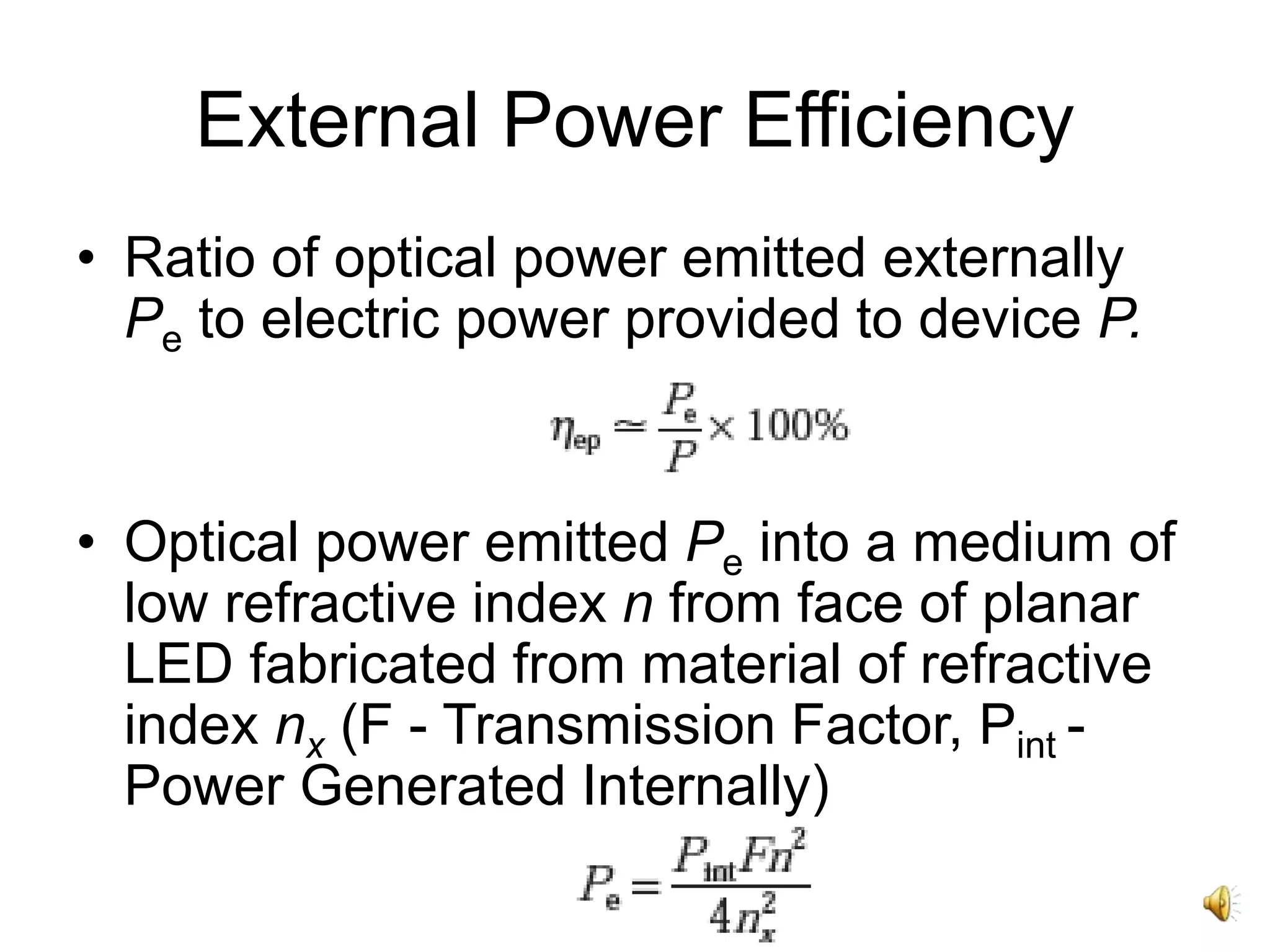
• Ratio of optical power emitted externally
Pe to electric power provided to device P.
• Optical power emitted Pe into a medium of
low refractive index n from face of planar
LED fabricated from material of refractive
index nx (F - Transmission Factor, Pint -
Power Generated Internally)
Example
• Planar LED fabricated from gallium
arsenide has a refractive index of 3.6. To
calculate the optical power emitted into air
as a percentage of internal optical power
for the device when transmission factor at
crystal–air interface is 0.68. When optical
power generated internally is 50% of
electric power supplied, to determine the
external power efficiency…..
Example
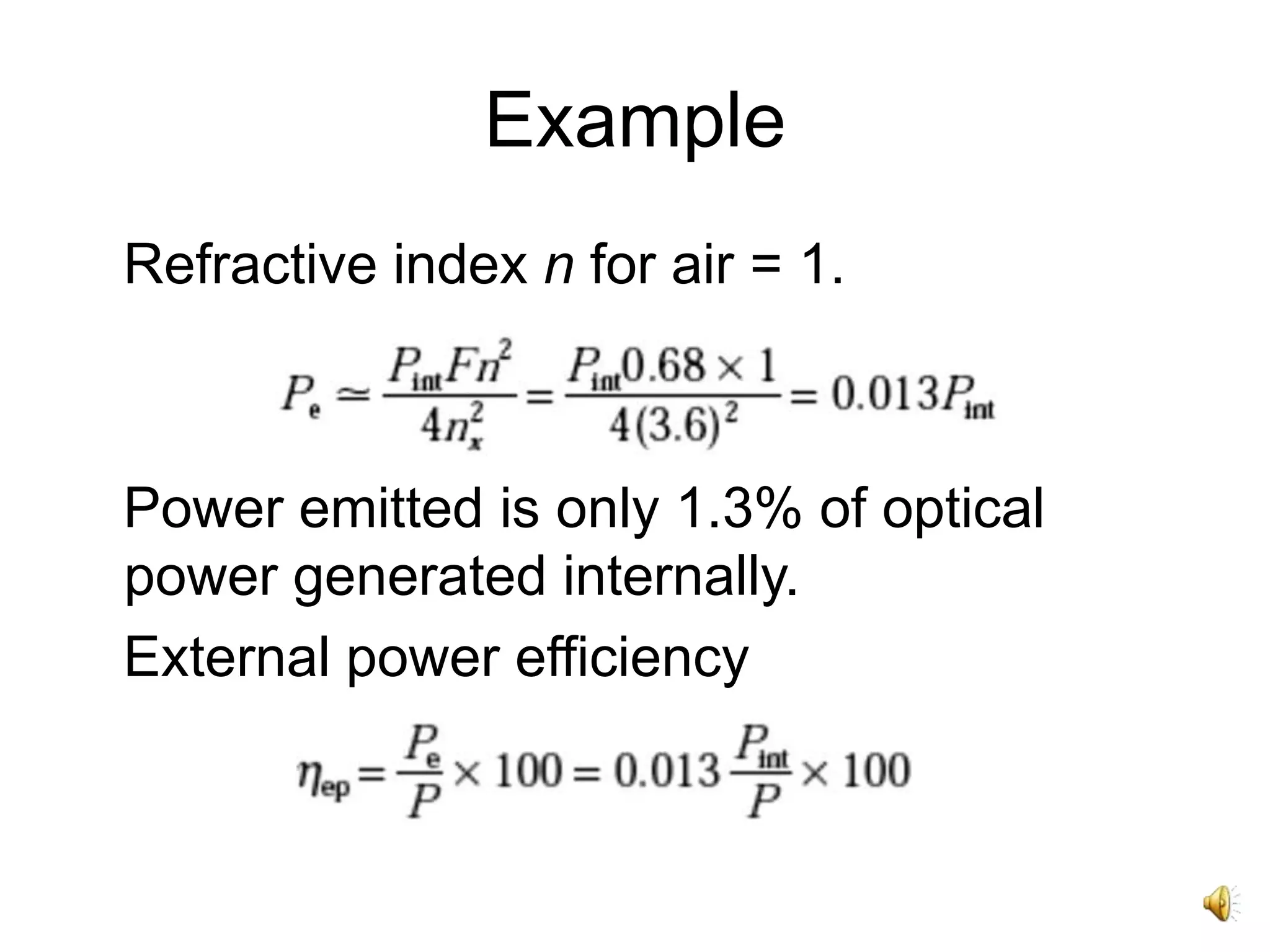
Refractive index n for air = 1.
Power emitted is only 1.3% of optical
power generated internally.
External power efficiency
Example
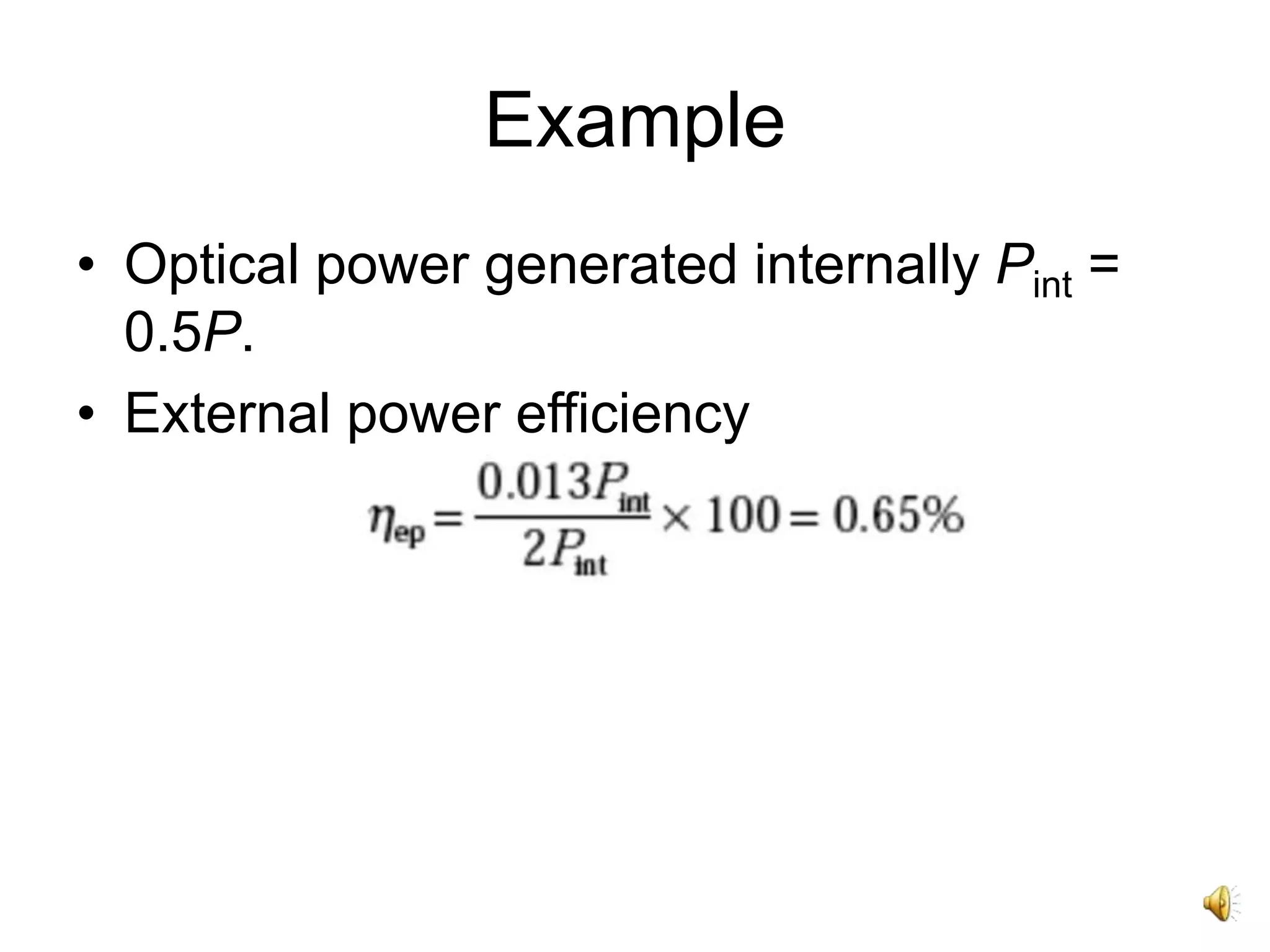
• Optical power generated internally Pint =
0.5P.
• External power efficiency
Thank You

LED Power Output and Efficiency

  • 1.
    LED Power Outputand Efficiency MEC
  • 2.
    Contents • Excess MinorityCarrier Density • Carrier Generation. • Carrier Recombination • Power Generated. • Quantum Efficiency. • Power Efficiency. • Problems and Solutions.
  • 3.
    Internal Power Generated •Power generated internally determined by considering excess electrons and holes in p- and n-type material (minority carriers) when forward biased. • Charge Neutrality - excess density of electrons & holes equal, Δn = Δp - injected carriers created and recombine in pairs. • Extrinsic materials - one carrier type have much higher concentration than other.
  • 4.
    Excess Minority CarrierDensity • In p-type region hole concentration > electron concentration. • Excess minority carrier density decays exponentially with time Δn(0) - initial injected excess electron density, τ - total carrier recombination lifetime. • Δn is only a small fraction of the majority carriers, all of minority carriers.
  • 5.
    Carrier Generation • Carrierrecombination lifetime becomes minority/injected carrier lifetime τi. • Constant current flow into the junction diode – equilibrium. • Total rate of carrier generation - sum of externally supplied and thermal generation rates.
  • 6.
    Carrier Recombination • Currentdensity J (A/m2) = J/ed electrons/ m3/s , d - thickness of recombination region. • Rate equation for carrier recombination in LED • Condition for equilibrium - derivative to zero.
  • 7.
    Carrier Recombination • Steady-stateelectron density when constant current flows into the junction region. • Recombination rate - total number of carrier recombinations per second.
  • 8.
    Carrier Recombination • Totalnumber of recombinations/sec i - forward biased current into the device • Excess carriers can recombine radiatively (photon generated) or nonradiatively (lattice vibration, energy release as heat). • DH device with thin active region (few microns) - nonradiative recombination dominate by surface recombination at the heterojunction interfaces.
  • 9.
    Carrier Recombination • Rr- total no. of radiative recombinations per second . • Rr is equivalent to total number of photons generated per second Internal quantum efficiency
  • 10.
    Recombination Coefficient • Obtainedfrom measured absorption coefficient, for low injected minority carriers relative to majority carriers. • Related to radiative minority carrier lifetime N, P - majority carrier concentrations in n and p regions. • In p type region, hole concentration determine radiative carrier life time such that 1 r rB N   1 ( ) r rB N P   
  • 11.
    Optical Power Generated •Each photon has energy = hf joules. • Optical power generated internally by LED • Internally generated power in terms of wavelength (i – drive current, linear)
  • 12.
    Power Emitted • Externalquantum efficiency - ratio of the photons emitted from the device to the photons internally generated • Also ratio of number of photons emitted to total number of carrier recombinations (radiative and nonradiative). • Optical power emitted from LED - constant of proportionality ηint multiplied by external quantum efficiency ηext
  • 13.
    Internal Quantum Efficiency • Internalquantum efficiency - ratio of photons generated to injected electrons, ratio of radiative recombination rate to total recombination rate. • Absence of optical amplification through stimulated emission in LED limits internal quantum efficiency. • Double-heterojunction (DH) structures give internal quantum efficiencies of 60 to 80%.
  • 14.
    Internal Quantum Efficiency •Radiative minority carrier lifetime τr = Δn/rr • Nonradiative minority carrier lifetime τnr = Δn/rnr. • Internal quantum efficiency • Total recombination lifetime τ = Δn/rt
  • 15.
    Example • Radiative &nonradiative recombination lifetimes of minority carriers in the active region of a DH LED are 60 ns and 100 ns, peak emission wavelength is 0.87 μm at a drive current of 40 mA. To find total carrier recombination lifetime, power internally generated within the device…..
  • 16.
    Example • Total carrierrecombination lifetime • Internal quantum efficiency • Power generated internally
  • 17.
    Example • LED hasan internal quantum efficiency of 62.5% generates 35.6 mW of optical power, internally. However, this power level will not be readily emitted from the device.
  • 18.
    Radiation Geometry • Radiationgeometry is Lambertian. • Surface radiance is constant in all directions. • Maximum intensity perpendicular to the planar surface, reduced on the sides as per cosine of viewing angle. •Coupling Efficiency
  • 19.
    External Power Efficiency •Ratio of optical power emitted externally Pe to electric power provided to device P. • Optical power emitted Pe into a medium of low refractive index n from face of planar LED fabricated from material of refractive index nx (F - Transmission Factor, Pint - Power Generated Internally)
  • 20.
    Example • Planar LEDfabricated from gallium arsenide has a refractive index of 3.6. To calculate the optical power emitted into air as a percentage of internal optical power for the device when transmission factor at crystal–air interface is 0.68. When optical power generated internally is 50% of electric power supplied, to determine the external power efficiency…..
  • 21.
    Example Refractive index nfor air = 1. Power emitted is only 1.3% of optical power generated internally. External power efficiency
  • 22.
    Example • Optical powergenerated internally Pint = 0.5P. • External power efficiency
  • 23.